英飞凌

Search documents
高端车规MCU,芯驰官宣:规模化量产
半导体行业观察· 2025-10-26 03:16
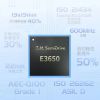
Core Viewpoint - The mass production of the E3650 MCU by Xinchip Technology marks a significant challenge to established international competitors in the automotive MCU market, particularly in the domain control sector [1][3]. Product Overview - The E3650 has officially entered mass production and has completed AEC-Q100 Grade 1 reliability certification, positioning it as a core solution for next-generation vehicle area controllers (ZCU) and domain controllers (DCU) [1][3]. - The E3650 features a 22nm automotive-grade process, a high-performance ARM Cortex-R52+ multi-core cluster with a frequency of 600MHz, and 16MB of embedded non-volatile memory, establishing a performance benchmark in its category [5][6]. Competitive Landscape - Historically, the automotive MCU market has been dominated by international giants such as Renesas, Infineon, STMicroelectronics, and NXP. The introduction of the E3650 represents a new competitive force from a domestic manufacturer [1][3]. - The E3650 outperforms competitors in several key specifications, including a higher main frequency and more available I/O ports, which enhances its capability to integrate various functions [2][5]. Market Positioning - The E3650 is positioned as a solution for the evolving automotive E/E architecture, which demands higher integration and performance from fewer, more powerful controllers [12][15]. - The product has already secured multiple key projects and is being developed for future vehicle platforms aimed at 2027 and 2028 [6][17]. Application Scenarios - The E3650 addresses the challenges faced by manufacturers in integrating advanced functions into area controllers, particularly as the industry moves towards more complex architectures [9][10]. - It also supports the central computing unit for integrated cockpit and driving functions, providing enhanced processing capabilities and reducing the need for additional I/O expansion chips [10][11]. Ecosystem Development - Xinchip Technology has built a comprehensive ecosystem around the E3650, including high-function safety PMICs, efficient I/O expansion chips, and mature virtualization software, facilitating a smooth transition from chip selection to mass production [15][17]. - The E3 series products have already achieved significant market penetration, with millions of units shipped across over 50 mainstream production models, showcasing the company's capability in automotive applications [17].

AI、半导体:人工智能推动半导体超级周期
Huajin Securities· 2025-10-25 12:41
Investment Rating - The industry investment rating is "Outperform the Market" (maintained) [3][36] Core Viewpoints - The report highlights that artificial intelligence (AI) is driving a semiconductor supercycle, with significant investments and collaborations in the sector, such as Anthropic's partnership with Google, which includes a deal for up to one million custom TPU chips [3] - Major memory manufacturers like Samsung and SK Hynix are expected to raise prices of DRAM and NAND storage products by up to 30% in response to the surge in AI-driven demand [3] - Amphenol reported a 53.35% year-on-year increase in revenue for Q3 2025, driven by the growing demand for data center solutions [3] - The report anticipates a substantial increase in overall computing power by 2035, predicting a growth of up to 100,000 times, emphasizing the transformative potential of general artificial intelligence [3] Summary by Sections 1. Market Review - The electronic industry saw a weekly increase of 8.49% from October 20 to October 24, with the communication sector leading at 11.55% [6] - The Philadelphia Semiconductor Index rose from 6,885.03 points to 6,976.94 points during the same period, indicating a positive trend since April 2025 [11] 2. Industry High-Frequency Data Tracking 2.1 Panel Prices - TV panel prices are expected to stabilize due to healthy inventory levels, with no significant changes anticipated for various sizes [17] 2.2 Memory Prices - Prices for DDR5 and DDR4 memory chips have shown an upward trend, with DDR5 increasing from $10.457 to $12.615 and DDR4 from $24.333 to $24.721 between October 20 and October 24 [21]





模拟大厂的“动荡期”
半导体行业观察· 2025-10-25 03:19
Core Viewpoint - The semiconductor industry is undergoing a significant transformation characterized by a shift towards "light packaging" and a focus on manufacturing, as major players like Texas Instruments (TI), Analog Devices (ADI), Qorvo, and Infineon adjust their manufacturing and packaging strategies [2][11]. Group 1: "Light Packaging" as a New Normal - ADI has signed a memorandum of understanding with ASE to sell its wholly-owned packaging subsidiary in Malaysia, marking a strategic shift towards a Fab-Lite model, which allows ADI to maintain control over core processes while outsourcing less critical manufacturing [3][4]. - Since 2020, ADI has been reducing its manufacturing burden by closing older packaging lines and outsourcing wafer production to TSMC and GlobalFoundries, while still expanding internal investments in key areas [4][6]. - Infineon has also sold its packaging facilities in the Philippines and South Korea to ASE, focusing on core manufacturing capabilities while ensuring stable packaging capacity through long-term supply agreements [7][8]. Group 2: Focus on Core Competencies - Qorvo announced the sale of its packaging and testing facilities in China to Luxshare Precision, aiming to reduce capital intensity and focus on high-value RF front-end design and domestic wafer manufacturing [9][10]. - The trend of divesting non-core packaging assets is seen as a response to increasing capital pressures and geopolitical uncertainties, allowing companies to streamline operations and enhance cash flow for R&D investments [11]. Group 3: ASE as a Major Beneficiary - ASE Technology Holding is emerging as a key player in the semiconductor packaging sector, acquiring facilities from major companies and establishing long-term supply agreements, thus transitioning from a service provider to a strategic manufacturing partner [11][12]. - ASE is expanding its operations in Malaysia, with plans for a new packaging and testing facility aimed at AI chips and automotive power devices, indicating a robust growth trajectory [12]. Group 4: Structural Adjustments in Manufacturing - The industry is witnessing a decline in 150mm wafer lines due to technological advancements and aging equipment, with TI planning to close its 150mm facility in Texas by 2025 [13]. - Companies like NXP and Infineon are shifting focus towards more advanced 12-inch wafer production, closing older 8-inch facilities to enhance efficiency and reduce costs [15][16]. Group 5: Texas Instruments' Unique Position - TI is bucking the trend by significantly investing in domestic wafer and packaging capabilities, with plans to invest over $60 billion in seven semiconductor factories in the U.S., creating over 60,000 jobs [16][20]. - TI's strategy emphasizes maintaining control over the entire manufacturing process, with a goal of achieving 95% internal manufacturing by 2030, despite the high capital expenditure involved [20][21]. Group 6: Future of Semiconductor Manufacturing - The semiconductor supply chain is being redefined, with a shift from self-sufficiency to collaborative ecosystems, as companies adapt to the demands of the AI era [22].


被“吹爆”的MRAM,走向MCU
3 6 Ke· 2025-10-24 11:29
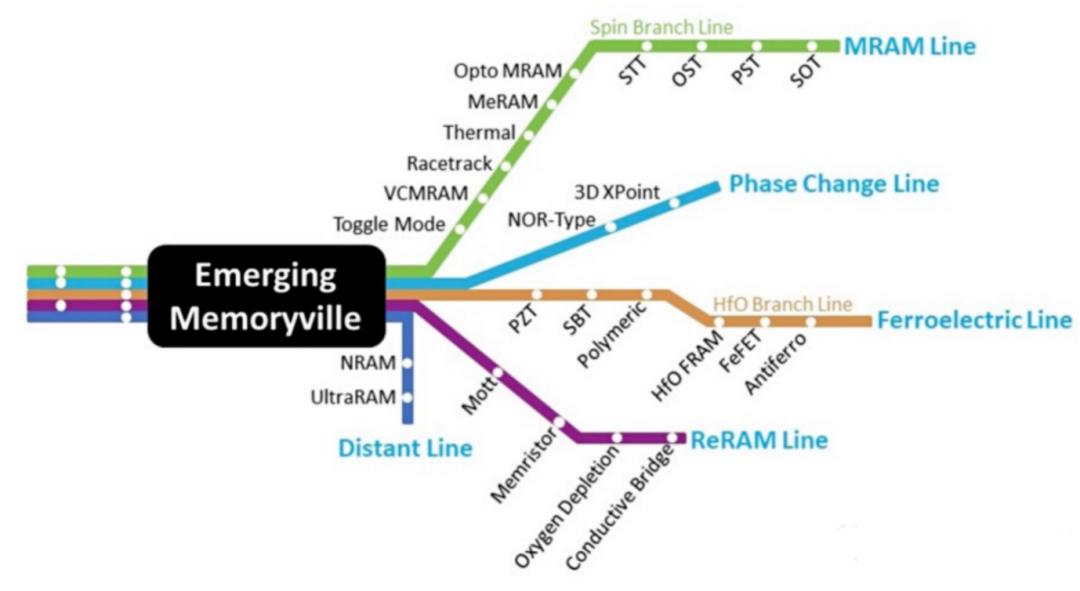
Core Insights - The article discusses the shift in memory technology for Microcontroller Units (MCUs) as embedded flash memory (eFlash) reaches its limits at 28nm, prompting manufacturers to explore new storage types like MRAM, PCM, RRAM, and FRAM [1][3][6]. Group 1: Industry Trends - The industry is moving towards new types of memory to enhance MCU performance, with MRAM being particularly favored due to its diverse types and broad application prospects [1][6]. - Major companies such as Huawei, TSMC, Samsung, Intel, and NXP are investing in MRAM technology, indicating strong industry interest and potential growth [1][6][19]. Group 2: Technical Advantages of MRAM - MRAM offers a combination of speed, low power consumption, and high durability, making it suitable for various applications, including automotive and AI accelerators [10][15][20]. - The technology allows for word-level erase and program capabilities, providing an energy-efficient non-volatile memory solution [15][16]. Group 3: Product Developments - Infineon has launched the AURIX TC4x series MCU using RRAM technology, while STMicroelectronics has introduced the xMemory Stellar series MCU with PCM [5][6]. - NXP's S32K5 MCU, the first 16nm FinFET+MRAM MCU, features high performance and low power consumption, integrating multiple ECUs into a single system [19][20]. - Renesas has released the RA8P1 series MCU with MRAM, emphasizing high performance and durability compared to traditional flash memory [22][28]. Group 4: Future Outlook - The article suggests that MRAM's integration into MCUs is accelerating, with TSMC making strides in the industrialization of third-generation SOT-MRAM technology [33]. - While MRAM presents significant advantages, it also faces challenges such as material complexity and sensitivity to strong magnetic fields, which may limit its application in certain environments [18][33].


中颖电子20251023
2025-10-23 15:20
Summary of Zhongying Electronics Conference Call Company Overview - **Company**: Zhongying Electronics - **Date**: October 23, 2025 Key Points Financial Performance - **Revenue**: In Q3 2025, Zhongying Electronics reported sales revenue of 314.46 million yuan, a year-on-year decrease of approximately 3% [3] - **Net Profit**: Net profit attributable to shareholders was 57.05 million yuan, down 36.6% year-on-year [3] - **Gross Margin**: Gross margin decreased by 1.37%, impacting profits by approximately 17 million yuan [3] - **Depreciation and Taxes**: New depreciation and property tax from the Hefei building added nearly 9 million yuan to costs [3] - **Inventory**: Inventory levels are expected to decrease to around 180 days by Q4 2025 [2][3] Shareholder Changes - **Major Shareholder Change**: Weilang International Group transferred shares to Intelligent Power Supply, which became the largest shareholder and effectively controls the company [2][5] - **Board Restructuring**: The board has been restructured to align with the new controlling shareholder's strategy [5] Business Segment Performance - **Home Appliance Segment**: Slightly weaker performance noted [2][6] - **Lithium Battery Management Chips**: Benefiting from growth in power applications, expected to account for 64% of revenue by year-end [17] - **Mobile Phone Business**: Sales were sluggish but showed slight growth; recovery is anticipated in 2026 [18][19] Market Position and Competition - **White Goods Market**: Zhongying Electronics maintains a leading position, with major competitors being Renesas and NEC, holding about 30-40% market share [7] - **Domestic IC Proportion**: The proportion of domestic ICs is expected to continue increasing due to high reliability requirements in the white goods market [7] Future Outlook - **Cost Reduction**: Anticipated reduction in wafer procurement costs in 2026, expected to gradually improve profitability [8] - **MCU Market Expansion**: Plans to continue expanding in the international MCU market, with expected sales exceeding 10 million USD in 2026 [4][15] - **Product Development**: Launch of a 1.5K display driver chip planned for H1 2026 to meet market demand for higher resolution screens [4][11] Strategic Initiatives - **Acquisitions**: Intelligent Power Supply is expected to support horizontal mergers and acquisitions to enhance influence in chip design [2][5] - **R&D Investments**: R&D spending increased by 3.5% year-on-year, amounting to nearly 8 million yuan [3] Challenges and Risks - **Profit Pressure**: Profitability has been pressured by increased operational costs related to the Hefei building [13][14] - **Market Competition**: The specialized MCU market is experiencing intense competition, but the company believes the market will stabilize over time [24] Additional Insights - **Seasonal Trends**: Noted seasonal patterns in sales, with Q4 typically being stronger for white goods and Q2 for small appliances [12] - **International Market Dynamics**: The company is adapting to changes in the international market, particularly in response to geopolitical tensions affecting chip procurement [22] This summary encapsulates the key insights from the conference call, highlighting Zhongying Electronics' current performance, strategic direction, and market positioning.

安世半导体事件引发全球汽车供应链危机
Ju Chao Zi Xun· 2025-10-23 13:09
Core Viewpoint - The Dutch government's decision to freeze the operational rights of Nexperia, a subsidiary of Wingtech Technology, has triggered a significant disruption in the global automotive supply chain, raising concerns about a potential chip supply crisis in Europe and beyond [1][5]. Company Summary - Nexperia, headquartered in the Netherlands, is a well-known semiconductor manufacturer with a product range that includes semiconductor technology, integrated circuits, system-level packaging, and electronic components [3]. - Wingtech Technology acquired a 79.98% stake in Nexperia for 26.854 billion yuan in 2019, later achieving full ownership, marking it as the first Chinese company to control a leading international semiconductor enterprise [3]. - Since Wingtech's acquisition, Nexperia's revenue has significantly increased from over 1 billion euros in 2018 to 2.36 billion euros in 2022, with gross margins rising from 25% to 42.4% and a market share exceeding 30% in automotive power chips [4]. Industry Summary - The Dutch government's intervention, which includes freezing the operations of Nexperia's 30 global subsidiaries and appointing foreign directors, is aimed at preventing excessive reliance on foreign entities and asset outflow in the European chip industry [3]. - The European Automobile Manufacturers Association (ACEA) has warned that this situation could lead to a disruption in the global automotive supply chain, with major car manufacturers like Volkswagen, BMW, and Mercedes facing parts shortages [4]. - The incident highlights the geopolitical pressures affecting the global semiconductor supply chain, serving as a stress test for the industry amid rising supply risks for European automakers [5].


摩根大通:从芯片到汽车:深入探讨高级驾驶辅助系统与无人驾驶出租车的报告
欧米伽未来研究所2025· 2025-10-23 04:26
Core Insights - The report from J.P. Morgan highlights that autonomous driving technology is becoming a decisive trend, with its maturity potentially outpacing the realization of zero-emission goals [2] - The global autonomous driving market is on the brink of explosion, with the penetration rate of high-level autonomous vehicles (Level 3 to Level 5) expected to rise from less than 5% in 2025 to approximately 15% by 2030, and around 45% by 2040 [2][3] Global Market Dynamics - The report outlines a tri-polar structure in the global autonomous driving landscape, focusing on the strategies of major players in China, the U.S., and Europe [4] - China is positioned as a future leader in Level 4/5 autonomous driving, with significant players like Baidu and Pony.ai leading the Robotaxi services [5] - The U.S. market exhibits a dual-track system, with companies like Waymo focusing on Level 4 Robotaxi technology, while Tesla leads in the consumer market with Level 2+ systems [6] - Europe leads in Level 3 consumer systems but lags in Level 4 Robotaxi development due to stringent regulations and public trust issues [7] Technological and Economic Challenges - The report identifies two core obstacles to achieving the autonomous driving vision: the need for technological maturity and a significant reduction in the costs of technology and hardware [3] - J.P. Morgan estimates that a Robotaxi must achieve at least 80% utilization to break even, highlighting the economic challenges in scaling deployment [3][15] Ecosystem and Competitive Landscape - The autonomous driving ecosystem consists of five key layers: OEMs, AV technology and software suppliers, fleet operators, financial stakeholders, and demand platforms [9] - Nvidia is currently the dominant player in the semiconductor space, with its "cloud-to-car" vertical integration providing a competitive edge [10] - Rideshare platforms like Uber and Didi are seen as essential participants in the autonomous driving ecosystem, facilitating demand and supply matching [11] Future Implications for Industries - The rise of autonomous driving will not only transform transportation but also disrupt related industries such as insurance [13] - The insurance industry is expected to shift from retail to commercial models due to the transfer of accident liability from drivers to manufacturers or technology providers [14] - The report warns that insurance companies heavily reliant on traditional retail models may face elimination risks as autonomous vehicle adoption increases [14]

深夜,“万物普涨”,仿佛暴跌从未发生
Feng Huang Wang Cai Jing· 2025-10-20 23:22
Group 1: Market Performance - The three major U.S. stock indices rose over 1%, with the Dow Jones up 1.12% to 46,706.58 points, the S&P 500 up 1.07% to 6,735.13 points, and the Nasdaq up 1.37% to 22,990.54 points, driven by easing trade tensions and a significant increase in Apple’s stock price [1] - European blue-chip stocks also saw gains, with a 1.3% rise to a record closing high, led by Infineon and German defense stock RHM, which both increased over 5% [1] - Major technology stocks generally rose, with Apple increasing by 3.94%, while Nvidia saw a slight decline of 0.32% [1] Group 2: Gold Market Dynamics - The proportion of gold in global central bank reserves has surpassed 30%, while the dollar's share has decreased to 40%, indicating a historic shift in reserve asset allocation [2] - Deutsche Bank estimates that if gold prices exceed $5,790 per ounce, gold and the dollar will each account for 36% of global reserves, marking a significant milestone [2] - A recent survey by the World Gold Council revealed that 43% of central banks plan to increase their gold holdings, up from 29% the previous year, suggesting a strong long-term support for gold prices [2]


投资200亿,士兰微挑战高端模拟芯片制造
3 6 Ke· 2025-10-20 12:55
Core Viewpoint - The announcement by Silan Microelectronics to invest 20 billion RMB in building a 12-inch high-end analog chip production line in Xiamen highlights the company's ambition to enhance its capabilities in the analog chip market, which is currently dominated by foreign firms like Texas Instruments and Analog Devices [1][9]. Company Overview - Silan Microelectronics, established in 1997 and listed in 2003, has evolved into a comprehensive semiconductor company involved in chip design, manufacturing, and packaging, with projected revenues of 12.68 billion RMB for 2024 and total assets of approximately 24.8 billion RMB [1][4]. Investment Details - The project involves a total investment of 20 billion RMB, with a planned capacity of 45,000 wafers per month, implemented in two phases. The first phase will cost 10 billion RMB, aiming for a monthly capacity of 20,000 wafers, while the second phase will add an additional 25,000 wafers per month [6][8]. Market Context - The global analog chip market is projected to reach 79.43 billion USD in 2024, with a forecasted growth to 83.16 billion USD in 2025, indicating a 4.7% increase [8]. In China, the analog chip market is expected to grow significantly, with a projected size of 195.3 billion RMB in 2024, accounting for about 35% of the global market [9]. Competitive Landscape - The analog chip market is heavily influenced by major players such as Texas Instruments and Analog Devices, which dominate both the global and Chinese markets. The domestic self-sufficiency rate for analog chips is currently around 16%, with even lower rates for automotive-grade chips [9][10]. Strategic Partnerships - Silan Microelectronics has entered into strategic cooperation agreements with local governments and investment groups to facilitate the establishment of the new production line, indicating a collaborative approach to enhance local semiconductor manufacturing capabilities [4][5]. Future Outlook - The investment in the analog chip production line is seen as a critical step for Silan Microelectronics to capture market share in a rapidly growing sector, particularly as demand for specialized chips in automotive and industrial applications continues to rise [8][9].


11份料单更新!出售安世、罗姆、三星等芯片
芯世相· 2025-10-20 09:06
Core Insights - The article discusses the challenges of managing excess inventory in the semiconductor industry, highlighting the financial burden of storage and capital costs associated with unsold materials [1] - It emphasizes the services provided by Chip Superman, which has served 21,000 users and offers rapid transaction completion for inventory clearance [8] Inventory Management - A significant amount of obsolete materials is held in inventory, with monthly storage and capital costs estimated at least 5,000, leading to a potential loss of 30,000 after six months [1] - Chip Superman has a smart warehouse covering 1,600 square meters, with over 1,000 stock models and a total inventory value exceeding 100 million [7] Sales and Promotions - The company is actively promoting discounted sales of various semiconductor components, including a wide range of brands and models available for immediate purchase [4][5] - The article lists specific components available for sale, including quantities and specifications, indicating a robust inventory management strategy [4][5] Market Demand - There is a call for purchasing specific semiconductor components, indicating ongoing demand in the market [6] - The article suggests that companies struggling to sell their inventory or seeking better prices can utilize Chip Superman's platform for assistance [9]