
诺华

Search documents
丽珠集团(000513):LZM012的III期临床达到主要终点
Xin Lang Cai Jing· 2025-07-24 08:33
Core Viewpoint - LZM012, a humanized monoclonal antibody injection targeting IL-17A/F developed by the company, has successfully met its primary endpoint in Phase III clinical trials for moderate to severe plaque psoriasis, showing non-inferiority and superiority compared to Secukinumab [1][2] Group 1: Clinical Trial Results - The primary endpoint of the Phase III trial was the proportion of subjects achieving PASI 100 at week 12, with LZM012 showing a PASI 100 response rate of 49.5% compared to 40.2% for Secukinumab [2] - The secondary endpoint at week 4 showed a PASI 75 response rate of 65.7% for LZM012 versus 50.3% for Secukinumab, indicating a faster onset of action and good safety profile for LZM012 [2] Group 2: Market Landscape - The IL-17 market remains competitive, with only three IL-17 inhibitors approved overseas: Novartis' Secukinumab, Eli Lilly's Efalizumab, and UCB's Bimekizumab [1] - In 2024, projected sales for these drugs are $6.14 billion for Secukinumab, $3.26 billion for Efalizumab, and $630 million for Bimekizumab [1] Group 3: Future Prospects - The company has submitted a pre-application for marketing authorization to the CDE, with expectations for continued growth as its pipeline products enter the market [1] - Profit forecasts indicate net profits of 2.2 billion, 2.5 billion, and 2.8 billion yuan for 2025-2027, reflecting an optimistic outlook on business structure optimization and accelerating growth [2]
开源晨会-20250722
KAIYUAN SECURITIES· 2025-07-22 14:43
Group 1: Macro Economic Overview - Domestic industrial product prices are showing strong performance, with fluctuations in supply and demand impacting the market [4][5] - Construction activity remains at a seasonal low, with recent weeks showing a decline in operational rates for asphalt and cement, although there are signs of stabilization [4] - The demand side shows weakness in construction, while automotive and home appliance demand is fluctuating [4][6] Group 2: Investment Strategy - Central Huijin has significantly increased its holdings in major ETFs, exceeding 190 billion yuan, indicating strong market resilience and risk appetite [10][11] - The market is experiencing a structural shift with long-term funds playing a crucial role in stabilizing market expectations and supporting liquidity [11][12] - The focus on core assets remains essential as the market experiences rapid sector rotation, with policy-driven support expected to continue [13] Group 3: Institutional Research Trends - There has been a decline in overall institutional research activity, but interest in sectors such as computing, media, and coal has increased [15][17] - Specific companies like Ice Wheel Environment and Dongfang Tantalum are gaining attention due to their market positioning and growth potential [21] Group 4: Chemical Industry Insights - The chemical industry is facing increased competition, necessitating a "de-involution" approach to improve profitability and market conditions [48][49] - Domestic demand is expected to stabilize, but export growth may be limited due to international trade challenges [49][50] Group 5: AI and Entertainment Sector - The gaming, music, and entertainment sectors are experiencing high growth, with companies like Heartbeat and Dreamland seeing significant revenue increases [37][38] - The rise of AI applications in music and entertainment is expected to enhance user engagement and market opportunities [40] Group 6: Robotics Industry Developments - Yushutech is leading in the robotics sector, particularly in dog robots and humanoid robots, with a valuation of 12 billion yuan following recent funding rounds [42][44] - The company is focusing on self-developed core hardware and advanced control systems to enhance product performance and market competitiveness [43][44] Group 7: Pharmaceutical Sector Growth - The siRNA drug market is rapidly developing, with significant sales growth reported by companies like Novartis, indicating strong potential for domestic pharmaceutical firms [53][54] - The expansion of siRNA applications into chronic disease areas presents a promising market opportunity for future growth [54]
核药龙头再传捷报 远大医药(00512)TLX591获批加入国际多中心III期临床 或改写mCRPC治疗标准
智通财经网· 2025-07-22 09:23
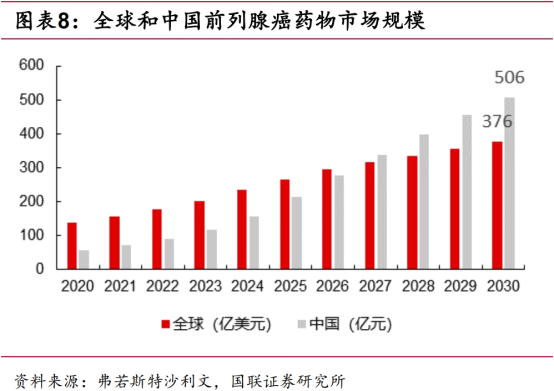
Core Viewpoint - The company, Yuan Da Pharmaceutical, has made significant advancements in its nuclear medicine sector, particularly with the innovative radiopharmaceutical TLX591 for prostate cancer treatment, which has received regulatory approval for international clinical trials, indicating strong potential for market growth and patient benefit [1][2][4]. Group 1: Product Development and Clinical Trials - TLX591, a radiolabeled monoclonal antibody, targets PSMA-positive metastatic castration-resistant prostate cancer (mCRPC) and has shown significant advantages in treatment duration and radiation exposure compared to traditional therapies [2][3]. - The international multi-center Phase III clinical trial for TLX591 aims to enroll over 500 patients across multiple countries, including China, the US, Australia, New Zealand, and Europe, to evaluate its efficacy and safety [1][2]. - TLX591's companion diagnostic product, TLX591-CDx, has already been launched in several countries and is projected to achieve global sales of AUD 783 million in 2024, highlighting its commercial potential [3]. Group 2: Market Potential and Growth - The prostate cancer drug market is expected to grow at a compound annual growth rate (CAGR) of 8.3% to reach USD 37.6 billion by 2030, with China's market projected to grow at a CAGR of 21.8% to reach CNY 50.6 billion [4][5]. - The global prostate cancer diagnostics market is anticipated to exceed USD 11.5 billion by 2032, driven by increasing incidence rates [5]. - The success of Novartis' Pluvicto, which is expected to generate nearly USD 1.4 billion in revenue in 2024, reflects the industry's recognition of the significant market potential in nuclear medicine [5]. Group 3: Company Position and Innovations - Yuan Da Pharmaceutical has a robust pipeline with 15 innovative products in the nuclear medicine oncology sector, covering various cancers and including both diagnostic and therapeutic radiopharmaceuticals [6][9]. - The company has established itself as a leader in the nuclear medicine field, being one of the few globally to commercialize nuclear medicine products successfully [9]. - The newly operational nuclear medicine research and production base in Chengdu, which received a Class A radiation safety license, is set to enhance the company's capabilities in research, production, and sales across the entire nuclear medicine value chain [11][13].

三大产业趋势下,小核酸行业迎来重大投资机会
Huafu Securities· 2025-07-22 08:11
Group 1 - The report emphasizes that 2025 will be a significant year for small nucleic acid drug investments due to three major industry trends: the maturity of the GalNac delivery platform, the expansion of indications from rare diseases to common diseases, and the intensification of commercialization and clinical data catalysts for small nucleic acid drugs [2][12][27] - The GalNac delivery technology has matured, allowing for effective liver-targeting with lower toxicity compared to previous systems like LNP, which had issues with immune reactions and production complexity [2][21][38] - Small nucleic acid drugs are transitioning from treating rare diseases to addressing more prevalent conditions such as hyperlipidemia and hypertension, significantly expanding the potential patient population and market opportunities [2][12][27] Group 2 - Key catalysts for small nucleic acid drugs include the expected commercial launch of Novartis' Inclisiran, which is projected to accelerate sales, and the anticipated approvals of several products like Alnylam's Vutrisiran and Fitusiran [2][27][30] - The report highlights the strong stock performance of small nucleic acid companies in the U.S. market, with Alnylam, Arrowhead, and Ionis seeing significant price increases of 39.6%, 63.9%, and 59.9% respectively from their April lows to July 18 [12][9] - The report suggests focusing on domestic companies such as Heng Rui Medicine, Zhengda Tianqing, and Xinlitai, as well as international firms like Alnylam and Ionis, which are leading in the small nucleic acid space [2][46][37] Group 3 - The report identifies the GalNac platform as a key value driver, with products beginning to demonstrate their market potential, particularly in liver-targeting applications [21][22] - Alnylam is recognized as a leader in the small nucleic acid field, having successfully commercialized multiple siRNA drugs and demonstrating a high clinical success rate of 62%, significantly above the industry average [38][12] - The report notes that major pharmaceutical companies are increasingly interested in small nucleic acid technologies, indicating a strong potential for partnerships and licensing agreements in this area [37][46]
全球前十大药企研发青睐上海,大手笔扫货→
第一财经· 2025-07-22 03:07
Core Viewpoint - The article highlights the significant transformation in the perception of China's biotech innovation capabilities by multinational pharmaceutical companies, particularly Roche, which has increased its investment and collaboration in the Chinese market [1][2]. Group 1: Investment and R&D Expansion - Roche has established a strong presence in China through its innovation center and accelerator, investing nearly 300 million RMB and facilitating numerous early-stage research collaborations [5][12]. - Shanghai has become a hub for multinational pharmaceutical companies, with six of the top ten global firms setting up R&D centers or incubators in the city, reflecting a shift towards open innovation and collaboration with local firms [3][6]. Group 2: Strategic Collaborations and Acquisitions - Recent high-profile licensing deals, such as the one between Shanghai-based Innovent Biologics and Pfizer, highlight the growing trend of multinational companies acquiring innovative drug pipelines from local firms, with upfront payments reaching record amounts [12][13]. - The article notes that the number of licensing transactions in China has surged, with the country accounting for 42% of global licensing deals with upfront payments exceeding $50 million in early 2025 [14][15]. Group 3: Innovation Ecosystem in Shanghai - Shanghai's biopharmaceutical industry has evolved significantly, with industrial output exceeding 200 billion RMB, supported by a robust ecosystem of research institutions, hospitals, and government policies promoting innovation [17][18]. - The city has established a comprehensive innovation ecosystem, enhancing the entire industry chain from R&D to clinical applications, which has attracted significant foreign investment and collaboration [19][20].


全球前十大药企研发青睐上海,大手笔扫货创新药管线
Di Yi Cai Jing· 2025-07-22 02:23
Core Viewpoint - Open innovation collaboration is becoming a consensus among multinational pharmaceutical companies, which helps improve R&D efficiency [1][6] Group 1: R&D Investment and Strategy - Roche has significantly increased its R&D investment in China, establishing the Roche China Innovation Center and the Roche China Accelerator, which are key components of its early drug development ecosystem in China [1][4] - The Roche China Accelerator, launched in May 2021, has received nearly 300 million RMB in investment and aims to enhance collaboration with local biotech firms [4] - The Roche China Innovation Center, upgraded in 2019 with an additional investment of 863 million RMB, has successfully advanced 11 drug molecules into clinical trials [5] Group 2: Multinational Companies in Shanghai - Six of the top ten global pharmaceutical companies have established R&D centers or incubators in Shanghai, including Johnson & Johnson, Roche, Pfizer, AstraZeneca, Novartis, and Sanofi [2] - AstraZeneca has designated Shanghai as a global strategic center for R&D, commercial operations, and production, alongside its major centers in the UK and the US [5] Group 3: Collaborative Innovation - There is a growing trend of collaborative innovation between multinational pharmaceutical companies and local Chinese firms, moving away from isolated R&D efforts [2][12] - Roche has established nearly 15 early-stage R&D collaborations with member companies of the Roche China Accelerator [5] Group 4: Market Transactions and Acquisitions - Recent high-value licensing deals, such as the one between Shanghai-based Innovent Biologics and Pfizer, highlight the increasing interest of multinational companies in Chinese innovation [9] - The licensing agreement for the PD-1/VEGF dual antibody drug SSGJ-707 involved a record upfront payment of up to 1.25 billion USD, indicating the potential commercial value of Chinese-developed drugs [9] - The overall trend shows that multinational companies are actively acquiring innovative drug pipelines in China to fill gaps left by expiring patents [12] Group 5: Shanghai's Biopharmaceutical Ecosystem - Shanghai has become a leading hub for biopharmaceutical innovation, with a robust ecosystem supported by numerous research institutions, hospitals, and a large pool of talent [13][14] - The city has seen its biopharmaceutical industry grow from an industrial output of less than 5 billion RMB in 1993 to over 200 billion RMB today [13] - Government policies have played a crucial role in fostering a conducive environment for pharmaceutical R&D, including support for clinical trials and internationalization efforts [15][16]
第十一批国采共纳入55个品种
Guo Ji Jin Rong Bao· 2025-07-17 02:11
Group 1 - The core announcement is about the initiation of the 11th batch of national organized drug procurement, allowing companies to submit information for drug selection from July 16 to July 31, 2023 [1] - A total of 55 drug varieties have been included in this procurement, covering commonly used clinical medications such as anti-tumor, diabetes, cardiovascular, and respiratory drugs [2][3] - The procurement process will exclude innovative drugs and focus on mature products that have been on the market for years and have multiple manufacturers [1][2] Group 2 - 68 drugs that met the evaluation criteria were not included in this procurement, with reasons including insufficient competitive landscape and low projected procurement amounts [3] - Notably, five drugs were excluded due to high patent infringement risks, including Novartis' sacubitril/valsartan, which has seen significant sales growth in recent years [3][4] - The procurement rules are expected to be optimized, focusing on maintaining clinical stability, ensuring quality, and preventing irrational competition among companies [5][6] Group 3 - The selection criteria for this batch of procurement have been made transparent, combining previous rules with new policy requirements [6] - Quality requirements have been strengthened, with a new mandate for bidders to have at least two years of production experience for similar formulations [6][7] - The pricing mechanism has been adjusted to discourage irrational low-price competition, with a focus on rational pricing based on cost and quality [7]
阿斯麦Q2订单额55.4亿欧元超预期,环比增长41%,管理层警告2026年增长或无法实现 | 财报见闻
news flash· 2025-07-16 14:09
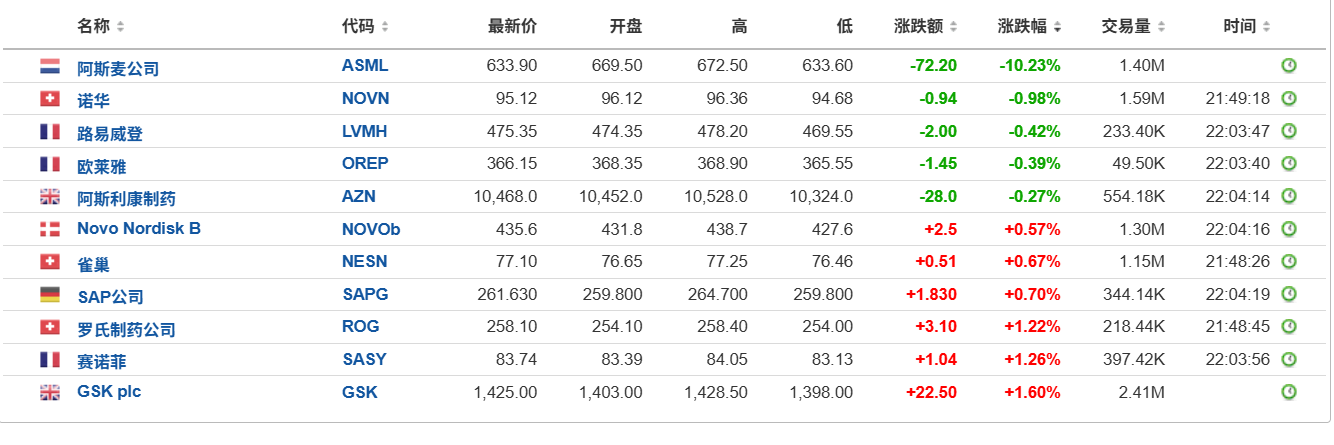
Group 1 - ASML Holdings experienced a decline of over 10%, leading the drop in European stocks and the semiconductor sector [1] - The latest stock price for ASML is 633.90, down from an opening price of 669.50, marking a decrease of 72.20 or 10.23% [2] - Other notable companies in the European market, such as Novartis and LVMH, also saw minor declines, but ASML's drop was significantly larger [2] Group 2 - ASML's stock performance is indicative of broader trends affecting the semiconductor industry in Europe, with several companies in the sector also reporting declines [2] - ASM International NV and BE Semiconductor Industries reported decreases of 4.59% and 3.44% respectively, reflecting a challenging environment for semiconductor stocks [2]

市值蒸发1600亿!暴跌84%,没落巨头靠一针痛风药,再冲IPO
Sou Hu Cai Jing· 2025-07-11 23:53
Core Viewpoint - Changchun High-tech, once known as "Northeast Medicine King," has faced a significant decline, with its market value evaporating by 160 billion yuan and stock prices plummeting by 84%. However, the approval of a new gout drug, "Jinbeixin," and plans for a Hong Kong IPO have sparked hopes for a turnaround [1][3]. Group 1: R&D and IPO Strategy - Over the past three years, Changchun High-tech has invested more than 6 billion yuan in R&D, with the R&D expense ratio soaring to nearly 20% in 2024. The company has increased its workforce by 2,518 employees, primarily in R&D and self-immune drug promotion [3]. - The company announced the preparation for an H-share listing on July 1, aiming to open up overseas financing channels to alleviate the financial pressure from its 6 billion yuan R&D "black hole" [3]. - Despite the low liquidity in the Hong Kong market, the policy allowing unprofitable innovative drug companies to list provides a lifeline for Changchun High-tech [3]. Group 2: New Drug Approval and Market Challenges - The National Medical Products Administration approved the new drug "Jinbeixin" for acute gouty arthritis, offering new hope for Changchun High-tech. Clinical data shows that it can significantly reduce pain and recurrence risk for patients [6]. - However, the market path for Jinbeixin is fraught with challenges, including competition from domestic rivals and pricing pressures. The expected price of Jinbeixin is 2,000 yuan per injection, which may deter patients if it is not included in medical insurance [7]. Group 3: Diversification Attempts and Lessons Learned - Jinbeixin is not the first attempt at diversification for Changchun High-tech. The company's shingles vaccine, launched in 2022, initially showed promise but saw a revenue drop from 1.82 billion yuan in 2023 to 1.23 billion yuan in 2024, with a 53% decline in net profit [8]. - The decline in the shingles vaccine's market share was attributed to its lower efficacy compared to competitors' products, highlighting the challenges of diversification [8]. Group 4: Decline of Growth Hormone and Future Outlook - The company's growth hormone product, which once held a 75% market share, has seen its revenue significantly impacted by price reductions due to national medical procurement policies, leading to a 43% drop in net profit in 2024 [9]. - Looking ahead, Changchun High-tech has 24 products in clinical stages across various fields, including oncology and reproductive health, indicating potential for future growth if successful in diversifying its product offerings [10].

从海外映射寻找下半年创新药新赛道
2025-07-07 00:51
Summary of Key Points from Conference Call Records Industry Overview - The conference call primarily discusses the **pharmaceutical industry**, focusing on **innovative drugs** and **biotechnology** advancements, particularly in the context of **PD-1 plus assets** and related companies. Core Insights and Arguments 1. **Performance of PD-1 plus Assets**: PD-1 plus assets have shown strong performance, particularly following the presentation of the Hamani two study results by 康方生物, which improved market confidence in EVOS monoclonal antibody and related companies [5][6] 2. **Strategic Collaborations**: Major pharmaceutical companies are accelerating their investments in PD-1 plus assets, with 三生制药 licensing PD-1 v j dual antibody rights to Pfizer for an upfront payment of **$1.25 billion** and 百安泰克 partnering with BMS for PDL one V E G F dual antibody development [6][7] 3. **Emerging Hotspots for Innovative Drugs**: Key areas of interest for the second half of the year include: - **Dual antibodies in autoimmune diseases** (e.g., TSLP dual antibody) - **Protein degradation agents** (Protac) - **Next-generation TCE dual antibodies** in solid tumors - **ADC iterative development** [9] 4. **HER3 ADC Development**: HER3 ADC has entered phase three trials, showing potential as a leading target combination. Initial preclinical data from 信达生物 on EGFR and B7H3 ADCs indicate significant potential for overcoming resistance issues [10] 5. **Nuclear Medicine Advances**: 诺华's Provelto has expanded its indications, with domestic companies like 科伦博泰 and 百利天恒 also involved in this field [11] 6. **Cardiovascular RNA Therapies**:礼来’s small interfering RNA therapy for lipoprotein a has shown positive results in phase two trials, indicating potential for domestic companies like 悦康药业 and 成都先导 to benefit from these advancements [12] 7. **CAR-T Therapy Developments**: The acquisition of 百泰 by 艾伯维 for its in vivo CAR-T technology highlights the growing interest in this area, with potential benefits for domestic companies like 科济药业 [13][14] Additional Important Insights 1. **Investment Opportunities**: The pharmaceutical industry is expected to see continued investment opportunities in innovative drugs and supply chain upstream sectors, with a focus on companies showing high growth in their mid-year reports [2] 2. **Emerging Technologies**: Notable technologies to watch include brain-computer interfaces, AI in medicine, and rehabilitation robotics, alongside the development of universal CAR-T therapies [3] 3. **Generic Drug Sector Performance**: The generic drug index has outperformed the pharmaceutical index, indicating a potential for revaluation among leading generic companies [15] 4. **Market Dynamics**: The conference highlighted the importance of monitoring market dynamics, including the impact of policy changes and the performance of various sectors within the pharmaceutical industry [4][28] This summary encapsulates the key points discussed in the conference call, providing insights into the current state and future outlook of the pharmaceutical industry, particularly in relation to innovative drug development and strategic collaborations.