通威股份

Search documents
研判2026!中国太阳能扩散炉行业概述、产业链、市场规模、竞争格局、发展趋势分析:光伏产业推动,太阳能扩散炉市场规模持续增长[图]
Chan Ye Xin Xi Wang· 2026-02-13 03:30
Core Viewpoint - The solar diffusion furnace industry in China is experiencing significant growth, with the market size expected to reach 6.05 billion yuan by 2025, reflecting an 11% year-on-year increase, driven by the expansion of the photovoltaic industry and supportive government policies [1][6]. Industry Overview - Solar diffusion furnaces are essential for producing crystalline silicon solar cells, specifically for forming PN junctions, which are critical for enhancing cell efficiency [2]. - The main types of solar diffusion furnaces are vertical and horizontal, each offering distinct advantages in terms of production efficiency and space utilization [2]. Industry Chain - The upstream of the solar diffusion furnace industry includes quartz components, heating systems, temperature control systems, and gas control systems, with quartz components being crucial for stability and efficiency [3]. - The midstream involves the manufacturing of solar diffusion furnaces, while the downstream primarily serves the photovoltaic industry, specifically in solar cell and module production [3]. Current Development - The solar diffusion furnace market is benefiting from China's commitment to renewable energy, with solar power generation capacity increasing significantly from 204.2 GW in 2019 to an expected 1,161.2 GW by the end of 2025, marking a 41.90% year-on-year increase [4][5]. - The production of solar cells is projected to reach 83,274.3 MW by 2025, a 7.60% increase from the previous year, driven by government subsidies and technological advancements [5]. Competitive Landscape - The solar diffusion furnace industry has high entry barriers, making it difficult for new entrants to compete. Leading companies leverage technology, supply chains, and customer resources to maintain competitive advantages [7]. - Key players in the industry include North Huachuang, Jiejia Weichuang, and Jing Sheng Machinery, among others, with North Huachuang reporting a revenue increase of 32.97% year-on-year for the first nine months of 2025 [7][8]. Industry Trends - The rapid development of the solar diffusion furnace industry is leading to accelerated industry consolidation, with smaller companies lacking core technologies being phased out, while stronger companies invest in R&D and improve production processes [9]. - Domestic companies are increasingly focusing on international markets, expanding their presence through partnerships and participation in global trade shows, capitalizing on their competitive pricing and responsive service [10].





未知机构:天风电新重视TS的叠瓦技术下一个天地共振的方向0212-20260213
未知机构· 2026-02-13 02:00
Summary of Key Points from the Conference Call Industry and Company Involvement - The discussion primarily revolves around the solar energy industry, specifically focusing on the advancements in solar module manufacturing techniques, particularly the **Tiling and Stacking (叠瓦)** technology being adopted by companies like **Tesla** and **聚和材料** [1][3][5]. Core Insights and Arguments - **Tesla's Manufacturing Resumption**: Tesla is set to restart its component manufacturing at its Buffalo, New York facility, utilizing the Tiling technology for its solar modules [1]. - **Potential Issues with Space Applications**: During a recent materials exchange meeting, it was noted that components welded in space may lead to micro-cracks, suggesting a possible shift towards Tiling methods to mitigate these risks [2][4]. - **Innovations in Manufacturing Processes**: The Tiling process introduces several new manufacturing steps compared to traditional lines, including: 1. **Slicing and Splitting**: The battery cells are divided into six segments, increasing the slicing and splitting processes [5]. 2. **Welding Method Changes**: A new welding technique using conductive glue is implemented to connect the split battery cells, which adds to the coating and stacking processes [5]. 3. **Layout Adjustments**: The new processes necessitate changes in the layout and busbar welding techniques to accommodate the modified battery cell arrangement [5]. Investment Recommendations - **Inflation Logic in Component Equipment**: The Tiling technology is expected to create inflationary pressures in component equipment, leading to investment recommendations for: - **ST京机**: A supplier of module lamination equipment and automated production lines, which stands to benefit directly from the inflation in component lines [5]. - **奥特维**: This company faces higher requirements for the Tiling components compared to conventional ones, with an anticipated increase in value [5]. - **Material Suppliers**: The primary growth in materials is expected to come from conductive glue, with recommendations for: - **德邦科技**: Recognized as a leader in Tiling conductive glue, supplying major companies like SunPower, 通威, and 阿特斯 [6]. - **聚和材料**: Currently testing silver paste and conductive glue samples with North American clients [7]. Additional Important Content - The emphasis on Tiling technology indicates a significant shift in the solar module manufacturing landscape, with potential implications for both production efficiency and product reliability in various applications, including space [2][4].


未知机构:招商电新关注叠瓦在太空光伏应用1太空光伏电池片极致减重与柔-20260213
未知机构· 2026-02-13 01:55
Summary of Conference Call Notes Industry Overview - The focus is on the application of **tandem solar cells** in **space photovoltaic** systems, highlighting the challenges and advancements in technology related to lightweight and flexible solar panels [1][2]. Key Points and Arguments 1. **Challenges with Thin Silicon Cells**: - Space photovoltaic cells require extreme weight reduction and flexibility, making ultra-thin silicon cells very fragile. The use of string welding can lead to mechanical stress and high-temperature welding issues, increasing the risk of silicon cell breakage and detachment under extreme temperature variations in space [1][2]. 2. **Advantages of Tandem Structure**: - The tandem structure allows for flexible connections of silicon cells, reducing the number of solder joints. This effectively disperses mechanical stress, minimizing the risks of hidden cracks and breakage [1][2]. 3. **Increased Effective Power Generation**: - The tandem structure can achieve zero spacing between solar cells, which enhances the effective power generation area for the same solar wing size [3]. 4. **Historical Context**: - The application of tandem structures in space photovoltaics is well-established, with the "Shijian-1" satellite launched in 1971 being an early example of a solar panel using a "comb-type" structure designed in China [4]. 5. **Industry Feedback**: - Leading North American renewable energy companies are currently using tandem solutions for ground photovoltaic modules. The production line for tandem components is reported to be more than twice the cost of conventional string welding lines, indicating significant market interest [4]. Company Highlights 1. **ST Jingji**: - The wholly-owned subsidiary, Shengcheng Photovoltaics, possesses competitive manufacturing technology for tandem components. It is noted for being the sole supplier of ground tandem production lines to a well-known North American company and has also supplied coating equipment to overseas space perovskite enterprises. The company holds a significant market share in North America, estimated to exceed 50% [4]. 2. **Dike Co., Ltd.**: - A leading company in photovoltaic silver paste, known for its R&D capabilities. It has nearly 100% market share in North America and has been promoting tandem adhesive products since 2019, leveraging its core patent advantages in conductive paste solutions [5]. 3. **Debang Technology**: - A core supplier of tandem conductive adhesives, with products widely used in leading photovoltaic companies such as Tongwei, Canadian Solar, and major North American renewable energy firms, holding a strong competitive position in the market [5]. 4. **Juhe Materials**: - A leading company in photovoltaic silver paste, developing copper paste products suitable for photovoltaic cells, currently undergoing testing with major clients and expected to benefit from the adoption of high/pure copper paste materials [5]. 5. **Aotewei**: - A leading company in photovoltaic component equipment, with key products including string welding machines and silicon wafer sorting machines. The company has also made advancements in tandem equipment, achieving high precision and yield rates [6]. Additional Important Insights - The integration of semiconductor material assets by companies is seen as a solution to domestic supply chain issues, addressing critical bottlenecks in the industry [5][6].
为加快建设更具活力和幸福感的现代化人民城市贡献更大力量
Xin Lang Cai Jing· 2026-02-12 17:28
Group 1 - The core viewpoint emphasizes the importance of social work in enhancing urban governance and contributing to the happiness and well-being of citizens in Chengdu [1][3][20] - The social work system in Chengdu has focused on high-quality development, aligning with the city's modernization goals and addressing key areas through targeted actions [1][2][20] - The establishment of the "Ronghui Shared Home" platform has facilitated job recruitment, reducing hiring costs by approximately 16% for companies [2] Group 2 - Chengdu has implemented various initiatives to improve living conditions, including the transformation of 605 key livelihood projects and the allocation of 98.17 million yuan in social funding [3][16] - The city has successfully hosted the 12th World Games, receiving positive feedback as the best in history, showcasing the effectiveness of its social work system [3][4] - The social work system has actively engaged in community activities, such as organizing over 1,300 community sports events and creating 30 "World Games Spaces" [4][18] Group 3 - The city has focused on enhancing the governance of new economic organizations and employment groups through the establishment of party organizations and support systems [6][7][10] - A total of 1.2 million social organizations are operating in Chengdu, contributing to various sectors and addressing social needs [7][8] - The city has initiated a special action for the standardized construction of social organizations, aiming for comprehensive party organization coverage [8] Group 4 - Chengdu has developed a grassroots governance model that emphasizes community participation and collaboration, leading to the establishment of over 1,000 "Sunshine Co-Governance" communities [12][13] - The city has implemented a "People's Suggestions Collection System," resulting in the collection of 16,700 actionable suggestions from citizens [16][17] - Volunteer services have become a significant aspect of social work, with over 400,000 registered volunteers contributing to community welfare [18][19] Group 5 - The social work system in Chengdu is focused on building a high-quality workforce to meet the evolving demands of social work [20][21] - The city has launched initiatives to support social organizations and enhance community engagement, including the establishment of 240 new social organizations [21][23] - Chengdu aims to strengthen its governance capabilities and improve service delivery through innovative approaches and community involvement [23][24]
金银暴跌真相揭秘!五大危机来袭,散户如何自保避免资金清零
Sou Hu Cai Jing· 2026-02-12 17:08
Core Viewpoint - The recent sharp decline in gold and silver prices, following a period of significant gains, has raised questions about market manipulation and the role of major financial institutions in precipitating this crash [1][3]. Group 1: Market Dynamics - Gold prices surged past $5,600 and silver reached $120, leading to widespread optimism among investors [1]. - A sudden market crash occurred from January 30 to February 2, with gold dropping over 20 points and silver experiencing a nearly 40% decline [3]. - The market was characterized by extreme overbuying, with gold and silver reaching relative strength index levels of 90 and 93.8, respectively, indicating a fragile market structure [7]. Group 2: Institutional Actions - Major banks raised gold price accumulation thresholds and restricted trading just before the crash, signaling potential market instability [3]. - The nomination of Kevin Warsh, a known hawk, to the Federal Reserve chair position shifted market expectations, leading to a spike in the dollar index and a rapid decline in gold and silver prices [5]. - Institutions like Morgan Stanley and Goldman Sachs began to withdraw from long positions as silver prices approached $100, indicating a strategic exit before the crash [13]. Group 3: Impact on Retail and Industry - The crash led to a significant drop in A-share gold stocks, with a market value loss of 50 billion yuan in a single day [11]. - Retail gold prices fell sharply, and many gold recycling businesses halted operations due to market chaos [11]. - The solar industry, heavily reliant on silver for production, faced substantial losses as silver prices plummeted, with companies like Tongwei Co. projected to incur losses of 15 billion yuan [11]. Group 4: Investor Behavior - Retail trading platforms saw a 30% increase in positions held by small investors, suggesting that while institutional players exited, retail investors remained heavily invested [13]. - The market's volatility and the subsequent forced liquidations of leveraged positions highlighted the risks associated with high leverage in trading [9]. Group 5: Lessons Learned - The recent events serve as a reminder that financial markets are not guaranteed profit machines, and the importance of heeding market signals and warnings is crucial for investors [15]. - The crash underscores the necessity for investors to remain vigilant and responsive to market changes rather than becoming complacent during periods of rising prices [15].

通威股份2025年业绩预亏扩大,股价震荡走弱
Jing Ji Guan Cha Wang· 2026-02-12 11:29
Group 1 - The core viewpoint of the news is that Tongwei Co., Ltd. (600438) is forecasting a significant increase in net losses for 2025, estimating losses between 9 billion to 10 billion yuan, primarily due to industry supply-demand imbalance and asset impairment provisions [1] - In contrast, institutional forecasts predict a net loss of 5.86 billion yuan for 2025, indicating a discrepancy with the company's projections, which will need to be confirmed by formal announcements [1] - The Q3 report for 2025 showed signs of improvement, with a single-quarter loss narrowing to 315 million yuan, a year-on-year reduction of 62.69%, attributed to a rebound in photovoltaic industry chain prices [1] Group 2 - Over the past week, Tongwei's stock price has experienced a volatile decline, with a cumulative drop of 5.83%, closing at 18.42 yuan on February 12, down 1.34% for the day [2] - The financial outlook appears weak, with a net outflow of 24.52 million yuan in principal funds on February 12, while the financing balance remains high at 2.697 billion yuan [2] - Trading volume saw a spike on February 9 due to movements in the photovoltaic sector, but subsequent corrections led to overall performance lagging behind industry indices [2] Group 3 - On February 11, the State Council released a document on the construction of a unified national electricity market system, aiming to establish a unified market by 2030, which is expected to benefit energy storage and renewable energy demand in the long term [3] - On February 9, the photovoltaic sector experienced fluctuations due to news of Elon Musk's inspection of the industry chain, with Tongwei being mentioned as a leading company, although the overall industry still faces significant loss pressures [3] Group 4 - Huatai Securities reported on February 12 that the construction of a unified electricity market will empower investments in energy storage and the grid, highlighting structural growth opportunities in the renewable energy sector [4] - The comprehensive target price for Tongwei Co., Ltd. is set at 28.00 yuan, indicating a potential upside of 47.21% from the current stock price, although the sentiment remains neutral with a predominant hold rating [4]

光伏周价格 | 白银硅片双跌引发连锁反应,电池组件价格2月下旬承压
TrendForce集邦· 2026-02-12 09:00
Core Viewpoint - The article discusses the current state of the photovoltaic industry, highlighting the supply-demand imbalance, price trends, and the impact of inventory levels on various segments including polysilicon, wafers, battery cells, and modules [4][5][6][7][9][10][11][13][14]. Polysilicon - Supply side: The total inventory of polysilicon remains above 510,000 tons, with a slight accumulation trend. Major upstream manufacturers have begun significant production cuts, with Tongwei expected to reduce output to below 85,000 tons in January [4]. - Demand side: Downstream demand continues to weaken, with crystal pulling factories focusing on consuming their own inventory, leading to a significant reduction in new procurement demand for polysilicon [5]. - Price trend: The market is experiencing a stalemate, with prices around RMB 50/kg lacking upward momentum due to weak downstream demand and falling wafer prices [6]. Wafers - Supply and demand: Inventory levels in the wafer segment have risen to approximately 25 GW, indicating an oversupply situation. Manufacturers face significant shipping pressure, and the market's primary task is to digest existing inventory [7]. - Price trend: Actual transaction prices for wafers have continued to decline, with mainstream specifications hitting historical lows. The price for 183N wafers has dropped to RMB 1.1 per piece, reflecting extreme market weakness [8]. Battery Cells - Supply side: Inventory levels for battery cells have slightly increased, with current stock at 8-9 days. Despite ongoing production cuts, there is strong anticipation for production resumption post-holiday, which may intensify price competition [9]. - Demand side: The terminal market shows weak demand, with downstream component manufacturers adopting a cautious procurement strategy and a strong willingness to press prices down [10]. - Price trend: Battery prices are at risk of declining due to falling costs from silver and wafer prices, with expectations of a potential price drop following the holiday [11]. Modules - Supply and demand: The module market exhibits a significant "hot outside, cold inside" dichotomy, with domestic demand weak while overseas markets show strong order activity due to export tax rebate policies [13]. - Price trend: Current spot prices vary significantly, with leading manufacturers quoting between RMB 0.8-0.85/W, while second and third-tier manufacturers are around RMB 0.78/W. Despite intense low-price competition, recent bidding prices for domestic projects have shown some recovery [14].
山西证券:AIDC电源革命创新机 光伏反内卷静待供需拐点
智通财经网· 2026-02-11 03:49
Group 1: Global AIDC and CAPEX Trends - The global demand for intelligent computing (AIDC) is experiencing significant growth, with major cloud companies increasing their capital expenditures (CAPEX). The top three global cloud providers are expected to cumulatively spend nearly $300 billion in CAPEX for the fiscal year 2025. Domestic companies in China are also accelerating their CAPEX, with Tencent's forecast raised from 300 billion yuan to 350 billion yuan for the fiscal years 2025-2027, and Alibaba's forecast increased to 460 billion yuan for the same period [1][2] Group 2: High Voltage Direct Current (HVDC) Technology - High Voltage Direct Current (HVDC) is emerging as a superior solution for powering next-generation data centers. The shift towards high-density and high-energy consumption data centers is driving the upgrade of power distribution systems. The expected market size for global HVDC is projected to reach 2.45 billion yuan, 14.49 billion yuan, and 30.26 billion yuan for the years 2025-2027 respectively [2][3] Group 3: Photovoltaic Industry Developments - The photovoltaic (PV) industry is transitioning towards high-quality development, with domestic PV installations reaching a record high in 2025. The cumulative new PV installations in China from January to November 2025 amounted to 274.89 GW, a year-on-year increase of 33.2%. However, global installation growth is expected to slow down after 2026, with projections indicating a decrease of 6 GW in global installations from 655 GW in 2025 to 649 GW in 2026 [3][4] Group 4: Industry Price Trends and Supply Chain Adjustments - The PV industry is witnessing a price turning point, with new technologies still commanding a premium. After a period of price fluctuations, the prices of PV products began to stabilize in late 2025. The price of BC components is currently at 0.76 yuan/W, showing a premium over TOPCon technology. The upstream segment is expected to benefit first, with significant profit recovery potential in the mid and downstream segments [4][5] Group 5: Investment Recommendations - The focus is on recommending investments in the AIDC sector, particularly in HVDC, SST, and energy storage solutions. Key recommended companies include Zhongheng Electric and Siyuan Electric, with additional attention on Keda Data, Kstar, and others. In the PV sector, recommendations include supply-side improvements and new BC technologies, with key companies such as Flat Glass and Quartz Shares highlighted [5][6]

截至2025年末305只绿债符合中欧共同标准 存量规模近3500亿元
Xin Hua Cai Jing· 2026-02-10 13:19
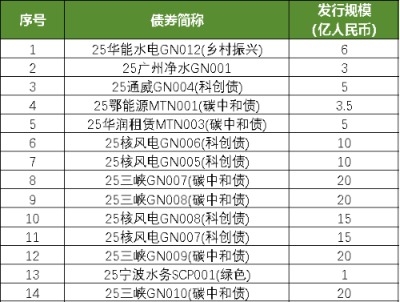
新华财经北京2月10日电新华财经10日获悉,中国金融学会绿色金融专业委员会专家组近日发布依据中 欧《可持续金融共同分类目录》贴标的中国绿色债券清单。最新数据显示,截至2025年12月31日,银行 间市场共有305只存量绿色债券符合该目录,存量规模达3492.49亿元人民币,占银行间市场全部存量绿 债规模的17.0%。 根据2025年12月的月度贴标情况,当月新发行绿色债券中,共有14只被认定为符合《共同分类目录》, 总发行规模153.5亿元。其中,12只在发行时已获认证符合该目录。同期,有1只已贴标债券到期。 | 序号 | 债券简称 | 发行规模 (亿人民币) | | --- | --- | --- | | 1 | 25华能水电GN012(乡村振兴) | 6 | | 2 | 25广州净水GN001 | 3 | | 3 | 25通威GN004(科创债) | 5 | | ন | 25鄂能源MTN001(碳中和债) | 3.5 | | 5 | 25华润租赁MTN003(碳中和债) | 5 | | 6 | 25核风电GN006(科创债) | 10 | | 7 | 25核风电GN005(科创债) | 10 | | 8 ...
马斯克宣布干法电极技术突破,BC头部企业完成专利许可
Ping An Securities· 2026-02-10 06:11
Investment Rating - The report maintains an "Outperform" rating for the industry [1] Core Insights - The report highlights significant developments in the wind and solar sectors, including a breakthrough in dry electrode technology by Elon Musk, which is crucial for reducing costs in liquid batteries and mass production of solid-state batteries [6] - The report notes that the wind power index decreased by 1.04%, outperforming the CSI 300 index by 0.30 percentage points, with a current PE_TTM valuation of approximately 27.71 times [4][11] - The solar sector saw a 3.36% increase in the photovoltaic equipment index, with the photovoltaic battery component index rising by 8.10% [4] Summary by Sections Wind Power - The European Commission has initiated an in-depth investigation into Goldwind Technology under the Foreign Subsidies Regulation (FSR), focusing on whether the company benefits from foreign subsidies in the EU market [5][10] - The report indicates that the impact of this investigation on China's wind turbine exports to Europe is limited in the short term, but it introduces uncertainty for future market entries [10] - The report maintains a positive outlook on China's competitive advantage in the wind power industry and its opportunities for international expansion [5][10] Solar Power - A major BC company, Aiko Solar, has signed a patent licensing agreement with Maxeon Solar, allowing Aiko to access all BC battery and component patents outside the U.S. for the next five years [5] - The total patent licensing fee amounts to RMB 1.65 billion, with the first-year payment set at RMB 250 million [5] - This agreement is expected to eliminate a significant barrier to Aiko's overseas sales and indicates high technical barriers in the BC technology sector [5] Energy Storage & Hydrogen - The report emphasizes the high demand for new energy storage solutions, recommending investments in domestic and international large-scale storage companies such as Sungrow Power, Haibo Shichuang, and Shuneng Electric [6] - In the lithium battery sector, the report suggests that the industry is emerging from a price decline cycle, with strong demand driving both volume and profit growth [6] - The report highlights the potential of dry electrode technology to significantly reduce costs and improve battery performance, which could create new opportunities in related equipment and materials [6]