腾讯控股

Search documents
前瞻全球产业早报:中国完成首次载人飞船返回舱海上回收
Qian Zhan Wang· 2026-02-12 12:21
Group 1 - The Ministry of Commerce announced a national subsidy fund of 62.5 billion yuan to boost consumption during the Spring Festival, along with additional incentives including a lottery for invoices in 50 cities and over 1 billion yuan in bonuses during the 9-day holiday [2] - Ford's global sales fell by approximately 2% to around 4.4 million units, while BYD's annual sales reached 4.6 million units, marking BYD's first surpassing of Ford in global sales and elevating it to the sixth position worldwide [3] - Meituan launched a native "Deep Research" Agent with a usability rate of 61.1%, outperforming ChatGPT's 42.8%, aimed at addressing AI challenges in real-world problem-solving [4] Group 2 - China successfully completed its first sea recovery of a manned spacecraft return capsule, which will be reusable for future lunar and space station missions, accumulating critical experience for subsequent projects [5] - A national-level overseas comprehensive service platform was launched to provide "one-stop" public services for 52,000 overseas enterprises and numerous foreign trade companies, enhancing the overseas service system [6] - Shanghai aims to collaborate with Jiangsu and Anhui provinces to establish a world-class technology innovation hub, including a mutual recognition list for technology policies and a major technology infrastructure alliance [8] Group 3 - Guangdong's ultra-high-definition video industry cluster is projected to achieve an operating income of 1,080.306 billion yuan by 2025, becoming the province's tenth trillion-yuan industry cluster [9] - Tencent and Tesla upgraded the in-car experience with new features like "WeChat Connectivity" and "Destination Services," set to roll out via OTA updates to over a million Model 3 and Model Y vehicles in China [10] - QQ launched a new AI social feature called "QQ Brain Hole Show," allowing users to create 3D virtual avatars from photos for short video collaborations with friends [11] Group 4 - iFlytek officially released the Spark X2 model, trained on domestic computing power, focusing on high-specialty scenarios in education, healthcare, and automotive sectors [12] - Xiaomi's Lei Jun announced the discontinuation of the first-generation SU7 model, with the new generation expected to launch in April [13] - Moore Threads open-sourced the TileLang-MUSA project to support the TileLang programming language, aiming to lower development barriers for domestic computing platforms [14] Group 5 - The founder of Pang Donglai announced his retirement, transitioning to an advisory role, with decision-making to be handled by a committee [15] - South Korea plans to invest 1 trillion won (approximately 687.8 million USD) in developing AI semiconductors for devices over the next five years [16] - Microsoft is exploring the use of high-temperature superconductors in data center power systems to address power density challenges associated with AI computing [17] Group 6 - The U.S. Department of Transportation announced that federally funded electric vehicle charging stations must be 100% manufactured in the U.S., increasing the domestic content requirement from 55% [19] - Elon Musk proposed the idea of building an AI satellite factory on the Moon during a meeting with xAI employees [20] - SK Hynix is developing a new technology called AIP to reduce NAND manufacturing costs by enabling the etching of multiple layers in a single process [21] Group 7 - The world's largest nickel mine in Indonesia has been ordered by the government to reduce production [22] - The U.S. FCC approved Amazon's application to deploy 4,500 satellites, expanding its satellite constellation to compete with SpaceX [23] - Japanese semiconductor company Rapidus plans to start production in the fiscal year 2028, targeting mass production of 2nm process products by late 2027 [24]


年末 AI 回顾:从模型到应用,从技术到商战,拽住洪流中的意义之线(上)
Xin Lang Cai Jing· 2026-02-12 12:12
Group 1: Models - The current AI wave is still in its early stages, with technological changes being the primary driving force behind product forms and business landscapes [4][56] - The Agentic Model supports agent capabilities, which include reasoning, coding, multimodal understanding, tool usage, and memory [5][58] - The rise of reasoning models is marked by the success of DeepSeek-R1, which is the first to replicate OpenAI's o1 model at a large parameter scale [7][59] Group 2: Applications - 2025 is seen as the year of large-scale explosion for agent applications, with two main lines: General Agents centered on coding capabilities and vertical agents [29] - General Agents utilize coding as a means to execute various tasks in the digital world, with products like Claude Code and Claude Cowork leading the way [30][32] - The emergence of mobile agents is notable, with ByteDance's Doubao phone preview enabling automated tasks like replying to WeChat messages [35] Group 3: AI Giants' Competition - Major players like ByteDance, Alibaba, and Tencent are engaged in a fierce competition in the AI space, focusing on collaborative optimization and infrastructure development [13][14] - Alibaba's Qianwen team has begun recruiting its own infrastructure talent to enhance agility in development [14] - Tencent's new AI head emphasizes the importance of co-design to streamline iterations and reduce internal friction [14] Group 4: Startups - A new ecosystem of startups is emerging around agent tools, driven by the demand for automation in personal and professional tasks [29][32] - Companies like Lovart and others are focusing on multimedia content production agents, aiming to redefine creative processes [37] Group 5: AI in Science - AI is accelerating scientific discoveries, with applications in first-principles calculations and generative AI for solving complex scientific problems [49][50] - The trend of AI agents capable of automating the entire research process is gaining traction, indicating a shift towards AI-driven scientific inquiry [51]





ETF日报:当前电网领域呈现内外需求共振格局 关注电网ETF
Xin Lang Cai Jing· 2026-02-12 11:49
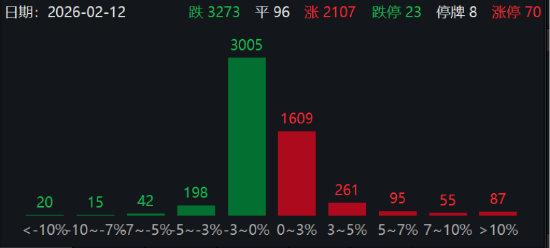
Market Overview - The A-share market experienced narrow fluctuations, with the Shanghai Composite Index closing up 0.05% at 4134.02 points, while the Shenzhen Component Index rose by 0.86%, the ChiNext Index by 1.32%, and the STAR Market Index by 1.56% [1][8] - Overall trading sentiment was subdued ahead of the Spring Festival, with a total trading volume of 2.16 trillion yuan, slightly up from 2 trillion yuan the previous trading day [1][8] - There was a divergence in individual stock performance, with over 3200 stocks declining, while sectors such as artificial intelligence, computing power, and electric grid saw gains [1][8] Artificial Intelligence Sector - The AI sector continued to strengthen, with the Guotai AI ETF (159388) and the STAR Market AI ETF (589110) both rising by 3.97% [3][10] - Major developments included the launch of new AI models and significant price adjustments for existing services, indicating a shift towards commercial viability in the AI market [3][10] - The introduction of the GLM-5 model and the "director-level" video AI Seedance2.0 showcased advancements in AI capabilities, enhancing user experience and market expectations [3][10][11] Electric Grid Sector - The electric grid sector saw significant gains driven by favorable policy announcements, including the State Council's implementation plan for a unified national electricity market by 2030 [6][14] - The plan aims for market-based transactions to account for 70% of total electricity consumption by 2030, with further improvements expected by 2035 [6][14] - The sector is experiencing a dual demand boost from both domestic infrastructure projects and international market needs, particularly in data center construction and AI computing power [6][14] Investment Opportunities - Investors are encouraged to monitor the Guotai AI ETFs (589110, 159388) and the electric grid ETF (561380) as potential investment opportunities due to the ongoing developments in AI and electric grid sectors [5][14]
港股晨报-20260212
国投证券(香港)· 2026-02-12 11:46
Group 1: Market Overview - The Hong Kong stock market continued its rebound with all three major indices closing higher, with the Hang Seng Index up 0.31%, the Hang Seng China Enterprises Index up 0.28%, and the Hang Seng Tech Index up 0.9% [2] - Market activity has slowed significantly ahead of the Chinese New Year, with trading volume dropping to 217.2 billion HKD, and the short-selling ratio on the main board at 17.95% [2] - Southbound capital remained stable, with a net buy of 4.82 billion HKD, with Tencent Holdings, Meituan, and Pop Mart being the most actively bought stocks [2] Group 2: Sector Performance - The resources and cyclical sectors led the market, driven by a rebound in gold prices, with companies like Zijin Mining, Lingbao Gold, and Shandong Gold seeing significant gains [3] - The building materials and cement sector performed well, with companies like China National Building Material and Conch Cement recording considerable increases, supported by improved industry profitability expectations [3] - The automotive supply chain remained active, particularly with Tesla-related stocks, as the market anticipates advancements in autonomous driving and robotics [4] Group 3: Company Analysis - LeShuShi (2698.HK) - LeShuShi is a multinational hygiene products company focused on emerging markets, with a broad sales network across over 30 countries in Africa, Latin America, and Central Asia [7] - The company has established eight factories in Africa, making it the largest local manufacturer in the hygiene products sector, which enhances its supply chain efficiency [8] - Future growth for LeShuShi is expected to come from external factors like demographic growth in emerging markets and internal factors such as localized production and extensive sales channels [8] - The report gives a "Buy" rating with a target price of 38 HKD, forecasting revenues of 541 million USD, 627 million USD, and 711 million USD for 2025, 2026, and 2027 respectively, with net profits of 106 million USD, 129 million USD, and 147 million USD [8]
AI 对行业的机遇与冲击:2026 五大应用板块全景扫描
3 6 Ke· 2026-02-12 11:42
Group 1: AI as a Content Producer - AIGC has transitioned from an efficiency tool to a primary production entity in the content industry, impacting animation, short videos, and educational publishing [2][3][6] - The animation and comic production system is experiencing significant transformation, with generative models streamlining processes that traditionally required extensive human labor [2][3] - The market for the comic industry is projected to exceed 20 billion yuan in 2025, with AI comic production showing a 900% increase in daily revenue compared to the previous year [3][5] - AI is also reshaping short video and knowledge content production, enabling mass generation of educational and promotional videos at a lower cost [6][7] Group 2: AI as a Learning Service Provider - AI is evolving from a single-point tool to a comprehensive service provider in the education sector, enhancing learning efficiency through personalized study paths and real-time feedback [11][15] - Language learning tools are being upgraded with AI capabilities, allowing for context-based learning and personalized review paths [12][14] - AI is also transforming homework assistance by providing detailed explanations and multiple solution methods, thus reducing the reliance on traditional tutoring [14][15] Group 3: AI as an Emotional Companion - The competition in the emotional companionship sector is intensifying, with AI toys and robots designed to provide emotional interaction and support becoming popular [16][19] - AI products are evolving to serve as long-term companions in households, moving beyond mere functionality to fulfill emotional needs [19][20] - Various AI devices are being developed to integrate emotional support with educational functions, targeting early childhood development [18][19] Group 4: AI as a Decision-Making Advisor - AI is transforming decision-making processes in areas like college admissions and career planning by automating the generation of recommendations based on user input [20][21] - Traditional consulting roles are being challenged as AI tools provide instant decision-making capabilities, reducing the need for human advisors [21][25] - The integration of AI in these sectors is leading to a shift from personalized consulting to automated, scalable solutions [26] Group 5: AI as an Execution Agent - The emergence of AI agents capable of completing tasks marks a significant shift in how industries operate, allowing for automated execution of user requests [27][29] - These agents can streamline processes in education, such as managing learning plans and application workflows, by automating previously manual tasks [29][30] - The potential risks associated with AI agents, including security and decision-making errors, highlight the need for careful implementation [30] Group 6: Overall Impact of AI on Industries - AI is fundamentally reshaping industries by creating new product forms while compressing traditional job roles, leading to a reallocation of value and responsibilities [31] - The focus is shifting from efficiency to the redefinition of roles, as AI takes over standardized tasks while complex human judgment remains essential [31]
大厂护城河,正在借AI重构
3 6 Ke· 2026-02-12 11:24
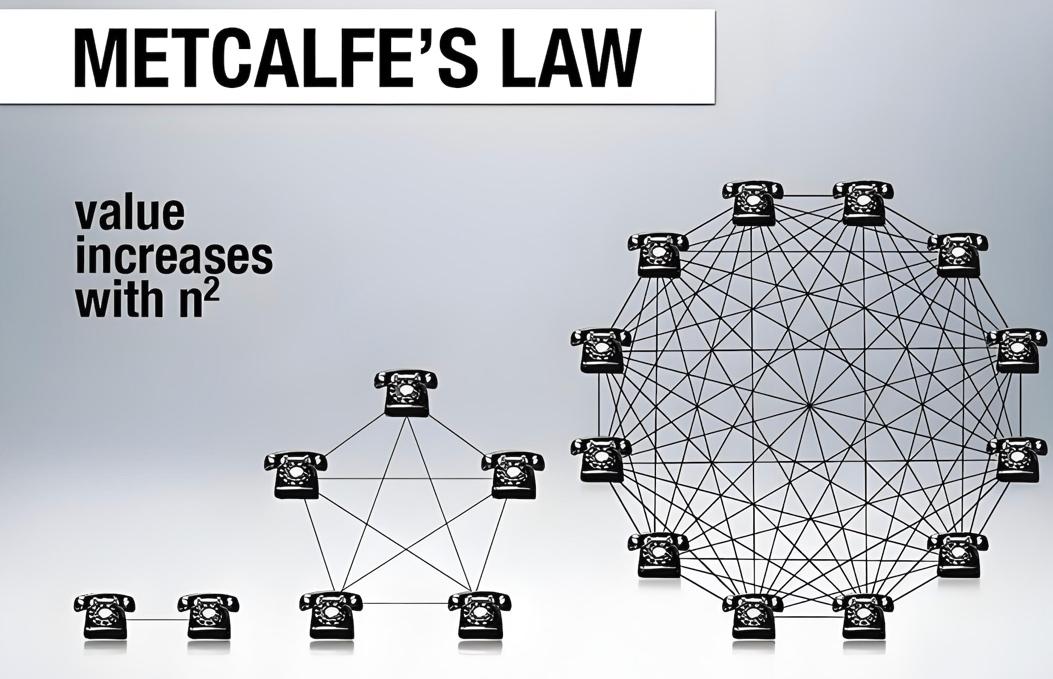
Core Insights - The article discusses the evolution of network effects in the Chinese internet landscape, particularly focusing on Tencent, Alibaba, and ByteDance, and how they are adapting to the challenges posed by AI technology [1][2][3] Group 1: Network Effects - Tencent's social network exhibits a unidirectional network effect, known as the Metcalfe effect, where the value of the network increases exponentially with the number of users [3][4] - Alibaba's e-commerce platform demonstrates a bidirectional network effect, where an increase in sellers leads to more choices for buyers, and vice versa, creating a strong growth flywheel [4][5] - ByteDance's network effect is based on data-driven user engagement, where increased usage leads to better algorithmic recommendations, creating a self-reinforcing loop [6] Group 2: AI Impact - The emergence of AI, particularly with the launch of ChatGPT, poses significant challenges to the existing network effects of these companies, altering how users interact with information and services [7][8] - ByteDance faces the most direct threat as AI can potentially replace its recommendation algorithms, shifting user behavior from platform-driven content to AI-assisted searches [7][8] - Alibaba's concern revolves around the potential displacement of its platform as AI agents could directly fulfill consumer needs, undermining its traditional role as a marketplace [8][9] Group 3: Strategic Responses - ByteDance is aggressively investing in AI-native applications and hardware to secure new data entry points and maintain its data network effect [10][12] - Alibaba is undergoing a self-disruption by integrating AI into its matching mechanisms to enhance its dual-sided market efficiency [12][13] - Tencent is taking a more cautious approach, embedding AI capabilities into existing products to enhance user experience without compromising its established social network [13][17] Group 4: Future Considerations - The article suggests that the future of AI products will hinge on their ability to foster user interaction and connection, moving beyond mere utility to create genuine network effects [15][19] - Companies must focus on accumulating quality users rather than just increasing user numbers, as service quality and user value will be critical for success in the AI era [18][19]
千问日活逼近,豆包为什么还敢把红包留到春晚 ?
3 6 Ke· 2026-02-12 11:13
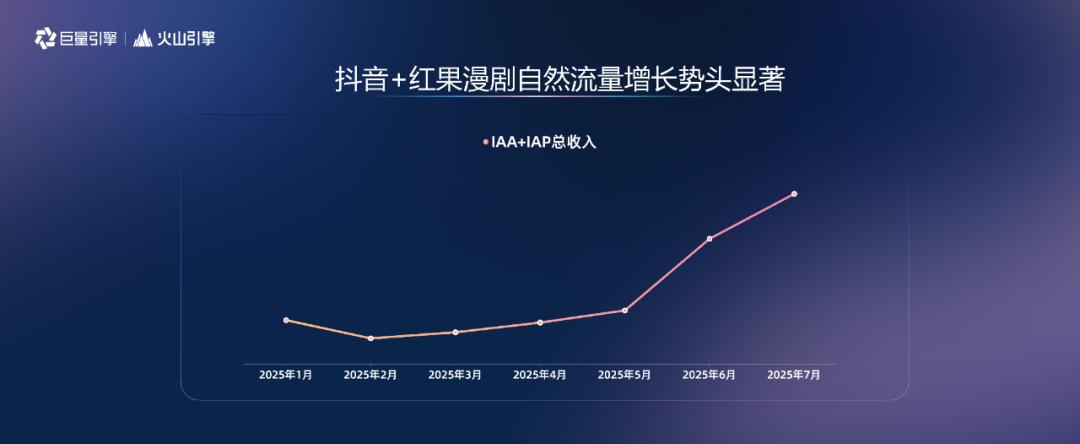
Core Insights - The competition among major players in the AI app market has intensified with the introduction of significant cash incentives, particularly during the Chinese New Year, leading to a surge in user engagement for various applications [1][3][4]. Group 1: User Engagement and Competition - Qianwen App's daily active users (DAU) surged from under 10 million to 73.52 million, nearing Doubao's 78.71 million, indicating the effectiveness of cash incentives [1]. - Doubao announced its cash incentive plan on February 10, with the distribution set for the CCTV Spring Festival Gala on February 16, suggesting a strategic delay in response to competitive pressure [1][3]. - The introduction of the Seedance 2.0 model by ByteDance has been a game-changer, with its capabilities being compared to a cash incentive of 1 billion, showcasing the importance of technological advancements in user retention [2][5]. Group 2: Technological Advancements - ByteDance has launched multiple AI models, including Seedream 5.0 and the upcoming Doubao 2.0, indicating a robust strategy to enhance product offerings alongside cash incentives [2][5][8]. - The Seedance 2.0 model has received acclaim for its superior performance in video generation, positioning it as a leader in the AI space [5][8]. - The integration of AI hardware into the cash incentive strategy reflects a shift towards a more comprehensive approach to user engagement, combining software and hardware solutions [12][15]. Group 3: Strategic Marketing and Positioning - The current cash incentive war is not just about monetary rewards but also about leveraging AI capabilities and existing business strengths to create a competitive edge [4][22]. - Companies are exploring new marketing strategies that integrate their traditional strengths with AI advancements, as seen with Doubao's collaboration with third-party hardware manufacturers [16][18]. - The competition is evolving into a multi-faceted battle where the effectiveness of AI models and user experience will play a crucial role in long-term success [22].
2026春节,游戏大厂打响“存量保卫战”
3 6 Ke· 2026-02-12 11:03
Core Insights - The gaming industry is experiencing a shift during the Spring Festival, with a noticeable decrease in the launch of new blockbuster games compared to previous years [1][2][3] - Major companies like Tencent, NetEase, and miHoYo are focusing on retaining existing players rather than aggressively promoting new titles, indicating a strategic pivot towards "user retention" [1][5][27] Group 1: Market Trends - The number of new game launches during the Spring Festival is significantly lower, with established titles like "Sandstone Town Time" and "Little Nightmares" relying on their successful PC versions for traction [2][3] - The cost of acquiring new users has more than doubled compared to previous years, making it less viable to invest in new games during a highly competitive period [5][29] - The focus has shifted from attracting new users to enhancing the experience for existing players, with companies offering substantial in-game benefits and events [5][30] Group 2: Marketing Strategies - Major games are launching significant Spring Festival events to engage existing users, such as "League of Legends Mobile" offering new year benefits and "Honor of Kings" providing free skins and discounts [7][9][11] - Companies are extending their marketing efforts beyond online platforms to include offline activities, creating immersive experiences for players [12][16][18] - The trend of focusing on existing user engagement rather than new user acquisition reflects a more mature approach to sustainable growth in the gaming industry [31][32]


12家第三方火车票网络销售平台被约谈
新浪财经· 2026-02-12 10:56
Group 1 - The Beijing Municipal Market Supervision Administration held an administrative interview with 12 major platforms involved in online train ticket sales, including Ctrip, Qunar, Fliggy, Tongcheng, Meituan, JD.com, and others, to address prominent issues raised by the public regarding online train ticket sales [2] - During the meeting, the Beijing Municipal Market Supervision Administration outlined four compliance requirements for the platforms to ensure proper business operations [3]





字节跳动卡位AI消费时代,生态布局野心藏不住了?
Mei Ri Jing Ji Xin Wen· 2026-02-12 10:52
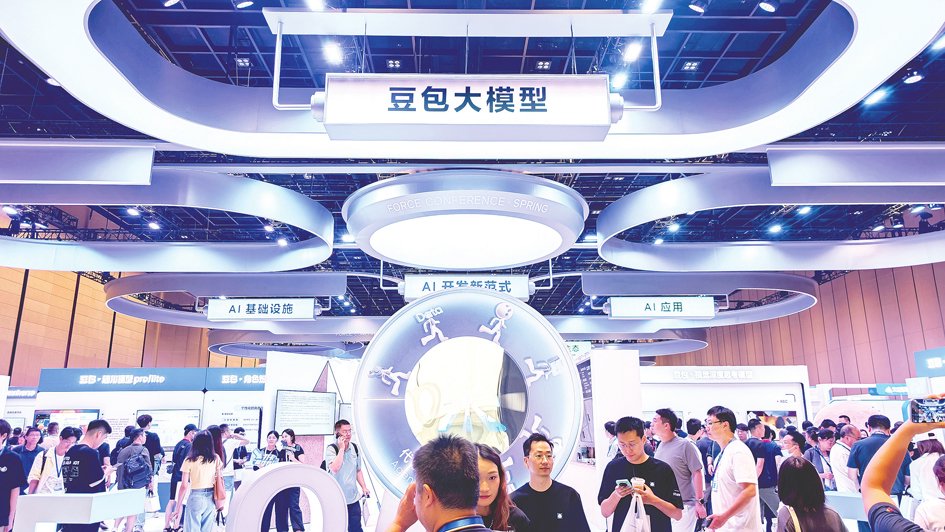
每经记者|李宇彤 每经编辑|陈 星 豆包杀入了硝烟弥漫的互联网春节AI(人工智能)大战。 2月10日,字节跳动(以下或简称字节)旗下AI应用——豆包官宣将登上中央广播电视总台2026年春晚(以下简称总台春晚)。2026年 农历除夕夜当晚,豆包不仅将通过总台春晚发放现金红包,还将为全国观众送出超过10万份接入了豆包大模型的科技好礼。 《每日经济新闻》记者注意到,这是字节跳动CEO(首席执行官)梁汝波在2026年1月29日首次全员会议上定下新一年"勇攀高峰"关键 词后的豆包"首战",也是豆包首次大方亮出硬件矩阵。 视觉中国图 据公司方面介绍,此次豆包送出的科技礼包囊括17款热门产品,包括宇树机器人、拓竹3D打印机、大疆无人机、极米投影仪等多款产 品,同时还送出上汽奥迪E5Sportback和奔驰CLA两款电车的使用权。 事实上,2026年农历春节,AI领域可谓红包纷飞、战火激烈:腾讯元宝携10亿元现金率先入场,希望重现微信红包的盛况;阿里千问 则以"春节30亿大免单"展开生态卡位…… 相较之下,字节跳动选择了另一条相对差异化的路径,将总台春晚的舞台转化为自身AI硬件生态的全民体验场。豆包再次打响AI交互 的硬件入 ...