李宁

Search documents
纺织服装行业2025Q2业绩前瞻:品牌景气走平,制造磨底
Changjiang Securities· 2025-08-06 23:30
Investment Rating - The industry investment rating is "Positive" and maintained [7] Core Insights - The domestic retail market for textiles and apparel continues to show steady performance, with most companies achieving positive revenue growth, although profit margins vary significantly [2][4] - The manufacturing sector faces challenges due to weak retail performance and expectations, with inventory replenishment becoming difficult and tariffs further suppressing manufacturing performance [2][4] - The recovery of Nike's operations is expected to alleviate some negative pressures on the industry, potentially leading to a rebound in the manufacturing sector [2][4][30] Summary by Sections Brand Performance - The retail environment remains stable, with most companies reporting positive revenue growth, while profit margins show divergence [4][16] - Sub-sectors exhibit varied performance, with sports retail maintaining steady growth, mid-to-high-end menswear showing resilience, and mass-market brands facing pressure [4][20] Manufacturing Sector - The manufacturing sector is under pressure as downstream brands enter a phase of passive inventory accumulation, compounded by tariffs affecting short-term performance [4][17] - The sector is expected to face challenges in the short term, but improvements in Nike's operations may provide a positive outlook for the manufacturing sector [4][30] Key Company Performance - Companies such as Luolai Life and Weigao Medical are expected to perform well in Q2 2025, with Luolai's revenue projected to grow by 0%-5% and net profit by 20%-30% due to low base effects [5][29] - Weigao Medical anticipates a revenue increase of 23%-33% and a net profit growth of 25%-35% driven by strong performance in personal care and medical products [5][29] Detailed Company Forecasts - 361 Degrees expects a revenue growth of 10%-20% in Q2 2025, with strong performance in adult and children's apparel [6][20] - Crystal International is projected to achieve a revenue growth of 12%-16% in H1 2025, benefiting from a low base and improved product mix [6][20] Market Trends - The retail sales growth for clothing and textiles in June 2025 was 1.9%, with a sequential decline of 2.1 percentage points [25][29] - The overall retail environment remains weak, with significant variations across different segments, particularly in the mass-market sector [20][29]
李宁(02331) - 截至二零二五年七月三十一日止月份之股份发行人的证券变动月报表
2025-08-06 08:15
股份發行人及根據《上市規則》第十九B章上市的香港預託證券發行人的證券變動月報表 | 截至月份: | 2025年7月31日 | | | | 狀態: 新提交 | | --- | --- | --- | --- | --- | --- | | 致:香港交易及結算所有限公司 | | | | | | | 公司名稱: | 李寧有限公司 | | | | | | 呈交日期: | 2025年8月6日 | | | | | | I. 法定/註冊股本變動 | | | | | | | 1. 股份分類 | 普通股 | 股份類別 | 不適用 | 於香港聯交所上市 (註1) | 是 | | 證券代號 (如上市) | 02331 | | 說明 | | | | | | | | --- | --- | --- | --- | --- | --- | --- | --- | --- | --- | | 多櫃檯證券代號 | 82331 | RMB | 說明 | | | | | | | | | | | 法定/註冊股份數目 | | | 面值 | | 法定/註冊股本 | | | 上月底結存 | | | | 10,000,000,000 | HKD | | ...
中证港股通纺织服装与珠宝综合指数报1922.06点,前十大权重包含新秀丽等
Jin Rong Jie· 2025-08-05 13:15
Group 1 - The core index of the CSI Hong Kong Stock Connect Textile, Apparel, and Jewelry Composite Index is reported at 1922.06 points, with a recent one-month decline of 4.00%, a three-month increase of 9.13%, and a year-to-date increase of 13.10% [1] - The index is compiled based on the classification standards of the CSI industry, reflecting the overall performance of different industry securities within the Hong Kong Stock Connect [1] - The top ten weighted stocks in the index include Li Ning (15.18%), Shenzhou International (15.11%), Anta Sports (14.03%), Lao Pu Gold (12.04%), Chow Tai Fook (9.28%), Samsonite (7.96%), Bosideng (7.29%), Jiu Xing Holdings (3.71%), Yue Yuen Industrial (3.57%), and Xtep International (3.4%) [1] Group 2 - The industry composition of the index shows that apparel accounts for 57.20%, jewelry and luxury goods account for 24.16%, and footwear and accessories account for 18.65% [2] - The index sample is adjusted biannually, with adjustments implemented on the next trading day following the second Friday of June and December each year [2] - In the event of special circumstances affecting the index sample, such as delisting or mergers, the sample will be adjusted accordingly [2]

收购传闻背后:安踏增长,需要锐步
2 1 Shi Ji Jing Ji Bao Dao· 2025-08-05 11:51
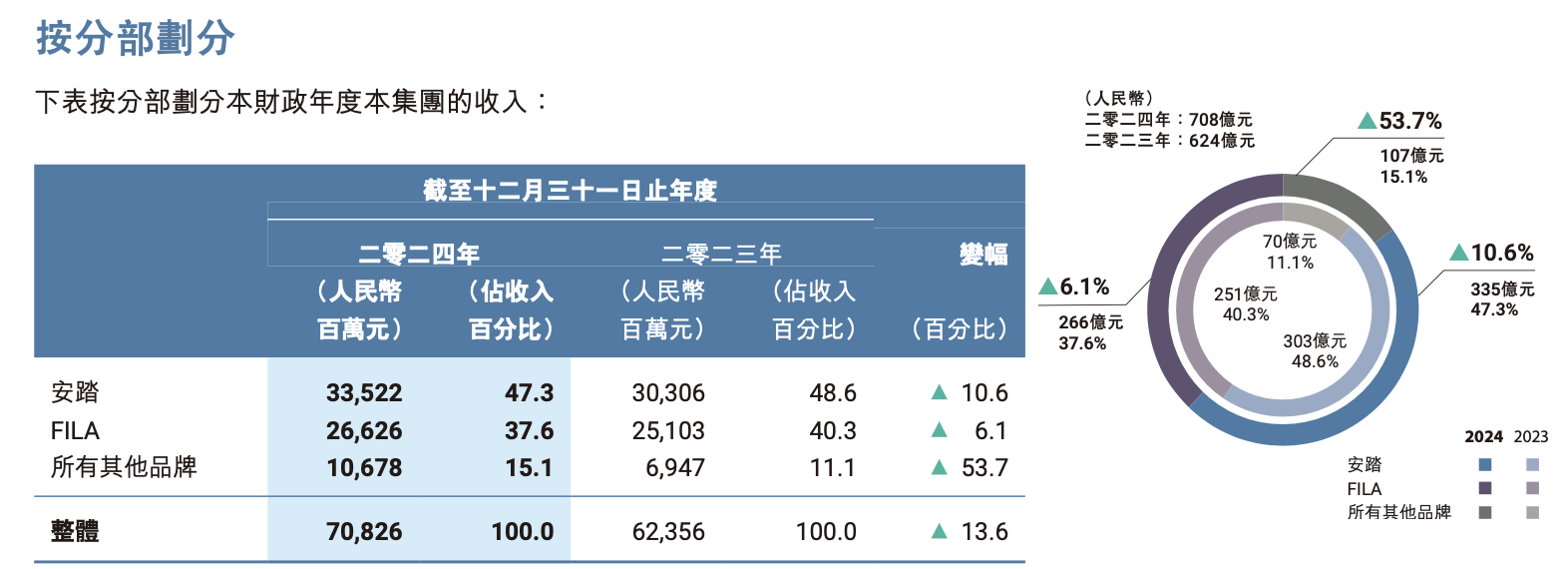
Group 1: Acquisition of Reebok - Anta Group is reportedly close to acquiring Reebok from Authentic Brands Group (ABG), having completed the funding process [1] - Anta has not officially confirmed the acquisition, stating it does not comment on market rumors [1] - Acquiring Reebok could significantly aid Anta's overseas expansion, especially as the domestic market matures [1] Group 2: Financial Performance - Anta's revenue for 2024 is projected to reach 335 billion RMB, a 10.6% increase from 2023, accounting for 47.3% of total revenue [6][5] - FILA's revenue is expected to be 266 billion RMB in 2024, growing by 6.1% [7] - Overall, Anta's revenue is anticipated to grow by 13.6% to 708.26 billion RMB in 2024 [14] Group 3: Market Challenges - Anta faces increasing growth pressure, with retail sales for its main brands showing low single-digit growth [4][3] - The performance of FILA has been volatile, with a decline in sales in the third quarter of 2024 [7] - The domestic sports market is experiencing heightened volatility, impacting overall sales for major players like Anta and Li Ning [10] Group 4: Strategic Positioning - Anta's strategy focuses on "single focus, multi-brand, globalization," which has been effective in expanding its brand portfolio [12] - The company has successfully integrated various brands, including FILA and Amer Sports, enhancing its market presence [13][14] - Anta's global strategy includes expanding into Southeast Asia and North America, with significant market coverage [26][27] Group 5: Reebok's Historical Context - Reebok was once a leading brand in the U.S. market but has seen a significant decline in market share from over 25% in 1987 to less than 10% by 2010 [18] - ABG acquired Reebok in 2022, aiming for significant revenue growth, but initial projections have not been met [20][21] - Reebok's performance in the Chinese market has also declined, with a reported 19% drop in revenue [22]

收购传闻背后:安踏增长,需要锐步丨消费一线
2 1 Shi Ji Jing Ji Bao Dao· 2025-08-05 11:48
Core Viewpoint - Anta Group is reportedly close to acquiring Reebok from Authentic Brands Group (ABG), which could significantly aid its overseas expansion amidst a challenging domestic market [1][20]. Company Performance - Anta's retail revenue growth has slowed, with the Anta brand showing low single-digit growth in Q2, while FILA's growth is also fluctuating [3][5]. - In 2024, Anta brand revenue is projected to be 33.5 billion yuan, a 10.6% increase, but its revenue share is expected to decline to 47.3% from 48.6% in 2023 [5]. - FILA is expected to generate 26.6 billion yuan in 2024, with a 6.1% year-on-year growth, but has faced a decline in sales in Q3 2024 [6][7]. Market Context - The domestic sports market is experiencing increased volatility, with competitors like Li Ning and Nike also reporting lower-than-expected growth [8][10]. - Nike's sales in Greater China fell by 21% in the latest quarter, indicating a challenging retail environment [8]. Strategic Moves - Anta has a history of successful acquisitions and brand management, including FILA and Amer Sports, which have contributed to its revenue growth [11][12]. - The company is pursuing a "globalization" strategy, expanding into Southeast Asia, North America, and Europe, with significant market coverage [19]. Reebok's Background - Reebok, once a leading brand in the U.S. market, has seen its market share decline significantly since the late 1980s [15]. - ABG acquired Reebok in 2022, aiming for substantial revenue growth, but recent reports indicate a 19% decline in Reebok's revenue in 2024 [17][18]. Potential Benefits of Acquisition - Acquiring Reebok could provide Anta with a foothold in the U.S. market, where it has not previously operated, and leverage Reebok's brand recognition to enhance its global presence [20].
中国可选消费行业:群雄激战,拉锯持续:业绩前瞻与展望
Bank of China Securities· 2025-08-05 07:18
Investment Rating - The report maintains an "Overweight" rating for the Chinese discretionary consumption sector [2] Core Insights - The overall consumption in China has received some support from national policies and e-commerce platform subsidies, but competition among brands and retailers has intensified, leading to potential risks of underperformance in earnings for many companies [2][3] - The report anticipates that the recovery of the current consumption cycle may take longer compared to the 2010s, which could result in faster capital rotation and less patience from investors [2] - Chinese companies are becoming increasingly competitive overseas, with international expansion seen as a significant growth driver for profitability [2] Summary by Sections Overall Consumption Performance - In the first half of 2025, China's total retail sales increased by 5.0% year-on-year, but there was a slowdown in sales data during the second quarter [5][6] - The home appliance sector showed strong performance with a year-on-year growth of 30.7% due to trade-in subsidies, supporting overall retail data [5][6] E-commerce and Competitive Landscape - The 618 shopping festival saw a total GMV of 855.6 billion RMB, a 15.2% increase year-on-year, but the competition was tougher than in 2024, leading to challenges for brands [5][6] - The report predicts that the upcoming Double 11 shopping festival will continue this trend of intense competition, potentially leading to downward adjustments in earnings guidance for many companies [5][6] Sector-Specific Insights Home Appliances - The report expects the central government's trade-in subsidies for durable goods to be extended into the second half of 2025, but the marginal benefits may decline due to previously released demand [5][6] - A potential price war is anticipated in the fourth quarter of 2025 due to demand slowdown and competition from emerging brands [5][6] Tourism - The tourism sector is expected to benefit from continued consumer demand for experiential consumption, although domestic air travel has slowed down in 2025 [5][6] - The report is optimistic about leading companies in the hotel sector outperforming the industry, with expectations of moderate year-on-year recovery in RevPAR metrics [5][6] Toys and Jewelry - The toy and jewelry sectors are currently performing strongly, with expectations for continued momentum into the second half of 2025 [5][6] - The overseas market is seen as a bright spot for toy companies, despite tariff threats, with new product launches anticipated in the fourth quarter [5][6] Apparel - The apparel sector's performance in the second quarter of 2025 was below expectations, leading to increased competition among brands in the Chinese market [5][6] - High-end brands are expected to accelerate their overseas expansion, albeit at the cost of some profit margins [5][6] Valuation and Market Outlook - The report notes that the consumption sector's valuations remain at historically low levels, with only a few leading companies showing higher valuations due to market concentration [9][10] - Without significant economic stimulus, the recovery of the consumption sector's profitability may take longer than previous cycles, limiting the upward movement of valuation multiples [9][10] Stock Selection Logic - The report highlights specific companies such as Anta, Tongcheng Travel, Pop Mart, and Blokus as having strong potential for growth both domestically and internationally [2][5]


波司登20250804
2025-08-05 03:15
Summary of Bosideng Conference Call Company Overview - **Company**: Bosideng - **Industry**: Down Jacket Market in China Key Points and Arguments Brand and Market Positioning - Bosideng has successfully upgraded its brand and improved supply chain quality, allowing it to enter the mid-to-high-end market through price increases, achieving high turnover, high gross margins, and low inventory levels [2][4][10] - The main brand's gross margin is higher than that of Canada Goose, and inventory turnover days are faster than Uniqlo, indicating superior operational efficiency [2][5] - The company aims to increase its market share from the current 11% over the next five years, with a focus on brand upgrades and supply chain optimization [6][12] Financial Projections - For the fiscal year 2025, Bosideng's revenue is expected to reach 25.9 billion yuan, with the down jacket business accounting for 84% and the main brand contributing 85% [2][8] - The company is projected to maintain a revenue growth rate of over 10% annually for the next three years [6][16] Growth Opportunities - Bosideng's future growth points include replacing international brands, increasing market share, opening seasonal stores, and implementing a multi-brand strategy [12] - The Chinese down jacket market has a low penetration rate, with per capita consumption significantly lower than in the U.S., indicating substantial growth potential [6][13] Supply Chain and Pricing Strategy - The key to Bosideng's successful price increases lies in product quality, channel management, and supply chain collaboration [2][10] - The company has a flexible supply chain that allows for quick responses to market demand, reducing the risk of unsold inventory and improving gross margins [11] Competitive Landscape - Bosideng's valuation is currently underestimated, with a dividend yield exceeding 6.5% and a price-to-earnings ratio of 11-12 times, compared to competitors like Li Ning, which has a higher valuation despite stagnant growth [3][7][17] - The company has a competitive advantage due to its unique supply chain and the growing demand for outdoor products [17] Product Diversification - Bosideng is expanding its product offerings beyond down jackets, including lightweight down jackets and sun protection clothing, which have seen rapid growth [6][14] - The sun protection clothing market is projected to reach 8.3 billion yuan by 2024, with Bosideng's online average price higher than the industry average [14] International Expansion - The acquisition of a stake in the luxury brand Mutinac is part of Bosideng's strategy to enhance its brand matrix, targeting both high-end and mass-market segments [15] Online and Offline Channel Development - Revenue and profit growth for the fiscal years 2025 to 2026 are expected to be 10% and 12%, respectively, with a focus on online sales through platforms like Douyin [16] Conclusion - Bosideng's strategic focus on brand enhancement, supply chain efficiency, and market expansion positions it well for future growth, despite current undervaluation in the market [3][17]

智通港股沽空统计|8月5日
智通财经网· 2025-08-05 00:21
Summary of Key Points Core Viewpoint - The report highlights the top short-selling stocks in the market, indicating significant investor sentiment and potential volatility in these companies' stock prices [1][2]. Short Selling Ratios - The top three stocks with the highest short-selling ratios are Li Ning-R (82331), Great Wall Motors-R (82333), and JD Health-R (86618), all at 100.00% [1][2]. - Other notable stocks with high short-selling ratios include Meituan-W (03690) at 95.59% and Baidu Group-SW (89888) at 91.59% [2]. Short Selling Amounts - The highest short-selling amounts are led by Tencent Holdings (00700) at 2.083 billion, followed by Meituan-W (03690) at 1.741 billion and Xiaomi Group-W (01810) at 1.477 billion [1][2]. - Other significant short-selling amounts include Alibaba-SW (09988) at 1.226 billion and Kuaishou-W (01024) at 814 million [2]. Deviation Values - The stocks with the highest deviation values, indicating a significant difference from their average short-selling ratios over the past 30 days, are Vanke Enterprises (02202) at 41.70%, Uni-President China (00220) at 40.05%, and JD Health-R (86618) at 39.76% [1][2]. - Other notable deviation values include Geely Automobile-R (80175) at 38.52% and Meituan-W (03690) at 36.65% [2].




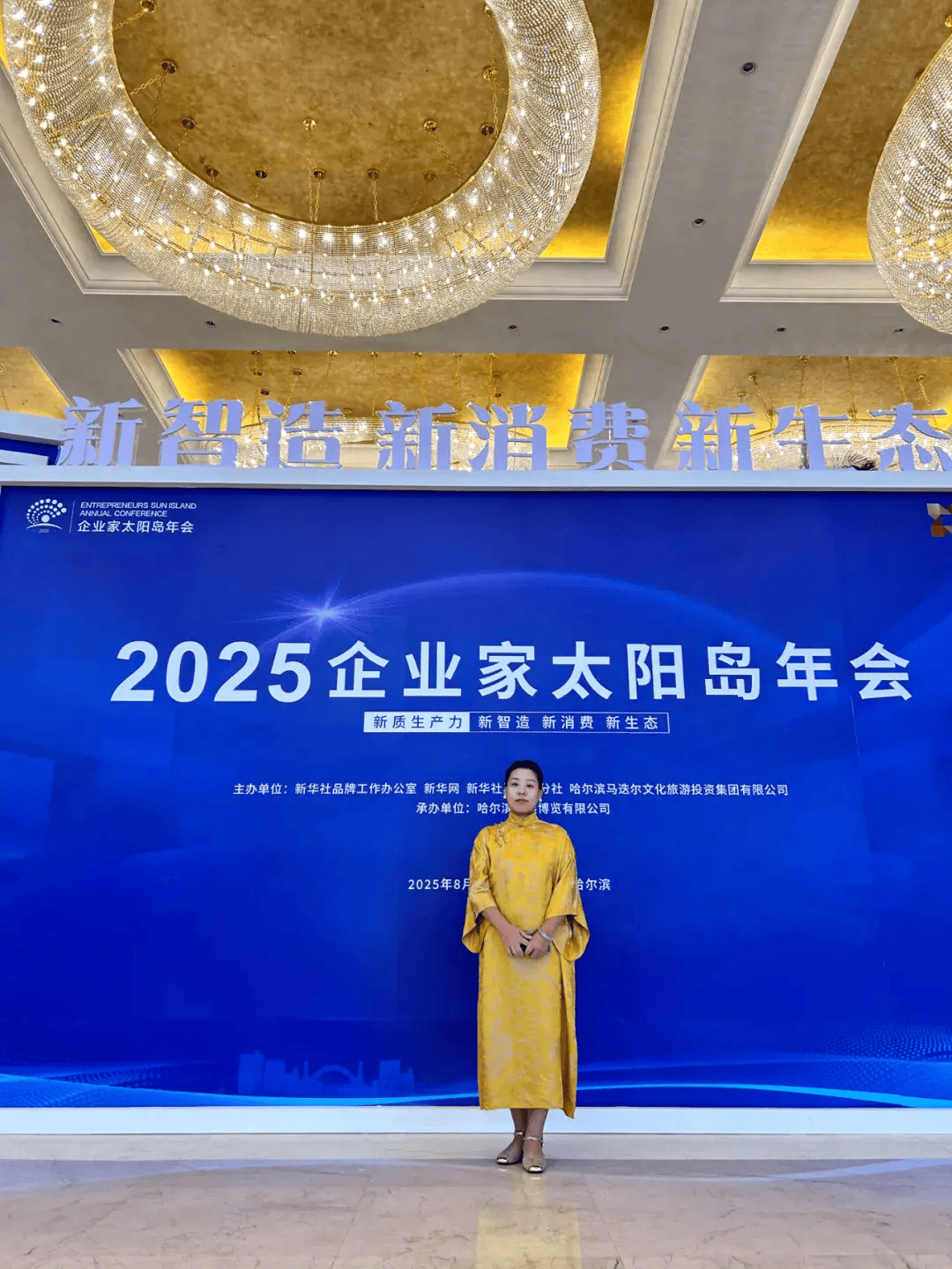
大圣驾到创始人赵小叶出席2025企业家太阳岛年会
Sou Hu Cai Jing· 2025-08-04 10:42
Core Viewpoint - The 2025 Entrepreneur Sun Island Annual Conference emphasized the theme of "New Quality Productivity: New Manufacturing, New Consumption, New Ecology," focusing on the development of strategic emerging industries and the spirit of entrepreneurship, aiming to inject new momentum into industrial upgrading and cooperation [1][4]. Group 1: National Brand Development - National brands are seen as vital carriers of national soft power, showcasing cultural confidence, economic strength, and technological capabilities [3]. - The success of national brands is rooted in their alignment with national development, as exemplified by companies like Huawei, BYD, Li Ning, and Yunnan Baiyao [3]. Group 2: Innovation and Tradition - The company "Dashing to the Future" is the only national enterprise in the pediatric massage industry recognized by the Xinhua News Agency's brand project, focusing on transitioning from manufacturing to intelligent manufacturing [4]. - By integrating traditional Chinese medicine techniques with modern technology, the company aims to standardize and enhance pediatric massage services, aligning with the "Healthy China" national strategy [4]. Group 3: Cultural Empowerment - The chairman emphasized the importance of using mainstream media to convey the cultural essence and values of national brands, highlighting the role of media in promoting traditional culture alongside modern needs [7]. - The company has leveraged media platforms to disseminate the cultural concept of "Chinese Pediatric Massage Health," bridging ancient wisdom with contemporary practices [7]. Group 4: Social Responsibility - The company has initiated projects like "Children's Health Public Welfare Action" to provide free medical services in rural areas, demonstrating its commitment to social responsibility and sustainable development [10]. - The focus is on integrating social responsibility into every aspect of business operations, reflecting the ethos of "giving back to society" [10]. Group 5: Global Perspective - The chairman discussed the dual output of culture and standards as essential for national enterprises' international expansion, with efforts to promote traditional Chinese pediatric massage services globally [12]. - Collaborations with educational institutions and the establishment of standards for traditional Chinese health services indicate a commitment to both preserving cultural roots and meeting international standards [12]. Group 6: Innovation and Cultural Products - The company plans to allocate 15% of its annual revenue to research and development for pediatric massage technology and equipment upgrades, following a model similar to Huawei [14]. - Cultural products like "24 Solar Terms Illustrated Books" and animations are being developed to enrich the narrative of national brands and avoid industry homogenization [14]. Group 7: Commitment to National Strategy - The company's actions reflect a commitment to align with national planning and mainstream media, positioning itself as a benchmark in the pediatric massage industry [14]. - The chairman's remarks at the conference highlighted the importance of innovation, culture, and responsibility in driving the growth of national brands, reinforcing the idea that each step forward for national brands contributes to China's global presence [14].
北欧品牌还在批量来华,中国户外的钱真那么好赚?
3 6 Ke· 2025-08-04 09:37
Group 1 - Nordisk, a Danish outdoor brand, is entering the Chinese market through a joint venture with K2 Group and Black Ant Capital, with plans to open its first stores by the end of the year [1] - The rise of Nordic outdoor brands in China is attributed to the booming outdoor sports market, with several brands like Haglöfs, Norrøna, and 66°North also planning to expand [1][3] - Nordic brands share a high-end positioning, focusing on performance, technology, and sustainability in their products, while maintaining a cautious marketing and channel expansion strategy [1][4][11] Group 2 - Nordic brands emphasize extreme performance, lightweight design, and unique technologies, catering to outdoor enthusiasts' desire for high-quality gear [5][4] - The design philosophy of Nordic brands incorporates natural elements, trendy colors, and minimalism, reflecting their cultural heritage and outdoor lifestyle [7][9] - Environmental sustainability is a core principle, with many brands using recycled materials and promoting repair and recycling initiatives [11][14] Group 3 - Marketing strategies of Nordic brands focus on maintaining a "cool" image, avoiding celebrity endorsements, and leveraging social media for engagement [14][15] - Partnerships with experienced local distributors like Sanfu Outdoor and Tobo are crucial for Nordic brands to navigate the Chinese market effectively [19][20] - The collective presence of Nordic brands in China creates a "group advantage," establishing a perception of high-end outdoor products among consumers [23] Group 4 - Despite current success, Nordic brands face challenges such as resource competition among distributors and increasing market saturation from both international and domestic brands [24][26] - The similarity in product design and positioning among Nordic brands may lead to a dilution of brand identity and increased competition [26][27] - The rise of domestic outdoor brands, which are becoming more competitive in the high-end market, poses a significant challenge to Nordic brands [27][29]