
禾赛科技

Search documents
中国资产全线大涨!特朗普、普京新变局!
天天基金网· 2025-10-24 01:24
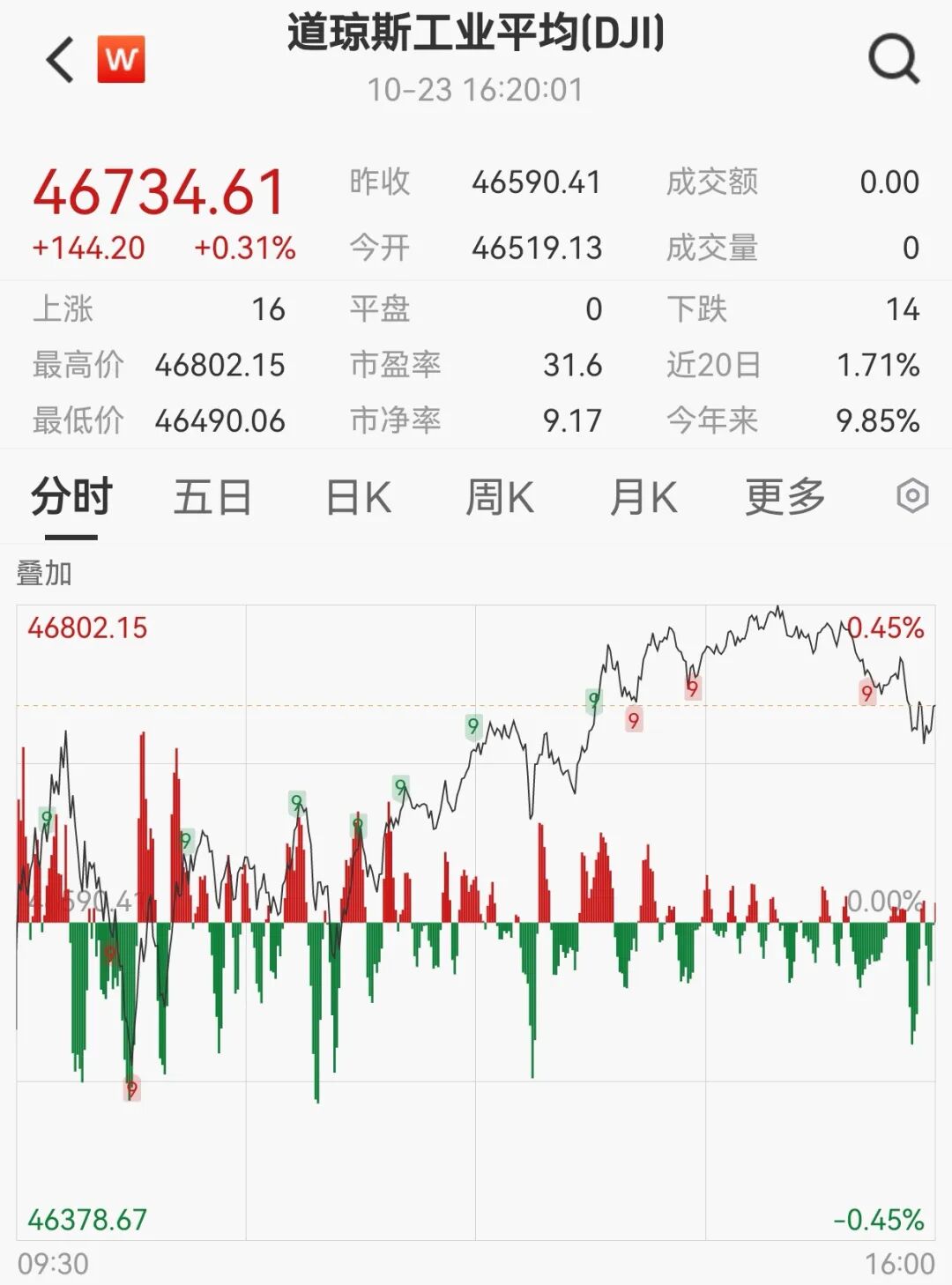
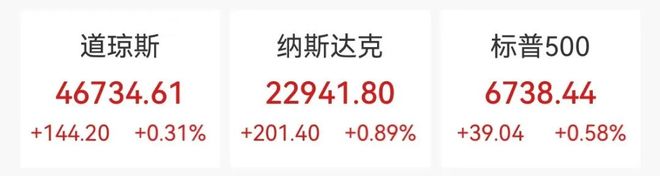
Market Overview - The US stock indices all closed higher, with the Dow Jones up 0.31%, S&P 500 up 0.58%, and Nasdaq up 0.89% [4][5] - Major tech stocks also saw gains, with the Tech Giants Index rising 0.70% [9] Individual Stock Performance - Notable performers included Honeywell International, which rose 6.81%, and 3M Company, which increased by 2.61% [5] - Tesla increased by 2.28%, Amazon by 1.44%, and Nvidia by 1.04%, leading the tech sector [10][11] Chinese Stocks Performance - Chinese stocks outperformed the broader market, with the Nasdaq Golden Dragon China Index up 1.66% and the Wind China Technology Leaders Index up 2.65% [12][13] - Meituan rose 5.01%, Alibaba increased by 3.65%, and Baidu gained 2.95%, leading the Wind China Technology Leaders Index [15][16] Oil Price Surge - International oil prices surged due to geopolitical tensions, with US oil closing up 5.56% at $61.75 per barrel, and Brent crude rising 5.38% to $65.96 per barrel [18][20] - The surge was driven by fears of potential disruptions in Russian oil supply following new sanctions from the US and EU [20][21] Geopolitical Developments - The White House indicated that a meeting between President Trump and President Putin is not entirely out of the question, despite recent tensions [22][23] - Putin commented that the new US sanctions are unfriendly but will not significantly impact the Russian economy, emphasizing the importance of dialogue over confrontation [25]






凌晨重磅!中国资产,爆发!
Zhong Guo Ji Jin Bao· 2025-10-24 00:36
Market Performance - The three major U.S. stock indices all closed higher, with the Dow Jones Industrial Average rising by 0.31%, the S&P 500 increasing by 0.58%, and the Nasdaq Composite gaining 0.89% [2][3] - Major technology stocks also saw gains, with the Nasdaq China Golden Dragon Index up by 1.66% and the Wind China Technology Leaders Index rising by 2.65% [16] Individual Stock Movements - Honeywell International surged by 6.81%, 3M Company increased by 2.61%, and Amazon rose by 1.44%, leading the Dow [3] - Among Chinese concept stocks, Meituan rose by 5.01%, Alibaba increased by 3.65%, and Baidu gained 2.95%, leading the Wind China Technology Leaders Index [19][20] Oil Price Surge - International oil prices surged due to geopolitical tensions, with U.S. crude oil futures rising by 5.56% to $61.75 per barrel, and Brent crude oil futures increasing by 5.38% to $65.96 per barrel [21] - The U.S. Treasury announced sanctions against Russian oil companies, contributing to concerns over potential disruptions in Russian oil supply, which further drove up oil prices [21] Geopolitical Developments - The White House indicated that a meeting between President Trump and President Putin is not entirely out of the question, despite recent tensions [22] - President Putin stated that the recent U.S. sanctions are unfriendly and will not significantly impact the Russian economy, emphasizing the importance of dialogue over confrontation [25]

A50拉升,中概股普涨,老虎证券涨近6%,阿里涨超3%,黄金白银短线跳水
2 1 Shi Ji Jing Ji Bao Dao· 2025-10-23 23:23
Market Performance - The three major U.S. stock indices all closed higher, with the Dow Jones up 0.31%, the S&P 500 up 0.58%, and the Nasdaq up 0.89% [1] - Major technology stocks generally rose, with the Wande American Technology Seven Giants Index increasing by 0.70% [2] Individual Stock Movements - Tesla rose over 2%, Amazon and NVIDIA increased by over 1%, Google by 0.55%, Apple by 0.44%, Facebook by 0.08%, and Microsoft remained flat [2][3] - Energy stocks collectively increased, with ExxonMobil up over 1%, Chevron up 0.63%, ConocoPhillips up over 3%, Schlumberger up over 3%, and Western Oil up over 2% [2] Semiconductor Sector - The Philadelphia Semiconductor Index rose by 2.54%, with notable increases in stocks such as Lam Research (over 4%), Micron Technology (over 4%), and Intel (over 3%) [4] Chinese Stocks - The Nasdaq China Golden Dragon Index rose by 1.66%, and the Wande Chinese Technology Leaders Index increased by 2.65% [7] - Individual Chinese stocks such as Tiger Brokers rose nearly 6%, Hesai Technology nearly 4%, and Alibaba over 3% [9] Market Outlook - Goldman Sachs predicts that the Chinese stock market is entering a slow bull market, expecting major indices to rise by about 30% by the end of 2027 [11] - Morgan Stanley's chief China equity strategist noted that global investors' allocation to Chinese stocks remains relatively low, indicating potential for increased investment [11]

禾赛已连续7个月车载主激光雷达市占率第一
Zheng Quan Ri Bao Zhi Sheng· 2025-10-23 11:11
Core Insights - The report from Gaishi Automotive Research Institute indicates that Hesai Technology has maintained its position as the leading supplier of automotive LiDAR systems, achieving a market share of 46% as of August 2025, which is 1.5 times that of the second place and 2.4 times that of the third place [1][2] Group 1: Market Performance - In the period from January to August 2025, the cumulative installation of main LiDAR systems in China's front-mounted production reached 1.31 million units, with Hesai's contribution being 510,000 units [1] - Hesai's monthly installation volume of LiDAR systems has surged from 33,485 units to 97,583 units, nearly tripling [1] - The penetration rate of LiDAR in new energy passenger vehicles reached 19% by August 2025, indicating that nearly one in five new cars is equipped with this technology [1] Group 2: Production and Strategic Developments - Hesai plans to achieve an annual production capacity exceeding 2 million units in 2025, with expected deliveries ranging from 1.2 million to 1.5 million units [2] - As of the end of September 2025, Hesai became the first company globally to produce over 1 million LiDAR units in a year, marking the entry into a "million-unit" mass production era [2] - Hesai has officially listed on the Hong Kong Stock Exchange, becoming the first company in the industry to achieve dual listing on both US and Hong Kong markets, reflecting international market recognition of Chinese LiDAR technology [2] Group 3: Client Base and Product Applications - This year, Hesai's LiDAR technology has supported the launch of several popular vehicle models, including Li Auto's i6, Xiaomi's YU7, and Leap Motor's B10 [2] - Hesai has secured mass production contracts with over 24 OEMs for more than 120 vehicle models, with planned deliveries from 2025 to 2027 [2] - Key clients include top-tier automotive manufacturers such as a leading European OEM, a global champion in new energy vehicle sales, and major Chinese brands like Geely, Great Wall, and Changan [2]
多只热门中概股跌逾4%,美股三大指数齐跌,黄金白银跳水
21世纪经济报道· 2025-10-22 23:22
Group 1: Technology Sector - The major technology stocks showed mixed performance, with the Wande American Technology Seven Giants Index declining by 0.51%. Amazon fell nearly 2%, Apple dropped over 1%, Tesla decreased by 0.82%, and Nvidia fell by 0.49%. In contrast, Facebook rose by 0.02%, Google increased by 0.49%, and Microsoft gained 0.56% [1] - Tesla reported third-quarter revenue of $28.1 billion, exceeding the estimate of $26.36 billion. The operating profit for the third quarter was $1.62 billion, slightly below the forecast of $1.65 billion, with a gross margin of 18.0% [1] - Apple faced an antitrust complaint from the EU regarding App Store terms and reduced production orders for the iPhone Air while increasing orders for other iPhone 17 models. The market response to the iPhone Air's official launch in China was lukewarm [1] Group 2: Banking Sector - Bank stocks experienced a broad decline, with JPMorgan falling over 1%, Goldman Sachs dropping nearly 2%, Citigroup decreasing by nearly 2%, Morgan Stanley down by 0.7%, Bank of America falling by 0.83%, and Wells Fargo declining over 1% [1] Group 3: Energy Sector - Energy stocks collectively rose, with ExxonMobil increasing nearly 2%, Chevron rising over 1%, ConocoPhillips up more than 1%, Schlumberger gaining over 4%, and Occidental Petroleum increasing over 2% [1] Group 4: Semiconductor Sector - The semiconductor stocks mostly declined, with the Philadelphia Semiconductor Index dropping by 2.36%. Notable declines included ON Semiconductor falling over 5%, Texas Instruments down over 5%, and Microchip Technology decreasing by over 4% [2][3] Group 5: Chinese Stocks - The Nasdaq China Golden Dragon Index fell by 0.92%, and the Wande Chinese Technology Leaders Index dropped by 0.90%. Individual stocks like Pony.ai fell nearly 7%, Hesai Technology decreased over 5%, and JD.com and Baidu dropped over 1% [4][5] Group 6: Precious Metals - Gold and silver prices experienced a significant drop, with gold spot prices falling below $4,090 per ounce. Earlier in the year, gold prices had surged, with a cumulative increase of around 57% [6][9] - The recent decline in gold prices was attributed to profit-taking by holders and a rise in the U.S. dollar index, which increased by 0.4% [9]
中概股回港上市带来三重变化
Zheng Quan Ri Bao· 2025-10-22 16:43
Group 1 - The recent trend of Chinese concept stocks returning to Hong Kong is primarily driven by companies in new economic sectors such as autonomous driving and biomedicine, indicating strategic adjustments and changes in global asset allocation [1][2] - The tightening regulatory environment in overseas markets, particularly the proposed changes by Nasdaq, has prompted companies to consider a dual listing in Hong Kong as a risk mitigation strategy, allowing them to diversify their shareholder base and avoid uncertainties in a single market [1][2] - The return of these companies to Hong Kong is not only for financing purposes but also represents a strategic move to align with local industry resources and attract investors who better understand their market positions and growth prospects [2][3] Group 2 - The return of Chinese concept stocks to Hong Kong is supported by the collaboration of regulatory bodies in mainland China and Hong Kong, which have simplified procedures and eased restrictions on cross-border capital flows [2][3] - The Hong Kong Stock Exchange has implemented continuous reforms, such as allowing dual-class shares and easing listing requirements for unprofitable biotech firms, which have facilitated the return of these companies [3] - The Hong Kong government has expressed its commitment to assist Chinese concept stocks in making Hong Kong their preferred return destination, enhancing the market's attractiveness for hard tech companies [3]
港股新观察 | 多只优质中概股“归巢” 港股迎科技企业生力军
Shang Hai Zheng Quan Bao· 2025-10-21 18:21
Core Insights - A total of 37 Chinese concept stocks have returned to the Hong Kong market through dual primary listings or secondary listings as of October 21, with 24 companies opting for dual primary listings and 13 for secondary listings [1][4] - The return of Chinese concept stocks is primarily driven by companies in the frontier technology sector, including smart driving, biotechnology, and advanced manufacturing [1][6] - The Hong Kong Stock Exchange (HKEX) offers significant advantages in terms of listing time, procedures, costs, and exemption conditions, which is expected to facilitate the continued return of Chinese concept stocks [1][6] Group 1 - Recent dual primary listings include smart driving companies WeRide and Pony.ai, which have both passed the HKEX hearing and are set to list [2] - The dual primary listing strategy is seen as crucial for smart driving companies to expand financing channels, enhance valuation stability, and connect with core markets [2] - Biotech companies are also planning dual primary listings, with Tianjing Biotechnology announcing its intention to conduct an IPO in Hong Kong [2] Group 2 - Hesai Technology became the first lidar company to achieve a dual primary listing, raising over 4.16 billion HKD, marking the largest IPO by a Chinese concept stock returning to Hong Kong in nearly four years [3] - The return of high-quality Chinese concept stocks to the Hong Kong market is supported by favorable policies and ongoing market reforms [4] - The HKEX has introduced mechanisms such as "same share, different rights" and relaxed listing requirements for unprofitable biotech firms, enhancing its capacity to accommodate Chinese concept stocks [4]
多只优质中概股“归巢”港股迎科技企业生力军
Shang Hai Zheng Quan Bao· 2025-10-21 18:17
Core Insights - A total of 37 Chinese concept stocks have returned to the Hong Kong market through dual primary listings or secondary listings as of October 21, indicating a significant trend of quality Chinese companies returning to Hong Kong [1][4] - The technology sector, particularly in areas such as smart driving, biotechnology, and advanced manufacturing, has become a new driving force for the return of Chinese concept stocks to Hong Kong [1][5] - The Hong Kong Stock Exchange (HKEX) offers advantages in terms of listing time, procedures, costs, and exemption conditions, which are expected to facilitate the continued return of Chinese concept stocks [1][5] Group 1: Recent Listings - Smart driving companies, such as WeRide and Pony.ai, have recently passed the HKEX hearing, indicating their imminent dual primary listings on both NASDAQ and HKEX [2] - The dual primary listing is strategically significant for smart driving companies as it broadens financing channels and enhances valuation stability [2] Group 2: Market Trends - The return of quality Chinese concept stocks to the Hong Kong market is supported by favorable policies and ongoing reforms in the Hong Kong market [4][5] - The average daily trading volume in the Hong Kong market has increased by 132% year-on-year, reaching 2,483 billion HKD in the first eight months of this year, reflecting enhanced liquidity [5] Group 3: Policy Support - The China Securities Regulatory Commission (CSRC) has expressed support for quality Chinese concept stocks to return to the domestic and Hong Kong markets [4] - The Hong Kong government has also indicated its commitment to making Hong Kong the preferred return destination for Chinese concept stocks [4]
无人驾驶双雄对决:文远知行亏损率曾高达697%压力显著 靠海外业务支撑30%毛利率
Xin Lang Zheng Quan· 2025-10-21 10:57
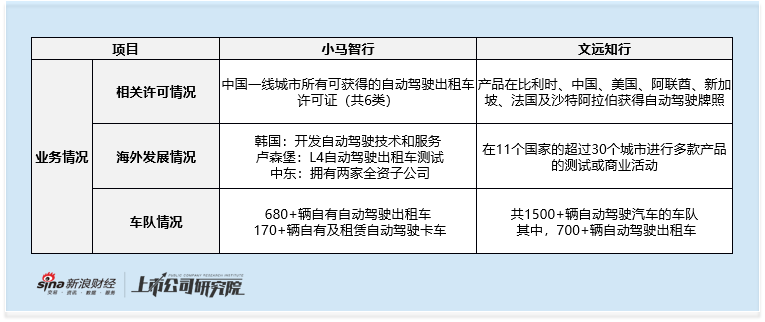
Core Viewpoint - The article discusses the recent listings of two major players in China's autonomous driving sector, Xiaoma Zhixing and Wenyuan Zhixing, on the Hong Kong stock market, highlighting their differing strategies and financial performances in a challenging industry environment [1]. Business Strategy Differences - Xiaoma Zhixing focuses on deepening its presence in China's first-tier cities and has obtained all available autonomous taxi licenses, while also exploring overseas markets like Luxembourg and the UAE [3][4]. - Wenyuan Zhixing adopts an "overseas first" strategy, concentrating on regions with clear economic advantages for autonomous vehicle operations, particularly in Europe and the Middle East, where it has established a leading position [3][4]. Fleet Composition and Scale - Wenyuan Zhixing operates a fleet of over 1500 autonomous vehicles, primarily focusing on taxi services, while Xiaoma Zhixing has a dual fleet strategy with over 680 autonomous taxis and 170 autonomous trucks, catering to both urban mobility and logistics [4]. Financial Performance - Both companies are experiencing significant losses, with Xiaoma Zhixing projected to generate $75.03 million in revenue and incur a net loss of $280 million in 2024, while Wenyuan Zhixing is expected to have $50.41 million in revenue and a net loss of $350 million [6][7]. - Wenyuan Zhixing maintains a gross margin above 30%, significantly higher than Xiaoma Zhixing's margins, indicating potential for profitability despite high loss rates [6]. Future Performance Predictions - Analysts predict that Wenyuan Zhixing may outperform Xiaoma Zhixing in 2025, with expected revenues of $89.6 million compared to Xiaoma's $82.1 million, and a narrower net loss for Wenyuan [7]. Additional Challenges for Xiaoma Zhixing - Xiaoma Zhixing faces increased scrutiny following a short-selling report that raised concerns about its technology, operational efficiency, and financial health, adding uncertainty to its future performance in the market [8].

无人驾驶双雄对决:小马智行毛利率仅16%遭做空机构指控 2025年财务预测被同行反超
Xin Lang Zheng Quan· 2025-10-21 10:55
Core Viewpoint - The article discusses the recent listings of two major players in China's autonomous driving sector, Xiaoma Zhixing and Wenyuan Zhixing, on the Hong Kong stock market, highlighting their differing strategies and financial performances in a challenging industry environment [1] Business Strategy Differences - Xiaoma Zhixing focuses on deepening its presence in China's first-tier cities and has obtained all available autonomous taxi licenses, while also exploring overseas markets like Luxembourg and the UAE [2][3] - Wenyuan Zhixing adopts an "overseas first" strategy, concentrating on regions with clear economic advantages for autonomous vehicle operations, particularly in Europe and the Middle East, where it has established a leading position [3][4] Fleet Composition and Scale - Wenyuan Zhixing operates a fleet of over 1500 autonomous vehicles, primarily focusing on taxi services, while Xiaoma Zhixing has a dual fleet of over 680 autonomous taxis and 170 commercial vehicles, covering both urban mobility and logistics [4] Financial Performance - Both companies are experiencing significant losses, with Xiaoma Zhixing projected to generate $75.03 million in revenue and incur a net loss of $280 million in 2024, while Wenyuan Zhixing is expected to have $50.41 million in revenue and a net loss of $350 million [6][7] - Wenyuan Zhixing maintains a gross margin above 30%, significantly higher than Xiaoma Zhixing's margins, indicating potential for profitability despite high loss rates [6][7] Future Performance Predictions - Analysts predict that Wenyuan Zhixing may outperform Xiaoma Zhixing in 2025, with expected revenues of $89.6 million compared to Xiaoma's $82.1 million, and a narrower net loss for Wenyuan [7] Additional Challenges for Xiaoma Zhixing - Xiaoma Zhixing faces increased scrutiny following a short-selling report that raised concerns about its technology, operational efficiency, and financial health, adding uncertainty to its future performance in the market [8]