伊利股份

Search documents
食品饮料行业周度市场观察-20250927
Ai Rui Zi Xun· 2025-09-27 09:13
Investment Rating - The report does not explicitly provide an investment rating for the food and beverage industry Core Insights - The food and beverage industry is experiencing significant trends, including the rise of ready-to-eat meals, the popularity of low-sugar and sparkling beverages, and the emergence of health-focused drinks like bamboo sugar and reed root water [1][2][7] Industry Trends - Consumer acceptance of ready-to-eat meals varies significantly by dining context, with over 50% acceptance in fast food chains and only 8.8% in high-end restaurants [2] - The iced tea market is booming, with brands like Nongfu Spring and Yuanqi Forest entering the space, focusing on sugar reduction and carbonation innovations. The market is expected to grow from 300 billion yuan in 2024 to 350 billion yuan in 2025 [2] - The global top 100 food and beverage companies list for 2025 sees PepsiCo reclaiming the top spot with revenues exceeding $90 billion, driven by product innovation and AI technology [4] - The integration of supermarkets and restaurants is on the rise, with new business models emerging that combine high cost-performance and fresh ingredients [4] - The dairy market in China faces challenges, particularly in liquid milk, while powdered milk and cheese are experiencing growth [5] - The tea beverage industry is shifting towards fast-moving consumer goods, with brands focusing on efficiency and cost reduction [6] - Bamboo sugar and reed root water have become popular health drinks, reflecting the potential of traditional Chinese health beverages [7] - The night economy is becoming a significant growth point for the restaurant industry, with night-time consumption in cities like Shanghai and Chengdu reaching 60% [10] Brand Dynamics - Brands like Kang Shifu are launching successful sugar-free tea products, indicating a shift towards premium and health-oriented offerings in the beverage market [14] - The introduction of new products by brands like Subway, which incorporates local flavors into their offerings, highlights the trend of localization in the food industry [15] - The collaboration between Three Squirrels and JD to establish quality standards for nuts aims to elevate industry standards and meet consumer demand for high-quality products [16] - Wahaha's rebranding to "Wah Xiaozong" under the leadership of Zong Fuli aims to attract younger consumers while addressing compliance issues [17] - Zhou Hei Ya's promotional activities targeting college students reflect efforts to engage younger demographics amid declining sales [20]
白酒会缺席这次牛市吗?
雪球· 2025-09-27 04:02
Core Viewpoint - The current market is in a bull phase, with significant increases in various indices over the past year, particularly in small and mid-cap stocks with technology attributes [3]. Industry Analysis - The food and beverage sector, especially the liquor segment represented by Kweichow Moutai, has undergone over four years of adjustment [4]. - The liquor industry is currently in a bottoming phase, with expectations that the bottom is near [5]. - Other companies in the food and beverage sector, such as Haitian Flavoring and Food, Shuanghui Development, Yili Industrial, Qingdao Beer, Anjixin Food, and COFCO, have not yet capitalized on the bull market [6]. - Despite the lack of stock price increases, many companies in this sector have seen profit growth over the years [7]. Valuation Insights - The stagnation in stock prices is attributed to the overextension of valuations and expectations during the bull market from 2018 to 2021 [8]. - After three to four years of valuation digestion, the food and beverage industry is currently considered undervalued from a price-to-earnings (PE) perspective [9]. - Historical data shows that the current price levels are situated between one and two times below the average PE ratio, similar to the situation in 2018 [10]. Economic Context - As of September 2023, real GDP has begun to exceed nominal GDP, indicating a state of deflation [11]. - Historical instances of similar economic conditions occurred during the Asian financial crisis in 1998-2000 and the subprime mortgage crisis in 2009 [13]. - There is a strong belief that the economy will gradually improve, leading the food and beverage industry to return to reasonable valuation levels [13]. Investment Opportunities - The food and beverage sector, particularly the liquor segment, is expected to participate in the current bull market, albeit with a delay [13]. - This delay presents investment opportunities, emphasizing the importance of patience in waiting for the right moment to invest and for prices to rise [14].



探索宇宙奥秘:“益”起看星空公益研学活动在京启动
Xin Jing Bao· 2025-09-27 02:05
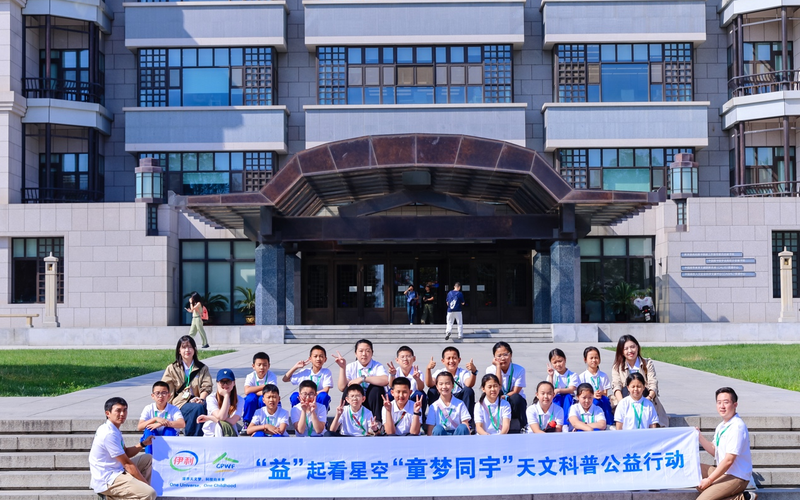
Group 1 - The core event is the "Together to See the Stars" public welfare research and study activity initiated by the China Population Welfare Foundation and sponsored by Yili Group, held in Beijing from September 22 to 26, attracting 20 teachers and students from two primary schools [1][2] - Participants visited significant locations such as Peking University, the Beijing Aerospace Museum, and the Beijing Ancient Observatory to enhance their astronomy knowledge and experience the development of national astronomical technology [1][9] - The project aims to provide astronomy education and research opportunities for students from resource-poor areas, encouraging them to explore the universe and pursue their scientific dreams [10] Group 2 - The exhibition "Let Beauty Speak" at the UCCA Center for Contemporary Art showcased warm moments from Yili's six long-term public welfare projects, transforming public welfare actions into interactive experiences for the audience [2] - Students selected for the program were chosen based on their performance in summer astronomy-themed courses and their participation in science resource donation activities, with a focus on those from rural backgrounds with limited opportunities [5][10] - The initiative has already reached 11 schools in Ulanqab City, Inner Mongolia, donating 2,000 sets of teaching aids and involving 98 teachers and students in research activities, with plans to expand further by 2025 [10]

内蒙古伊利实业集团股份有限公司关于2024年度第一、二期短期融资券兑付完成的公告
Shang Hai Zheng Quan Bao· 2025-09-26 20:00
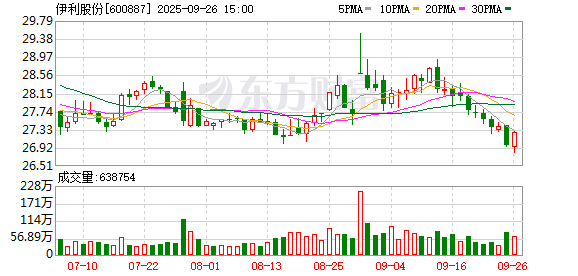
Core Points - Inner Mongolia Yili Industrial Group Co., Ltd. successfully issued the first and second phases of short-term financing bonds for the year 2024 in November 2024 [1] - The company completed the repayment of the first phase of short-term financing bonds on September 24, 2025, with a total principal and interest repayment amounting to RMB 5,085,356,164.38 [1] - The repayment of the second phase of short-term financing bonds was completed on September 25, 2025, with a total principal and interest repayment amounting to RMB 5,085,631,506.85 [1] Summary by Sections - **Bond Issuance**: The company issued short-term financing bonds in November 2024 [1] - **Repayment Details**: - First phase repayment completed on September 24, 2025, totaling RMB 5,085,356,164.38 [1] - Second phase repayment completed on September 25, 2025, totaling RMB 5,085,631,506.85 [1] - **Payment Process**: Payments were made through the China Interbank Market Clearing House to the designated bank accounts of bondholders [1]
伊利股份:关于2024年度第一、二期短期融资券兑付完成的公告
Zheng Quan Ri Bao· 2025-09-26 12:41
Group 1 - The company, Yili Co., announced the completion of the repayment of the first phase of short-term financing bonds for the year 2024 on September 24, 2025, with a total principal and interest repayment amounting to RMB 5,085,356,164.38 [2] - On September 25, 2025, the company completed the repayment of the second phase of short-term financing bonds for the year 2024, with a total principal and interest repayment amounting to RMB 5,085,631,506.85 [2] - Both repayments were facilitated by the China Central Depository & Clearing Co., Ltd., which transferred the amounts to the designated bank accounts of the bondholders [2]
中国冰淇淋产业繁荣为国际商家创造广阔机遇
Xin Hua Wang· 2025-09-26 11:55
Core Insights - The 27th China Ice Cream and Frozen Food Industry Expo in Tianjin attracted over 500 well-known enterprises and more than 2000 overseas buyers, indicating a growing international interest in China's ice cream industry [2][4] - The Chinese ice cream market is projected to reach a scale of 183.5 billion RMB in 2024 and is expected to grow to 233.4 billion RMB by 2030, reflecting a robust growth trajectory [2] - The trend of incorporating Chinese cultural elements into ice cream products has gained popularity, with international buyers showing strong interest in culturally themed ice creams [2][4] Industry Growth and Opportunities - The number of overseas buyers at the expo doubled compared to the previous year, highlighting the increasing global attention on China's ice cream market [2] - Major foreign ice cream brands such as Unilever, Nestlé, Häagen-Dazs, Mars, and Meiji have entered the Chinese market, creating significant opportunities for global food ingredient suppliers [4] - The demand for high-quality ingredients from various countries, such as cocoa from Southeast Asia and milk powder from New Zealand and Australia, is on the rise, with imports of cocoa expected to reach 1.336 billion USD in 2024, a 29.3% increase year-on-year [4][6] Equipment and Technology - The expo featured over 120 Chinese ice cream equipment and accessory companies, showcasing a wide range of machinery and automated solutions for ice cream production [6] - The demand for ice cream equipment is strong in developing countries, driven by rapid market expansion and the establishment of new factories [6][7] - Chinese ice cream equipment has captured a 40% market share in Southeast Asia, with companies offering comprehensive solutions that include packaging and technical support [7]

2025年全球乳业20强榜单发布 伊利股份稳居全球乳业五强
Qi Lu Wan Bao Wang· 2025-09-26 11:29
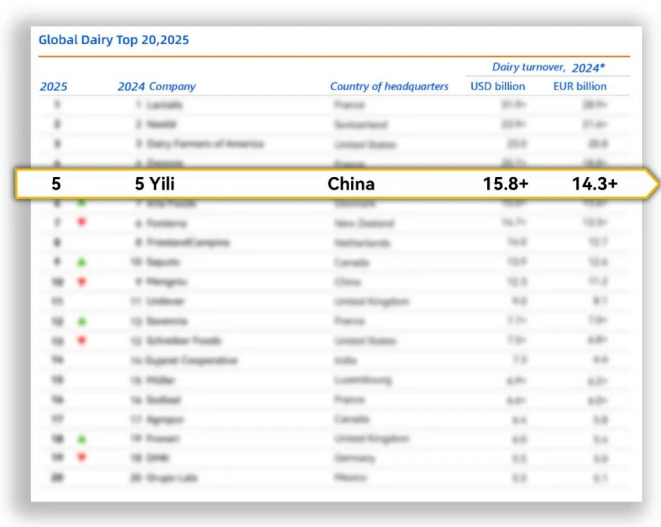
Core Insights - Rabobank's 2025 Global Dairy Top 20 list ranks Yili Group as one of the top five dairy companies globally, maintaining its position as the leading dairy company in Asia for 12 consecutive years, and the only Chinese company in the top five [1][2] Financial Performance - Yili Group achieved a total revenue of 115.78 billion yuan (approximately 16.1 billion USD) in 2024, solidifying its status as Asia's top dairy company [2] - The company's net profit, after excluding goodwill impairment, reached 11.54 billion yuan (approximately 1.6 billion USD), reflecting a year-on-year growth of 12.2% [2] Market Position - Yili Group holds the largest market share in the liquid milk segment and ranks first in overall milk powder sales in China, while also being a leader in the national cold drink industry [2] Strategic Initiatives - In 2025, Yili Group is focusing on two strategic areas: functional nutrition and deep processing of dairy products, aiming to capture high-value segments of the industry [3] - A comprehensive strategic partnership with Tongrentang aims to integrate traditional Chinese medicine concepts with dairy products, creating a new category of health-oriented dairy offerings [3] - The launch of a cheese manufacturing base will address the domestic production of cheese and reduce reliance on imported raw materials [3] Innovation and Future Growth - Yili Group is exploring new channels and service innovations, transitioning from merely selling products to providing comprehensive health solutions across various consumer touchpoints [3] - The global dairy industry has seen moderate revenue growth, prompting companies to adjust their strategies, with Yili Group's expansion into new fields and vertical integration expected to drive high-quality development in the dairy sector [3]
【招银研究|House View】政策有望“空中加油”,风险偏好仍有支撑——招商银行研究院HouseView(2025年四季度)
招商银行研究· 2025-09-26 11:04
Group 1: Economic Overview - The U.S. economy is showing strong growth driven by consumer spending, with a projected GDP growth rate of 3.3% for Q3, significantly higher than the previous half-year average [14][26] - However, employment figures are declining, with an average of only 27,000 new jobs added from May to August, leading to a rise in the unemployment rate to 4.3% [16][19] - The divergence between strong economic performance and weak employment is attributed to structural factors and the lag in hiring adjustments by companies [21][22] Group 2: Monetary Policy - The Federal Reserve has restarted its rate-cutting cycle, lowering the policy rate by 25 basis points to a range of 4.0-4.25% [16][26] - The dual monetary and fiscal easing is expected to support economic resilience, although inflationary pressures remain a concern [32][26] - The Fed's cautious approach to further rate cuts is influenced by the need to balance employment and inflation risks [32][26] Group 3: International Economic Context - The European Central Bank and the Bank of Japan have maintained their interest rates, with the ECB indicating no immediate need for further cuts [36][46] - The Eurozone is experiencing a mixed economic recovery, with manufacturing underperforming while services remain stable [36][37] - Japan's central bank is showing signs of potential policy normalization, with discussions around interest rate hikes becoming more prominent [46][47] Group 4: Asset Allocation Recommendations - The investment strategy suggests maintaining a balanced allocation in equities, particularly in sectors like technology and consumer goods, while being cautious of high valuations [49][50] - Fixed income investments are recommended to focus on short to medium-term bonds due to the uncertain long-term interest rate outlook [56][57] - Gold is expected to continue its bullish trend, supported by the Fed's rate cuts and ongoing central bank purchases [71][72] Group 5: Market Trends - The U.S. stock market is projected to continue its upward trend, driven by strong corporate earnings, particularly in the technology sector [49][50] - The bond market is expected to experience a steepening yield curve, with short-term rates declining while long-term rates remain under pressure [56][58] - Currency markets are anticipated to see the U.S. dollar maintain a range-bound trading pattern, influenced by the Fed's monetary policy and global economic conditions [62][63]


从政策加持到招股书卡壳,君乐宝的IPO之路为何这么难?
Sou Hu Cai Jing· 2025-09-26 09:53
当君乐宝乳业集团股份有限公司在2023年12月28日正式启动A股IPO辅导时,这家承载着河北奶业振兴期望的区域乳企,似乎距离资本市场大门仅一步之 遥。 彼时,其高调宣布的"2025年营收破500亿元+实现上市"双目标,让市场看到区域乳企冲击头部阵营的野心。 然而,635天过去,IPO辅导期已远超A股284天的平均水平,招股书仍杳无音信,君乐宝的上市之路,俨然从一场资本冲刺,演变为中国乳业转型期多重 矛盾交织的典型样本。 资本运作与地方背书下的高调启程 君乐宝的上市野心,并非一时兴起,而是贯穿其发展脉络。 早在2008年,创始人魏立华就已为上市铺路,却因"三聚氰胺事件"突发,与三鹿的股权关联让其上市计划戛然而止。2019年,君乐宝以40.11亿元从蒙牛 手中赎回51%股权,彻底脱离蒙牛体系,独立后的第一件大事便是重启上市进程——短短两年内完成3轮融资,引入红杉中国、高瓴资本等16家顶级投资 机构,2023年更是完成股份制改造,注册资本从6221.6万元激增至7.2亿元,资本运作的架势拉满。 这份野心背后,离不开地方政府的强力背书。河北省将君乐宝视为"奶业振兴"的核心抓手,不仅在《2019年河北省奶业振兴工作方案 ...

食品饮料行业资金流入榜:贵州茅台等10股净流入资金超千万元
Zheng Quan Shi Bao Wang· 2025-09-26 09:41
Market Overview - The Shanghai Composite Index fell by 0.65% on September 26, with 10 industries experiencing gains, led by the petroleum and petrochemical sector, which rose by 1.17%, and the environmental protection sector, which increased by 0.38% [1] - The computer and electronics sectors saw the largest declines, with drops of 3.26% and 2.75%, respectively [1] - Overall, there was a net outflow of 83.579 billion yuan in the main funds across the two markets, with 5 industries seeing net inflows [1] Industry Performance - The automotive industry had the highest net inflow of funds at 0.882 billion yuan, despite a decline of 0.56% in its stock price [1] - The banking sector also saw a slight increase of 0.08% with a net inflow of 0.566 billion yuan [1] - A total of 26 industries experienced net outflows, with the electronics sector leading with a net outflow of 29.836 billion yuan, followed by the computer sector with a net outflow of 13.807 billion yuan [1] Food and Beverage Sector - The food and beverage industry declined by 0.15% but had a net inflow of 0.128 billion yuan, with 69 out of 124 stocks rising [2] - Guizhou Moutai led the inflow with 0.373 billion yuan, followed by Jinzi Ham and Wancheng Group with inflows of 0.115 billion yuan and 0.0429 billion yuan, respectively [2] - The sector also had 17 stocks with net outflows exceeding 10 million yuan, with Wuliangye, Yangyuan Beverage, and ST Juewei leading the outflows at 0.125 billion yuan, 0.0729 billion yuan, and 0.0409 billion yuan, respectively [2][4] Fund Flow in Food and Beverage Sector - Top inflow stocks included: - Guizhou Moutai: -0.28% change, 0.373 billion yuan inflow [2] - Jinzi Ham: +6.61% change, 0.115 billion yuan inflow [2] - Wancheng Group: +0.43% change, 0.0429 billion yuan inflow [2] - Top outflow stocks included: - Wuliangye: -1.11% change, -0.125 billion yuan outflow [4] - Yangyuan Beverage: +10.01% change, -0.0729 billion yuan outflow [4] - ST Juewei: -3.40% change, -0.0409 billion yuan outflow [4]