
华为

Search documents
国补入手正当时:购华为笔记本,享更好AI体验,优惠叠加国补入手正当时
Xin Lang Cai Jing· 2026-01-23 01:16
Core Insights - The PC market is experiencing a price surge due to a "super cycle" in global memory supply, with major manufacturers like Lenovo, HP, and Dell raising prices by 12%-16% for mid-to-high-end models, leading to price increases exceeding 600 yuan for some models [1][10][11] - In contrast, Huawei's MateBook series maintains price stability while offering multiple discounts and government subsidies, positioning itself as a preferred choice for consumers in learning, office, and creative scenarios [10][18] Industry Overview - The price increase in the PC industry is driven by supply-demand imbalances and capacity adjustments, exacerbated by a surge in AI computing demand that has altered the storage market structure [11] - Major brands have collectively raised prices, causing many consumers to delay their purchasing plans, while Huawei's strategy of maintaining stable prices has disrupted this trend [11][18] Government Subsidies and Promotions - Under the new 2026 national subsidy policy, consumers purchasing energy-efficient computers can receive a 15% subsidy, capped at 1500 yuan per unit [12] - Huawei is offering significant discounts on its MateBook series, with prices starting as low as 2975 yuan after applying the national subsidy and additional promotions [12] Competitive Advantages - Huawei's MateBook series leverages strong AI capabilities as a core competitive advantage, addressing user needs that extend beyond basic office tasks [13] - The AI features in Huawei laptops enhance productivity by automating tasks such as document creation and meeting transcription, significantly improving user efficiency [13][14] Product Differentiation - The MateBook series includes models tailored to different user needs, such as the MateBook 14 for performance and experience, the MateBook D14 for cost-effectiveness, and the MateBook Pro for high-end users [16][17] - Each model incorporates AI functionalities that cater to various scenarios, from academic research to professional tasks, ensuring a comprehensive coverage of user requirements [14][16] Market Positioning - Huawei's strategy of "price stability + national subsidies" stands out in a market where competitors are raising prices, making the MateBook series an attractive option for consumers seeking value [10][18] - The ongoing promotional activities until January 25, 2026, combined with the national subsidy, create a unique opportunity for consumers to purchase Huawei laptops at competitive prices [18]
我在超级现场丨超级工厂超智慧
He Nan Ri Bao· 2026-01-23 00:02
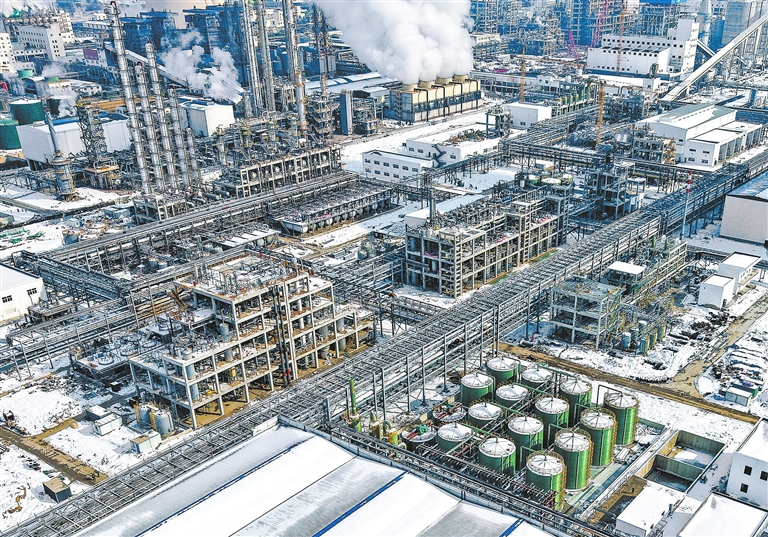
Core Viewpoint - The construction of the Jin Hai billion-level fluorosilicon new materials phase one project is progressing rapidly, with a focus on optimizing processes and integrating advanced technologies to enhance resource utilization and production efficiency [1][2]. Group 1: Project Overview - The project includes nine product units and ten utility systems, featuring over 70 major technological innovations across equipment selection, energy utilization, and system integration [1]. - It is one of the largest single investment projects in the province, with the highest investment intensity per acre, and is a key project promoted by the provincial government for 2025 [1]. Group 2: Technological Integration - The project incorporates top international equipment, such as ion-exchange membrane electrolyzers from Japan's Asahi Kasei and compressors from Germany's Siemens, along with a custom "industrial super brain" developed in collaboration with companies like Zhejiang Zhongkong and Huawei [2]. - An intelligent platform integrating AI, big data, and IoT technologies will oversee operations, enabling long-term autonomous optimization and unmanned operation of production systems [2]. Group 3: Economic Impact - The project aims to establish four major industrial chains focusing on organic fluorine, organic chlorine, organic silicon, and new energy materials, targeting high-value products like electronic-grade silicone and aerospace insulation materials [4]. - Upon full completion, the project is expected to generate an additional annual output value of 100 billion yuan, potentially leading to the formation of a trillion-level new materials industry cluster [4].

阿里芯片谋求ipo
小熊跑的快· 2026-01-22 23:43
Group 1 - Alibaba Cloud did not undergo the expected spin-off, while Alibaba's chip division is preparing for a separate IPO [1] - The chip division, nicknamed "Ping Tou Ge," is currently at the 1.7 generation level, competing with the H100 [1] - The domestic demand for self-developed chips is projected to be in the hundreds of thousands over the next two years, with a significant portion of the market share [2] Group 2 - Alibaba's token usage reached over 60 trillion in a single day last year, indicating strong demand for its self-developed chips [2] - In November of the same year, ByteDance reported a single-day token usage of 40 trillion, highlighting competitive dynamics in the industry [2] - Global token usage is expected to increase by 100 times, further driving the need for Alibaba's self-developed chips [2] Group 3 - Alibaba closely monitored Google's TPU sales last year, leading to speculation about Alibaba's own chip sales, but the company opted for an IPO instead [3]


字节、OpenAI、Meta都在赌一件事
3 6 Ke· 2026-01-22 23:34
Core Insights - Major tech companies are entering the AI hardware market, with OpenAI planning to launch its first AI hardware device in the second half of 2026, indicating a significant shift in strategy from software to hardware [1] - This trend is seen across various companies including ByteDance, Alibaba, and Meta, which are all investing heavily in AI hardware despite past failures in the hardware sector [1][2][4] Group 1: Reasons for Past Failures - Historically, major tech companies have struggled with hardware due to a lack of understanding of the complexities involved, often leading to failed products and financial losses [2][3][5] - The inherent arrogance of internet companies, which thrive on rapid iteration and low marginal costs, has hindered their ability to manage the high stakes and complexities of hardware production [6][7][8] Group 2: Changes in the Market - The emergence of AI models has changed the dynamics of hardware development, allowing for simpler interaction methods that reduce the need for complex designs [9][10] - AI hardware is now viewed as a sensor for AI, enabling companies to gather real-world data that can enhance their models, thus making hardware development more appealing [11][22][23] Group 3: Strategic Shifts - Companies like ByteDance, Meta, and OpenAI are now focusing on creating their own hardware to maintain control over user interactions and data, as the risk of losing direct access to users increases [15][17] - The collaboration between software and hardware companies is becoming more common, allowing for reduced development times and shared risks, making hardware ventures less daunting [25][26] Group 4: Future Implications - The AI hardware trend reflects a broader fear among software companies of being sidelined in the evolving tech landscape, as they seek to embed themselves into users' daily lives [27][28] - The proliferation of AI devices raises questions about the necessity and impact of such technology on human life, suggesting a deeper integration of AI into everyday activities [27][29]

新一轮“以旧换新”精准发力消费升温 智能眼镜首入补贴,绿色消费唱起主角
Zhen Jiang Ri Bao· 2026-01-22 23:32
Group 1 - The consumer market is experiencing a "renewal" trend, driven by new government subsidies for smart devices, including smart glasses, which have seen increased customer interest and sales [1][2] - The new subsidy policy includes a 15% discount on traditional digital products and introduces smart glasses into the subsidy list, aligning with the trend of AI wearable devices [2] - Online and offline sales data indicate a positive impact from the subsidy, with brands like Huawei and Xiaomi selling over 4,000 units of subsidized smart glasses [2] Group 2 - The new subsidy policy emphasizes green and energy-efficient products, with only first-class energy efficiency appliances eligible for a 15% subsidy, signaling a shift towards sustainable consumption [3] - The automotive sector is also responding positively to the new vehicle replacement subsidy policy, particularly in the electric vehicle market, with significant customer engagement and interest [4] - Retailers are enhancing customer experience by offering one-stop services for old product recycling and new product delivery, reflecting a comprehensive approach to the new subsidy policy [5]

彩电出货量或继续走低 Mini LED技术爆发 RGB成分水岭
Nan Fang Du Shi Bao· 2026-01-22 23:11
Industry Overview - The global TV industry is undergoing unprecedented adjustments, with significant market differentiation driven by large screen adoption, Mini LED technology proliferation, and AI integration [2] - Global TV shipments fell below 200 million units in 2025, marking a ten-year low, with a projected further decline of 5%-7% in 2026 [2] - China's TV market, as the largest consumer market, saw a shipment drop to 32.895 million units in 2025, a decline of 8.5%, the lowest in 16 years [2][3] Market Dynamics - The Chinese market showed a notable split in performance, with a slight increase of 1.4% in the first half of 2025 due to government subsidies, followed by a significant decline of 16.9% in the second half [2] - European markets are under pressure, with Western Europe expected to see a decline, while Eastern Europe may experience slight growth due to economic recovery [2][3] - North America remains relatively stable, supported by a solid consumer base and event marketing [2] Emerging Markets - Emerging markets in Asia-Pacific, Latin America, and the Middle East and Africa still hold growth potential, but price sensitivity may limit actual volume if prices rise due to memory cost increases [3] - The Indian market, despite strong demand, is dominated by local brands using low-price strategies, posing challenges for international brands [3] Technology Trends - Mini LED technology is expected to enter a phase of widespread adoption in 2026, with RGB-Mini LED shipments projected to exceed 300,000 units, becoming a new profit driver in the high-end market [6] - In 2025, China's Mini LED TV shipments surged by 92.8%, with a penetration rate of 28.9%, and are expected to exceed 10 million units in 2026 [6][7] Competitive Landscape - Chinese brands like Hisense and TCL are leading innovations in RGB-Mini LED and SQD-Mini LED technologies, respectively, with significant growth in global shipments [6][7] - International brands such as Samsung and Sony are entering the RGB technology space, but Chinese companies maintain advantages in technology iteration and cost control [8] - The competition is shifting from price wars to a comprehensive contest of technology, supply chain, and globalization capabilities [3][8] Consumer Trends - Large screen adoption is an irreversible trend, with 75-inch and larger TVs expected to account for 23% of the Chinese market in 2025, with further growth anticipated in 2026 [9] - AI technology is redefining the role of TVs as central to living spaces, with companies like Huawei and Skyworth investing heavily in AI capabilities for their products [9] Market Share - In 2025, the top three brands—Samsung, TCL, and Hisense—held over 43% of the global market share, with Samsung leading at 35.3 million units shipped [9] - TCL's growth of 5.4% positioned it as the most significant growing brand, while Hisense maintained a strong presence with 29.3 million units shipped [9] Strategic Partnerships - Sony and TCL have signed a memorandum of understanding for strategic cooperation in the home entertainment sector, which may impact market dynamics and competition [10]

经济日报:着力推动产学研系统化协同
Xin Lang Cai Jing· 2026-01-22 22:58
Core Insights - Since the "14th Five-Year Plan," the quantity and quality of technology transfer in China have increased simultaneously, with the total value of technology contracts rising from 2.83 trillion yuan to 6.84 trillion yuan, marking a growth of 141.7% from 2020 to 2024 [1] Group 1: Technology Transfer Growth - The total value of technology contracts in China is projected to grow significantly, indicating a robust environment for technology transfer [1] - The increase in technology transfer is largely driven by the active participation of universities in the commercialization of research outcomes [1] Group 2: University-Industry Collaboration - Notable collaborations include the establishment of the "Zhongguancun National Basic Conditions Technology Resource Sharing Service Innovation Alliance" by Beihang University, which aims to standardize and package research services for small and medium-sized enterprises [1] - Partnerships between universities such as Tsinghua University and Huazhong University of Science and Technology with Huawei to create joint laboratories demonstrate the effective integration of academic research into industry applications [1] - These collaborations facilitate a reciprocal relationship where academic research is directly transformed into industrial value, promoting a positive cycle of innovation and application [1]
轻薄之“身”,荣耀“亲近”年轻人
Shen Zhen Shang Bao· 2026-01-22 22:44
Core Viewpoint - The smartphone industry is facing increasing external pressures, leading to price hikes across various models, including the newly launched Honor Magic8 Pro Air, which targets the young consumer demographic [1][2]. Group 1: Product Launches and Features - Honor has introduced the Magic8 Pro Air, weighing 155 grams and measuring 6.1mm thick, making it the lightest flagship smartphone of the year [1]. - The Magic8 Pro Air features a MediaTek Dimensity 9500 processor and a rear camera setup that includes a 64MP periscope lens, while competing models like Huawei's Mate70 Air and Apple's iPhone Air have different specifications [3]. - Honor also launched a limited edition "Honor 500 Pro MOLLY 20th Anniversary" phone in collaboration with the trendy brand Pop Mart, aiming to resonate emotionally with younger consumers [1][5]. Group 2: Market Trends and Pricing - The smartphone market is experiencing a price increase due to rising storage chip costs, with DDR5 memory prices up over 300% since September 2025 [2]. - Honor's new models, including the Magic8 Pro Air, have starting prices above 4000 yuan, with the Magic8 Pro Air priced at 4999 yuan (12GB+256GB) [3]. - Despite the price hikes, Honor's strategy appears to be focused on appealing to younger consumers and creating a broader ecosystem beyond just smartphones [5][6]. Group 3: Industry Performance and Competition - The Chinese smartphone market saw a 1.6% year-on-year decline in shipments in Q4 2025, with Honor holding a 13.4% market share, ranking sixth [4]. - Apple's iPhone Air has struggled in the market, with initial activation numbers significantly lower than previous models, indicating a cooling demand for lightweight smartphones [5]. - The overall smartphone industry is entering a phase of low growth, with companies like Honor adapting their strategies to seek structural growth opportunities within a stagnant market [6].

已明确技术方向,将研发原型样机,中国6G技术开启第二阶段征程
Huan Qiu Shi Bao· 2026-01-22 22:35
Core Viewpoint - China has completed the first phase of 6G technology research and has initiated the second phase, focusing on technology solution testing and integration of key technologies [1][2]. Group 1: 6G Technology Development Phases - The 6G technology testing in China is divided into three phases: the first phase focuses on key technology testing, the second phase on technology solution testing, and the third phase on system networking testing [1][2]. - The second phase aims to develop 6G prototypes and validate solutions based on typical scenarios and performance indicators set by the International Telecommunication Union (ITU) [2][3]. Group 2: Industry Participation and Collaboration - The IMT-2030 (6G) Promotion Group, under the guidance of the Ministry of Industry and Information Technology, includes 18 core domestic and international companies such as Huawei, ZTE, and Ericsson, actively participating in the 6G technology testing [2]. - The global mobile communication standard-setting organization, 3GPP, has initiated research projects on 6G, with 77% of the service demand research completed [3]. Group 3: China's Position in Global 6G Development - Experts indicate that China is in the leading tier of global 6G technology development, with strong competitiveness in 6G base stations and network systems [4]. - China holds approximately 40.3% of global 6G patent applications, ranking first worldwide [4]. Group 4: Future Applications and Impacts of 6G - 6G technology is expected to revolutionize various industries by enabling new applications such as drone logistics and low-altitude inspections through enhanced communication capabilities [6]. - The integration of 6G with AI is anticipated to facilitate the development of collaborative robotic systems, enhancing their operational efficiency and deployment [7].
着力推动产学研系统化协同
Jing Ji Ri Bao· 2026-01-22 21:59
Core Insights - The report from the State Council highlights the significant progress in the transformation of scientific and technological achievements in China since the start of the 14th Five-Year Plan, emphasizing the need for deeper integration of industry, academia, and research to enhance competitiveness and innovation [1][2] Group 1: Achievements in Technology Transfer - Since the 14th Five-Year Plan, the quantity and quality of technology transfer in China have increased, with the total value of technology contracts rising from 2.83 trillion yuan to 6.84 trillion yuan, a growth of 141.7% from 2020 to 2024 [1] - Universities play a crucial role in this transformation, exemplified by initiatives such as the establishment of the "Zhongguancun National Basic Conditions Technology Resource Sharing Service Innovation Alliance" by Beihang University, which standardizes and packages research services for small and medium-sized enterprises [1] - Collaborative efforts between universities and companies, such as the joint laboratory established by Tsinghua University, Huazhong University of Science and Technology, and Huawei, demonstrate the effective conversion of academic research into industrial value [1] Group 2: International Comparisons and Challenges - Major innovative countries globally emphasize the deep integration of education, research, and industry as a pathway to enhance competitiveness, with successful models like the Triangle Research Park in the U.S. showcasing the importance of collaboration between academia and industry [2] - Despite progress, challenges remain, including a disconnect between scientific achievements and industrial needs, an imperfect research evaluation system, and a lack of effective incentive mechanisms for talent participation in industry [2] Group 3: Recommendations for Improvement - The promotion of a "company poses questions, universities provide solutions, and joint efforts" model is recommended to enhance the relevance and efficiency of scientific research by integrating real industrial challenges into academic studies [3] - Reforming the research evaluation system to include metrics for industry-oriented talent development is essential, ensuring that project teams submit and execute plans that involve students in practical contributions [3] - Establishing an open and shared collaborative platform for industry-academia-research integration is crucial to improve resource matching and information transfer efficiency, facilitating the development of a one-stop hub for industry needs and innovation resources [4]