
长安汽车

Search documents
超200家机构,盯上长安汽车
Zhong Guo Zheng Quan Bao· 2025-12-20 05:45
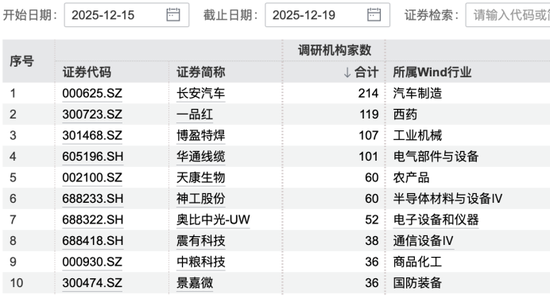
原标题:超200家机构,盯上1家公司 "请问公司对于L3的安全是如何考虑的""为什么公司获得首批L3准入""L3是由长安车联B端运营吗?与 现有Robotaxi有何区别"…… 本周(12月15日—12月19日)长安汽车调研机构家数最多,达214家,机构调研诸多问题指向长安汽车 获得首批L3准入情况。 从行业看,应用软件、电子元件、汽车零配件与设备等赛道的上市公司,本周获得机构调研频率较高。 12月以来超600家公司获机构调研 截至发稿,本周共有近170家上市公司披露机构投资者调研记录。其中长安汽车获超200家机构调研,一 品红、博盈特焊、华通线缆调研机构家数超百家。 长安汽车调研问题集中于L3准入的细节与规划。 12月15日,长安汽车旗下深蓝汽车一款纯电动轿车(长安牌SC7000AAARBEV型)获工信部L3级自动 驾驶车型产品准入许可,成为我国首批获此资质的车型之一。 长安汽车在回应机构关于"公司对L3商业化落地后续有什么样的规划"的提问时表示,预计2026年一季度 与使用主体长安车联科技进行上路通行试点应用;在国家相关法规及政策正式发布实施后,长安汽车将 开始面向C端用户的产品准入和市场投放。 本周调研机 ...


11月主要经济指标波动 沐曦股份单日盈利创纪录丨一周热点回顾
Di Yi Cai Jing· 2025-12-20 03:14
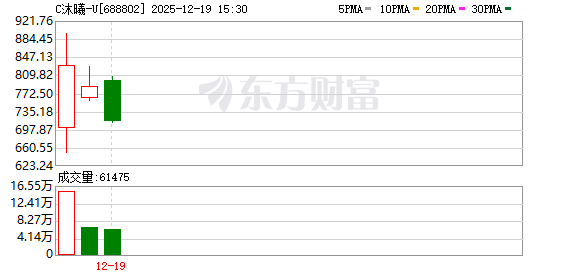
Economic Indicators - In November, the industrial added value of large-scale enterprises increased by 4.8% year-on-year, slightly down by 0.1 percentage points from October, marking the lowest since September 2024 [2] - The total retail sales of consumer goods grew by 1.3% year-on-year, a decline of 1.6 percentage points, continuing a six-month slowdown [2] - Fixed asset investment (excluding rural households) decreased by 2.6% year-on-year in the first eleven months, with the decline expanding by 0.9 percentage points from the previous month, marking eight consecutive months of decline [2] High-tech Manufacturing - High-tech manufacturing added value increased by 8.4% year-on-year in November, surpassing the overall industrial added value by 3.6 percentage points [2] - Cumulatively, from January to November, high-tech manufacturing added value rose by 9.2%, with smart consumer equipment manufacturing increasing by 7.6% [2] - Investment in the automotive manufacturing sector grew by 15.3%, while investment in rail, shipbuilding, aerospace, and other transportation equipment manufacturing increased by 22.4% [2] Fiscal Revenue and Expenditure - From January to November, the general public budget revenue reached approximately 20.1 trillion yuan, a year-on-year increase of 0.8%, consistent with the growth rate of the previous ten months [4] - General public budget expenditure was about 24.9 trillion yuan, up 1.4% year-on-year, with social security and employment expenditure, health expenditure, and education expenditure growing by 8.1%, 4.7%, and 4.4% respectively, all exceeding the average expenditure growth rate [4] - The central economic work conference indicated a continuation of a more proactive fiscal policy next year, emphasizing the need for necessary fiscal deficits and total expenditure [4] Hainan Free Trade Port - Hainan Free Trade Port officially launched its full island closure on December 18, with eight open ports and ten "second-line ports" now operational [5] - The proportion of "zero tariff" goods will increase from 21% to 74%, covering 6,600 tax items, which is expected to save about 20% in tax costs for importing equipment enterprises [5] - The first day of closure is expected to see significant imports of "zero tariff" goods, with a total value exceeding 500 million yuan [5] Autonomous Driving - The Ministry of Industry and Information Technology approved the first two L3-level conditional autonomous driving models, marking a significant step towards mass application [7] - The approved models include the Deep Blue SL03 and the Arcfox Alpha S, with specific operational scenarios and speed limits [7] - This approval indicates a shift from "technical verification" to "mass production application" in China's autonomous driving sector [7] Monetary Policy - The People's Bank of China resumed 14-day reverse repos on December 18, injecting liquidity into the market to maintain a stable financial environment [8] - The central bank's actions aim to counter potential tightening risks and stabilize market expectations [9] - Analysts expect continued reverse repo operations to meet year-end funding demands while preventing excessive liquidity accumulation [9] Stock Market Performance - Mu Xi Co., a leading domestic GPU company, saw its stock price surge by 568.83% on its debut, setting a record for single-day profits for investors [10] - The stock closed at 829.90 yuan, with a total market value reaching 332 billion yuan, ranking fifth among companies listed on the Sci-Tech Innovation Board [10] - The high valuation of Mu Xi Co. reflects market confidence in China's technological upgrade path, particularly in the GPU sector [11]
11月主要经济指标波动,沐曦股份单日盈利创纪录丨一周热点回顾
Di Yi Cai Jing· 2025-12-20 02:57
Economic Indicators - In November, the industrial added value above designated size increased by 4.8% year-on-year, slightly down by 0.1 percentage points from October, marking the lowest since September 2024 [1] - Retail sales of consumer goods grew by 1.3% year-on-year, a decline of 1.6 percentage points, continuing a six-month slowdown [1] - Fixed asset investment (excluding rural households) decreased by 2.6% year-on-year in the first eleven months, with the decline expanding by 0.9 percentage points from the previous month, marking eight consecutive months of decline [1] High-tech Manufacturing - High-tech manufacturing added value increased by 8.4% year-on-year in November, surpassing the overall industrial added value by 3.6 percentage points [1] - Cumulative added value in high-tech manufacturing for January to November rose by 9.2%, with smart consumer equipment manufacturing increasing by 7.6% [1] - Investment in automotive manufacturing and other transportation equipment manufacturing grew by 15.3% and 22.4% respectively from January to November [1] Fiscal Revenue and Expenditure - From January to November, the general public budget revenue was approximately 20.1 trillion yuan, a year-on-year increase of 0.8%, with tax revenue at about 16.5 trillion yuan, up by 1.8% [3] - General public budget expenditure reached about 24.9 trillion yuan, a year-on-year increase of 1.4%, with social security, health, and education expenditures growing by 8.1%, 4.7%, and 4.4% respectively [3] - The central economic work conference indicated a continuation of a more proactive fiscal policy next year, focusing on maintaining necessary fiscal deficits and enhancing policy effectiveness [3] Hainan Free Trade Port - Hainan Free Trade Port officially launched its full island closure on December 18, with all eight open ports and ten "second-line ports" regulatory facilities activated [4] - The proportion of "zero tariff" goods will increase from 21% to 74%, covering 6,600 tax items, expected to save about 20% in tax costs for importing equipment companies [4] - The first day of closure is expected to see significant imports of "zero tariff" goods, with a total value exceeding 500 million yuan [4] Autonomous Driving - The Ministry of Industry and Information Technology approved the first two L3 conditional autonomous driving models, marking a shift from "technical verification" to "mass application" [6] - The approved models have specific operational scenarios and speed limits, indicating a cautious approach to accumulating safety data [6] - The approval of these models is expected to encourage other automotive companies to apply for entry, following a principle of "mature one, permit one" [6] Monetary Policy - The central bank resumed 14-day reverse repos, injecting liquidity into the market to maintain a stable and ample liquidity state [7] - The market is currently in a relatively loose liquidity situation, with the central bank's actions aimed at countering potential tightening risks [7] - Analysts expect continued reverse repo operations to meet year-end funding needs while preventing excessive liquidity accumulation [8] Stock Market Performance - Mu Xi Co., a leading domestic GPU company, saw its stock price surge by 568.83% on its debut, setting a record for single-day profit in the A-share market [9] - The stock closed at 829.90 yuan, with a total market value reaching 332 billion yuan, ranking fifth among companies listed on the Sci-Tech Innovation Board [9] - The high valuations of hard-tech companies like Mu Xi reflect market confidence in China's technological upgrade path [10]
中国长安新能源汽车年销量突破100万辆
Zheng Quan Shi Bao Wang· 2025-12-20 02:35
人民财讯12月20日电,据长安汽车(000625)消息,中国长安新能源汽车年销量突破100万辆。 ...
图说研报 | 汽车投资的四条主线
Xin Lang Cai Jing· 2025-12-20 01:36
Core Viewpoint - The new policies are expected to stimulate the automotive industry, leading to a significant increase in the sales growth of pure electric vehicles, surpassing hybrid vehicles, and a notable rise in the penetration rate of new energy vehicles [3][6]. Group 1: Sales Trends and Projections - From 2021 to October 2025, the retail sales trend of passenger cars shows a steady increase, with a notable rise in new energy vehicle penetration rates [3][5]. - The penetration rate of new energy vehicles is projected to reach 54% by 2025, with significant growth in the sales of pure electric vehicles [4][47]. - In the first ten months of 2025, the sales of self-owned brands increased to 66%, with brands like Geely, Xpeng, and Leap Motor showing outstanding performance [7][10]. Group 2: Market Dynamics - The domestic market for low-end vehicles is benefiting from the trade-in policy, with the fastest growth seen in vehicles priced below 100,000 yuan [12][14]. - In the 100,000 to 150,000 yuan segment, self-owned brands achieved a market share of 78%, driven by the new policies that promote the share of pure electric vehicles [14][19]. - The high-end market (above 300,000 yuan) is experiencing a decline in total volume, with hybrid vehicles becoming the main focus, led by brands like Silas and Li Auto [22][42]. Group 3: Export Growth and International Market - In the first nine months of 2025, the overseas sales of passenger cars grew by 7.4%, with brands like Chery and BYD performing well; the top three overseas markets for new energy vehicles are the EU, Southeast Asia, and Central and South America [31][42]. - The penetration rate of new energy vehicles in overseas markets reached 12%, with a year-on-year increase of 2 percentage points, driven by policy benefits and the supply of high-quality Chinese products [29][42]. - The European market is expected to see a significant increase in new energy vehicle penetration, with an estimated growth of 950,000 units, making it a crucial market for Chinese electric vehicle exports [42][43]. Group 4: Policy Impact and Future Outlook - The new energy vehicle policies in Europe are expected to create favorable conditions for the replacement of traditional fuel vehicles, with significant subsidies and incentives for electric vehicles [34][45]. - The automotive industry is anticipated to face increased competition in 2026, with a focus on high-end passenger vehicles and the rapid development of large five/six-seat SUVs [38][42]. - The overall retail sales of passenger vehicles in China are projected to slightly decrease by 1% to 24.05 million units in 2026, while export volumes are expected to increase by 21% to 6.6 million units [47].


高阶“智驾”京渝先“尝鲜”
Bei Jing Ri Bao Ke Hu Duan· 2025-12-20 00:38
Core Viewpoint - The approval of the first L3 (conditional automated driving) models marks a significant milestone in the transition from testing to regulatory acceptance, enhancing public expectations for advanced automated driving technology [1][2]. Group 1: L3 Level Automated Driving - L3 level automated driving represents a critical transition from "assisted driving" to "true automated driving," allowing the vehicle system to take full control under specific conditions, with the driver required to take over only when requested [2]. - The two approved models, Changan Deep Blue SL03 and BAIC Arcfox Alpha S (L3 version), have undergone rigorous safety evaluations, ensuring multiple safety redundancies in key areas such as perception, decision-making, steering, braking, communication, power supply, and positioning [2]. Group 2: Application Scenarios - The Changan Deep Blue SL03 is designed for congested traffic environments, with an automated driving function at a maximum speed of 50 km/h, aimed at reducing driver fatigue and improving traffic efficiency [2]. - The BAIC Arcfox Alpha S (L3 version) focuses on relatively smooth highway and urban rapid road scenarios, capable of reaching speeds up to 80 km/h [2][3]. Group 3: Industry Competition and Market Potential - Multiple automotive companies are actively competing in the L3 automated driving sector, with some having obtained L3 testing licenses, including GAC Aion, XPeng, and Li Auto, which are conducting regular L3 road tests in various cities [4]. - According to Southwest Securities, the penetration rate of L3 automated driving is expected to reach 55% by 2028, with the domestic market potentially exceeding 1.2 trillion yuan by 2030, indicating a significant growth opportunity in this sector [4]. Group 4: Regulatory and Safety Considerations - The conditional approval of L3 automated driving models signifies a shift towards mass production applications, but the industry must proceed cautiously, focusing on safety and regulatory frameworks [5]. - Current approved models are limited to simpler, well-defined road conditions, and strict operational design domain (ODD) settings are essential for ensuring safety and accumulating experience [5]. - Future regulatory improvements will be crucial for broader L3 automated driving applications, as existing regulations need further refinement regarding application scenarios and accident liability [6].
首批L3级车型获准入许可 自动驾驶向商业化应用迈出关键一步
Ren Min Ri Bao· 2025-12-19 23:30
Core Viewpoint - The approval of the first batch of L3 conditional autonomous driving vehicle licenses in China marks a significant step towards the commercialization of L3 autonomous driving technology, allowing for specific road testing in designated areas of Beijing and Chongqing [1][2][3]. Group 1: Significance of the Approval - The approval signifies a transition from technical validation to mass production application in the autonomous driving industry, paving the way for legal pathways for the industry to move from laboratories to specific scenarios and open roads [3][4]. - L3 autonomous driving allows vehicles to operate independently under certain conditions, requiring driver intervention only when prompted by the system [2][3]. Group 2: Conditions for L3 Autonomous Driving - The term "conditional" refers to the necessity for manufacturers to specify the applicable road types, weather conditions, driver status, and vehicle conditions for the autonomous driving features [3][4]. - L3 vehicles can only operate on designated routes at limited speeds, with Beijing's test vehicles capable of 80 km/h and Chongqing's vehicles designed for congested traffic at a maximum of 50 km/h [4][6]. Group 3: Vehicle Requirements and Safety Measures - The vehicles must be equipped with advanced sensing technologies, including multiple lidar and radar systems, to ensure comprehensive environmental perception and decision-making capabilities [4][5]. - A seven-layer redundancy architecture is implemented in the vehicles to ensure safety, allowing backup systems to take over in case of primary system failures [5][6]. Group 4: Consumer Access and Future Plans - Currently, the test vehicles are not available for direct consumer sales; however, consumers can experience the autonomous driving features through ride-hailing services [6]. - A consortium led by BAIC Group plans to initiate operations in specific scenarios by the first quarter of 2026 to gather practical experience [6].
自动驾驶向商业化应用迈出关键一步(经济新方位)
Ren Min Ri Bao· 2025-12-19 22:10
Core Insights - The approval of the first batch of L3 conditional autonomous driving vehicles in China marks a significant step towards the commercialization of autonomous driving technology [1][2][3] Group 1: Significance of Approval - The approval signifies a transition from technical validation to mass production application in the autonomous driving industry [2][3] - L3 level autonomous driving allows vehicles to operate independently under specific conditions, requiring driver intervention only when prompted by the system [2][3] Group 2: Differences from Testing Licenses - The newly approved L3 vehicles will be able to obtain formal licenses for road use, distinguishing them from previous testing licenses [3] - The approval opens a legal pathway for the autonomous driving industry to move from laboratory settings to real-world applications [3] Group 3: Conditions for Operation - L3 autonomous driving is conditional, requiring clear definitions of applicable road types, weather conditions, driver status, and vehicle conditions [3][4] - Vehicles must operate within designated trial areas and at specified speed limits, with Beijing's vehicles allowed up to 80 km/h and Chongqing's up to 50 km/h [4] Group 4: Vehicle Requirements - The approved models are equipped with advanced sensor technology, including 34 high-performance sensors, to ensure comprehensive environmental perception [4][5] - Safety measures include a "seven-fold redundancy architecture" to maintain vehicle operation even in the event of system failures [5] Group 5: Consumer Access - Currently, the trial vehicles are not available for direct consumer purchase; they are limited to specific trial organizations [6] - Consumers can experience the autonomous driving features through ride-hailing services via a mini-program [6] Group 6: Future Plans - A consortium led by BAIC Group plans to initiate operations in specific scenarios by Q1 2026 to gather practical experience [6] - The unique terrain of Chongqing provides a challenging environment for testing the capabilities of L3 vehicles, enhancing their potential to handle complex road conditions [6]
首批L3级车型获准入许可 自动驾驶向商业化应用迈出关键一步(经济新方位)
Ren Min Ri Bao· 2025-12-19 21:53
Core Insights - The approval of the first batch of L3 conditional autonomous driving vehicles in China marks a significant step towards the commercialization of autonomous driving technology [1][2][3] Group 1: Significance of Approval - The L3 level represents conditional automation, allowing vehicles to drive autonomously in specific scenarios, while requiring the driver to be ready to take control when prompted by the system [2][3] - This approval differentiates from previous testing licenses, as it allows for formal licensing and road use, indicating a shift from technology validation to mass production applications [3] Group 2: Conditions for Operation - L3 autonomous driving is conditional on specific road types, weather conditions, driver status, and vehicle conditions, emphasizing the need for a collaborative safety framework involving people, vehicles, and infrastructure [3][4] - The vehicles can only operate on designated routes at limited speeds, with the Beijing model allowing up to 80 km/h and the Chongqing model focusing on congested traffic conditions at a maximum of 50 km/h [4] Group 3: Vehicle Requirements - The vehicles are equipped with advanced sensor technology, including 34 high-performance sensors, to ensure comprehensive environmental perception and decision-making capabilities [4][5] - A redundancy architecture is implemented in the L3 vehicles, ensuring that critical systems can maintain safe operation even in the event of a failure [5] Group 4: Consumer Access and Future Plans - Currently, the trial vehicles are not available for direct consumer sales, but consumers can experience the technology through ride-hailing services [6] - A consortium led by BAIC Group plans to initiate operations in specific scenarios by Q1 2026, aiming to gather practical experience and accelerate the commercialization of L3 autonomous driving technology [6]

“反内卷”升格制度治理:汽车价格战走向“硬约束”时代
Zhong Guo Jing Ying Bao· 2025-12-19 20:29
在中央经济工作会议明确提出"深入整治'内卷式'竞争"后,监管层迅速给出制度回应。 中经记者 陈靖斌 广州报道 在推进全国统一大市场建设的政策语境下,"反内卷"正从一项行业共识上升为具有制度约束力的宏观治 理议题。 12月10日至11日召开的中央经济工作会议明确提出,要"纵深推进全国统一大市场建设,深入整治'内卷 式'竞争",并首次提出制定全国统一大市场建设条例,强调推动要素自由流动和规则统一。与以往侧 重"综合整治"不同,此次表述将"反内卷"升级为"深入整治",政策指向更为清晰——引导产业竞争逻辑 由低水平价格博弈,转向以技术、效率和服务为核心的价值竞争。 这一信号在汽车行业率先得到呼应。12月12日,国家市场监督管理总局发布《汽车行业价格行为合规指 南(征求意见稿)》(以下简称《合规指南》),对汽车生产企业和销售企业的价格行为作出系统规 范,直指近年来行业内频繁出现的恶性价格战、变相降价、价格欺诈等问题。从时间节点看,该文件被 视为中央经济工作会议精神在重点行业的具体化落地。 《中国经营报》记者从比亚迪、小鹏汽车、长安汽车等多家车企相关负责人处获悉,上述企业已明确表 态支持相关政策方向。在行业层面,"反内卷 ...

