
比亚迪

Search documents
西安企业全球化新引擎:海外GEO优化的战略价值与实践路径
Sou Hu Cai Jing· 2026-01-16 08:47
Core Insights - The user base of generative AI is expected to exceed 1.5 billion by 2025, with over 30% of online information retrieval behaviors conducted through generative AI interfaces, posing structural challenges to traditional SEO strategies [1][3] - The concept of Generative Engine Optimization (GEO) has been systematically defined by a Princeton University research team, showing that optimized content can increase exposure in AI-generated answers by 40% [3][4] - The shift from keyword searches to natural language inquiries indicates a transfer of information distribution power from traditional search engines to AI answer generation engines, with generative AI search tools capturing 30% of the global search market share by 2025 [3][4] GEO Optimization - GEO optimization differs fundamentally from traditional SEO, focusing on enhancing the probability of brand or product recognition and citation by large models, rather than merely improving webpage rankings [4][6] - GEO optimization advances through four core dimensions: prioritizing semantic understanding, driving structured data, utilizing conversational content, and building authoritative sources [4][6] - The global GEO market is projected to exceed $12 billion by 2025, with a compound annual growth rate of 145%, and the Chinese market is expected to reach 48 billion RMB, accounting for 55.4% of the global market share [5][6] Xi'an Technology Enterprises - Xi'an's high-tech enterprises are increasingly globalizing, with a foreign trade import and export value of 283.12 billion RMB in 2024, a year-on-year increase of 24.3% [5][6] - The region's tech companies are diversifying their overseas strategies, moving from traditional goods export to cross-border R&D, overseas investment, and cultural exports [5][6] - The cross-border GEO market in China has reached 19.8 billion RMB, with a year-on-year growth of 93.1%, indicating a significant increase in marketing budget allocations for GEO among outbound enterprises [6][7] Industry Trends - The GEO service market is becoming increasingly competitive, with major players like Semrush and Profound leading the charge, while Chinese GEO service providers leverage multilingual optimization capabilities to gain a first-mover advantage in emerging markets [7][8] - The industry is transitioning from "traffic speculation" to "value cultivation," with a consensus emerging around the importance of high-quality content driving AI recommendations [7][8] - Companies are encouraged to establish a multi-dimensional GEO effect evaluation system, focusing on new core metrics such as answer position ratio and AI recommendation rates [9][10] Technological Framework - The RAG (Retrieval-Augmented Generation) architecture is identified as a core technological support for GEO optimization, ensuring high availability of AI-generated content [8][9] - Companies like Beijing Haiying Cloud Holdings have developed comprehensive GEO optimization solutions, achieving significant improvements in brand visibility and inquiry volumes through their services [9][10] - The ongoing evolution of AI technology is expected to enhance the intelligence and automation levels of GEO optimization, making it more accessible for small and medium-sized enterprises [16][17]

“未来产业”主题系列报告(二):商业航天:跨越“卡门线”
Western Securities· 2026-01-16 08:07
Core Conclusions - The "singularity" of commercial aerospace is approaching, with a transition from "single satellite testing" to "constellation networking" underway. China's satellite deployment completion is currently around 1%, indicating significant room for growth in the coming years as rocket recovery and reusability technologies are mastered [1][9][10] - Commercial aerospace is a high-growth and scarce sector, with the successful launch of the "Zhuque-3" rocket, which has a capacity of 21.3 tons (non-recoverable), setting a strong foundation for mass satellite launches. The cost of commercial rocket launches in China is expected to decrease rapidly, further enhancing market potential [2][17][18] - The commercial aerospace sector is likely to evolve into a mainline market, with the second wave of market growth not being the endpoint. The satellite industry index has increased nearly 105% in a short period, indicating strong investor interest and potential for further growth as rocket recovery technologies mature [3][27][28] Group 1: The Singularity of Commercial Aerospace - Global commercial aerospace is at a critical stage, moving towards "constellation networking" with strict timelines set by the International Telecommunication Union (ITU) for satellite frequency and orbital resource applications [1][9] - China's satellite constellation construction is lagging, with significant room for improvement in launch frequency and completion rates. The largest constellation, SpaceX's Starlink, has a completion rate of approximately 18.9%, while China's major constellations are at about 1% [10][11] Group 2: High-Growth Potential - The bottleneck in China's commercial aerospace development is insufficient rocket capacity, leading to high satellite launch costs. However, the successful launch of the "Zhuque-3" rocket marks a significant breakthrough, with a theoretical capacity to launch multiple satellites simultaneously [17][18] - The market space for satellite launches is substantial, with an estimated annual demand for approximately 4,000 satellites based on the lifespan of existing constellations [2][17] Group 3: Transition to Mainline Market - The commercial aerospace sector is expected to transition from a thematic market to a mainline market as rocket recovery technologies mature. The current market dynamics suggest that the sector is in the middle of a long-term upward trend [3][27][31] - The performance of leading companies in the sector indicates that while there has been significant growth, there is still potential for further increases compared to other sectors like low-altitude economy and new energy vehicles [3][27] Group 4: Focus on Rocket Manufacturing and Satellite Services - The commercial aerospace market is expected to follow a clear sequence of development, with rocket manufacturing leading the charge, followed by satellite payloads and platforms. The downstream application and service market still lack clear business models, indicating room for growth [4][33][34] - As satellite launches increase, the need for operational and service capabilities will become critical, making satellite operations and services a key area of focus for future investment [4][33][34] Group 5: Industry Chain and Related Stocks - A comprehensive industry chain map for commercial aerospace has been developed, highlighting key players and stocks for investor reference. This includes segments such as rocket manufacturing, satellite payloads, platforms, testing, and operations [41][42]
海伦哲(300201.SZ):比亚迪目前不是及安盾消防的客户

Ge Long Hui· 2026-01-16 07:37
格隆汇1月16日丨海伦哲(300201.SZ)在投资者互动平台表示,比亚迪目前不是及安盾消防的客户。 ...
100万辆“斩杀线”出现,2026年中国智驾进入淘汰赛
3 6 Ke· 2026-01-16 07:30
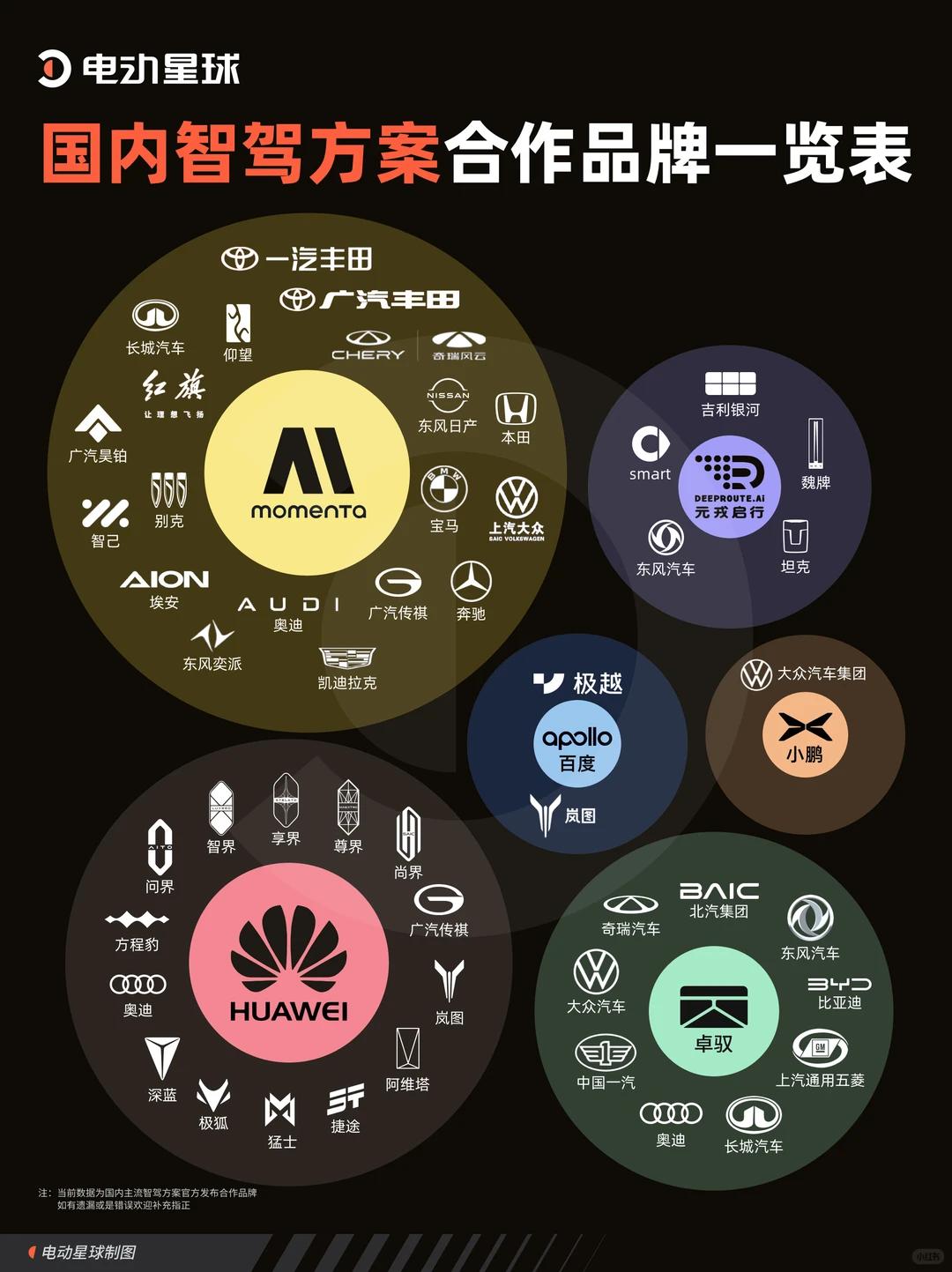
Core Insights - The Chinese smart driving industry has reached a critical turning point in 2025, transitioning from a phase of exploration to one dominated by scale and delivery, leading to the emergence of clear "losers" in the market [1][2] - The threshold of 1 million vehicles equipped with smart driving systems is becoming a significant benchmark, with companies like Yuanrong Qixing indicating that crossing this line will be essential for survival in 2026 [3][34] Competitors - As of January 1, 2026, a comprehensive overview of domestic smart driving solution providers reveals the competitive landscape among third-party suppliers [4] - Horizon Robotics has established partnerships with over 40 automakers, including major brands like SAIC and GAC, indicating its strong market presence [6] - By the end of 2025, Horizon's HSD system saw activation in over 12,000 vehicles shortly after its launch, showcasing its rapid adoption [8] - Companies like NIO, Xpeng, and Li Auto are also significant players in the self-developed smart driving systems space, alongside traditional automakers like BYD and Great Wall [11] - The industry is witnessing a convergence of technology routes, with a consensus on end-to-end architecture and multi-modal large models, leading to a more competitive environment [12] - Huawei has crossed the 1 million vehicle mark with its smart driving system, establishing a unique position in the market [12][15] - The competitive landscape is characterized by a significant number of active smart driving brands, exceeding 15, which poses sustainability challenges for the industry [12] Exiting Players - The failures of companies like Haomo and Dazhuo in 2025 highlight the industry's harsh realities, with common issues including slow technology transitions and concentrated customer bases [29][30] - The inability to deliver products on time has been a critical factor in the downfall of these companies, emphasizing the need for rapid iteration and delivery capabilities [30] - The increasing number of exiting players is attributed to mismatched technology routes and capability shortfalls, with a shift towards data-driven solutions becoming essential for survival [32] "Killing Line" Approaching - The 1 million vehicle mark is emerging as a psychological threshold, with companies below this number at risk of being pushed out of the market [34] - This benchmark represents a cash flow turning point, where companies can begin to cover core investments through revenue generated from vehicle deployments [34] - Achieving this scale also enhances data density, allowing for better coverage and problem-solving capabilities in diverse driving scenarios [35] - The lack of a standardized reporting mechanism for vehicle deployment numbers leads to inflated claims by companies, complicating the competitive landscape [35] - The true survival criteria for smart driving companies will hinge on their ability to establish data-driven development paradigms and integrate them with traditional manufacturing processes [34][39]
达威股份(300535.SZ):没有直接和比亚迪建立供应链或项目合作
Ge Long Hui· 2026-01-16 07:06
Group 1 - The core viewpoint of the article highlights that Davi Co., Ltd. has over 400 leather chemicals certified by the ZDHC initiative, which is a global environmental initiative launched by several well-known brands and retailers [1] - The industry has various strengths and weaknesses in product processes, customer structures, and regional layouts, making it difficult to determine a clear leader among companies [1] - The company acts as an indirect supplier to automotive enterprises, providing leather products and automotive interior materials to well-known domestic and international car manufacturers, and does not have a direct supply chain or project cooperation with BYD [1]

盐城经开区企业荣登“灯塔工厂”名单 ,领跑全球汽车座椅智造
Yang Zi Wan Bao Wang· 2026-01-16 06:25
Core Insights - The company, Faurecia (Yancheng) Automotive Components System Co., Ltd., has been recognized as a "Lighthouse Factory" by the World Economic Forum, marking it as the first factory in the automotive seating sector to achieve this honor, indicating its advanced level of smart manufacturing [1] Group 1: Company Achievements - Since its establishment in September 2011, the Yancheng factory has focused on the production of automotive seat slides, quickly becoming the largest production base for seat slides globally due to stringent quality control and an efficient supply chain [2] - The company's customer base includes major traditional automakers such as Volkswagen, General Motors, Mercedes-Benz, BMW, Audi, and Hyundai-Kia, as well as new energy vehicle manufacturers like BYD, Chery, Li Auto, and Leap Motor, with products exported to countries including the USA, Japan, and South Korea [2] - The factory has achieved a domestic market share of over 30% in automotive seat slides, with sales revenue increasing from 400 million to 2 billion yuan, making it the highest tax-paying enterprise per unit area in Yancheng [2] Group 2: Digital Transformation - The company initiated a digital upgrade project in 2016, developing over 50 digital management tools and deploying more than 40 intelligent application scenarios, with annual technology investments exceeding 100 million yuan [3] - By the end of 2024, the company plans to officially launch the "Lighthouse Factory" project, investing over 10 million yuan to refine five core digital cases involving AI, big data, digital twins, and VR, aimed at transforming the entire production chain [3] - Automation on the assembly line has reached 80%, with costs reduced by 62.5%, overall equipment effectiveness (OEE) improved by 10.2%, and defect rates decreased by 25.8% [3] Group 3: Future Development - The company has outlined a clear development blueprint, aiming to establish itself as a lighthouse factory by 2026, achieve sustainable lighthouse factory status by 2028, and upgrade to an Industry 5.0 factory by 2030, focusing on high levels of intelligence and human-centered production [4] - The recognition as a "Lighthouse Factory" reflects the strong synergy between local development and corporate innovation, with the Yancheng Economic Development Zone leveraging this achievement to promote technological and industrial innovation [5]
重启冲刺!南京功率半导体龙头叩关 A 股
是说芯语· 2026-01-16 03:45
Core Viewpoint - Changjing Technology, a leading power semiconductor company based in Nanjing, has officially restarted its A-share IPO process after completing the listing guidance filing with the Jiangsu Securities Regulatory Bureau on January 15, 2026 [1][4]. Company Overview - Established in November 2018, Changjing Technology has a registered capital of 435 million yuan and is led by founder Yang Guojiang, who serves as both chairman and CEO [6]. - The company has built a comprehensive IDM (Integrated Device Manufacturer) supply chain covering circuit design, chip manufacturing, and packaging/testing, allowing for effective quality and efficiency control across production stages [6]. Financial Performance - From 2020 to 2022, the company's revenue remained stable between 1.3 billion to 1.9 billion yuan, with a notable 42.06% year-on-year growth in 2021 [7]. - The net profit for the same period was 66 million yuan, 242 million yuan, and 130 million yuan, indicating strong profitability [7]. - R&D investment has significantly increased, with expenses rising from 60 million yuan to 138 million yuan over three years, reflecting a compound annual growth rate of over 40% [7]. Market Position and Product Offering - Changjing Technology's product matrix includes discrete devices, power management ICs, and wafers, catering to consumer, industrial, and automotive applications [6]. - In 2022, the company sold 19 billion discrete devices, 930 million power management ICs, and 10.38 billion wafers, showcasing its competitive advantage in niche markets [7]. Industry Outlook - The global power semiconductor industry is expected to grow by 9% year-on-year by 2026, driven by AI technology penetration and expanding electric vehicle demand [8]. - The industry is witnessing a recovery phase, with inventory cycles bottoming out and capacity utilization rates gradually increasing, creating a favorable environment for business growth [8]. Strategic Intent - By restarting its IPO, Changjing Technology aims to leverage capital market resources to expand production capacity and enhance R&D efforts, thereby solidifying its position in the domestic power semiconductor sector [9].

中国乘用车月度图表(2025 年 12 月):国内需求下滑加快,出口增长提速-China Passenger Vehicle Monthly Chartbook_ Dec 2025 - Faster domestic decline & export growth
2026-01-16 02:56
Summary of the China Passenger Vehicle Monthly Chartbook - December 2025 Industry Overview - The report focuses on the **passenger vehicle (PV)** and **new energy vehicle (NEV)** industry in China, highlighting trends in retail and wholesale volumes, inventory levels, pricing, and battery prices [1][2][5]. Key Industry Trends - **NEV Retail Growth**: NEV retail growth decelerated to **+3% year-over-year (yoy)** in December 2025, down from **+4% yoy** in November 2025, attributed to decreasing subsidies [1][5]. - **ICE Decline**: Internal combustion engine (ICE) vehicle sales further deteriorated, showing a decline of **-31% yoy** in December, compared to **-22% yoy** in November, with higher ICE inventory levels [1][5]. - **Export Growth**: Exports of passenger vehicles (PV) and NEVs showed significant strength, with growth rates of **+47% yoy** and **+164% yoy** respectively in November, compared to **+41% yoy** and **+67% yoy** in October [1][5]. Detailed Industry Data - **December 2025 Highlights**: - PV retail sales decreased by **-14% yoy** and increased by **+2% month-over-month (mom)**. - Wholesale sales for PV decreased by **-9% yoy** and **-7% mom**. - NEV retail sales increased by **+3% yoy** and **+1% mom**, while wholesale sales increased by **+3% yoy** but decreased by **-8% mom**. - NEV retail penetration reached **59.1%**, an increase of **9.7 percentage points (pp) yoy**, while wholesale penetration was **56.0%**, up **6.8 pp yoy** [5][6]. Pricing and Inventory Trends - **Inventory**: NEV inventory remained stable, while ICE inventory levels increased [5][6]. - **Pricing**: Dealer discounts for both NEVs and ICE vehicles narrowed month-over-month, with one NEV manufacturer implementing a price cut [6]. - **Battery Prices**: Lithium cobalt oxide (LCE) battery prices increased by **+32% mom**, while lithium iron phosphate (LFP) and nickel-cobalt-manganese (NCM) battery prices remained flat [6]. Company Highlights - **BYD**: - Delivered **133,000 units** of export volume in December 2025, maintaining strong overseas expansion momentum. - Expected overseas sales volume to reach between **1.5 million to 3.5 million** units from 2026 to 2035, driven by NEV penetration and product competitiveness. - Forecasted **30% earnings compound annual growth rate (CAGR)** from 2025 to 2028, with overseas profit contribution expected to rise from **21% in 2024 to 60% by 2028** [6][7]. - **XPeng**: - Delivered **32,000 units** of domestic retail volume in December 2025, reflecting a **-5% yoy** decline but a **+2% mom** increase. - Market share remained relatively stable with a **-0.2 pp** change. - Blended transaction price increased by **5% yoy** and **4% mom**, attributed to a favorable model mix [7]. Future Outlook - Domestic PV and NEV volume growth is expected to slow down in 2026, with projections of **-2% yoy** for PV and **+11% yoy** for NEV, compared to **+4% yoy** and **+18% yoy** in 2025. - Exports are anticipated to be a bright spot for the industry, particularly for companies like BYD, which is well-positioned for overseas exposure [6][7]. Conclusion The December 2025 report indicates a challenging environment for the domestic PV market, particularly for ICE vehicles, while NEVs continue to show growth albeit at a slower pace. Export opportunities remain robust, particularly for leading companies like BYD and XPeng, which are expected to capitalize on international markets in the coming years [1][5][6][7].

福特据悉与比亚迪洽谈为海外工厂采购电池
Xin Lang Cai Jing· 2026-01-16 02:55
Core Viewpoint - Ford is in discussions with Chinese company BYD regarding the supply of batteries for hybrid vehicles manufactured at Ford's overseas plants, although no agreements have been reached yet [1][2]. Group 1: Discussions and Partnerships - Ford is negotiating with multiple battery suppliers, with BYD being one of the key players in these discussions [1]. - The discussions aim to support Ford's expanding hybrid vehicle product line through battery supply from overseas manufacturing [2]. Group 2: Production and Sales - Hybrid vehicles produced at Ford's overseas plants are intended for export globally, including to the United States, while most hybrid vehicles sold in the U.S. will still come from North American factories [2]. - BYD, known for having the highest electric vehicle sales globally, has not commented on the discussions [1].

麦格理将比亚迪A股目标价从122.00元下调至110.00元
Zhi Tong Cai Jing· 2026-01-16 02:37
麦格理将 比亚迪 A股目标价从122.00元下调至110.00元。 ...