南京银行

Search documents
年终奖理财竞赛升级:发力“一站式配置”服务
Zhong Guo Jing Ying Bao· 2026-02-06 18:54
Core Insights - The banking sector is shifting from single product sales to comprehensive wealth management solutions, driven by declining interest rates and increasing competition [3][4] - Financial institutions are focusing on customized financial products to meet diverse customer needs, particularly in the context of year-end bonuses [2][3] Group 1: Market Trends - Banks are introducing tailored financial strategies to cater to different risk appetites, emphasizing low-risk investment products like fixed-income and "fixed income plus" offerings [1][2] - The demand for low-volatility, fixed-income products is rising, aligning with customer preferences for stable value growth [6] Group 2: Strategic Shifts - The transition to comprehensive wealth management is a response to pressures from both market conditions and operational challenges, including narrowing net interest margins and intensified competition from various financial service providers [4][3] - The regulatory environment is pushing banks to enhance their service offerings and ensure responsible selling practices, particularly in light of the shift towards net value products [4] Group 3: Investment Recommendations - Investors are advised to adopt a defensive asset allocation strategy, focusing on liquidity management and diversification to mitigate risks associated with volatile assets [5][7] - A three-step approach for year-end financial planning is suggested: clarify fund usage, assess risk tolerance, and select appropriate financial products [5][6]


11家A股上市银行率先披露业绩快报,全员盈利正增长、资产规模实现突破
Sou Hu Cai Jing· 2026-02-06 16:47
Core Insights - The overall performance of A-share listed banks shows a trend of "all profitable and positive growth, with stable asset expansion," indicating a robust operational status in the banking sector [2][9] - Qingdao Bank leads with a remarkable 21.66% year-on-year growth in net profit, showcasing strong profit growth momentum among the disclosed banks [2][6] - Both CITIC Bank and Shanghai Pudong Development Bank have crossed the 10 trillion yuan asset threshold, joining the "trillion yuan club," highlighting the scale advantages and resilience of joint-stock banks [5][9] Performance Summary - As of February 5, 2026, 11 A-share listed banks have disclosed their 2025 performance reports, including four joint-stock banks, six city commercial banks, and one rural commercial bank, reflecting a balanced representation of different bank types [3][5] - Qingdao Bank reported an operating income of 14.573 billion yuan, a year-on-year increase of 7.97%, and a net profit of 5.188 billion yuan, with a growth rate of 21.66% [6][8] - Shanghai Pudong Development Bank achieved a net profit growth of 10.52%, while CITIC Bank's net profit increased by 2.98%, both benefiting from their substantial asset scales [5][6] Growth Highlights - All 11 banks reported positive year-on-year net profit growth, with four banks exceeding 10% growth: Qingdao Bank (21.66%), Qilu Bank (14.58%), Hangzhou Bank (12.05%), and Shanghai Pudong Development Bank (10.52%) [8] - Qingdao Bank's asset total surpassed 800 billion yuan, with both deposits and loans growing by over 16%, and its non-performing loan ratio improved to 0.97% [8] - Ningbo Bank also demonstrated strong performance with an operating income of 71.968 billion yuan, a year-on-year increase of 8.01%, and a net profit growth of 8.13% [8] Asset Scale Developments - CITIC Bank and Shanghai Pudong Development Bank's asset totals reached 10.081 trillion yuan and 10.132 trillion yuan respectively, marking significant milestones in their operational scale [9] - The entry of these banks into the "trillion yuan club" not only expands the membership but also underscores the pivotal role of joint-stock banks in the industry [9] - The overall performance of the 11 banks reflects a stable development trend in the banking sector, providing a solid foundation for future growth as more banks disclose their performance reports [9]




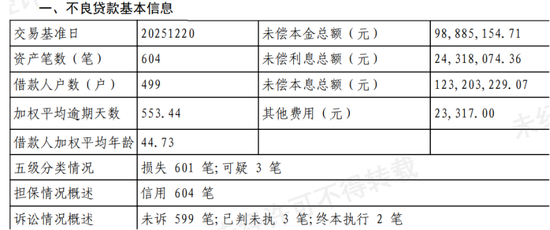
南京银行转让604笔个人不良贷款,要求受让方不暴力催收
Xin Lang Cai Jing· 2026-02-06 09:20
Core Viewpoint - Nanjing Bank has announced the transfer of non-performing assets, specifically personal non-performing loans related to credit card overdrafts, with a total outstanding principal of approximately 98.89 million yuan and total outstanding interest of about 24.32 million yuan, indicating a significant focus on managing and disposing of non-performing loans [1][2][13]. Group 1: Non-Performing Loan Transfer Details - The asset package consists of 604 loans from 499 borrowers, with a weighted average overdue period of 553.44 days and an average borrower age of 44.73 years [1][2][17]. - The total outstanding principal is 98.89 million yuan, total outstanding interest is 24.32 million yuan, and the total outstanding principal and interest amount to approximately 123.20 million yuan [2][15]. - The classification of the loans shows 601 as losses and 3 as suspicious [14][15]. Group 2: Conditions for Potential Buyers - Interested buyers must conduct individual investigations of the non-performing loans and agree to bear the risks associated with the disposal of these assets [3][16]. - Buyers are required to commit to using only legal means for the collection of these loans and are prohibited from transferring the loans to third parties or using violent collection methods [3][16]. Group 3: Retail Business Performance - Nanjing Bank has emphasized retail banking as a key area, launching a "three-year doubling plan for retail value customers" to enhance channel development and product creation [3][16]. - As of mid-2025, the bank's personal loan balance reached 3319.49 billion yuan, with a year-on-year increase of 117.55 billion yuan, reflecting a growth rate of 3.67% [4][17]. - Consumer loans accounted for over 62% of the total personal loans, while credit card overdrafts represented only 4.43% [4][17]. Group 4: Loan Growth and Quality - By the end of Q3 2025, the personal loan balance increased to 3383.47 billion yuan, marking a growth of 5.67% compared to the end of the previous year [20]. - The non-performing loan ratio for personal loans rose to 1.33%, up from 1.29% at the end of the previous year, indicating a slight increase in loan quality concerns [10][22]. - Despite the increase in non-performing loans, the retail segment achieved a revenue of 117.02 billion yuan in the first three quarters of 2025, with a year-on-year growth rate of 22.10% [12][22].
齐鲁银行2025年业绩快报点评利润增速保持强劲,资产质量连续七年优化
GUOTAI HAITONG SECURITIES· 2026-02-06 04:30
利润增速保持强劲,资产质量连续七年优化 齐鲁银行(601665) 齐鲁银行 2025 年业绩快报点评 | [姓名table_Authors] | 电话 | 邮箱 | 登记编号 | | --- | --- | --- | --- | | 马婷婷(分析师) | 021-23185608 | matingting@gtht.com | S0880525100001 | | 陈惠琴(分析师) | 021-38676666 | chenhuiqin@gtht.com | S0880525100003 | [Table_Industry] 商业银行/金融 | [Table_Invest] 评级: | 增持 | | --- | --- | | [Table_Target] 目标价格(元): | 7.43 | | | | 齐鲁银行业务规模保持较快增长,同时主动加强负债成本管控,净息差同比改善, 资产质量持续向好,打开信用成本下行空间,利润增速快于同业。 投资要点: | [Table_Finance] 财务摘要(百万元) | 2023A | 2024A | 2025E | 2026E | 2027E | | --- | --- ...
开年险资调研忙 新质生产力受关注
Zhong Guo Zheng Quan Bao· 2026-02-06 03:50
Core Insights - Insurance capital management is increasingly focused on deep research of individual stocks and industries, with significant interest in A-share listed companies as indicated by over 300 companies being researched since the beginning of 2026 [1][2] Group 1: Research Trends - A total of 96 insurance companies and 32 insurance asset management companies have participated in the research of A-share listed companies since the beginning of 2026 [2] - Key players such as Taiping Pension, Changjiang Pension, and China Life Pension have conducted over 30 research sessions each within a month [2] - Regional banks and sectors like electronic components, semiconductor materials, and devices are receiving heightened attention from insurance capital [2] Group 2: Investment Strategies - Insurance capital views company research as a crucial part of investment strategy, often focusing on high-quality stocks with long-term growth potential [3] - The demand for high dividend stocks is driven by the need for stable cash flow in a low-interest-rate environment, with banks being a primary focus for insurance capital [4] - Insurance capital is increasingly adopting a dividend strategy, favoring high dividend stocks to stabilize returns amid pressure on fixed-income yields [4] Group 3: Focus on New Productive Forces - Insurance capital is aligning with long-term investments in new productive forces, particularly in technology innovation and emerging strategic industries [5] - There is a focus on investing in sectors with real technological barriers and clear business models that can deliver performance [5] Group 4: Investment Paths - For mature technology leaders, insurance capital is likely to invest directly for excess returns, while for emerging tech sectors, indirect investments through ETFs or industry funds are preferred to manage risks [6] - The insurance capital sector is particularly interested in AI-driven technology and high-end manufacturing, with a strategy to invest in companies with clear business models and strong competitive advantages [6]


开年险资调研忙 新质生产力受关注
Zhong Guo Zheng Quan Bao· 2026-02-05 22:23
Group 1 - The core viewpoint of the articles highlights the increasing interest of insurance capital in specific sectors and companies, particularly in regional banks and new productivity sectors, as indicated by their extensive research activities [1][2][3] - Since the beginning of 2026, over 300 A-share listed companies have been researched by insurance companies and asset management firms, with significant participation from 96 insurance companies and 32 asset management companies [2] - Key areas of focus for insurance capital include regional banks such as Shanghai Bank and Nanjing Bank, as well as sectors like electronic components, semiconductor materials, and devices [2][3] Group 2 - Insurance capital is increasingly favoring high-dividend stocks as a stable source of cash flow, particularly in a low-interest-rate environment, which drives the demand for equity assets [4] - The strategy of investing in high-dividend stocks is seen as a way to enhance returns and stabilize portfolios, with a focus on long-term holdings and dividend yields [4][5] - The shift towards high-dividend stocks is also a response to new accounting standards that increase profit statement volatility, making these investments more attractive [4] Group 3 - Insurance capital is aligning with the new productivity sector, which relies on technological innovation and strategic emerging industries, requiring long-term and stable capital support [5][6] - Investments are being directed towards technology leaders with clear business models and performance track records, while emerging tech sectors may be approached through industry-themed ETFs or funds to mitigate risks [6] - The focus on AI-driven technology and high-end manufacturing is expected to be central to future technological revolutions, with a commitment to direct investments in companies with strong competitive advantages [6]

开年险资调研忙新质生产力受关注
Zhong Guo Zheng Quan Bao· 2026-02-05 20:27
● 本报记者 薛瑾 "无论是配置盘还是交易盘,险资投资框架都是基于对个股和行业的深度研判。"一位保险资管人士日前 在接受中国证券报记者采访时表示。作为对个股和行业研判的重要环节,上市公司调研透露出险资一段 时间内的兴趣点。Wind数据显示,2026年开年以来,保险公司及保险资管公司合计调研A股上市公司逾 300家。从调研标的分布来看,部分区域性银行和新质生产力领域个股备受险资关注。 调研个股透露险资偏好 从调研机构看,截至2月5日,2026年以来有96家保险公司、32家保险资产管理公司参与调研A股上市公 司。保险公司中,太平养老、长江养老、国寿养老、人保养老在一个多月的时间里调研次数均超过30 次。保险资管公司中,泰康资产、华泰资产、新华资产、人保资产、国寿资产、大家资产调研次数居 前,也均达到30次以上。 从调研对象来看,部分区域性银行以及电子元件、电子设备和仪器、半导体材料与设备等领域关注度颇 高。 上海银行、南京银行、苏州银行、齐鲁银行、厦门银行等多家区域性银行,均位列险资调研行列,上海 银行被14家保险公司及保险资管公司调研,南京银行也得到10家保险公司及保险资管公司调研。息差变 化及管理举措、投资策 ...
风格切换进行时?银行连续走强,厦门银行罕见涨停!机构:历史春节前银行胜率最高
Xin Lang Ji Jin· 2026-02-05 12:36
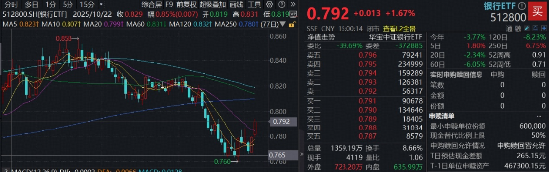
Core Viewpoint - The banking sector continues to show strong performance, with significant gains in individual bank stocks and a notable increase in the banking ETF, indicating a potential market style shift towards large-cap and quality stocks [1][3][5]. Group 1: Market Performance - On February 5, the banking sector saw collective gains, with Xiamen Bank hitting a trading limit and reaching its highest price since June 2021 [1]. - Major banks such as Chongqing Bank and Shanghai Bank also experienced significant increases, with gains of nearly 6% and over 4% respectively [1]. - The largest banking ETF (512800) opened high and further surged, closing up 1.67% with a trading volume of 1.071 billion yuan, reflecting a substantial increase in market activity [1]. Group 2: Fund Flows and Style Shift - There was a rapid influx of main funds into the banking sector, with a net inflow of 5.502 billion yuan, ranking second among all Shenwan first-level industries [3]. - Institutions suggest that the current strength in the banking sector may indicate a style shift in the market, moving from small-cap to large-cap stocks and from thematic to quality investments [3]. - Historical data shows that the banking sector has a high success rate before the Spring Festival, with an 80% win rate for absolute and excess returns over the past decade [3]. Group 3: Financial Performance of Banks - As of the 2025 reporting season, 10 listed banks that have disclosed performance reports achieved positive growth in net profit, with 9 of them reporting both revenue and net profit increases [5]. - Despite a challenging environment characterized by declining interest rates and narrowing interest margins, the banking sector is demonstrating stable growth, providing fundamental support for valuation recovery [5]. - The banking ETF (512800) and its linked funds are effective investment tools tracking the overall performance of the banking sector, with the ETF's latest scale exceeding 12.2 billion yuan and an average daily trading volume of over 800 million yuan since 2025 [5].



银行股,资金出手了
3 6 Ke· 2026-02-05 11:21
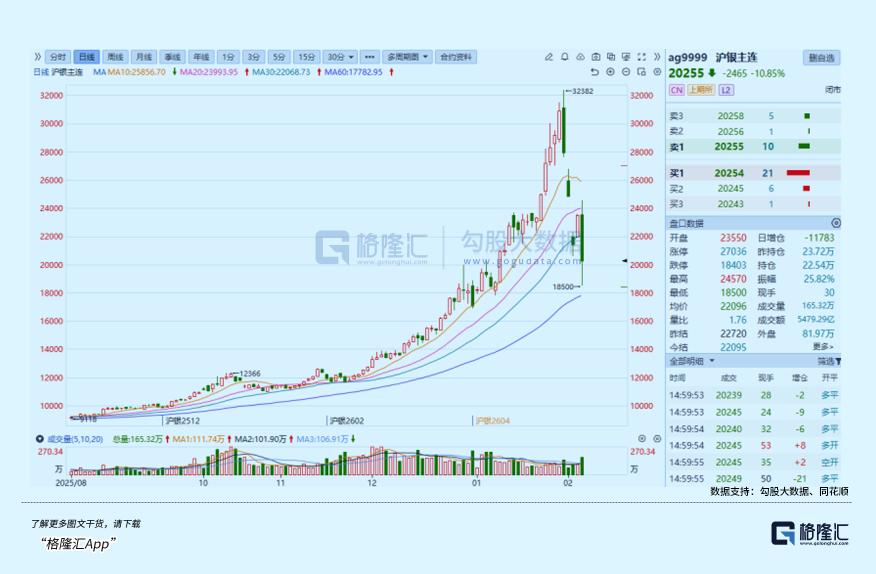
Core Viewpoint - A significant market shift occurred as global funds fled from technology stocks and precious metals, leading to a notable decline in major indices and a surge in bank stocks as a safe haven for investors [1][2][3]. Group 1: Market Reactions - On February 4, U.S. tech stocks experienced a sharp decline, with the Nasdaq dropping over 2% and major companies like Nvidia, Meta, and Tesla falling more than 3%. AMD saw a staggering drop of 17.3%, marking its largest single-day decline in nearly nine years [1][3]. - The panic spread to A-shares and Hong Kong stocks, with sectors like solar energy and precious metals witnessing significant sell-offs. Silver futures plummeted nearly 20% at one point, exacerbating market fears [2][5]. - Despite the overall market turmoil, the banking sector in A-shares rose by 2.1%, with all 42 bank stocks closing in the green, indicating a flight to safety among investors [2][10]. Group 2: Capital Flows - Southbound funds recorded a net purchase of over 22 billion HKD, with major Chinese banks like ICBC, CMB, and CCB becoming core targets for accumulation [3][13]. - A significant shift in capital is underway, with funds moving from tech and precious metals to banks, which are perceived as having a higher safety margin [3][9]. Group 3: Banking Sector Performance - The banking sector is supported by strong earnings growth and historically low valuations, making it an attractive option for risk-averse investors [15][20]. - As of February 4, several banks reported robust earnings, with Qingdao Bank, Hangzhou Bank, and others showing significant profit increases, further solidifying the sector's appeal [16][18]. - The banking sector's average dividend yield ranges from 4.87% to 5.2%, significantly higher than the 10-year government bond yield of around 2%, enhancing its attractiveness in a low-interest-rate environment [21][22]. Group 4: Future Outlook - The recent market volatility raises questions about whether the declines in tech stocks and precious metals will lead to further panic selling. However, the influx of funds into bank stocks suggests a potential shift in market sentiment [23].



银行股,资金出手了!
格隆汇APP· 2026-02-05 10:15
Core Viewpoint - A significant market shift is occurring, characterized by a mass exodus of funds from technology and precious metals sectors, with a notable influx into bank stocks as a safe haven amid rising panic and volatility [2][5][21]. Group 1: Market Dynamics - The U.S. tech stocks experienced a sharp decline, with the Nasdaq dropping over 2%, and major companies like Nvidia, Meta, and Tesla falling more than 3%. AMD saw a staggering drop of 17.3%, marking its largest single-day decline in nearly nine years [2][5]. - Panic spread to A-shares and Hong Kong stocks, with sectors like solar energy and oil equipment witnessing significant sell-offs. Precious metals, which had recently rebounded, also faced a sharp decline, with silver futures plummeting nearly 20% in a single day [3][5]. - The market turmoil was triggered by negative news affecting U.S. tech stocks, leading to a valuation bubble burst. Despite AMD's strong performance, its results fell short of the most optimistic analyst expectations, resulting in a drastic stock price drop [5][6]. Group 2: Bank Sector Resilience - In contrast to the broader market, the banking sector saw a rise, with A-share bank stocks collectively increasing by 2.1%. All 42 bank stocks closed in the green, with Xiamen Bank hitting a rare limit-up and several city commercial banks rising over 3% [3][15]. - Southbound funds significantly targeted bank stocks, with a net purchase exceeding 22 billion HKD, focusing on major banks like ICBC, CMB, and CCB as core investment targets [4][20]. - The banking sector is viewed as a "safe haven" due to its strong earnings growth and historically low valuations, making it an attractive option for risk-averse investors [21][22]. Group 3: Earnings and Valuation - Recent earnings reports from several banks indicate robust growth, with Qingdao Bank, Hangzhou Bank, and Shanghai Pudong Development Bank showing significant increases in net profits. For instance, Qingdao Bank reported a net profit of 51.88 billion CNY, a 21.66% year-on-year increase [23][25]. - The banking sector has undergone a six-month correction, leading to a new valuation bottom. The sector's price-to-earnings ratio stands at a low 6.7 times, and the average dividend yield is between 4.87% and 5.2%, making it appealing in a low-interest-rate environment [27][28]. - Institutional interest in bank stocks is rising, with over 370 institutions conducting research on 11 listed banks, indicating a strategic shift towards these stocks amid market volatility [28][29].