迪卡侬

Search documents
供应链降碳,既要“绿电集采”也要推动供应商“用绿电”
Xin Lang Cai Jing· 2025-09-25 05:56
Core Insights - The ultimate goal for companies purchasing green electricity is to achieve specific carbon reduction targets and attain "carbon neutrality" [3][10] - Many small and medium-sized enterprises in the supply chain face challenges in technology, funding, and channels when entering the green electricity market [3] - Leading companies typically adopt two strategies: facilitating "green electricity collective procurement" for suppliers and prioritizing partnerships with low-carbon suppliers based on ESG performance [3][4] Green Electricity Collective Procurement - The motivation for companies to procure green electricity and engage suppliers in collective procurement largely stems from the carbon reduction requirements imposed by leading enterprises, especially those with significant scope 3 emissions [4][5] - The "green electricity collective procurement" model allows leading companies to aggregate the green electricity needs of multiple suppliers and sign long-term contracts with large renewable energy developers, resulting in price advantages [4][5] - For instance, in 2023, Decathlon assisted 14 suppliers in Fujian to sign long-term green electricity procurement agreements with China General Nuclear Power Group [4] Regional Focus and Efficiency - Collective procurement is more effective when conducted within the same province, as it facilitates stable green electricity consumption and supports local renewable energy projects [5] - Lenovo plans to pilot green electricity collective procurement in Guangdong in 2024, with an expected reduction of 30,000 tons of CO2 emissions from the procurement of 46 million kWh of green electricity [5] Integrated Sales Model - Companies requiring large-scale green electricity procurement often find it more efficient to choose integrated sales companies that possess both generation and sales capabilities [6] - Integrated sales companies can better meet the needs of large users due to their stable self-generated resources, while pure sales companies may face challenges in matching user demand and securing stable green electricity sources [6] Supply Chain Collaboration - Collaboration between upstream and downstream enterprises can enhance the use of green electricity among suppliers, driven by ESG performance evaluations [7][8] - ESG compliance has become a critical factor for companies, influencing their creditworthiness and market competitiveness, particularly in the solar industry [7][8] Case Studies and Industry Standards - JinkoSolar conducts annual ESG audits of its primary suppliers, covering over 60 suppliers by 2025, which accounts for approximately 70% of its procurement [8] - Baosteel is responding to green and low-carbon demands from automotive clients by calculating carbon footprints and gradually introducing low-carbon steel products [9][10] Conclusion - Companies need to adopt a goal-oriented approach to green electricity procurement, considering the entire supply chain to facilitate collective procurement and promote ESG performance [10]

户外品牌,正从女性人群要增长
3 6 Ke· 2025-09-25 00:51
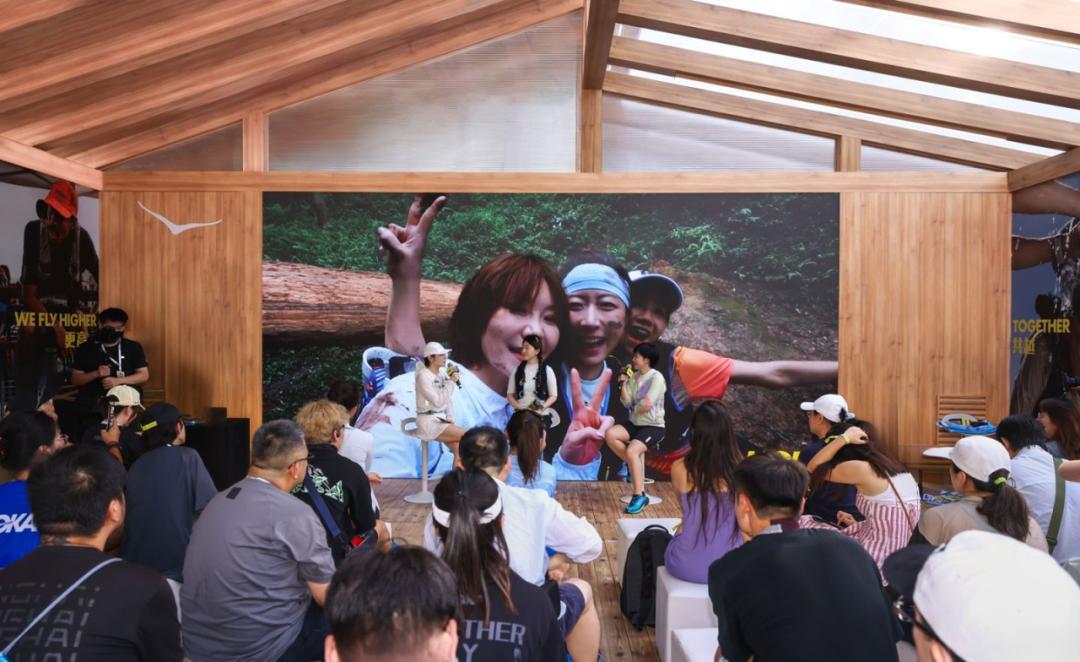
Core Insights - The "Ancestor Bird" incident serves as a reminder for outdoor brands that fashion-oriented marketing can backfire if not handled carefully, emphasizing the need to adhere to core values and connect with their primary audience for sustainable growth [1] - The outdoor market is increasingly recognizing the importance of female consumers, who represent a significant growth opportunity, as brands shift focus from merely expanding their reach to embracing this demographic [2] Group 1: Brand Activities and Strategies - HOKA's recent event, the "Flying Carnival," attracted over 2,000 runners and included unique features such as providing female hygiene products at aid stations and hosting discussions on outdoor experiences, highlighting a shift towards inclusivity and fun [1][3] - Columbia's "Play Hiking Party" also emphasized gender balance by incorporating mixed-gender teams in its events, showcasing a commitment to inclusivity [1][3] - Brands like Salomon are actively targeting the female market, with initiatives such as appointing actress Zhao Jinmai as a brand ambassador to promote their "Samen Girl" concept, reflecting a strategic focus on female consumers [2][5] Group 2: Market Trends and Consumer Insights - The female consumer segment is becoming increasingly vital, with reports indicating that women accounted for up to 70% of outdoor users in China during 2022-2023, and brands are recognizing this potential for growth [2][9] - The outdoor industry is witnessing a shift in female participation in traditionally male-dominated sports, with female runners in events like UTMB increasing from 20% to 25% in 2024, indicating a growing interest and capability among women in outdoor activities [9][11] - Brands are adapting to the evolving preferences of female consumers, moving away from the notion of women's outdoor gear as merely smaller versions of men's products to creating specialized equipment that meets their unique needs [7][8] Group 3: Marketing and Brand Positioning - Outdoor brands are increasingly focusing on the emotional and spiritual aspects of female consumers, aiming to resonate with their inner strength and diverse expressions [5][7] - The trend of using younger female influencers and ambassadors is on the rise, as seen with Columbia's partnerships with Gen Z actresses, which helps to convey a modern and vibrant brand image [5][12] - Brands are also recognizing the importance of community engagement and emotional connection, with initiatives aimed at fostering female-centric discussions and activities to deepen brand loyalty [11][17]
星巴克们的中国往事:从黄金十年到败退时刻
3 6 Ke· 2025-09-24 11:15
Group 1 - The core viewpoint of the article highlights the accelerated divestment of foreign brands in China, marking a significant shift in the market dynamics that have evolved over the past 40 years [4][71]. - The initial entry of foreign brands into China during the reform and opening-up period was characterized by a cooperative approach, as they sought to establish a foothold in a market with limited consumer spending power [5][9]. - By the mid-1990s, as urban consumer groups began to grow, foreign brands started to adopt aggressive strategies, leading to the decline of many domestic brands [10][12]. Group 2 - The article discusses the "two-lever" strategy employed by foreign brands, which involved both establishing retail channels and leveraging brand power to dominate the market [29][40]. - The entry of foreign supermarkets in the 1990s transformed the retail landscape in China, introducing advanced business models and changing consumer shopping habits [30][32]. - The rise of e-commerce and mobile internet has further disrupted traditional retail, allowing smaller domestic brands to thrive by leveraging online platforms [47][51]. Group 3 - The case of Luckin Coffee's rise against Starbucks illustrates how domestic brands have begun to leverage capital and technology to compete effectively with established foreign brands [60][67]. - The article emphasizes that the decline of foreign brands in China is a result of their inability to adapt to the rapidly changing market dynamics and consumer preferences [72]. - The current trend of foreign brands considering divestment to local teams is seen as a potential positive step for their operations in China, allowing for better alignment with local market conditions [71].

迪卡侬:全面推动零碳重卡的应用|2025华夏ESG实践节能降耗案例
Hua Xia Shi Bao· 2025-09-24 09:36
Company Overview - Decathlon Group was founded by Michel LECLERCQ in 1976 in France, currently operating 1,817 stores in 79 countries with a workforce of 101,100 and achieving a revenue of €16.2 billion [1] - Decathlon entered China in 1989 for procurement and production, officially launching retail operations in 2003, establishing a full supply chain including product design, production, logistics, branding, and retail [1] - The company has 4 owned factories, 3 logistics parks, 11 industrial procurement offices, and 200 physical stores across over 100 cities in China, with more than 44% of its procurement sourced from China [1] Sustainability Initiatives - Decathlon aims to reduce absolute greenhouse gas emissions from scopes 1, 2, and 3 by 42% from a 2021 baseline by 2030, with a commitment to achieve net-zero emissions across its value chain by 2050 according to SBTi standards [2] - In 2023, Decathlon began implementing Smart Meters in its energy management systems, with 69 stores successfully installed by the end of 2024, allowing precise monitoring of electricity usage [2] - The rooftop solar photovoltaic project initiated in 2019 has generated nearly 3 GWh of electricity by 2023, saving over ¥140,000 in electricity costs and reducing CO2 emissions by more than 1,800 tons [2] - By 2024, Decathlon plans to have 124 fast charging stations, expected to reduce carbon emissions by approximately 620-992 tons annually, equivalent to the emissions of 400-600 gasoline vehicles [2] Logistics and Green Energy - In 2024, Decathlon China will promote the application of zero-carbon heavy trucks, having tested long-range intelligent heavy trucks with over 600 kilometers of endurance [3] - The green electricity trading project in China has seen participation from over 140 suppliers responding to Decathlon's supply chain decarbonization initiative, with coverage expected in several provinces by 2024 [3] - Decathlon's renewable energy usage exceeds 84%, with a reduction of single-use plastic packaging by over 53%, achieving revenue growth while decoupling from carbon emissions for three consecutive years [3]
迪卡侬“处女地”宣传引争议,官方称已全网下架
Xi Niu Cai Jing· 2025-09-23 07:17
自迪卡侬实行高端化策略以来,肉眼可见的是产品价格上涨,但是结果却是两头不讨好。在价格优势消失之后,原来的那波消费群体不买单了;至于高价产 品,由于缺乏品牌叙事和产品独特性,也很难打动中产群体。 现阶段迪卡侬正处于一种尴尬的状态,如何重新获得消费者的"欢心",是摆在迪卡侬面前的难题。 对于上述争议,网友也是各执一词。一部分人认为"小题大做,不需要过于敏感";一部分人认为"翻译和用词本身存在一定局限"。 实际上因"virgin"一词翻译引发争议的不只是迪卡侬,前段时间施华蔻俏翎烫发套装产品包装也使用了"处女发质"来描述发质。9月11日,施华蔻官方微博发 布文称,核查后发现是由于翻译未能准确传达意愿,已立即启动包装说明的更新工作。对收到影响的消费者致以诚挚歉意,同时将进一步完善内部审核流 程,避免此类问题再次发生。 此次宣传风波,可能只是迪卡侬发展危机中的一环,曾经凭借高性价比产品俘获中国消费者的迪卡侬,现在却在逐渐"降温"。 近日,迪卡侬产品宣传页面引发广泛讨论,其中"海洋,是一块尚未开发且无边无际的处女地",被部分网友质疑用词不当。 针对上述问题,迪卡侬相关负责人回复媒体称:"迪卡侬已经关注到消费者对于网站页面 ...
迪卡侬转型冲高端:“穷鬼”买不起,富人看不上?
3 6 Ke· 2025-09-19 01:24
Core Insights - Decathlon, known for its affordability, has significantly increased prices since 2022, with an average sales price on Douyin rising from 128.81 yuan to 196.32 yuan, a 52% increase [1][2] - The company has launched four high-end sub-brands in March 2024, aiming to enhance its premium image, but this strategy has not resonated well with consumers [1][2] - Financial reports indicate a slowdown in sales growth and a negative net profit growth of -15.48% in 2024, raising concerns about the effectiveness of its pricing strategy [2][5] Pricing Strategy - Decathlon's price hikes have led to a perception of losing its value proposition, with basic items now priced over 100 yuan, making it less appealing to budget-conscious consumers [2][3] - The company faces stiff competition from domestic brands like Camel and KAILAS, which offer a wider variety of styles and faster product updates at competitive prices [2][6] Market Positioning - Despite the price increases, Decathlon's customer base remains primarily middle-class, who appreciate the brand for its reliability and affordability, especially for entry-level sports equipment [7][8] - The brand's attempt to penetrate the high-end market is challenged by established competitors like Lululemon and Arc'teryx, which have successfully positioned themselves as premium brands [6][8] Operational Challenges - Decathlon's net profit margin is around 6%, significantly lower than competitors like Nike and Adidas, making it more vulnerable to rising costs [5][6] - The company operates a heavy asset model, controlling design, production, and logistics, which has helped maintain lower prices but is now strained by increasing raw material and labor costs [5][6] Consumer Experience - Recent changes in store layout and branding have not significantly improved customer experience, leading to confusion about the brand's positioning between low-cost and high-end products [8][10] - While Decathlon's physical stores continue to attract foot traffic, the conversion rate for high-end products remains low, indicating a struggle to shift consumer perception [8][10] Digital Presence - Decathlon's online sales account for a relatively low percentage compared to competitors, highlighting the need for improvement in its digital strategy [8][10] - The brand has a substantial following on social media, but its sales performance on platforms like Douyin lags significantly behind that of competitors like Lululemon [9][10]
传GE Healthcare(GEHC.US)考虑出售中国业务 估值或达数十亿美元
Zhi Tong Cai Jing· 2025-09-18 12:16
Group 1 - GE Healthcare Technologies (GEHC.US) is exploring various options, including the potential sale of its Chinese subsidiary, with valuations possibly reaching several billion dollars [1] - The company is working with advisors to assess the prospects of its business in China, although no final decisions on timing or scale have been made [1] - Other multinational companies, such as Starbucks (SBUX.US) and General Mills (GIS.US) with Häagen-Dazs, are also considering divesting their operations in China due to intense local competition [1] Group 2 - General Electric (GE) divested its medical equipment business in 2023, and GE Healthcare's stock has decreased by 2% this year, with a current valuation of approximately $35 billion [2] - GE Healthcare's product offerings include imaging scans, ultrasound, patient care solutions, and pharmaceutical imaging agents [2] - China is GE Healthcare's second-largest market, employing around 7,000 people, with projected revenues of $2.4 billion for 2024, reflecting a 15% decline from the previous year [2]

体育外卖,究竟能火多久?
3 6 Ke· 2025-09-18 11:16
Core Insights - The core viewpoint of the articles is that sports brands are shifting their focus from merely selling equipment to becoming "sports lifestyle service providers" by entering the instant retail market, which is rapidly growing in China [1][9]. Group 1: Market Trends - Over 1,000 stores of 361 Degrees have launched a "30-minute delivery" service on Meituan, while Anta has over 1,200 stores on Meituan Flash Purchase, and Xtep has over 2,500 stores on JD Instant Delivery [1]. - Instant retail for sports categories has shown significant growth, with running shoes and sports T-shirts seeing over 200% year-on-year sales growth since June, and swimming and cycling gear sales increasing by over 100% [1][2]. - Decathlon's collaboration with Meituan resulted in a nearly 120% month-on-month sales increase [1]. Group 2: Sales Channel Innovations - Sports brands primarily rely on a combination of online and offline sales channels, with a significant number of physical stores, such as Anta with over 13,000 stores globally and Li Ning with 7,534 stores [2]. - The growth of offline stores has slowed, leading brands to explore innovative channel strategies, including instant retail, to tap into new sales growth points [2][3]. Group 3: Operational Efficiency - Instant retail can enhance the efficiency of sports brands' offline resources by converting stores into "front warehouses," reducing delivery times from 1-3 days to around 30 minutes [3]. - This model allows for the circulation of idle inventory, improving space utilization and overall operational efficiency [3]. Group 4: Marketing and Consumer Engagement - Marketing costs are significant for sports brands, with Xtep spending 12.6% of its revenue on marketing, 361 Degrees at 10.1%, Li Ning at 9%, and Anta at 6.6% [4]. - Instant retail platforms are intensifying competition, allowing brands to reach more consumers at lower costs, thus achieving dual benefits of sales and marketing [4]. Group 5: Consumer Behavior and Challenges - Price differences between instant retail and physical stores pose a challenge for sports brands, as consumers may be sensitive to pricing discrepancies [6]. - The potential for high return rates in instant retail, particularly for sports footwear, is a concern, as the lack of fitting opportunities may lead to dissatisfaction [7]. Group 6: Future Outlook - The integration of instant retail into sports brands' strategies is still in its early stages, with a focus on delivery speed and inventory management [9]. - As the relationship between sports brands and instant retail matures, the focus may shift from speed to creating a comprehensive service ecosystem, potentially offering value-added services alongside products [9].
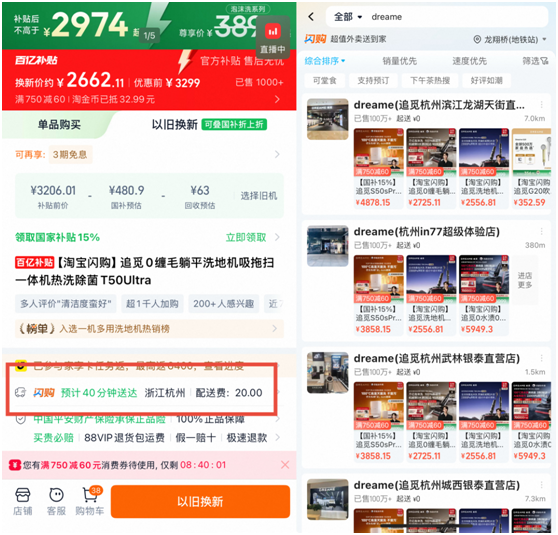
追觅天猫旗舰店接入淘宝闪购,首批33家直营门店实现小时达
Zhong Guo Jing Ji Wang· 2025-09-18 08:42
Core Viewpoint - The partnership between the home appliance brand Chasing and Tmall marks a significant step towards integrating online and offline retail, enhancing consumer experience through instant delivery services [1][3]. Group 1: Company Strategy - Chasing has launched its products on Tmall's flash purchase platform, offering items such as vacuum cleaners and hair dryers, focusing on immediate consumer needs for home cleaning and personal care [1]. - The brand emphasizes a "same model, same price" policy to alleviate consumer concerns about price differences between online and offline purchases [1][5]. - The integration of inventory, traffic, and service through the flash purchase model allows Chasing to capture immediate consumer demand and improve fulfillment efficiency [3]. Group 2: Market Trends - The current government policy promoting trade-in subsidies is stimulating the home appliance market, positioning instant retail as a new growth avenue for brands [5]. - Rapid delivery has become a primary decision factor for consumers in urgent scenarios, and Chasing's "far and near integration" model is designed to seize consumer mindshare and create new growth paths [5]. - As of September, 260 brands, including Midea and Chasing, have connected their Tmall flagship stores to Tmall's flash purchase, enhancing the consumer experience with immediate availability [5].

暴跌15%!穷鬼买不起,中产不买账,这家运动巨头要“卖股”了?
Xin Lang Cai Jing· 2025-09-18 06:35
Core Viewpoint - Decathlon, once a dominant player in the Chinese sports retail market, is experiencing a decline in popularity and profitability due to increased competition and a shift in consumer preferences towards brands like Lululemon and Salomon [3][5][15]. Group 1: Market Position and Strategy - Decathlon's initial success in China was driven by its "high quality, low price" strategy, which resonated with urban young professionals and families seeking affordable sports gear [5][7]. - The company has faced challenges as competitors have emerged with more targeted pricing strategies, eroding Decathlon's market share in the entry-level sports segment [3][15]. - In 2024, Decathlon's net profit fell by 15.5% to €787 million, raising concerns about its profitability amidst a changing market landscape [9][11]. Group 2: Competitive Landscape - Competitors like Lululemon and Camel have gained traction, with Lululemon becoming a staple for middle-class consumers, further complicating Decathlon's market position [15][19]. - Decathlon's attempts to shift towards higher-end products have not resonated with its core consumer base, which primarily values affordability [25][40]. - The brand's identity as a "value leader" is at risk as it struggles to balance price increases with maintaining quality and consumer trust [19][36]. Group 3: Consumer Perception and Brand Narrative - The brand's recent price hikes have led to consumer backlash, with many feeling betrayed as Decathlon's value proposition diminishes [19][38]. - Decathlon's marketing efforts have focused on sustainability, but this narrative has not effectively connected with its primary consumer demographic, which prioritizes value over environmental concerns [43][45]. - The company is attempting to revitalize its image by reintroducing affordable products and leveraging nostalgic marketing strategies, such as the "urea bag" campaign, to reconnect with consumers [50][55]. Group 4: Future Outlook - Decathlon is exploring options to sell approximately 30% of its Chinese subsidiary as part of a significant capital restructuring effort [37]. - The company aims to enhance product quality and align its offerings with consumer expectations to regain market share and consumer loyalty [40][58]. - There is a focus on optimizing the supply chain and deepening market penetration to better meet the evolving needs of Chinese consumers in the next 20 years [58][60].