江淮汽车

Search documents
行业深度 | 自主冲击豪华市场 高端定义增量空间【民生汽车 崔琰团队】
汽车琰究· 2025-09-02 14:30
Core Insights - The core viewpoint of the article emphasizes that the competition in the automotive market is shifting from low-cost vehicles to the mid-to-high-end market, where brand building will be crucial for future growth [2][12]. Group 1: Market Dynamics - The main source of market share growth for domestic car manufacturers from 2024 to 2025 will be in the A-class car market priced between 50,000 to 150,000 CNY, where domestic brands currently hold a 70.6% market share as of Q2 2025 [12][16]. - The mid-to-high-end market (150,000 to 250,000 CNY) is expected to see significant competition, with current domestic market share below 50%, indicating substantial room for growth [5][18]. - The luxury market (250,000 CNY and above) is dominated by brands like Li Auto, Xiaomi, and Huawei, which are leveraging electric and intelligent vehicle technologies to establish themselves as leaders in this segment [5][13]. Group 2: Profitability and Brand Loyalty - The profitability in the mid-to-high-end market is strong, with the 150,000 to 250,000 CNY segment projected to generate annual revenues of approximately 1.1 to 1.2 trillion CNY and net profits of around 550 to 600 billion CNY [3][12]. - Brand loyalty is becoming increasingly important in the 150,000 to 250,000 CNY market, where consumers are less price-sensitive and more focused on overall product quality and brand reputation [18][19]. - The luxury market is characterized by high brand barriers, making it difficult for new entrants to compete solely on price, thus emphasizing the need for established brand identities [4][5]. Group 3: Competitive Landscape - The competitive landscape in the 250,000 CNY and above luxury market is becoming clearer, with domestic brands like Li Auto and Huawei gaining significant market shares, while traditional luxury brands are experiencing a decline [21][22]. - The 150,000 to 250,000 CNY market is fragmented, lacking a clear leader, which presents opportunities for traditional automakers and emerging players to capture market share through innovation and design [5][14]. - The article suggests that traditional automakers and second-tier new forces should focus on the mid-range market (150,000 to 250,000 CNY) as it offers a better opportunity for growth compared to the high-end luxury segment [14][18].







【2日资金路线图】银行板块净流入近119亿元居首 龙虎榜机构抢筹多股
Zheng Quan Shi Bao· 2025-09-02 12:33
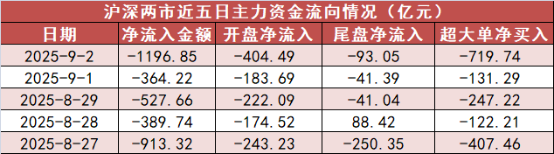
Market Overview - The A-share market experienced an overall decline on September 2, with the Shanghai Composite Index closing at 3858.13 points, down 0.45%, the Shenzhen Component Index at 12553.84 points, down 2.14%, and the ChiNext Index at 2872.22 points, down 2.85%. The North Stock 50 Index increased by 0.4% [1] - The total trading volume in the A-share market reached 29,127.66 billion yuan, an increase of 1,347.62 billion yuan compared to the previous trading day [1] Capital Flow - The main capital in the A-share market saw a net outflow of 1,196.85 billion yuan, with an opening net outflow of 404.49 billion yuan and a closing net outflow of 93.05 billion yuan [2][3] - The CSI 300 index recorded a net outflow of 311.43 billion yuan, while the ChiNext saw a net outflow of 524.41 billion yuan and the Sci-Tech Innovation Board a net outflow of 10.85 billion yuan [4][5] Sector Performance - Among the 4 sectors that experienced net capital inflow, the banking sector led with a net inflow of 118.85 billion yuan, reflecting a 1.69% increase [6][7] - The electronic sector faced the largest net outflow of 497.79 billion yuan, followed by the computer sector with 334.87 billion yuan and the communication sector with 194.06 billion yuan [7] Institutional Activity - The stock "Jilun Intelligent" saw the highest net inflow of main capital at 11.96 billion yuan [8] - Institutional investors showed interest in several stocks, with "Liou Shares" receiving a net purchase of 22,244.99 million yuan, while "Jingwang Electronics" faced a net sell-off of 29,027.97 million yuan [10][11] Institutional Focus - Recent institutional attention has been directed towards stocks such as "Gongchuang Turf" with a target price of 41.02 yuan, representing an upside potential of 28.87%, and "Qingdao Port" with a target price of 12.00 yuan, indicating a 36.05% upside [13]
汽车行业系列深度十:自主冲击豪华市场,高端定义增量空间
Minsheng Securities· 2025-09-02 12:08
Investment Rating - The report maintains a positive investment recommendation for the mid-to-high-end automotive market, particularly for domestic brands [6]. Core Insights - The domestic automotive market is experiencing a shift from a focus on cost-effectiveness to brand building, especially in the mid-to-high-end segments [1][2]. - The high-end market (above 150,000 RMB) is expected to see significant growth, with domestic brands poised to capture a larger share due to their increasing brand loyalty and product capabilities [2][5]. - The competitive landscape is evolving, with traditional luxury brands facing challenges from emerging domestic players leveraging technology and innovation [3][4]. Summary by Sections 1. Mid-to-High-End Market Profitability - The mid-to-high-end market is characterized by strong profitability and significant growth potential, with domestic brands currently holding less than 50% market share in segments priced above 150,000 RMB [2][5]. - The 5-15 million RMB market is dominated by domestic brands, achieving a market share of 70.6% as of Q2 2025, but is entering a phase of stock competition with limited growth potential [12][16]. - The 15-25 million RMB market shows a growing share for domestic brands, currently at 48.0%, indicating room for further expansion [18][19]. 2. Lessons from Overseas Brands - Traditional luxury brands have established strong brand identities through historical positioning and consistent messaging, which domestic brands can learn from [2][3]. - The ultra-luxury segment emphasizes performance and exclusivity, while traditional luxury brands focus on luxury experiences and brand prestige [3]. 3. Building Brand Barriers for Domestic Brands - Domestic brands are increasingly focusing on building brand barriers through product differentiation and technological advancements, particularly in the luxury segment [4][5]. - The competitive landscape in the 25 million RMB and above market is stabilizing, with leading domestic brands like Li Auto and Huawei establishing a strong presence [4][24]. 4. Challenges and Opportunities in the Luxury Market - The luxury market is witnessing a clear leadership structure, with domestic brands like Li Auto and Xiaomi emerging as strong competitors against traditional luxury brands [4][24]. - The report suggests that the 15-25 million RMB market is fragmented and presents opportunities for traditional and emerging players to establish leadership [15][19]. 5. Investment Recommendations - The report recommends focusing on domestic brands in the mid-to-high-end market, particularly those with strong brand potential and innovative capabilities [5]. - Suggested companies for investment include emerging players like Xiaomi, Li Auto, and traditional brands with high-end sub-brands such as Geely and BYD [5].




【2日资金路线图】银行板块净流入近119亿元居首 龙虎榜机构抢筹多股
证券时报· 2025-09-02 10:30
Market Overview - The A-share market experienced an overall decline on September 2, with the Shanghai Composite Index closing at 3858.13 points, down 0.45%, the Shenzhen Component Index at 12553.84 points, down 2.14%, and the ChiNext Index at 2872.22 points, down 2.85%. The North Stock 50 Index increased by 0.4%. Total market turnover reached 29,127.66 billion yuan, an increase of 1,347.62 billion yuan compared to the previous trading day [1]. Capital Flow - The main capital in the A-share market saw a net outflow of 1,196.85 billion yuan, with an opening net outflow of 404.49 billion yuan and a closing net outflow of 93.05 billion yuan [2]. - The CSI 300 index recorded a net outflow of 311.43 billion yuan, while the ChiNext saw a net outflow of 524.41 billion yuan and the Sci-Tech Innovation Board a net outflow of 10.85 billion yuan [4]. Sector Performance - Among the major sectors, the banking industry led with a net inflow of 118.85 billion yuan, while the electronic sector faced the largest outflow of 497.79 billion yuan [6][7]. - Other sectors with notable inflows included oil and petrochemicals (16.25 billion yuan) and home appliances (3.49 billion yuan) [7]. Stock Highlights - The stock "Jilun Intelligent" saw the highest net inflow of 11.96 billion yuan [8]. - Institutional investors showed interest in several stocks, with "Liou Shares" receiving a net buy of 22,244.99 million yuan, while "Jingwang Electronics" faced a significant net sell of 29,027.97 million yuan [10][11]. Institutional Focus - Recent institutional ratings highlighted stocks such as "Qingdao Port" with a target price of 12.00 yuan, representing a potential upside of 36.05%, and "Jianghuai Automobile" with a target price of 68.64 yuan, indicating a 29.00% upside [13].


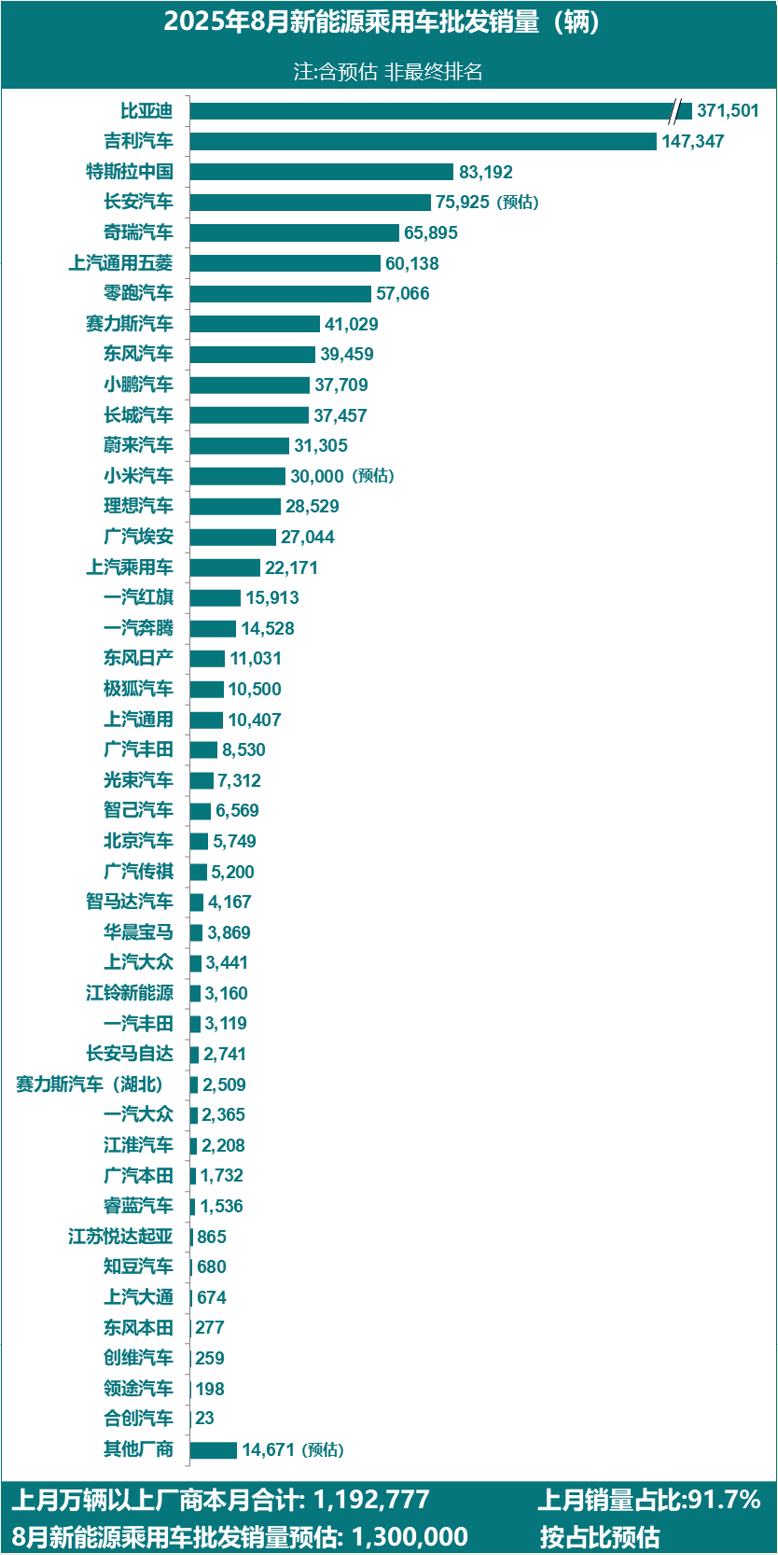
乘联分会:预估8月全国新能源乘用车厂商批发销量130万辆 同比增长24% 环比增长10%
智通财经网· 2025-09-02 09:21
Core Insights - The wholesale sales of new energy passenger vehicles in China reached 1.3 million units in August 2025, representing a year-on-year increase of 24% and a month-on-month increase of 10% [1] - Cumulatively, from January to August 2025, the total wholesale sales amounted to 8.93 million units, reflecting a year-on-year growth of 34% [1] Industry Performance - In August 2025, there were 21 working days, one less than the same period last year, leading to relatively stable production and sales among manufacturers [4] - The Ministry of Industry and Information Technology (MIIT) is promoting a shift from price competition to value competition, focusing on technological upgrades and service quality [4] - Promotions in the fuel vehicle market remained stable at 22.9%, while promotions for new energy vehicles increased to 10.7%, up 2.5 percentage points year-on-year [4] Company Highlights - Major automakers such as Geely, Leap Motor, Dongfeng, Xiaopeng, NIO, Dongfeng Nissan, and GAC Toyota achieved record high wholesale sales of new energy vehicles in August [5] - The combined sales of manufacturers with wholesale volumes exceeding 10,000 units in July accounted for 91.7% of the total new energy passenger vehicle sales for that month [5] - Despite some manufacturers taking summer breaks, most have locked in their sales figures, leading to an estimated total of 1.3 million units sold in August [5]

【一图看懂】A股两融余额创新高,这些股票融资净买入金额居前
Sou Hu Cai Jing· 2025-09-02 08:57
Core Insights - The A-share market's margin trading balance reached a historical high of 22,969.91 billion yuan as of September 1, with a financing balance of 22,808.29 billion yuan, marking an increase of 426 billion yuan year-to-date [4][5]. Margin Trading Overview - The electronic industry saw a significant increase in margin trading, with a financing balance increase of over 950 billion yuan [5]. - The top stock by net financing inflow is Xinyi Technology, with a net inflow of 1,082,594 million yuan and a year-to-date price increase of 372.49% [14]. Industry Margin Trading Balances - The top industries by margin trading balance are as follows: - Electronics: 31,264.90 million yuan - Non-bank financials: 18,055.99 million yuan - Computers: 17,921.09 million yuan - Power equipment: 16,588.25 million yuan - Pharmaceutical biology: 16,166.37 million yuan [7]. Top Stocks by Margin Trading - The top ten stocks by margin trading balance include: - Dongfang Caifu: 2,756,754.1 million yuan - China Ping An: 2,361,717.6 million yuan - CITIC Securities: 1,497,522.2 million yuan [10]. Year-to-Date Net Financing Inflows - The year-to-date net financing inflows by industry are led by: - Electronics: 9,557,255.25 million yuan - Computers: 4,002,277.26 million yuan - Power equipment: 3,920,478.21 million yuan [11].


商用车板块9月2日跌0.05%,江铃汽车领跌,主力资金净流出5.35亿元
Zheng Xing Xing Ye Ri Bao· 2025-09-02 08:55
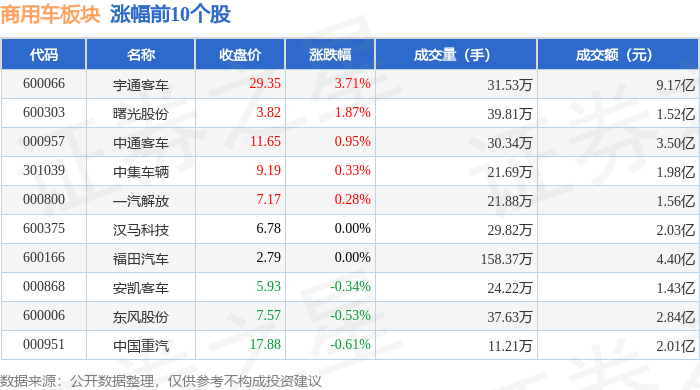
Market Overview - The commercial vehicle sector experienced a slight decline of 0.05% on September 2, with Jiangling Motors leading the drop [1] - The Shanghai Composite Index closed at 3858.13, down 0.45%, while the Shenzhen Component Index closed at 12553.84, down 2.14% [1] Stock Performance - Yutong Bus saw a significant increase of 3.71%, closing at 29.35, with a trading volume of 315,300 shares and a turnover of 917 million yuan [1] - Other notable performers included Shuguang Co. (+1.87%), Zhongtong Bus (+0.95%), and FAW Jiefang (+0.28%) [1] - Jiangling Motors led the decline with a drop of 2.26%, closing at 21.18, with a trading volume of 72,000 shares [3] Fund Flow Analysis - The commercial vehicle sector saw a net outflow of 535 million yuan from institutional investors, while retail investors contributed a net inflow of 307 million yuan [3][4] - Notable net outflows from major stocks included Jiangling Motors (-13.18 million yuan), Dongfeng Motor (-27.30 million yuan), and Ankai Bus (-13.44 million yuan) [4] Individual Stock Highlights - Zhongtong Bus had a net inflow from retail investors of 1.91 million yuan, despite a net outflow from institutional and speculative investors [4] - FAW Jiefang experienced a net inflow of 348,140 yuan from retail investors, indicating some resilience despite overall sector weakness [4]

观车 · 论势 || 从兆瓦超充勃兴看电动重卡的下一步攻坚
Zhong Guo Qi Che Bao Wang· 2025-09-02 08:00
Group 1 - The Sichuan Yuanqi Xingguang Heavy Truck Megawatt Charging Station, the world's first 100-megawatt heavy truck charging station based on Huawei's technology, has officially commenced operations, addressing key industry pain points such as slow charging and compatibility issues [1] - The heavy truck sector in China, with a vehicle ownership of approximately 8 to 9 million, contributes over 50% of carbon emissions in road transport, making it crucial for achieving carbon neutrality goals [1] - The electric heavy truck market is expected to see significant growth, with sales projected to reach 75,000 units in the first half of 2025, representing a year-on-year increase of 195.2% [2] Group 2 - The transition of electric heavy trucks into open logistics and intercity freight scenarios is anticipated to begin in the latter half of this year or early next year, driven by the need for high-power and high-density charging infrastructure [2] - Huawei has formed the "Supercharging Alliance 2.0" with major commercial vehicle manufacturers, aiming to launch around 55 models of megawatt charging heavy trucks this year, with over 20 already delivered [2] - The implementation of megawatt charging technology faces challenges related to infrastructure investment, safety, energy density, and compatibility with the power grid [3] Group 3 - The Chinese government has set a target to establish over 100,000 high-power charging facilities by the end of 2027, promoting the integration of charging infrastructure with distribution network planning [4] - The penetration rate of new energy heavy trucks has exceeded 23% for four consecutive months this year, but the penetration in long-distance logistics remains below 0.1% [4] - The successful electrification of heavy trucks is expected to rely on the effective deployment of megawatt charging technology [4]
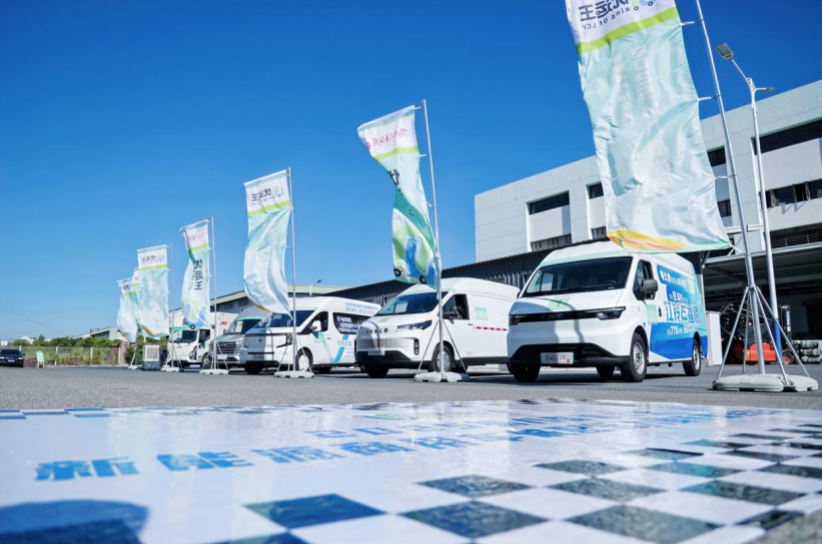
真实场景沉浸式体验!第八届优运王登陆南通
Zhong Guo Neng Yuan Wang· 2025-09-02 06:32
Group 1 - The core viewpoint of the articles highlights the rapid growth of new energy logistics vehicles, particularly in the urban distribution logistics sector, with significant sales increases in both light trucks and vans [1] - The eighth "Youyun Wang" event aims to provide a platform for the industry to explore high-quality and cost-effective solutions for new energy commercial vehicles [3][10] - The event is held in Nantong, a strategic logistics hub in China, which is expected to attract local logistics companies to experience new energy vehicles [6][10] Group 2 - The event features a more complex test drive route compared to previous years, allowing for a thorough evaluation of vehicle performance under various road conditions [8] - A diverse range of vehicle models is showcased, including newly launched and popular products, catering to different market segments [11] - Participants provide in-depth evaluations of vehicles based on their specific operational needs, emphasizing the importance of matching vehicles to their intended use [19][25] Group 3 - The event emphasizes the importance of intelligent development in the new energy commercial vehicle sector, which is crucial for adapting vehicles to different operational scenarios [17] - Feedback from participants indicates that the choice of new energy vehicles can lead to lower operating costs and higher efficiency, directly impacting their income [23][25] - The immersive experience provided by the event allows users to assess vehicle capabilities in real-world scenarios, helping them make informed decisions in a competitive market [25]
8月新能源重卡销近1.6万辆!徐工/解放/三一争冠 神秘黑马暴涨7倍杀入前十 | 头条
第一商用车网· 2025-09-02 06:18
Core Viewpoint - The sales of new energy heavy trucks reached a record high in July 2025, with 16,200 units sold, and continued strong performance is expected in August 2025 [1][20]. Group 1: Market Performance - In August 2025, 15,800 new energy heavy trucks were added nationwide, showing a slight month-on-month decrease of 3% but a year-on-year increase of 169% [3][4]. - The average monthly sales from January to August 2025 exceeded 12,000 units, with six consecutive months of sales surpassing 10,000 units [3][20]. - A total of 30 provincial-level administrative regions reported new energy heavy truck sales in August, with 21 regions adding over 200 units each [3][6]. Group 2: Company Performance - In August 2025, 12 companies sold over 100 new energy heavy trucks, with seven companies exceeding 1,000 units sold [7][11]. - XCMG led the sales with 2,778 units, followed by Jiefang and SANY, both exceeding 2,000 units [7][9]. - The top ten companies in sales saw nine achieve year-on-year growth, with notable increases from Foton and United Heavy Truck at 505% and 684%, respectively [11][16]. Group 3: Cumulative Sales Data - From January to August 2025, cumulative sales of new energy heavy trucks reached 98,000 units, a year-on-year increase of 188% [13][20]. - The top five companies in cumulative sales were SANY, XCMG, Jiefang, Heavy Truck, and Shaanxi Automobile, each exceeding 10,000 units sold [13][14]. - The market share of the top five companies ranged from 11.72% to 16.08%, indicating a competitive landscape [19].