OPPO

Search documents
出海,选孟加拉吗?
Hu Xiu· 2025-09-06 00:30
Group 1: Political Changes - In the second half of 2024, Bangladesh experienced significant political upheaval, leading to the resignation and exile of Prime Minister Sheikh Hasina after widespread protests against the controversial civil servant quota system [1][5][6] - The new interim government aims to stabilize the political situation and prioritize economic revitalization while seeking to deepen cooperation with various countries, including China [2][3] Group 2: Economic Impact - The political turmoil has severely impacted Bangladesh's economy, with GDP growth expectations for the 2024-2025 fiscal year dropping to 3.8%, the lowest in nearly two decades [14] - Exports, particularly in the garment sector, have declined, with a 10.97% year-on-year drop in exports to the U.S. in the first half of 2024 due to instability [15] Group 3: Government Policies - The interim government, led by economist Muhammad Yunus, has implemented measures to restore macroeconomic stability, including tightening monetary policy and reducing government spending [15][16] - Structural reforms are underway, including tax system reforms aimed at increasing tax revenue, which has historically been below 10% of GDP [16] Group 4: Foreign Relations and Investment - The new government continues a friendly policy towards China, signing nine cooperation agreements and securing $2.1 billion in funding for various projects [18][19] - The government is also working to balance relations with the U.S. and India, emphasizing a non-aligned foreign policy while seeking to attract foreign investment [21] Group 5: Market Opportunities - Bangladesh's large population of 170 million, with over 28% aged 15-29, presents significant consumer demand potential, particularly in sectors like automotive and electronics [23] - The country is seen as a favorable investment destination due to its relatively open foreign investment policies and the establishment of special economic zones [25][26] Group 6: Challenges - Despite the opportunities, challenges remain, including political uncertainty, bureaucratic inefficiencies, and a high level of corruption, which can hinder business operations [26][27] - The need for infrastructure development and skilled labor remains critical, as the country seeks to diversify its manufacturing base beyond garment production [27][28]
上海龙旗拟港股IPO 中国证监会要求说明医疗器械经营等业务实际开展情况等
Zhi Tong Cai Jing· 2025-09-05 12:49
Core Viewpoint - The China Securities Regulatory Commission (CSRC) has announced additional requirements for overseas listing applications, specifically requesting Shanghai Longqi to clarify its business operations related to medical devices and compliance with foreign investment regulations [1] Group 1: Regulatory Requirements - CSRC requires Shanghai Longqi to provide details on its operations in the production and sales of Class I, II, and III medical devices, including whether it has obtained the necessary qualifications [1] - The company must also clarify if its subsidiaries' business scopes involve areas covered by the "Negative List of Special Management Measures for Foreign Investment Access (2024 Edition)" [1] Group 2: Company Overview - Shanghai Longqi is a leading global provider of smart products and services, offering comprehensive solutions for well-known smart product brands and leading technology companies [1] - The company's diverse product portfolio includes smartphones, AI PCs, automotive electronics, tablets, smartwatches/bands, and smart glasses, with key clients such as Xiaomi, Samsung Electronics, Lenovo, Honor, OPPO, and vivo [1]
新股消息 | 上海龙旗拟港股IPO 中国证监会要求说明医疗器械经营等业务实际开展情况等
智通财经网· 2025-09-05 12:48
Core Viewpoint - The China Securities Regulatory Commission (CSRC) has announced additional requirements for overseas listing applications, specifically requesting Shanghai Longqi to clarify its business operations related to medical devices and compliance with foreign investment regulations [1] Company Overview - Shanghai Longqi is a leading global provider of smart products and services, offering comprehensive solutions for well-known smart product brands and leading technology companies, including product research, design, manufacturing, and support [1] - The company has developed a diversified product portfolio that includes smartphones, AI PCs, automotive electronics, tablets, smartwatches/wristbands, and smart glasses [1] - Key clients of Shanghai Longqi include major brands such as Xiaomi, Samsung Electronics, Lenovo, Honor, OPPO, and vivo [1] Regulatory Requirements - The CSRC requires Shanghai Longqi to provide detailed information on its and its subsidiaries' operations in relation to the production and sales of first, second, and third-class medical devices, including whether they have obtained the necessary qualifications [1] - The company must also clarify if its subsidiaries' business scopes involve areas covered by the "Negative List of Special Management Measures for Foreign Investment Access (2024 Edition)" [1]
折叠屏之争升维:从硬件竞速到生态决战,国产手机抢先一步
Hua Xia Shi Bao· 2025-09-05 11:56
Core Viewpoint - The foldable smartphone market is becoming increasingly competitive, with Huawei and Samsung leading the charge in the three-fold category, while various domestic brands are actively participating in the two-fold segment. The evolution of smartphone designs is driven by the need for differentiation in the high-end market, particularly against Apple [2][9]. Group 1: Product Launches and Features - Huawei has launched its second three-fold smartphone, featuring the HarmonyOS 5.1 and Kirin 9020 chip, marking a significant upgrade in user experience by integrating PC-level applications [3][4]. - The new three-fold smartphone's starting price has decreased from 19,999 yuan to 17,999 yuan compared to the previous model, attributed to advancements in core technologies and increased production volumes [4][5]. - The device supports PC-level multi-window operations and includes applications like WPS Office and financial terminals, enhancing its productivity capabilities [3][5]. Group 2: Market Dynamics and Competition - The foldable smartphone segment has become a crucial growth engine in the saturated smartphone market, with Huawei leading the domestic market with a 75% share, significantly ahead of its competitors [6][7]. - Despite the growth, the overall market for foldable smartphones is experiencing a slowdown, with a 14% year-on-year decline in Q2 shipments, indicating challenges in consumer adoption due to pricing and quality concerns [8]. - The competition is intensifying as nearly all smartphone manufacturers, except Apple, are entering the foldable market, with several new models launched in 2023 [6][9]. Group 3: High-End Market Competition - The foldable smartphone segment is seen as a key strategy for domestic brands to compete with Apple in the high-end market, with Huawei's new model priced higher than the iPhone 16 Pro Max [10][11]. - Apple is expected to enter the foldable market with its own device by 2026, which could significantly impact the competitive landscape and market dynamics [11]. - Analysts predict that the introduction of Apple's foldable iPhone could lead to substantial market growth, with expectations of around 7-8 million units planned for production [11].



广东茂名首富,又要IPO了
Hua Er Jie Jian Wen· 2025-09-05 11:30
Core Viewpoint - XINWANDA ELECTRONICS CO., LTD. is set to launch an IPO on the Hong Kong Stock Exchange, following the footsteps of other major lithium battery manufacturers like CATL and EVE Energy [2][10]. Company Overview - Founded in 1997 by brothers Wang Mingwang and Wang Wei, XINWANDA started with consumer batteries and has expanded into automotive power batteries and energy storage [3][7]. - The company was listed on the Shenzhen Stock Exchange in 2011 and later on the Swiss Exchange in 2022, marking its third entry into capital markets [4][9]. Financial Performance - XINWANDA reported revenues of 521.62 billion RMB, 478.62 billion RMB, and 560.21 billion RMB for the years 2022 to 2024, with profits of 7.63 billion RMB, 3.31 billion RMB, and 5.34 billion RMB respectively [13]. - The company holds a 34.3% market share in the global mobile phone battery market, ranking first, and a 21.6% share in laptop and tablet batteries, ranking second [12]. Business Segments - The business is divided into three main segments: consumer batteries, power batteries, and energy storage systems [11]. - The revenue from power batteries increased from 126.87 billion RMB in 2022 to 151.39 billion RMB in 2024, while energy storage revenue rose from 4.55 billion RMB to 18.89 billion RMB in the same period [13]. Market Strategy - XINWANDA is facing intense competition in the power battery sector, dominated by CATL and BYD, which together hold over 60% of the market share [14]. - The company is expanding internationally, with significant investments in battery factories in Hungary, Vietnam, and Thailand to support its growth strategy [14][15]. Capital Market Activities - In addition to the upcoming IPO, XINWANDA is also planning to spin off its subsidiary, XINWANDA POWER, for a separate listing on the Shenzhen Stock Exchange [16][17]. - The company has made substantial investments in 73 companies, totaling over 6.5 billion RMB, primarily focusing on battery and energy storage technologies [18][19].

深耕高速连接器 意华股份在通讯连接器领域和华为保持密切合作关系
Quan Jing Wang· 2025-09-05 08:17
Group 1 - Company maintains a close partnership with Huawei in the communications connector field, focusing on R&D and expanding into consumer electronics and automotive connectors [1] - The company has achieved mass delivery of high-speed connectors and optical modules, with a strong market presence due to high entry barriers [1] - In the first half of 2025, the company reported revenue of 3.045 billion yuan and a net profit of 162 million yuan, demonstrating operational resilience in a complex macroeconomic environment [1] Group 2 - The domestic computing power industry is experiencing high prosperity, and the company is leveraging its technical barriers and customer resources to enhance its consumer electronics connector product line [2] - The company is strategically expanding into high-growth sectors such as automotive electronics and smart terminal consumer electronics, which is expected to contribute significantly to performance [2] - The company has established relationships with well-known clients including Foxconn, Xiaomi, and OPP, and possesses advanced manufacturing capabilities [2] Group 3 - The photovoltaic industry is rapidly developing due to global carbon neutrality goals and clean energy transitions, with the company's subsidiary focusing on manufacturing core components for photovoltaic tracking brackets [3] - The company has established a solid reputation in the international market, achieving steady growth in shipment volumes and becoming a key supplier for major clients [3] - The company has a global production and supply network supported by factories in the US and Thailand, enhancing its operational efficiency [3] Group 4 - The company is one of the few in China capable of mass-producing high-speed connectors, with a focus on automotive connectors and photovoltaic bracket businesses [4] - Despite short-term pressures on the photovoltaic business due to global uncertainties, the long-term demand driven by carbon neutrality goals is expected to sustain growth [4] - The company's overseas production bases improve responsiveness to client needs and enhance supply chain resilience, supporting long-term growth [4]
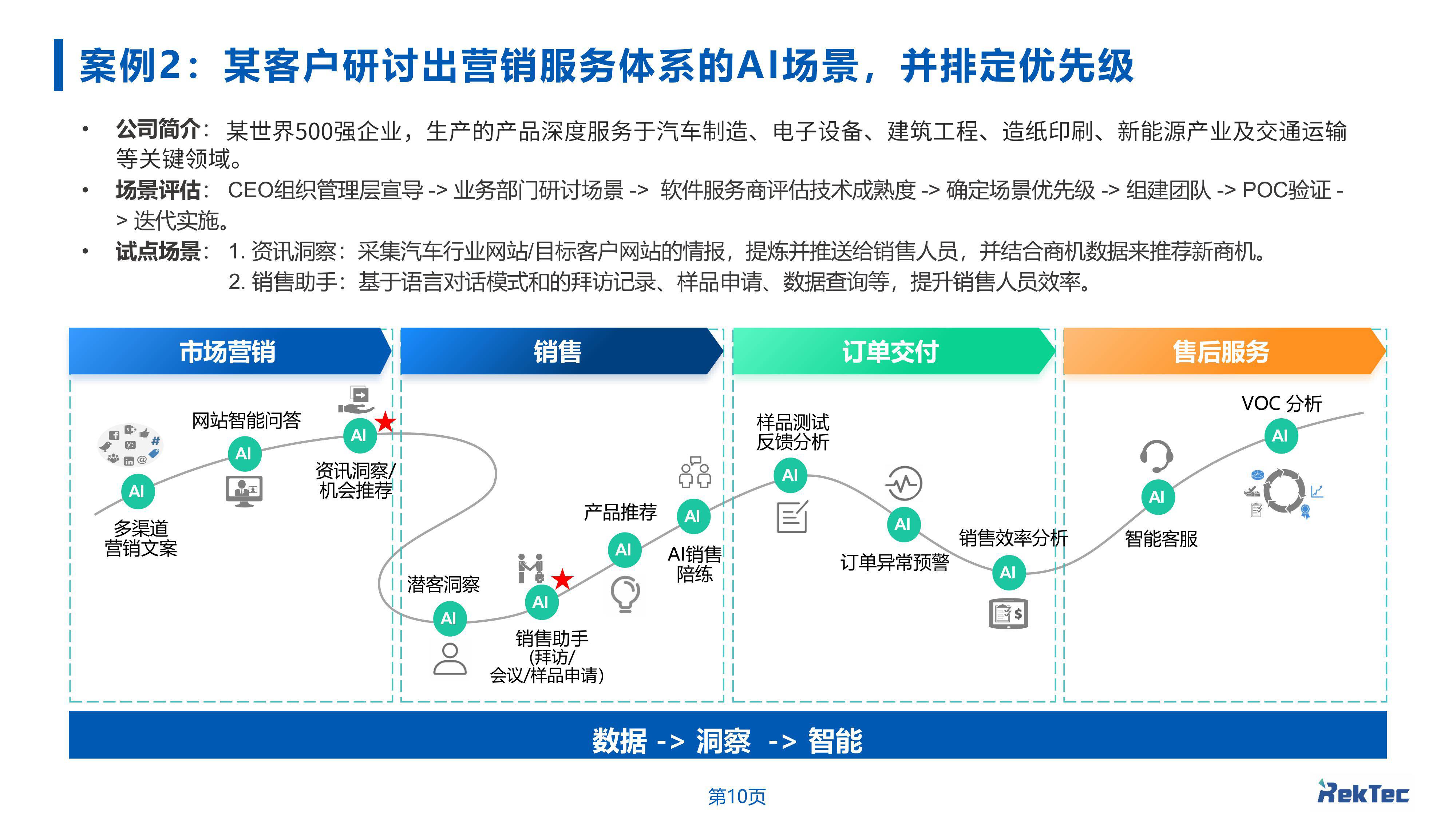
AI如何让获客成本直降80%,利润翻三倍?
Hu Xiu· 2025-09-05 06:01
Core Insights - The article discusses how AI can significantly reduce customer acquisition costs and enhance profitability for businesses, particularly in the context of marketing and sales efficiency [2][30]. Group 1: AI Integration in Marketing - AI is positioned as a "second brain" for sales, marketing, and service personnel, emphasizing its role beyond just a tool [3]. - The development of a proprietary AI platform by RuTai integrates four key capabilities: knowledge management, workflow engine, dialogue support, and agent creation tools [4][5]. - The platform transforms general AI capabilities into secure, controllable, and easily deployable enterprise tools, addressing critical issues like data security and system integration [5]. Group 2: AI Applications in Customer Journey - AI can enhance various stages of the customer journey, including customer acquisition, conversion, delivery, and service [6]. - A case study involving a Fortune 500 automotive parts company illustrates how AI can streamline sales processes by automating customer information retrieval and opportunity identification [6][11][12]. - AI tools can intelligently recommend products based on customer needs, improving the accuracy and efficiency of sales recommendations [13]. Group 3: Addressing B2B Marketing Challenges - Current B2B enterprises face challenges such as low marketing efficiency and poor customer matching, leading to industry "involution" [18]. - AI can help identify new market opportunities by analyzing data and breaking cognitive boundaries, as demonstrated by a chip trading company that expanded its market reach [18][19]. - The article outlines a framework for achieving cost reduction, efficiency improvement, and high-quality growth through AI [19]. Group 4: Quantitative Benefits of AI - AI can reduce customer acquisition costs by over 50%, with traditional costs ranging from 150-200 yuan per lead [24]. - Sales efficiency can be significantly improved, allowing sales personnel to focus on high-quality leads rather than spending time on low-value tasks [24]. - The article highlights that AI can help businesses identify and target high-value customers, leading to increased order profit margins by up to 30% [24]. Group 5: Industry Engagement and Future Directions - The event featured participation from various industry leaders and decision-makers, indicating a strong interest in AI marketing applications [22]. - There is a general confusion in the industry regarding the practical implementation of AI in marketing, prompting further discussions and workshops [23]. - The article concludes with a call for collaboration among industry leaders to explore the logic and future directions of AI marketing [26].
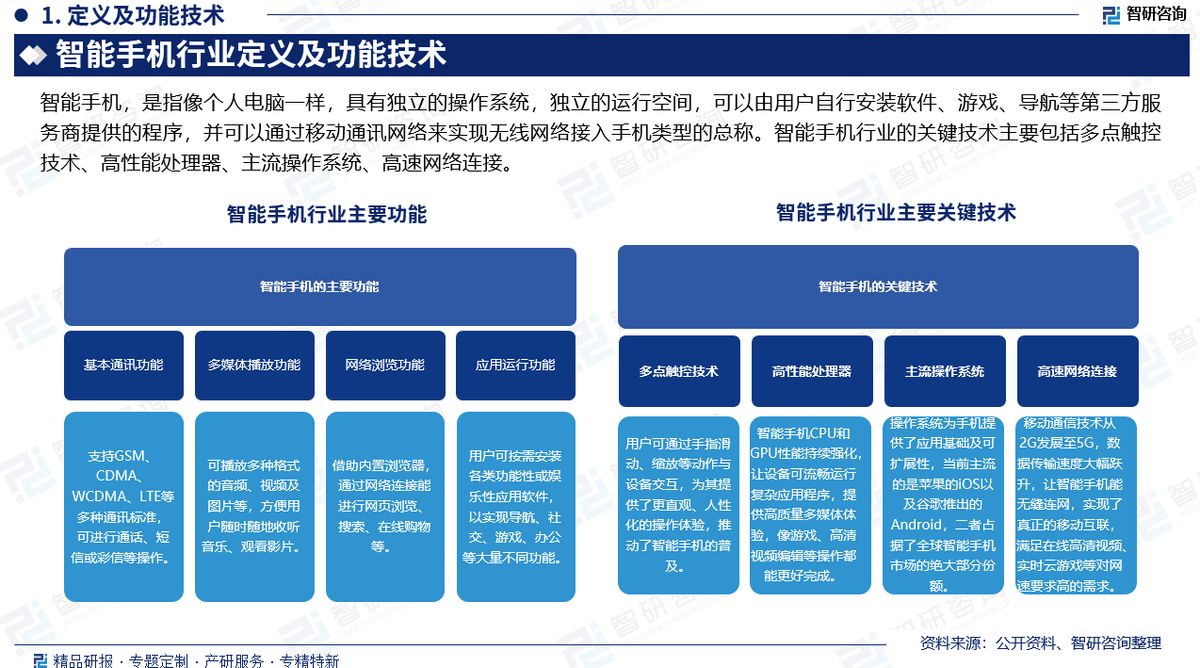
智研咨询解析:中国智能手机行业现状、竞争格局与未来趋势预测
Sou Hu Cai Jing· 2025-09-05 02:22
Core Insights - The smartphone industry in China is experiencing significant growth, with a production volume of 1.25 billion units in 2024, accounting for over 70% of global smartphone production [1] - Despite a 6.5% year-on-year increase in shipment volume to 294 million units in 2024, the market share has declined to 63%, indicating a maturing market with more rational consumer purchasing decisions [1] - The domestic smartphone market is highly concentrated, with local brands holding an 85.6% market share in 2024, and fierce competition among major players like Vivo, Huawei, Apple, Honor, and OPPO [2] Industry Trends - The rapid pace of product updates is leading to increased consumer demands for performance, design, and camera capabilities, while the introduction of AI technology is driving innovation in the smartphone sector [6] - Brands are investing more in marketing strategies, utilizing both online and offline channels to target younger consumers through social media and short video platforms, enhancing brand visibility and market growth [6] - A report by Zhiyan Consulting forecasts stable development for the Chinese smartphone industry from 2025 to 2031, with intensified competition and a focus on differentiated branding becoming crucial [8]
华为上新,价格降了!三星、苹果、小米......密集官宣
Jing Ji Wang· 2025-09-05 02:08
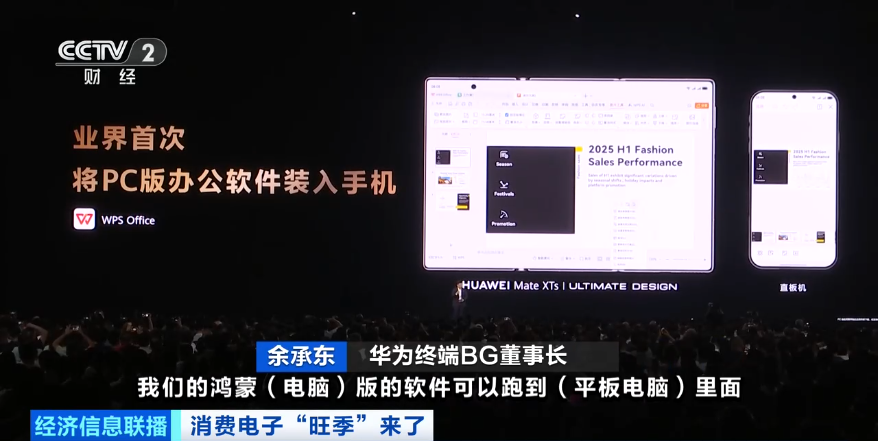
Core Viewpoint - Huawei held its autumn product launch event on September 4, showcasing new devices including a new foldable smartphone, smart screens, tablets, and wireless earphones, amidst a competitive landscape as multiple smartphone manufacturers announced their own September product launches [1][2][3]. Group 1: Huawei's New Product Launch - Huawei introduced a new version of its foldable smartphone, which features a stylus, upgraded chips, and imaging capabilities, and for the first time supports downloading PC applications on mobile [3][5]. - The starting price of the new foldable smartphone is set at 17,999 yuan, which is 2,000 yuan lower than the first generation, reflecting a strategy to enhance competitiveness as the supply chain matures and costs decrease [7]. Group 2: Industry Trends and Market Insights - The foldable smartphone segment is becoming a key focus for manufacturers, with significant opportunities emerging for the electronic supply chain as more brands enter this market [7][10]. - As of August 24, 2023, foldable smartphone sales in China reached 5.88 million units, marking a 26% year-on-year increase, with a market penetration rate of 3.2% [10]. - The consumer electronics industry is experiencing a recovery, with IDC predicting a 1% year-on-year growth in global smartphone shipments by 2025, reaching 1.24 billion units, alongside emerging demand in VR, AR, and smart wearable devices [14].
美的一天净赚近1.5亿,高管回应:公司估值被低估了;字节通报8人涉刑被移交,有人「造黄谣」被追责;追觅上半年营收远2024年全年
雷峰网· 2025-09-05 00:34
Key Points - Usmile, a leading electric toothbrush brand, has established a subsidiary to explore AI hardware, indicating a strategic shift towards smart technology [4] - Midea Group reported a total revenue of 252.3 billion yuan for the first half of 2025, a year-on-year increase of 15.7%, and a net profit of 26 billion yuan, up 25% [6] - Xiaohongshu's valuation has surged by 19% in three months, reaching 31 billion USD, reflecting strong investor interest [7] - NIO's CEO Li Bin confirmed internal restructuring efforts, including personnel adjustments and organizational optimization [8] - Chasing Technology's revenue for the first half of 2025 has already surpassed its total for the entire year, with over 20 billion yuan in intended orders for home appliances [9] - ByteDance reported the dismissal of 100 employees for violating company policies, with 8 individuals facing criminal charges [10] - Five Chinese new energy vehicle companies are facing potential fines of approximately 47 million yuan for alleged maintenance monopolies [12] - Amazon's strict return-to-office policy has reportedly led to the loss of top tech talent [19] - Hyundai's union in South Korea is planning limited strikes to demand a four-and-a-half-day workweek and wage increases [20] - Nvidia's new chip for China, B30A, is expected to have six times the performance of the H20 model, with a price potentially double that of H20 [21] - Apple is developing an AI-based web search tool to enhance competition with OpenAI and others, integrating it with Siri [22] - Google has been fined 325 million euros by France for inserting ads into Gmail without user consent [23] - Shein has been fined 150 million euros by France for improper use of cookies, and plans to appeal the decision [24][25] - European automotive executives are urging the EU to adopt a more flexible approach to emissions regulations, learning from China's policies [26]