
工商银行

Search documents
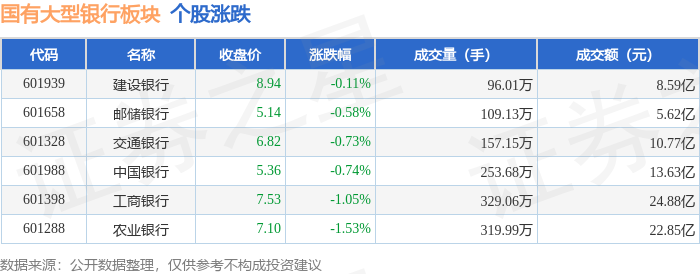
国有大型银行板块1月19日跌1.12%,农业银行领跌,主力资金净流出4.07亿元
Zheng Xing Xing Ye Ri Bao· 2026-01-19 08:58
Group 1 - The core viewpoint of the news is that the state-owned large bank sector experienced a decline of 1.12% on January 19, with Agricultural Bank leading the drop [1] - The Shanghai Composite Index closed at 4114.0, up 0.29%, while the Shenzhen Component Index closed at 14294.05, up 0.09% [1] - The trading performance of individual stocks in the state-owned large bank sector showed varied results, with Agricultural Bank down 1.53% and Industrial and Commercial Bank down 1.05% [1] Group 2 - The net outflow of main funds from the state-owned large bank sector was 407 million yuan, while retail investors saw a net inflow of 539 million yuan [1] - The detailed fund flow data indicates that the Agricultural Bank had a significant net outflow of 35.37 million yuan from main funds, but a net inflow of 73.72 million yuan from retail investors [2] - The overall trend shows that while main and speculative funds are withdrawing, retail investors are increasing their positions in certain banks [2]





今年仅半月减少超70家银行 “减量提质”持续推进
Xin Jing Bao· 2026-01-19 06:20
Core Viewpoint - The banking industry is undergoing a significant structural adjustment, with many rural banks being acquired and transformed into branches of larger state-owned banks, reflecting a trend towards consolidation and quality improvement in the financial sector [1][2][5]. Group 1: Bank Acquisitions - Several rural banks are being acquired by major state-owned banks, such as Chang'an Bank acquiring Shaanxi Taibai Changyin Rural Bank and Bank of Communications acquiring Zhejiang Anji Jiaoyin Rural Bank [1][3]. - In just the first half of this year, over 70 banks are set to be integrated, a stark increase from only 8 during the same period last year [1]. - The acquisitions are part of a broader strategy to enhance the quality of financial institutions by eliminating weaker competitors and optimizing regional financial supply [1][5]. Group 2: Structural Reforms - The central economic work conference has emphasized the need to "deeply promote the reduction and quality improvement of small and medium-sized financial institutions," indicating a shift towards a more efficient banking structure [11]. - The consolidation of smaller banks into larger entities is seen as a necessary step to mitigate regional financial risks and improve the management and operational standards of these institutions [5][11]. - The approach of merging smaller banks into larger ones is being recognized as a new model for enhancing the quality of financial services in rural areas [5]. Group 3: Governance and Quality Improvement - The focus on "reduction" is aimed at achieving "rebirth," with the ultimate goal being quality enhancement rather than merely reducing the number of institutions [10][11]. - The ongoing reforms are expected to lead to a decrease in the number of high-risk institutions, thereby laying a foundation for deeper reforms and risk management [11]. - The success of these reforms hinges on improving governance and ensuring that financial institutions can effectively meet the diverse financial needs of the real economy [11][12]. Group 4: Customer Impact - Bank customers' deposits will remain unaffected during the transition, as the assets and liabilities are typically assumed by the acquiring bank or newly established institution [12]. - The consolidation is expected to enhance the overall competitiveness of banks, thereby providing greater security for customer deposits [12].

债市早报:资金面逐渐恢复宽松;债市整体走暖
Sou Hu Cai Jing· 2026-01-19 04:31
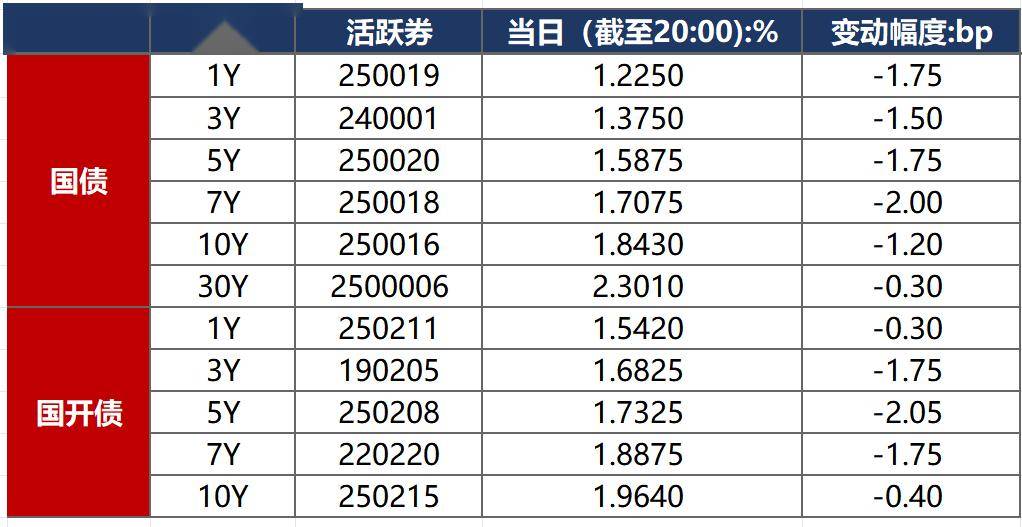
Group 1: Domestic News - The People's Bank of China and the National Financial Regulatory Administration announced that the minimum down payment ratio for commercial property loans will be adjusted to no less than 30% [2] - The Ministry of Finance and the State Taxation Administration extended tax incentives for public rental housing until December 31, 2027, including exemptions from urban land use tax and stamp duty for related entities [2] Group 2: Market Dynamics - The China Securities Regulatory Commission emphasized maintaining market stability and preventing large fluctuations, while promoting long-term investment and value investing [3] - The Financial Regulatory Administration called for the normalization of a coordinated financing mechanism for urban real estate and effective risk resolution for financing platforms [3] Group 3: International News - Federal Reserve Governor Bowman suggested that the Fed should be prepared to lower interest rates if the labor market does not show significant improvement, while expressing optimism about easing inflation pressures [4] Group 4: Bond Market - On January 16, the bond market showed signs of warming, with the yield on the 10-year government bond falling by 1.20 basis points to 1.8430% [8] - The secondary market for credit bonds saw significant price deviations, with "21 Vanke 06" rising over 10% and "23 Vanke 01" increasing by over 21% [10] Group 5: Convertible Bonds - The convertible bond market saw major indices rise, with the China Convertible Bond Index increasing by 0.47% and trading volume reaching 103.48 billion yuan, up 8.11 billion yuan from the previous trading day [17] - New listings such as Aohong Convertible Bond and Shuangle Convertible Bond hit the upper limit, while some existing bonds like Xinzhi Convertible Bond fell over 10% [17]

银行资负跟踪20260119:降准降息还有空间
GF SECURITIES· 2026-01-19 04:26
Investment Rating - The industry investment rating is "Buy" [3] Core Viewpoints - The report indicates that there is still room for further cuts in reserve requirement ratios and interest rates, with a focus on structural monetary policy support for high-quality economic development [15][19] - The central bank has implemented a reduction of 0.25 percentage points in various structural monetary policy tool rates, signaling a supportive monetary policy stance [15][19] - The report emphasizes the importance of timing for future policy implementations, particularly in relation to government bond issuance peaks and the maturity schedule of high-interest bank deposits [15] Summary by Sections 1. Monetary Policy Adjustments - The report notes a reduction of 0.25 percentage points in structural monetary policy tool rates, with a focus on supporting key areas through increased re-lending [15] - Future attention is directed towards December economic data and January LPR [22] 2. Central Bank Dynamics and Market Rates - The central bank conducted a total of 9,515 billion yuan in 7-day reverse repos at an interest rate of 1.40%, with a net injection of 9,741 billion yuan [16] - The report highlights that the funding rates remained stable, with expectations of slight increases due to tax payments and government bond net repayments [16] 3. Bank Financing Tracking - The report indicates that the total outstanding amount of interbank certificates of deposit (CDs) is 19.09 trillion yuan, with an average issuance rate of 1.65% [20] - The report also notes that there were no commercial bank bond issuances during the period, with a total outstanding commercial bank bond size of 3.38 trillion yuan [20]


GYBrand发布2026年全球品牌价值500强榜单!中国78家企业名单一览
Sou Hu Cai Jing· 2026-01-19 04:13
Core Insights - The globalization of Chinese brands is accelerating, with brand value assessment becoming a strategic priority for sustainable development, shifting from an optional to a necessary approach for companies [2] - The GYBrand 2026 World Brand 500 list emphasizes a comprehensive evaluation system based on brand value, financial performance, brand strength, contribution, and sustainability [2] Group 1: Brand Rankings and Distribution - The 2026 GYBrand World Brand 500 includes brands from 33 countries, with a total value exceeding $14 trillion, representing a 7.11% increase from the previous year, and an average brand value of $28.544 billion [3] - The United States leads with 180 companies, while China ranks second with 78 companies, accounting for 15.6% of the total list [3] - Major cities like Beijing, Shanghai, Shenzhen, Guangzhou, and Hangzhou show significant brand concentration, with "Beijing, Shanghai, Shenzhen, Guangzhou, and Hangzhou" collectively contributing 60 companies to the list [3][12] Group 2: Chinese Brand Performance - In 2026, 78 Chinese companies made the GYBrand list, with a total brand value of $22,764 billion, representing 15.9% of the global total, and an average brand value of approximately $292 million [12] - Beijing is the leading city with 38 companies and a total brand value of $12,178 billion, while Shenzhen has 7 companies, all from the private sector [13] - The presence of state-owned enterprises in Beijing highlights its advantages in innovation resources and industrial clusters, reinforcing its leading position in brand value [13] Group 3: Challenges and Opportunities - Chinese brands face a "large but weak" dilemma, needing to transition from scale expansion to value deepening to enhance brand strength [16] - Comparisons with the Fortune Global 500 reveal that while China has a significant number of companies, their average revenue and profit lag behind those of U.S. companies [16] - The ongoing technological revolution and industrial transformation present new opportunities for Chinese brands to enhance their value through innovation, emotional connection, and cultural empowerment [17]


欧盟急议关税纸黄金多头发力
Jin Tou Wang· 2026-01-19 04:04
科斯塔表示,经与成员国就格陵兰岛问题磋商,各方在多项立场上达成共识:欧盟坚决反对任何形式的 胁迫,将坚定捍卫自身利益;团结维护国际法及领土完整、国家主权原则,全力支持丹麦及格陵兰;认可 跨大西洋伙伴在北极和平安全领域的共同利益,强调相关合作应在北约框架内推进。 鉴于事态重要性,科斯塔宣布将在未来数日内召开欧洲理事会特别会议,以进一步强化协调应对。 【最新纸黄金行情解析】 摘要今日周一(1月19日)亚盘时段,纸黄金目前交投于1045元附近,截至发稿,纸黄金暂报1042.56元/ 克,涨幅1.37%,最高触及1048.94元/克,最低下探1028.58元/克。目前来看,纸黄金短线偏向看涨走 势。 今日周一(1月19日)亚盘时段,纸黄金目前交投于1045元附近,截至发稿,纸黄金暂报1042.56元/克,涨 幅1.37%,最高触及1048.94元/克,最低下探1028.58元/克。目前来看,纸黄金短线偏向看涨走势。 【要闻速递】 欧洲理事会主席科斯塔18日通过社媒发声,称欧盟及成员国一致认为,美国为获取格陵兰岛对欧洲8国 加征关税的举措,将严重削弱跨大西洋关系,且与欧美贸易协定精神相悖。 工行纸黄金1月19日开盘价1 ...
金融街丨展望“十五五”:推动科技金融与国家重大科技任务同频共振
Sou Hu Cai Jing· 2026-01-19 03:57
Core Insights - The launch of the "Financial Street" platform aims to document the practice of financial services in supporting the real economy, focusing on the intersection of finance and technology as a key area for innovation and development [2][3]. Group 1: Policy Framework and Strategic Importance - The Central Economic Work Conference emphasizes "innovation-driven development" as a critical strategy, positioning "innovative technology financial services" as a key deployment alongside other major tasks [3]. - The development of a comprehensive policy framework for technology finance is expected to enhance resource allocation and promote a virtuous cycle between technology, industry, and finance [3][5]. Group 2: Financial Support for Technology Development - Technology finance is expected to provide crucial support for cutting-edge technology research and development, with a focus on differentiated credit support policies and multi-level capital market construction [4][6]. - The financial system is evolving to better serve the lifecycle of technology enterprises, from inception to maturity, fostering a positive feedback loop between financial support and industrial growth [4][6]. Group 3: Challenges and Solutions in Technology Finance - Despite significant progress, challenges remain in the technology finance sector, including structural deficiencies in product supply and a lack of effective market mechanisms [7][9]. - Recommendations include enhancing risk-sharing mechanisms, improving information sharing platforms, and developing specialized financial products for early-stage technology companies [8][9]. Group 4: Future Trends in Technology Finance - The "14th Five-Year Plan" period is expected to see the establishment of a multi-layered ecological system that aligns with the entire lifecycle of technological innovation, promoting synergy with national strategic tasks and emerging industries [10][11]. - Trends indicate a deeper collaboration between policy-driven and market-oriented tools, enhancing the financial service system to support technology enterprises throughout their growth trajectories [10][11].


银行业周报:结构性工具降息扩容,对公贷款有望支撑开门红-20260119
Yin He Zheng Quan· 2026-01-19 03:31
Investment Rating - The report maintains a "Recommended" rating for the banking sector, highlighting the continued dividend value of bank stocks and the positive outlook for the sector [39]. Core Insights - The expansion of structural monetary policy tools and interest rate cuts is expected to support banks in stabilizing their interest margins and enhance support for key areas of the real economy [5][39]. - The report anticipates a marginal improvement in corporate financing demand, with public loans expected to continue supporting the bank's credit growth in early 2026 [5][39]. - The report emphasizes the importance of monitoring the effectiveness of policies and the potential for further monetary easing, including a projected 50 basis points (BP) reduction in reserve requirements and a 10-20 BP cut in interest rates throughout the year [8][39]. Summary by Sections Latest Research Insights - The People's Bank of China (PBOC) has reduced the interest rates on various structural monetary policy tools by 25 BP, which is expected to enhance banks' credit allocation to key sectors [7][8]. - The PBOC's measures include increasing the quotas for re-lending to small and medium-sized enterprises and expanding support for technology innovation and green financing [7][8]. Market Performance - The banking sector underperformed the market, with a decline of 3.03% compared to a 0.57% drop in the CSI 300 index [5][15]. - The report notes that only three A-share banks saw an increase in stock prices, while the majority experienced declines [15]. Investment Recommendations - The report suggests focusing on banks that are likely to benefit from the structural monetary policy changes, recommending specific banks such as Industrial and Commercial Bank of China, Agricultural Bank of China, and Postal Savings Bank of China [39]. - The report highlights the ongoing dividend appeal of bank stocks, driven by factors such as low interest rates and substantial dividend payouts [39]. Financial Data - As of December, the total social financing (TSF) showed a year-on-year increase of 8.3%, with corporate loans demonstrating a notable increase, indicating a recovery in financing demand [9][10]. - The report projects that the total new RMB loans in January 2026 will be approximately 5.5-5.6 trillion yuan, with public loans expected to perform slightly better than the previous year [12][39].


苏州金融监管分局核准杨青工商银行昆山分行副行长任职资格
Jin Tou Wang· 2026-01-19 03:31
2026年1月14日,苏州金融监管分局发布批复称,《中国工商银行苏州分行关于杨青任职资格审核的请 示》(工银苏州报〔2025〕121号)收悉。经审核,现批复如下: 一、核准杨青中国工商银行股份有限公司昆山分行副行长的任职资格。 二、中国工商银行昆山分行应要求上述核准任职资格人员严格遵守金融监管总局有关监管规定,自中国 工商银行昆山分行政许可决定作出之日起3个月内到任并向苏州金融监管分局报告。未在上述规定期限 内到任的,本批复文件失效,由苏州金融监管分局办理行政许可注销手续。 三、中国工商银行昆山分行应督促上述核准任职资格人员持续学习和掌握经济金融相关法律法规,牢固 树立风险合规意识,熟悉任职岗位职责,忠实勤勉履职。 ...
数据驱动的管理
3 6 Ke· 2026-01-19 03:29
Core Insights - Data has become an indispensable strategic resource for enterprises, often referred to as the "new oil" of business development. Efficient data collection, scientific analysis, and effective utilization are essential for driving decision-making, optimizing operations, and unlocking innovation [1] Group 1: Necessity of Data-Driven Management - The rapid development of IoT, big data, and AI is driving a comprehensive digital transformation in the global economy, resulting in massive data generation across all operational aspects of businesses [2] - Traditional management models relying on experience and intuition are becoming inadequate in the face of explosive data growth and rapidly changing market conditions, leading to slower responses and inaccurate judgments [2] Group 2: Core Elements of Data-Driven Management - **Data Resource Optimization**: Companies are shifting focus from merely pursuing advanced models to deeply optimizing their unique internal data resources, which are crucial for AI application and differentiated innovation [3] - **Technological Empowerment**: Advanced technologies like AI, machine learning, and big data analytics serve as the engine for data-driven management, enabling precise market trend predictions and operational insights [4] - **Talent Development**: There is a growing need for composite talents who understand both business and data, with positions like data scientists experiencing significant growth in demand [6] Group 3: Practical Pathways for Data-Driven Management - **Precision Decision-Making**: Companies should establish data-based decision-making mechanisms, integrating data analysis into strategic planning, market expansion, and product iteration [7] - **Process Optimization**: Businesses should utilize data to identify and eliminate redundant processes, enhancing efficiency in production, supply chain management, and financial operations [8] - **Risk Prevention**: A data risk warning system should be established to capture potential market, credit, and operational risks in real-time [9] - **Value Creation**: Companies need to leverage data as a core driver for innovation in business models and services, enhancing customer engagement and operational efficiency [10] Group 4: Challenges and Responses in Data-Driven Management - **Data Security and Privacy**: Companies must strengthen data security measures to prevent breaches and ensure compliance with legal regulations [11] - **Data Quality and Governance**: Establishing stringent data quality standards and governance frameworks is essential to avoid misleading decisions due to low-quality data [12] - **Technological Iteration and Talent Shortage**: Companies should invest in R&D and collaborate with educational institutions to keep pace with rapid technological advancements and address talent shortages [13] Group 5: Future Outlook for Data-Driven Management - The latest accounting standards require companies to recognize data resources as assets, marking a significant step towards data assetization. Several companies have begun to disclose the monetary value of their data resources [14] - The emergence of financialization cases for data assets indicates new financing channels for businesses, driven by technological advancements and regulatory frameworks [15] - Embracing a data culture and building core competitive capabilities will be crucial for companies to navigate the challenges and opportunities in the digital economy [16]