易方达基金

Search documents
基金双周报:ETF市场跟踪报告-20251124
Ping An Securities· 2025-11-24 05:08
1. Report Industry Investment Rating No relevant content provided. 2. Core Viewpoints of the Report - As of November 21, ETF products declined overall in the past two weeks. Among domestic major broad - based ETFs, the Shanghai Composite 50 had the smallest decline, and among industry and theme products, the consumption - themed ETF had the smallest decline [2]. - In the past two weeks, among domestic major broad - based ETFs, the Science and Technology Innovation Board 50, CSI 500, ChiNext Index, and CSI 1000 ETFs had the highest net inflows of funds. On November 21, major broad - based and technology - themed ETFs had significant net inflows [2]. - In the past two weeks, funds in cycle, military, and new energy ETFs changed from net outflows to net inflows; funds in technology, dividend, and other large - manufacturing ETFs accelerated their inflows; while the inflow speed of funds in pharmaceutical, consumption, and financial real - estate ETFs slowed down [2]. 3. Summary by Related Catalogs 3.1 ETF Market Review 3.1.1 Main Types of ETF Fund Flows Overview - In terms of broad - based ETFs, the Science and Technology Innovation Board 50, CSI 500, ChiNext Index, and CSI 1000 ETFs had relatively high net inflows in the past two weeks. For example, the Science and Technology Innovation Board 50 had a net inflow of 90.66 billion yuan in the past two weeks [9]. - Among industry - themed ETFs, technology ETFs had an accelerated inflow of funds in the past two weeks, with a net inflow of 322.73 billion yuan. New energy ETFs changed from net outflows to net inflows, with a net inflow of 28.34 billion yuan [9]. 3.1.2 Cumulative Fund Flows of Main Types of ETFs - For broad - based ETFs, since 2025, the fund trend of major broad - based ETFs has changed from outflows to inflows and then back to outflows. In the past two weeks, the overall funds of major broad - based ETFs turned into net inflows [11]. - For industry and theme ETFs, technology ETFs turned to net inflows since March after a large - scale outflow at the beginning of the year, and the inflow speed accelerated in the past two weeks. Cycle, military, and new energy ETFs changed from net outflows to net inflows [17]. - For bond ETFs, since 2025, credit - bond and treasury - bond ETFs have had the highest net inflows. In the past two weeks, convertible - bond ETFs changed from net outflows to net inflows, and treasury - bond ETFs accelerated their net inflows [17]. 3.1.3 ETF Product Structure Distribution - As of November 21, a total of 13 new ETFs were established in the market in the past two weeks, with a total issuance share of 5.828 billion shares. Among them, 12 were stock ETFs and 1 was a QDII - ETF [26]. - Compared with the end of 2024, the scale of various types of ETFs has increased. The scales of bond ETFs, commodity ETFs, industry + dividend ETFs, QDII - ETFs, and broad - based ETFs increased by 313.15%, 204.80%, 105.82%, 52.50%, and 9.24% respectively [26]. 3.1.4 Fund Manager Scale Distribution - As of November 21, China Asset Management had the largest on - exchange ETF scale, reaching 88.8558 billion yuan. The ETF management scale of E Fund expanded by more than 22 billion yuan compared with a year ago [27]. 3.2 Classification of ETF Tracking 3.2.1 Technology - Themed ETF Tracking in the Past Two Weeks - Products tracking the Hang Seng Tech Index had the highest net inflows of funds in the past two weeks, while products tracking semiconductor materials and equipment had net outflows [32]. 3.2.2 Dividend - Themed ETF Tracking in the Past Two Weeks - Products tracking the Hang Seng Hong Kong Stock Connect High - Dividend Low - Volatility Index had the highest net inflows of funds in the past two weeks, while products tracking the A500 Dividend Low - Volatility Index had net outflows [35]. 3.2.3 Consumption - Themed ETF Tracking in the Past Two Weeks - Products tracking the S&P 500 Consumer Select Index had a relatively high premium rate. ETFs tracking the Hang Seng Consumption Index had the highest net inflows of funds in the past two weeks, while products tracking the CSI Tourism Index had net outflows [37]. 3.2.4 Pharmaceutical - Themed ETF Tracking in the Past Two Weeks - ETFs tracking the Hong Kong Stock Connect Innovative Drugs had the highest net inflows of funds in the past two weeks, while products tracking the CSI Traditional Chinese Medicine Index had net outflows [40]. 3.2.5 Large - Manufacturing - Themed ETF Tracking in the Past Two Weeks - Products tracking the Robot Index had the highest net inflows of funds in the past two weeks, while products tracking the CSI National Defense Index had net outflows [43]. 3.2.6 QDII ETF Tracking in the Past Two Weeks - Products tracking the Hang Seng Tech Index had the highest net inflows of funds in the past two weeks, while ETF products tracking the Hang Seng Index had net outflows [46]. 3.3 Popular - Themed ETF Tracking 3.3.1 AI - Themed ETF Tracking in the Past Two Weeks - AI - themed products performed poorly in the past two weeks, with an average return rate of - 7.70%. Products tracking cloud computing had the smallest decline. Since 2025, funds have had an overall net inflow, and in the past two weeks, the net inflow of funds was 9.172 billion yuan [57]. 3.3.2 Robot - Themed ETF Tracking in the Past Two Weeks - Robot - themed products performed poorly in the past two weeks, with an average return rate of - 7.30%. Products tracking the Robot Index had the smallest decline. Since February 2025, funds have shown a rapid inflow trend, and in the past two weeks, the net inflow of funds was 3.556 billion yuan [61].
告别“同名混淆”!5.6万亿ETF市场,命名规范开启倒计时
Sou Hu Cai Jing· 2025-11-24 04:26
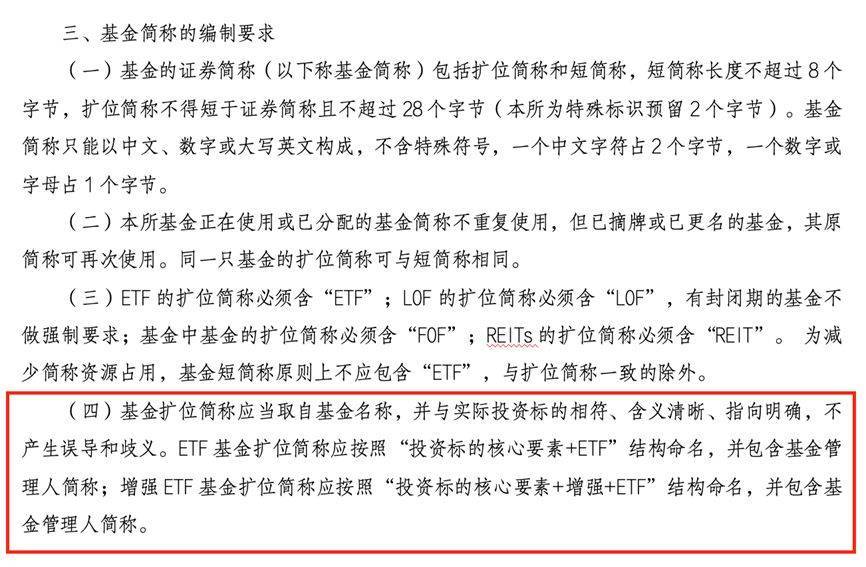
《每日经济新闻》记者获悉,5.6万亿元ETF市场迎来最新规范。 近日沪深交易所发布修订版《上海证券交易所基金业务指南第1号——业务办理》《深圳证券交易所证券投资基金业务指南 第1号——相关业务办理》,对基金命名进行了规范。其中要求,ETF基金扩位简称应按照"投资标的核心要素+ETF"结构命 名,并包含基金管理人简称;存量ETF基金扩位简称必须包含基金管理人,需要在明年3月31日之前完成产品更名。 多位受访公募人士告诉记者,新规意味着ETF命名进入规范化时代。提高产品的辨识度,有利于投资者精准投资相关指数 产品,也将进一步促进我国ETF市场向标准化、规范化方向发展。 事实上,在此之前已有多家基金公司按相关规则对ETF简称进行了修改,此次新规落地后,ETF市场将迎来新一轮更名潮。 新规来了,ETF市场将迎更名潮 近日,沪深交易所发布了修订版基金业务办理通知,对基金命名进行规范。 记者注意到,相关新规中明确规定: ETF基金扩位简称应按照"投资标的核心要素+ETF"结构命名,并包含基金管理人简称; 增强ETF基金扩位简称应按照"投资标的核心要素+增强+ETF"结构命名,并包含基金管理人简称; 存量ETF基金扩位简称 ...

新能源ETF上周领跌,传媒ETF回撤较少丨ETF基金周报
2 1 Shi Ji Jing Ji Bao Dao· 2025-11-24 03:10
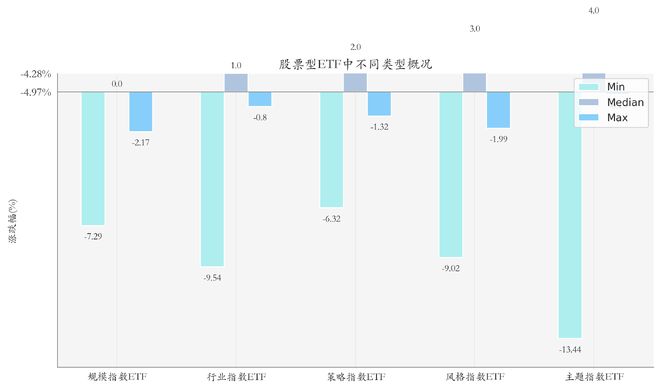
Market Performance - The Shanghai Composite Index fell by 3.9% last week, closing at 3834.89 points, with a high of 3992.4 points [1] - The Shenzhen Component Index decreased by 5.13%, ending at 12538.07 points, with a peak of 13251.78 points [1] - The ChiNext Index dropped by 6.15%, closing at 2920.08 points, with a maximum of 3137.07 points [1] - Major global indices also declined, with the Nasdaq Composite down 2.74%, the Dow Jones Industrial Average down 1.91%, and the S&P 500 down 1.95% [1] - In the Asia-Pacific region, the Hang Seng Index fell by 5.09%, and the Nikkei 225 Index decreased by 3.48% [1] ETF Market Performance - The median weekly return for stock ETFs was -4.56% [2] - The highest weekly return among scale index ETFs was -2.17% for the CCB SSE 50 ETF [2] - The highest weekly return among industry index ETFs was -0.8% for the FTSE China 800 Bank ETF [2] - The highest weekly return among strategy index ETFs was -1.32% for the Harvest CSI 300 Dividend Low Volatility ETF [2] - The highest weekly return among theme index ETFs was -0.15% for the Penghua CSI Media ETF [2] ETF Liquidity and Fund Flows - Average daily trading volume for stock ETFs increased by 32.1%, and average daily turnover rose by 6.8% [6] - The top five stock ETFs with the highest fund inflows included the Huatai-PB CSI 300 ETF with an inflow of 3.876 billion yuan [8] - The top five stock ETFs with the highest fund outflows included the Hua Bao CSI Bank ETF with an outflow of 321 million yuan [8] Financing and Margin Trading - The financing balance for stock ETFs increased from 47.722 billion yuan to 50.553 billion yuan [9] - The highest financing buy amount was for the E Fund ChiNext ETF, totaling 801 million yuan [9] ETF Market Size and Composition - The total size of the ETF market reached 55,994.97 billion yuan, a decrease of 1,305.99 billion yuan from the previous week [13] - Stock ETFs accounted for 64.0% of the total ETF market size, with a total size of 35,817.94 billion yuan [15] - The number of stock ETFs in the market was 1,065 out of a total of 1,355 ETFs [10] New ETF Issuance - No new ETFs were issued last week, but eight new ETFs were established, including the Harvest Hang Seng Technology ETF and the Penghua Hang Seng Biotechnology ETF [16] Institutional Insights - Pacific Securities highlighted the importance of advancements in AI foundational model technology, particularly in e-commerce and advertising sectors [16] - Galaxy Securities noted the potential of AI video and social ecosystems, emphasizing the shift towards ecological construction and scene penetration in various industries [17]
两市ETF两融余额增加3.7亿元丨ETF融资融券日报
2 1 Shi Ji Jing Ji Bao Dao· 2025-11-24 02:44
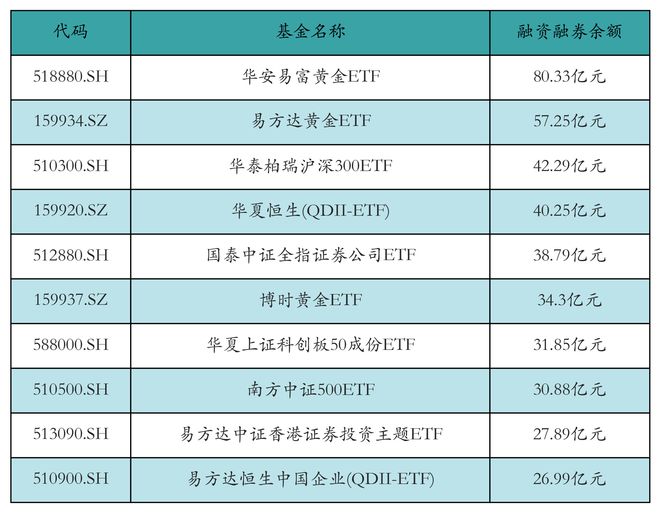
Market Overview - As of November 21, the total ETF margin balance in the two markets reached 121.289 billion, an increase of 0.037 billion from the previous trading day [1] - The financing balance was 114.266 billion, up by 0.0986 billion, while the securities lending balance decreased to 7.023 billion, down by 0.0616 billion [1] - In the Shanghai market, the ETF margin balance was 84.459 billion, increasing by 0.052368 billion, with a financing balance of 78.279 billion, up by 0.0553 billion [1] - The Shenzhen market's ETF margin balance was 36.83 billion, increasing by 0.0318 billion, with a financing balance of 35.987 billion, up by 0.0434 billion [1] ETF Margin Balance - The top three ETFs by margin balance on November 21 were: - Huaan Yifu Gold ETF (8.033 billion) - E Fund Gold ETF (5.725 billion) - Huatai-PB CSI 300 ETF (4.229 billion) [2] - The detailed list of the top 10 ETFs by margin balance includes various funds, with the total balances reflecting significant investor interest in gold and large-cap indices [2] ETF Financing Buy Amount - The top three ETFs by financing buy amount on November 21 were: - Huatai-PB Southern Dongying Hang Seng Technology Index (1.58 billion) - Bosera CSI Convertible Bonds and Exchangeable Bonds ETF (1.278 billion) - Huaxia Hang Seng Technology (1.981 billion) [3] - The data indicates a strong demand for technology-focused ETFs, particularly those linked to the Hang Seng index [3] ETF Financing Net Buy Amount - The top three ETFs by financing net buy amount on November 21 were: - E Fund ChiNext ETF (0.329 billion) - Huatai-PB CSI 300 ETF (0.186 billion) - Guotai CSI All-Share Securities Company ETF (0.137 billion) [5] - This reflects a positive sentiment towards growth-oriented sectors, particularly in the ChiNext market [5] ETF Securities Lending Sell Amount - The top three ETFs by securities lending sell amount on November 21 were: - Huatai-PB CSI 300 ETF (25.6611 million) - Southern CSI 500 ETF (22.2563 million) - Huaxia SSE 50 ETF (7.9742 million) [7] - The data suggests active trading strategies among investors, particularly in large-cap and mid-cap ETFs [7]
凌云光股价涨5.11%,易方达基金旗下1只基金位居十大流通股东,持有425.67万股浮盈赚取761.96万元
Xin Lang Cai Jing· 2025-11-24 02:40
Group 1 - The core viewpoint of the news is that Lingyun Optical has seen a stock price increase of 5.11%, reaching 36.79 CNY per share, with a trading volume of 273 million CNY and a turnover rate of 1.64%, resulting in a total market capitalization of 16.959 billion CNY [1] - Lingyun Optical Technology Co., Ltd. is based in Haidian District, Beijing, and was established on August 13, 2002. The company focuses on machine vision and optical communication, with a strategic emphasis on machine vision business [1] - The revenue composition of Lingyun Optical includes: intelligent visual equipment 34.69%, configurable visual systems 30.97%, optical communication products 27.44%, visual devices 5.31%, and service revenue 1.59% [1] Group 2 - From the perspective of major circulating shareholders, E Fund's ETF, the E Fund National Robot Industry ETF (159530), entered the top ten circulating shareholders in the third quarter, holding 4.2567 million shares, which accounts for 0.92% of circulating shares, with an estimated floating profit of approximately 7.6196 million CNY [2] - The E Fund National Robot Industry ETF (159530) was established on January 10, 2024, with a latest scale of 13.315 billion CNY. Year-to-date returns are 19.52%, ranking 2161 out of 4208 in its category; the one-year return is 16.81%, ranking 2018 out of 3981; and since inception, the return is 38.65% [2] Group 3 - The fund managers of the E Fund National Robot Industry ETF (159530) are Li Shujian and Li Xu. As of the report, Li Shujian has a tenure of 2 years and 78 days, with a total fund asset size of 19.931 billion CNY, achieving a best fund return of 87.32% and a worst return of -12.01% during his tenure [3] - Li Xu has a tenure of 3 years, with a total fund asset size of 26.841 billion CNY, achieving a best fund return of 117.97% and a worst return of -3.68% during his tenure [3]

方正证券:收到盛京银行股份转让对价款约4.35亿元;16只硬科技主题基金同日获批 | 券商基金早参
Mei Ri Jing Ji Xin Wen· 2025-11-24 01:36
Group 1: Talent Movement in Securities Firms - The rapid turnover of Chief Information Officers (CIOs) in the securities industry reflects a talent competition driven by industry transformation, with at least 13 firms changing their CIOs this year [1][2] - Notable movements include He Jiang, the former CIO of First Capital Securities, potentially returning to Southwest Securities, where he began his career [1][2] - The trend indicates a significant shift in the technology talent landscape within the securities sector, emphasizing the importance of technology investment [2] Group 2: Approval of Hard Technology Themed Funds - On November 21, 16 hard technology themed funds were approved, including several ETFs focused on artificial intelligence and chips, signaling a substantial influx of capital into the market [3][4] - This approval highlights ongoing policy support for technological innovation, with direct benefits expected for sectors like artificial intelligence and semiconductor industries [3][4] - The move is anticipated to enhance liquidity and market activity in the STAR Market, reinforcing investor confidence in the technology growth sector [4] Group 3: Fund Issuance Trends - The new fund issuance in 2025 has reached 1,340 funds with a total scale of approximately 1,044.6 billion, marking the seventh consecutive year of exceeding the trillion yuan threshold [4] - Active equity products, particularly stock and mixed funds, have become the dominant force in new fund issuance, contributing over half of the total scale [4] - This trend reflects a long-term confidence in equity assets, benefiting asset management firms and potentially increasing capital inflows into the A-share market [4] Group 4: Transaction by Founder Securities - Founder Securities announced the completion of a share transfer of approximately 4.35 billion yuan from its holdings in Shengjing Bank, enhancing its liquidity and focusing on core business development [5][6] - This transaction may prompt market attention towards the divestment of non-core assets by securities firms, accelerating resource integration within the financial sector [6] - Overall, such capital operations are expected to boost investor confidence in the governance optimization of financial enterprises, providing a positive market signal [6]

“全市场撒网”还是“主题深耕”?公募投资逻辑正深度重构
券商中国· 2025-11-24 01:33
Core Viewpoint - The investment style of public funds is shifting from "full market stock selection" to "thematic investment," driven by economic transformation and the emergence of high-growth stocks [1][3]. Group 1: Shift in Investment Strategies - Public funds previously favored "core assets" like large-cap stocks, but this strategy is losing traction as thematic investments gain popularity [2][3]. - Thematic investments allow for a more comprehensive layout of high-growth stocks and can enhance competitive rankings among funds [1][2]. - The shift is attributed to changes in the investment environment, including slower economic growth and the emergence of new industries, which have made traditional core assets less attractive [3][5]. Group 2: Characteristics of Thematic Investment - Thematic funds have been performing well, often ranking at the top in annual performance due to their focus on high-growth sectors like AI and innovative pharmaceuticals [4][5]. - The concentration on specific themes allows for greater potential returns, but also increases volatility and risk [5][11]. - Thematic investments help investors engage with long-term trends and direct capital towards state-supported sectors, fostering a positive cycle between capital markets and technological innovation [6][11]. Group 3: Challenges of Thematic Investment - Thematic investment requires deeper industry understanding and foresight, as it involves answering long-term questions about market dynamics and competition [7][8]. - The need for rigorous valuation discipline and risk management is heightened, as concentrated portfolios are more susceptible to individual stock performance and policy changes [8][9]. - The complexity of managing risks increases with thematic investments, necessitating precise control over concentration and liquidity [8][9]. Group 4: Future of Full Market Stock Selection - Despite the rise of thematic investments, "full market stock selection" is not expected to disappear, as it offers unique advantages in capturing structural opportunities across various sectors [10][11]. - The ability to conduct fundamental comparisons across industries will remain relevant, especially in a market characterized by frequent sector rotations [10][11]. - The long-term viability of "full market stock selection" will depend on its adaptation to new macroeconomic and industry conditions [10].

越跌越买?超700亿逆势加仓这些基金!
天天基金网· 2025-11-24 01:12
Core Viewpoint - The recent market correction in A-shares is attributed to external factors, including declining expectations for a Federal Reserve rate cut and rising concerns over an AI bubble, which have transmitted pessimistic sentiment from overseas markets to China [3][8][9]. Market Performance - On November 21, A-shares experienced a significant decline, with the Shanghai Composite Index dropping 2.45% to close at 3834.89 points, while the Shenzhen Component and ChiNext Index fell 3.41% and 4.02%, respectively. Nearly 5100 stocks in the market declined, particularly in high-performing sectors like AI, chips, and lithium batteries [3][4]. - Over the week from November 17 to November 21, the Shanghai Composite Index fell 3.9%, and the Shenzhen Component dropped 5.03%. High-growth sectors such as coke, photovoltaic equipment, electronics, batteries, and chemicals saw declines exceeding 10% [4]. Fund Flows - Despite the market downturn, over 700 billion yuan flowed into stock ETFs, indicating a trend of buying on dips. Notable ETFs like the Southern CSI 500 ETF and E Fund ChiNext ETF saw net inflows exceeding 30 billion yuan each during the week [5][6]. - On the day of the market drop (November 21), over 400 billion yuan was invested in ETFs, with the Huatai-PB CSI 300 ETF alone receiving about 40 billion yuan in net inflow [5]. External Factors - Multiple fund companies attribute the market correction primarily to external disturbances, particularly the unclear direction of the Federal Reserve's monetary policy and heightened concerns over an AI bubble. The U.S. job market data showed strong job growth but an unexpected rise in unemployment, complicating the Fed's decision-making [8][9]. - The sentiment from U.S. markets, particularly regarding tech stocks, has amplified the pressure on A-shares, with concerns about liquidity tightening affecting growth stock valuations [10]. Future Outlook - Several fund companies maintain a positive long-term outlook for Chinese assets, suggesting a "slow bull" market trend. They believe that while short-term volatility may occur, the underlying fundamentals remain strong [11]. - The market is expected to benefit from supportive policies in the tech sector and a potential stabilization in the real estate market, which could lead to a gradual recovery in stock valuations [12].

MSCI中国指数调整11月24日收盘后正式生效
Zhong Zheng Wang· 2025-11-24 00:16
Group 1 - 16 hard technology-themed funds have been approved, including 7 AI ETFs, 3 chip ETFs, 4 chip design ETFs, and 2 actively managed technology equity funds from various fund managers such as E Fund, GF Fund, and Invesco Great Wall Fund, expected to be launched soon [1] - QDII products, represented by indices like Nasdaq 100 and S&P 500, have tightened subscription limits, with some products suspending subscriptions due to high premium rates in the market, indicating a disparity in technology asset performance across different markets [1] - MSCI announced the results of its index review for November 2025, which will take effect after the market closes on November 24, including the addition of 26 Chinese stocks and the removal of 20 stocks from the MSCI China Index [1]
MSCI中国指数调整即将生效……盘前重要消息还有这些
证券时报· 2025-11-24 00:13
Key Points - MSCI announced the inclusion of 26 new Chinese stocks and the removal of 20 stocks from the MSCI China Index, effective after the market close on November 24, 2025 [2] - The Ministry of Finance and the People's Bank of China have included electronic savings bonds in the scope of personal pension products to support the development of a multi-tiered pension insurance system [3] - Sixteen hard technology-themed funds have been approved, including seven AI ETFs and three chip ETFs, indicating an influx of capital into the sector [4] - The first large-capacity all-solid-state battery production line in China has been completed, with plans for small-scale production tests and a target for mass production between 2027 and 2030 [5] - Alibaba and Meituan are set to release their financial reports on November 25 and November 28, respectively, along with reports from leading electric vehicle companies [6][7] - The Federal Reserve will release its Beige Book this week, with expectations of interest rate decisions from New Zealand and South Korea [8] Company News - Hillstone Networks expects to achieve large-scale sales and product delivery of its new generation security products equipped with ASIC chips by Q1 2026 [10] - Zhongjin Lingnan plans to acquire a 6.7784% stake in Zhongjin Copper and a 10.3333% stake in Zhongjin Rongsheng for a total consideration of 742 million yuan [11] - Jinfeng Technology is planning to acquire at least a 51% stake in Guangdong Lanyuan Technology, which will enhance its growth and profitability [12] - Nenghui Technology signed a contract for a new energy power battery assembly with an estimated total price of 100 million yuan [13] - JinkoSolar announced the mass production of its Tiger Neo 3.0 module, achieving a production efficiency of over 24.8% and a total order of 15 GW [14] - Qingmu Technology's subsidiary plans to acquire control of Vitalis, enhancing its competitiveness in the health supplement sector [16] - Jiahua Technology is planning to acquire a controlling stake in Shudun Technology, with stock suspension expected [17] Market Insights - China Merchants Securities maintains a cautious outlook, citing weak trading signals and mixed fundamental indicators [19] - CITIC Securities notes the market is in a "three-phase overlap," suggesting a wait-and-see approach until key economic meetings in December [20]