
易方达基金

Search documents
MSCI中国指数调整11月24日收盘后正式生效
Zhong Zheng Wang· 2025-11-24 00:16
Group 1 - 16 hard technology-themed funds have been approved, including 7 AI ETFs, 3 chip ETFs, 4 chip design ETFs, and 2 actively managed technology equity funds from various fund managers such as E Fund, GF Fund, and Invesco Great Wall Fund, expected to be launched soon [1] - QDII products, represented by indices like Nasdaq 100 and S&P 500, have tightened subscription limits, with some products suspending subscriptions due to high premium rates in the market, indicating a disparity in technology asset performance across different markets [1] - MSCI announced the results of its index review for November 2025, which will take effect after the market closes on November 24, including the addition of 26 Chinese stocks and the removal of 20 stocks from the MSCI China Index [1]
MSCI中国指数调整即将生效……盘前重要消息还有这些
证券时报· 2025-11-24 00:13
Key Points - MSCI announced the inclusion of 26 new Chinese stocks and the removal of 20 stocks from the MSCI China Index, effective after the market close on November 24, 2025 [2] - The Ministry of Finance and the People's Bank of China have included electronic savings bonds in the scope of personal pension products to support the development of a multi-tiered pension insurance system [3] - Sixteen hard technology-themed funds have been approved, including seven AI ETFs and three chip ETFs, indicating an influx of capital into the sector [4] - The first large-capacity all-solid-state battery production line in China has been completed, with plans for small-scale production tests and a target for mass production between 2027 and 2030 [5] - Alibaba and Meituan are set to release their financial reports on November 25 and November 28, respectively, along with reports from leading electric vehicle companies [6][7] - The Federal Reserve will release its Beige Book this week, with expectations of interest rate decisions from New Zealand and South Korea [8] Company News - Hillstone Networks expects to achieve large-scale sales and product delivery of its new generation security products equipped with ASIC chips by Q1 2026 [10] - Zhongjin Lingnan plans to acquire a 6.7784% stake in Zhongjin Copper and a 10.3333% stake in Zhongjin Rongsheng for a total consideration of 742 million yuan [11] - Jinfeng Technology is planning to acquire at least a 51% stake in Guangdong Lanyuan Technology, which will enhance its growth and profitability [12] - Nenghui Technology signed a contract for a new energy power battery assembly with an estimated total price of 100 million yuan [13] - JinkoSolar announced the mass production of its Tiger Neo 3.0 module, achieving a production efficiency of over 24.8% and a total order of 15 GW [14] - Qingmu Technology's subsidiary plans to acquire control of Vitalis, enhancing its competitiveness in the health supplement sector [16] - Jiahua Technology is planning to acquire a controlling stake in Shudun Technology, with stock suspension expected [17] Market Insights - China Merchants Securities maintains a cautious outlook, citing weak trading signals and mixed fundamental indicators [19] - CITIC Securities notes the market is in a "three-phase overlap," suggesting a wait-and-see approach until key economic meetings in December [20]



ETF简称统一规范落地,非货基“T+0.5”赎回时代来临【国信金工】
量化藏经阁· 2025-11-24 00:09
Market Overview - The A-share market saw a decline across major indices last week, with the Shanghai Composite Index down by -3.90% and the ChiNext Index down by -6.15% [6][14] - The banking, food and beverage, and media sectors performed relatively better, with returns of -0.87%, -1.36%, and -1.39% respectively, while the comprehensive, electric equipment and new energy, and basic chemicals sectors lagged behind with returns of -9.47%, -9.41%, and -8.24% [19][21] Fund Issuance and Performance - A total of 41 new funds were established last week, with a combined issuance scale of 356.35 billion yuan, marking an increase from the previous week [4] - 54 funds were reported for issuance, including 1 REITs and 3 FOFs, indicating a decrease in the number of new fund applications compared to the previous week [5][6] - The median returns for active equity, flexible allocation, and balanced mixed funds were -4.95%, -4.04%, and -3.13% respectively last week [35] Fund Manager Changes - There were changes in fund managers for 113 fund products across 41 fund companies last week, with notable changes at E Fund (12 funds), Changsheng Fund (11 funds), and Ping An Fund (8 funds) [45] Bond Market - The central bank's net reverse repurchase was 554 billion yuan, with a total of 16,760 billion yuan in net open market operations last week [22] - The yield on government bonds of various maturities decreased, with the yield spread widening by 1.22 basis points [24] ETF Developments - The first bond ETF in China surpassed 700 billion yuan in scale, reaching 723.73 billion yuan, a 147% increase from the end of 2024 [11] - The Shanghai and Shenzhen Stock Exchanges issued a revised notice on fund business operations, standardizing ETF naming conventions [10]

越跌越买?超700亿资金借道ETF逆势加仓
Zheng Quan Shi Bao· 2025-11-24 00:04
Core Viewpoint - The recent stock market correction has raised concerns, with significant declines in major indices, but there is a notable influx of capital into ETFs as investors seek to capitalize on lower prices [1][2][3]. Market Performance - The A-share market experienced a substantial drop, with the Shanghai Composite Index falling by 2.45% to 3834.89 points, and the Shenzhen Component and ChiNext indices declining by 3.41% and 4.02% respectively [1]. - Over the past week, the Shanghai Composite Index saw a weekly decline of 3.9%, while the Shenzhen Component and ChiNext indices dropped by 5.03% and 5.96% respectively [2]. Capital Inflow into ETFs - Despite the market downturn, over 700 billion yuan flowed into stock ETFs in the past week, indicating a strong buying interest [3]. - On November 21, the day of the market drop, more than 400 billion yuan was invested in ETFs, with significant inflows into various major ETFs [3]. External Factors Impacting the Market - Multiple fund companies attribute the market correction to external factors, particularly the declining expectations for a Federal Reserve rate cut and rising concerns over an AI bubble, which have transmitted pessimism from overseas markets to China [5][6]. - The recent U.S. employment data showed a paradox, with job growth exceeding expectations but the unemployment rate rising to a four-year high, complicating the Fed's decision-making regarding interest rates [7]. Industry Analysis - Certain sectors, such as batteries, banks, communications, and coal, have shown slight net outflows in their respective ETFs, indicating a shift in investor sentiment [4]. - The technology sector, particularly related to AI, has faced significant pressure, with concerns over valuation and market sentiment affecting stock performance [6][7]. Future Outlook - Fund companies maintain a positive long-term outlook for Chinese assets, suggesting a "slow bull" market trend despite short-term volatility [8]. - The balance between AI capital investment and output is crucial, with expectations that ongoing technological advancements will support long-term growth [8][9]. - The fundamental factors, including real estate stabilization and the impact of "anti-involution" policies, are expected to support a sustained upward trend in the A-share market [9].
公募基金投资逻辑深度重构:“主题投资”风行一时 “全市场选股”暂避锋芒
Zheng Quan Shi Bao Wang· 2025-11-23 23:42
Core Viewpoint - The investment style of public funds has shifted from core assets to high-growth stocks amid economic transformation, moving from "full market stock selection" to "thematic investment" strategies [1][3]. Group 1: Shift in Investment Strategies - Public funds previously favored large-cap stocks like Sany Heavy Industry and Kweichow Moutai, achieving significant returns through a diversified stock selection approach [2]. - The "full market stock selection" strategy has become less prominent, with thematic products dominating annual performance rankings [2][3]. - Changes in the investment environment, including economic deceleration and shifts in consumer behavior, have led to decreased profitability and valuation of traditional core assets [3]. Group 2: Rise of Thematic Investment - Thematic funds have gained popularity due to structural opportunities concentrated in high-growth sectors, outperforming traditional industries [5]. - The volatility of thematic products can lead to substantial excess returns, encouraging funds to increase style purity and concentration [5]. - Thematic investments help investors engage with long-term trends and direct capital towards government-supported sectors, fostering a positive cycle of capital market support for national strategies [6]. Group 3: Challenges of Thematic Investment - Thematic investment requires deeper industry understanding and foresight, raising the bar for fund managers [7]. - The need for rigorous valuation and risk management frameworks is heightened, as concentrated portfolios are more susceptible to individual stock performance and policy changes [8]. - The complexity of managing risks in concentrated portfolios necessitates meticulous control over concentration, liquidity, and stress testing [8]. Group 4: Future of Full Market Stock Selection - The "full market stock selection" strategy is unlikely to disappear, as it offers unique advantages in capturing structural opportunities across various sectors [10]. - Market aesthetics will continue to evolve with macroeconomic and structural changes, but the fundamental capabilities of full market stock selection will remain relevant [10]. - Thematic investments, while potentially lucrative, carry risks of significant losses if market trends shift unfavorably [11].
ETF简称规范迎倒计时!变与不变,藏着哪些“心机”?
券商中国· 2025-11-23 23:37
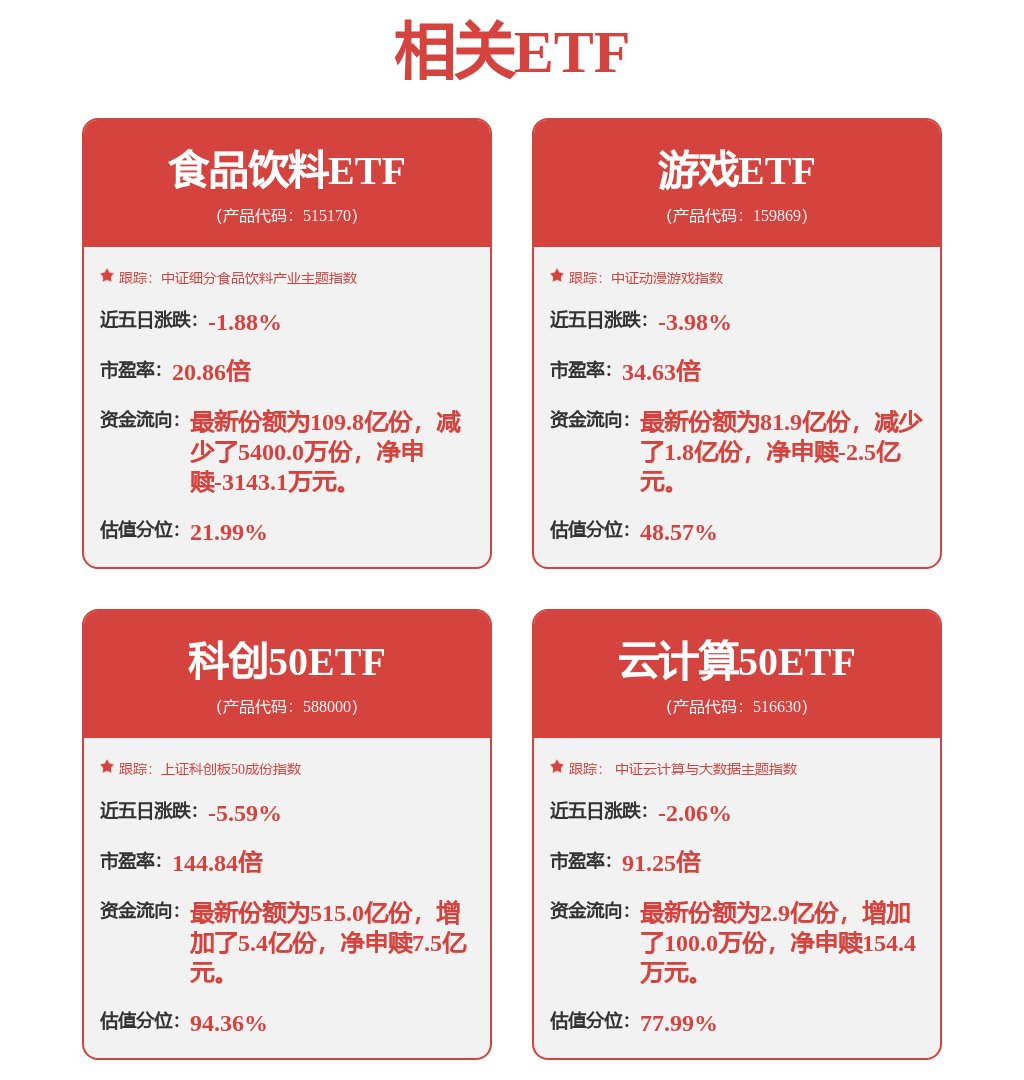
Core Viewpoint - The development and scale competition of public ETF products are facing new regulatory requirements, with a focus on standardizing ETF naming conventions by March 31, 2026 [1][2]. Group 1: Regulatory Changes - The Shanghai and Shenzhen Stock Exchanges have issued revised guidelines requiring ETF names to include the fund manager's name and follow a specific naming structure: "core elements of investment target + ETF" [2][6]. - Existing ETFs must complete the renaming process by the specified deadline, prompting many public funds to respond actively [2][3]. Group 2: Market Response - Several public funds, including Dachen Fund and Penghua Fund, have already begun to change their ETF names in accordance with the new regulations, with Dachen Fund changing its ETF name to "深成长ETF大成" [2][3]. - Some funds have been proactive, with E-Fund and others adjusting multiple ETF names earlier in the year to align with the new naming rules [3][4]. Group 3: Strategic Considerations - Public funds are strategically timing their ETF name changes based on product performance and market potential, focusing on those with limited growth while reserving changes for high-potential ETFs until closer to the deadline [4][5]. - The trend shows that ETFs with names not including the fund manager's name have attracted more retail investor interest, especially in high-performing sectors [4][5]. Group 4: Enhanced Product Differentiation - The new naming conventions are expected to improve product differentiation in a crowded ETF market, making it easier for investors to identify and select products [6][7]. - The inclusion of the fund manager's name in ETF titles is anticipated to enhance investor decision-making efficiency and reduce information search costs [6][7].
“主题投资”风行一时 “全市场选股”暂避锋芒
Zheng Quan Shi Bao· 2025-11-23 23:34
Core Viewpoint - The investment style of public funds in China is shifting from traditional core assets to emerging industries, driven by economic transformation and policy support, leading to a focus on thematic investments rather than broad market selection [2][3][5]. Group 1: Investment Strategy Changes - Public funds are moving from a "full market selection" strategy to a "thematic investment" approach, allowing for better positioning in high-growth stocks and enhancing competitiveness in performance rankings [3][4]. - The previous success of large-cap stocks like Sany Heavy Industry and Kweichow Moutai has diminished, with thematic products now dominating annual performance rankings [4][5]. - The rapid development of broad-based indices and Smart Beta products has made traditional active equity products less competitive, necessitating differentiation in style and active management [5][6]. Group 2: Thematic Investment Trends - Thematic funds have gained prominence, focusing on high-growth sectors such as artificial intelligence and innovative pharmaceuticals, which are seen as more lucrative compared to traditional sectors [6][7]. - Structural opportunities are increasingly concentrated in a few high-growth sectors, leading to significant performance disparities among funds [7][8]. - The focus on single themes allows for potentially higher returns, but also increases volatility and risk, necessitating careful management of exposure and risk [8][9]. Group 3: Challenges of Thematic Investment - Thematic investment requires deeper industry understanding and foresight, raising the bar for fund managers in terms of research and analysis capabilities [9][10]. - The need for rigorous valuation and risk management frameworks is heightened, as concentrated investments in specific sectors can lead to significant impacts from individual stock performance or policy changes [10][11]. - The complexity of managing concentrated portfolios increases, demanding more sophisticated risk management strategies to mitigate potential losses [10][11]. Group 4: Future of Investment Strategies - The "full market selection" strategy is not expected to disappear, as it offers unique advantages in capturing structural opportunities across various sectors [12][13]. - The market's aesthetic preferences will continue to evolve, but the fundamental skills associated with "full market selection" will remain relevant [12][13]. - The dual nature of thematic investments presents both opportunities for high returns and risks of significant losses, emphasizing the need for careful asset allocation and risk management [14][15].

越回调越买,超700亿元资金借道ETF逆市加仓
Sou Hu Cai Jing· 2025-11-23 23:31
Core Viewpoint - Recent market adjustments have led to increased investor concerns, yet significant capital inflows into ETFs indicate a counter-trend buying behavior, suggesting a potential resilience in the market despite external pressures [1] Group 1: Market Conditions - The stock market has experienced a pullback, raising worries among investors [1] - External factors such as declining expectations for Federal Reserve interest rate cuts and rising concerns over an AI bubble are identified as primary reasons for the recent market downturn [1] Group 2: Capital Inflows - Despite the market pullback, over 70 billion yuan in net inflows have been recorded in stock ETFs over the past week [1] - Several major ETFs, including Southern CSI 500 ETF, E Fund ChiNext ETF, Huatai-PB CSI 300 ETF, Huaxia Sci-Tech 50 ETF, and Huaxia Hang Seng Tech ETF, each received over 3 billion yuan in net inflows during the week [1] Group 3: Future Outlook - Support from the domestic technology sector and "anti-involution" policies is expected to sustain a "slow bull" market for Chinese assets [1]
“抄底”钱,动了!A股增量资金将入场
Zhong Guo Zheng Quan Bao· 2025-11-23 23:29
Group 1 - The S&P Biotechnology ETF and Emerging Asia ETF were the top-performing cross-border ETFs for the week of November 17-21, with weekly gains of 1.35% and 0.67% respectively [1][3] - A significant number of bond ETFs saw gains during the same period, while renewable energy-themed ETFs experienced a collective pullback, with the Sci-Tech Board Renewable Energy ETF dropping the most at 13.44% [1][4][5] - Several broad-based ETFs, including the CSI 500 ETF, ChiNext ETF, and CSI 300 ETF, saw net inflows exceeding 2 billion yuan, indicating strong investor interest despite market fluctuations [1][6][8] Group 2 - The technology sector faced a pullback, but some funds began to adopt a "bottom-fishing" strategy, focusing on technology-related ETFs, such as the E Fund Chip ETF [2][7] - A total of 16 new public funds focusing on hard technology were approved, providing diverse investment options for investors looking to allocate to China's hard tech assets [10] Group 3 - The net inflow for the CSI 500 ETF was the highest at 5.778 billion yuan, followed by other ETFs like the ChiNext ETF and CSI 300 ETF, which also saw significant inflows [6][8] - The trading volume for broad-based ETFs tracking major indices, such as the CSI A500 and CSI 300, was substantial, with the A500 ETF alone exceeding 140 billion yuan in trading volume [9]

ETF简称规范迎倒计时 公募基金为抢流量“先冷后热”
Zheng Quan Shi Bao· 2025-11-23 23:01
Core Viewpoint - The development and scale competition of public ETFs are facing new regulatory requirements, with a focus on standardizing ETF naming conventions by March 31, 2026 [2][3]. Group 1: Regulatory Changes - The Shanghai and Shenzhen Stock Exchanges have issued new guidelines requiring ETF names to follow a specific structure: "core elements of investment target + ETF," including the fund manager's name [3][4]. - Existing ETFs must complete the renaming process by March 31, 2026, to comply with the new regulations [3]. Group 2: Market Response - Public funds are actively responding to the new naming regulations, with many already implementing changes, particularly for less popular ETFs [2][4]. - Some funds are adopting a "cold first, hot later" strategy, prioritizing renaming for underperforming ETFs while delaying changes for those with strong performance and growth potential [5][6]. Group 3: Strategic Considerations - Fund companies are strategically selecting which ETFs to rename based on performance and growth potential, with a focus on maximizing year-end inflows [5][6]. - ETFs that have completed name changes are primarily from sectors with limited short-term capital attraction, indicating a cautious approach by fund managers [6]. Group 4: Enhanced Product Differentiation - The new naming conventions are expected to improve product differentiation and enhance investor decision-making efficiency, addressing the issue of homogeneity in the ETF market [7][8]. - Including the fund manager's name in ETF titles is anticipated to reduce investor confusion and improve the overall investment experience [7][8].