
伊利股份

Search documents
饮料乳品板块9月10日跌0.04%,新乳业领跌,主力资金净流出154.13万元
Zheng Xing Xing Ye Ri Bao· 2025-09-10 08:30
Market Overview - The beverage and dairy sector experienced a slight decline of 0.04% on September 10, with New Dairy leading the drop [1] - The Shanghai Composite Index closed at 3812.22, up 0.13%, while the Shenzhen Component Index closed at 12557.68, up 0.38% [1] Stock Performance - Notable gainers in the beverage and dairy sector included: - Happy Family (300997) with a closing price of 21.92, up 8.19% and a trading volume of 322,500 shares, totaling 661 million yuan [1] - Yiming Food (605179) closed at 23.02, up 3.69% with a trading volume of 153,400 shares, totaling 350 million yuan [1] - Western Pastoral (300106) closed at 11.95, up 3.02% with a trading volume of 157,700 shares, totaling 186 million yuan [1] - Conversely, New Dairy (002946) saw a decline of 1.85%, closing at 18.55 with a trading volume of 53,600 shares, totaling 99.44 million yuan [2] Capital Flow - The beverage and dairy sector experienced a net outflow of 1.5413 million yuan from institutional investors, while retail investors saw a net outflow of 6.40847 million yuan [2] - Conversely, speculative funds recorded a net inflow of 65.626 million yuan [2] Individual Stock Capital Flow - Western Pastoral (300106) had a net inflow of 29.1616 million yuan from institutional investors, while retail investors experienced a net outflow of 19.8580 million yuan [3] - Yiming Food (605179) saw a net inflow of 28.1769 million yuan from institutional investors, with retail investors facing a net outflow of 15.6304 million yuan [3] - New Dairy (002946) had a net outflow of 9.3036 million yuan from speculative funds [3]




联想与伊利共创全球智链生态圈 “AI+”加速产业变革
Zheng Quan Ri Bao Wang· 2025-09-10 08:16
Core Insights - Lenovo and Yili have formed a strategic partnership to create a global intelligent supply chain ecosystem, enhancing Yili's digital transformation from production to consumer services [1][3] Group 1: Supply Chain and Production - Yili's smart factory utilizes automated production lines capable of processing over 7,000 tons of fresh milk daily and filling 40,000 packages per hour, making it the fastest milk production line globally [1] - The supply chain control tower system developed by Lenovo and Yili integrates over 80 supply indicators and 140 promotional product indicators, significantly reducing risks related to raw material expiration, excess inventory, and stockouts [2] - The introduction of a unified VOC (Voice of Customer) intelligent mining management platform allows Yili to close the loop on problem discovery and business improvement, enhancing consumer satisfaction [2] Group 2: Digital Transformation and AI Integration - Yili's digital transformation includes a comprehensive consumer digital platform that supports over 20 mini-programs for purchasing, after-sales, product co-creation, and health consultations [3] - The partnership emphasizes that digitalization is not a solitary endeavor; the integration of AI is expected to accelerate industry transformation and connect various sectors [3][5] - Lenovo's full-stack AI strategy aims to enhance productivity and innovation across personal, enterprise, and urban applications, with a focus on smart decision-making in cities [4] Group 3: Industry Impact and Future Outlook - The collaboration between Lenovo and Yili is seen as a benchmark for AI transformation in China's manufacturing sector, with expectations for continued advancements as the national "Artificial Intelligence +" initiative progresses [5] - Lenovo's intelligent agent matrix provides long-term services for government and enterprise clients, while also catering to small and medium-sized enterprises and individual customers [4] - The Chinese government's policy aims for AI applications to achieve over 70% penetration in key sectors by 2027 and over 90% by 2030, positioning intelligent economy as a crucial growth driver [4]

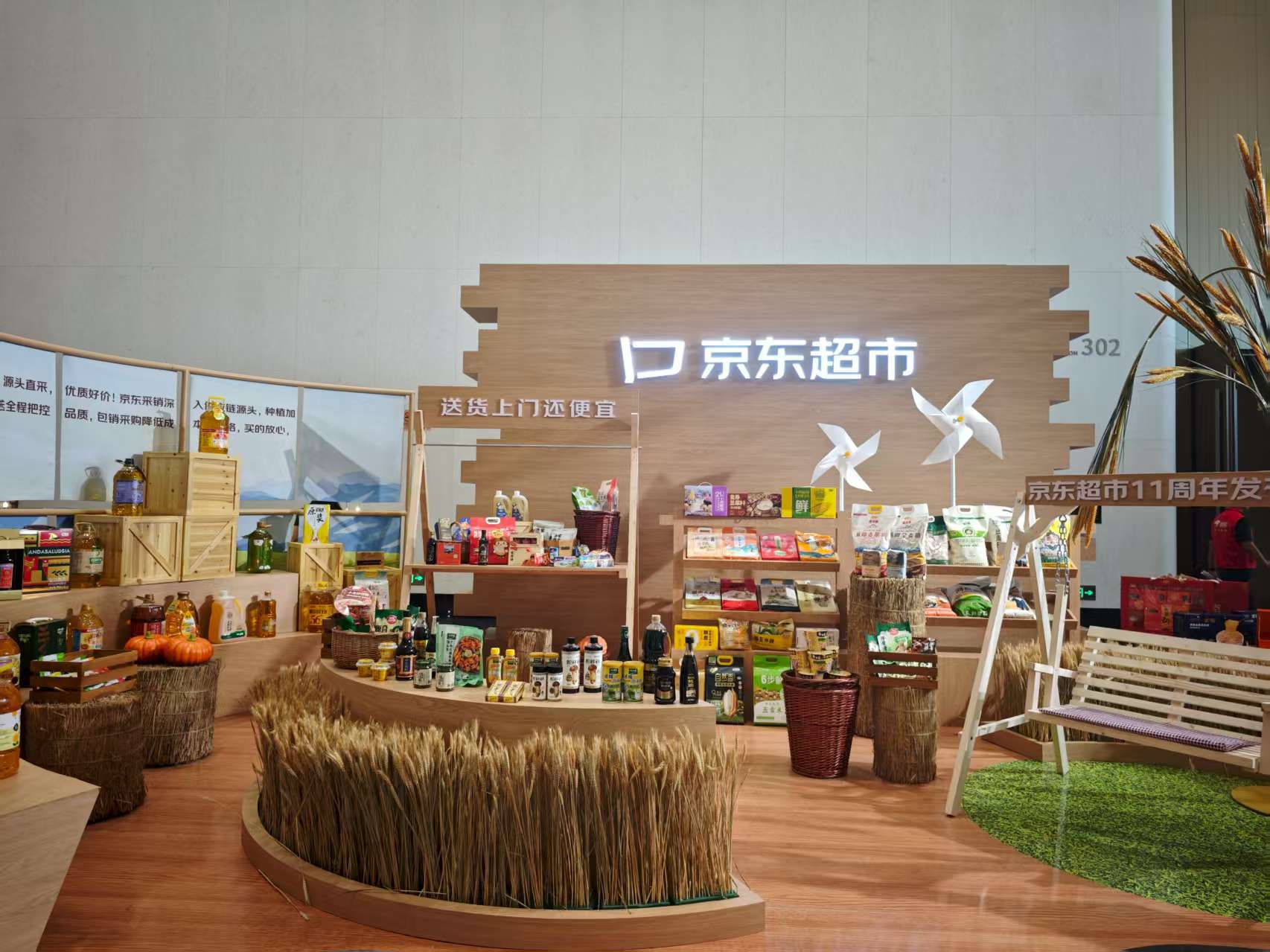
京东超市立下新的Flag
Hua Er Jie Jian Wen· 2025-09-10 06:32
Core Insights - The retail industry in China is undergoing significant transformation, with companies seeking growth amidst uncertainty [2][3] - JD Supermarket, as the largest supermarket in China, reported impressive growth metrics in the first half of the year, including an 18% increase in user scale, a 20% rise in order volume, and a 15% growth in transaction value [2] - JD Supermarket aims to increase its user base from 300 million to 500 million over the next three years, indicating ambitious growth plans [2][8] Industry Challenges - The retail sector faces challenges such as severe product homogeneity, escalating price wars, and rising costs, leading to thinner profit margins for brands [3] - Consumers are becoming more rational and diverse in their demands, making it difficult for brands to rely solely on low prices to attract users [3] JD Supermarket's Strategic Focus - JD Supermarket plans to focus on five key areas: products, brands, categories, channels, and efficiency to achieve growth in the next three years [4] - The company emphasizes three core capabilities: user insight, product strength, and new product promotion to enhance its product offerings [5] Brand and Product Development - JD Supermarket collaborates with brands to anticipate industry trends and create differentiated products that resonate with consumers [5] - Successful case studies include the exclusive collaboration with Qingdao Beer for a custom gift box that became a top-selling product during the New Year festival [5][6] User Growth and Market Penetration - JD Supermarket has a significant user base of 300 million, with substantial growth potential for brands on the platform [6] - Notable user growth examples include Vinda Paper and Yili Dairy, which saw net increases of 5 million and over 4 million new users, respectively [6] Operational Efficiency and Technology - The company is enhancing its operational efficiency through recruitment and training, aiming to improve its workforce's capabilities [7] - JD Supermarket invests heavily in technology, including AI systems and supply chain optimization, to ensure efficient operations and successful product launches [7] Future Outlook - The ambitious goal of increasing users from 300 million to 500 million presents challenges, and the company's execution capabilities will be crucial in achieving this target [8]

中国芯力量丨中国牛用上“中国芯”
Xin Hua Wang· 2025-09-10 06:04
Core Insights - The Chinese dairy industry has made significant advancements in milk production, with some high-yield farms achieving an annual milk yield of 14 tons per cow by 2024, surpassing most developed countries [1][2] - The overall quality of Chinese raw milk has improved, with key indicators exceeding EU standards, marking a historic leap in the industry [1] - The development of domestic gene detection technology is crucial for improving dairy cattle breeding and production efficiency, addressing the reliance on foreign technology [3][4] Group 1: Dairy Production Advancements - In 2000, the average milk yield in China was only 2,605 kg per cow, which has now increased dramatically to 14 tons per cow in some high-yield farms by 2024 [1] - The quality of Chinese milk, including protein and fat content, has reached world-class standards, with certain brands like Yili showing exceptional results [1] - The rapid development of the dairy industry in China has allowed it to catch up with developed countries in just 20 years [2] Group 2: Genetic Improvement and Technology - The improvement in dairy production is fundamentally linked to the genetic enhancement of dairy cattle, facilitated by whole-genome testing technology [3] - Domestic development of gene chips for dairy cattle has been initiated, significantly reducing testing costs and improving efficiency compared to foreign technologies [3][4] - The introduction of a closed-loop system for breeding using domestic gene chips has helped overcome key technological barriers previously dominated by foreign sources [4] Group 3: Breeding and Data Utilization - The contribution of breeding bulls to genetic improvement is over 75%, while breeding cows contribute more than 40% to production performance [5] - The establishment of a breeding big data platform across 96 large-scale farms has enabled comprehensive genetic assessments and performance tracking of dairy cattle [5] - The use of machine learning algorithms has accelerated the genetic evaluation process, reducing the breeding cycle for bulls from 6 years to 2 years [6] Group 4: Smart Farming and AI Integration - The integration of AI technology in dairy farming has led to improved efficiency, with significant increases in daily milk production and reductions in management costs [11] - Smart farming solutions, including real-time monitoring of cattle health and production, have transformed traditional farming practices into data-driven operations [8][9] - The deployment of an intelligent logistics platform has optimized transportation routes, ensuring the freshness of raw milk and reducing costs significantly [11]

大消费产业月报:“它经济”产业链生态图鉴-20250909
Huachuang Securities· 2025-09-09 14:32
Investment Rating - The report does not explicitly state an investment rating for the industry Core Insights - The pet economy in China is experiencing a high-quality transformation driven by emotional consumption and the integration of emotional value with tangible industries [8][10] - The market for pet dogs and cats in urban areas is projected to reach CNY 300.2 billion in 2024, with a compound annual growth rate (CAGR) of approximately 13.3% from 2015 to 2024 [10][12] - The global pet economy is highly concentrated, with significant markets in the US, Europe, and Asia, and is expected to grow from USD 207 billion in 2024 to USD 270.8 billion by 2029, with a CAGR of 5.5% [9][11] Summary by Sections Introduction - The report outlines the growth of the pet economy driven by changing lifestyles and emotional consumption needs, highlighting the integration of emotional and tangible aspects in the industry [8] Global Pet Market Overview - The global pet industry is expected to grow from USD 207 billion in 2024 to USD 270.8 billion by 2029, with a CAGR of 5.5% [9] China Pet Dog and Cat Market Overview - The urban pet consumption market in China is projected to reach CNY 300.2 billion in 2024, with a 7.5% year-on-year growth [10] - The average annual consumption per pet dog is CNY 2,961, while for cats it is CNY 2,020, reflecting a steady increase in spending [10] Pet Economy Industry Chain Definition and Layout - The pet economy industry chain includes breeding and trading, food and supplies, and medical and service sectors, reflecting the transformation of emotional value into commercial value [23] Pet Economy Industry Chain Analysis - The overall consumption structure is stabilizing, with pet food leading the market, accounting for 52.8% of the total pet consumption market in 2024 [25] - The upstream sector is transitioning from a rough model to a more standardized approach, with new regulations being introduced [29] - The midstream sector is seeing the rise of domestic brands and the integration of smart products into pet care [31] - The downstream sector is characterized by professional development and the construction of a diversified ecosystem, with a focus on medical services and pet care [47] Policy Support for Industry Development - Local governments are increasingly supporting the pet economy through the establishment of industrial parks and public facilities, aiming for a market scale of over CNY 30 billion by 2027 [55][56] Industry Outlook - The pet industry in China is undergoing a structural transformation, shifting from extensive feeding to refined services, with a focus on quality improvement and standardization [57]
伊利股份(600887.SH):目前成人营养品、奶酪等业务已经拓展到零食、营养品等领域
Ge Long Hui· 2025-09-08 08:02
Group 1 - The company is actively exploring research related to dairy and non-dairy products [1] - Current business expansions include adult nutrition products and cheese, extending into snacks and nutritional products [1] - The company plans to continue strengthening research and exploring various consumer scenarios in the future [1]
伊利股份(600887.SH):在宠粮、宠物零食等方面正在初步尝试和布局,并推出了“依宝”品牌
Ge Long Hui· 2025-09-08 08:02
Core Viewpoint - Yili Group (600887.SH) is actively adapting to changes in consumer habits and preferences by exploring various channel development opportunities, including content e-commerce, membership chains, discount snacks, instant retail, community group buying, and private domain marketing [1] Group 1 - The company has launched new product specifications, flavors, and packaging, as well as customized products, such as the collaboration with Sam's Club to introduce products like Bofilan milk, Milktalk latte coffee, and Meiyitian Sam's customized yogurt drinks [1] - In the pet food sector, the company is making initial attempts and arrangements in pet food and pet snacks, launching the "Yibao" brand, and plans to continue exploring non-dairy fields in the future [1]
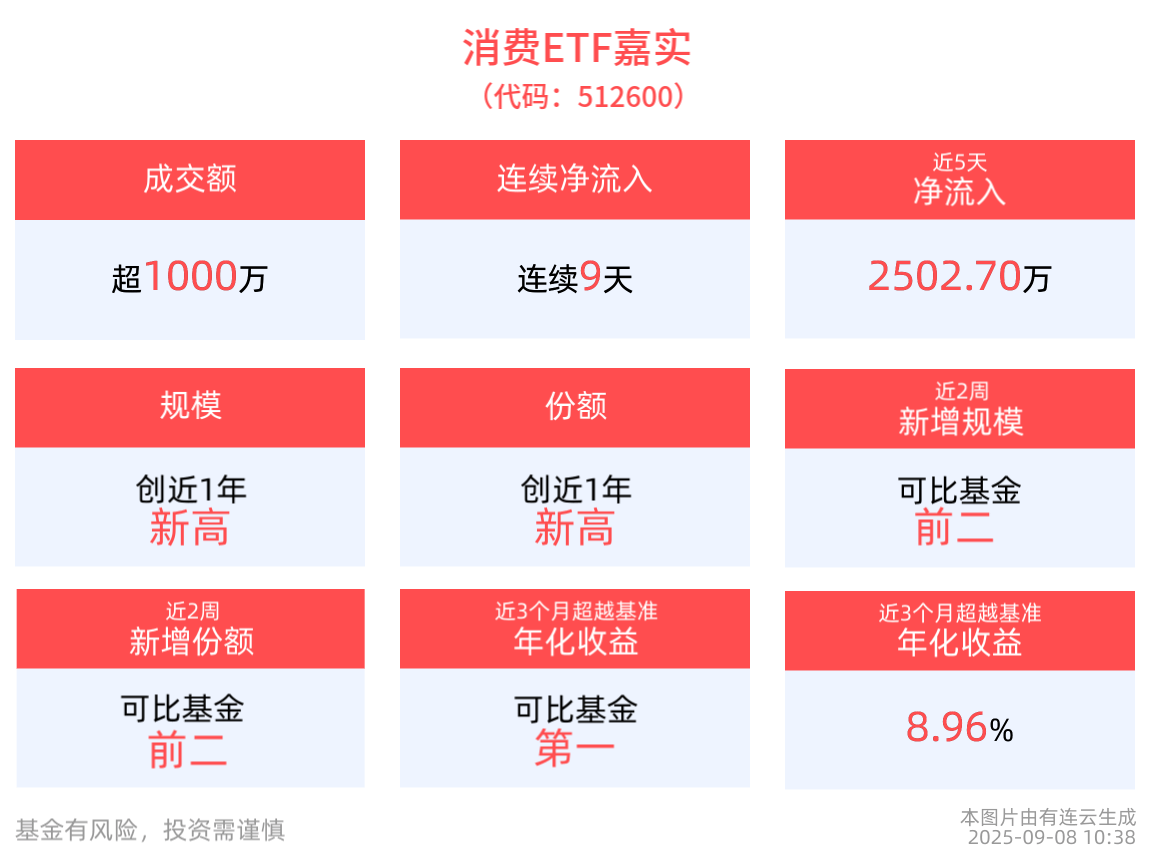
消费ETF嘉实(512600)连续9天净流入近亿元,机构:关注白酒板块估值修复机会
Sou Hu Cai Jing· 2025-09-08 03:05
Core Viewpoint - The consumer sector is showing resilience with significant gains in key stocks and a strong performance of the consumption ETF, indicating potential investment opportunities in the market [1][3][4]. Group 1: Market Performance - The CSI Major Consumer Index rose by 1.04%, with notable increases in stocks such as Beitaini (+6.41%), Huaxi Biological (+4.67%), and New Hope (+3.69%) [1]. - The Consumption ETF (512600) experienced a trading volume of 16.28 million yuan, with a turnover rate of 2.29% [3]. - The Consumption ETF's latest scale reached 702 million yuan, marking a one-year high, and its shares totaled 955 million, also a one-year high [3]. Group 2: Fund Performance - Over the past six months, the Consumption ETF has seen a net value increase of 9.74%, ranking in the top two among comparable funds [3]. - Since its inception, the ETF has recorded a maximum monthly return of 24.50% and a longest consecutive monthly gain of 66.83% [3]. - The ETF's annualized return over the past three months surpassed the benchmark by 8.96%, ranking first among comparable funds [3]. Group 3: Valuation Insights - The latest price-to-earnings ratio (PE-TTM) for the CSI Major Consumer Index is 19.85, which is in the 11.11% percentile over the past three years, indicating a valuation lower than 88.89% of the historical period [3]. Group 4: Sector Analysis - The CSI Major Consumer Index includes leading consumer stocks across various sectors, with liquor accounting for 45% of the index weight [4]. - Despite weak demand in the consumer goods sector, leading companies are showing strong operational resilience and gaining market share [6]. - Analysts suggest that positive policy guidance and healthy supply-demand interactions will improve the supply-demand landscape, particularly in the liquor sector [7].
国海证券晨会纪要-20250908
Guohai Securities· 2025-09-08 01:05
Group 1: Company Performance Highlights - The report indicates that Meinian Health achieved a revenue of 4.1 billion yuan in H1 2025, with a year-on-year decline of 2.28%, and a net loss of 221 million yuan, which is an increase in loss by 2.59% year-on-year [4][6] - Zhongjian Technology reported a significant revenue increase of 59.46% year-on-year, reaching 464 million yuan in H1 2025, with a net profit growth of 99.15% [8][9] - Jinfat Technology's revenue for H1 2025 was 31.6 billion yuan, reflecting a 36% year-on-year increase, while net profit rose by 54% [15][16] Group 2: Strategic Initiatives and Innovations - Meinian Health is advancing its "All in AI" strategy, integrating AI technology into health management, generating 140 million yuan in revenue from AI-related services, a 62.36% increase year-on-year [6][7] - Zhongjian Technology is benefiting from the growing demand for high-performance carbon fiber in aerospace and high-end equipment, with a focus on expanding production capacity [8][11] - Jinfat Technology is leveraging new materials and innovative products to capture emerging market opportunities, with significant growth in its modified plastics and new materials segments [15][17] Group 3: Financial Projections and Ratings - Meinian Health's revenue projections for 2025-2027 are 10.4 billion, 11.4 billion, and 12.6 billion yuan, with net profits expected to grow significantly in the coming years [7] - Zhongjian Technology's revenue forecasts for 2025-2027 are 1.06 billion, 1.27 billion, and 1.59 billion yuan, with a "buy" rating maintained due to strong growth prospects [13] - Jinfat Technology anticipates revenues of 646 billion, 737 billion, and 828 billion yuan for 2025-2027, with a "buy" rating reflecting its leadership in the modified plastics industry [19]






食品饮料行业研究方法与框架
2025-09-07 16:19
Summary of Key Points from the Conference Call Industry Overview - The conference call discusses the **food and beverage industry**, focusing on various segments such as **liquor, beer, soft drinks, dairy products, snacks, condiments, and frozen foods** [1][2][3]. Core Insights and Arguments Liquor Market - The **liquor market** is impacted by the downturn in the real estate sector, but the rigid demand leads to relatively small fluctuations. The demand during the Spring Festival supports self-drinking and gifting needs [1][9]. - Investment and collection attributes of liquor have weakened since 2021, leading to risk release. Future growth drivers depend on price increase capabilities, relying on social and investment attributes [1][12]. - The **white liquor market** has a production scale of **800 billion RMB**. The market is characterized by strong price increase potential and a shift towards premiumization [4][10]. Beer Industry - The **beer industry** has seen slow sales growth, with a production scale of **300 billion RMB**. The competition is characterized by multiple strong players, each with their profit pools [4][13]. - The high-end beer segment is growing, but the overall market is experiencing a slow recovery post-pandemic. The immediate consumption market is weak, while instant retail is rising rapidly [14]. Soft Drinks - The **soft drink market** is nearly **700 billion RMB** in size, with a diverse range of products. The market is witnessing a significant health trend, with rapid growth in sugar-free tea and energy drinks [1][17]. - The carbonated beverage market is dominated by **Coca-Cola and Pepsi**, with pricing strategies impacting competition. Coca-Cola plans to increase prices from **3 RMB to 3.5 RMB** [18]. Dairy Products - The **dairy industry** is valued at approximately **300 billion RMB**, with a duopoly between **Yili and Mengniu**. The market for long-life milk and yogurt is saturated, while fresh milk and cheese have growth potential [4][22]. Snacks - The **snack industry** benefits from channel transformations, with increased price sensitivity driving the growth of discount stores and e-commerce. The health trend is significant, with healthier snack options emerging [1][23]. Condiments and Frozen Foods - The **condiment market** is valued at nearly **500 billion RMB**, with soy sauce and pickled vegetables performing well. The market shows high consumer stickiness and pricing power [2][24]. - The **frozen food sector** faced challenges post-pandemic, requiring innovation and new channels for growth [2][24]. Lifecycle Stages of Segments - Different segments are at various lifecycle stages, with craft beer and coconut water in the introduction phase, while high-end liquor and sugar-free tea are in the growth phase [6]. Competitive Landscape - The competitive landscape varies, with some segments dominated by a single player (e.g., high-end liquor) and others exhibiting a more fragmented structure [7][8]. Future Trends and Challenges - The liquor industry faces challenges from the real estate downturn but maintains rigid demand due to its social attributes. Future price increases depend on economic conditions [9][12]. - The beer industry is adapting to changes in consumer behavior and channel dynamics, with a focus on high-end products [14][13]. Conclusion - The food and beverage industry is characterized by diverse segments, each with unique growth drivers, competitive dynamics, and challenges. The focus on health trends, premiumization, and channel innovation will shape the future landscape of the industry [1][2][3].