
中国进出口银行

Search documents
中交集团董事长宋海良与中国进出口银行董事长陈怀宇举行会谈
Zheng Quan Shi Bao Wang· 2025-10-12 13:43
Core Viewpoint - The meeting between the chairman of China Communications Construction Company (CCCC) and the chairman of China Export-Import Bank focused on enhancing financial product innovation and strengthening cooperation between the bank and enterprises [1] Group 1 - CCCC's chairman, Song Hailiang, and the chairman of China Export-Import Bank, Chen Huaiyu, engaged in in-depth discussions [1] - The discussions aimed at deepening the comprehensive strategic partnership between the two entities [1] - Emphasis was placed on the importance of innovative financial products in facilitating collaboration [1]

上海国际金融中心一周要闻回顾(10月6日—10月12日)
Guo Ji Jin Rong Bao· 2025-10-12 06:46
Group 1: Key Events and Policies - Shanghai Mayor Gong Zheng met with representatives from international companies during the 37th Shanghai Mayor International Entrepreneur Consultation Conference, emphasizing the city's commitment to creating a market-oriented, law-based, and international business environment to support enterprise growth [1] - The Shanghai Financial "Five Major Articles" work promotion meeting was held, focusing on aligning financial supply-side structural reforms with the city's high-quality economic development and enhancing the role of financial institutions in supporting technological innovation and green development [2] - The People's Bank of China launched a one-stop account opening platform for foreign institutions in the interbank bond market, facilitating entry and operational processes for foreign investors [3] Group 2: Financial Innovations and Initiatives - The Bank of Communications Shanghai Branch initiated the "Shanghai Financial Support for Silver Economy Consumption Service Month" to enhance payment convenience and promote consumption among the elderly [4] - The Export-Import Bank of China Shanghai Branch successfully executed its first online interest rate options trading, helping export enterprises manage interest rate risks while capitalizing on potential benefits from rate declines [6] - China Pacific Insurance launched the country's first "drone inspection platform insurance," addressing the insurance needs of the low-altitude economy [7] - SPD Bank completed the world's first investment in a private enterprise "Yulan Bond," amounting to 100 million yuan, enhancing collaboration with quality private enterprises [8] Group 3: Financial Standards and Regulations - The National Financial Regulatory Administration issued a notice to strengthen the supervision of non-auto insurance businesses, aiming to promote rational competition and improve service quality in the sector [10] - The China Securities Regulatory Commission released three financial industry standards related to data specifications for securities and futures, effective immediately [11] Group 4: Statistical Data - As of September 2025, China's foreign exchange reserves reached 333.87 billion USD, an increase of 16.5 billion USD from the end of August, reflecting a 0.5% rise [12] Group 5: New Investment Initiatives - Shanghai Jing'an Capital Investment Operation Co., Ltd. was established with a registered capital of 12 billion yuan, aiming to create a significant investment matrix to support regional industrial upgrades and innovation center development [9]
【财闻联播】宏胜集团祝丽丹被“被带走调查”?最新回应!墨西哥终止对华风塔征收反倾销税
券商中国· 2025-10-11 12:51
Macro Dynamics - The Ministry of Industry and Information Technology and six other departments issued a notice to enhance the construction of new information infrastructure, emphasizing the integration of computing power with industry applications and the development of high-quality industry data sets [2] Market Data - In September, the retail sales of passenger cars in China reached 2.239 million units, a year-on-year increase of 6%, and a month-on-month increase of 11%. Cumulatively, retail sales for the year reached 17.004 million units, up 9% year-on-year [5] - The wholesale of passenger cars in September was 2.770 million units, a year-on-year increase of 11%, with a cumulative wholesale of 20.812 million units for the year, up 13% year-on-year [5] Company Dynamics - Didi Autonomous Driving announced a D-round financing of 2 billion yuan, with funds aimed at increasing AI research and development and promoting the application of Level 4 autonomous driving [13] - Wahaha Group appointed Xu Simin as General Manager, while the Chairman position remains vacant following the resignation of Zong Fuli [14] - Hongsheng Beverage Group's legal representative, Zhu Lidan, responded to rumors of being taken away for investigation, urging not to believe in rumors [12]


中国进出口银行北京分行原行长吴少华,被开除党籍!以贷谋私,搞“逃逸式”辞职、“期权式”腐败……
Zhong Guo Ji Jin Bao· 2025-10-11 10:49
吴少华身为国有金融机构党员领导干部,目无党纪国法,利用职权在信贷项目中以贷谋私,搞"逃逸 式"辞职,通过接受金融票据、他人代持股权等形式搞"期权式"腐败,严重违的政治纪律、廉洁纪律, 构成严重职务违法并涉嫌受贿犯罪,且在党的十八大后不收敛、不收手,性质严重,影响恶劣,应予严 肃处理。依据《中国共产党纪律处分条例》《中华人民共和国监察法》等有关规定,经中国进出口银行 党委研究,决定给予吴少华开除党籍处分;收缴其违纪违法所得;经襄阳市监委研究,将其涉嫌犯罪问 题移送检察机关依法审查起诉,所涉财物一并移送。 超37%!两大稀土巨头宣布提价 今天17时,中央纪委国家监委网站发布消息称,据中央纪委国家监委驻中国进出口银行纪检监察组、湖 北省纪委监委消息:日前,经中央纪委国家监委批准,中央纪委国家监委驻中国进出口银行纪检监察 组、湖北省襄阳市监委联合对中国进出口银行北京分行原党委书记、行长吴少华严重违纪违法问题进行 了纪律审查和监察调查。 经查,吴少华丧失理想信念,背弃初心使命,长期烧香拜佛搞迷信活动,造成不良影响;无视中央八项 规定精神,违规公款报销个人费用,违规组织公款吃喝,违规组织公款旅游;廉洁底线失守,收受可能 ...
中国进出口银行北京分行原行长吴少华,被开除党籍!以贷谋私,搞“逃逸式”辞职、“期权式”腐败……
中国基金报· 2025-10-11 10:25
今天17时,中央纪委国家监委网站发布消息称,据中央纪委国家监委驻中国进出口银行纪检监察组、湖北省纪委监委消息:日 前,经中央纪委国家监委批准,中央纪委国家监委驻中国进出口银行纪检监察组、湖北省襄阳市监委联合对 中国进出 口银行 北京分行原党委书记、行长吴少华严重违纪违法问题 进行了纪律审查和监察调查。 来源: 中央纪委国家监委网站 经查,吴少华丧失理想信念,背弃初心使命, 长期烧香拜佛搞迷信活动, 造成不良影响;无视中央八项规定精神, 违规公款 报销个人费用, 违规组织公款吃喝,违规组织公款旅游;廉洁底线失守,收受可能影响公正执行公务的礼品; 以贷谋私,利用 职务便利为企业在贷款审批发放上提供帮助,非法收受巨额财物。 吴少华 身为国有金融机构党员领导干部,目无党纪国法,利用职权在信贷项目中以贷谋私,搞"逃逸式"辞职,通过接受金融票 据、他人代持股权等形式搞"期权式"腐败, 严重违反党的政治纪律、廉洁纪律,构成严重职务违法并涉嫌受贿犯罪,且在党的 十八大后不收敛、不收手,性质严重,影响恶劣,应予严肃处理。依据《中国共产党纪律处分条例》《中华人民共和国监察 法》等有关规定,经中国进出口银行党委研究, 决定给予吴少 ...
跨境债券专辑丨点心债助力离岸人民币市场稳步发展
Xin Lang Cai Jing· 2025-10-10 23:03
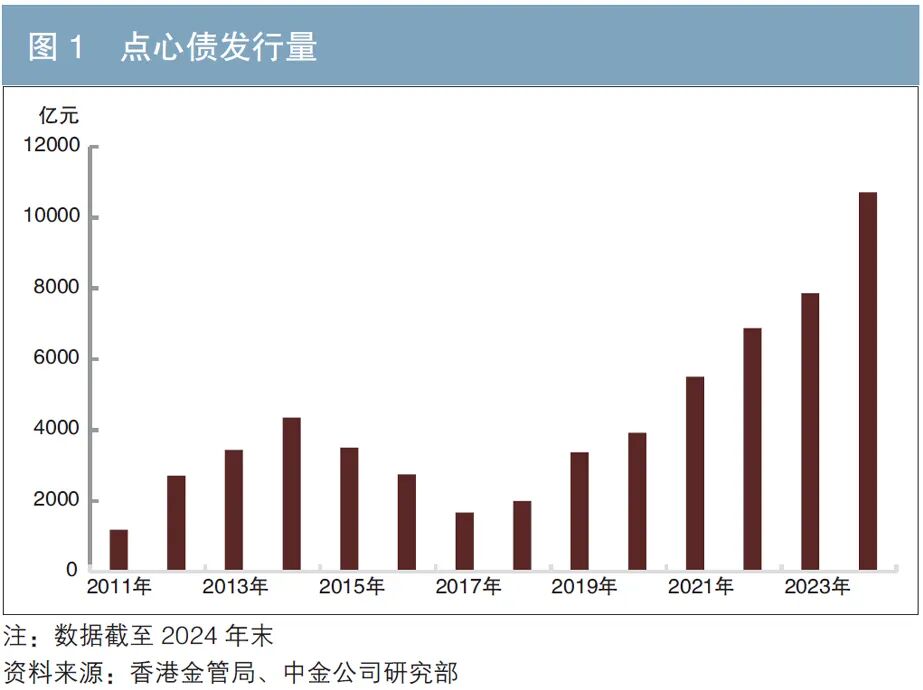
Core Viewpoint - The development of the dim sum bond market has been steady, driven by policies promoting financial market openness and the internationalization of the RMB, with significant growth in issuance and market size observed since 2021 [1][8]. Dim Sum Bond Development History - The dim sum bond market began in 2007, initially dominated by Chinese policy banks and commercial banks, with the first issuance occurring in June 2007 [5]. - From 2010 to 2014, the market experienced rapid growth, with a 27% increase in issuance volume in 2014, reaching 434.7 billion RMB [6]. - The period from 2015 to 2017 saw a slowdown in growth due to economic challenges and currency depreciation, leading to decreased attractiveness of dim sum bonds [7]. - Since 2018, the market has expanded again, with the introduction of the Bond Southbound Connect in September 2021 facilitating foreign investment in Hong Kong's bond market [7][10]. RMB Internationalization Process - The growth of the dim sum bond market is closely linked to China's financial market opening policies and infrastructure improvements, allowing for more diverse participation from domestic investors [8][9]. - The Qualified Domestic Institutional Investor (QDII) system initiated in 2006 has enabled domestic institutions to invest in offshore fixed-income products, including dim sum bonds [9]. - The Southbound Bond Connect has further enhanced access for domestic investors to offshore bonds, promoting market development [10]. Role of Dim Sum Bonds in Offshore RMB Market - Dim sum bonds play a crucial role in creating an effective offshore RMB financing loop, enhancing the RMB's functions as a medium of exchange and store of value [11]. - The issuance of dim sum bonds by the Ministry of Finance has increased, attracting more foreign investors and enhancing the RMB's status as a reserve currency [12]. - The market has diversified, with a growing number of issuers and an increasing presence of foreign sovereign funds and ESG-focused investors [17]. Investment and Trading Value of Dim Sum Bonds - The dim sum bond market is expected to continue growing, with its trading value increasing due to its relative advantages in risk diversification and currency stability [14][15]. - The market has seen a rise in secondary liquidity, with trading volumes significantly increasing since 2022, indicating a more active market [18]. - The Ministry of Finance's increased issuance of offshore RMB bonds has created a demonstration effect, attracting more participants to the offshore market [14][16]. Recommendations for Market Expansion - To further enhance the dim sum bond market, it is recommended to simplify issuance procedures, lower barriers, and improve regulatory frameworks [20]. - Expanding the Southbound Bond Connect to include more long-term funds and increasing QDII quotas could attract a broader range of investors [21]. - Developing a more diverse market structure, including the issuance of sovereign bonds from other countries in RMB, could stimulate international investment [21].
加纳与西班牙签署双边债务重组协议
Shang Wu Bu Wang Zhan· 2025-10-10 18:02
此前,该国已与中国进出口银行、法国、芬兰和英国达成了双边协议。加 纳财政部长指出,政府的目标是在今年年底前完成剩余的重组进程,让国家摆 脱这一困难时期。 (原标题:加纳与西班牙签署双边债务重组协议) 据加纳"乐在线"网10月8日报道,加纳政府与西班牙王国政府签署了双边 债务重组协议,这是该国官方债权人框架下达成的第5份此类协议。此次签署 是加纳为恢复债务可持续性和加强经济复苏基础而做出的持续努力的一部分。 ...
巴西与美直接对话,40%关税或将取消,背后竟然是这个国家唆使?
Sou Hu Cai Jing· 2025-10-10 04:08
Core Points - The trade relationship between Brazil and the United States has become strained due to the U.S. imposing additional tariffs on Brazilian goods, raising the total tariff to 50% [1][3] - In response to these challenges, China has stepped in to support Brazil by establishing a $1 billion fund aimed at enhancing cooperation and providing financial assistance [1][4] - The U.S. government's justification for the tariffs has been criticized as politically motivated, with Brazil asserting that it undermines its political independence [3][6] Trade Impact - Brazilian businesses, particularly in sectors like fishing and coffee, have faced significant market losses due to the increased tariffs, disrupting entire supply chains [4] - The orange juice industry, while not directly affected by tariffs, has seen related agricultural products hit by tariffs, leading to price declines [4] Strategic Cooperation - The establishment of the $1 billion fund by China and Brazil is intended to alleviate Brazil's economic pressures and foster collaboration in various sectors, including energy and agriculture [4][5] - A long-term strategic project, the "Transoceanic Railway," aims to connect Brazil's east coast to Peru's Pacific ports, significantly reducing transportation costs and dependency on other nations [5] Diversification of Trade - Brazil is increasingly diversifying its trade partnerships, reducing reliance on the U.S. market, and seeking new opportunities in China [6][10] - The cooperation with China has empowered Brazil to adopt a firmer stance in negotiations with the U.S., demanding the removal of unreasonable tariffs [6][7] Global Trade Dynamics - The U.S. pressure on Brazil has inadvertently strengthened Brazil's resolve to pursue a diversified trade strategy, showcasing a potential model for other nations facing similar pressures [8][10] - Brazil's approach to enhancing cooperation with China not only aids its own economic transformation but also positions China as a key player in the evolving global trade landscape [10]
信贷高频违规 银行业前三季被罚9.81亿元
Bei Jing Shang Bao· 2025-10-09 16:14
Core Insights - The regulatory environment for the banking industry in 2025 remains stringent, with a "zero tolerance" approach leading to a significant number of penalties issued [1][3] - In the first three quarters of 2025, a total of 997 penalties were imposed on various banking institutions, amounting to approximately 981 million yuan [3][4] - The focus of regulatory scrutiny is primarily on credit business violations, which account for nearly 60% of total penalties, highlighting the need for improved internal controls and compliance mechanisms within banks [6][9] Regulatory Overview - The National Financial Supervision Administration and its branches issued 997 penalties in the first nine months of 2025, with a total fine amounting to 981 million yuan [3][4] - The regulatory body itself issued 14 penalties totaling approximately 314.67 million yuan, indicating a high average penalty per case [3] - The first quarter saw the highest number of penalties at 394, while the third quarter experienced a surge in penalties to 372, reflecting an intensified regulatory environment [4] Credit Business Violations - Credit business remains a significant area of concern, with various violations leading to substantial penalties, including cases of improper loan management and misuse of funds [6][7] - Notable penalties include 16.8 million yuan for Zhejiang Merchants Bank and 8.725 million yuan for Huaxia Bank, both related to credit business violations [7][8] - The prevalence of violations in the credit sector is attributed to the high stakes involved, as it directly impacts financial security and order [9][10] Compliance Challenges - Other areas of compliance, such as wealth management and credit card operations, also exhibit significant vulnerabilities, necessitating a comprehensive upgrade in internal control systems [11][12] - Banks are encouraged to shift their focus from aggressive business expansion to robust risk management and compliance practices [13] - The need for a cultural shift within banks to prioritize compliance as a core aspect of operations is emphasized, aiming to build a more resilient financial environment [13]




罚没9.81亿元!前三季度银行收近千张罚单 信贷违规高频踩“雷”
Bei Jing Shang Bao· 2025-10-09 14:56
Core Insights - The regulatory environment for the banking sector in 2025 remains stringent, with a "zero tolerance" approach leading to a significant number of penalties issued [1][2] - In the first three quarters of 2025, a total of 997 penalties were imposed on various banking institutions, amounting to approximately 981 million yuan [2][3] - The majority of penalties are related to credit business violations, highlighting the need for banks to enhance internal control mechanisms and compliance [1][5] Regulatory Overview - The National Financial Supervision Administration and its branches issued 997 penalties, with a total fine of 981 million yuan in the first nine months of 2025 [2] - The central administration issued 14 penalties totaling approximately 314.67 million yuan, while local regulatory bodies issued 306 and 677 penalties, respectively, with fines of 294.39 million yuan and 371.52 million yuan [2] - The first quarter saw the highest number of penalties, with 394 issued, while the second quarter experienced a decline, followed by a surge in the third quarter with 372 penalties and fines reaching 538 million yuan [3] Credit Business Violations - Credit business violations account for nearly 60% of total penalties, with diverse violations leading to substantial fines [5][6] - Notable cases include Zhejiang Merchants Bank and Shanghai Huari Bank, which faced significant penalties for various credit-related violations [5][6] - The trend of high penalties in the credit sector is attributed to the core nature of credit business in banking and the associated risks of fund mismanagement and regulatory non-compliance [7][8] Compliance Challenges - Compliance issues are not limited to credit business; other areas such as wealth management and credit card operations also exhibit significant regulatory gaps [9][10] - Banks often prioritize business expansion over compliance, leading to inadequate risk management practices [8][10] - The need for banks to upgrade their internal control governance is emphasized, focusing on a comprehensive approach to compliance and risk management [9][10]


