
佳能

Search documents
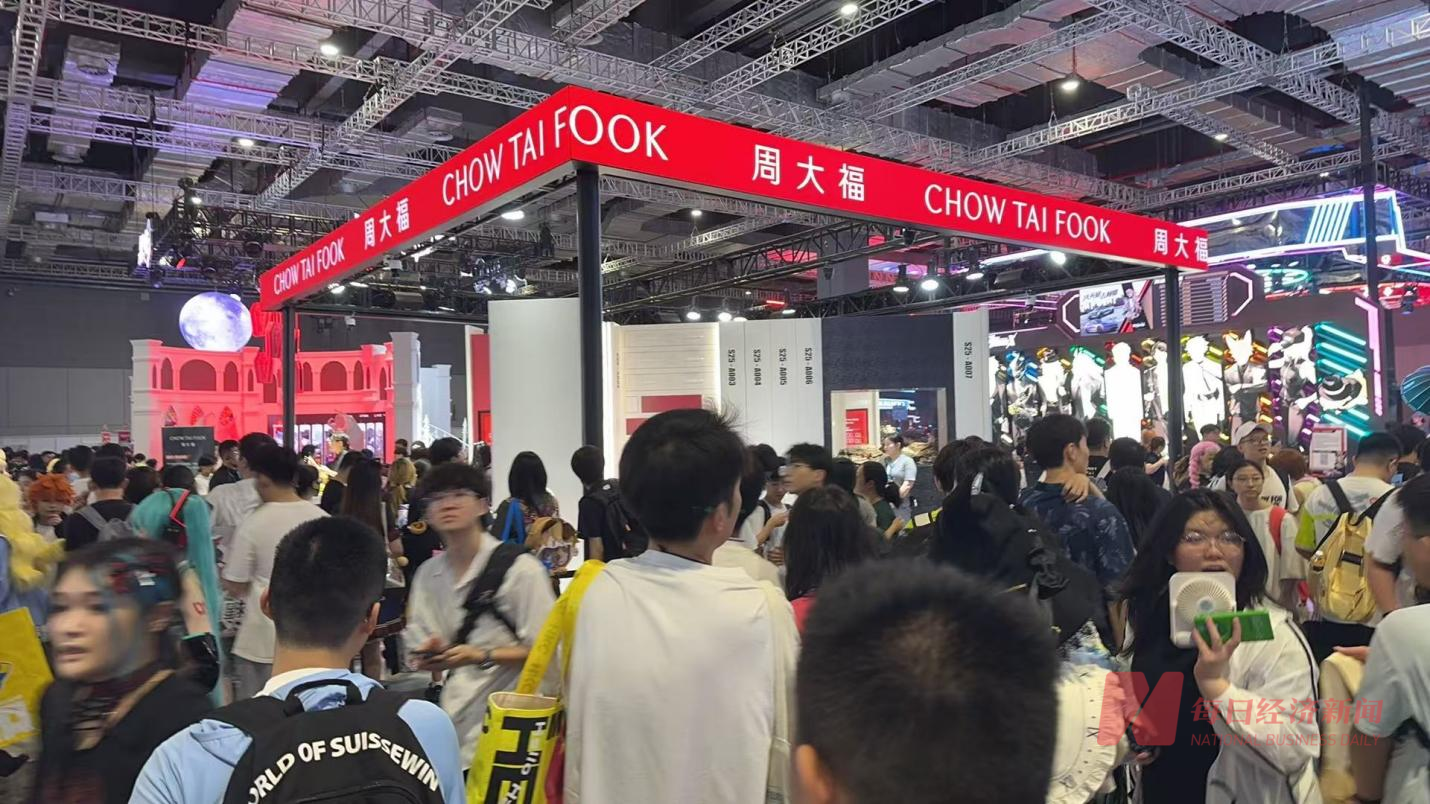
周大福把金饰雕成悟空金箍、建行吆喝开卡赠会员⋯⋯十余家品牌“围攻”BW漫展,只为抓住二次元年轻人?
Mei Ri Jing Ji Xin Wen· 2025-07-13 11:02
Group 1 - The "Bilibili World 2025" (BW2025) exhibition in Shanghai has gained immense popularity, with nearly 900,000 people attempting to purchase tickets, leading to rapid sellouts [1][3] - The exhibition features a diverse range of sponsors, including brands like Chow Tai Fook and China Construction Bank, which are not traditionally associated with the ACGN (Animation, Comic, Game, Novel) culture [2][7] - The event is part of a broader trend in the booming ACGN market in China, which has over 500 million users, predominantly young individuals under 35 years old [2][13] Group 2 - The BW2025 exhibition has seen a 30% increase in both venue size and ticket availability compared to previous years, attracting around 700 exhibitors and over 1,000 global content creators [5][6] - The event has significantly boosted local tourism and consumption, with hotel bookings around the exhibition area tripling compared to the previous week [5] - The exhibition's sponsors are primarily consumer-facing brands, with about 80% targeting end-users in sectors like food, beauty, and automotive [8][11] Group 3 - The rapid growth of the ACGN market is evident, with projections estimating the market size to reach 597.7 billion yuan in 2024 and 834.4 billion yuan by 2029 [2][13] - The demographic of the ACGN audience is heavily skewed towards younger individuals, with 70% of Bilibili's users aged between 18 and 30 [17][18] - Brands are increasingly recognizing the purchasing power of young women, who are seen as a key demographic in the ACGN community [18]



佳能在“自动驾驶之眼”领域挑战索尼
日经中文网· 2025-07-04 05:45
Core Viewpoint - Canon has developed a new type of image sensor called "SPAD" (Single Photon Avalanche Diode), which excels in low-light conditions and reduces power consumption, targeting the automotive sensor market as a new growth area [1][3]. Group 1: Product Development - Canon's SPAD sensor is designed to perform well in dark environments, capable of detecting pedestrians from 120 meters away even in conditions darker than moonlight [5]. - The new sensor improves upon earlier prototypes by reducing power consumption to one-fourth of the 2022 trial product, aiming for practical applications and competitive pricing with CMOS sensors [5]. - Canon plans to start mass production of the SPAD sensor by 2031, marking its entry into the automotive market [3]. Group 2: Market Potential - The automotive sensor market is expected to grow significantly, with projections indicating a market size of 3.6929 trillion yen by 2030, which is 2.3 times larger than in 2024 [5]. - Canon aims for its camera segment to capture 50% of the overall automotive sensor market by 2030 [5]. Group 3: Competitive Landscape - The automotive sensor market is currently dominated by major players such as ON Semiconductor, OmniVision, and Sony Semiconductor Solutions, with Sony planning to increase its market share from 32% in FY2023 to 43% in FY2026 [6]. - Sony is also developing its own SPAD sensors for high-performance LiDAR applications, which will begin mass production in the fall of 2025, enhancing detection capabilities [7]. - The competition in the automotive sensor market is intensifying, with various manufacturers adopting different strategies regarding the use of cameras and LiDAR for Advanced Driver Assistance Systems (ADAS) and autonomous driving [7].

科技股7月开门红?光刻机、芯片齐“躁动”
Ge Long Hui· 2025-07-01 07:04
Group 1 - The A-share technology sector experienced a strong opening on July 1, with the semiconductor industry chain leading the gains, particularly in areas such as photolithography machines and advanced packaging [1][7] - Several stocks, including Kai Mei Te Qi and Hai Li Shares, reached their daily limit, while Blue Ying Equipment surged over 16% and Jiu Ri New Materials increased by over 5% [2][3] - The semiconductor and chip concepts have seen a wave of limit-up stocks, with significant gains in the photolithography machine sector, which has risen over 11% in the last seven trading days [4][5] Group 2 - Recent market rumors suggest a major breakthrough in domestic EUV photolithography machines, with reports indicating that the National Integrated Circuit Industry Investment Fund is adjusting its focus to address key shortcomings in photolithography machines and EDA software [7] - The Chinese government emphasizes the importance of technological self-reliance, with recent meetings highlighting the need to accelerate breakthroughs in core technologies and enhance national security [8][9] - The semiconductor wafer manufacturing equipment market in mainland China is projected to reach over 230 billion yuan in 2024, with a year-on-year growth of 19.4% [9] Group 3 - SEMI forecasts that by 2025, the self-sufficiency rate of domestic chip equipment will reach 50%, with full coverage of 14nm processes, reducing dependence on equipment from the US, Japan, and Europe [10] - The outlook for domestic substitution is promising, with strong momentum in the artificial intelligence sector, and J.P. Morgan predicts a potential 15%-20% increase in Asian tech stocks this year [11] - Minsheng Securities notes that the high-end photolithography machine market is currently dominated by ASML, Nikon, and Canon, indicating a significant market opportunity for domestic breakthroughs in certain categories [13] Group 4 - The domestic semiconductor industry is experiencing a wave of mergers and acquisitions, with companies across various sectors, including materials, equipment, and chip design, actively pursuing consolidation strategies [14] - Mergers are seen as a core strategy for companies to quickly acquire key technologies and maintain market competitiveness, especially in the context of accelerating domestic substitution [15]
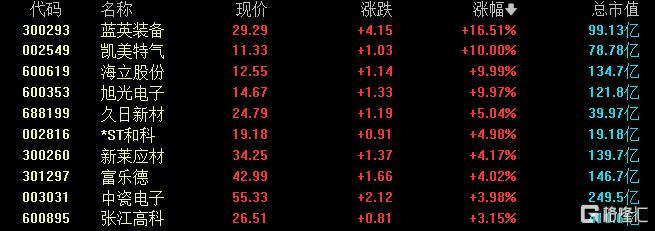
光刻机概念爆发,蓝英装备20%涨停,波长光电等大涨
Zheng Quan Shi Bao Wang· 2025-06-30 02:21
Group 1 - The core viewpoint of the articles emphasizes the importance of lithography machines in the semiconductor industry, highlighting recent stock price surges of related companies due to government support for technological self-reliance and innovation [1][2] - The State Council's meeting on June 27 stressed the need for enhancing responsibility and urgency in advancing high-level technological self-reliance, focusing on breaking through key core technologies and integrating technological innovation with industrial innovation [1] - Lithography is identified as the most critical and complex process in integrated circuit manufacturing, accounting for approximately one-third of manufacturing costs and 40%-50% of the time spent in the process [2] Group 2 - The lithography machine market is dominated by ASML, Nikon, and Canon, with a growing demand for high-end EUV and DUV lithography machines, while there remains significant demand for i-line lithography machines [2] - There is a vast market potential for domestic breakthroughs in certain categories of lithography machines, which could lead to substantial growth opportunities for companies involved in the lithography supply chain [2] - Companies such as Blue Ying Equipment, Wavelength Optoelectronics, and others have seen significant stock price increases, indicating strong market interest and potential investment opportunities in the lithography equipment sector [1]





「经济发展」胡鞍钢等:新型举国体制与世界数字经济强国的构建
Sou Hu Cai Jing· 2025-06-24 14:31
Core Viewpoint - The article emphasizes the necessity of strengthening China's digital economy as a national priority, highlighting the importance of a new type of national system to achieve this goal [3][10][12]. Group 1: Digital Economy Development - The digital economy is rapidly evolving, with significant advancements in technologies such as big data, cloud computing, and artificial intelligence, making it a key variable in global competition [3][10]. - China's digital economy has grown from 22.6 trillion yuan to 45.5 trillion yuan (approximately 7.1 trillion USD) from 2016 to 2021, with an average nominal growth rate of 16.2% [23][26]. - As of 2021, the global digital economy scale reached 38.1 trillion USD, accounting for 45% of GDP, with a nominal growth rate of 15.6%, surpassing the growth rate of nominal GDP by 2.5 percentage points [10][11]. Group 2: National System and Its Importance - The "national system" refers to the mobilization of state power to achieve national goals, characterized by its unique ability to integrate vast resources [4][5]. - The high costs and potential risks associated with the national system necessitate careful consideration of its benefits versus costs, particularly in the context of digital technology development [5][6]. - Historical examples, such as the construction of the Great Wall and the Grand Canal, illustrate the effectiveness of the national system in addressing significant challenges [6][7]. Group 3: Digital Technology and Economic Structure - Digital technology is identified as the cornerstone of the digital economy, with its development being crucial for overcoming existing bottlenecks [15][18]. - China's advantages in data and internet infrastructure are contrasted with its disadvantages in critical digital technologies, particularly in semiconductor manufacturing [14][15]. - The article stresses that the competition in the digital economy ultimately hinges on advancements in digital technology [15][18]. Group 4: New Type of National System - The new type of national system must evolve to be more market-oriented and inclusive, adapting to the demands of the digital economy [12][19]. - The integration of government mechanisms with market mechanisms is essential for fostering innovation in digital technology [22]. - The article advocates for a focus on key core digital technologies, such as quantum information and integrated circuits, to drive overall advancements in the digital economy [18][19]. Group 5: Future Prospects - The article concludes that the next phase is critical for establishing China as a global leader in the digital economy, leveraging its unique advantages and addressing technological gaps [25][26]. - China's digital market demand and infrastructure are positioned to support rapid growth, with significant potential in emerging sectors like industrial internet and smart cities [26][27]. - The establishment of a robust governance structure for digital economy development is highlighted as a key factor for success [26].

中国CIS崛起,索尼带头反击
半导体行业观察· 2025-06-23 02:08
Core Viewpoint - Sony's 2024 fiscal year performance report indicates that due to lower-than-expected sales from major clients and intensified competition from Chinese high-end CIS manufacturers, its market share in the CIS sector remains flat compared to the previous year, delaying its goal of achieving a 60% market share by 2025 [1][9]. Industry Overview - The current dynamics in the CIS market reflect a significant shift from a Japan-Korea dominated landscape to a more competitive environment with the rise of Chinese companies like Weier Technology, SmartSens, and Gekewei, which are transitioning from followers to competitors [2][8]. - Historically, the CIS market has seen various phases, starting from the commercialization of CCD technology in the 1970s to the emergence of CMOS technology in the 1990s, which laid the groundwork for the industry's growth [4][5]. Market Dynamics - The smartphone boom has driven explosive growth in the CIS market, with global sales increasing threefold from 2010 to 2019, making it one of the fastest-growing semiconductor categories [5][6]. - Sony and Samsung emerged as market leaders, with Sony capturing over 70% of the high-end mobile CIS market by 2022, while Samsung held a 19% market share [7][8]. Competitive Landscape - Chinese manufacturers have gained significant ground, with domestic CIS market share rising from 8% in 2018 to 25% in 2023, driven by advancements in technology and increased demand in sectors like security and automotive [9][10]. - The competition is intensifying, with Sony facing pressure from Chinese firms that are leveraging cost advantages and improving technology to penetrate high-end markets [9][10]. Future Outlook - Sony anticipates a compound annual growth rate (CAGR) of approximately 9% for its CIS business from 2024 to 2030, despite the postponement of its market share target [15][18]. - The company is focusing on enhancing product performance across five key areas: sensitivity/noise, dynamic range, resolution, read speed, and power consumption, while also investing in new manufacturing processes [15][22]. Strategic Initiatives - Sony is expanding its production capacity in Thailand and collaborating with TSMC in Japan to strengthen its manufacturing base [14][15]. - The company is positioning its automotive camera business as a strategic focus area, aiming for a 43% market share by 2026, up from 37% in 2024 [36][38]. Technological Innovations - Sony is investing in advanced manufacturing techniques, including multi-layer technology and new process nodes, to enhance sensor performance and meet evolving market demands [27][30]. - Canon is also making strides in sensor development, focusing on high dynamic range SPAD sensors and maintaining its commitment to in-house sensor R&D [48][55]. Conclusion - The CIS market is undergoing a transformation characterized by technological innovation and increased competition, particularly from Chinese manufacturers. Companies like Sony and Canon are actively adapting their strategies to maintain leadership in this evolving landscape [72].

纳思达: 中联国际房地产土地资产评估咨询(广东)有限公司关于深圳证券交易所《关于对纳思达股份有限公司重大资产出售的问询函》之核查意见
Zheng Quan Zhi Xing· 2025-06-20 12:06
Group 1 - The core viewpoint of the article revolves around the valuation analysis of Lexmark International II, LLC, focusing on the methodologies used, including the income approach and market approach, to determine the company's equity value [2][23][29] - The income approach estimates the market value of Lexmark's equity at $17,200.00 million, with a basis in projected revenue from hardware sales, supplies, and other services [18][19] - The market approach evaluates Lexmark's equity value at $19,800.00 million, considering comparable companies in the same industry and market [23][24] Group 2 - The valuation analysis indicates that Lexmark's main business revenue is projected to grow at an annual rate of 0.26% to 0.44% during the forecast period [8][19] - The analysis highlights the importance of hardware sales in generating ongoing revenue from consumables and after-sales services, which are critical for profitability [3][4] - The estimated gross margin for Lexmark's hardware sales is projected to decline slightly, reflecting competitive pressures and changes in product mix [11][19] Group 3 - The selection of comparable companies for the market approach includes Brother Industries, Ricoh Group, Konica Minolta, and Canon, which are all publicly traded companies in the same industry [24][27] - The analysis emphasizes that the chosen comparable companies share similar business models and are influenced by the same economic factors, ensuring a relevant comparison [23][27] - The valuation process incorporates adjustments for financial metrics and other factors to enhance comparability between Lexmark and the selected companies [28][29]

中国辽宁—日本经贸合作说明会在东京举行
Xin Hua Wang· 2025-06-19 11:38
Group 1 - The China Liaoning-Japan Economic Cooperation Conference was held in Tokyo to promote comprehensive cooperation in trade, investment, technology, and cultural tourism between Liaoning and Japan [1][2] - Liaoning Province has emphasized the importance of its relationship with Japan, highlighting successful investments from major Japanese companies such as Panasonic, Mitsubishi, and Canon [1][2] - The conference aimed to enhance understanding and cooperation, leveraging Liaoning's geographical advantages and favorable policies to strengthen Sino-Japanese economic ties [1][2] Group 2 - The Japan-China Economic Association has been dedicated to promoting economic exchanges since its establishment in 1972, maintaining a solid cooperative foundation with Liaoning Province [2] - The association has established an office in Shenyang in 2006 and participates in the annual China Liaoning International Investment and Trade Fair to create more business opportunities [2] - The Director of Liaoning's Commerce Department introduced the province's development status, key industries, foreign enterprise services, and cooperation potential with Japan during the conference [3]

时尚设计智能手表成消费新趋势 京东618全周期成交额同比增长超2倍
Sou Hu Cai Jing· 2025-06-19 08:42
Core Insights - JD.com's 618 sales event achieved record-breaking performance, with digital product sales exceeding double the amount from the same period last year, marking a historic high [1] - The event was significantly supported by government subsidies and trade-in policies, driving strong consumer engagement and sales growth [1] User Growth and Consumer Preferences - During the 618 event, new user transactions for JD's digital products increased by 50% year-on-year, indicating a growing preference for JD as a primary platform for digital products [3] - Sales volume and user transactions for new products surged over six times, reflecting strong consumer demand for innovative digital products [3] - The trade-in service saw order volume increase by over six times, showcasing consumer commitment to sustainability and recognition of JD's trade-in offerings [3] Innovative Consumption Trends - JD's digital products are becoming a trendsetter in consumer behavior, with AI smart glasses sales increasing over seven times, highlighting the deep penetration of AI technology in consumer markets [5] - Fashionable smartwatches saw sales revenue double, meeting consumer desires for the integration of technology and fashion [5] - Sales of no-data monitoring devices and gaming products also more than doubled, indicating robust demand for convenient monitoring and entertainment solutions [5] Brand and Product Performance - Notable brands such as DJI, Huawei, Sony, Xiaomi, and Canon emerged as top performers during the event, thanks to their product quality and technological innovation [6] - Top-selling products included DJI Pocket 3, Sony Alpha 7C II, and Huawei GT5, which stood out for their unique advantages [6] New Product Launches - Many brands chose to debut new products on JD during the 618 event, achieving remarkable market responses, such as Huawei Watch 5 sales tripling year-on-year [8] - The Switch 2 auction attracted over 500,000 viewers, demonstrating significant consumer interest [8] - New products like the Fujifilm X-half and Huawei FIT 4 garnered top attention in their respective categories, quickly becoming market highlights due to their innovative features and designs [8] Future Outlook - JD's impressive performance during the 618 event serves as both a validation of past efforts and an encouragement for future initiatives [8] - The company aims to continue its commitment to innovation, quality, and service, striving to provide consumers with superior digital products and shopping experiences [8]


体现崭新特点,吸引外国企业,超长“618”提振中国消费
Huan Qiu Wang· 2025-06-18 23:02
Group 1 - The "618" shopping festival in China has been extended to 39 days, starting from May 13 and ending on June 20, which is 7 days earlier than last year, aiming to boost consumer spending amid global economic uncertainties [1] - Major e-commerce platforms like Tmall and JD.com have simplified their promotional rules this year, eliminating complex discount calculations and focusing on straightforward discount methods to enhance consumer experience [2] - The sales of agricultural products, particularly lychees, have surged during the "618" festival, with JD.com reporting a significant increase in sales due to direct sourcing from Guangdong [3][4] Group 2 - The "618" festival has attracted international attention, with foreign companies increasing their stock for the event, indicating a growing interest in the Chinese market [5][6] - China's retail market is showing signs of vitality, with the retail sales growth rate reaching 6.4% in May, the highest since December 2023, supported by strong consumer spending during the Labor Day holiday and government subsidies [6][7] - Despite external challenges such as trade conflicts, the demand in the Chinese market remains stable, with experts suggesting that the retail sector has significant growth potential [7]