北新建材

Search documents
上海地产政策松绑,期待更多政策落地
GOLDEN SUN SECURITIES· 2026-03-01 08:46
证券研究报告 | 行业周报 gszqdatemark 2026 03 01 年 月 日 建筑材料 上海地产政策松绑,期待更多政策落地 2026 年 2 月 24 日至 2 月 27 日建筑材料板块(SW)上涨 0.68%,其中 水泥(SW)上涨 1.07%,玻璃制造(SW)上涨 2.44%,玻纤制造(SW) 下跌 2.16%,装修建材(SW)上涨 2.39%,本期建材板块相对沪深 300 超额收益+0.62%。本期建筑材料板块(SW)资金净流入额为-11.78 亿元。 【周数据总结和观点】 本周上海五部门联合发布《关于进一步优化调整本市房地产政策的通知》 新政主要从限购松绑、公积金提额、房产税调整三方面发力:非沪籍居民 外环内购房社保年限由 3 年缩短至 1 年,连续缴纳满 3 年及以上可在外 环内增购 1 套;持居住证满 5 年可全市购 1 套;外环外购房不限套数。 首套公积金贷款最高额度从 160 万元提至 240 万元,多子女家庭叠加政 策后可达 324 万元;沪籍成年子女家庭唯一住房暂免房产税。根据 wind 统计,2026 年 1 月地方政府债总发行量 8633.5 亿元,发行金额环比 2025 年 ...


【行业深度】洞察2025:中国涂料行业竞争格局及市场份额(附市场集中度、市场份额等)
Qian Zhan Wang· 2026-02-27 06:09
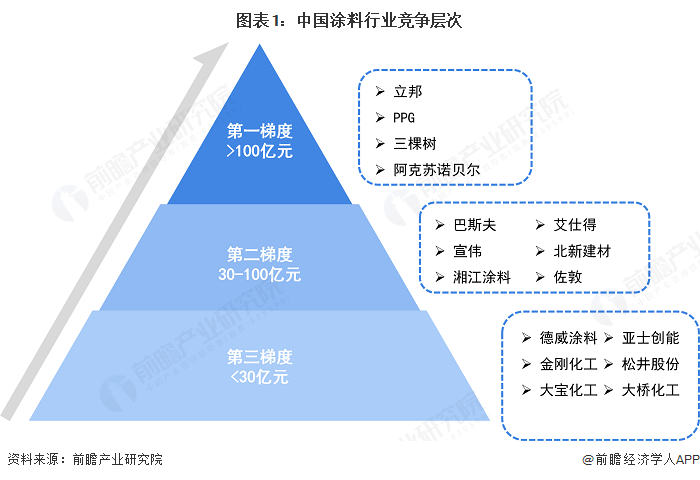
本文核心数据:涂料企业竞争格局;涂料市场集中度 1、中国涂料行业竞争梯队 根据国内涂料行业首家财经媒体《涂界》发布的《2025中国涂料企业100强排行榜》对中国涂料行业竞争梯 队进行分析,销售额大于100亿元的企业有立邦、PPG、三棵树和阿克苏诺贝尔等,位于行业竞争第一梯 队;30-100亿元区间内包括巴斯夫、佐敦、宣伟、艾仕得、北新建材、湘江涂料等,位于第二梯队;小于30亿 元企业包括德威涂料、亚士创能、松井股份、大宝化工、大桥化工等,位于第三梯队。 转自:前瞻产业研究院 以下数据及分析来自于前瞻产业研究院涂料研究小组发布的《中国涂料行业发展前景预测与投资战略规划分 析报告》 行业主要上市公司:三棵树(603737)、北新建材(000786)、亚士创能(603378)、松井股份(688157)等 2、中国涂料行业区域竞争分析 根据企查猫以"涂料、油墨、颜料及类似产品制造业"为选定行业,以"涂料"为关键词进行精确搜索,涂料产 业链企业主要分布在广东省,以及山东、浙江、江苏、上海等华东地区。截至2025年12月,广东共有相关涂 料企业数5931家。 注:企查猫数据截止到2025年12月5日 从代表性企业分布来看 ...


北新建材:截至2026年2月13日公司股东总户数约为5.8万户
Zheng Quan Ri Bao· 2026-02-25 11:11
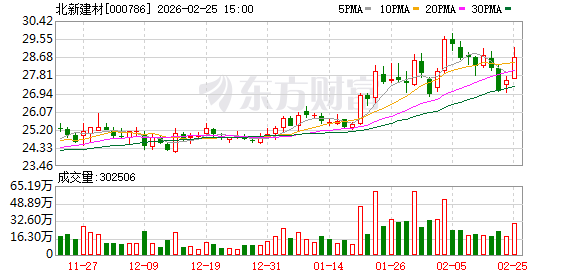
(文章来源:证券日报) 证券日报网讯 2月25日,北新建材在互动平台回答投资者提问时表示,截至2026年2月13日,公司股东 总户数约为5.8万户。 ...
地产政策加码+建材提价催化,建材ETF易方达(159787)标的指数涨超3%
Mei Ri Jing Ji Xin Wen· 2026-02-25 07:05
产业层面,节后下游复工复产节奏加快,建筑链迎来小阳春。防水、涂料行业企业相继发布涨价函,部 分产品价格触底反弹;玻纤行业景气度持续提升,电子布产品供需格局向好,2026年行业景气度有望稳 步向上。供给端加速出清背景下,建材产业供需新平衡正在形成。 中证全指建筑材料指数覆盖水泥、防水、涂料等行业龙头,前十大成分股包括海螺水泥、东方雨虹、北 新建材、华新建材等企业。建材ETF易方达(159787)管理费率仅0.15%/年,是跟踪该指数的ETF中唯 一的低费率产品,可助力投资者低成本把握建材产业企稳改善机遇。 2月25日,建筑材料板块表现活跃。截至14:30,中证全指建筑材料指数上涨3.5%,指数成分股中,南玻 A涨停,科顺股份涨超14%,东方雨虹涨超8%,韩建河山涨超7%。 政策面上,上海楼市"新七条"重磅发布,其中提到非沪籍家庭外环内购房社保年限缩短至1年,公积金 贷款最高额度提至240万元,成年子女唯一住房暂免房产税。地产支持政策接续释放,市场由于地产链 企稳回升预期受到积极提振。 (文章来源:每日经济新闻) ...
周期论剑|开年周期开门红
2026-02-25 04:10
会议主持人: 好的,各位投资者新年好。 甚至是食品饮料,也都出现了这个明显的这个机会所以我觉得就是在今天大家都要看到在 中国市场,它的市场结构变得更加广泛,更加具有梯度。科技和非科技都在出现这个投资 机会。同时,权重和小市值也在出现投资机会。所以我觉得市场结构本身的变化也非常值 得大家去重新的审视今年中国市场的一个。这个眼镜,那说到我们的看法,大家也其实大 家也比较熟悉了。在 1 月中旬以来,国泰海通应该是唯一一个在市场当中讲,要开始重视 内需,要开始重视这个传统行业的这样的一个,这个证券公司和研究团队。 李鹏飞 国泰海通金属分析师: 现在就是我们联合还是策略跟十大周期行业的首席,给大家开年梳理一下这个周期整个板 块,这个投资逻辑,还有这个机会。那首先,我们还是有请策略首席方毅老师发言。 方奕 国泰海通策略首席: 好的,谢谢。各位朋友,大家晚上好,我是方毅。大家新年快乐,这是开年以来,这个第 一天,也是第一次和大家沟通我们对中国市场的看法。那应该来说,2026 年以来,实际 上大家可以看到今年所上涨的这个板块,其实和去年是有比较大的这个差异的。比如说去 年比较强劲的这个算力,今年普遍的表现是这个比较差的。那当 ...
随着工业4.0与智能制造需求增长,2026年中国岩棉需求量将达461.4 万吨[图]
Sou Hu Cai Jing· 2026-02-24 03:42
共研产业研究院通过对公开信息分析、业内资深人士和相关企业高管的深度访谈,以及分析师专业性判断 和评价撰写了《2026-2032年中国岩棉市场深度调研与投资分析报告》。本报告为岩棉企业决策人及投资者 提供了重要参考依据。 2021-2026年中国岩棉产量及增速 岩棉生产过程中的能耗和碳排放是行业关注焦点。近年来,企业通过采用电炉熔融、余热回收、废料再生 等技术,显著降低单位产品的能耗和碳排放。例如,部分企业已实现生产过程的碳中和,并通过第三方认 证(如ISO 14001环境管理体系),岩棉废弃后可回收再利用,用于生产轻质混凝土、路基材料等,实现循 环经济,预计2026年中国岩棉需求量同比增长3%。 2021-2026年中国岩棉需求量及增速 为确保岩棉行业数据精准性以及内容的可参考价值,共研产业研究院团队通过上市公司年报、厂家调研、 经销商座谈、专家验证等多渠道开展数据采集工作,并运用共研自主建立的产业分析模型,结合市场、行 业和厂商进行深度剖析,能够反映当前市场现状、热点、动态及未来趋势,使从业者能够从多种维度、多 个侧面综合了解当前岩棉行业的发展态势。 岩棉是以天然岩石(如玄武岩、辉绿岩、白云石)或工业废渣( ...
寒冬渐退春不远,劲草迎风气象新:建筑建材 2026 年策略报告:-20260213
Huafu Securities· 2026-02-13 13:48
Investment Highlights - The construction sector faced pressure in 2025, with the building materials sector showing signs of bottom recovery, as the building materials sector increased by 22.1%, outperforming the construction decoration sector which only rose by 6.7% [2][15][22]. Construction Sector Analysis - The construction sector is under significant fundamental pressure, with a focus on three main investment directions: overseas expansion through the "Belt and Road" initiative, resource value reassessment, and state-owned enterprise reform [3][5]. - The domestic traditional infrastructure investment growth rate is slowing, and real estate construction continues to weaken, limiting the improvement space for the sector [3][5]. - Companies with business transformation capabilities and those positioned in high-growth niche markets performed well, while engineering consulting firms faced pressure due to local government financial constraints [3][5]. Building Materials Sector Analysis - The building materials sector is experiencing structural differentiation, with some segments expected to reach a turning point, particularly consumer building materials [4][5]. - Despite weak real estate data, the marginal negative impact on the building materials sector has significantly decreased, with supply-side improvements expected to precede demand-side recovery [4][5]. - The cement industry is recovering from price bottoming, while the glass industry remains under pressure, and the fiberglass sector is seeing significant improvements due to structural demand [4][5][41][46]. Investment Recommendations - In the construction sector, focus on leading infrastructure companies benefiting from overseas projects and major engineering, such as China Communications Construction Company, China State Construction Engineering, and China Railway Construction Corporation [5]. - In the building materials sector, attention should be given to leading consumer building material companies like Sangke Tree, Oriental Yuhong, and Beixin Building Materials, as well as cyclical building material leaders like Huaxin Cement and China National Building Material [5]. Belt and Road Initiative - The "Belt and Road" initiative has created significant opportunities for the construction sector, with a notable increase in overseas orders and contracts signed in 2025, amounting to $257.98 billion, a 10.8% increase year-on-year [77][79]. - The demand for infrastructure in countries participating in the initiative is expected to grow rapidly, providing a substantial project pool for construction companies [77][79]. Resource Value Reassessment - The expectation of rising prices for non-ferrous metals is anticipated to benefit state-owned construction companies that have acquired valuable mineral resources through past projects [3][5]. State-Owned Enterprise Reform - Policies promoting the securitization of state-owned assets and mergers and acquisitions are expected to create value reassessment opportunities for state-owned construction companies with quality assets [3][5].
科顺股份(300737):提价先锋,行业格局改善,公司蓄势待发
Shenwan Hongyuan Securities· 2026-02-13 09:50
Investment Rating - The report assigns an "Accumulate" rating for the company, marking its first coverage [2][9]. Core Insights - The company is poised for growth, with strong pricing power and an improving industry landscape. It has been restructuring its revenue sources, significantly increasing the share of non-residential and overseas income [5][8]. - The waterproofing industry has undergone significant changes over the past five years, with a shift in demand structure and an increase in market concentration. The company is expected to benefit from these trends [8][43]. - The company's financial performance is projected to recover, with expected revenue growth and improved profit margins in the coming years [6][10]. Summary by Sections Company Overview - Established in 1996, the company specializes in comprehensive waterproofing solutions, covering various sectors including construction waterproofing, civil materials, and energy solutions. It has participated in major national projects [18]. - The company has a stable governance structure, with concentrated ownership among key stakeholders [20]. Industry Changes - The demand structure in the waterproofing industry has shifted, with non-residential applications gaining importance and the share of second-hand housing transactions increasing significantly [44][50]. - The industry has seen a significant reduction in competition, with market consolidation occurring faster than in other segments of the real estate chain [54]. Financial Performance and Forecast - Revenue is expected to recover from a projected decline in 2025, with estimates of 6.22 billion yuan in 2025, followed by growth to 6.67 billion yuan in 2026 and 7.16 billion yuan in 2027 [6][10]. - The gross margin is anticipated to improve, with a forecasted increase to 28.1% in 2026 and 29.7% in 2027, reflecting the company's focus on high-margin products [6][10]. Investment Analysis - The company's valuation is currently below that of comparable companies in the consumer building materials sector, suggesting potential for upside as the market recovers [9][10]. - The report highlights the company's strong pricing power and willingness to increase prices, which could enhance profitability as market conditions improve [8][11].

建材行业双周报(2026/01/30-2026/02/12):“防内卷”带来建材供需格局优化,电子布价格提升预期增强-20260213
Dongguan Securities· 2026-02-13 08:48
Investment Rating - The report maintains a "Market Weight" rating for the building materials industry, indicating that the industry index is expected to perform within ±10% of the market index over the next six months [46]. Core Insights - The building materials industry is experiencing an optimization in supply and demand dynamics due to the "anti-involution" policies, with expectations for price increases in electronic fabrics [2][4]. - The cement sector is anticipated to see a further contraction in total production capacity in 2026, driven by regulatory measures and a potential recovery in real estate sales in key cities [4][39]. - The flat glass market is showing signs of recovery with a slight increase in production and prices, although short-term demand remains weak due to seasonal factors [4][40]. - The photovoltaic glass market is facing challenges with excess supply and ongoing losses, but long-term demand is expected to be supported by the development of new energy bases [4][40]. - The glass fiber industry is in a structural recovery phase, with increasing demand for high-end products driven by advancements in AI and 5G technologies [4][40]. Summary by Sections Cement - The Ministry of Industry and Information Technology has implemented measures to control cement production capacity, leading to an expected reduction in total capacity in 2026 [4][39]. - Recent data indicates a recovery in real estate sales, which, combined with major infrastructure projects, may improve the supply-demand balance in the cement industry [4][39]. - Recommended stocks include Shangfeng Cement, Taipai Group, and Huaxin Cement, which have favorable fundamentals and high dividend yields [4][39]. Glass and Fiberglass - The flat glass production in 2025 is projected to be 97,591 million weight boxes, a 3% decrease year-on-year, but December 2025 saw a 3.4% increase compared to the previous year [4][40]. - The price of float glass has shown a slight recovery, with expectations for price stabilization due to supply-side adjustments [4][40]. - The fiberglass market is benefiting from increased demand for low-DK glass fabrics, with Taiwanese manufacturers shifting production to meet this demand [4][40]. - Recommended stocks in the fiberglass sector include China Jushi, which is expected to benefit from the structural recovery in the industry [6][40]. Consumer Building Materials - Leading companies like Keshun and Sankeshu have announced price increases due to rising raw material costs, indicating a trend of price stabilization in the industry [6][42]. - The demand for new construction is weakening, but renovation and urban renewal projects are expected to drive growth [6][42]. - Recommended stocks include Beixin Building Materials, Tubaobao, and Sankeshu, which are well-positioned to recover ahead of their peers [6][42].


机构资金抢筹布局!标的指数展现高Beta弹性,建材ETF(159745)布局行业核心标的
Xin Lang Cai Jing· 2026-02-13 07:07
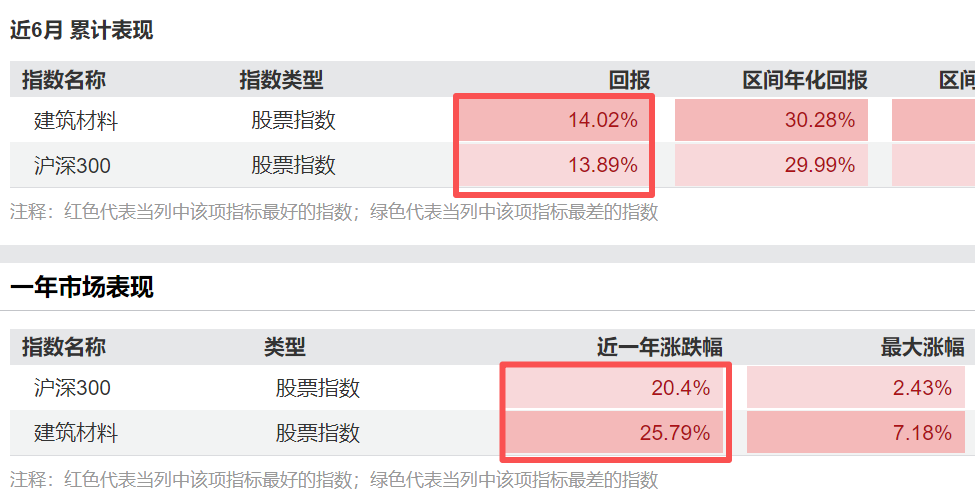
Core Viewpoint - The building materials sector is experiencing a strategic configuration window for upward resonance in both prosperity and valuation, driven by the deepening "anti-involution" policies, alleviation of cost pressures, and recovery expectations in the real estate chain [1] Policy and Industry Dynamics - The "Building Materials Industry Stabilization Growth Work Plan (2025-2026)" aims to regulate low-price disorderly competition and promote the orderly exit of backward production capacity [1] - The cement industry is transitioning from "capacity replacement" to "actual capacity and registered capacity unification," with actual clinker capacity expected to decrease from 2.1 billion tons to 1.6 billion tons, leading to a 10-15 percentage point increase in capacity utilization [1] - By April 2025, approximately 31.65 million tons of capacity had exited the national cement industry, with a net exit of 12.2 million tons, and capacity clearance is expected to accelerate by 2026 [1] Demand Recovery - A January 2026 article in "Qiushi" magazine emphasized the need to "improve and stabilize real estate market expectations," with multiple cities relaxing purchase restrictions, resulting in a 16% month-on-month and 33% year-on-year increase in second-hand housing transaction area [1] - Although new housing development is slowing, the demand for renovation, secondary decoration, and old housing transformation is increasing, prompting building material companies to shift from B-end real estate procurement to C-end retail, which offers stable cash flow and high gross margins [1] Performance of Building Materials Index - The CSI All Share Building Materials Index (931009) has shown significant advantages over mainstream broad-based indices like the CSI 300 in terms of industry exposure, cyclical elasticity, valuation cost-effectiveness, and policy sensitivity, especially as the market approaches a cyclical turning point [2] - The building materials index has outperformed the CSI 300 in both the last six months and the past year, benefiting from high beta elasticity during the economic recovery cycle [2] - The building materials index is highly sensitive to industrial policies, with actual clinker capacity reduced from 2.1 billion tons to 1.6 billion tons, while the CSI 300 lacks sufficient cyclical stock representation to reflect this supply-side change [2] Valuation and Dividend Yield - The current price-to-book ratio of the CSI All Share Building Materials Index is only 1.15%, below the 25th percentile of the past decade, with some leading cement companies' price-to-book ratios falling below 0.8, indicating that market valuations may have overly reflected pessimistic expectations [4] - The building materials index has a dividend yield exceeding 4%, significantly higher than the CSI 300's approximately 3%, with leading companies expected to continue increasing their dividend payout ratios as the "stable price and profit" framework takes shape [6] Fund Flows and Market Sentiment - Institutional consensus on left-side allocation to the building materials sector is evidenced by a gradual increase in the proportion of active equity funds held in the building materials industry since Q2 2025 [6] - Following late January 2026, there has been a noticeable increase in net inflows into the CSI All Share Building Materials Index, with the fund size tracking this index rising from 1.426 billion at the end of 2025 to 3.151 billion within two months [6] - This transition from active institutional allocation to passive market fund resonance indicates a systemic improvement in the liquidity environment for the sector [6] ETF and Investment Opportunities - The Building Materials ETF (159745) tracks the CSI All Share Building Materials Index, covering leading companies across the entire building materials industry chain, providing an efficient tool for investors to gain exposure to the sector [8] - The top ten holdings in the ETF include leading companies in various segments, reflecting a high concentration in the industry [10] - The building materials sector is positioned as a core cyclical investment, supported by demand recovery, supply optimization, and profit restoration, making it attractive for investors looking to capitalize on low valuations and high dividends [10]