Helion

Search documents
Trump Media—TAE Merger: Fusion's Public Market Leap
Yahoo Finance· 2025-12-21 16:46
Core Insights - The fusion industry has seen unprecedented growth in 2023, driven by record private funding and political support, particularly through the new Department of Energy Office of Fusion [1] - The TMTG-TAE merger represents a significant shift in the fusion landscape, creating the first large-cap, pure-play fusion stock on a major U.S. exchange, which could enhance U.S. leadership in fusion energy [3][4] - The merger is viewed as a bold experiment to crowd-fund the next generation of baseload energy, with potential implications for global energy markets and the demand for energy to power AI [2] Funding Landscape - U.S. fusion companies have historically relied on private capital, with 91.9% of funding coming from this source, contrasting sharply with China's state-directed funding model [1] - The TMTG-TAE deal allows for direct public investment in fusion, providing a new avenue for capital that venture capital cannot match, potentially accelerating the commercialization of fusion technology [1][4] Market Dynamics - The TMTG-TAE merger signifies the end of "stealth mode" for fusion, pushing it into the public eye and capital markets, which will now track its progress through SEC filings and project finance structures [4] - Competitors in the fusion space, such as Helion and Commonwealth Fusion Systems, may feel pressured to pursue public listings to avoid missing out on the wave of public funding [4] Regulatory and Technical Challenges - The ambitious timeline for TMTG-TAE to begin construction of a utility-scale fusion plant by 2026 is contingent on overcoming various technical and regulatory hurdles [6] - The power sector must adapt to the new dynamics of fusion funding, prioritizing commercial projects for high-demand sites and requiring regulatory support for new grid connections and contract approaches [7] Public Perception and Investment Psychology - The merger reframes fusion as a critical component for meeting the energy demands of AI and data centers, positioning it as a reliable energy source free from geopolitical constraints [8] - The association with a high-profile public company like TMTG is expected to attract a diverse range of investors, from AI hyperscalers to clean energy advocates, thereby mainstreaming fusion in energy discussions [8]
Trump Media is merging with fusion power company TAE Technologies in $6B+ deal
TechCrunch· 2025-12-18 14:59
Company Overview - Trump Media and Technology Group (TMTG) is merging with TAE Technologies, a company focused on fusion power, in an all-stock transaction valued at over $6 billion [1] - TMTG is the parent company of Truth Social, a microblogging platform launched after former President Trump was banned from major social media platforms [2] - TMTG went public last year through a merger with a special-purpose acquisition company (SPAC) and reported a loss of $54.8 million on revenue of $972,900 for the quarter ended September 30, 2025 [2] Financial Position - TMTG has amassed $3.1 billion in assets, primarily through cryptocurrency investments and partnerships, despite low revenue generation from its platforms [3] Fusion Power Initiative - TMTG's acquisition of TAE Technologies aims to establish America's global energy dominance, with plans to construct the world's first utility-scale fusion power plant (50 MWe) next year and additional plants expected to be 350-500 MWe [4] - TAE Technologies has raised nearly $2 billion since its inception, with a recent funding round of $150 million from investors including Google and Chevron [8] - TAE has faced challenges in making its fusion designs work but is also developing a division focused on life sciences, selling a particle accelerator for cancer treatment [9] Industry Context - The fusion power sector is competitive, with other companies like Commonwealth Fusion Systems and Helion also pursuing the goal of integrating fusion power into the grid by the early 2030s [6] - Successful fusion startups could provide gigawatts of clean energy using hydrogen isotopes from seawater, with the process involving heating and compressing these isotopes to create plasma [7]


拉斯·特维德:未来5年最具前景的5大投资主题
首席商业评论· 2025-11-29 05:08
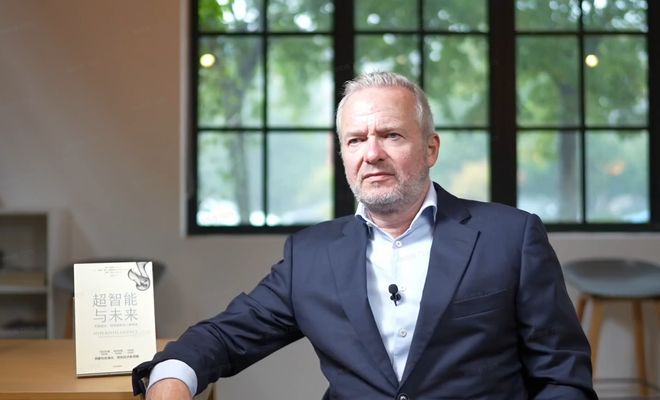
Group 1 - The core investment themes for the next five years include technology, metals and mining, passion investments, ASEAN and Chinese markets, and biotechnology [9][30][40] - The technology sector is expected to continue its growth, but current valuations are high [9] - The metals and mining industry may experience explosive growth due to potential metal shortages, particularly in uranium, silver, and platinum [30] - Passion investments, which are assets with limited supply that do not involve technological iteration, are likely to see increased demand during periods of innovation and wealth growth [33] - The ASEAN and Chinese markets are projected to prosper, with Chinese innovation capabilities rapidly advancing [36][38] Group 2 - Generative AI is anticipated to be a major source of profit in future society, with its effective compute power growing exponentially [10][19] - The effective compute power of AI has increased by 100,000 times from 2019 to 2023, and this growth is expected to continue [13] - The application of generative AI in various industries can create strong business moats, unlike large language models which lack brand loyalty and key technological barriers [20] Group 3 - Approximately 80% of jobs are expected to be completed by intelligent robots by 2050, with significant implications for labor markets [22][29] - The rise of reasoning AI and physical AI is expected to transform industries, with robots and intelligent systems taking over both physical and cognitive tasks [24][25] - The cost of producing robots is significantly lower than the cost of training human labor, leading to a potential shift in workforce dynamics [28] Group 4 - The biotechnology sector is currently undervalued compared to the AI sector, with a price-to-earnings ratio of around 10-11 times for international biotech ETFs [40] - AI is significantly reducing research and development costs in biotechnology, leading to a rapid increase in the number of new products [42] - The potential for breakthroughs in personalized medicine and advanced health monitoring technologies is high, making biotechnology a promising investment area [42]

【机械】聚变新能发布采购项目超20亿元,行业招标提速——可控核聚变行业系列报告之三(陈佳宁/汲萌/夏天宇)
光大证券研究· 2025-11-18 23:05
Core Viewpoint - The recent surge in procurement projects in the fusion energy sector indicates a significant acceleration in capital expenditure, with a focus on key components and systems essential for the BEST project and other related initiatives [4][5][6]. Group 1: Procurement and Project Updates - The BEST project has seen a notable increase in procurement activities, with over 2 billion yuan in recent tenders, covering critical components such as power systems and low-temperature systems [4][5]. - Key procurement items include: 1. Low-temperature system components: approximately 728 million yuan 2. ECRH helical tube for the BEST project: 440 million yuan 3. Magnetic power supplies for the BEST system: 189 million yuan 4. Total assembly engineering for the BEST annular system: 180 million yuan 5. Ion cyclotron wave source system for the BEST: 170 million yuan 6. Stainless steel shielding blocks for the BEST shielding system: 139 million yuan - The opening date for these tenders is scheduled between December 4-9, 2025 [5]. Group 2: Industry Trends and Future Outlook - The fusion industry is entering a phase of intensive bidding, with significant procurement announcements from various organizations, including a recent 1.3 billion yuan project from the Chinese Academy of Sciences [6]. - The fusion energy sector is expected to see continued growth in capital expenditure as multiple projects progress, with a focus on initiatives like BEST, "Spark One," "China Circulation Four," and CFEDR [6]. - The strategic value of fusion energy is highlighted by its potential to meet the increasing electricity demands driven by AI and other technologies, with major companies like Microsoft and Google entering into agreements for fusion power [7][8]. - Predictions indicate that by 2050, data centers could account for 5%-9% of global electricity consumption, underscoring the importance of fusion energy as a sustainable solution [8].

“人造太阳”热潮助推 全球高温超导龙头上海超导闯关科创板
2 1 Shi Ji Jing Ji Bao Dao· 2025-11-17 13:29
Core Viewpoint - The article highlights the rapid advancement of controllable nuclear fusion technology, particularly focusing on the key material, high-temperature superconducting tape, which is attracting significant capital interest. Shanghai Superconductor Technology Co., Ltd. is positioned as a leader in this field, with its IPO on the Sci-Tech Innovation Board aiming to raise 1.2 billion yuan for production and headquarters projects [1][2]. Company Overview - Shanghai Superconductor, established in 2011, is one of only two companies globally capable of producing over 1,000 kilometers of second-generation high-temperature superconducting tape annually, the other being a Japanese firm, FFJ [1][14]. - The company holds a dominant position in the domestic market with a market share exceeding 80% [2][14]. Product and Technology - High-temperature superconducting materials exhibit zero electrical resistance and complete magnetic resistance at extremely low temperatures, making them crucial for applications in energy transmission, medical imaging, and quantum computing [4]. - The second-generation high-temperature superconducting tape, produced by Shanghai Superconductor, is characterized by superior mechanical strength, lower raw material costs, and high current-carrying capacity, gradually replacing the first generation in emerging applications like controllable nuclear fusion [4][5]. Market Dynamics - The global commercialization of nuclear fusion has seen significant investment, with cumulative financing in the field reaching approximately $9.766 billion, an increase of $2.643 billion from the previous year [12]. - The demand for high-temperature superconducting tape is expected to grow rapidly, with the market size in the controllable nuclear fusion sector projected to increase from approximately 722 million yuan in 2025 to about 2.144 billion yuan by 2027 [12]. Financial Performance - Shanghai Superconductor's revenue has shown significant growth from 36 million yuan in 2022 to an estimated 240 million yuan in 2024, with a net profit of 72.01 million yuan expected in 2024 [15]. - The company experiences seasonal revenue fluctuations, with a substantial portion of its income concentrated in the fourth quarter due to the budget management practices of its major clients, which include large state-owned enterprises and research institutions [16]. Client Base - The client base of Shanghai Superconductor is highly concentrated, with the top five clients accounting for 75% to 85% of total revenue during the reporting period [16]. - A significant portion of revenue in the first half of 2025 is expected to come from the Chinese Academy of Sciences, which has been a stable partner since 2015 [16].
我们即将经历下一个技术奇点,超智能时代人类会更加不平等吗?
Guan Cha Zhe Wang· 2025-11-14 01:09
Core Insights - The development of artificial intelligence (AI) is viewed as a significant economic growth point globally, with some considering it the start of the "Fourth Industrial Revolution" and a pathway to general AI [1] - There are growing concerns regarding the limitations of large models, including diminishing marginal returns and the impact on traditional employment markets [1] - The conversation emphasizes the need for humanity to adapt and coexist with AI, exploring the philosophical implications of intelligence evolution in the universe [1][8] Group 1: AI Development and Economic Impact - AI is seen as a transformative force in the economy, with the potential to create new knowledge and understanding [11] - The timeline for AI achieving continuous operation and self-definition of tasks is projected around 2028, marking a significant milestone in AI capabilities [18][20] - The potential for AI to drive economic changes is highlighted, with predictions of AI robots becoming widely accepted by 2028 [20] Group 2: Philosophical and Evolutionary Perspectives - The concept of "critical density" is introduced, suggesting that as systems reach a certain complexity, they trigger cascading reactions that lead to higher levels of intelligence [10][15] - The universe's evolution is posited as inherently designed to create intelligence, with humanity playing a role in this broader narrative [8][11] - The idea that AI could lead to a form of universal consciousness is explored, suggesting that humanity may be a stepping stone in this evolution [11] Group 3: China's Position in AI Development - China is recognized for its rapid advancements in power infrastructure, which is crucial for AI development, having invested more in smart grids than the rest of the world combined [33] - The country benefits from a large pool of technically educated individuals, with a significant portion of STEM graduates globally coming from China [34] - Challenges include a lag in chip technology compared to leading companies like NVIDIA, which may impact the pace of AI development [37] Group 4: Future Trends and Innovations - The discussion highlights the importance of distinguishing between genuine trends and hype in technology, emphasizing the need for real market demand [26] - Innovations in energy sources, such as nuclear fusion, are anticipated to provide abundant resources, further driving technological advancements [22][25] - The potential for AI to enhance efficiency in existing processes while also creating new opportunities is emphasized, suggesting a dual approach for businesses [28][29]
中金 | 核聚变之光02:能源革命的下个纪元
中金点睛· 2025-11-07 00:07
Core Viewpoint - The article emphasizes that nuclear fusion is entering a critical phase of "engineering verification" and "demonstration reactor introduction," suggesting a focus on the key window for industrialization configuration [1]. Group 1: Global Nuclear Fusion Landscape - Nuclear fusion is recognized for its environmental friendliness, abundant resources, high energy density, and self-limiting reaction mechanisms, making it a key focus in future energy strategies globally [3][4]. - Major economies, including China, the US, Japan, and the UK, are accelerating the development of nuclear fusion through legislative support and funding, establishing a comprehensive support system from top-level design to industrial practice [3][9]. - By mid-2025, the cumulative financing for the global commercial nuclear fusion industry is expected to reach $9.766 billion, marking the highest annual increase in three years [3][12]. Group 2: Technological Advancements and Cost Structure - The core value of nuclear fusion devices, such as the ITER project, is concentrated in four major systems: magnets, blanket, vacuum chamber, and divertor, with the highest cost shares being 28%, 17%, 14%, and 8% respectively [3][39]. - The transition to high-temperature superconductors is crucial for enhancing fusion power density and reducing the overall size of fusion reactors, significantly impacting the commercialization process [19][22]. - The cost of nuclear fusion plants is a decisive factor for their penetration in future power systems, with potential construction costs ranging from $11,300/kW to $2,800/kW influencing their market share [22]. Group 3: International Collaboration and Domestic Development - The ITER project represents a significant international collaboration, with China contributing to key components and systems, highlighting the global effort in nuclear fusion research [25][29]. - The US National Ignition Facility (NIF) serves as a representative platform for inertial confinement fusion research, showcasing advancements in energy release and control [27][31]. - China's nuclear fusion technology roadmap aims to establish a fusion engineering test reactor by 2025 and a commercial demonstration plant by 2050, indicating a structured approach to domestic development [37][41].
纳德拉亲口承认:微软 GPU 堆成山,却因缺电在仓库吃灰!
程序员的那些事· 2025-11-05 14:21
Core Viewpoint - Microsoft is facing an unprecedented issue with a surplus of GPUs that are idly stored due to insufficient power supply and data center infrastructure [1][2][3][4]. Group 1: Current Challenges - The primary challenge is not a surplus of computing power but rather the lack of electrical capacity and the inability to quickly build data centers close to power sources [2][4]. - Microsoft has a significant number of NVIDIA AI chips that are currently unused due to these infrastructure limitations [3][4]. - The industry is experiencing a collective challenge where energy and infrastructure must match the growing demand for AI computing power [10][11]. Group 2: Energy Supply Issues - The overall electricity demand in the U.S. has surged over the past five years, driven by the rapid expansion of AI and cloud computing data centers [15][16]. - Traditional power plants take years to develop, while the AI industry expands at a quarterly pace, leading to a mismatch in supply and demand [17][18]. - Many data center developers are opting for "behind-the-meter" power solutions to bypass public utilities and meet their energy needs [17]. Group 3: Future Outlook - There are concerns that if AI demand slows down, the investments in power plants and energy storage could become underutilized [22]. - However, some industry leaders believe that AI's energy demand will only continue to grow, leading to more applications and higher overall demand [24][25]. - The call for increased power generation capacity is seen as a strategic asset for AI development, with suggestions for the U.S. government to add 100 gigawatts of power annually [28]. Group 4: Strategic Adjustments - Microsoft has decided not to stockpile single-generation GPUs due to the risk of obsolescence and depreciation if they cannot be powered [30][32][33]. - The industry is shifting focus from peak performance to energy efficiency, as the limitations have transitioned from computing power to energy supply [39][40]. - Microsoft has announced plans to invest $8 billion in data centers and AI projects in the Gulf region over the next four years, indicating a shift in AI infrastructure towards energy-rich emerging markets [43][44].


当微软CEO说“电力不足可能导致芯片堆积”时,他和Altman都不知道AI究竟需要多少电
硬AI· 2025-11-04 06:48
Core Insights - The focus of the artificial intelligence (AI) race is shifting from computing power to electricity supply, with industry leaders acknowledging the uncertainty surrounding future energy consumption for AI [2][4] - Microsoft CEO Satya Nadella highlighted that the biggest challenge is no longer chip shortages but rather the availability of electricity and the construction of data centers close to power sources [3][4] - OpenAI CEO Sam Altman emphasized the strategic dilemma faced by tech companies regarding energy contracts, as locking in long-term contracts could lead to losses if new energy technologies emerge [8][9] Group 1: Bottleneck Shift - The bottleneck in AI deployment has transitioned from acquiring advanced GPUs to securing adequate electricity supply [4] - The rapid increase in electricity demand for data centers in the U.S. has outpaced the capacity planning of utility companies, leading developers to seek alternative power solutions [4] Group 2: Energy Demand Uncertainty - There is significant uncertainty regarding the energy consumption required for AI, with both Altman and Nadella admitting they do not know the exact requirements [6][7] - Altman suggested a potential exponential growth in demand if the cost of AI units continues to decrease at a rapid pace, which could lead to a dramatic increase in energy needs [6][7] Group 3: Energy Gamble - The uncertainty in energy needs creates a dilemma for industry leaders, as they must decide whether to invest in current energy contracts or risk missing out on future opportunities [9] - Altman has invested in several energy startups to hedge against risks associated with energy supply and demand fluctuations [9] Group 4: Strategies for Adaptation - Tech companies are exploring solutions such as solar energy, which can be deployed more quickly and at lower costs compared to traditional natural gas plants [11] - The modular nature of solar technology allows for rapid assembly and deployment, aligning more closely with the fast-paced demands of the AI industry [11]

微软机房大量英伟达GPU开始吃灰……
量子位· 2025-11-04 03:32
Core Viewpoint - Microsoft is facing an unprecedented issue with a surplus of GPUs that are idly stored due to a lack of power and space, rather than a shortage of chip supply [1][3][4]. Group 1: Power and Infrastructure Challenges - The primary challenge is not the surplus of computing power but the insufficient power supply and the inability to quickly build data centers close to power sources [2][4]. - Microsoft has a significant number of Nvidia AI chips that are currently unused due to power shortages and a lack of ready-to-use data centers, referred to as "warm shells" [3][6]. - The overall demand for electricity has surged in the past five years, driven by the rapid expansion of AI and cloud computing, outpacing utility companies' capacity to meet this demand [15][16]. Group 2: Industry Response and Future Outlook - Data center developers are increasingly opting for "behind-the-meter" power solutions to bypass public utilities and address energy shortages [17]. - Despite efforts to increase power supply, the construction pace of data centers and cooling systems is lagging behind actual demand [18][20]. - There are concerns that if AI demand slows down, the investments in power plants and storage projects may become underutilized [22]. Group 3: Strategic Shifts in Chip Production - Microsoft has decided not to hoard single-generation GPUs due to the risk of depreciation if the chips cannot be powered in time [30][32]. - The industry is shifting focus from peak performance to energy efficiency, as companies now prioritize the most energy-efficient chips due to power constraints [39]. - The CEO of Microsoft has called for an increase in annual power generation capacity by 100 gigawatts, viewing it as a strategic asset for AI [28]. Group 4: Investment and Market Dynamics - Microsoft has received approval to export Nvidia chips to the UAE for building data centers necessary for AI model training, indicating a shift of AI infrastructure to energy-rich emerging markets [41][43]. - The company plans to invest $8 billion over the next four years in the Gulf region for data centers, cloud computing, and AI projects, highlighting the region's financial and energy advantages [42][43].