大疆创新

Search documents
无人机行业深度:AI赋能无人装备稳立战场中央
2025-09-11 14:33
无人机行业深度:AI 赋能无人装备稳立战场中央 20250911 摘要 美国无人机技术领先,早期以侦察为主,后发展出多种型号如 MQ-9, 广泛应用于军事行动,且已实现标准航空战斗旅的无人机连配备,表明 无人机在现代战争中的重要性日益提升。 无人机相较于传统军事装备具有性价比优势,如 RQ-4 全寿命周期成本 低于 P8 侦察机,自杀式无人机打击成本远低于导弹,且能有效摧毁高 价值目标,具备广泛适应性和作战职能。 人工智能赋能无人系统,使其在电子战环境下具备自主判断和攻击能力, 减少人员需求,提高任务成功率。美国"天宫博格计划"通过模块化设 计降低成本,并采用分层次作战思路,提高作战效费比。 美国协同作战无人机研发经费在 2028 年将占下一代战机总研发经费的 42%,表明美国对无人机和下一代战机同等重视,预示着未来无人机购 置费用将大幅增加。 全球军贸无人机市场增长迅速,2015-2024 年复合增长率为 9.41%。 若此增长率保持,预计到 2028 年中国无人机军贸销售额将达 55.3 亿元, 同时国内察打一体和消耗型无人机需求巨大。 Q&A 无人机在现代战争中的应用有哪些主要发展趋势? 无人机在现代战 ...
新华全媒头条|“人工智能+”加速释放强劲动能——透视我国智能经济发展新趋势
Xin Hua She· 2025-09-11 10:15
Group 1 - The article highlights the rapid development and integration of artificial intelligence (AI) in various industries, showcasing innovations such as flying cars and humanoid robots at the 2025 World Intelligent Industry Expo [1][2] - The Chinese government has issued a directive to accelerate the formation of a new intelligent economy and society through human-machine collaboration and cross-industry integration [1][3] - The number of AI companies in China has surged from over 1,400 to more than 5,000 in five years, indicating a significant growth rate of approximately 11 companies emerging every 11 hours [2][3] Group 2 - The foundation of the intelligent industry in China is strengthening, with over 35,000 basic-level and 6,300 advanced-level smart factories established, alongside 11 national AI innovation application pilot zones [3][4] - A national AI industry investment fund with a total scale of 60 billion yuan has been established, and over 240 standards in core AI technology have been developed to enhance the industry ecosystem [3][4] - AI applications are increasingly penetrating daily life, with innovations in healthcare, social security, and education, such as AI-assisted medical diagnostics and smart educational solutions [4][5] Group 3 - International cooperation in AI is being emphasized, with countries like Singapore showcasing their innovations at the expo and seeking collaborative opportunities in various sectors [6][7] - China is actively promoting AI as a global public good, with initiatives like the Global AI Governance Initiative and the establishment of cooperation centers to enhance collaboration in AI technology and applications [6][7] - Successful case studies of AI applications in other countries, such as smart farming in Cambodia and intelligent power grid management in Brazil, demonstrate the global impact of Chinese AI technology [7]
深圳创新源泉:“来了就是深圳人”彰显包容和无限可能
2 1 Shi Ji Jing Ji Bao Dao· 2025-09-04 12:38
Core Insights - Shenzhen has transformed from a fishing village into a global technology innovation hub over 45 years, driven by its inclusive spirit and innovative culture [1] - The city has undergone three significant phases: the pioneering era (1979-1992), industrial upgrading (1992-2010), and innovation-driven development (2010-present) [2] - Shenzhen's population is characterized by a high percentage of immigrants, a young demographic, and a strong entrepreneurial spirit, contributing to its innovation ecosystem [3] Historical Transformation - Shenzhen served as China's "testing ground" for market economy reforms, introducing the "time is money, efficiency is life" motto [2] - The city shifted from processing trade to high-tech industries, with companies like Huawei and ZTE emerging as key players [2] - A comprehensive innovation ecosystem has been established, with R&D intensity projected to reach 6.46% by 2024 and leading the nation in PCT patent applications for 18 consecutive years [2] Demographic Characteristics - Over 70% of Shenzhen's registered population consists of migrants, fostering adaptability and creativity [3] - The average age of residents is 33, with a significant number of high-level talents and returnees from studying abroad [3] - Approximately 60% of enterprises are technology-based, with a strong presence of private firms, exemplified by Huawei's projected R&D investment of 179.7 billion yuan in 2024 [3] Success Factors - Institutional innovation has been pivotal, including the delegation of research management and the establishment of a national intellectual property protection demonstration zone [4] - The market-driven innovation ecosystem is characterized by a high concentration of innovative enterprises and collaborative efforts between leading companies and SMEs [4] - Shenzhen's global integration is facilitated by platforms like Qianhai and He Tao, attracting top research institutions and talent [4] Innovation Case Studies - Huawei has evolved into a global leader in ICT, investing over 1.4 trillion yuan in R&D over the past decade [6] - DJI has redefined the consumer drone market, holding over 70% market share globally, supported by Shenzhen's robust electronics supply chain [6] - BGI has become a leading genomics research institution, contributing significantly to global pandemic response efforts [6] Challenges - Shenzhen faces resource constraints, particularly in land use, with a development intensity of 50% [7] - There is an imbalance in talent structure, with a shortage of top scientists in certain fields [7] - The city must transition from "following" to "leading" in key technology sectors like integrated circuits and software [7] - Increased competition from cities like Hangzhou and Suzhou poses a risk to Shenzhen's innovation leadership [7] Strategic Recommendations - Enhance original innovation by increasing government investment in basic research and establishing more national laboratories [8] - Optimize the talent ecosystem by implementing programs to attract and retain top young scientists [8] - Deepen international cooperation to build a global innovation network, leveraging Shenzhen's strengths in hardware and digital technology [8] Policy Innovations - Shenzhen has introduced a series of policies to support businesses throughout their lifecycle, including the "Shen i Enterprise" platform [9][10] - Financial reforms such as the "Tengfei Loan" model aim to provide long-term financing for high-growth companies [10] - Talent policies have been upgraded to support various categories of talent, including subsidies for young professionals [10] Future Outlook - Shenzhen aims to lead in original innovation, particularly in quantum technology and brain science, with plans for significant industry clusters by 2030 [11][12] - The city seeks to strengthen the "Shenzhen-Hong Kong Innovation Community" and enhance cross-border research collaboration [11] - A commitment to sustainable development includes initiatives for carbon neutrality and green finance innovations [12] Conclusion - Shenzhen's narrative is one of courage, wisdom, and inclusivity, with a focus on continuous innovation and breaking down institutional barriers [13] - The city's future as a leader in "Chinese intelligence manufacturing" hinges on its ability to overcome technological challenges and maintain its innovative edge [13]
2025年中国智能影像设备市场持续扩张,中国品牌影响全球格局
Tou Bao Yan Jiu Yuan· 2025-09-02 12:16
Investment Rating - The report indicates a positive investment outlook for the smart imaging devices industry, highlighting significant growth potential in the coming years [5][29]. Core Insights - The global smart imaging devices market is projected to grow at a compound annual growth rate (CAGR) of 18.9% from 2020 to 2024, reaching a market size of 62.651 billion yuan by 2024, before slowing to 5.8% growth from 2025 to 2029, with an expected market size of 98.62 billion yuan by 2029 [5][29][31]. - China remains a core market, with a shipment volume share of 17.4% in 2024, while the Asia-Pacific region (excluding China) is expected to see a recovery in growth, accounting for 15.0% [5][18]. - The industry is characterized by a highly concentrated competitive landscape, with the top three companies (CR3) holding a combined market share of 78.9% in 2024, indicating strong market control by leading players [7][36]. Market Overview - Smart imaging devices include handheld devices (such as panoramic cameras and action cameras) and non-handheld devices (such as drones and photography gimbals), with over 80% domestic market share in consumer-grade panoramic cameras held by Chinese brands [4][5]. - The global market for smart imaging devices is expected to experience a shift from explosive growth to stable growth as the market matures, with increased competition and market saturation impacting new user acquisition [31][36]. Industry Chain Analysis - The smart imaging devices industry chain consists of upstream (raw materials and core components suppliers), midstream (brand manufacturers), and downstream (application scenario customers) segments [6][9]. - Key components in the upstream segment include CMOS image sensors, optical lenses, DSP chips, and lithium batteries, with CMOS sensors accounting for 52% of costs [6][10]. Competitive Landscape - The leading companies in the smart imaging devices market include Insta360, DJI, and GoPro, with Insta360 experiencing significant market share growth from 28.4% in 2023 to 35.6% in 2024 [7][36]. - GoPro's market share decreased from 38.2% to 30.1%, while DJI's share fell from 19.1% to 13.2% during the same period [7][36]. Regional Insights - The global shipment volume of smart imaging devices has shown fluctuations, with China maintaining a high volume, while the U.S., Japan, and Europe have seen declines due to inflation and market saturation [18][29]. - The outdoor sports camera market is expanding, with shipments expected to rise from 18.07 million units in 2020 to 50 million units by 2024, driven by the growing number of outdoor enthusiasts [28].


胜蓝股份(300843):连接器主业增长提速 液冷业务蓄势待发
Xin Lang Cai Jing· 2025-08-29 00:48
Core Viewpoint - The company reported significant growth in revenue and net profit for the first half of 2025, driven by advancements in various sectors including consumer electronics, new energy vehicles, and AI [1][2]. Group 1: Financial Performance - In the first half of 2025, the company achieved revenue of 774 million RMB, a year-on-year increase of 28.97%, and a net profit attributable to shareholders of 84.01 million RMB, up 58.13% [1]. - For Q2 2025, the company recorded revenue of 438 million RMB, representing a 39.80% year-on-year growth, and a net profit of 53.87 million RMB, which is a 71.81% increase compared to the same period last year [1]. - The gross margin for the company improved to 25.33%, an increase of 0.69 percentage points year-on-year, while the expense ratios for sales, management, R&D, and finance decreased [1]. Group 2: Business Segments - The consumer electronics connector and components segment generated revenue of 485 million RMB, a 26.32% increase year-on-year, with a gross margin of 25.52% [1]. - The new energy vehicle connector and components segment saw revenue of 177 million RMB, a 40.58% increase year-on-year, although its gross margin slightly decreased to 16.96% [1]. - The data communication high-speed connector business experienced substantial growth, with revenue reaching 51.52 million RMB, a remarkable increase of 104.59% year-on-year [1]. Group 3: Strategic Initiatives - The company plans to issue convertible bonds to raise 450 million RMB for the development of high-voltage connectors for new energy vehicles and industrial control connectors, reinforcing its core business [2]. - The company has begun to explore the liquid cooling market, with initial orders for UQD and liquid cooling plates, indicating a strategic shift towards this growing sector [3]. - The global data center liquid cooling market is projected to grow from 2.6 billion USD in 2023 to 7.8 billion USD by 2028, with a CAGR of 24.4%, presenting a significant opportunity for the company [3]. Group 4: Profit Forecast - The company is expected to maintain steady growth in its connector business while expanding into the liquid cooling sector, with projected net profits of 162 million RMB, 199 million RMB, and 240 million RMB for 2025-2027 [4]. - The earnings per share (EPS) are forecasted to be 0.99 RMB, 1.22 RMB, and 1.47 RMB for the same period, with corresponding price-to-earnings (PE) ratios of 66, 53, and 44 times [4].

拱墅试点低空人才“飞地计划” 学员未毕业已获企业青睐
Hang Zhou Ri Bao· 2025-08-27 02:27
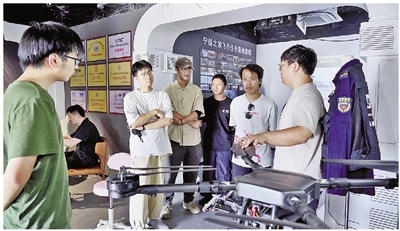
Core Viewpoint - The establishment of the "Low-altitude Talent Dream Factory" in Guashan Future Community aims to address the talent gap in the low-altitude economy, providing training and employment opportunities for local youth [3][4][7]. Group 1: Low-altitude Economy and Talent Gap - The low-altitude economy is experiencing rapid growth, with a reported employment gap of 1 million positions in China [4]. - The "Low-altitude Talent Dream Factory" is designed to train individuals for roles such as drone operators, which are in high demand [4][5]. - The training program has attracted significant interest, with over 50 applicants for the first session, predominantly from the "90s" generation [3]. Group 2: Training Program Structure - The training program features a "three-instructor teaching system" that includes industry experts, technical staff, and experienced coaches to ensure comprehensive skill development [5]. - The curriculum is tailored to meet real industry needs, focusing on practical skills and knowledge required for specific job roles [5][6]. - Graduates can achieve CAAC flight certification in as little as 28 days, enhancing their employability [5]. Group 3: Employment Opportunities and Mechanisms - The program aims to create a "flying land mechanism" that connects local training with national employment opportunities, leveraging partnerships with over 20 leading companies [6][7]. - Graduates can expect monthly salaries ranging from 8,000 to 20,000 yuan, with a 40% success rate for job placements in certain cities [7]. - The initiative seeks to establish Guashan as a hub for low-altitude talent, fostering a symbiotic relationship between the community and the industry [7][8].

中金 | 低空科技系列农业篇:田野上的无人机
中金点睛· 2025-08-27 00:08
Core Viewpoint - The integration of low-altitude economy and technology-driven agriculture is creating significant investment opportunities in the drone industry, particularly in agricultural modernization and efficiency improvements [2][3]. Demand Side Analysis - Food consumption significantly impacts residents' living standards, with food and beverage spending accounting for 30.4% of per capita consumption in the first half of 2025 [5]. - China, with 18% of the global population, consumes approximately 30% of the world's rice, 51% of pork, 46% of vegetables, 37% of fruits, and 40% of seafood, highlighting the importance of food security [5]. - The limited arable land, which constitutes only 8.2% of the global total, necessitates higher agricultural productivity to ensure food security [5][7]. Supply Side Analysis - The total arable land in China remained stable at 1.93 billion acres in 2023, with a slight increase of 0.58% since 2019 [13]. - The agricultural sector is primarily composed of smallholder farms, facing labor shortages and rising costs, which traditional farming methods cannot sustain [13][14]. - The demand for agricultural drones is driven by the need for efficient, large-scale operations, as the industry shifts towards mechanization and modernization [3][14]. Drone Applications and Benefits - Drones are well-suited for high-load, repetitive agricultural tasks, enhancing productivity, quality, environmental sustainability, and economic efficiency [3][16]. - Drones can increase crop yields through precise spraying and fertilization, reduce pesticide residues, and improve crop quality by minimizing soil compaction [16][17]. - The use of drones can lead to significant cost savings in water and pesticide usage, as demonstrated by a case study showing a 25% increase in yield and substantial reductions in operational costs [17]. Market Potential - The potential demand for agricultural drones in China is estimated to reach 6.24 million units, with a corresponding market value of 224.6 billion yuan, and an annual demand of 1.12 million units valued at 44.9 billion yuan [24]. - The service market for agricultural drones is projected to reach 225.6 billion yuan annually, driven by the increasing acceptance of professional services among small and medium-sized farmers [25][26]. Policy and Technological Drivers - The development of the agricultural drone industry is supported by favorable low-altitude economy policies and technological advancements that reduce costs and improve product performance [20][21]. - The Chinese government has implemented various policies to encourage the cultivation of skilled drone operators and provide subsidies for agricultural drones, enhancing the industry's growth prospects [20][21]. Industry Chain Perspective - The rapid development of agricultural drones is benefiting the entire industry chain, from upstream component suppliers to midstream brand manufacturers and downstream service providers [27][29]. - Upstream suppliers of key components such as sensors and batteries are expected to benefit from increased demand and technological advancements in the drone sector [29][30]. - Leading midstream companies like DJI and XAG dominate the market, with a combined market share of approximately 50% in the global agricultural drone market [31].

美媒:中国正用无人机“配送未来”
Huan Qiu Wang Zi Xun· 2025-08-26 23:29
Core Insights - China is positioning itself to lead the low-altitude economy, showcasing advanced technologies such as the world's first 7-seat, 3-ton electric vertical takeoff and landing aircraft (eVTOL), hydrogen drones, and large fixed-wing unmanned aerial vehicles [1] - The focus is shifting from consumer-grade drones to delivery drones capable of carrying hundreds of kilograms over long distances, with increasing autonomy [1] - The global drone logistics market is projected to exceed $53 billion by the early 2030s, with China expected to capture a significant market share due to its first-mover advantage [2] Group 1 - China is rapidly building a comprehensive low-altitude logistics ecosystem that includes unmanned cargo aircraft, battery swap stations, and electric air taxis, enhancing delivery efficiency and reliability while reducing operational costs [2] - The establishment of dedicated pilot zones, digital traffic systems, and new regulatory frameworks is being pursued to manage potential challenges related to low-altitude airspace congestion [2] - The implications of China's advancements in drone technology extend beyond manufacturing, as it aims to create a global aerial logistics network and market, which holds substantial commercial significance [2] Group 2 - The U.S. risks losing a multi-trillion-dollar industry and global influence if it does not take coordinated action to lead in this sector [2] - The competition is framed as a choice between U.S. industry leading the trend or China advancing its drone delivery capabilities [2]
深圳市市场监督管理局构建一套覆盖创造、运用、保护、管理、服务全链条的知识产权生态体系 深圳:创新沃土上的知识产权护航者
Shen Zhen Shang Bao· 2025-08-26 07:01
Core Insights - Shenzhen is enhancing its intellectual property (IP) ecosystem to support innovation and competitiveness in industries such as high-end equipment manufacturing and jewelry processing, with new patent pre-examination services launched in 2025 [1][5] - The city has achieved remarkable patent statistics, leading the nation in patent authorizations and international applications, showcasing its status as an innovation hub [2][3] - Companies like BYD and ZTE are recognized for their innovative technologies, contributing to Shenzhen's reputation for high-quality patents and technological advancements [2][3] Innovation - Shenzhen's patent authorization reached 241,900 in 2024, maintaining the top position in China for seven consecutive years, with a PCT international patent application volume of 16,300 [2] - The city boasts a high-value invention patent ownership rate of 110 per 10,000 people, which is 7.9 times the national average [2] - Shenzhen's enterprises won 81 awards at the 25th China Patent Awards, accounting for 10.5% of the national total, with 9 gold awards representing 22.5% of the national gold awards [2] Application - In 2024, Shenzhen saw nearly 27,000 patent transfers and over 25,000 patent acquisitions, indicating a vibrant market for IP transactions [4] - The city has also recorded 6,000 patent licenses, leading all indicators in Guangdong Province [4] Protection - Shenzhen's IP pledge financing reached 50.42 billion yuan in 2024, maintaining its leadership in Guangdong for five consecutive years [4] - The city has developed a comprehensive overseas IP protection service platform, successfully assisting numerous companies in navigating international IP disputes [6][7] - As of June 2025, Shenzhen's market supervision bureau monitored 2,292 overseas dispute cases, providing tailored guidance to 2,234 companies, resulting in significant cost savings and reduced market losses [6][7] Strategic Development - The launch of high-end equipment manufacturing and jewelry processing patent pre-examination services marks a significant milestone in Shenzhen's IP service capabilities, reducing the average patent authorization period to approximately three months [5] - The "domestic pre-examination + overseas family" patent layout mechanism has accelerated the patent authorization process for Shenzhen enterprises, with some patents being authorized in as little as 4.3 months [5]

南山:一条“独角兽走廊”见证特区创新活力跃迁
Nan Fang Du Shi Bao· 2025-08-25 23:14
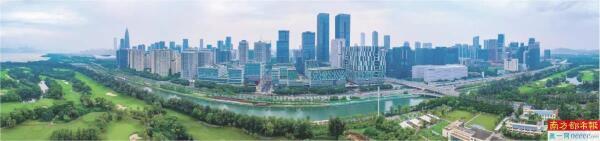
Core Insights - The "Unicorn Corridor" in Nanshan, Shenzhen, is a vibrant cluster of China's most dynamic unicorn companies, contributing over 50% of Shenzhen's unicorns for six consecutive years, showcasing a shift from policy-driven innovation to an ecosystem of self-circulation [1][2] Industry Overview - The Nanshan "Unicorn Corridor" has demonstrated a clear numerical advantage, with 12 companies listed in 2020, accounting for 60% of Shenzhen's total, and the semiconductor sector alone increasing to 6 unicorns by 2024 [2] - Key sectors such as fintech, robotics, and logistics consistently maintain 2-3 unicorns each, with leading companies like WeBank and DJI holding stable valuations in the hundreds of billions [2][5] - Emerging sectors like semiconductors and artificial intelligence have seen rapid growth, with the number of unicorns in semiconductors rising from 1 in 2021 to 6 in 2024, and AI companies expanding from a single entity in 2020 to multiple players by 2024 [2][4] Innovation Ecosystem - The region's innovation ecosystem is characterized by a high level of R&D investment, with 7.66% of GDP allocated to R&D in 2024, nearly three times the national average [3] - The "Unicorn Corridor" benefits from a comprehensive nurturing system that supports companies through their growth phases, ensuring a gradient development model from nurturing seedlings to mature trees [3][4] Government Support and Policy - Nanshan's government has implemented policies that foster innovation, such as the "Pioneer Plan" for talent acquisition and various funding initiatives to alleviate financial pressures on businesses [8][9] - The region has adopted a "policy blank space" approach, allowing market forces to drive innovation rather than strictly defining industrial boundaries, which has led to a self-sustaining innovation ecosystem [9][10] Future Outlook - The "Unicorn Corridor" is expected to continue evolving, with a focus on creating a self-circulating ecosystem that nurtures innovation and drives the growth of new industries, ultimately contributing to the global industrial landscape [10]