宝钢股份

Search documents
2月金股报告:指数震荡,行业关注资源、出海、科技
ZHONGTAI SECURITIES· 2026-01-29 11:18
Group 1 - The report indicates that the A-share market is experiencing a typical spring rally characterized by initial strength followed by stabilization and structural differentiation, with major indices recording positive returns as of January 28, 2026 [6] - The average daily trading volume in January reached 3.04 trillion yuan, an increase of 1.16 trillion yuan month-on-month, indicating a significant influx of new capital and a loose liquidity environment driving the index upward [2] - Regulatory measures, including raising the minimum margin requirement from 80% to 100%, have led to fluctuations in market sentiment and a deceleration in the index's upward momentum [3] Group 2 - The report highlights that technology assets are experiencing a rotation between thematic and cyclical investments, with thematic investments (e.g., commercial aerospace, AI applications) initially favored but cooling off due to increased margin requirements [4] - In the cyclical sector, non-ferrous metals, basic chemicals, and oil & petrochemicals have shown strong performance driven by three factors: demand from high-end manufacturing, proactive supply-side adjustments, and external geopolitical risks [4] - The report anticipates a structural market characterized by a focus on "resources + technology + overseas expansion," with low-risk preference assets potentially outperforming in certain phases [5] Group 3 - The investment strategy emphasizes focusing on "external demand cyclical + AI industry chain," highlighting the potential for global manufacturing recovery to support resource prices and opportunities for Chinese manufacturing to expand overseas [5] - The AI industry remains a clear investment theme, with a shift from thematic to performance-driven investments, particularly in areas with supply shortages such as power supply and semiconductor sectors [5] - The report recommends a selection of stocks across various sectors, including Invesco's Nonferrous ETF, Dongpeng Beverage, and Huazhong Precision, among others, reflecting a diversified investment approach [10]




中国股票策略机遇论坛要点-China Equity Strategy_ Shenzhen Opportunity Forum takeaways
2026-01-29 10:59
Summary of Key Points from the Conference Call Industry Overview - **China Equity Strategy**: The 2026 JPM China Opportunity Forum highlighted a constructive outlook on China equities, emphasizing thematic trades such as leading exporters, beneficiaries of AI infrastructure capital expenditure, anti-involution strategies, K-shaped consumption recovery, and property market upside optionality [2][7]. Core Insights - **AI Ecosystem**: The memory and ESS (Energy Storage Systems) sectors are benefiting from global AI capital expenditure demand. Notable trends include a memory up-cycle and rising localization. However, consumer electronics and automotive sectors are facing component cost increases and lower trade-in subsidies year-on-year [6][14]. - **Anti-involution Strategies**: Companies like H World and Atour are shifting to rational pricing strategies to enhance market share. Home appliance brands are focusing on innovation rather than price cuts. The solar industry is also expected to see continued anti-involution efforts [6][31]. - **Consumption Trends**: Leading brands are innovating and optimizing to counteract soft domestic demand, with a focus on overseas growth. The "Liberation Day" in April 2025 is noted as a potential trigger for a future recovery in consumer confidence [6][29]. - **Healthcare Sector**: Drug innovation is a key growth driver for pharmaceutical companies, with a focus on launching new drugs and expanding into overseas markets. Healthcare service providers are gradually recovering, aided by technology upgrades [35][38]. - **Humanoid Robots**: China leads in global humanoid robot shipments, driven by government orders. The sector faces challenges in commercialization and scalability, but industrial applications are expected to show strong potential [40][41]. Important Data Points - **Smartphone Market**: Global smartphone shipments are expected to decline by 0.9% in 2026, with iPhones projected to outperform Android devices. JPM forecasts iPhone EMS builds at 251 million units for 2025, a 6% year-on-year increase [14][15]. - **Automotive Sales**: A slow start for passenger vehicle sales in 2026 is anticipated, with a forecasted decline of 24-29% quarter-on-quarter in Q1 2026 [15]. - **Energy Storage Systems**: Global ESS battery shipments are projected to grow over 40% to approximately 900 GWh in 2026, driven by policy momentum in China and strong orders from Europe [19]. - **Semiconductor Market**: The semiconductor industry is expected to see divergent dynamics, with consumer electronics facing softness while memory and foundry segments show strength. Average DRAM pricing is forecasted to increase by approximately 60% year-on-year in 2026 [20][21]. Company-Specific Insights - **Top Picks**: J.P. Morgan's preferred companies include Zhongji Innolight, NAURA, and CATL, among others, with various ratings and market caps provided [8][10][11][13]. - **Healthcare Innovations**: Companies like Hansoh are targeting over 80% of revenue from innovative medicines by FY25, with a robust pipeline in oncology and diabetes [35][37]. Additional Considerations - **Cost Management**: Companies are overcoming upward cost pressures through process optimization and effective cost pass-through strategies in export markets [34]. - **Global Expansion**: Chinese brands are increasingly building capacity and expanding distribution in emerging markets, with notable investments in ASEAN production bases [33]. This summary encapsulates the key insights and data points from the conference call, providing a comprehensive overview of the current landscape and future outlook for various sectors within the Chinese market.
马钢股份(600808.SH):2025年预亏1.90亿元到2.50亿元
Ge Long Hui A P P· 2026-01-29 08:28
Core Viewpoint - The company, Maanshan Iron & Steel Co., Ltd. (600808.SH), expects a net loss attributable to shareholders of RMB -2.50 billion to -1.90 billion for the fiscal year 2025, which represents a reduction in loss by approximately RMB 44.09 billion to 44.69 billion compared to the previous year [1]. Group 1: Main Business Impact - In 2025, the domestic steel industry continues to experience a reduction in production and structural adjustments, leading to severe operational challenges due to ongoing supply-demand imbalances, pressure on steel prices, and fluctuations in raw material costs [1]. - The company adheres to the "Four Have" operational principles, actively promoting institutional reforms and collaborative efficiency, optimizing product structure, and increasing the proportion of high-end products to enhance operational capabilities and production line efficiency [1]. - With support from Baosteel, the company has achieved stable improvements in the iron-making system and enhanced quality and efficiency in the steel rolling system, while also fostering collaborative development within its operational framework [1]. Group 2: Non-Recurring Gains and Losses - For 2025, the company anticipates a net gain from non-recurring items attributable to shareholders of RMB 0.22 billion, primarily influenced by the disposal of non-current assets and government subsidies [1].

马钢股份:预计2025年全年净亏损1.90亿元—2.50亿元
2 1 Shi Ji Jing Ji Bao Dao· 2026-01-29 08:23
Core Viewpoint - The company, Maanshan Iron & Steel Co., Ltd., has announced a projected net loss for the fiscal year 2025, estimating a loss of between RMB -2.50 billion to -1.90 billion, which represents a significant reduction in losses compared to the previous year [1] Industry Summary - The domestic steel industry is expected to continue its trend of reducing output while adjusting its structure, facing ongoing supply-demand imbalances, pressure on steel prices, and fluctuations in raw material costs [1] - The operational environment for steel companies remains challenging due to these market conditions [1] Company Summary - The company aims to adhere to its "Four Have" operational principles, focusing on institutional reform, collaborative efficiency, and optimizing product structure to increase the proportion of high-end products [1] - Maanshan Iron & Steel has achieved improvements in operational performance, with a reduction in net losses by approximately RMB 44.09 billion to 44.69 billion compared to the previous year [1] - Despite these improvements, the company did not achieve profitability due to market fluctuations in the fourth quarter and ongoing transformation challenges [1] - The company reported a non-operating income of RMB 0.22 billion, primarily from non-current asset disposals and government subsidies [1]
全指现金流ETF鹏华(512130)涨近1.5%,白酒有色领涨市场
Xin Lang Cai Jing· 2026-01-29 07:09
午后白酒消费板块走强,有色金属延续强势,消息面上,受春节旺季需求向好等因素影响,部分茅台经 销商已到货的飞天茅台(53度、500ml)一月和二月配额已售罄。此外,伦敦金属交易所(LME)金属普 涨,多个品种价格创新高,三个月期铜涨7.05%,报14009.0美元/吨;三个月期铅涨1.56%,报2048.5美 元/吨;三个月期锡涨2.32%,报57250.0美元/吨;三个月期锌涨2.87%,报3460.5美元/吨;三个月期镍涨 3.05%,报18828.0美元/吨。 全指现金流ETF鹏华紧密跟踪中证全指自由现金流指数,中证全指自由现金流指数选取100只自由现金 流率较高的上市公司证券作为指数样本,以反映现金流创造能力较强的上市公司证券的整体表现。 中信证券指出,白酒行业即将迎来春节旺季营销活动,渠道在经销商大会后持续学习,吸收龙头企业渠 道、产品等多维度改革经验。行业或在新改革和新方向下重新聚焦市场培育和消费者教育,促进开瓶动 销并为经销商减负。综合考虑到动销已逐步平稳、2026年春节假期多一天、白酒春节消费场景等诸多因 素,判断2026年春节白酒实际动销有望维持平稳,无须过度悲观。再考虑到后续逐步复苏趋势明确 ...



海上风电直连制氢项目落地广东阳江
Zhong Guo Zi Ran Zi Yuan Bao· 2026-01-29 05:55
这个项目由中国宝武钢铁集团子公司宝武清洁能源有限公司投资建设。项目创新使用海上风电直连 制氢模式,整合风电与氢能全链条,通过"绿电直供、绿氢直连",带动氢能装备、绿氨、绿色醇类等上 下游产业集群发展。 据悉,为实现氢能源与市场接轨,阳江将开展输氢管道建设,可大幅降低运输成本。其中,将规划 建设阳江至湛江输氢管线,可为湛江宝武钢铁基地供应绿氢。此外,还将谋划到珠三角、香港输氢管 线,服务粤港澳大湾区氢能市场。 总投资110.9亿元的宝武清能(阳江)绿氢产业园项目,1月23日在广东省阳江市主平台产业新空间 正式启动。 新金属材料全国重点实验室——宝武清能(阳江)绿氢产业创新研究院当天揭牌成立,将重点攻关 新型制氢变革性纳米关键组件等技术,引领产业技术突破。 项目规划建设年产8万吨绿氢生产基地,同步布局绿氨产品线、氢能先进装备生产基地、新型固态 储氢材料及装备生产线、新型制氢装备创新研发中心等。 ...
成交额超3亿元,自由现金流ETF(159201)近9天获得连续资金净流入,合计“吸金”19.33亿元
Sou Hu Cai Jing· 2026-01-29 02:22
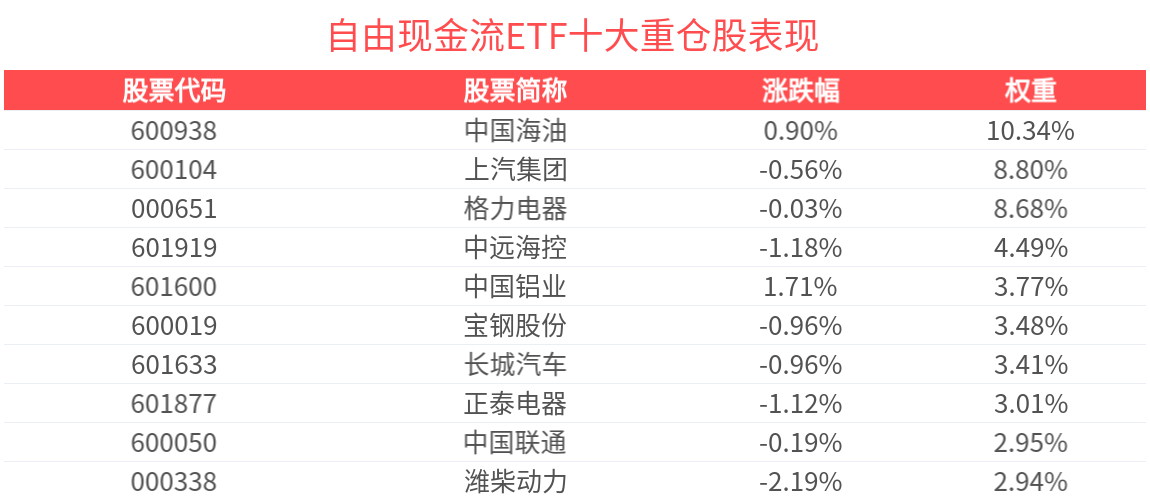
Core Viewpoint - The Guozheng Free Cash Flow Index has shown a slight increase, with notable performance from constituent stocks such as JiBit, JingJin Equipment, and others, indicating a positive trend in free cash flow among listed companies [1] Group 1: Free Cash Flow ETF Performance - The Free Cash Flow ETF (159201) has decreased by 0.67%, with the latest price at 1.34 yuan [1] - The ETF has seen a trading volume of 3.19 billion yuan, with a turnover rate of 2.61% [1] - Over the past week, the ETF has averaged a daily trading volume of 7.21 billion yuan [1] - The ETF has experienced continuous net inflows over the past 9 days, totaling 1.933 billion yuan [1] - The latest share count for the ETF is 9.111 billion, with a total asset size reaching 12.199 billion yuan, marking a record high since its inception [1] - The ETF's net value has increased by 26.18% over the past 6 months [1] - Historical performance shows a maximum monthly return of 7% and a longest consecutive monthly gain of 6 months, with an average monthly return of 3.3% [1] Group 2: Index Composition - The Guozheng Free Cash Flow Index closely tracks the performance of companies with high and stable free cash flow levels [2] - As of December 31, 2025, the top ten weighted stocks in the index include China National Offshore Oil Corporation, SAIC Motor, and Gree Electric Appliances, collectively accounting for 51.95% of the index [2] Group 3: Component Stocks - The top ten component stocks and their respective weightings include: - China National Offshore Oil Corporation: 10.34% - SAIC Motor: 8.80% - Gree Electric Appliances: 8.68% - COSCO Shipping Holdings: 4.49% - China Aluminum: 3.77% - Baosteel: 3.48% - Great Wall Motors: 3.41% - Chint Group: 3.01% - China Unicom: 2.95% - Weichai Power: 2.94% [4]

做实第一职责 走好第一方阵丨助力全面推进美丽中国建设
Zhong Yang Ji Wei Guo Jia Jian Wei Wang Zhan· 2026-01-28 23:32
助力全面推进美丽中国建设 "生态环境部高度重视长江大保护,针对存在的问题短板深入研究整改措施,督促指导长江流域各省 (区、市)制定方案,有序开展入河排污口监测、溯源、整治等工作。"驻部纪检监察组二室主任石安 琪告诉记者,驻部纪检监察组立足职能职责,持续跟进监督有关问题整改成效。"本次调研监督发现地 方在水污染防治、大气污染治理、尾矿库监管、矿山生态修复等方面存在短板弱项,对此我们提出监督 建议,并反馈给有关方面,推动以更高站位、更高标准巩固提升问题整改质量。" 推动对习近平总书记重要指示批示精神贯彻落实情况开展常态化"回头看",是驻生态环境部纪检监察组 推进政治监督具体化、精准化、常态化的重要机制。同时,驻部纪检监察组围绕党中央关于生态环境保 护重大决策部署,建立监督台账,跟踪掌握政策学习、研究部署、推动落实等方面情况,与部领导班子 成员、责任司局、办公厅加强全方位协同,确保重要事项全覆盖、重点问题不漏项、问题整改高质量。 驻生态环境部纪检监察组综合施策 中央纪委国家监委网站 黄秋霞 近期,中央纪委国家监委驻生态环境部纪检监察组与生态环境部办公厅面对面沟通,围绕习近平总书记 关于生态环境保护的重要指示批示精神 ...
中国对澳大利亚的矿业投资 现状、案例与前景
Sou Hu Cai Jing· 2026-01-28 14:02
文 / 邱慧芳 我国是世界最大的矿产进口国。以铁矿为例,我国已经连续二十多年位居全球铁矿进口国之首。2016年和2020年,我国铁矿石进口分别超过10亿吨、11亿 吨,到2024年,我国铁矿石进口达12.37亿吨,其中从澳大利亚进口铁矿7.4亿吨,占我国铁矿石进口总量的60%。 显然,相比被动从外国进口,企业积极在矿产来源国进行直接投资可以更好地保障矿产供给的稳定性并获得一定的定价权。在过去二十年里,我国已有约二 十家企业在澳大利亚通过绿地投资、兼并收购等方式进行了铁矿、有色金属、煤炭、石油等方面的投资,既积累了丰富经验,也有不少教训。 宝武钢铁集团公司("宝武"由原宝钢集团与武钢集团于2016年通过联合重组而成立)是较早在澳大利亚进行矿业投资的中国企业之一。早在2002年,原宝钢 集团就与力拓集团下属的哈默斯利铁矿公司及其关联企业等签约,共同投资宝瑞吉铁矿合营项目。到2018年,宝瑞吉已向宝武销售超过1.8亿吨铁矿石,为 保障宝武原料稳定供应起到重要作用。2018年12月,宝武和力拓集团同意将宝瑞吉项目进行延期,并积极推进西坡重点矿山项目。西坡项目总投资约24亿澳 元,其中力拓持股54%、宝武持股46%,项 ...


上海浦东VS深圳南山,谁是中国第一强区
Sou Hu Cai Jing· 2026-01-28 10:29
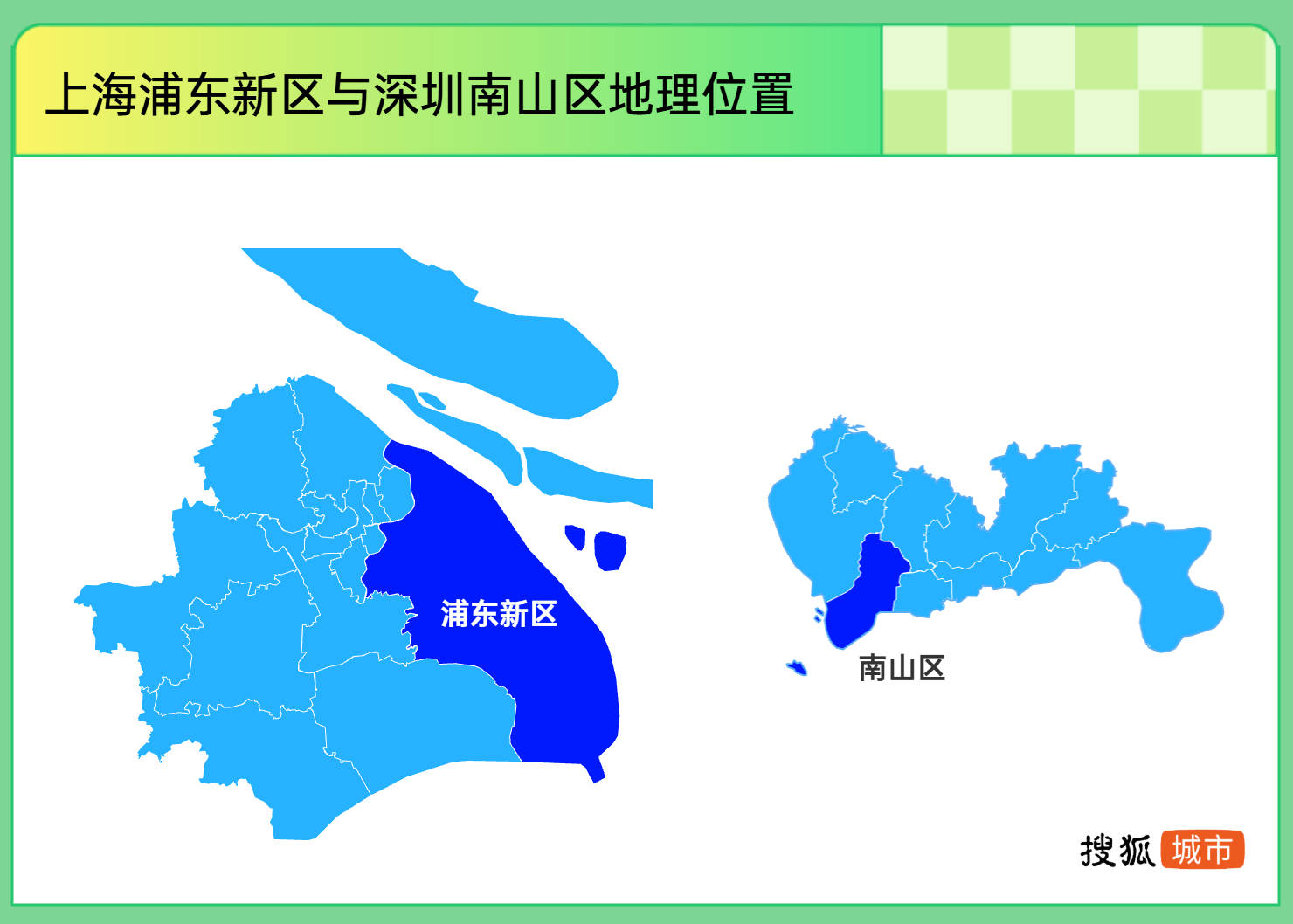
Group 1 - Shenzhen Nanshan District officially announced that its GDP will exceed 1 trillion yuan by 2025, becoming the third "trillion-yuan district" in the country and the first trillion-yuan district under a city jurisdiction [1] - Shanghai Pudong New Area disclosed that its GDP is expected to reach approximately 1.88 trillion yuan by 2025, positioning it as the first "2 trillion-yuan economic region" in the country [1][3] - In terms of economic scale, Pudong has a significant advantage with a resident population of 5.7858 million and a GDP of 1.88 trillion yuan, nearly double that of Nanshan [1][3] Group 2 - Nanshan District has a higher development efficiency, with a per capita GDP exceeding 500,000 yuan, which is 1.7 times that of Pudong, and a land GDP of over 5 billion yuan, which is 3.5 times that of Pudong [1][3] - Pudong New Area is a core functional area for Shanghai's international economy, finance, trade, shipping, and technological innovation, housing numerous high-end platforms [6][8] - Nanshan District is recognized for its high density of listed companies, with 218 listed companies and 6,037 high-tech enterprises, making it the highest in the country [10] Group 3 - Beijing's Chaoyang District is projected to be the next to reach a GDP of 1 trillion yuan, with an expected GDP of 966.85 billion yuan in 2025, just 350 billion yuan short of the target [11][13] - Chaoyang's economy is heavily reliant on the service sector, with over 95% of its GDP coming from tertiary industries, significantly higher than that of Pudong and Nanshan [13]