XREAL

Search documents
活力中国调研行丨从未来感到日常用 中国智造如何在全球赛道脱颖而出
Sou Hu Cai Jing· 2025-09-19 05:38
Group 1 - The article highlights the rapid integration of technological innovations into daily life, showcasing advancements in AR glasses and service robots as examples of how companies are transitioning from technological breakthroughs to market leaders [1][3]. - XREAL, an AR glasses company, has achieved significant milestones, including the development of the world's first retinal-level optical module and a dedicated spatial computing chip, leading to its position as the top seller of consumer AR glasses for four consecutive years [5][7]. - The service robot sector is also thriving, with a company reporting over 100,000 units shipped globally, emphasizing China's leadership role in the global market for service robots [13][15]. Group 2 - Shanghai has become a hub for artificial intelligence talent, with nearly 300,000 AI professionals, accounting for one-third of the national total, fostering a strong workforce for tech companies [16]. - The "Mosu Space" innovation ecosystem has emerged as a preferred location for young entrepreneurs, providing essential services such as computational resources, financial services, and talent support, facilitating collaboration among businesses [29][31]. - The establishment of "Mosu Space" and "Moli Community" in Shanghai has created a new industrial landscape for artificial intelligence, attracting mature companies with supportive policies and talent recruitment measures [35][37].

CINNO Research:1H’25新品和政策助推 国内消费级AI/AR市场销量同比激增73%
智通财经网· 2025-09-04 23:49
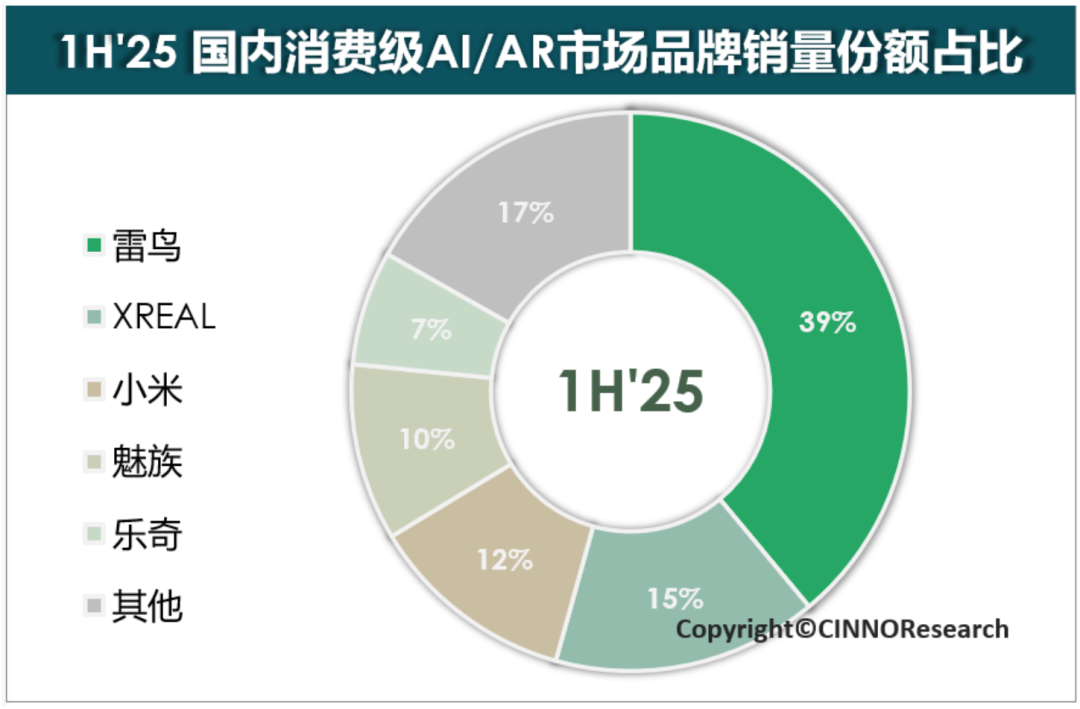
Group 1 - The Chinese consumer-grade AI/AR glasses market experienced explosive growth, with sales reaching 262,000 units in the first half of 2025, a year-on-year increase of 73% [1][2] - The market is driven by government subsidies and the 618 e-commerce promotion, leading to a new wave of product iteration across three major segments: split AR glasses, screen AI glasses, and non-screen AI glasses [2][6] - Non-screen AI glasses led the market with a staggering year-on-year growth of 463%, driven by products like Thunder V3 and Xiaomi AI smart glasses, which integrate AI voice interaction and health monitoring features [2][4] Group 2 - Local brands are diversifying the market, with Thunder leading with a 39% market share and a year-on-year sales increase of 113%, while Xiaomi entered the market with a 12% share, achieving rapid sales growth [4][5] - Thunder's new product launches, including the Air 3S series and X3 Pro AR glasses, have contributed to its strong market position, while Xiaomi's AI glasses achieved 31,000 units sold in the first week [4][5] Group 3 - The dual engines of government policy and e-commerce promotions have significantly boosted the AI/AR market, with consumers benefiting from a 15% subsidy and promotional discounts during the 618 shopping festival [6] - During the core promotional period from May 20 to June 20, sales of AI/AR products across major e-commerce platforms reached 59,000 units, with AR products seeing an increase of over 130% [6] Group 4 - Local brands are focusing on building a content ecosystem to achieve breakthroughs, emphasizing cross-device collaboration, cross-domain applications, and cross-industry cooperation [8] - The integration of AR devices with mobile phones and partnerships with cloud services and content platforms are key strategies for enhancing user experience and expanding market applications [8]

1H’25新品和政策助推,国内消费级AI/AR市场销量同比激增73%,雷鸟第一,小米入局
CINNO Research· 2025-09-04 23:33
Core Viewpoint - The Chinese consumer-grade AI/AR glasses market experienced explosive growth in the first half of 2025, with sales reaching 262,000 units, a year-on-year increase of 73%, driven by policy subsidies, major e-commerce promotions, and innovations from local brands [1][5]. Group 1: Market Growth - The domestic consumer-grade AI/AR market is witnessing a surge, with sales surpassing 262,000 units in the first half of 2025, marking a 73% year-on-year increase [1]. - The market is fueled by national subsidy policies and the 618 e-commerce festival, leading to a new wave of product iterations across three major subcategories [5]. Group 2: Product Segmentation - Split AR glasses achieved a steady growth of 39% year-on-year, supported by new product iterations from leading brands like Thunderbird [2]. - Screened AI glasses (integrated AR) saw a 14% increase in sales, driven by applications in business and cross-language interactions [2]. - Screenless AI glasses led the market with an explosive growth of 463% year-on-year, activating the mass consumer market through features like AI voice interaction and health monitoring [2]. Group 3: Competitive Landscape - Local brands are adopting a "hardware + ecosystem" strategy to capture market share, creating a differentiated competitive landscape [5]. - Thunderbird holds a 39% market share, with a 113% year-on-year sales increase, launching new products at competitive prices [7]. - Xiaomi entered the market strongly, capturing 12% of the overall sales with its AI glasses, which achieved 31,000 units sold in the first week [7]. Group 4: Policy and E-commerce Impact - The introduction of digital product consumption subsidy policies by the National Development and Reform Commission and the Ministry of Finance has been a key driver for market growth, offering consumers a 15% discount [5]. - During the core promotional period from May 20 to June 20, sales of AI/AR products reached 59,000 units across major e-commerce platforms, with AR products seeing an increase of over 130% [5]. Group 5: Future Outlook - CINNO Research predicts that the shipment of AI/AR glasses in China will reach 900,000 units by 2025, representing a 133% year-on-year increase, with the industry expected to exceed a trillion yuan in scale within three years [6]. - Local brands are building content ecosystems through cross-device collaboration, cross-domain applications, and cross-industry partnerships, which are crucial for future growth [6].

AI赋能千行百业,为何需要「中国式方案」?|2025 AI Partner百业大会嘉宾金句集锦
36氪· 2025-09-03 09:10
Core Viewpoint - The article emphasizes that the digital wave, driven by artificial intelligence (AI), is rapidly reshaping the global business landscape, marking the arrival of a golden era powered by "Chinese solutions" which involve deep integration of technology, scenario development, ecosystem collaboration, and value reconstruction [1][2]. Group 1: Conference Insights - The 2025 AI Partner Conference, co-hosted by 36Kr and CEIBS, focused on "Chinese solutions" and featured discussions on the next era of AI, showcasing the latest breakthroughs and ecosystem developments in China's AI sector [2]. - Key topics included the golden moment for Chinese innovation, the potential of superintelligent agents, and the impact of AI across various industries such as manufacturing, healthcare, finance, and education [2]. Group 2: Industry Perspectives - 36Kr's CEO highlighted that China possesses the best environment for AI development, with abundant internet and industrial data, predicting that top AI software and hardware will emerge from China [6]. - The article discusses the transition of AI from concept to practice, emphasizing its active role in various sectors and the need for continuous empowerment of industries through AI [2]. Group 3: Technological Innovations - The article mentions advancements in AI applications, such as the development of intelligent agents and the integration of AI with augmented reality (AR) to create new interaction paradigms [16][30]. - Companies like XREAL and Yihua Intelligent are leading innovations in AR glasses and industrial robots, respectively, showcasing the potential for AI to enhance productivity and operational efficiency [16][24]. Group 4: Future Trends - The article suggests that AI will become a foundational technology, similar to electricity in the past, driving significant changes in productivity and production relationships [49]. - It also notes that the AI sector is expected to experience a decade-long period of growth, with opportunities in traditional industry AI transformation [54].

IDC最新报告:XREAL再度登顶全球AR市场第一,全球化多点同步领跑
IPO早知道· 2025-09-02 02:00
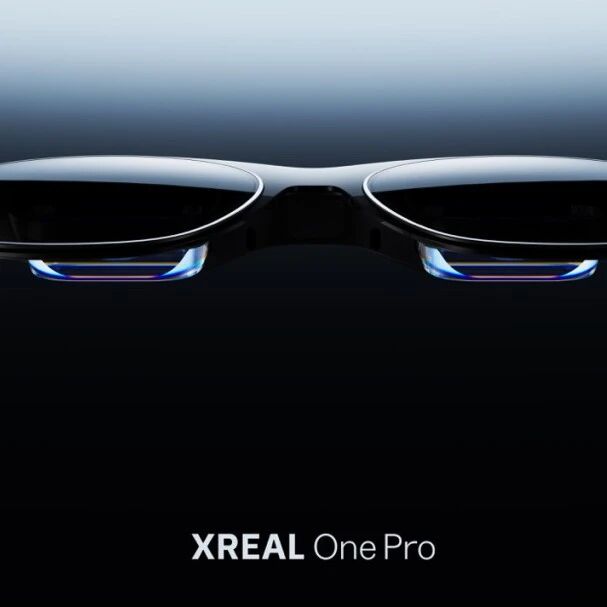
Core Viewpoint - The article highlights the rapid growth of the AR market, with XREAL maintaining its position as the global leader in consumer AR glasses sales for four consecutive years, as reported by IDC [2][4]. Market Performance - In Q2 2025, global AR shipment volume increased by 85.5% year-on-year, with lightweight AR glasses entering the consumer market as a new trend [4]. - XREAL's shipment volume in Q2 2025 grew by 113.7% year-on-year, ranking second in the overall AR+VR market, just behind Meta [4]. - As of June 30, 2025, XREAL's cumulative shipment volume surpassed 700,000 units, making it the most widely used AR glasses brand among consumers [4]. Company Performance - XREAL achieved a market share of 43.9% in North America and 39.4% in Europe, leading in both regions [5]. - The company’s flagship model, XREAL One, continues to perform well, while the new model, XREAL One Pro, launched in July, is expected to enhance its market share in the high-end segment [5][7]. Product and Technology Advancements - The XREAL One Pro features significant upgrades in design and comfort, utilizing self-developed technologies such as the X Prism optical engine and X1 spatial computing chip, achieving a 57° ultra-wide field of view [7]. - The new chip enables stable native 3DoF spatial positioning with a latency reduced to 3 milliseconds, enhancing user experience [7]. - XREAL's collaboration with Google on Project Aura signifies a strategic shift towards integrating spatial computing and AI, reinforcing its technological leadership in the global AR market [7]. Recognition and Strategic Positioning - XREAL was included in the Fortune China Tech 50 list, marking the first time an AR glasses company has been recognized, highlighting its global influence and innovation in the AR and spatial computing sectors [9]. - The company is positioned as a key player in promoting the next generation of smart terminals, contributing to the development of intelligent economic core industries through the integration of AR and AI [9].
美团发布并开源“龙猫”大模型;IDC:XREAL连续四年居消费级AR眼镜销量冠军|未来商业早参
Mei Ri Jing Ji Xin Wen· 2025-09-01 22:05
Group 1: Meituan's LongCat-Flash-Chat - Meituan officially released and open-sourced LongCat-Flash-Chat, a large model utilizing a Mixture-of-Experts (MoE) architecture with a total of 560 billion parameters and an activation range of 18.6 billion to 31.3 billion parameters, averaging 27 billion [1] - LongCat-Flash-Chat demonstrates outstanding performance in intelligent tasks with a processing speed exceeding 100 TPS while activating only a small number of parameters [1] - The move into large models is a proactive strategy for Meituan to enhance its delivery and recommendation services, thereby improving user and merchant experiences and solidifying its competitive position in the local service sector [1] Group 2: XREAL's AR Glasses Market Leadership - XREAL has maintained its position as the global leader in consumer-grade AR glasses sales for four consecutive years, with a year-on-year shipment increase of 113.7% in Q2 2025 [2] - As of June 30, XREAL's cumulative shipment volume has surpassed 700,000 units, ranking second in the overall AR+VR market, only behind Meta [2] - XREAL's competitive edge lies in its technological innovation, product experience, and market expansion, supported by deep collaboration with Google to leverage the Android ecosystem [2] Group 3: AI²Robotics Funding Round - AI²Robotics, a company specializing in embodied intelligence, has completed a new round of Series A financing led by Shenzhen Capital Group, with investments exceeding 100 million yuan [3] - The funding round also saw participation from existing shareholders and new investors, including Huaxi Biological and a large retail enterprise, aimed at further developing the GOVLA large model and AlphaBot series robots [3] - The investment highlights the potential of AI²Robotics in a competitive landscape, where the company aims to enhance technology, increase production capacity, and expand market share [3]

博士眼镜:上半年净利润5603.34万元 同比增长6.97%
Zheng Quan Shi Bao Wang· 2025-08-27 10:48
Core Viewpoint - The company, 博士眼镜, reported a revenue of 686 million yuan for the first half of 2025, reflecting a year-on-year growth of 14.22%, and a net profit attributable to shareholders of 56.03 million yuan, which is a 6.97% increase compared to the previous year [1] Financial Performance - The company's operating revenue for the first half of 2025 reached 686 million yuan, marking a 14.22% increase year-on-year [1] - The net profit attributable to shareholders was 56.03 million yuan, showing a growth of 6.97% year-on-year [1] - Basic earnings per share stood at 0.25 yuan [1] Strategic Partnerships - The company has established collaborations with leading smart glasses manufacturers including 星纪魅族, 雷鸟创新, XREAL, 界环, 李未可, 小米mijia, and 雷神科技 [1] - The revenue from the company's smart glasses lens fitting services is currently minimal and will not significantly impact the company's operations in the short term [1]

财经观察:从“新物种”到“必备品”,智能眼镜卡在哪?
Huan Qiu Shi Bao· 2025-08-26 23:20
Core Insights - The smart glasses industry is on the verge of a breakthrough, but it still needs advancements in technology, branding, and user experience to achieve global impact similar to the iPhone's effect on smartphones [1][8][9] Industry Trends - The demand for AI-enabled smart glasses is increasing, with a reported 118% year-on-year growth in sales volume for AI smart devices in July [1][3] - Major tech companies like Meta and Google are accelerating the iteration of smart glasses, with Meta planning to launch its first display-equipped smart glasses priced at approximately $800 [2][3] - The global smart glasses market is projected to see a shipment of 1.487 million units in Q1 2025, marking an 82.3% year-on-year increase [3] Market Dynamics - The Chinese smart glasses market is expected to reach nearly 1.4 million units in retail sales for the entire year of 2025, reflecting a 216% increase [3] - Domestic brands are competing aggressively in the market, with over twenty models priced between 1,000 to 4,000 yuan, significantly lower than foreign counterparts [3][4] Product Categories - Smart glasses can be categorized into three main types: AI shooting glasses, AI audio glasses, and AI display glasses, each serving different user needs and scenarios [4][5] Challenges - The industry faces challenges such as high return rates for products, with Xiaomi's AI glasses experiencing a return rate of about 40% due to various issues [5][6] - Key consumer concerns include comfort and battery life, with many users finding current models too heavy and with insufficient battery duration [6][7] Competitive Landscape - Chinese companies are leveraging supply chain advantages for global expansion, with over 60% of key components in some products being self-developed [8][9] - To compete globally, Chinese brands need to focus on technology innovation, brand value, user experience, and ecosystem development [8][9]
「中国式方案」点亮AI黄金时代|36氪2025 AI Partner百业大会核心看点剧透
36氪· 2025-08-22 13:47
Core Viewpoint - The article emphasizes that China's AI industry is not only leading in technological innovation but also exploring unique commercialization models, termed "Chinese-style solutions," which are reshaping the global AI landscape [2][13]. Group 1: Chinese-style Solutions - The "Chinese-style solution" is characterized by a complete closed loop of "technology research and development - scene implementation - industry feedback," driven by scene demands to iterate technology and enable AI across various industries [2][13]. - The upcoming "2025 AI Partner Conference" will focus on topics such as "Chinese-style innovation," "super intelligent agents," and the integration of AI with various industries, highlighting the deep fusion of AI with the real economy [2][11]. Group 2: AI Embodiment and Infrastructure - AI embodiment requires breakthroughs in hardware, software, and computing power, with a focus on smart terminals and robotics as key areas for innovation [4]. - The development of AI infrastructure is crucial for supporting the demands of full-domain intelligence, with practices in computing resource scheduling and data foundation construction being shared [6]. Group 3: AI as a Necessity - AI is transitioning from a "show-off technology" to a "necessity" by integrating into core industry processes in sectors like enterprise services, healthcare, and environmental protection [8]. - The application of AI in human resources, medical services, and commercial content creation is being explored to enhance efficiency and innovation [8]. Group 4: Future Directions and Challenges - The commercialization of humanoid robots is still in its early stages, with discussions on overcoming challenges related to technology maturity and market acceptance [5]. - The role of AI in carbon management and the automotive finance industry is being examined, focusing on how AI can transform traditional models into more efficient ecosystems [9]. Group 5: Event Highlights - The "AI Partner" initiative has become a platform for communication between AI application and scene sectors, with plans to continue fostering AI innovation and collaboration among over 70 companies [11].

AI眼镜,这次能成吗?
3 6 Ke· 2025-08-21 11:05
Core Insights - The year 2025 is anticipated to be the "year of AI glasses," with significant growth projected in both global and Chinese markets [1] - Major companies like Xiaomi, Alibaba, and China Telecom are entering the AI glasses market, indicating a competitive landscape [1][2][3] - Despite initial consumer enthusiasm, there are notable concerns regarding product quality and functionality, leading to negative feedback from early adopters [1][11] Group 1: Market Overview - IDC forecasts that global smart glasses shipments will reach 14.5 million units in Q1 2025, with China accounting for 2.9 million units, representing year-on-year growth of 42.5% and 121.1% respectively [1] - Xiaomi's AI glasses sold over 10,000 units within 12 hours of launch, topping sales charts [2] - Alibaba's Quark AI glasses will integrate deeply with its ecosystem, offering unique features compared to existing products [2] Group 2: Product Developments - China Telecom launched its Tianyi AI smart glasses, featuring advanced imaging technology and a competitive price point [3] - HTC introduced the VIVE Eagle AI smart glasses, emphasizing long battery life and high-quality audio capabilities [4] - Li Auto is developing AI glasses in collaboration with Goertek, focusing on advanced imaging and payment functionalities [5] Group 3: Supply Chain Dynamics - The AI glasses market is characterized by a "hundred glasses war," with a focus on resolving core technology issues such as chips and AI capabilities [6] - The cost of AI glasses is significantly influenced by the chip, which accounts for 30% to 40% of the total product cost [6] - Various chip architectures are being explored to balance performance and cost, including SoC and dual-core solutions [6][7] Group 4: Challenges and Consumer Feedback - Early sales data indicates a decline in demand for Xiaomi's AI glasses, with a high return rate of 40% to 50% due to performance issues [11] - Common complaints include poor battery life, slow response times, and inadequate user experience [11][12] - Historical precedents, such as Google Glass and Microsoft's HoloLens, highlight ongoing challenges in the wearable tech space [12][13][14] Group 5: Future Outlook - For AI glasses to succeed, manufacturers must address hardware supply chain issues and enhance AI technology [15] - Consumer concerns include high prices, software performance, and data privacy, which need to be addressed for broader adoption [15] - The concept of "killer applications" for AI glasses is still under exploration, with suggestions for a shift from traditional apps to more streamlined interactions [15]