
三星

Search documents
iPhone Air成苹果“滑铁卢” 库克未来要如何找回场子?
Sou Hu Cai Jing· 2025-12-19 07:55
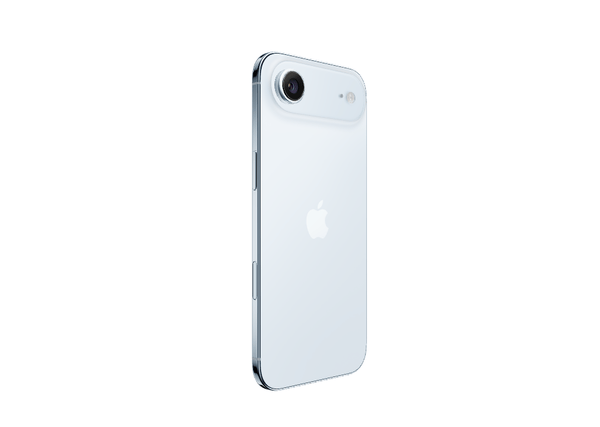
Core Insights - Apple's iPhone Air, launched in 2025, faced significant market challenges due to a lack of innovation, high pricing, and technical issues, leading to poor sales performance [1][3][18] Product Performance - The iPhone Air's first-week activation was less than one-tenth of the iPhone 17 Pro Max, with pre-order sales accounting for only 6% of total orders, prompting a price cut within five days of launch [3][7] - The device's ultra-thin design resulted in compromises on key features, including a single 48MP camera, reduced battery capacity, and limited audio capabilities, which negatively impacted user experience [9][11] Market Reaction - The failure of iPhone Air has caused a ripple effect in the smartphone industry, leading competitors like Xiaomi, OPPO, and vivo to cancel similar lightweight models and refocus on other market segments [8] - Samsung's Galaxy S25 Edge also underperformed, resulting in the cancellation of its successor, indicating a shift in consumer preference towards comprehensive user experience rather than just thinness [8] Future Strategies - Apple is planning to launch iPhone Air 2, aiming to enhance its features and adjust pricing to improve competitiveness, including the addition of a dual-camera system to address previous shortcomings [12][15] - The potential new pricing strategy for iPhone Air 2 may lower the starting price to around 6000 yuan, significantly improving its value proposition [15][17] - The release of iPhone Air 2 has been postponed to spring 2027 to avoid internal competition with the iPhone 17 series and to allow more time for product optimization [17] Lessons Learned - The iPhone Air's failure highlights Apple's need for better market research and product definition, emphasizing that sacrificing core user experiences for design aesthetics can alienate consumers [11][20] - The smartphone market's competitive landscape has shifted towards optimizing overall user experience rather than focusing solely on individual features, necessitating a balanced approach in future product development [20]


为什么说,时间是公平且坚固的壁垒?| 轻分享
高毅资产管理· 2025-12-19 07:00
Core Viewpoint - The article emphasizes that time is a crucial barrier in business, as it cannot be bought or replicated, and it plays a significant role in establishing competitive advantages [5][12][33]. Group 1: Strategic Six Variables - The article introduces the "Strategic Six Variables" which include value, scarcity, barriers, assets, leverage, and flywheel, highlighting their importance in building a business [5]. - It acknowledges that while these variables are essential, the most significant barrier for ordinary people is time, which is often overlooked [5][6]. Group 2: Barriers in Manufacturing - In manufacturing, the true barrier is often the "ineffable know-how" that comes from years of experience rather than just equipment or standard operating procedures [7][8]. - An example is given of Corning, which has developed its expertise in glass manufacturing over 170 years, creating a barrier that competitors cannot easily overcome [9][10][11]. Group 3: Time as a Barrier - Time is presented as a unique barrier because it is the one resource that cannot be purchased; companies like Amazon have leveraged their early start in cloud computing to build significant advantages that later entrants struggle to replicate [15][16]. - The article encourages businesses to identify what unique aspects they possess that competitors cannot quickly copy, emphasizing the importance of investing time in building these advantages [16][30]. Group 4: The Value of Persistence - The article discusses the importance of persistence in business, using examples like Luo Zhenyu, who has built a brand over years through consistent effort [27][28]. - It suggests that businesses should focus on long-term projects that accumulate value over time rather than seeking immediate returns [22][31]. Group 5: Conclusion - The article concludes by encouraging businesses to embrace time as a friend and to focus on building enduring barriers that will yield rewards in the long run [34][35].


消费电子ETF(561600)盘中交投活跃,AI终端迎来爆发临界点
Xin Lang Cai Jing· 2025-12-19 05:41
Group 1 - The core viewpoint of the articles highlights the contrasting dynamics in the global consumer electronics market, characterized by a slowdown in traditional business and an explosion of AI innovation, with AI terminal shipments expected to exceed 300 million units in 2025, driving revenue growth of 25%-40% for related supply chain companies [2] - The shortage and price increase of storage chips are identified as critical variables affecting the industry, with DRAM and NAND Flash spot prices rising over 300% from September to mid-December 2025, and major manufacturers like Samsung and SK Hynix raising prices by up to 30% in Q4 [1][2] - The consumer electronics ETF closely tracks the CSI Consumer Electronics Theme Index, which includes 50 listed companies involved in component production and design, reflecting the overall performance of the consumer electronics sector [2][3] Group 2 - The top ten weighted stocks in the CSI Consumer Electronics Theme Index account for 56.39% of the index, with notable companies including Luxshare Precision, Cambricon, and Industrial Fulian [3] - The anticipated price increase of storage chips in 2025 is projected to be between 30%-50% year-on-year, with the cost of storage for AI phones expected to rise by $80-$120 per unit, potentially leading to a 5-8 percentage point decline in gross margins for brands lacking core technology reserves [2] - The consumer electronics ETF has various connection options, including multiple classes of the Ping An CSI Consumer Electronics Theme ETF, indicating a structured investment approach for investors [3]


周大福营收389.86亿、茅台价跌黄牛亏损30万、手机套餐价升难降
3 6 Ke· 2025-12-19 05:11
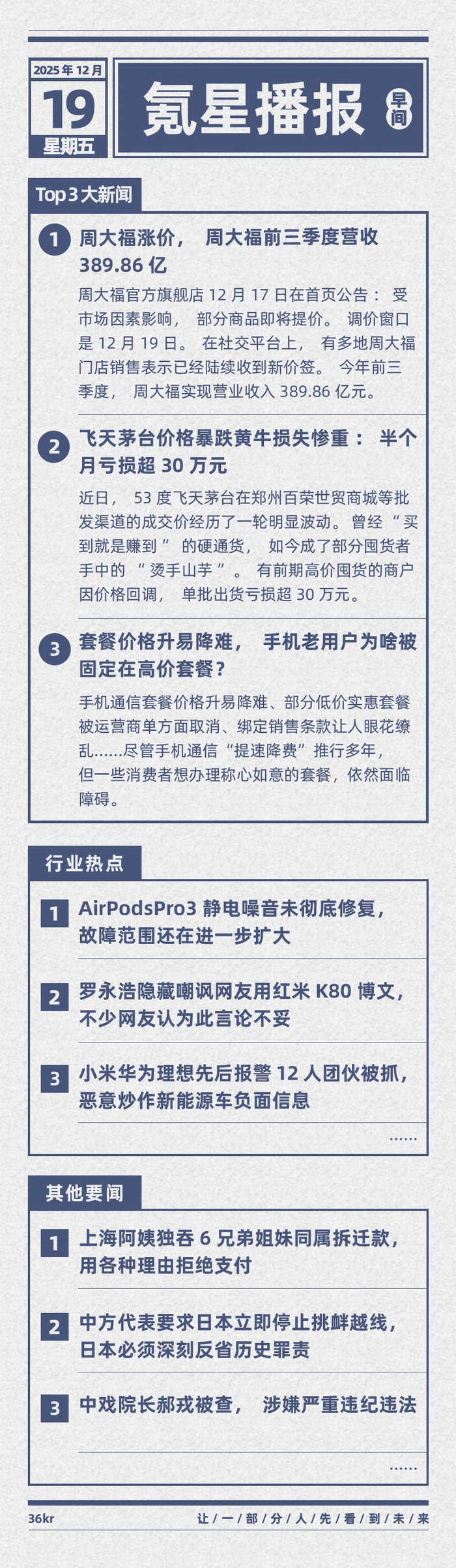
Group 1 - Chow Tai Fook announced a price increase for some products, with a revenue of 38.986 billion yuan for the first three quarters of the year [5] - The price of Feitian Moutai has dropped significantly, causing losses exceeding 300,000 yuan for some speculators who had previously hoarded the product [5] - Mobile communication package prices are difficult to lower, with many consumers facing obstacles in finding satisfactory plans despite years of "speeding up and reducing fees" initiatives [5] Group 2 - AirPods Pro 3 continues to experience unresolved static noise issues, with the scope of the problem expanding [6] - A group of 12 individuals has been arrested for maliciously promoting negative information about new energy vehicles, involving companies like Xiaomi and Huawei [6] - The price of platinum jewelry has surpassed 800 yuan, indicating a rising trend in precious metal prices [4]


苹果救得了小折叠吗?
创业邦· 2025-12-19 03:50
Core Viewpoint - The article discusses the anticipated entry of Apple into the foldable smartphone market, highlighting the challenges and market dynamics surrounding small foldable devices, particularly in comparison to traditional smartphones and larger foldable models [6][8][19]. Group 1: Apple's Foldable Smartphone Development - Apple has been working on foldable smartphone technology since at least 2011, focusing on addressing the issue of screen creases, which has been a significant barrier to market entry [9][11]. - Recent leaks suggest that Apple's first foldable iPhone will adopt a small flip design, similar to Huawei's Pura X, but with a more square aspect ratio [6][8]. - The company has developed various hinge designs to improve the folding mechanism, but achieving the desired results has proven difficult, leading to delays in product launch [13][14]. Group 2: Market Dynamics of Small Foldable Phones - Small foldable phones have struggled to gain traction in the market, with sales significantly lagging behind larger foldable models. In China, small foldable shipments are projected to be less than half of those for large foldables in 2024 [21][22]. - The lack of differentiation in functionality compared to traditional smartphones and the inability to command higher profit margins have hindered the success of small foldable devices [21][26]. - The additional costs associated with the unique components of small foldable phones, such as hinges and flexible screens, have led to lower profitability for manufacturers [29]. Group 3: Competitive Landscape and Manufacturer Strategies - Several manufacturers, including OPPO and vivo, have either paused or discontinued their small foldable phone development due to poor sales performance, while others like Xiaomi and Honor continue to explore this segment [31][32]. - Huawei has shifted its strategy by introducing the Pura X, which aims to enhance functionality through a larger display area, indicating a trend towards improving the utility of small foldable devices [38][40]. - Apple's brand strength may allow it to overcome pricing challenges in the small foldable market, but past experiences with products like the iPhone Air suggest that aesthetic appeal alone may not drive sales [40][41].

55岁三星长公主腿脚不便引热议 曾不顾反对嫁给其司机
Xin Lang Cai Jing· 2025-12-19 02:11
特别声明:以上文章内容仅代表作者本人观点,不代表新浪网观点或立场。如有关于作品内容、版权或其它问 题请于作品发表后的30日内与新浪网联系。 55岁三星长公主腿脚不便引热议 曾不顾反对嫁给其司机 ...
Counterpoint Research:2026年折叠屏智能手机面板出货量预计将增长46%
智通财经网· 2025-12-19 01:28
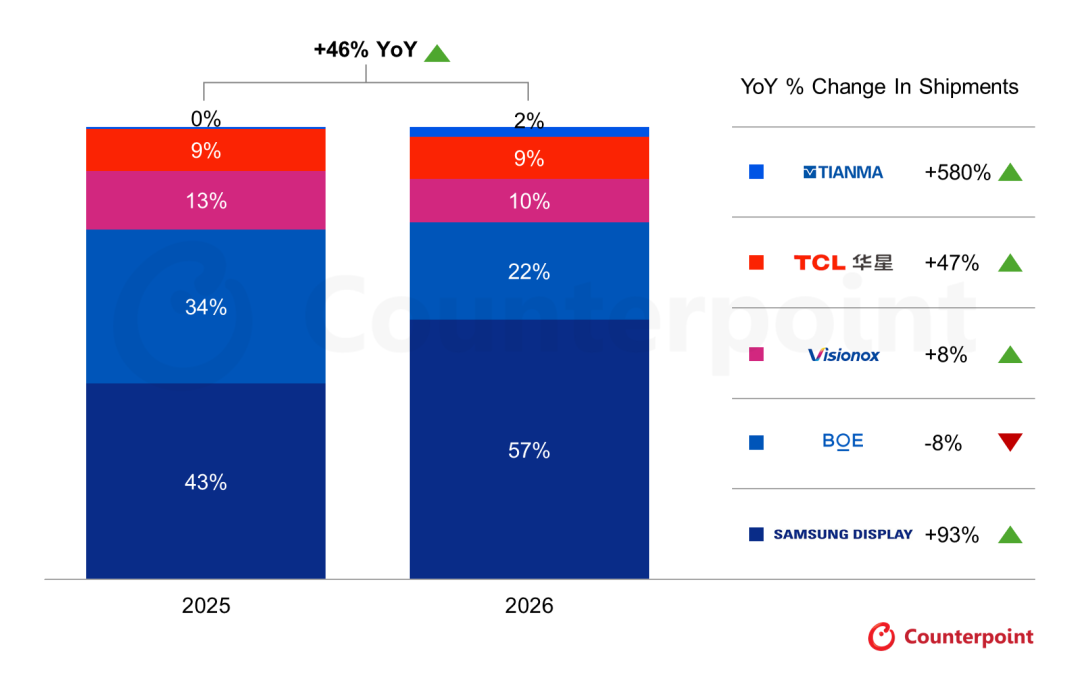
Core Insights - The report from Counterpoint Research predicts a 46% year-on-year growth in foldable smartphone panel shipments by 2026, driven primarily by Apple's entry into the foldable market with its first foldable iPhone [1][3]. Group 1: Market Growth and Trends - Apple's procurement of panels for its foldable iPhone is expected to significantly boost market demand, reactivating the entire foldable screen market [1]. - The overall shipment of foldable smartphones is projected to grow by 14% in 2025 and by 38% in 2026, with book-style models maintaining a dominant position [3]. - The average selling price (ASP) of foldable panels is anticipated to rise significantly, benefiting companies like Samsung Display, which is expected to surpass a 50% market share [3]. Group 2: Consumer Preferences and Market Dynamics - There is a growing consumer demand for larger screens and enhanced multitasking capabilities, leading to the popularity of book-style foldable designs despite their higher prices [5]. - The book-style foldable smartphones are rapidly gaining traction, with Samsung's Galaxy Z7 series showing that the Fold model's sales have surpassed that of the Flip model during the early sales phase in the second half of 2025 [3].
豆包手机恢复销售,华为、荣耀等多数手机厂商仍在调用无障碍权限
3 6 Ke· 2025-12-19 00:12
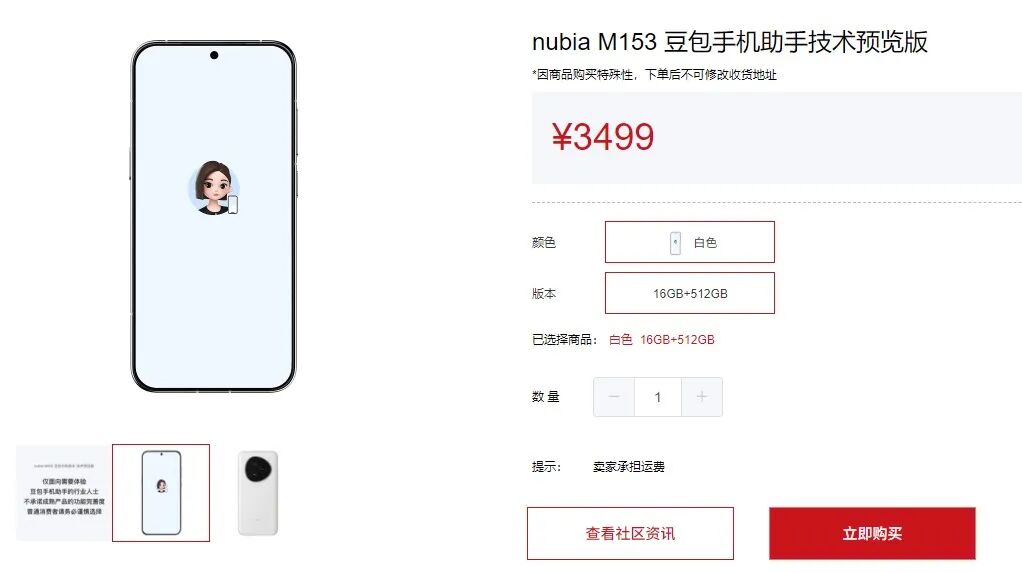
Core Viewpoint - The emergence of Doubao phone has sparked significant controversy due to its ability to access underlying system permissions, allowing it to simulate human interactions without relying on apps or manufacturers, raising concerns about privacy and compliance [1][14][24] Group 1: Doubao Phone Controversy - Doubao phone's assistant has resumed product purchase eligibility, indicating a return to the market amidst ongoing debates [1] - The phone's ability to bypass traditional app interactions has led to a clash with major platforms like WeChat and Alipay, which have implemented restrictions to prevent its use [17][19] - Doubao's approach challenges the dominance of super apps as traffic entry points, potentially disrupting existing business models [17][24] Group 2: AI Assistant Capabilities - AI assistants in new devices like Honor Magic 8 and Huawei Mate 80 have significantly improved, now capable of executing complex tasks such as price comparisons and product selections [5][6] - The use of "accessibility" permissions by various manufacturers allows AI assistants to enhance user experience by simulating clicks and reading screen content [6][7] - Doubao phone's assistant utilizes a deeper system-level permission (INJECT_EVENTS), enabling it to perform actions across multiple apps without relying on accessibility tools [16][14] Group 3: Industry Response and Compliance Issues - Major companies have expressed resistance to Doubao's operational model, citing security and risk management concerns [17][19] - The use of high-risk permissions by Doubao phone has raised alarms among app developers, particularly in social and content sectors, where user engagement is critical [21] - International competitors like Apple and Google are adopting a more cautious approach, focusing on user consent and privacy compliance rather than full automation [22][24] Group 4: Market Trends and Future Outlook - The demand for AI-enabled smartphones in China is projected to grow significantly, with an expected shipment of 147 million units by 2026, representing a 31.6% year-on-year increase [24] - The rapid development of AI capabilities in smartphones raises important questions about data security and the ethical use of AI, which the industry must address moving forward [24]
从“猎奇”到“信赖”:折叠屏手机用户发展洞察报告
艾瑞咨询· 2025-12-19 00:06
Core Insights - The global foldable smartphone market is experiencing continuous growth, particularly in China, driven by technological advancements and an improved supply chain, leading to product diversification [1] - China has emerged as a major growth engine for the global foldable smartphone market, with Huawei maintaining a significant market share and leading the industry [1][18] - User willingness to purchase foldable smartphones is increasing, with higher expectations for product functionality and experience [1] - The transition from niche to mainstream market for foldable smartphones is anticipated, with sustained demand growth and a focus on hardware optimization, software ecosystem development, and enhanced user interaction experiences [1] Market Overview - The global smartphone market has entered a phase of stock competition since 2017, with annual shipment volumes declining by approximately 2.52%, projected to reach 1.22 billion units by 2024 [2] - The flat smartphone market has become saturated, prompting manufacturers to innovate product forms to explore the high-end market [5] Competitive Landscape - The foldable smartphone industry chain includes upstream raw material supply, midstream design and manufacturing, and downstream sales [7] - Chinese foldable smartphone manufacturers, such as Huawei and Samsung, are leading the industry chain with strong technological capabilities and market influence [7][8] User Behavior and Preferences - The majority of foldable smartphone users are male and female, with a higher preference among first-tier and new first-tier city users [20] - Users with higher education levels, particularly those with a bachelor's degree or above, show a greater preference for foldable smartphones [20] - The price range for most users' foldable smartphones is between 5,000 to 9,000 yuan, with Huawei being the most used brand at 62.3% [22] Purchase Motivations - The key reason for purchasing foldable smartphones is the stronger sense of technology and futurism, accounting for 44.7% of users [24] - Users have a substantial budget for purchasing foldable smartphones, with 28.4% willing to spend between 8,000 to 10,000 yuan [24] Brand Recognition and Image - Huawei leads in brand recognition across various dimensions, including high-end perception, business style, technological innovation, and reputation [26][28] - Users express high satisfaction with Huawei products, indicating strong user recognition and loyalty [30] User Experience and Pain Points - Current user satisfaction is highest for Huawei, followed by Xiaomi and Samsung, with a notable willingness to recommend these brands [30][31] - Users report pain points related to hardware durability, such as screen wear and tear, and software issues like poor visual effects [39] Future Outlook - Over 90% of consumers are considering purchasing a foldable smartphone for their next device, focusing on reliability, battery life, and hardware specifications [41] - The foldable smartphone market is transitioning from a niche to a mainstream product, with 95.5% of consumers willing to switch to a foldable device in the future [47]

超轻薄手机遇冷,真“AI手机”登场? 聊聊2025年手机行业的新玩意
Xin Lang Cai Jing· 2025-12-18 14:23
Core Insights - The mobile market in 2025 is witnessing significant changes, including the introduction of ultra-thin designs, emergency communication technologies, new folding phone forms, and AI-integrated smartphones, all impacting industry development [1][38]. Ultra-Thin Design - Major manufacturers like Samsung and Apple have launched ultra-thin smartphones, with Samsung's Galaxy S25 Edge at 5.8mm and 163g, and Apple's iPhone Air at 5.6mm and 165g, both priced from 7999 yuan [3][40]. - Despite the hype, sales for these ultra-thin models have been disappointing due to a mismatch between product definition and market positioning, sacrificing essential features for thinness [5][42]. - The ultra-thin design captures a niche market focused on portability and aesthetics, but it is not a mainstream demand, indicating a need for balance between functionality and design [7][45]. Emergency Communication Technology - Huawei's Mate 80 series introduced a "black technology" called emergency communication, allowing point-to-point communication without external networks, crucial for disaster scenarios [9][46]. - This technology operates on a 700MHz frequency, enabling communication over distances of up to 13km and penetrating obstacles like concrete walls, making it vital for rescue operations in extreme conditions [11][50]. - Huawei's approach to emergency communication is distinct from other manufacturers, focusing on critical situations like natural disasters, thus creating a new category of mobile communication [18][55]. New Folding Phone Forms - The folding phone market sees competition with Huawei's Mate XT and Samsung's Galaxy Z TriFold, which have different folding mechanisms and design philosophies [20][57]. - Both devices offer large screens around 10 inches, with Samsung's design providing better protection for the inner screen, while Huawei allows for more flexible screen usage [23][60]. - The emphasis is on software ecosystem development to maximize the advantages of larger screens, as both companies aim to enhance user experience through innovative designs [27][64]. AI-Integrated Smartphones - The introduction of the "Doubao AI phone" marks a significant advancement in AI integration within smartphones, featuring a deep system-level AI assistant capable of multi-modal interactions and automated operations [28][65]. - This AI assistant can perform complex tasks like price comparisons across platforms and provide contextual information, representing a leap towards AI agents in mobile technology [30][70]. - However, concerns regarding execution efficiency and user privacy persist, highlighting the need for ongoing exploration in balancing innovation with data security [35][72].

