
上港集团

Search documents
提前破5000万标箱!上海港今年集装箱吞吐量有望再创新高
Bei Jing Ri Bao Ke Hu Duan· 2025-12-10 07:53
Core Insights - Shanghai Port achieved a container throughput of 50.56 million TEUs in the first 11 months of this year, marking a year-on-year increase of 6.7%, and is expected to set a new annual record, maintaining its position as the world's largest container port for 16 consecutive years [1] Group 1: Shanghai Port Performance - Shanghai Yangshan Deep-Water Port is the main contributor to this record, with a throughput of 26.25 million TEUs in the first 11 months, reflecting a year-on-year increase of 9.7%, and is projected to exceed 29 million TEUs for the year [3] - The port surpassed the 50 million TEU mark a month earlier than last year, showcasing the resilience and potential of the Chinese economy [1] Group 2: Technological Advancements - The Yangshan Phase IV automated terminal is evolving towards intelligence, utilizing complex processes such as "dual small vehicles and dual lifting devices" to enhance operational efficiency [3] - The terminal has established China's first port-level simulation testing platform, creating a "digital twin" system that allows for virtual verification of new processes and algorithms, significantly reducing innovation costs and risks [3] Group 3: Future Developments - The Yangshan Phase I and II terminals are undergoing a major transformation aimed at creating an automated and intelligent production system, with the intelligent yard completed in 2023, reducing the container transfer rate from 55.8% to 7.2% [4] - The construction of the Xiaoyangshan North Operation Area is underway, which will add 6,100 meters of new coastline to Shanghai Port, including 5,500 meters of container terminal coastline and a designed annual throughput capacity of 11.6 million TEUs [7]


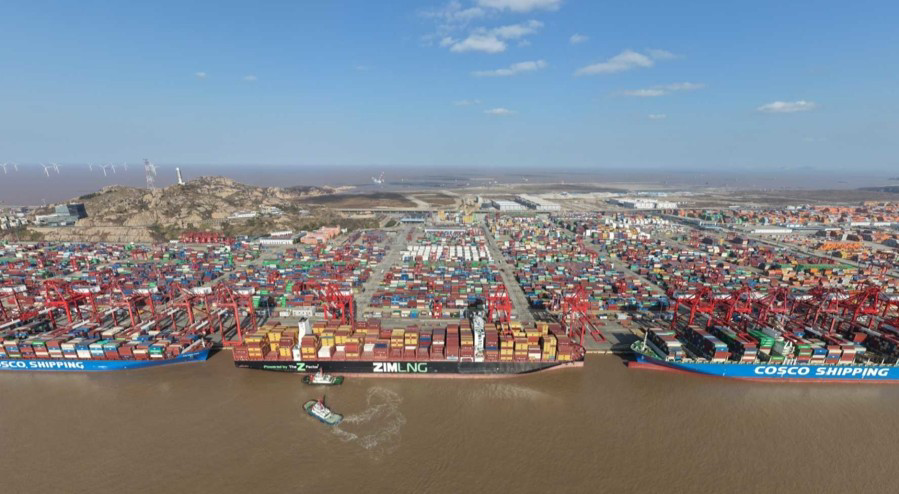
洋山港开港运营20周年,船舶靠港量、货物吞吐量双双创新高
Di Yi Cai Jing· 2025-12-10 07:19
Core Insights - Yangshan Port has achieved a significant milestone by inspecting over 10,000 international vessels ahead of last year's schedule, marking a robust growth in maritime activity [1][4] Group 1: Port Operations and Achievements - Since its opening, Yangshan Port has inspected a total of over 168,000 international vessels and processed more than 4 million personnel [4] - The port has established a deep-water coastline of 7,950 meters and equipped with 104 ultra-large intelligent cranes, supporting a global shipping network with 105 international routes [1] - In 2024, the number of inspected international vessels at Yangshan Port is expected to exceed 10,000 for the first time, setting a new historical record [4] Group 2: Container Throughput and Trade Indicators - Yangshan Port has handled a cumulative total of 330 million TEUs (Twenty-foot Equivalent Units) since its inception, with container throughput expected to surpass 26 million TEUs in 2024 [4] - In the first 11 months of this year, Yangshan Port's container throughput reached 26.25 million TEUs, reflecting a year-on-year increase of 9.7% [4] - The port's performance is seen as a barometer for China's international trade, with the country's trade surplus exceeding $1 trillion for the first time this year [4]
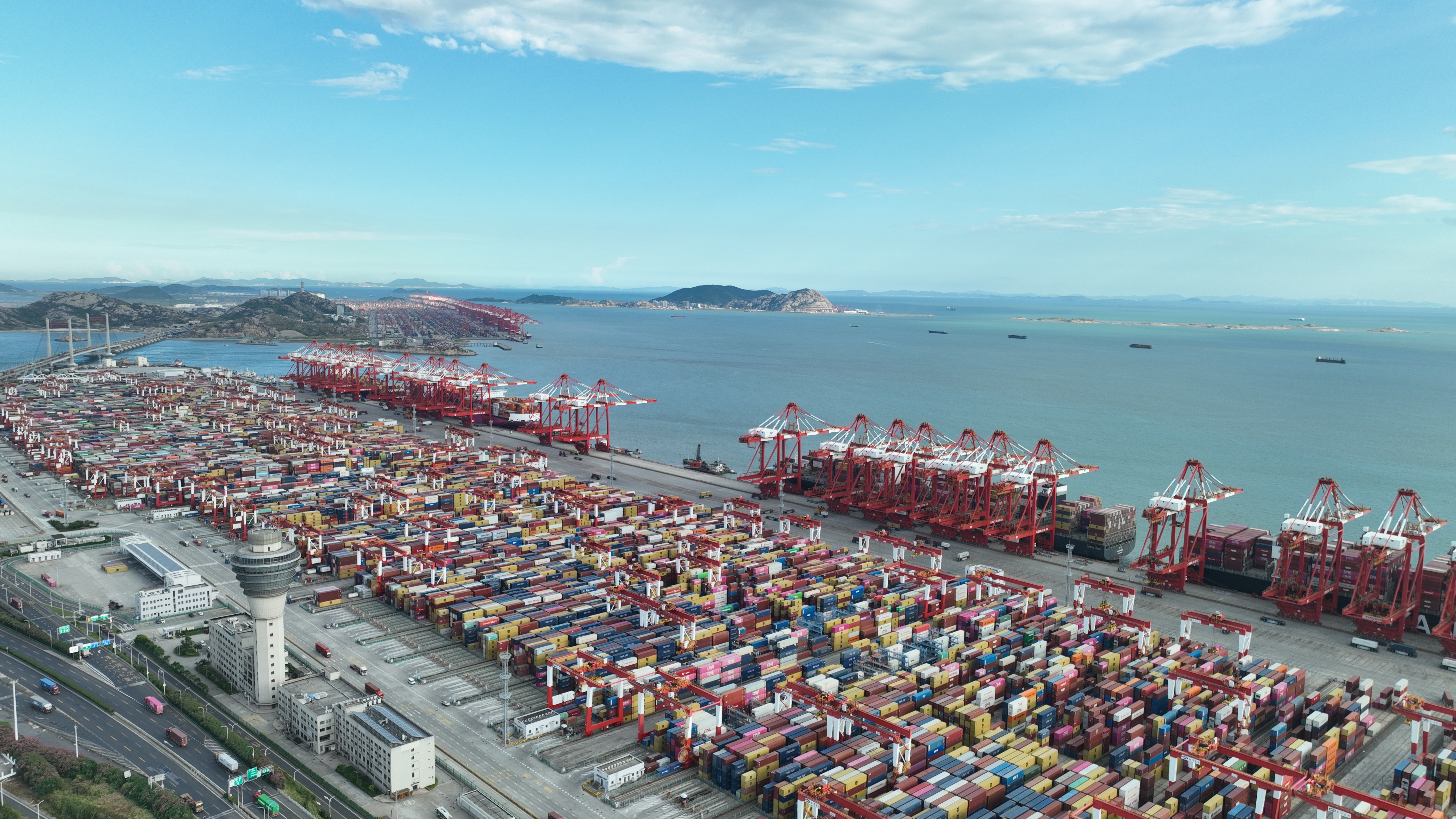
上海港今年前11个月集装箱吞吐量已超5050万标准箱
Bei Ke Cai Jing· 2025-12-10 04:24
Group 1 - The core point of the news is that Shanghai Port's container throughput has exceeded 50.5 million TEUs in the first 11 months of the year, with expectations to surpass 55 million TEUs for the entire year, marking a historical high [1] - Yangshan Deep-Water Port is projected to achieve a container throughput of over 29 million TEUs for the year, also setting a new record [1] - The Yangshan Port has established a global shipping network covering 105 international routes, connecting to over 200 countries and regions, attracting major global shipping companies [4] Group 2 - Since its opening, Yangshan Port has handled a cumulative total of 330 million TEUs, with container throughput expected to exceed 26 million TEUs in 2024 [4] - In the first 11 months of this year, Yangshan Port's container throughput increased by 9.7% year-on-year, reflecting continuous growth in both vessel and cargo volumes [7] - The port has become a barometer for China's international trade, with the country's trade surplus surpassing 1 trillion USD for the first time this year [7]
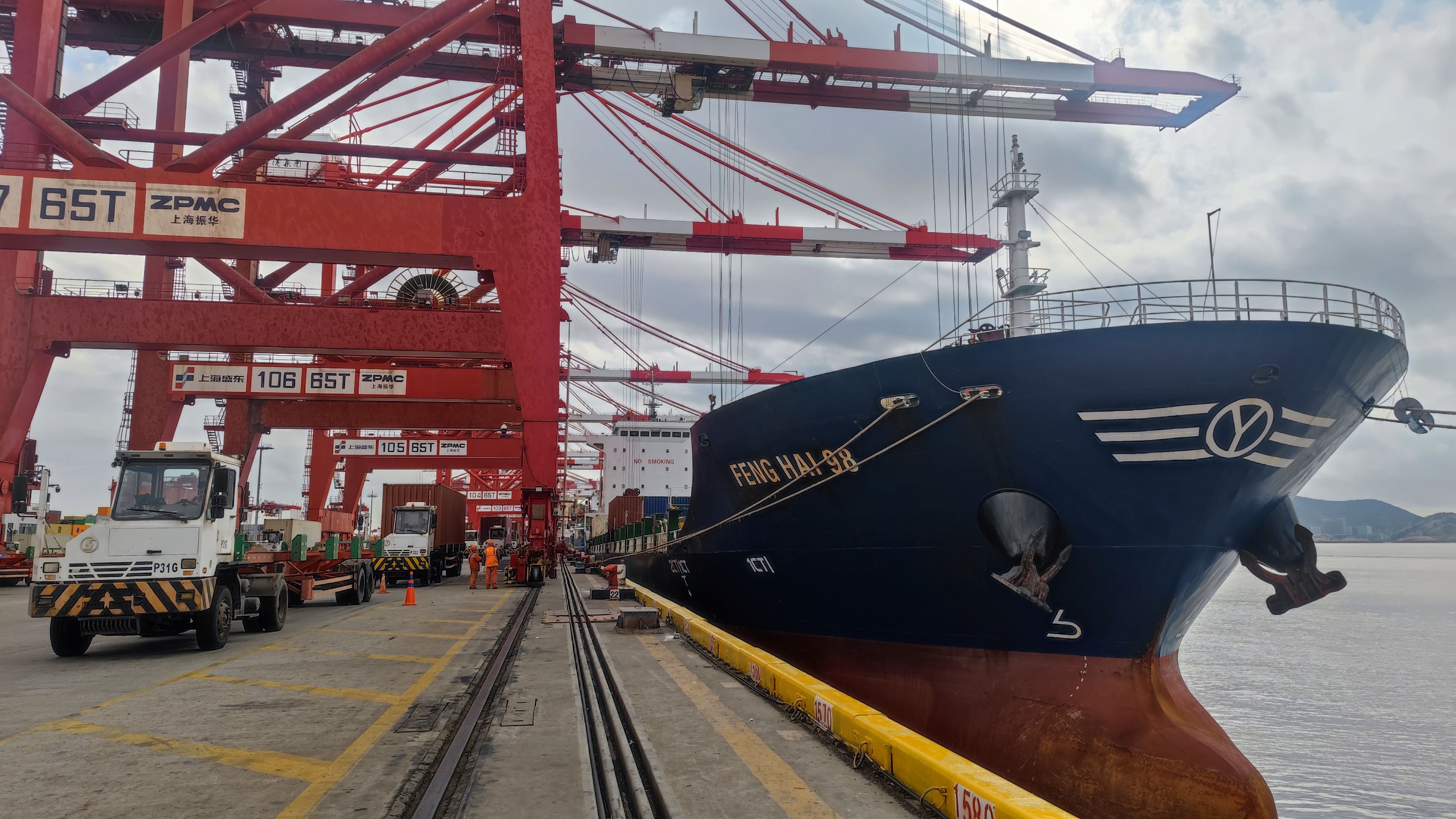
2025年洋山港口岸船舶靠港量和货物吞吐量将双双创下历史新高
Zhong Guo Xin Wen Wang· 2025-12-10 03:29
Core Insights - Yangshan Port is expected to achieve record highs in both ship arrivals and cargo throughput by 2025, marking its 20th anniversary of operation [1][3]. Group 1: Port Development and Capacity - Since its opening, Yangshan Port has expanded its deep-water shoreline to 7,950 meters and has installed over 104 ultra-large intelligent cranes, establishing a global shipping network with 105 international routes [3]. - The port has become a significant hub for global shipping companies, facilitating access to over 200 countries and regions [3]. Group 2: Performance Metrics - As of December 10, 2024, the Yangshan Border Inspection Station has inspected a cumulative total of 16,800 international vessels and over 4 million personnel since the port's inception [3]. - In 2024, the number of inspected international vessels is projected to exceed 10,000 for the first time, setting a new historical record [3]. - The total container throughput at Yangshan Port has reached 330 million TEUs since its opening, with a forecast of surpassing 26.0 million TEUs in 2024 [3]. Group 3: Trade Indicators - The port's performance serves as a barometer for China's international trade, with a 9.7% year-on-year increase in container throughput, totaling 26.25 million TEUs in the first 11 months of the year [4]. - The average daily number of international vessels arriving and departing from the port is around 30, with peak periods reaching approximately 40 vessels [4].
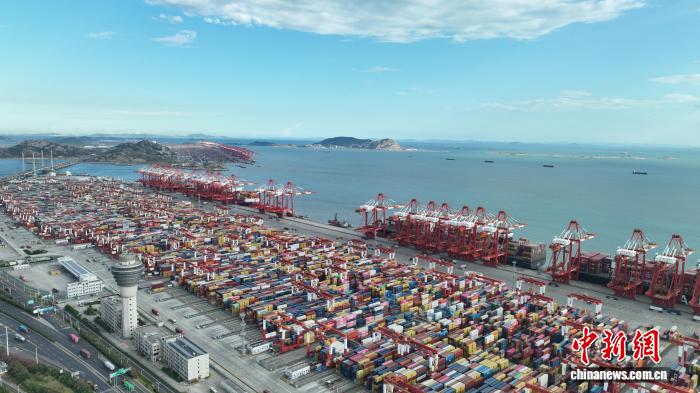
洋山一二三四期持续升级增能 小洋山北作业区正抓紧建设 上海港提前突破5000万标箱
Jie Fang Ri Bao· 2025-12-10 01:27
Core Insights - Shanghai Port achieved a container throughput of 50.56 million TEUs in the first 11 months of this year, marking a year-on-year increase of 6.7%, and is expected to set a new annual record, maintaining its position as the world's largest container port for 16 consecutive years [1] Group 1: Shanghai Port Performance - The Shanghai Yangshan Deep Water Port is the main contributor to this record, with a throughput of 26.25 million TEUs, reflecting a year-on-year increase of 9.7% [1] - The port's automation and intelligent systems are evolving, with new technologies such as "dual small vehicles and dual lifting devices" and a "digital twin" system that significantly reduce innovation costs and risks [1] Group 2: Future Developments - The Yangshan Phase IV terminal is expected to increase its throughput capacity from the designed 6.3 million TEUs to 7 million TEUs in 2024, with a target of reaching 8 million TEUs this year [2] - The Yangshan Phase I and II terminals are undergoing a major transformation to enhance operational efficiency through automation and intelligent systems, with full remote control of 20 container areas planned for completion by mid-2026 [2] Group 3: Infrastructure Expansion - The Yangshan Phase III terminal achieved a throughput of 9.215 million TEUs, up 11.2% year-on-year, and is recognized for its high service efficiency among major global shipping alliances [3] - The Xiaoyangshan North operation area is under construction, which will add 6,100 meters of new coastline to Shanghai Port, including 5,500 meters of container terminal shoreline and a designed annual throughput capacity of 11.6 million TEUs [3]
2025年中国港口航运行业市场研究报告
硕远咨询· 2025-12-09 14:15
Investment Rating - The report does not explicitly state an investment rating for the industry Core Insights - The Chinese port shipping industry has evolved significantly from its origins in the ancient Maritime Silk Road to a modernized sector driven by globalization and technological advancements [4] - Recent trends in the industry include the adoption of smart, green, and digital transformation practices, enhancing operational efficiency and safety [8] - The market is projected to grow, with total cargo throughput expected to exceed 2 billion tons by 2025, driven primarily by container shipping [20][21] Industry Overview - The Chinese port shipping industry has a rich history, with modernization accelerating since the 1980s due to reforms and foreign investment [4] - The industry is categorized into freight ports, passenger ports, and comprehensive ports, each serving different functions and market needs [10][11] - Shipping services are divided into bulk cargo, container, and liquid cargo transport, with container shipping being the dominant segment [12][16] Market Size and Structure Analysis - The overall market capacity is expected to reach over 2 billion tons in cargo throughput by 2025, with significant growth in value-added services [20] - The container shipping market is projected to reach over 30 million TEUs by 2025, while liquid cargo transport is also expanding due to the growth of the new energy and chemical industries [21][24] - Major ports like Shanghai and Ningbo-Zhoushan dominate the market, with Shanghai holding over 15% market share [25][27] Competitive Landscape Analysis - State-owned large port groups play a crucial role in the industry, supported by government policies and capital, driving modernization and internationalization [36] - Private and foreign port operators focus on market-driven operations and service innovation, enhancing competition [40] - Emerging and innovative companies are pushing for technological advancements in automation and green practices, contributing to the industry's evolution [41][43] Technology Development and Innovation Trends - The adoption of smart scheduling and logistics management systems is transforming port operations, enhancing efficiency and responsiveness [53] - IoT and big data technologies are being utilized for real-time monitoring and data collection, improving operational safety and efficiency [54][56] - The development of new energy vessels is becoming a key trend, promoting sustainability in the shipping industry [58] Future Development Suggestions and Strategic Planning - The industry should focus on green development and smart transformation, aligning with national carbon reduction goals [67] - Strengthening international cooperation and regional coordination among ports is essential for optimizing resource sharing and enhancing competitiveness [68] - Enhancing risk management and operational efficiency through advanced information systems will support sustainable growth in the industry [69]
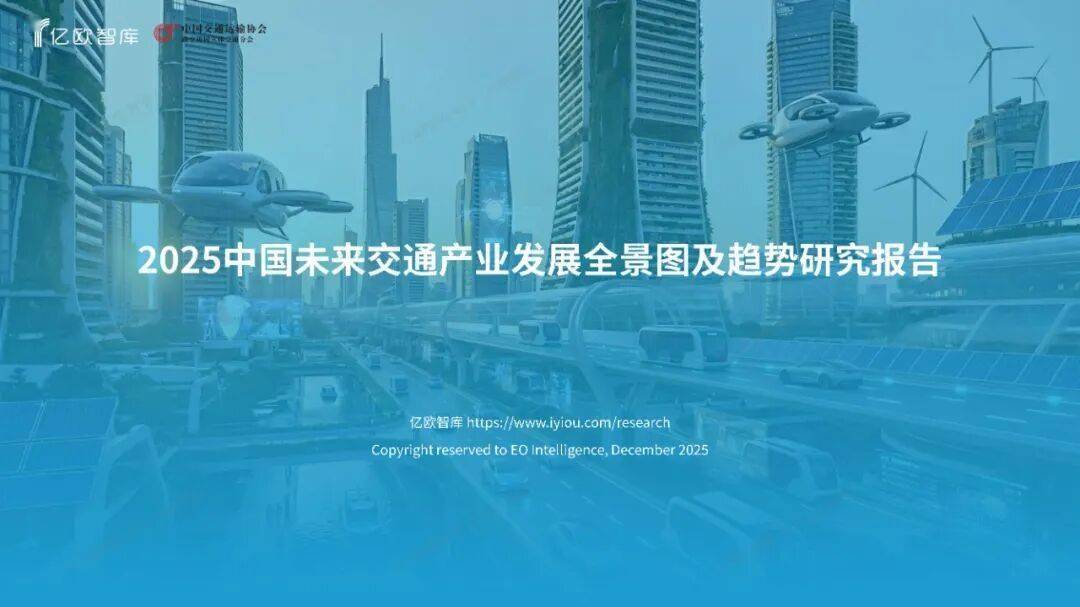
亿欧智库:2025中国未来交通产业发展全景图及趋势研究报告
Sou Hu Cai Jing· 2025-12-07 02:18
Core Insights - The report focuses on the transformation of airspace traffic under the low-altitude economy and the changes in waterway traffic driven by the wave of intelligence [1] Participants - The report mentions a wide range of companies across various fields, including low-altitude transportation (e.g., CITIC Offshore, XPeng Heavens), intelligent driving (e.g., Pony.ai, WeRide, Didi), waterway transportation (e.g., Shanghai Port Group, Ningbo-Zhoushan Port, China Shipbuilding Group), and technology or energy support (e.g., Huawei, ZTE, CATL, BYD) [1] Market Data - Traffic-related data from 2021 to 2027 shows growth from 48,400 to 68,300 (specific metrics and fields not defined) - The scale of China's smart ports is expected to reach $23.8 billion by 2030 - An additional figure of 12.8 billion corresponds to a 32% share (specific business scope not defined) [2] Airspace Traffic Transformation - The report analyzes airspace traffic transformation centered on the low-altitude economy, mentioning fixed-wing and other aircraft, but details on technical paths and application scenarios are sparse [3] Waterway Traffic Transformation - Upgraded scheduling models have been implemented in sections of the Yangtze River, achieving closed-loop management for vessel operations, reducing congestion and wait times - Automation scenarios have been demonstrated in multiple ports, including automated container handling and remote bridge cranes, with high feasibility in closed or semi-closed environments - Technical bottlenecks exist for high-level autonomous navigation of large merchant ships in open waters, lacking unified engineering standards and comprehensive risk assessment methods [4] Future Transportation Trends - The future of transportation in China is driven by AI, energy restructuring, and ecological integration, transitioning from simple equipment upgrades to a comprehensive reconstruction of the transportation system [11] - The transportation system will evolve into a three-dimensional ecosystem comprising road, air, and water, with a focus on L4 autonomous driving, eVTOL/unmanned aerial networks, and intelligent shipping [11] - The report emphasizes the importance of policies and strategic frameworks in shaping the future transportation landscape, moving towards a low-carbon, efficient, and safe transportation system [14]
连接中国腹地与上海港 让经济循环更加畅通——上海海铁联运首破百万标箱
Jie Fang Ri Bao· 2025-12-06 01:55
Core Insights - Shanghai's sea-rail intermodal transport has achieved a historic milestone, surpassing 1 million TEUs (Twenty-foot Equivalent Units) for the year, marking a nearly 20% year-on-year increase [1] - The integration of Shanghai port into the global supply chain is accelerating, with a focus on green, low-carbon, and intelligent transformation in logistics [1] - The Shanghai sea-rail intermodal network now connects over 40 cities across China, enhancing economic circulation [2] Group 1 - The Shanghai Lu Chao Port Container Center has undergone facility upgrades with over 200 million yuan invested, increasing its annual handling capacity from 500,000 TEUs to 1.2 million TEUs, with a single container handling time reduced to 3 minutes [1] - Daily operations of sea-rail intermodal trains have increased by 40% compared to the previous year, facilitated by adjustments in train schedules and optimization of locomotive operations [1] Group 2 - The forecast indicates that the volume of sea-rail intermodal transport in Shanghai is expected to exceed 1.09 million TEUs this year, representing a 15% year-on-year growth [2] - Future plans include increasing the frequency of trains to the Yangtze River Delta, Central Yangtze, and Midwest regions, as well as launching customized train services to attract more cargo from inland areas [2]
港口航运业持续健全运输通道体系,助力打造全球航运枢纽
Sou Hu Cai Jing· 2025-12-05 04:59
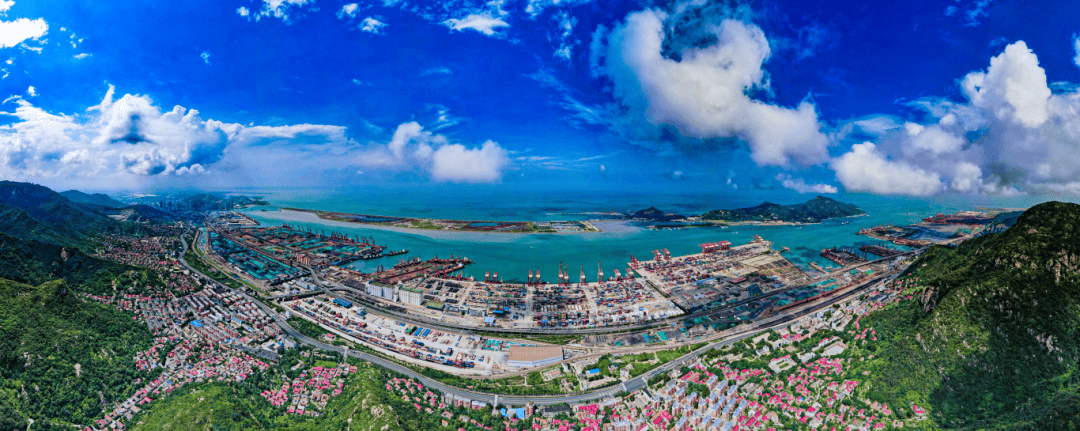
过去5年,我国国际航运能力持续增强。截至2024年,中国海运连接度连续19年保持世界第一,港口货物吞吐量、集装箱吞吐量连续多年位居世界第一; 2024年,我国国际海运量占全球海运量的31.3%;截至今年10月,中国已与70个国家和地区签署双多边海运协定。 《启航新征程 共谋"十五五"》报道之五 文 / 现代物流报记者 马敬泽 港口是连通我国内外循环的重要窗口,水路则是我国重要的交通动脉。过去5年,我国港口航运业深入践行交通强国建设要求,在基础设施、服务品质、 智慧绿色转型等领域实现跨越式发展。 (连云港港供图) 2025年,既是"十四五"规划的收官之年,也是"十五五"规划谋篇布局的关键节点。在这一关键历史交汇点,我国港口航运业正以固强补弱、创新驱动为抓 手,布局迈向社会主义现代化的下一个5年,朝着世界一流航运强国目标稳步前进。 "点线交织"提升国际影响力 持续打造国际物流通道体系,提升国际航运枢纽能级,不仅是我国扩大高水平对外开放,维护供应链安全的关键举措,也为我国港口航运业完善航线网 络,提升服务能力,增强国际影响力及竞争力奠定基础。 党的二十届四中全会审议通过的《中共中央关于制定国民经济和社会发展第十五个 ...
航运港口2025年11月专题:原油、干散货吞吐量承压,集装箱吞吐量高增
Xinda Securities· 2025-12-03 14:50
Investment Rating - The industry investment rating is "Positive" [2] Core Insights - The report highlights that the throughput of crude oil and dry bulk cargo is under pressure, while container throughput is experiencing significant growth [2][8] - From January to October 2025, the total import and export value reached 37.31 trillion yuan, a year-on-year increase of 3.6%, with exports growing by 6.2% [17] - Coastal major ports achieved a cargo throughput of 96.44 billion tons, up 3.5% year-on-year, with foreign trade cargo throughput at 41.91 billion tons, increasing by 3.6% [3][34] Summary by Sections 1. Overview: National Import and Export Total and Cargo Throughput - The total import and export value from January to October 2025 was 37.31 trillion yuan, with imports at 15.19 trillion yuan (flat year-on-year) and exports at 22.11 trillion yuan (up 6.2%) [17] - Coastal major ports' cargo throughput reached 96.44 billion tons, a 3.5% increase year-on-year, while foreign trade cargo throughput was 41.91 billion tons, up 3.6% [3][34] 2. Container: Container Shipping Rates and Throughput - As of November 28, 2025, the China Container Freight Index (CCFI) was at 1121.8 points, down 23.58% year-on-year, while the Shanghai Container Freight Index (SCFI) was at 1403.13 points, down 35.04% year-on-year [4][37] - From January to October 2025, container throughput at coastal major ports reached 25.908 million TEUs, a year-on-year increase of 6.6% [4][43] 3. Liquid Bulk: Oil Shipping Rates and Crude Oil Throughput - The Baltic Dirty Tanker Index (BDTI) was at 1452 points on November 28, 2025, reflecting a year-on-year increase of 62.78% [5][45] - Crude oil imports from January to October 2025 totaled 471 million tons, a 3.1% increase year-on-year, while the throughput at major crude oil receiving ports was 329 million tons, down 3.25% year-on-year [6][53] 4. Dry Bulk: Bulk Shipping Rates and Iron Ore, Coal Throughput - The Baltic Dry Index (BDI) was at 2560 points on November 28, 2025, up 89.07% year-on-year [7][55] - From January to October 2025, iron ore throughput at major ports reached 1.164 billion tons, a year-on-year increase of 3.45%, while coal throughput was 571 million tons, down 0.28% year-on-year [61][70] 5. Key Port Listed Companies Monthly Throughput - In October 2025, major port companies reported various throughput figures, with Shanghai Port Group achieving a cargo throughput of 0.49 billion tons and container throughput of 453.5 million TEUs [73]


