
中国财险

Search documents
终结高费用乱象,非车险“报行合一”落地
Hua Xia Shi Bao· 2026-01-13 13:37
Core Viewpoint - The non-auto insurance sector in China's property insurance market is evolving from a supplementary role to a primary growth driver, prompting regulatory changes to address irrational competition and ensure industry health [2][9]. Regulatory Changes - The China Banking and Insurance Regulatory Commission (CBIRC) has introduced significant documents in 2025 to enhance non-auto insurance regulation, applying the "reporting and operation in unison" principle previously effective in auto insurance [2][3]. - The recent issuance of the "Q&A on Comprehensive Governance of Non-Auto Insurance" provides detailed clarifications on policy execution, covering various aspects such as applicable insurance types, company classification, premium collection, and policy issuance timing [3][4]. Insurance Type Exclusions - Short-term health insurance and accident insurance are explicitly excluded from the non-auto insurance governance scope, recognizing their unique attributes [3][4]. - However, any health insurance that combines with property insurance must adhere to the "reporting and operation in unison" requirements, closing potential loopholes [3]. Company Classification - The regulatory framework categorizes companies into three groups based on market share: large companies (e.g., PICC, Ping An, Taikang), medium companies (e.g., China Life, Zhonghua United), and small companies [4][5]. - This classification allows for differentiated regulatory standards, providing smaller companies with a 5% higher buffer on premium rates compared to larger firms, facilitating their transition [4][5]. Premium Collection and Policy Issuance - The "reporting and operation in unison" principle aims to address high accounts receivable issues by ensuring that premium collection aligns with insurance liability timing [5][6]. - Specific provisions clarify that premiums collected by intermediaries do not count as "reporting and operation in unison," compelling insurers to regain control over premium collection [5][6]. Flexibility in Special Cases - The regulations allow for flexible recognition of payment methods in complex scenarios, such as accepting verifiable payment receipts for policy issuance [5][6]. - For public interest insurance using government funds, the strict "reporting and operation in unison" requirement is relaxed under certain conditions, ensuring continuity in policy-related services [6]. Market Dynamics and Company Strategies - The new regulations are expected to reshape the competitive landscape of the property insurance market, favoring large firms with strong capital and brand influence while posing challenges for smaller companies [7][9]. - Smaller companies must pivot towards specialization and differentiation rather than competing solely on price, as the regulatory environment discourages traditional scale-driven growth [7][8]. Shift in Industry Focus - The regulations encourage insurers to abandon the "scale-first" mentality, emphasizing value and efficiency over mere growth [8][9]. - Internal assessment metrics within companies are expected to shift focus from premium volume to compliance, quality, and customer satisfaction [8][9]. Long-term Implications - The comprehensive implementation of "reporting and operation in unison" is anticipated to enhance market transparency and accountability, ultimately fostering a healthier competitive environment [9][10]. - Experts believe that while short-term adjustments may be painful for some, the long-term benefits will include improved risk management and customer trust [10].


异动盘点0113 |黄金股多数走高,方舟健客早盘涨近40%;金山云大涨21.6%,爱芬奇跌17.69%
贝塔投资智库· 2026-01-13 04:05
Group 1 - The core viewpoint of the articles highlights significant movements in various sectors, particularly in gold and lithium stocks, driven by geopolitical risks and market dynamics [1][2][5]. - International spot gold prices have historically surpassed $4600 per ounce, influenced by rising geopolitical tensions and uncertainties surrounding Federal Reserve policies [1][2]. - Lithium stocks have seen a resurgence, with Tianqi Lithium and Ganfeng Lithium rising by 5.18% and 6.59% respectively, as lithium carbonate futures reached a new high of 170,000 yuan per ton [1][2]. Group 2 - Insurance stocks performed strongly, with China Ping An, China Pacific Insurance, China Life, and New China Life all experiencing gains between 2.04% and 2.51% [2]. - Gold-related stocks also rose, with China Gold International up 7.72% and Lingbao Gold up 6.35%, reflecting increased safe-haven demand as gold prices hit record highs [2]. - The cement sector saw gains, with Jinju Group rising nearly 5% following the announcement of key construction projects in Hebei province [2]. Group 3 - Biopharmaceutical stocks, particularly WuXi AppTec and Tigermed, saw significant increases, with WuXi AppTec rising 6.86% after announcing a projected revenue of 45.456 billion yuan for the year, a 15.84% increase year-on-year [4]. - Ark Health's stock surged nearly 40% after launching an "AI + chronic disease management" solution in collaboration with Tencent Health, marking a new phase in chronic disease management [4]. - In the U.S. market, the Nasdaq China Golden Dragon Index rose over 3%, with notable gains in Chinese concept stocks like Zhihu and Kingsoft Cloud, driven by advancements in AI applications [5][6].

低利率期间红利策略的性价比相对较高,港股通红利低波ETF基金(159118)迎配置良机
Mei Ri Jing Ji Xin Wen· 2026-01-13 03:00
Core Viewpoint - The insurance stocks in Hong Kong experienced a general rise, with the Hong Kong Stock Connect Low Volatility Dividend ETF (159118) showing an increase of over 1% after opening, driven by leading stocks such as Henderson Land, China Pacific Insurance, Global Medical, and CNOOC [1] Group 1: Market Trends - The economic slowdown is making it increasingly difficult to find companies with sustained high growth, leading investors to prefer assets with higher certainty, which benefits dividend strategies [1] - Dividend strategies exhibit "bond-like" characteristics, making them more attractive during periods of low interest rates [1] Group 2: ETF Performance - The Hong Kong Stock Connect Low Volatility Dividend ETF (159118) closely tracks the S&P Hong Kong Stock Connect Low Volatility Dividend Index, with a focus on large-cap value stocks [1] - The top three sectors represented in the ETF are real estate, public utilities, and banking, with the top ten constituent stocks covering high-dividend targets across multiple industries [1] - The ETF offers low fees (management and custody fees only 0.2%) and high efficiency (T+0 trading), facilitating a one-click investment in Hong Kong stocks, dividends, and low volatility [1]
港股内险股表现强势 中国平安涨2.85%
Mei Ri Jing Ji Xin Wen· 2026-01-13 02:36
Core Viewpoint - The Hong Kong insurance stocks are showing strong performance, with notable increases in share prices for major companies in the sector [1] Company Performance - China Ping An (02318.HK) increased by 2.85%, reaching HKD 70.45 [1] - China Pacific Insurance (02328.HK) rose by 2.52%, reaching HKD 16.66 [1] - China Life Insurance (02628.HK) saw a rise of 2.32%, with shares priced at HKD 32.62 [1] - New China Life Insurance (01336.HK) increased by 2.14%, with shares at HKD 62.15 [1]


内险股表现强势 2026年开门红数据超预期 到期存款有望向保险配置转移
Zhi Tong Cai Jing· 2026-01-13 02:33
Core Viewpoint - The strong performance of insurance stocks is driven by better-than-expected data for the 2026 New Year sales, with leading insurance companies showing significant growth in new policies [1] Group 1: Stock Performance - China Ping An (601318) rose by 2.85% to HKD 70.45 [1] - China Pacific Insurance (02328) increased by 2.52% to HKD 16.66 [1] - China Life (601628) saw a rise of 2.32% to HKD 32.62 [1] - New China Life (601336) grew by 2.14% to HKD 62.15 [1] Group 2: Market Drivers - Huaxi Securities reported that the strong performance in new policy sales during the 2026 New Year period, with some leading insurers showing over 70% year-on-year growth in new policies, is a direct catalyst for the current rise in insurance stocks [1] - The low base from the previous year contributes to the strong momentum observed in the leading insurance companies this year [1] Group 3: Investment Trends - Insurance products are expected to attract part of the funds from savings due to their relative yield advantages [1] - Concerns regarding interest margin losses have significantly eased, leading to a gradual elimination of valuation pressures on the sector [1] Group 4: Future Projections - Guojin Securities anticipates that the shift of bank insurance will drive high growth in new policies and new business value (NBV) in 2026 [1] - Since 2020, residents have increased their precautionary savings, with new deposits consistently exceeding CNY 10 trillion, particularly in 2021, 2023, and 2024, with new deposits of CNY 9.9 trillion, CNY 16.67 trillion, and CNY 14.26 trillion respectively [1] - A significant portion of these high-interest deposits is expected to mature in 2026, with a potential shift of funds towards insurance products amid declining deposit rates and a shortage of medium to long-term deposit supply [1]


港股异动 | 内险股表现强势 2026年开门红数据超预期 到期存款有望向保险配置转移
智通财经网· 2026-01-13 02:31
Core Viewpoint - The strong performance of Chinese insurance stocks is driven by better-than-expected data for the 2026 New Year sales, with leading insurers showing significant growth in new policies [1] Group 1: Stock Performance - China Ping An (02318) increased by 2.85%, reaching HKD 70.45 [1] - China Pacific Insurance (02328) rose by 2.52%, reaching HKD 16.66 [1] - China Life Insurance (02628) gained 2.32%, reaching HKD 32.62 [1] - New China Life Insurance (01336) increased by 2.14%, reaching HKD 62.15 [1] Group 2: Market Drivers - Huaxi Securities reported that leading insurers saw a more than 70% year-on-year increase in new policy sales over the first three days of 2026, supported by a low base from the previous year [1] - The insurance sector is expected to attract part of the funds from savings due to the relative yield advantage of insurance products [1] - Concerns over interest margin losses have eased, gradually eliminating valuation pressures on the sector [1] Group 3: Future Growth Potential - Guojin Securities indicated that the shift of bank insurance is expected to drive high growth in new policies and new business value (NBV) in 2026 [1] - Since 2020, household savings have increased significantly, with new deposits consistently exceeding CNY 10 trillion, including CNY 9.9 trillion in 2021, CNY 16.67 trillion in 2023, and CNY 14.26 trillion in 2024 [1] - A significant portion of these early high-interest deposits is expected to mature in 2026, with two-thirds of 2/3/5-year deposits likely to shift towards insurance investments amid declining deposit rates and a shortage of medium to long-term deposit supply [1]
人保财险:热血奉献践初心 金融护航守民生
Jin Rong Jie Zi Xun· 2026-01-13 01:31
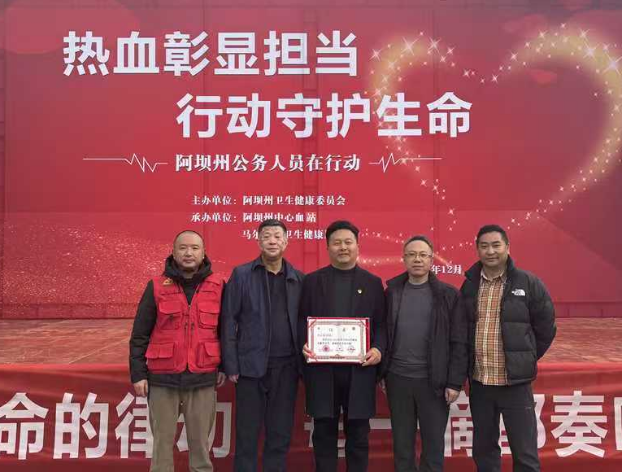
Core Viewpoint - The article emphasizes the commitment of China People's Insurance Company (PICC) to volunteer service and social responsibility, aligning with the directives from the 20th Central Committee and the 2025 Central Economic Work Conference to enhance public welfare and improve people's livelihoods [1][2]. Group 1: Volunteer Spirit and Community Engagement - PICC volunteers embody the spirit of "dedication, friendship, mutual assistance, and progress," actively delivering warmth and care to various community needs [1]. - Retired employee Hou Zhirong from PICC Sichuan Aba branch has dedicated 18 years to blood donation, saving over 20 lives, and received the "Blood Donation Contribution Gold Award" for his efforts [2][4]. - Young volunteer Xiong Dong from PICC Guizhou donated hematopoietic stem cells, successfully matching with a patient, showcasing the impact of volunteerism in life-saving initiatives [4][6]. Group 2: Financial Safety and Public Awareness - PICC volunteers play a crucial role in enhancing public safety and financial security, particularly targeting vulnerable groups like the elderly to prevent financial fraud [6][7]. - The "Qing Qibing" volunteer service team in Shenzhen effectively engages the community through interactive games to educate residents about fraud prevention, reaching over 30,000 individuals [7][9]. - In Qingdao, the "Financial Consumer Protection Volunteer Service Team" conducts workshops for elderly residents, teaching them to identify scams and ensuring financial literacy tailored to their understanding [9][10]. Group 3: Commitment to Social Responsibility - Over the past three years, nearly 60,000 PICC employees have participated in volunteer services, benefiting over 1.6 million people, demonstrating the company's dedication to fulfilling its social responsibilities [12]. - PICC aims to integrate volunteer services with the improvement of people's livelihoods, establishing a volunteer service system that meets the needs of the new era and contributes to China's modernization efforts [12].
报行合一”重塑财险半壁江山 五千亿非车险告别“野蛮生长
2 1 Shi Ji Jing Ji Bao Dao· 2026-01-13 00:52
Core Viewpoint - The rapid growth of China's non-auto insurance sector, with an average annual growth rate exceeding 10% over the past decade, has led to high costs and irrational competition, prompting regulatory measures to reshape the market dynamics towards risk pricing and service capability [2][3][12]. Group 1: Industry Growth and Challenges - Non-auto insurance premiums accounted for over 50% of total premiums, with a significant increase in the average annual growth rate of 14.4% from 2014 to 2024, compared to 5.2% for auto insurance [3][12]. - Major insurance companies, including PICC, Ping An, and Taiping, have reported that their average non-auto insurance comprehensive cost ratio has remained above 100% since 2019, indicating underwriting losses primarily offset by auto insurance profits [4][12]. - The industry faces challenges such as high expense levels, inadequate premium sufficiency, persistent underwriting losses, and high accounts receivable [2][3]. Group 2: Regulatory Measures - The China Banking and Insurance Regulatory Commission (CBIRC) has issued several notifications and guidelines to address irrational competition and high costs in the non-auto insurance sector, including the recent "Questions and Answers on Comprehensive Governance of Non-Auto Insurance" [2][4][12]. - The new regulations emphasize the principle of "reporting and operating in unison," requiring insurance companies to strictly adhere to approved insurance terms and rates, thereby enhancing market behavior regulation [4][11]. - The regulations aim to reduce the emphasis on premium scale and growth, shifting the focus towards compliance, quality, and consumer rights protection [6][12]. Group 3: Company Responses - Leading insurers like PICC, Ping An, and Taiping have proactively initiated product term filings and cost governance in response to regulatory changes, indicating a strong commitment to compliance [6][7]. - Companies are restructuring their business models to transition from cost competition to risk pricing and service capability, with a focus on enhancing internal management and product innovation [7][8]. - Smaller insurers are encouraged to focus on niche markets and specialized products to differentiate themselves and build competitive advantages [15][16]. Group 4: Market Dynamics and Future Outlook - The implementation of the "reporting and operating in unison" policy is expected to compress some business operations in the short term but will ultimately lead to a more sustainable competitive environment based on risk identification and service quality [10][12]. - The regulatory framework aims to clarify responsibilities and streamline processes, pushing the market towards a more structured and compliant operational model [10][11]. - The anticipated market concentration will favor larger, well-managed companies, while smaller firms may need to adapt by focusing on specialized areas to survive [15][16].



“报行合一”重塑财险半壁江山 五千亿非车险告别“野蛮生长”
2 1 Shi Ji Jing Ji Bao Dao· 2026-01-12 11:57
Core Insights - The non-auto insurance sector in China has experienced an average annual growth rate exceeding 10% over the past decade, with premiums now accounting for over 50% of total insurance premiums, but this growth has been driven by high costs rather than sustainable practices [1][2] - The National Financial Regulatory Administration has issued several guidelines to address irrational competition and high costs in the non-auto insurance sector, aiming to shift the focus from price wars to risk pricing and service capabilities [1][4][9] Industry Growth and Trends - Non-auto insurance premiums have grown at an average annual rate of 14.4% from 2014 to 2024, significantly outpacing the 5.2% growth rate of auto insurance [2] - By mid-2025, the total insurance premium income in the property insurance industry is projected to reach 965.4 billion yuan, with non-auto insurance contributing 514.9 billion yuan, surpassing 50% of the total [2] Regulatory Changes - The recent regulatory measures include the "reporting and operation unity" policy, which mandates that insurance companies adhere strictly to approved insurance terms and rates, aiming to eliminate high fees that do not correspond to services provided [3][4][6] - The new regulations are expected to compress some business operations in the short term but will ultimately reshape the competitive landscape by emphasizing risk assessment and service quality [9][10] Company Responses - Major insurance companies like PICC, Ping An, and Taikang have begun to implement changes in response to the new regulations, focusing on compliance and optimizing their cost structures [5][7][8] - Companies are restructuring their business models to transition from fee-based competition to risk pricing and service capability enhancement [7][10] Market Dynamics - The regulatory changes are anticipated to accelerate industry differentiation, with larger firms solidifying their competitive advantages while smaller firms may struggle to adapt [15][16] - The new policies may lead to a concentration of market power among larger firms, but they also provide a buffer for smaller companies to transition and innovate within niche markets [16][17] Future Outlook - The shift towards a more regulated and quality-focused market is expected to enhance the sustainability of the non-auto insurance sector, fostering a competitive environment based on risk management and service excellence [10][12] - Smaller companies are encouraged to focus on specialized markets and innovative products to establish competitive advantages, rather than competing directly with larger firms [17][18]
行业研究|行业周报|投资银行业与经纪业:政策持续净化资本市场生态,建议重视板块业绩高增长预期-20260112
Changjiang Securities· 2026-01-12 08:12
Investment Rating - The report maintains a "Positive" investment rating for the non-bank financial sector [7] Core Insights - The non-bank sector has shown strong performance this week, with brokers experiencing increased trading activity while maintaining historical highs. The insurance sector is expected to see improved long-term ROE and valuation recovery, indicating a rising cost-effectiveness for overall allocation [2][4] - Recommendations include stable profit growth and dividend rates for Jiangsu Jinzu, high dividend yield for China Ping An, and companies with strong business models and market positions like China Pacific Insurance. Additional recommendations include New China Life, China Life, Hong Kong Stock Exchange, CITIC Securities, Dongfang Caifu, Tonghuashun, and Jiufang Zhitu Holdings based on performance elasticity and valuation levels [4] Market Performance - The non-bank financial index increased by 2.6% this week, with a year-to-date performance of 2.6%, ranking 21 out of 31 sectors. The average daily trading volume in the two markets reached 28,519.51 billion yuan, up 34.00% week-on-week, with a daily turnover rate of 2.77%, up 61.14 basis points [5][15] - The market has seen a recovery in trading activity, with the Shanghai Composite Index rising by 5.11% and the bond index declining by 0.23%. Long-term interest rates have increased, with the 10-year government bond yield rising by 3.09 basis points to 1.8782% [5][39] Insurance Sector Overview - In November 2025, the cumulative premium income reached 57,629 billion yuan, a year-on-year increase of 7.56%. Life insurance premiums increased by 9.06%, while property insurance premiums rose by 3.88% [19][20] - The total assets of insurance companies reached 40.65 trillion yuan, with life insurance companies holding 35.75 trillion yuan, reflecting a stable asset allocation with a slight decrease in deposit proportions and an increase in bond and equity fund allocations [25][26] Brokerage and Investment Business - The brokerage business has seen a recovery in trading volumes, with a two-market average daily trading volume of 28,519.51 billion yuan, indicating a gradual recovery in profitability as commission rates stabilize [40] - The investment business has also rebounded, with the Shanghai Composite Index increasing by 2.79% and the ChiNext Index by 3.89%. The proportion of equity investments in brokerage assets is approximately 10%-30%, while bond investments account for 70%-90% [44] Financing Activities - In December 2025, equity financing reached 663.12 billion yuan, a 30.9% increase, while bond financing totaled 7.34 trillion yuan, up 4.0%. This indicates a positive trend in financing activities, with expectations for increased stock underwriting in the future [51] - The asset management sector saw a rebound in new issuance, with 61.14 billion units issued in December, a 39.0% increase compared to previous months [53]