
光大证券

Search documents
A股1月强势收官!指数市值双升,春季行情获券商看好
Huan Qiu Wang· 2026-02-01 02:53
Market Overview - The A-share market started the year positively with all major indices showing gains, leading to a significant increase in market activity and a total market capitalization surge of over 6 trillion yuan in January [1][3] - As of January 30, the three major indices, the Shanghai Composite Index, Shenzhen Component Index, and ChiNext Index, recorded monthly increases of 3.76%, 5.03%, and 4.47% respectively, indicating a robust upward trend [3] Market Capitalization - By the end of January, the total market capitalization of A-shares reached 125.21 trillion yuan, reflecting a substantial increase of 6.3 trillion yuan compared to the end of the previous year, showcasing a significant recovery in market confidence and increased capital activity [3] Sector Performance - In January, a clear structural market trend emerged, with most of the 31 sectors in the Shenwan classification showing gains. The metals sector led with a monthly increase of 22.59%, followed by media and oil & petrochemicals with increases of 17.94% and 16.31% respectively [3] - Other sectors such as construction materials, basic chemicals, and electronics also saw gains exceeding 10%, demonstrating strong upward momentum [3] Analyst Insights - Multiple brokerages have expressed optimism regarding the continuation of the spring market rally. For instance,招商证券 highlighted the strong performance of resource prices and TMT sectors driven by AI trends, suggesting a focus on cyclical and technology sectors for February [4] -国信证券 noted that the current market liquidity remains relatively abundant, and despite significant net redemptions in broad-based ETFs, there is still active subscription in sector and thematic ETFs, indicating ongoing investor interest [4] -光大证券 also anticipates further positive developments in both policy and fundamentals, recommending a focus on growth sectors such as humanoid robots, AI, gaming, and film during the upcoming spring market [5]


【固收】本周有所下跌——可转债周报(2026年1月26日至2026年1月30日)(张旭)
光大证券研究· 2026-02-01 00:04
以下文章来源于债券人 ,作者光大证券固收研究 债券人 . 唯有进行扎实的基本面研究,方能行稳致远。 点击注册小程序 查看完整报告 特别申明: 本订阅号中所涉及的证券研究信息由光大证券研究所编写,仅面向光大证券专业投资者客 户,用作新媒体形势下研究信息和研究观点的沟通交流。非光大证券专业投资者客户,请勿 订阅、接收或使用本订阅号中的任何信息。本订阅号难以设置访问权限,若给您造成不便, 敬请谅解。光大证券研究所不会因关注、收到或阅读本订阅号推送内容而视相关人员为光大 证券的客户。 分评级来看,债项评级高评级券(评级为AAA)、中高评级券(评级为AA+)、中评级券(评级为 AA)、中低评级券(评级为AA-)和低评级券(评级为AA-及以下)本周涨跌幅分别为-0.81%、-1.48% 、-1.51%、-1.87%、-2.81%,高评级券跌幅最低。 分转债规模看,大规模转债(债券余额大于20亿元)、中大规模转债(余额在15至20亿元之间)、中规模 转债(余额在10至15亿元之间)、中小规模转债(余额在5至10亿元之间)、小规模转债(余额小于5亿 元)本周涨跌幅分别为-1.42%、-1.59%、-1.93%、-1.49% ...

钛和检测认证集团股份有限公司向港交所提交上市申请书
Mei Ri Jing Ji Xin Wen· 2026-01-30 15:13
每经AI快讯,1月30日,港交所显示,钛和检测认证集团股份有限公司向港交所提交上市申请书,独家 保荐人为光大证券国际。 ...
北水动向|北水成交净买入32.22亿 石药集团宣布重磅BD交易 北水抢筹超9亿港元
Zhi Tong Cai Jing· 2026-01-30 11:19
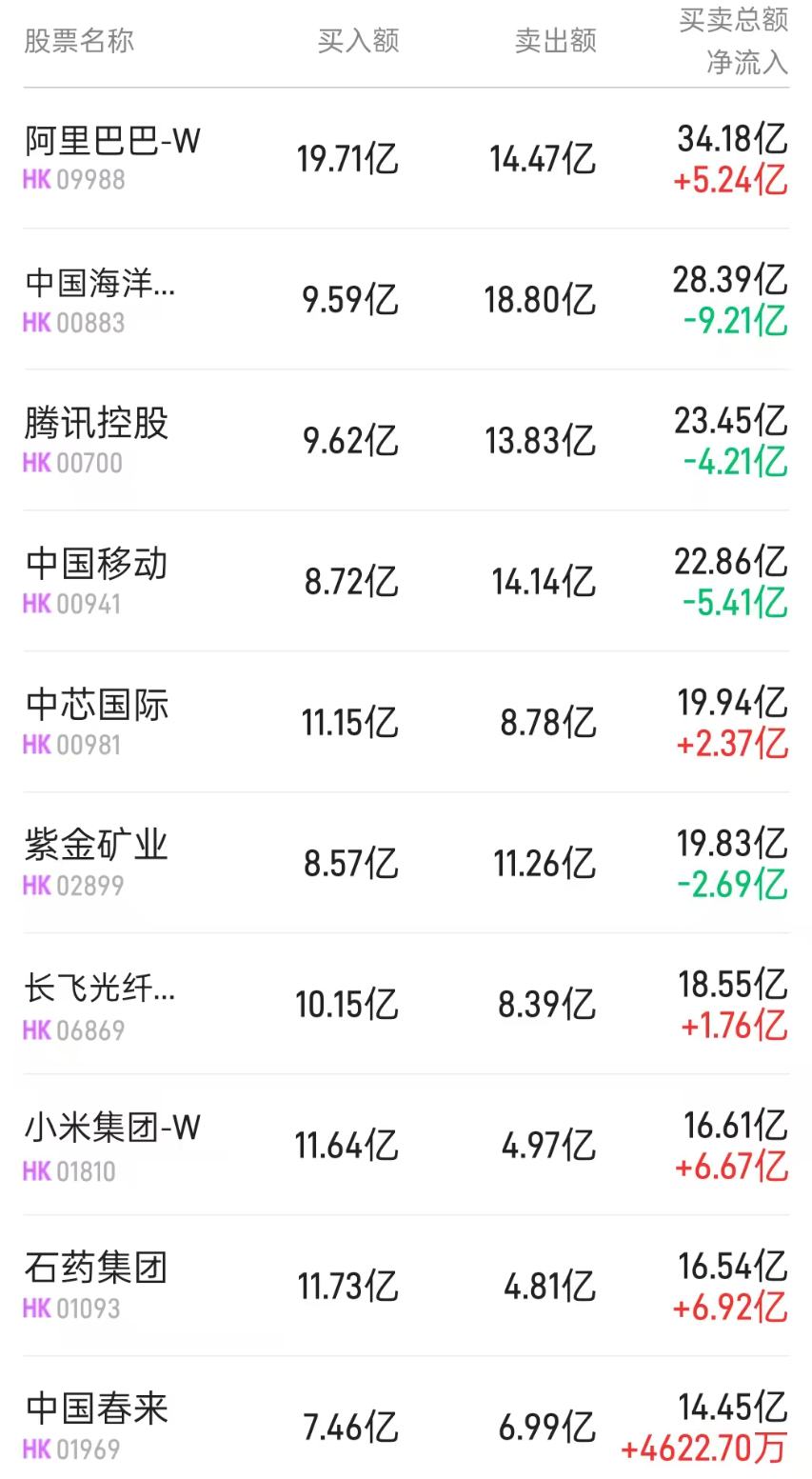
Group 1: Market Overview - The Hong Kong stock market saw a net inflow of 32.22 billion HKD from northbound trading, with 20.39 billion HKD from Shanghai and 11.83 billion HKD from Shenzhen [1] - The most bought stocks included CSPC Pharmaceutical Group (01093), Xiaomi Group-W (01810), and the Tracker Fund of Hong Kong (02800) [1] Group 2: Notable Stock Transactions - CSPC Pharmaceutical Group (01093) received a net inflow of 9.36 billion HKD, following a strategic cooperation agreement with AstraZeneca for the development of innovative long-acting peptide drugs, potentially worth up to 18.5 billion USD [4] - The Tracker Fund of Hong Kong (02800) saw a net inflow of 5.89 billion HKD, with positive market sentiment driven by earnings recovery, improved liquidity, low valuations, and policy support [5] - Alibaba Group-W (09988) had a net inflow of 3.29 billion HKD, as it launched a high-end AI chip, enhancing its position in the AI technology sector [5] - Longi Green Energy Technology (06869) experienced a net inflow of 2.41 billion HKD, driven by strong demand for AI infrastructure and optical communication upgrades [5] Group 3: Stocks with Significant Net Outflows - Shandong Gold (01787) and Zijin Mining (02899) faced net outflows of 2.06 billion HKD and 6.35 billion HKD respectively, amid significant volatility in the precious metals market [7] - Semiconductor manufacturer SMIC (00981) saw a net outflow of 545.8 million HKD, with limited impact expected from the approval of H200 chips for the domestic market [7] - Xiaomi Group-W (01810) had a net inflow of 9.14 billion HKD, while China Mobile (00941) and CNOOC (00883) faced net outflows of 5.41 billion HKD and 5.25 billion HKD respectively [7]



证券板块1月30日跌1.59%,华安证券领跌,主力资金净流出23.74亿元
Zheng Xing Xing Ye Ri Bao· 2026-01-30 09:00
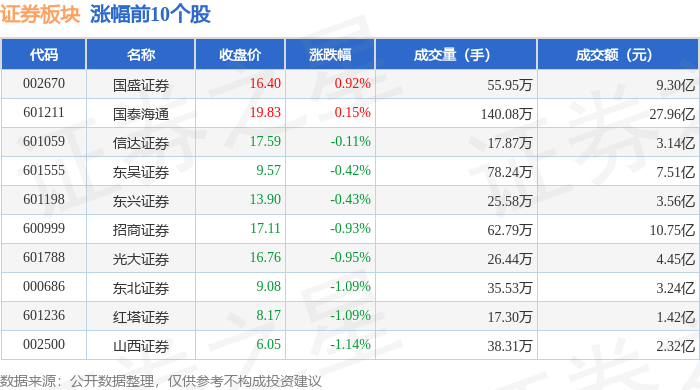
Market Overview - The securities sector experienced a decline of 1.59% on January 30, with Huazhong Securities leading the drop [1] - The Shanghai Composite Index closed at 4117.95, down 0.96%, while the Shenzhen Component Index closed at 14205.89, down 0.66% [1] Individual Stock Performance - Notable declines included Huazhong Securities, which fell by 6.90% to a closing price of 7.15, with a trading volume of 1.932 million shares and a turnover of 1.388 billion [2] - Other significant declines included Hualin Securities down 4.07% and Changjiang Securities down 3.67% [2] - In contrast, Tusheng Securities saw a slight increase of 0.92%, closing at 16.40 [1] Capital Flow Analysis - The securities sector saw a net outflow of 2.374 billion from institutional investors, while retail investors contributed a net inflow of 739 million [2] - The data indicates that speculative funds had a net inflow of 1.635 billion [2] Detailed Capital Flow by Stock - CITIC Securities had a net inflow of 168 million from institutional investors, while it faced a net outflow of 206 million from speculative funds [3] - Dongwu Securities experienced a net inflow of 26.088 million from institutional investors, but a net outflow of 63.284 million from retail investors [3] - The overall trend shows that while institutional investors are pulling back, retail investors are still actively participating in the market [2][3]





光大证券净资本减少,关键管理人员半年报酬1007万元
Xin Lang Cai Jing· 2026-01-30 08:33
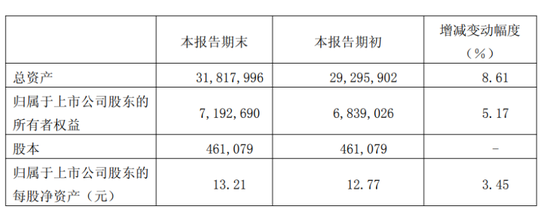
过去一年,光大证券董事长赵陵鲜少露面参加公开活动。 他变得更加低调,专注于光大证券的内部事务发展。 2022年,赵陵成为"救火队长",空降光大证券担任董事长一职,一直在处理风险事件后遗症、高管震荡 等问题。 这几年,光大证券规模、盈利都不算特别亮眼。 炒股就看金麒麟分析师研报,权威,专业,及时,全面,助您挖掘潜力主题机会! 文/瑞财经 许淑敏 | | 本报告期末 | 本报告期初 | 增减变动幅度 | | --- | --- | --- | --- | | | | | (%) | | 总资产 | 31, 817, 996 | 29, 295, 902 | 8.61 | | 归属于上市公司股东的 | 7. 192, 690 | 6,839, 026 | 5.17 | | 所有者权益 | | | | | 股本 | 461, 079 | 461, 079 | | | 归属于上市公司股东的 | 13. 21 | 12. 77 | 3.45 | | 每股净资产(元) | | | | 二是光大证券终于回归营收、净利双涨的状态。 2022年-2024年,光大证券营收增幅分别为-35.48%、-6.94%、-4.32%,归母净 ...
苹果表示先进制程芯片短缺影响供应,科创半导体ETF(588170)、半导体设备ETF华夏(562590)盘中翻红
Mei Ri Jing Ji Xin Wen· 2026-01-30 06:36
截至2026年1月30日14:07,上证科创板半导体材料设备主题指数上涨0.81%,成分股华峰测控上涨 16.16%,耐科装备上涨7.65%,华海诚科上涨5.98%,兴福电子上涨4.95%,富创精密上涨3.17%。科创 半导体ETF(588170)上涨0.61%,最新价报1.82元。流动性方面,科创半导体ETF盘中换手10.68%,成 交8.91亿元,市场交投活跃。 截至2026年1月30日14:08,中证半导体材料设备主题指数上涨0.64%,成分股华峰测控上涨15.5%,珂玛 科技上涨6.43%,华海诚科上涨6.27%,富创精密上涨3.45%,中晶科技上涨3.41%。半导体设备ETF华 夏(562590)上涨0.46%,最新价报1.95元。流动性方面,半导体设备ETF华夏盘中换手6.34%,成交 1.88亿元。 光大证券认为,随着制程节点不断向先进化演进,芯片线宽持续缩小、结构复杂度显著提升,使得制造 过程对外来污染的容忍度大幅下降。在先进制程中,极少量的杂质或颗粒就可能对芯片性能和良率造成 明显影响,因此对电子化学品的纯度、稳定性和一致性提出了更高要求。相比成熟制程,先进制程更强 调超低金属杂质、极低颗粒 ...

上海季丰电子股份有限公司启动上市辅导
Jing Ji Guan Cha Wang· 2026-01-30 06:33
经济观察网证监会网站显示,上海季丰电子股份有限公司2026年1月30日向上海证监局办理辅导备案登 记,辅导机构为光大证券股份有限公司。 ...
光期黑色:铁矿石基差及价差监测日报-20260130
Guang Da Qi Huo· 2026-01-30 04:12
光期研究 光期黑色:铁矿石基差及价差监测日报 2026 年 1 月 3 0 日 1 光大证券 2020 年 半 年 度 业 绩 E V E R B R I G H T S E C U R I T I E S 1.1 合约价差 | 期货合约 | 今日收盘价 | 上日收盘价 | 变化 | 合约价差 | 今日价差 | 上日价差 | 变化 | | --- | --- | --- | --- | --- | --- | --- | --- | | I05 | 798.5 | 783.0 | 15.5 | I05-I09 | 19.5 | 18.5 | 1.0 | | I09 | 779.0 | 764.5 | 14.5 | I09-I01 | 13.5 | 12.0 | 1.5 | | I01 | 765.5 | 752.5 | 13.0 | I01-I05 | -33.0 | -30.5 | -2.5 | 图表1:05-09合约价差(单位:元/吨) 图表2:09-01合约价差(单位:元/吨) -50 0 50 100 150 200 09 10 10 10 11 11 12 12 01 01 02 02 03 03 ...
交易退潮 配置当道:债市薄利让中小银行被迫转身
Zhong Guo Zheng Quan Bao· 2026-01-29 20:59
Core Insights - The bond investment strategies of small and medium-sized banks are shifting from capital gains to a focus on stable coupon income due to narrowing yields and limited risk management tools [1][2][3] - Banks are adopting a strategy of shortening duration, controlling positions, and focusing on short-term bonds, which reflects a broader trend affecting the entire bond market's funding structure [1][2] Group 1: Investment Strategy Adjustments - Many banks are strictly limiting long-duration trades and primarily investing in short-duration bonds while selectively using leverage [2] - Some banks have maintained their duration but reduced trading volumes, opting for other assets like deposits and interbank certificates during periods of inactivity [2] - The overall strategy has shifted towards a balanced approach due to internal profit pressures and market volatility, with state-owned banks enhancing trading attributes while rural commercial banks significantly reduce bond market allocations [2][3] Group 2: Market Conditions and Challenges - The bond market is characterized by limited returns, with the ten-year government bond yield expected to fluctuate within a narrow range of 30 basis points in 2025, leading to reduced coupon income [3] - Most small and medium-sized banks lack risk hedging tools, making them vulnerable to market fluctuations, as they do not have the qualifications for derivative trading [3][4] - The reliance on adjusting cash positions rather than utilizing sophisticated risk management tools has led to a cycle of forced selling during downturns and missed opportunities during upswings [4] Group 3: Asset Allocation Trends - There is a clear stratification in bond asset allocation among different types of banks, with state-owned banks being the primary holders of government bonds, reflecting their focus on asset safety and liquidity [6] - Joint-stock banks and city commercial banks have similar holding structures, primarily investing in government and local bonds, while rural commercial banks maintain a higher proportion of financial and credit bonds in pursuit of better yields [6] - The pressure to achieve profit targets often leads to a shift of funds into financial markets when credit lending falls short, but the subdued bond market limits the potential returns on these investments [6] Group 4: Future Outlook - The ten-year government bond yield has decreased from approximately 2.82% at the beginning of 2023 to 1.68% by the end of 2024, resulting in significant floating profits for banks [7] - As net interest margins continue to narrow and bond risk-reward ratios decline, banks are increasingly pressured to realize floating profits to secure returns [7] - If a rate cut window opens in 2026, the pressure to realize floating profits may ease as the bond market enters a phase of declining interest rates [7]