宝钢股份

Search documents
部长谈 | 曾杰:强基固本谋长远 数智赋能谱新篇
Xin Lang Cai Jing· 2026-01-27 12:24
(来源:中国宝武) 邂逅 · 3502 期 · 11964 篇 编者按 1月15日至16日,中国宝武党委二届二次全委(扩大)会、二届四次职代会暨2026年度工作会议胜利召开。宝武党委书记、董事长胡望明作党委工作报 告。总经理侯安贵作工作报告。会议报告高屋建瓴、总揽全局,既充分回顾肯定了"十四五"期间取得的成果,又对抓好"十五五"工作提出了明确要求和殷 切希望。 为深入学习领会、全面贯彻会议精神,进一步凝聚共识、激发干劲,融媒体中心推出"贯彻落实年度工作会议精神·部长谈"专栏,邀请总部相关部门负责 人围绕各自部门工作重点,总结成绩谈体会,聚焦部署谈落实,展现新起点上的新担当、新作为。 ☆ 部长谈 强基固本谋长远 数智赋能谱新篇 □财务资本部总经理 曾杰 胡望明党委书记、董事长所作的党委工作报告和侯安贵总经理所作的工作报告,既深刻剖析了"四个期"交织叠加的宏观新特征与钢铁行业"四个加快"的结 构性变革趋势,又精准锚定了宝武"十五五"时期"五个更加"的发展方向与"六大本领"的能力要求,并部署了2026年重点工作任务,为集团高质量发展新征 程指明了方向,也为财务工作提供了行动指南。 一、深刻领会会议精神,坚定推行宝武 ...


建信期货钢材日评-20260127
Jian Xin Qi Huo· 2026-01-27 04:12
1. Report Industry Investment Rating No relevant information provided. 2. Core View of the Report - Due to the factors on the news front, the prices of black - series commodity futures have turned from weak to strong recently, and the changes in the fundamentals tend to show a basic balance between supply and demand. It is expected that there is a high possibility of a moderately strong oscillation in the future market. It is advisable to arrange medium - to long - term buy - hedging or investment positions on dips [10]. 3. Summary by Related Catalogs 3.1 Market Review and Future Outlook 3.1.1 Spot Market Dynamics and Technical Analysis - On January 26, the prices of some rebar and hot - rolled coil spot markets rose. The rebar price in Shenyang market increased by 30 yuan/ton, and the rebar prices in Hangzhou, Wuhan, Beijing, Baotou, and Chongqing markets rose by 10 - 20 yuan/ton. The hot - rolled coil prices in Nanchang, Baotou, Shenyang, Harbin, and Guangzhou markets increased by 10 - 20 yuan/ton, while the hot - rolled coil price in Shanghai market fell by 10 yuan/ton [8]. - The daily KDJ indicators of the rebar and hot - rolled coil 2605 contracts showed a divergent trend, with the J and K values continuing to rise and the D value continuing to decline, showing a trend of a golden cross. The daily MACD green bars of the rebar and hot - rolled coil 2605 contracts narrowed for two consecutive trading days [8]. 3.1.2 Future Outlook - News front: Europe and the United States will not impose additional tariffs on each other due to the Greenland issue for the time being, and the risk appetite of the global financial market has turned to recovery again. The US military is gathering in the Middle East, and Iran has become the focus of geopolitical attention again. The international crude oil and energy prices have been significantly boosted by the tense situation in the Middle East and the low - temperature weather in Eurasia, and the strong energy prices have partially spilled over to the metal commodity market [9][10]. - Fundamentals: The output of the five major steel products has increased slightly for four consecutive weeks, while the demand has declined, approaching the lowest level since mid - October last year and the second - lowest level since late February last year. Due to the weekly oversupply, the total inventory has started to increase. On the cost side, the spot price of iron ore has risen after significantly giving back the gains since December 25 last year, while the spot price of coke has been relatively stable after the fourth round of price cuts. However, urged by coke enterprises, more and more steel enterprises are considering accepting a new round of price increases for coke [10]. - Raw materials: The shipment volume of iron ore from Australia and Brazil has decreased by 4.7% on a four - week basis compared to the previous period, but the arrival volume has increased by 3.6%. The port iron ore inventory has reached a record high of 1.67 billion tons, and steel mills have replenished their iron ore stocks to a 23 - day available level. Independent coking enterprises have slightly reduced production after following the increase in production of steel enterprises in the past four weeks. The customs clearance volume of Mongolian coal has rebounded again since January 12. Except on January 16, the customs clearance volume of Mongolian coal at the Ganqimaodu Port has exceeded 190,000 tons again, and the supply of imported coal has rebounded again. Considering the cold weather in most of the north, the supply and demand are still relatively balanced [10]. 3.2 Industry News - China Iron and Steel Association: The industry should promote the application of energy - saving technologies based on the three - year summary of extreme energy efficiency to promote the green and low - carbon transformation of the steel industry [11]. - Production data of key steel enterprises in mid - January 2026: The average daily output of crude steel decreased by 0.9% month - on - month, the average daily output of pig iron increased by 1.8% month - on - month, and the average daily output of steel products increased by 3.0% month - on - month. The steel inventory of key steel enterprises increased by 7.3% compared with the previous ten - day period [11]. - Corporate performance: Shagang Co., Ltd. expects its net profit in 2025 to increase by 50.69% - 78.37% year - on - year; Bayi Iron and Steel Co., Ltd. expects a net loss of 1.85 - 2.05 billion yuan in 2025; Huaibei Mining Co., Ltd. expects its net profit in 2025 to decrease by about 69.21% year - on - year; Zhengzhou Coal and Electric Co., Ltd. expects a net loss of about 916 million yuan in 2025 [11][12]. - Market demand: China's demand for thermal coal decreased by 0.4% in 2025, and the proportion of the power industry further declined to 62.8% [12]. - International trade: Australia launched a safeguard measure investigation on imported pre - fabricated steel structures on January 23, 2026; Thailand decided to maintain the original anti - dumping tax rates on cold - rolled carbon steel coils and non - coils from the Chinese mainland, Taiwan region, and Vietnam for another five years on January 22, 2026 [12]. - International situation: The US Treasury Department imposed a new round of sanctions on entities and vessels related to Iran's energy and shipping systems on January 23; the world's crude steel output in December 2025 decreased by 3.7% year - on - year [12]. - Market expectation: The market believes that the probability of the Fed keeping interest rates unchanged in the January monetary policy meeting has reached 95% [13]. 3.3 Data Overview - The report provides multiple data charts, including the spot prices of rebar and hot - rolled coils in major markets, the weekly output of five major steel products, the steel mill inventory of five major steel products, the social inventory of rebar and hot - rolled coils in major cities, the blast furnace and electric furnace operating rates and capacity utilization rates, the national daily average pig iron output, the apparent consumption of five major steel products, and the basis between Shanghai rebar and hot - rolled coil spot and May contracts. The data sources are Mysteel and the Research and Development Department of CCB Futures [14][16][19].
低费率的自由现金流ETF(159201)连续7天净流入,合计“吸金”17.07亿元
Xin Lang Cai Jing· 2026-01-27 02:10
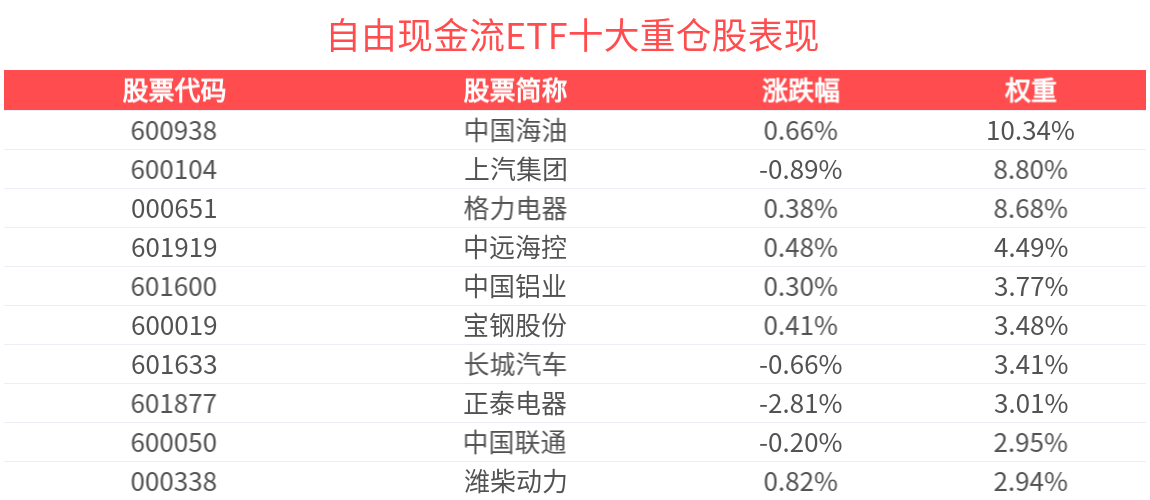
截至2026年1月27日9:45,国证自由现金流指数下跌0.21%。成分股方面涨跌互现,三生国健、白银有色、景津装备等领涨;华人健康、上海建工、株冶集团 等领跌。自由现金流ETF(159201)下跌0.53%,最新报价1.32元。流动性方面,自由现金流ETF盘中换手1.31%,成交1.54亿元。拉长时间看,截至1月26日, 自由现金流ETF近1周日均成交6.66亿元。 从资金净流入方面来看,自由现金流ETF近7天获得连续资金净流入,合计"吸金"17.07亿元。自由现金流ETF最新份额达89.40亿份,最新规模达117.82亿 元,创成立以来新高。数据显示,杠杆资金持续布局中。自由现金流ETF本月以来融资净买额达301.53万元,最新融资余额达1.38亿元。 从收益能力看,截至2026年1月26日,自由现金流ETF自成立以来,最高单月回报为7%,最长连涨月数为6个月,最长连涨涨幅为22.69%,涨跌月数比为 8/2,上涨月份平均收益率为3.3%,月盈利百分比为80%,月盈利概率为80.57%,历史持有6个月盈利概率为100%。 自由现金流ETF(159201)紧密跟踪国证自由现金流指数,国证自由现金流指数反映沪 ...
心智观察所:AI狂奔,中国变压器成了最硬通货
Guan Cha Zhe Wang· 2026-01-27 00:43
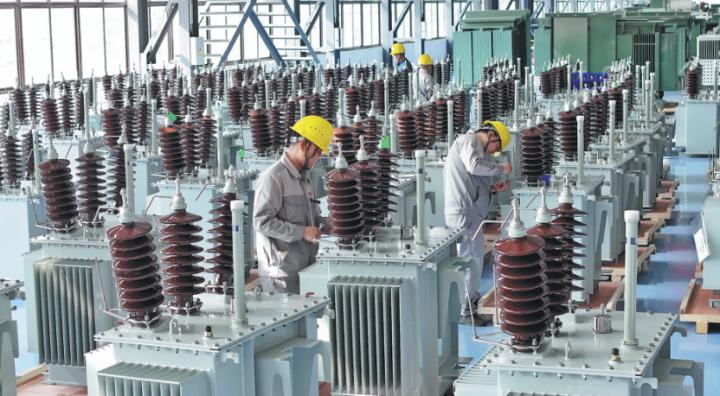
Core Viewpoint - The article emphasizes that the real bottleneck for the future of artificial intelligence (AI) is not computational power but electrical power, specifically the availability of large power transformers (LPTs) which are critical for energy infrastructure [1][2]. Group 1: Current Situation in the U.S. - The U.S. is facing a significant shortage of large power transformers, which are essential for converting high-voltage electricity for long-distance transmission [2][3]. - The average delivery time for a standard large transformer has reached 128 weeks, while transformers for data centers can take up to 144 weeks, with some cases nearing four years [2]. - Over 80% of large power transformers in the U.S. are expected to be imported by 2025 due to the decline of domestic manufacturing capabilities [3]. Group 2: Policy and Economic Implications - The U.S. government has imposed high tariffs on Chinese transformers, yet American companies are still compelled to purchase them due to a lack of alternatives [3][9]. - The high costs associated with tariffs are ultimately borne by U.S. electricity companies and consumers, revealing the limitations of "decoupling" strategies in critical infrastructure [9]. Group 3: European Context - Europe is also experiencing a transformer shortage, which hampers the integration of renewable energy projects into the grid [4][5]. - The European Union aims to increase renewable energy to 45% by 2030, but many projects are stalled due to insufficient transformer supply [4]. - European countries are beginning to source transformers from China, despite political pressures, to avoid project delays [5]. Group 4: China's Manufacturing Advantage - China has developed a complete and efficient transformer manufacturing supply chain, from raw materials to assembly, making it a key player in the global market [6][8]. - The typical delivery time for a large transformer in China is 10 to 14 months, significantly shorter than in the U.S. and Europe [8]. - Chinese manufacturers are not only meeting domestic demands but are also exporting transformers globally, establishing themselves as a reliable supplier [6][8]. Group 5: Strategic Insights - The article highlights the importance of stable energy supply for technological advancements, asserting that without reliable electricity, ambitious AI projects remain unfeasible [9][10]. - China's sustained investment in its manufacturing base has positioned it as a strategic player in the global supply chain for critical infrastructure [10].


AI狂奔,中国变压器成了最硬通货
虎嗅APP· 2026-01-26 13:22
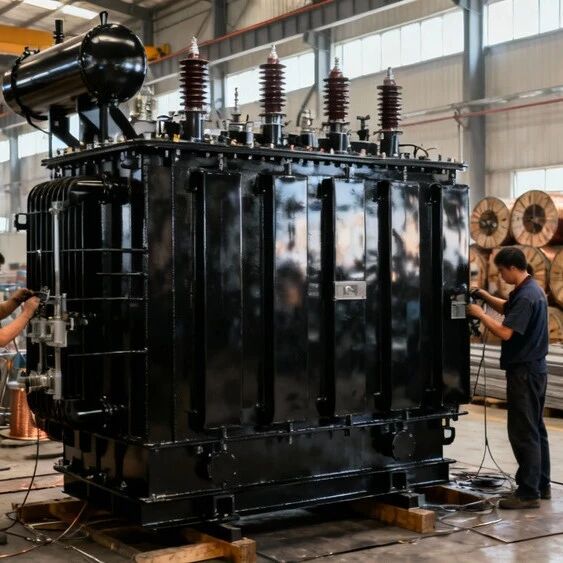
Core Viewpoint - The article emphasizes that the real bottleneck for the future of artificial intelligence (AI) is not computational power but electrical power, particularly the availability of large power transformers, which are crucial for the operation of AI data centers and energy infrastructure [4][6]. Group 1: Current Challenges in the U.S. and Europe - In the U.S., there is a significant shortage of large power transformers (LPTs), with an average delivery time of 128 weeks for standard transformers and 144 weeks for generator step-up transformers (GSUs) [6][8]. - The decline of U.S. manufacturing capabilities since the 1980s has led to over 80% of large power transformers being imported, primarily from China [7]. - European countries face similar issues, with many renewable energy projects unable to connect to the grid due to a lack of suitable transformers, highlighting a critical lag in the upgrade of transmission systems [10][11]. Group 2: The Role of China in Transformer Manufacturing - China has developed a complete and efficient transformer manufacturing supply chain, from raw materials to assembly, making it a key player in the global market [12][13]. - Chinese manufacturers can deliver large transformers in 10 to 14 months, significantly faster than their U.S. and European counterparts, which can take up to three years [13]. - The demand for Chinese transformers is increasing globally, as countries like the U.S. and those in Europe are forced to rely on Chinese imports despite political tensions and tariffs [15][18]. Group 3: Strategic Implications - The reliance on Chinese transformers reveals the limitations of "decoupling" strategies in critical infrastructure sectors, as the need for reliable electrical supply outweighs political considerations [15][18]. - The article suggests that the ability to produce essential infrastructure equipment domestically is a form of strategic deterrence in a world marked by supply chain vulnerabilities and geopolitical conflicts [18].
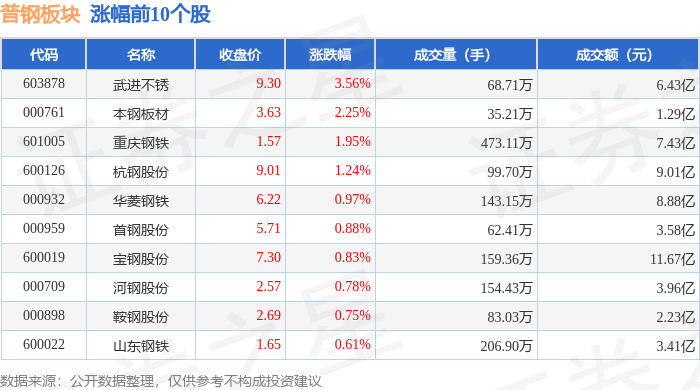
普钢板块1月26日涨0.41%,武进不锈领涨,主力资金净流出3.34亿元
Zheng Xing Xing Ye Ri Bao· 2026-01-26 09:37
Group 1 - The steel sector saw a slight increase of 0.41% on January 26, with Wujin Stainless Steel leading the gains [1] - The Shanghai Composite Index closed at 4132.61, down 0.09%, while the Shenzhen Component Index closed at 14316.64, down 0.85% [1] - Key stocks in the steel sector showed varied performance, with Wujin Stainless Steel closing at 9.30, up 3.56%, and Baosteel closing at 7.30, up 0.83% [1] Group 2 - The steel sector experienced a net outflow of 334 million yuan from main funds, while retail investors saw a net inflow of 304 million yuan [2] - Among individual stocks, Baosteel had a net inflow of 87.72 million yuan from main funds, while Chongqing Steel saw a net inflow of 44.03 million yuan [3] - The overall trading volume for the steel sector was significant, with Baosteel recording a transaction amount of 1.167 billion yuan [1][2]


全指现金流ETF鹏华(512130)涨近2%,有色石油领涨市场
Xin Lang Cai Jing· 2026-01-26 05:29
Group 1 - The core viewpoint of the articles highlights the strong performance of the non-ferrous metals and oil sectors, driven by rising commodity prices and geopolitical tensions [1] - Spot gold has reached a historical high of $5080.60 per ounce, with a 2% increase, while spot silver briefly surpassed $108 per ounce, showing a daily increase of over 4.6% [1] - The cash flow index's focus on "strong cyclical resources" like non-ferrous metals and chemicals reflects its structural advantages and precise value in the market [1] Group 2 - The CSI All-Share Free Cash Flow Index (932365) has risen by 0.81%, with significant gains in constituent stocks such as silver non-ferrous (up 10.03%), Nanshan Aluminum (up 7.08%), and China National Offshore Oil Corporation (up 5.86%) [1] - The CSI All-Share Free Cash Flow ETF (512130) has increased by 1.84%, marking its sixth consecutive rise, with the latest price at 1.33 yuan [1] - As of December 31, 2025, the top ten weighted stocks in the CSI All-Share Free Cash Flow Index include China National Offshore Oil Corporation, SAIC Motor, and Gree Electric Appliances, collectively accounting for 53.78% of the index [2]




292亿资金涌入现金流赛道,现金流ETF嘉实(159221)一键布局优质“现金牛”组合
Xin Lang Cai Jing· 2026-01-26 03:09
Group 1 - The core viewpoint of the articles highlights the performance of the National Index of Free Cash Flow, which has seen a rise of 0.65% as of January 26, 2026, with significant gains in constituent stocks such as silver and various industrial companies [1] - The current market has 101 ETFs tracking free cash flow-related indices, with a total scale of 29.291 billion yuan as of January 21 [1] - Western Securities notes that during the Kondratiev wave downturn, geopolitical uncertainties have increased, leading to a natural preference for gold or stable cash flow "safe assets," which has re-evaluated the dividend strategy in the A-share market [1] - The free cash flow strategy has shown advantages over the dividend strategy, particularly in bull markets, as it has not underperformed the market in bear markets [1] - As of December 31, 2025, the top ten weighted stocks in the National Index of Free Cash Flow include major companies like China National Offshore Oil Corporation and SAIC Motor Corporation, accounting for 51.95% of the index [1] Group 2 - The cash flow ETF managed by Harvest (159221) closely tracks the National Index of Free Cash Flow, aiming to create a combination of profitability quality and dividend potential [2] - Investors can also access the cash flow ETF through the Harvest's off-market connection (024574) to seize investment opportunities [3]
金属-关注供给扰动带来的板块机会
2026-01-26 02:49
Summary of Key Points from Conference Call Records Industry Overview - **Metals Sector**: The focus is on supply disruptions creating opportunities within the metals sector, particularly in precious metals, industrial metals, and energy metals [1][5]. Core Insights and Arguments Precious Metals - **Long-term Drivers**: The precious metals market benefits from global de-dollarization, central bank gold purchases, and increased ETF investments. The Chinese central bank is a major player, purchasing 24-25 tons of gold in 2025 [4]. - **Current Prices**: Gold and silver prices have reached new highs, with gold at 44,981 CNY and silver at 103 CNY. The demand for silver is expected to rise due to high physical and investment demand [2][10]. - **ETF Trends**: The trend of increasing ETF investments in gold is expected to continue, supporting price growth [8]. Industrial and Energy Metals - **Price Increases**: Significant price increases have been observed in copper, aluminum, tin, and lithium, with lithium prices surpassing 180,000 CNY. Supply constraints due to geopolitical issues and ESG factors are limiting supply growth [2][5]. - **Copper Supply Issues**: Supply disruptions from strikes in Chile are expected to keep copper prices strong in the short term [3][17]. - **Lithium Market Outlook**: The lithium market is optimistic due to increased demand from electric vehicles and energy storage, despite recent price surges posing short-term risks [12]. Nickel Market - **Supply Concerns**: The nickel market is closely watching Indonesia's nickel quota, which could lead to a supply shortage if reduced to 260 million tons. The demand from the EV sector is expected to grow, but caution is advised [13][15]. Aluminum Market - **Current Trends**: Aluminum prices are supported by geopolitical events and recovering demand from downstream processing industries. The market is expected to remain tight due to limited domestic supply growth [21][23]. Silver Market - **Demand Dynamics**: The silver market has been in a supply shortage since 2021, with fluctuations in physical and investment demand. Despite a decrease in photovoltaic demand, overall demand is expected to rise, supporting price increases [9][10]. Steel Industry - **Current Performance**: The steel industry shows mixed performance, with production growth in some areas but overall demand expected to remain stable due to reduced real estate activity. Investment opportunities are seen in companies with strong fundamentals [30][32]. Other Important Insights - **Investment Recommendations**: Focus on companies with competitive advantages in the metals sector, including leading firms in precious metals and energy metals. Specific recommendations include companies like Tianqi Lithium and Northern Rare Earth [28]. - **Market Sentiment**: The overall sentiment in the metals market is optimistic, driven by strong demand and supply constraints, with potential for price increases across various metals [2][5][12]. This summary encapsulates the key points discussed in the conference call, highlighting the dynamics within the metals sector and providing insights into future trends and investment opportunities.
自由现金流ETF(159201)冲击6连涨,最新规模达113.78亿元,创成立以来新高
Xin Lang Cai Jing· 2026-01-26 02:13
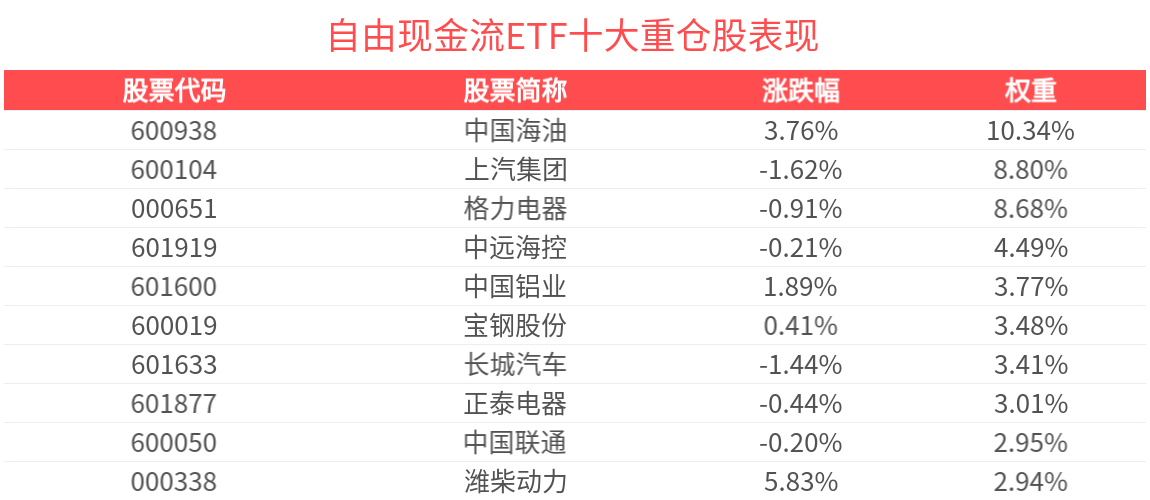
Core Viewpoint - The National Index of Free Cash Flow has shown positive performance, with significant increases in both the index and its constituent stocks, indicating strong investor interest and liquidity in the market [1][2]. Group 1: Market Performance - As of January 26, 2026, the National Index of Free Cash Flow rose by 0.59%, with notable increases in constituent stocks such as Silver Nonferrous (+8.68%), Weichai Power (+5.83%), and China National Offshore Oil Corporation (+3.76%) [1]. - The Free Cash Flow ETF (159201) has experienced a 0.30% increase, marking its sixth consecutive rise, with a trading volume of 1.84 billion yuan [1]. - Over the past week, the Free Cash Flow ETF has averaged daily transactions of 6.16 billion yuan, reflecting strong liquidity [1]. Group 2: Fund Inflows and Performance - The Free Cash Flow ETF has seen continuous net inflows over the past six days, with a peak single-day net inflow of 672 million yuan, totaling 1.402 billion yuan in net inflows [1]. - The latest share count for the Free Cash Flow ETF reached 8.709 billion shares, with a total scale of 11.378 billion yuan, setting a new record since its inception [1]. - The ETF has recorded a financing net purchase amount of 3.3297 million yuan this month, with a current financing balance of 137 million yuan [1]. Group 3: Historical Returns - Since its inception, the Free Cash Flow ETF has achieved a maximum monthly return of 7%, with the longest streak of consecutive monthly gains being six months and a total gain of 22.69% [2]. - The ETF has an 80% monthly profit percentage and a 100% probability of profitability over a six-month holding period [2]. - As of January 23, 2026, the ETF outperformed its benchmark with an annualized excess return of 5.21% over the past six months [2]. Group 4: Index Composition - The top ten weighted stocks in the National Index of Free Cash Flow as of December 31, 2025, include China National Offshore Oil Corporation, SAIC Motor, and Gree Electric Appliances, collectively accounting for 51.95% of the index [2]. - The index reflects the price changes of listed companies with high and stable free cash flow levels in the Shanghai and Shenzhen stock exchanges [2].