福能股份

Search documents
能源周期-反内卷迎蜕变,破局新生
2025-10-21 15:00
Summary of Key Points from Conference Call Records Industry Overview - The conference call primarily discusses the **non-ferrous metals industry** and its strategic planning under the "15th Five-Year Plan" (2026-2030) in China, focusing on resource security, technological innovation, and market optimization [1][2][4][5]. Core Insights and Arguments 1. **Resource Security and Development**: - The non-ferrous metals industry will enhance resource security by increasing domestic reserves and integrating resources, especially for strategic minerals like copper, cobalt, and nickel, where foreign dependency is projected to remain above 50% to 70% [2][5]. - China ranks 53rd globally in per capita proven reserves of major minerals, with half of its 30 key mineral resources below the world average in terms of reserves [2]. 2. **Technological Innovation**: - Technological innovation is identified as the core driver for high-quality development, focusing on domestic production of high-end materials to overcome foreign technology blockades [1][4]. - Key areas for innovation include AI chip optical modules, solid-state battery materials, magnesium alloys for humanoid robots, and titanium alloys for aerospace applications [1][4]. 3. **Market Structure Optimization**: - The "15th Five-Year Plan" aims to optimize the non-ferrous metals industry structure through market-oriented and legal measures, addressing overcapacity in sectors like copper and lithium smelting [1][4][5]. - The plan emphasizes integrated operations and green low-carbon development to enhance efficiency and sustainability [1][4]. 4. **Export Control and Global Positioning**: - In response to geopolitical tensions, China may strengthen export controls on rare metals to enhance negotiation power and participate in global governance of dual-use items [1][4][5]. - The strategy aims to transition from being a resource power to a rule-making power, enhancing global pricing power for rare metals [5]. Additional Important Insights 1. **Investment Opportunities**: - Companies with strong metal resource reserves, such as Zijin Mining, are expected to benefit from increased mineral resource development [6]. - The digital economy and AI advancements will favor companies involved in high-end new materials, such as Putailai, and those positioned in the lithium supply chain, like Ganfeng Lithium [6]. - The green transition in industries like aluminum may benefit leading companies such as China Aluminum [6]. 2. **Electric Power Industry Developments**: - The electric power sector is set to establish a unified national market by 2029, enhancing various service mechanisms and improving transaction efficiency [12][13]. - By 2030, coal-fired power generation is expected to account for 30% of installed capacity, down from current levels, with a shift towards auxiliary services and capacity compensation as key revenue sources [9][10]. 3. **Clean Energy Growth**: - By 2030, renewable energy installations are projected to reach 3 billion kilowatts, representing 60% of total capacity, with significant growth opportunities in solar and wind energy [10][13]. 4. **Urban Renewal and Construction Industry**: - Urban renewal initiatives will focus on improving living conditions and infrastructure, with a projected urbanization rate exceeding 70% by the end of the "15th Five-Year Plan" [20]. - The construction industry is expected to leverage AI and digital technologies to enhance efficiency and safety in building projects [18][24]. 5. **Challenges and Future Directions**: - The non-ferrous metals industry faces challenges such as overcapacity and the need for technological upgrades, which will be addressed through strategic planning and investment in innovation [37][39]. - The construction sector will focus on high-quality development, digital transformation, and international expansion to adapt to changing market dynamics [42][43]. This summary encapsulates the key points discussed in the conference call, providing insights into the strategic direction and investment opportunities within the non-ferrous metals and related industries in China.
如何评估风电与核电增值税政策调整的影响?
2025-10-21 15:00
Summary of Key Points from the Conference Call Industry Overview - The conference call primarily discusses the impact of VAT policy adjustments on the wind power and nuclear power industries [1][2]. Core Insights and Arguments - **Nuclear Power Impact**: - Existing operational nuclear units are unaffected by the VAT policy changes. However, approved but not yet operational units will see a reduction in the VAT refund period from 15 years to 10 years, with a refund rate lowered to 50%. New approved projects will not benefit from any VAT incentives [1][2]. - The financial impact on approved but not operational nuclear units is estimated to be between 350 million to 400 million yuan, primarily affecting years 6 to 15. New approved projects may face around 500 million yuan in financial impact [3]. - **Wind Power Impact**: - For onshore wind power, profitability per GW is expected to decrease by approximately 0.11 yuan, representing a 6% decline. Offshore wind power will see a more significant reduction, with profitability per GW decreasing by 0.41 yuan. The competitiveness of onshore wind power will drop by 0.3 percentage points, while offshore wind power will decrease by 0.6 percentage points [1][3][4]. - **Market Reaction**: - The market's response to these policy changes has been relatively stable, with only a few companies significantly affected by the tax refund changes experiencing noticeable declines. Overall, most wind power operators and major nuclear power operators have shown stable performance due to low valuations of green electricity and nuclear power, with limited fundamental impacts [5]. - **Long-term Outlook for Nuclear Sector**: - The VAT policy changes are not expected to significantly impact the long-term investment value of the nuclear sector. Despite uncertainties from the pressure to decarbonize thermal power and rising coal prices, these factors may limit the decarbonization process of thermal power, which could benefit clean energy sources [6]. Additional Important Insights - **Green Energy Trends**: - The "Document No. 136" protects the tax rates of older projects. High-energy-consuming industries are mandated to use green energy, with sectors like aluminum required to purchase a certain percentage of green energy starting in 2025. Other industries such as steel, cement, data centers, and polysilicon may also be included in this system in the coming years. Significant subsidy funds released in August and September have alleviated some overdue payment issues, indicating that green energy has left-side investment value [7]. - **Investment Potential in Fujian Coastal Operators**: - Fujian coastal operators, such as Funiu and Zhongmin, are expected to benefit from two favorable factors: improved performance since the third quarter and the anticipated distribution of projects as part of the 14th Five-Year Plan, which may address valuation issues due to a lack of growth [8].
风电核电增值税返还政策调整进口LNG综合价格创四年新低:申万公用环保周报(25/10/13~25/10/17)-20251020
Shenwan Hongyuan Securities· 2025-10-20 07:55
Investment Rating - The report provides a "Buy" rating for several companies in the power and gas sectors, indicating a positive outlook for their performance [41]. Core Insights - The report highlights the recent adjustments in the value-added tax (VAT) policies for wind and nuclear power, which may impact profitability for operators in these sectors [9][10]. - It notes the competitive pricing results for electricity in Xinjiang and Gansu, with Xinjiang's prices nearing the upper limit of the bidding range, suggesting a favorable environment for renewable energy operators [8]. - The report discusses the decline in global LNG prices, with China's comprehensive LNG import price reaching a four-year low, which could benefit domestic gas companies [12][27]. Summary by Sections 1. Power Sector - Xinjiang's mechanism electricity bidding results show a scale of 36 billion kWh for solar and 185 billion kWh for wind, with prices at 0.235 CNY/kWh and 0.252 CNY/kWh respectively, indicating a competitive market [5][8]. - The VAT policy changes will eliminate the 50% VAT refund for onshore wind from November 1, 2025, while maintaining it for offshore wind until the end of 2027 [9][10]. - Recommendations include focusing on companies like Guodian Power, China Nuclear Power, and Longyuan Power due to their stable growth prospects [11]. 2. Gas Sector - Global gas prices have shown slight declines, with the US Henry Hub price at $2.82/mmBtu, reflecting a 2.90% weekly drop [12][15]. - China's LNG import price has dropped to 2852 CNY/ton, the lowest since mid-2021, driven by lower oil prices affecting long-term contracts [27][29]. - The report suggests a positive outlook for gas companies like Kunlun Energy and New Hope Energy, as cost reductions and economic recovery may enhance profitability [29]. 3. Environmental Sector - The report emphasizes the benefits of debt-for-equity swaps and the increasing stability of returns for green energy operators, recommending companies like China Everbright Environment and Hongcheng Environment [11]. - It highlights the ongoing rise in SAF (Sustainable Aviation Fuel) prices, suggesting investment opportunities in related companies [11]. 4. Key Company Valuations - The report includes a valuation table for key companies, with several rated as "Buy," indicating strong expected performance in the coming years [41].




可转债周报:转债跟随权益缩量下行,高评级、低价风格继续占优-20251020
Dong Fang Jin Cheng· 2025-10-20 07:24
Report Summary 1. Investment Rating The provided text does not mention the industry investment rating. 2. Core Views - Last week, convertible bonds followed the equity market in a volume - shrinking adjustment. High - rated and low - priced convertible bonds outperformed, while high - priced convertible bonds weakened significantly. The net redemption scale of convertible bond ETFs expanded to 2382 million yuan, but convertible bonds showed anti - decline properties compared to the equity market, with the Wind Convertible Bond Weighted Index outperforming the Wind All - A Index by 1.43 pcts. - Currently, the market risk preference is running at a low level. Although Sino - US trade friction is expected to ease gradually, short - term market sentiment depends on the progress of Sino - US game before Trump's new round of tariffs on November 1st. Under uncertainty, the defensive value of convertible bonds in dividend and weighted sectors such as banks, coal, gas, and non - bank finance will be prominent. - Some hard - tech sectors need adjustment to regain cost - effectiveness and open up upward space. The "15th Five - Year Plan" is expected to release positive signals for some sectors, and sectors with outstanding performance advantages are expected to get stronger support during the third - quarter report disclosure period. [2] 3. Summary by Directory Policy Tracking - On October 17, the Ministry of Finance and other three departments issued an announcement to adjust the duty - free shopping policy for Hainan off - island passengers, expanding the scope of duty - free goods from 45 categories to 47 categories, and allowing island residents with off - island records to buy duty - free goods without limit of times under the "buy - and - pick - up - immediately" method. - The same day, the Ministry of Commerce and other five departments released a guidance on improving the overseas comprehensive service system, aiming to build a three - dimensional, full - chain overseas comprehensive service ecosystem, and put forward specific measures in aspects such as optimizing public platforms, integrating local services, extending overseas services, strengthening economic and trade cooperation guarantees, and enhancing the capabilities of overseas - going enterprises. [3][4] Secondary Market - Last week, the main equity market indexes showed mixed performance. The Shanghai Composite Index rose 0.37%, while the Shenzhen Component Index and the ChiNext Index fell 1.26% and 3.86% respectively. Overseas, the US government shutdown and bank credit risks affected market risk preference, and the market started recession trading. - Domestically, the September price data showed that consumption promotion supported CPI, and the low base narrowed the year - on - year decline of PPI. The September export data was better than expected, mainly due to the base effect and the Mid - Autumn Festival date difference. - Affected by global risk events and Sino - US trade frictions, the risk preference of the domestic equity market further weakened, with obvious volume shrinkage and a significant adjustment in the previous strong technology sectors. Funds flowed to dividend and consumer sectors for risk - aversion. - In the convertible bond market, all major indexes declined. High - rated and low - priced convertible bonds were stronger, while high - priced convertible bonds weakened. The net redemption of convertible bond ETFs increased. The valuation of convertible bonds rebounded, and trading activity declined. [6][7][8] Primary Market - Last week, Funeng Convertible Bond and Jinlang Convertible Bond 2 were issued, and no convertible bonds were listed. Some convertible bonds were delisted due to early redemption or maturity. As of October 17, the convertible bond market's outstanding scale was 59.0529 billion yuan, a decrease of 14.3364 billion yuan from the beginning of the year. - Ten convertible bonds had a conversion ratio of over 5%. Some convertible bonds announced price adjustments, early redemptions, or were expected to trigger early redemption conditions. Two convertible bonds were approved by the CSRC and waiting to be issued, with a total of 2.677 billion yuan, and eight convertible bonds passed the review committee, with a total of 5.306 billion yuan. [30][33][34]
申万公用环保周报:风电核电增值税返还政策调整,进口LNG综合价格创四年新低-20251020
Shenwan Hongyuan Securities· 2025-10-20 07:12
Investment Rating - The report maintains a positive outlook on the power and gas sectors, highlighting potential investment opportunities in renewable energy and gas companies [3][12]. Core Insights - The report emphasizes the recent adjustments in value-added tax policies for wind and nuclear power, which may impact profitability in the short to medium term [10][11]. - It notes the significant drop in LNG import prices, reaching a four-year low, which could benefit gas companies and consumers [13][29]. - The report suggests that the competitive bidding results for electricity prices in Xinjiang and Gansu indicate varying strategies among renewable energy operators, which could lead to improved profit margins [9][12]. Summary by Sections 1. Power Sector - Xinjiang's competitive bidding results show a mechanism electricity price of 0.252 CNY/kWh for wind power, close to the upper limit, while Gansu's price is 0.1954 CNY/kWh, near the lower limit [5][9]. - The adjustment of the value-added tax policy for onshore wind power, effective November 1, 2025, will eliminate the 50% refund policy, while offshore wind will retain it until the end of 2027 [10][11]. - Recommendations include focusing on companies like Guodian Power, Sichuan Investment Energy, and China Nuclear Power due to their stable growth prospects [12]. 2. Gas Sector - The report highlights a slight decline in global gas prices, with the US Henry Hub price at $2.82/mmBtu, down 2.90% week-on-week, and LNG import prices in China dropping to 2852 CNY/ton, the lowest since mid-2021 [13][29]. - It suggests that the cost reduction in upstream resources and the recovery of the macro economy will benefit Hong Kong gas companies like Kunlun Energy and New Hope Energy [31]. - The report anticipates that the LNG prices may stabilize as demand increases with the onset of colder weather [29][31]. 3. Weekly Market Review - The public utility, power, gas, and environmental protection sectors outperformed the CSI 300 index during the week of October 13-17, 2025 [35]. - The report notes that the power equipment sector lagged behind the index, indicating potential investment opportunities in other sectors [35]. 4. Company and Industry Dynamics - The report discusses the upcoming competitive bidding for renewable energy projects in Anhui, with a bidding range set between 0.2 CNY/kWh and 0.3844 CNY/kWh [41][42]. - It highlights the performance of major companies, such as China General Nuclear Power and Longyuan Power, which reported varying results in their electricity generation [43][44].
外围扰动或有限,关注转债结构变化:——可转债周报20251020-20251020
Huachuang Securities· 2025-10-20 06:42
Report Industry Investment Rating No information provided regarding the report industry investment rating. Core Viewpoints of the Report - The current round of Sino-US trade conflict heated up in October, but high tariffs may not last long. The market is relatively stable in sentiment, and the callback disturbance is limited. [3][6] - The demand - side support for convertible bonds remains. ETF funds in the convertible bond market are stronger than in April, catalyzing relatively firm valuations. [3][8] - There are structural differentiations in the convertible bond market. High - parity convertible bond valuations are compressed, and the market preference has shifted to the financial sector. [3] - Attention should be paid to the structural opportunities of convertible bonds, especially high - parity equity - biased varieties with large pullbacks and medium - and low - rated varieties that have corrected this time. [3] Summary According to the Directory I. Tariffs Rise Again, but Disturbance May Be Controllable - The Sino - US trade conflict heated up in October with frictions in multiple aspects. High tariffs may not last long and are mainly for bargaining chips. The market is relatively stable with over 90% probability that tariffs won't be implemented on November 1st and about 80% probability of a tariff agreement before November 10th. [3][6] - Market expectations are stable, and the callback disturbance is limited. The market performance after the restart of tariff disturbances was better than in April, and the VIX index was lower. [3][8] - The demand - side support for convertible bonds remains. The combined share of relevant ETFs increased by 41.49% compared to April 7th, catalyzing relatively firm valuations. [3][8] - There are structural differentiations in the convertible bond market. High - parity convertible bond valuations are compressed, and the market preference has shifted to the financial sector. Bank convertible bond prices rose by 1.6% from October 9th to October 17th, outperforming the convertible bond index by 3.9pct. [3][12] - Attention should be paid to the structural opportunities of convertible bonds. The median convertible bond price is around 130 yuan, and the 100 - yuan premium rate fluctuates at 30%. There may be opportunities in high - parity equity - biased varieties and medium - and low - rated varieties. [3][13] II. Market Review: Weekly Callback of Convertible Bonds, Slight Compression of Valuations (1) Weekly Market Quotes: Convertible Bond Market Callback, Weak Performance in Each Sector - Last week, major stock indexes performed weakly. The Shanghai Composite Index fell 1.47%, the Shenzhen Component Index fell 4.99%, the ChiNext Index fell 5.71%, the SSE 50 Index fell 0.24%, the CSI 1000 Index fell 4.62%, and the CSI Convertible Bond Index fell 2.35%. [15] - There are 418 issued and unexpired convertible bonds with a balance of 5752.81 billion yuan. Yingliu Convertible Bonds will be listed on October 22nd. [15] - In the equity market, most industries performed weakly last week. Only the banking, food and beverage, and transportation industries rose. In the convertible bond market, most also declined, with only environmental protection and banking rising. [17] (2) Valuation Performance: High - Rating and Large - Scale Convertible Bond Premium Rates Compressed More - The weighted average closing price of convertible bonds was 129.46 yuan, a 2.30% decline from the previous Friday. The closing prices of equity - biased, debt - biased, and balanced convertible bonds all decreased. The proportion of the 110 - 120 (including 120) price range increased significantly. [22] - The median price was 129.36 yuan, a 2.27% decline from the previous Friday. The 100 - yuan par - value fitted conversion premium rate was 29.74%, a 0.62pct decline from the previous Friday. [22] - High - rating and large - scale convertible bond premium rates compressed more. The AAA rating declined 1.93pct, and the premium rate of convertible bonds over 5 billion yuan declined 1.76pct. The 120 - 130 (including 130) yuan par - value range declined 5.85pct. [22] III. Terms and Supply: 5 Convertible Bonds Announced Early Redemption, Total Pending Issuance Scale About 8.9 Billion (1) Terms: 5 Convertible Bonds Announced Early Redemption Last Week, No Convertible Bond Board Proposed Downward Revision - As of October 17th, Hengbang, Sheng 24, Chenfeng, Changji, and Nuitai Convertible Bonds announced early redemption; Mengsheng, Tairui, Xinzhi, Huicheng, and Yanpai Convertible Bonds announced no early redemption; Shenma, Tongcheng, Fuchun, Youfa, Zhonghuan Zhuan 2, and Youcai Convertible Bonds announced that they were expected to meet the early redemption conditions. [1][43] - As of October 17th, no convertible bond announced a downward - revision proposal last week. Zhengchuan Convertible Bonds announced the downward - revision result. Nine convertible bonds announced no downward revision, and seven were expected to trigger downward revision. [1][43] (2) Primary Market: Yingliu Convertible Bonds to Be Listed Soon, Total Pending Issuance Scale About 8.9 Billion - Last week, Jinlang Zhuan 02 and Funeng Convertible Bonds were issued, with a total scale of 5.479 billion yuan. Yingliu Convertible Bonds will be listed this week, with a scale of 1.5 billion yuan. [1][46] - Last week, 3 companies had new board proposals, 1 company passed the shareholders' meeting, no company passed the CSRC review committee, and 2 companies got CSRC approval, compared with +3, +1, - 1, +2 respectively compared to the same period last year. [1][47] - As of October 17th, 3 listed companies got convertible bond issuance approvals with a proposed issuance scale of 2.322 billion yuan. Six companies passed the CSRC review committee with a total scale of 3.983 billion yuan. Three new board proposals last week included Zhongqi Co., Ltd., Mankun Technology, and Huatong Cable, with a total scale of 2.599 billion yuan. [2][53]
福能股份(600483) - 福能股份向不特定对象发行可转换公司债券发行结果公告
2025-10-16 12:18
福建福能股份有限公司 向不特定对象发行可转换公司债券发行结果公告 保荐机构(主承销商):兴业证券股份有限公司 联席主承销商:华福证券有限责任公司 联席主承销商:中信建投证券股份有限公司 本公司董事会及全体董事保证本公告内容不存在任何虚假记载、误导性陈述或者 重大遗漏,并对其内容的真实性、准确性和完整性承担法律责任。 重要内容提示: 福建福能股份有限公司(以下简称"发行人"或"公司")向不特定对象发行可 转换公司债券(以下简称"可转债")已获得中国证券监督管理委员会证监许可〔2025〕 1973 号文同意注册。本次发行的保荐人(主承销商)为兴业证券股份有限公司(以下 简称"兴业证券"或"保荐人(主承销商)"),联席主承销商为华福证券有限责任公司 (以下简称"华福证券")、中信建投证券股份有限公司(以下简称"中信建投",兴业 证券、中信建投与华福证券合称"联席主承销商")。本次发行的可转债简称为"福能 转债",债券代码为"110099"。 | 类别 | 认购数量(手) | 放弃认购数量(手) | | --- | --- | --- | | 原股东 | 3,282,748 | 0 | | 网上社会公众投资者 | 5 ...

浦发银行500亿元转债进入转股倒计时 三大“白衣骑士”接踵而至
Hua Xia Shi Bao· 2025-10-16 00:23
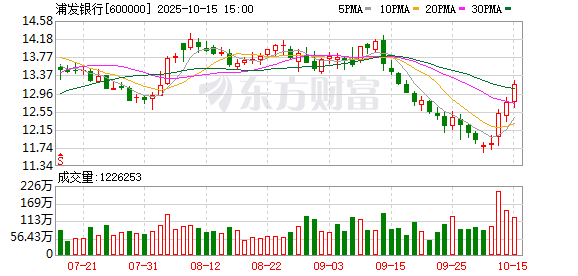
Core Viewpoint - The upcoming expiration of the 50 billion yuan convertible bonds from Shanghai Pudong Development Bank (SPDB) is drawing significant market attention, with a substantial portion yet to be converted into equity, raising concerns about potential cash payouts and capital adequacy [2][4][5]. Summary by Sections Convertible Bonds and Shareholding Changes - On October 13, SPDB announced that China Mobile converted 56.31 million convertible bonds into 450 million ordinary shares, increasing its stake from 17.00% to 18.18% [2]. - In June, Xinda Securities converted approximately 118 million SPDB convertible bonds into A-shares, representing 23.57% of the total issuance [2]. - As of now, 37% of the convertible bonds, amounting to about 18.6 billion yuan, remain unconverted, with a premium rate of around 8% [2][4]. Market Pressure and Stock Performance - SPDB's stock price rose by 5.66% to 12.51 yuan per share on October 13, followed by a 2.08% increase to 12.77 yuan on October 14, coinciding with the conversion price of the bonds [4]. - The remaining 18.6 billion yuan of convertible bonds must be converted within two weeks, creating significant pressure on the bank [4]. Capital Adequacy Concerns - As of the end of Q1, 99.9971% of the SPDB convertible bonds had not been converted, raising concerns about the bank's capital adequacy if a large cash payout is required [5][6]. - The core Tier 1 capital adequacy ratio is close to regulatory limits, making the conversion of bonds critical for maintaining capital levels [5][6]. Market Dynamics and Future Outlook - The convertible bond market is experiencing a significant reduction in size, with 121 bonds successfully delisted since 2025, indicating a trend of shrinking market scale [9]. - Despite the increase in new bond issuance, the lack of large-scale bank convertible bonds may lead to a continued decline in overall market size [10][11]. - Regulatory encouragement for banks to supplement capital through various debt instruments is expected to continue, with a focus on optimizing capital structures and enhancing risk resilience [12].


浦发银行500亿元转债进入转股倒计时,三大“白衣骑士”接踵而至
Hua Xia Shi Bao· 2025-10-15 04:59
Core Viewpoint - The upcoming expiration of the 50 billion yuan convertible bonds from Shanghai Pudong Development Bank (SPDB) is drawing significant market attention, with a substantial portion yet to be converted into equity, raising concerns about potential cash payouts and capital adequacy [2][4][5]. Group 1: Convertible Bond Conversion - On October 13, SPDB announced that China Mobile converted 56.31 million convertible bonds into 450 million shares, increasing its stake from 17.00% to 18.18% [2]. - As of now, approximately 37% of the convertible bonds, amounting to about 18.6 billion yuan, remain unconverted, with a conversion premium of around 8% [3][4]. - The probability of achieving full conversion before the redemption deadline appears low, given the current stock price and the remaining unconverted bonds [3][4]. Group 2: Market Impact and Stock Performance - SPDB's stock price saw a significant increase, rising 5.66% to 12.51 yuan per share on October 13, followed by a further 2.08% increase to 12.77 yuan on October 14 [3]. - The conversion price of 12.51 yuan aligns with the adjusted conversion price of the convertible bonds, indicating a critical threshold for conversion [3][6]. Group 3: Capital Adequacy Concerns - If the remaining 18.6 billion yuan in convertible bonds are not converted, SPDB will need to make cash payouts, which could negatively impact its capital adequacy ratios [4][5]. - SPDB's core Tier 1 capital adequacy ratio is currently at 8.51%, which is close to regulatory limits, making the conversion of bonds crucial for maintaining capital levels [5]. Group 4: Broader Market Trends - The convertible bond market is experiencing a significant contraction, with 121 bonds successfully delisted since 2025, indicating a trend of diminishing bank-related convertible bonds [7][8]. - Despite the increase in new bond issuance, the overall market size is expected to remain below 600 billion yuan due to the lack of large-scale bank issuances [8][9]. Group 5: Future Issuance Outlook - The issuance of new convertible bonds is expected to stabilize but not accelerate, primarily driven by non-bank enterprises, particularly in high-tech sectors [10]. - Regulatory encouragement for banks to supplement capital through various channels, including convertible bonds, suggests a potential for renewed issuance in the near future [10].

2025年1-4月中国核能发电量产量为1584.9亿千瓦时 累计增长12.7%
Chan Ye Xin Xi Wang· 2025-10-15 01:19
Group 1 - The core viewpoint of the article highlights the growth of China's nuclear power generation, with a projected output of 411 billion kilowatt-hours in April 2025, representing a year-on-year increase of 12.4% [1] - From January to April 2025, the cumulative nuclear power generation in China reached 1,584.9 billion kilowatt-hours, showing a cumulative growth of 12.7% [1] Group 2 - The article lists several publicly listed companies in the nuclear energy sector, including China General Nuclear Power (003816), China National Nuclear Power (601985), and others [1] - It references a report by Zhiyan Consulting titled "Market Operation Pattern and Investment Strategy Analysis of China's Nuclear Power Generation Industry from 2025 to 2031" [1]