On Holding AG

Search documents
昂跑发布2025年第一季度财报 多渠道战略推动销售额同比增长
Zheng Quan Ri Bao Wang· 2025-05-16 01:47
Group 1 - On Holding AG reported a 43% year-on-year increase in sales for Q1 2025, reaching 727 million Swiss francs, with a gross margin increase from 59.7% to 59.9% [1] - Net profit decreased by 38% year-on-year to 56.7 million Swiss francs [1] - The brand's multi-channel strategy contributed to sales exceeding expectations, with direct-to-consumer (DTC) sales at 276.9 million Swiss francs and wholesale sales at 449.7 million Swiss francs [1] Group 2 - The Americas remained the largest contributor to sales, with a 32.7% year-on-year increase to 437 million Swiss francs, although the sales proportion decreased by 4.7 percentage points to 60.2% [1] - Approximately 90% and 10% of footwear products are produced in Vietnam and Indonesia, respectively, while 65% of apparel and accessories are produced in Vietnam [1] - Sales in the U.S. accounted for 55% and 59% of total sales in Q1 2025 and Q1 2024, respectively [1] Group 3 - Sales in Europe, the Middle East, and Africa grew by 33.6% year-on-year to 169 million Swiss francs, representing about 23.2% of total sales [2] - The Asia-Pacific region saw a significant growth of 130.1% year-on-year, reaching 121 million Swiss francs, with a sales proportion increase of 6.3 percentage points to 16.6% [2] - China and Japan were highlighted as key markets driving strong sales growth, with On planning to exceed 100 stores in China by 2026 [2]

安德玛转型阵痛,昂跑、彪马利润承压,阿迪却意外惊艳市场
Nan Fang Du Shi Bao· 2025-05-15 05:56
Core Insights - The global sports brand industry is facing multiple pressures including economic slowdown, tariff impacts, rising costs, and weak consumer demand [2] - Under Armour reported a 9% decline in annual sales to $5.2 billion for the fiscal year ending March 31, 2025, with a net loss of $201 million [4][5] - On, a rising brand, experienced a 38% drop in net profit for Q1 2025 despite a 43% increase in sales, indicating challenges in maintaining profitability amid expansion costs [7][9] Under Armour - Under Armour's Q4 revenue fell 11% to $1.2 billion, but gross margin improved by 1.7 percentage points to 46.7% [4] - The company is focusing on full-price sales, reducing promotions, optimizing inventory, and implementing layoffs to enhance profitability and brand positioning [5] - North American revenue decreased by 11% to $3.1 billion, while international revenue fell by 6% to $2.1 billion, with the Asia-Pacific region down 13% to $755 million [5] On - On's Q1 2025 sales surged by 43% to 726.6 million Swiss francs, but net profit dropped by 38% to 56.7 million Swiss francs, resulting in a net profit margin of 7.8% [7] - The brand plans to increase prices in the U.S. market starting July, with potential expansion of this strategy to other markets next year [7] - The Asia-Pacific market saw a remarkable 130.1% increase in sales, becoming a key growth driver for the brand [7] Puma - Puma's Q1 2025 net profit plummeted by 64%, with sales growth of only 0.1% to €2.076 billion [10][12] - The company reported a significant drop in EBIT, down 63.7% to €57.7 million, while maintaining its sales and profit guidance for the fiscal year [12][13] - Puma is implementing cost efficiency plans and plans to cut 500 jobs globally by the end of Q2 [13] Adidas - Adidas reported a strong Q1 2025 with a 13% increase in sales to €6.15 billion, achieving a record high for the quarter [17] - The company’s operating profit surged by 82% to €610 million, driven by strong sales of retro shoe models [17] - Despite the strong performance, Adidas remains cautious about long-term goals due to geopolitical uncertainties and changing consumer sentiments [17]



国泰海通 · 联合解读|“关税缓和”联评
国泰海通证券研究· 2025-05-14 15:05
Group 1 - The core viewpoint is that the Chinese stock market is expected to rise further due to reduced opportunity costs for investors and stable policy continuity [1][2] - The A/H shares are favored, particularly in the financial, technology, and certain cyclical sectors [2] - The adjustment in the stock market during March-April is seen as a significant turning point, indicating reduced investor concerns about US-China competition and a more favorable environment for investment [2] Group 2 - The impact of tariffs on inflation in the US is not yet fully realized, with April inflation data showing no immediate pressure from tariffs [7] - The reduction of tariffs is expected to delay any rebound in US inflation, although the risk of "stagflation" remains a concern [7] Group 3 - The bond market is experiencing limited short-term adjustment space due to a supportive liquidity environment, with a focus on mid to long-term economic narratives [9][10] - The recent easing of tariffs is expected to create structural opportunities in convertible bonds, particularly for technology and domestic demand sectors [13][14] Group 4 - The easing of tariffs is beneficial for the electronics sector, with expectations of a significant innovation year for the supply chain, particularly for Apple products [17][18] - The communication sector is also expected to benefit from reduced tariffs and strong overseas AI demand, maintaining a positive outlook for companies with significant overseas operations [21][22] Group 5 - The machinery sector is poised for growth due to reduced tariffs, benefiting both consumer-grade equipment exporters and engineering machinery through global supply chain restructuring [24][25] - The textile and apparel sector is expected to see improved market confidence and valuation recovery due to the reduction of tariffs, although long-term impacts will depend on overseas market fluctuations [28][30]

涨价后,迪卡侬的日子不好过了
Hu Xiu· 2025-05-14 08:51
Core Viewpoint - Decathlon is facing significant challenges in the Chinese market, with rumors of selling a 30% stake in its China operations and a decline in profitability, indicating a shift from its original value proposition to a more expensive product range that alienates its core customer base [2][3][4]. Group 1: Financial Performance - Decathlon's total revenue for 2024 was €16.2 billion, a slight increase of 3.8%, while net profit fell to €787 million, a year-on-year decline of 15.47%, marking the lowest profit in four years [2]. - From 2022 to 2024, the average selling price of Decathlon's products increased from ¥128.81 to ¥196.32, representing a 52% rise [5]. Group 2: Market Positioning and Strategy - Decathlon has transitioned from being a budget-friendly outdoor goods retailer to a brand perceived as both expensive and unattractive, losing its appeal to price-sensitive consumers [3][4]. - The company has initiated a brand refresh and is focusing on high-end product lines, aiming to cater to middle-class consumers by offering smaller, more specialized stores in urban areas [9][11]. Group 3: Competitive Landscape - The outdoor equipment market is seeing a trend of rising prices across various brands, with many local brands experiencing price increases of 25% to 65% [13]. - High-end outdoor brands have been capitalizing on market demand, with significant revenue growth reported by competitors such as Anta and Lululemon in the Chinese market [15][16]. Group 4: Brand Image and Consumer Perception - Decathlon's shift towards higher-priced products has led to consumer backlash, with critiques highlighting the brand's decline in value perception [6][7]. - The company is attempting to enhance its brand image through marketing efforts, including sponsorship of major sporting events and partnerships with well-known athletes [10]. Group 5: Leadership Changes - In 2024, Decathlon announced a leadership change, replacing CEO Barbara Martin Coppola with Javier López, suggesting potential dissatisfaction with the effectiveness of the company's recent transformation efforts [8].
18家运动品牌,2024年1.3万亿营收里的最新行业格局
3 6 Ke· 2025-05-14 00:38
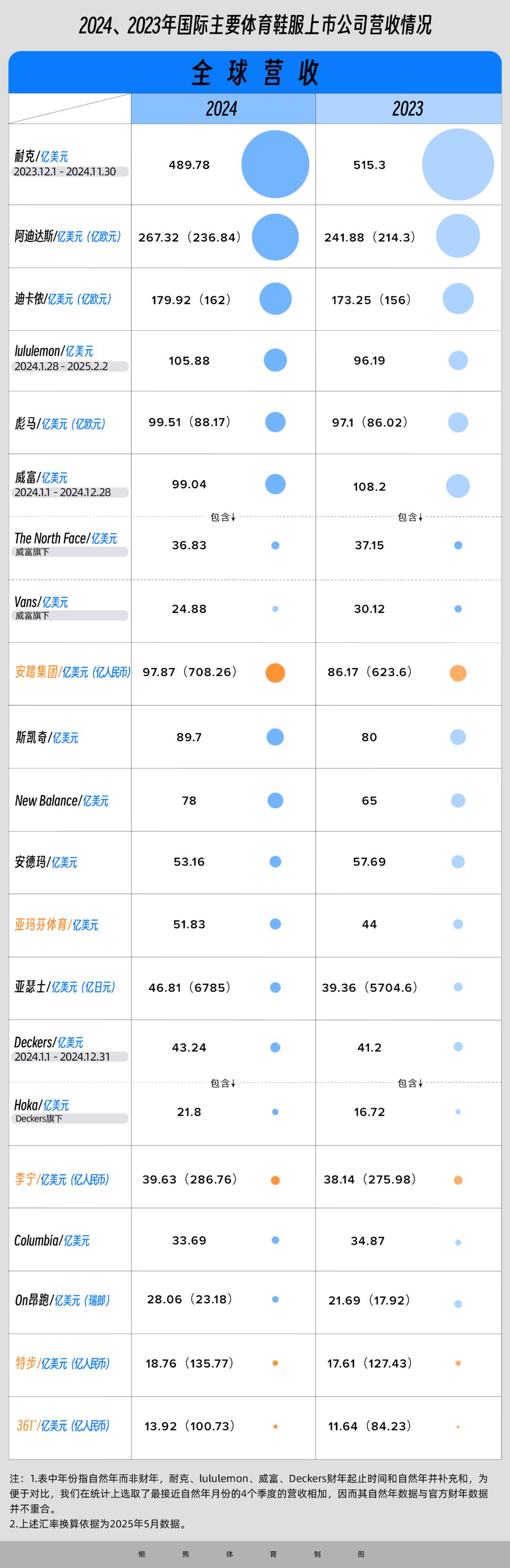
Core Insights - The sports footwear and apparel industry demonstrates resilience amid a sluggish global economic recovery and differentiated consumer demand, outperforming other sectors [1][2] - The analysis includes 19 brands/groups, primarily publicly listed companies, with revenue data for the 2024 calendar year, adjusted for fiscal year discrepancies and currency fluctuations [1][2] Global Market Overview - Total global revenue for the 18 brands/groups in 2024 is approximately $183.61 billion, reflecting a 3.78% increase from 2023 [8] - Nike and Adidas remain the dominant players, while Lululemon has surged to third place, surpassing Puma and VF Corporation [6][7] - The industry structure remains stable, with a leading tier of Nike and Adidas, followed by a growing middle tier including Decathlon, Anta, VF, and Lululemon [7][8] Chinese Market Insights - The total revenue for the Chinese market is estimated at around $37 billion for 2024, with an 8.8% year-over-year growth, outpacing global growth [14] - Anta Group leads the Chinese market, with significant contributions from its multi-brand strategy, while Nike retains the top position for single-brand revenue [14][15] - The competitive landscape in China features intense rivalry among brands like Anta, Li Ning, Adidas, and FILA, with Puma also showing growth [14][15] Growth Drivers - Running remains the highest growth segment in the sports footwear and apparel industry, with brands like HOKA and On experiencing significant revenue increases [15][16] - Outdoor brands, particularly those appealing to the middle class, are also thriving, driven by a shift in consumer identity and preferences [16] Future Considerations - The industry faces challenges related to brand positioning in either stock or incremental competition, necessitating strategic decisions on growth potential and market dynamics [17] - Established brands are undergoing transformations while new entrants must navigate consumer expectations and market integration [17]





运动品牌同质化竞争有新解法?HOKA中国事业部总经理:社群文化是吸引消费者的关键支点之一
Mei Ri Jing Ji Xin Wen· 2025-05-13 08:36
Core Insights - The sports footwear and apparel industry is experiencing a slowdown in growth, with the growth rate declining from 20% to approximately 10%, making deep engagement with existing users crucial for success [1][3] - Brands are seeking differentiated strategies to break the industry stagnation, with HOKA focusing on "experience economy" to replace traditional retail models [1][2] Industry Trends - The Chinese outdoor market is undergoing unprecedented growth, with projections indicating that the sports apparel market will exceed 600 billion yuan by 2025, maintaining a growth rate of over 10% year-on-year [2] - The rise of experience economy and deepening community value are two significant trends in the sports footwear and apparel sector, as consumers shift from functional needs to emotional recognition [3] Company Strategies - HOKA has opened its first global brand experience center in Shanghai, featuring immersive spaces and community culture areas, aiming to transform retail into a cultural "utopia" [2][3] - HOKA's sales performance has been impressive, with net sales growth of 27.9% in the fiscal year 2024, reaching approximately 1.81 billion dollars [4][5] Market Position - HOKA is recognized as the fastest-growing brand under Deckers Brands, with significant sales increases in recent quarters, indicating strong market acceptance of its experiential approach [4] - The Shanghai experience center is strategically located in a high-end commercial area, targeting affluent consumers and aiming to enhance brand visibility and community engagement [5]
lululemon和始祖鸟,加入户外运动鞋争夺战
3 6 Ke· 2025-05-13 00:43
Core Insights - The outdoor market is experiencing significant growth, prompting brands like Arc'teryx and Lululemon to intensify their focus on outdoor footwear [1][2][10] - Both companies are responding to slowing growth in overseas markets and are seeking new revenue streams by expanding into specialized outdoor footwear [2][16] - The establishment of dedicated footwear divisions by Arc'teryx and the launch of new products by Lululemon indicate a strategic shift towards becoming leaders in the outdoor footwear segment [5][10][14] Company Strategies - Arc'teryx has launched an independent Footwear Business Unit to enhance its focus on hiking and trail running shoes, with expectations of over 60% revenue growth in this segment by 2024 [2][5][10] - Lululemon has introduced new outdoor gear, including the Wildfeel Trail running shoe, as part of its strategy to expand its footwear offerings [1][7][8] - Both brands are leveraging their established market presence in China to capture a growing demand for specialized outdoor gear [2][16] Market Dynamics - The outdoor footwear market is becoming increasingly competitive, with numerous brands, including Columbia, HOKA, and Salomon, opening new stores and enhancing their market presence [4][19][22] - The Chinese outdoor market is projected to reach a total scale of 3 trillion yuan by 2025, indicating substantial growth potential for footwear [14][16] - The influx of international brands into the Chinese market is intensifying competition, making it essential for established players like Arc'teryx and Lululemon to innovate and expand their product lines [22][25] Consumer Trends - There is a rising trend of female participation in outdoor activities, which Lululemon aims to capitalize on, given its strong female customer base [10][14] - The demand for outdoor footwear is driven by its necessity as a safety equipment and its relatively short lifespan compared to apparel, highlighting its market potential [14][16] - Consumer preferences are shifting towards brands that can deliver high-quality, specialized footwear, making product performance a critical factor in brand success [23][25]

华利集团(300979):产能爬坡扰动盈利 新客户放量显著
Xin Lang Cai Jing· 2025-04-30 04:50
Core Viewpoint - The company reported a revenue of 5.35 billion yuan in Q1 2025, reflecting a year-over-year increase of 12.3%, while the net profit attributable to shareholders was 760 million yuan, down 3.3% year-over-year, primarily due to the ramp-up of new factory capacity. The company is expected to benefit from capacity improvements in the future, with new customer acquisition and increased market share from existing clients continuing to strengthen its competitive advantage, maintaining a "buy" rating [1]. Group 1: Financial Performance - In Q1 2025, the company achieved a sales volume of 49 million pairs of sports shoes, up 8.24% year-over-year, with an average price of 109 yuan per pair, an increase of 3.8% year-over-year. The volume growth is attributed to strategic customer expansion with brands like Adidas, New Balance, and On, which is expected to contribute to further growth in Q2 2025 [2]. - The company's net profit margin decreased by 2.3 percentage points year-over-year to 14.2%, and the gross profit margin fell by 5.5 percentage points to 22.9%, mainly due to the initial efficiency ramp-up of the new factory. The workforce increased to 184,000 employees, a rise of 17.0% year-over-year [2]. - The company reported inventory of 3.67 billion yuan, up 12.5% year-over-year, and accounts receivable of 3.31 billion yuan, up 15.3% year-over-year, primarily due to inventory buildup related to factory capacity ramp-up and increased sales collections, resulting in a net cash inflow from operating activities of 1.21 billion yuan, up 12.9% year-over-year [2]. Group 2: Strategic Developments - To meet capacity demands, the company acquired 100% stakes in three Vietnamese footwear companies for 23.038 million yuan, 28.250 million yuan, and 16.113 million yuan, respectively, aimed at optimizing production resources for shoe uppers. These companies will be included in the company's consolidated financial statements starting from Q1 2025, and are expected to enhance production capacity synergy within 1-2 years, thereby increasing the company's market share in global footwear manufacturing [3]. Group 3: Profit Forecast and Valuation - The company maintains its profit forecast for 2025-2027 at 4.32 billion yuan, 4.95 billion yuan, and 5.61 billion yuan, respectively. Based on the average PE ratio of comparable companies at 12.7 times for 2025, and considering the potential for continued customer base expansion and solid industry leadership, a target PE of 21.8 times is assigned for 2025, resulting in a target price of 80.82 yuan, with a "buy" rating maintained [4].
Wayfair Set to Report Q1 Earnings: What's in the Cards for the Stock?
ZACKS· 2025-04-29 17:15
Wayfair (W) is scheduled to report first-quarter 2025 results on May 1.W expects revenues between flat and slightly negative on a year-over-year basis. The Zacks Consensus Estimate for first-quarter 2025 revenues is pegged at $2.71 billion, suggesting a 0.66% year-over-year decline.The consensus mark for the first-quarter 2025 bottom line is pegged at a loss of 18 cents per share, which has narrowed by 1 cent over the past 30 days. This also marks a sharp improvement from the year-ago quarter's loss of 32 c ...


成都太古里旗舰店开幕,On昂跑进入快速发展期|最前线
3 6 Ke· 2025-04-28 11:42
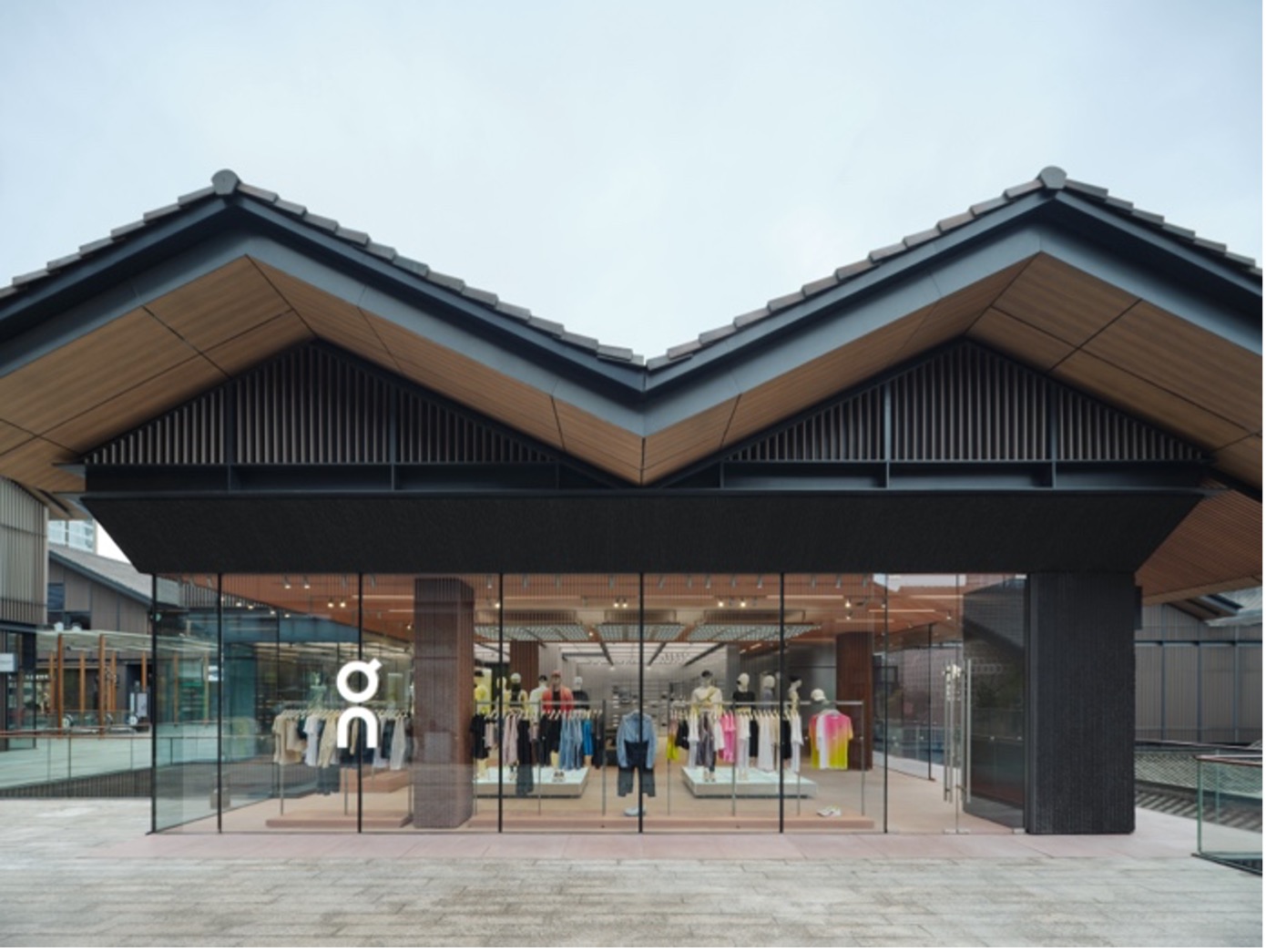
Core Insights - On has opened its first flagship store in Chengdu, marking the end of a five-year exploration period in China [1][3] - The company plans to expand its store count in China to over 100 by 2026, currently operating 66 stores [1][3] - On's new Cloudboom Strike LS shoe, featuring innovative LightSpray™ technology, aims to enhance production efficiency and comfort [5][6] Group 1: Store Expansion - The flagship store in Chengdu covers 500 square meters and showcases a variety of products for different sports [1][3] - On's strategy emphasizes the need for more self-operated retail stores in China, moving away from reliance on wholesale channels [3] - The company aims to open more flagship stores in both China and other regions in the future [1][3] Group 2: Product Innovation - The Cloudboom Strike LS is the first mass-produced racing shoe using LightSpray™, a technology that simplifies the manufacturing process [5][6] - The shoe weighs only 170 grams, making it lighter than competitors, which is crucial for professional runners [6] - On's team has developed a unique formula for the shoe's material, enhancing durability and comfort [5] Group 3: Financial Performance - On's annual compound growth rate from 2021 to 2024 exceeds 47% [7] - In 2024, the company reported a net revenue of 2.318 billion Swiss francs (approximately 19 billion RMB), a year-on-year increase of 29.4% [7] - The net profit for 2024 reached 242 million Swiss francs (approximately 1.984 billion RMB), showing a remarkable growth of 204% [7]