沃尔玛

Search documents
白酒在胖东来、山姆、盒马找到“新卖场”|行业风向标
Tai Mei Ti A P P· 2025-07-31 10:51
Core Insights - The emergence of new retail formats, such as supermarkets like Fat Donglai, Sam's Club, and Hema, is reshaping the distribution channels for liquor, particularly for the Chinese liquor industry [2][3][5] - The collaboration between Fat Donglai and liquor companies, such as the launch of "Jiu Gui·Zi You Ai," indicates a shift towards self-operated liquor brands in supermarkets, which is becoming a clear trend in the industry [3][5] - The traditional liquor distribution channels are facing significant challenges, leading to a decline in sales and the need for liquor brands to adapt to new retail environments [9][10] Industry Trends - New supermarkets are leveraging their supply chain, pricing strategies, and brand partnerships to promote self-operated liquor products, creating new growth opportunities for the liquor sector [3][7] - The sales of self-operated liquor brands in new supermarkets are showing promising results, with Fat Donglai's "Bao Feng·Zi You Ai" achieving over 400 million yuan in annual sales within two years [3][5] - The trend of low-priced liquor is gaining traction, with products like the 9.9 yuan liquor from Aldi becoming popular among consumers, indicating a shift in consumer preferences towards affordable options [4][5] Market Dynamics - Traditional supermarkets are experiencing a decline, with major players like Carrefour and Yonghui closing numerous stores, which is impacting the availability of traditional liquor distribution channels [6][9] - The number of liquor distributors is decreasing, with a notable drop from 58,437 in 2023 to 56,747 in 2024, reflecting the challenges faced by traditional distribution models [9][10] - The rise of new retail formats is leading to a two-tier market for liquor distribution, where traditional channels are struggling while new supermarkets thrive [8][10] Consumer Behavior - Consumers are increasingly drawn to the affordability of liquor products in new supermarkets, with many offerings priced below 200 yuan, making them attractive alternatives to traditional brands [5][6] - The shift towards self-operated liquor brands in supermarkets is driven by consumer demand for high-quality products at competitive prices, which traditional channels are struggling to provide [7][10]

企业扛不住了!特朗普关税下,提价潮向消费者蔓延
Jin Shi Shu Ju· 2025-07-30 01:15
Core Viewpoint - The implementation of U.S. tariffs under President Trump's policy is leading companies to pass increased costs onto American consumers, impacting their profit margins and operational space [2][3]. Group 1: Company Responses - Procter & Gamble (P&G) plans to raise prices on about 25% of its products in the U.S. market to offset new tariff costs, indicating a dual approach of cost-cutting and price increases [3][4]. - Other companies, such as EssilorLuxottica and Swatch, have also begun to implement price increases, with Swatch reporting a 5% price hike with no negative impact on sales [8]. Group 2: Market Impact - Despite a rise in U.S. stock indices driven by technology investments, many consumer goods companies are struggling, with P&G's stock down 19% since the tariff announcement [5]. - The anticipated total loss for companies due to tariffs is estimated to be between $7.1 billion and $8.3 billion for the year [6]. Group 3: Consumer Behavior - Consumers are currently not feeling the effects of the tariff increases, but inflationary pressures are expected to emerge once company inventories are depleted, likely in Q4 or early next year [7]. - There is a cautious attitude among North American consumers towards price increases, which may affect sales for major brands [5].
零售商集体“练内功”,从商品“卷”到前置仓
第一财经· 2025-07-24 01:25
Core Viewpoint - Retailers are transitioning into a phase of internal improvement after facing challenges such as store expansion, e-commerce competition, and high costs in the first half of 2025. Companies like Yonghui Supermarket and Bubugao are undergoing significant store adjustments and upgrades [1][4]. Group 1: Learning and Store Adjustments - The success of Pando's operations has inspired other retailers to adopt similar practices, with companies like Bubugao and Yonghui Supermarket making substantial store adjustments. Yonghui has opened its 100th store modeled after Pando, indicating a trend towards adopting successful regional retail strategies [4][5]. - The retail industry is witnessing a surge in learning from successful membership store models like Sam's Club and Costco, with traditional retailers focusing on product development and consumer-oriented service strategies [4][5]. Group 2: Performance and Financial Impact - Bubugao's half-year performance forecast indicates a net profit of 180 million to 220 million yuan, a year-on-year increase of 331.18% to 382.55%, attributed to restructuring and operational efficiency improvements [5]. - In contrast, Yonghui Supermarket anticipates a net loss of 240 million yuan for the first half of 2025 due to ongoing strategic transformations and store adjustments, including the closure of 227 underperforming stores [6]. Group 3: Supply Chain Competition - The retail landscape is evolving with new formats such as membership and discount stores, leading to intensified competition focused on high-quality, cost-effective products. The supply chain battle has become particularly pronounced in the first half of 2025 [8][9]. - Companies like Lianhua and Zhongbai are launching discount stores, while Sam's Club and Dailongfa are expanding their membership offerings, emphasizing the importance of unique products and competitive pricing [9][10]. - Speed in delivery is becoming a critical factor, with retailers aiming to enhance their logistics capabilities to meet consumer demands for faster service, transitioning from next-day delivery to half-hour delivery [10][11].


半年盘点|零售商集体“练内功”,从商品“卷”到前置仓
Di Yi Cai Jing· 2025-07-23 09:04
Core Insights - Retailers are shifting focus towards internal optimization and store adjustments after facing challenges such as expansion, e-commerce impact, and high costs, starting from the first half of 2025 [1] - The trend of learning from successful regional retailers like Pang Donglai is influencing major players such as Yonghui Supermarket and Bubugao to implement store modifications [3][4] - The competition in the retail supply chain is intensifying, with a shift from traditional store expansion to offering high-quality, cost-effective products [8][9] Retailer Adjustments - Yonghui Supermarket has opened its 100th store modified in the Pang Donglai model, indicating a trend towards adopting this model across its nationwide stores [4] - Bubugao's half-year performance forecast shows a significant profit increase of 331.18% to 382.55% year-on-year, attributed to strategic restructuring and operational efficiency improvements [5] - In contrast, Yonghui Supermarket anticipates a net loss of 240 million yuan for the first half of 2025 due to ongoing strategic transformations and store closures [6] Supply Chain Competition - The retail landscape is evolving with new formats like membership and discount stores emerging, leading to fierce competition based on product quality and pricing [8] - Major retailers are enhancing their supply chains, with Sam's Club and other membership stores expanding their offerings and improving sourcing strategies to maintain competitive pricing [8] - The focus on speed in delivery services is becoming crucial, with traditional retailers like Dailunfa introducing next-day delivery and aiming for half-hour delivery to meet consumer demands [9]
赢了沃尔玛“一毛钱”,却输掉一个时代,“广东超市三巨头”崩塌退市
创业邦· 2025-07-22 03:02
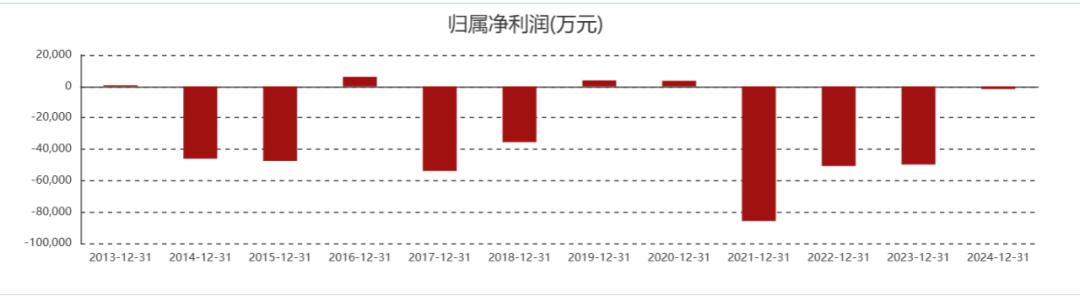
Core Viewpoint - The article discusses the decline of Renrenle Supermarket, highlighting its historical significance in the Chinese retail market and the factors leading to its eventual delisting from the Shenzhen Stock Exchange, marking the end of an era for traditional large-scale chain supermarkets in China [5][12]. Group 1: Historical Context - Renrenle Supermarket was established in 1996 and quickly became a significant player in the Chinese retail market, competing successfully against international giants like Carrefour and Walmart [4][8]. - At its peak in 2010, Renrenle's market capitalization reached approximately 13.668 billion yuan, but by its delisting in July 2023, its market value had plummeted to about 15.8 million yuan, a 99% decrease [4][12]. Group 2: Competitive Strategies - Renrenle initially thrived by adopting competitive strategies against foreign competitors, such as focusing on local consumer needs and implementing aggressive promotional tactics [9][10]. - The company successfully increased its daily sales to 600,000 yuan by outmaneuvering Carrefour and Walmart through strategic pricing and promotional timing [11]. Group 3: Expansion and Missteps - After going public, Renrenle pursued an aggressive expansion strategy, aiming to open 10,000 stores within five years, but this led to significant operational challenges and financial losses [14][15]. - The company failed to adapt its successful business model from Shenzhen to other regions like Xi'an, resulting in lower profit margins and unsustainable operations [14][15]. Group 4: Industry Trends and Challenges - The rise of e-commerce and changing consumer behaviors significantly impacted traditional supermarkets, with Renrenle unable to pivot effectively to online sales, which remained below 5% of its total revenue [25]. - The overall supermarket industry in China is facing severe challenges, with competitors like Yonghui and RT-Mart also experiencing significant declines in revenue and store closures [21][27]. Group 5: Management and Cultural Issues - Renrenle's internal management issues, including a lack of strategic direction and high turnover among executives, contributed to its decline [26][28]. - The company's leadership, primarily controlled by the founder and his family, led to a culture that prioritized personal interests over effective corporate governance [28].
赢了沃尔玛“一毛钱”,却输掉一个时代,“广东超市三巨头”崩塌退市
3 6 Ke· 2025-07-21 04:03
Core Viewpoint - The delisting of Renrenle Supermarket marks the accelerated decline of the golden era of traditional large chain supermarkets in China, reflecting broader industry turbulence and differentiation [1][2][3]. Company Overview - Renrenle Supermarket, once a prominent player alongside Yonghui and RT-Mart, has seen its market value plummet from approximately 13.668 billion yuan at its peak in 2010 to about 1.58 million yuan at the time of delisting, representing a 99% decrease [2][3]. - Founded in 1996, Renrenle was initially successful, breaking the myth of "no competitors within 3 kilometers" against Carrefour and Walmart, and was recognized as one of the "three giants" of Guangdong supermarkets [2][16]. Industry Context - The rise and fall of Renrenle reflect the changing dynamics of the retail industry, where new entrants like Sam's Club and the emergence of e-commerce have disrupted traditional business models [3][26]. - The traditional supermarket model, which relied heavily on physical store expansion, has become increasingly untenable in the face of evolving consumer preferences and the rise of online shopping [18][26]. Strategic Missteps - Renrenle's aggressive expansion strategy, including a "ten thousand stores in five years" plan, led to significant financial strain, particularly in markets like Xi'an where profitability was not achieved [19][20]. - The company failed to adapt its successful business model from Shenzhen to other regions, leading to operational inefficiencies and financial losses [20][21]. Financial Decline - By 2023, Renrenle's audited net assets were reported at -387 million yuan, triggering delisting warnings, and the company faced severe liquidity issues with a 40% out-of-stock rate in stores [25][27]. - The company's financial struggles culminated in the closure of 45 stores in 2024, alongside significant asset sales to recover funds [25][27]. Broader Industry Trends - The entire supermarket sector is experiencing challenges, with competitors like RT-Mart and Yonghui also reporting significant revenue declines and store closures [25][29]. - The shift towards e-commerce and changing consumer behaviors have rendered traditional supermarket models less effective, leading to a wave of industry consolidation and exits [26][30]. Conclusion - The case of Renrenle serves as a cautionary tale for the retail industry, highlighting the risks of failing to innovate and adapt to changing market conditions, as well as the consequences of misaligned strategic decisions [26][31].
当一座县城有了“胖东来”
Hu Xiu· 2025-07-21 02:52
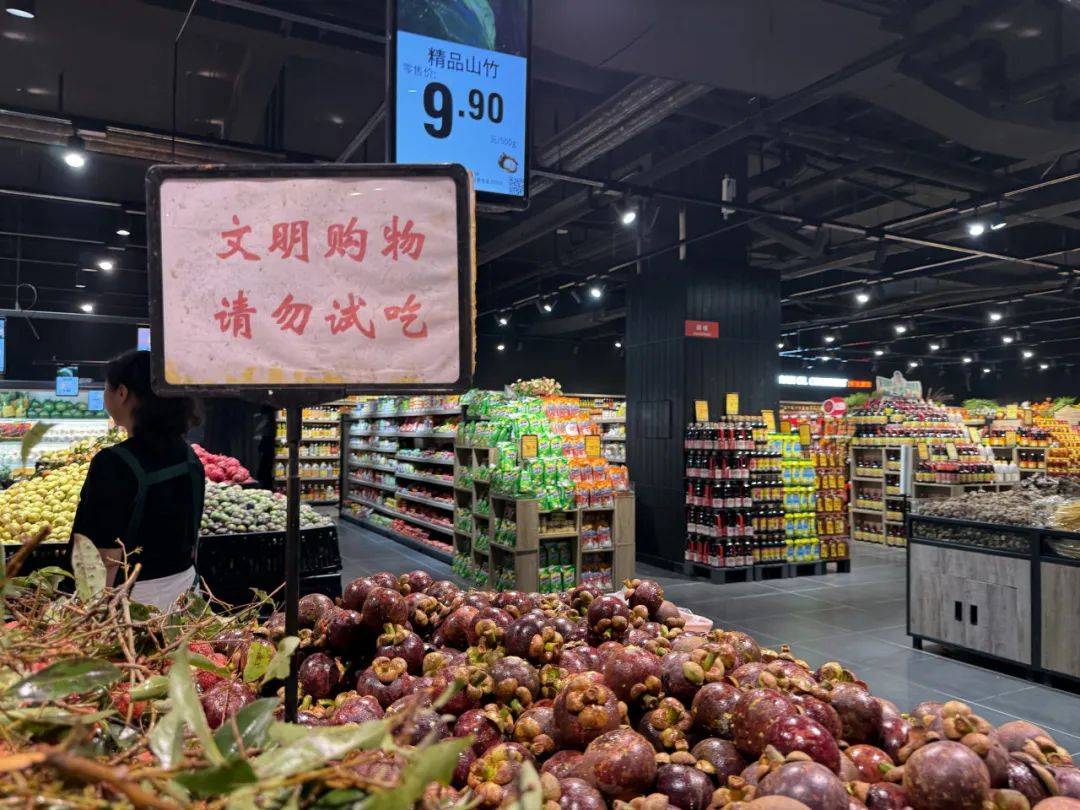
Group 1 - The article discusses the shift in consumer behavior in lower-tier cities, highlighting how local brands are gaining popularity over international luxury brands [4][5][20] - The presence of local supermarkets like "胖东来" is noted, which have adapted to the tastes and preferences of consumers in these areas [7][10][20] - The article emphasizes the unique shopping experience in these counties, where local culture influences service styles and product offerings [15][19][60] Group 2 - The rise of short video content is impacting consumer habits, with many residents engaging with this medium in various settings, including educational institutions and local shops [25][32][33] - The article points out the emergence of local influencers and content creators who are capitalizing on the popularity of short videos, although the market is competitive [34][35][36] - There is a noted trend of parents investing in education for their children, with a focus on local training institutions that offer affordable options compared to larger cities [39][43][46] Group 3 - The article highlights the proliferation of tea and coffee shops in these counties, indicating a growing demand for such beverages among residents [48][51][62] - It discusses the limited impact of the recent delivery service trends in these areas, where traditional shopping habits remain prevalent [54][57][60] - The article mentions the challenges faced by local businesses, including empty storefronts and reduced consumer spending, as the economy shifts [73][75]
【干货】奶酪产业链全景梳理及区域热力地图
Qian Zhan Wang· 2025-07-19 03:11
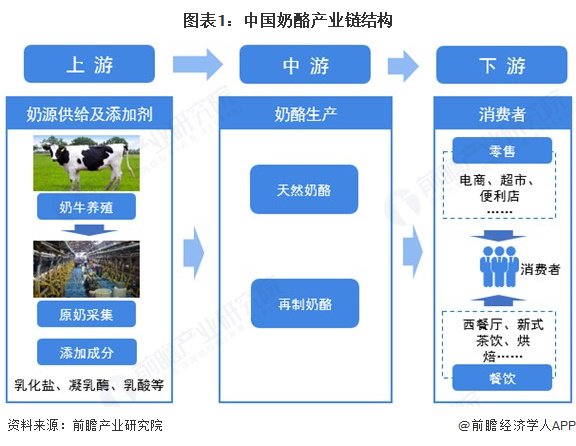
Core Insights - The cheese industry has a long supply chain that spans primary, secondary, and tertiary industries, with upstream focusing on milk supply and added ingredients, midstream on cheese production, and downstream on food service and retail channels [1][2][6] Industry Structure - The upstream segment consists of dairy farms and raw milk suppliers, with major players including YouRan Dairy, Modern Dairy, and others [2] - The midstream includes cheese manufacturers, with domestic participants like Mengniu, Yili, and Miaokelan Duo, and international brands such as Anchor and Kraft Heinz [2] - The downstream retail sector encompasses both online platforms like Taobao and JD.com, and offline supermarkets such as Walmart and Carrefour, as well as food service outlets like KFC and Starbucks [2][6] Regional Distribution - The upstream dairy supply is concentrated in regions like Inner Mongolia, Heilongjiang, and Shandong, while cheese production is primarily located in coastal areas [6] - Consumer demand is stronger in southern and coastal regions, indicating a north-south distribution pattern in the cheese industry [6] Cost Structure - The cost structure for processed cheese, such as cheese sticks, shows that raw material costs can exceed 50%, with packaging and processing costs accounting for approximately 17% and 28% respectively [9] - The cheese content in products often meets or exceeds 50%, impacting the overall cost structure [9] Price Transmission Mechanism - The cheese market price is influenced by supply-side costs, manufacturing costs, and consumer demand elasticity, creating a complex price transmission mechanism [12] - The final consumer price is affected by the cumulative costs from the supply chain, including raw material prices and brand premiums [12] Value Chain Analysis - The upstream segment has a higher profit margin, with companies competing for stable and quality milk supply [13] - Midstream cheese manufacturers like Miaokelan Duo have gross margins around 45%-50%, while downstream distributors have margins of 29%-33% [13]
从好丽友•派下架到“洋名”争议:山姆的国产供应链为何常在“躲猫猫”?
Mei Ri Jing Ji Xin Wen· 2025-07-18 10:29
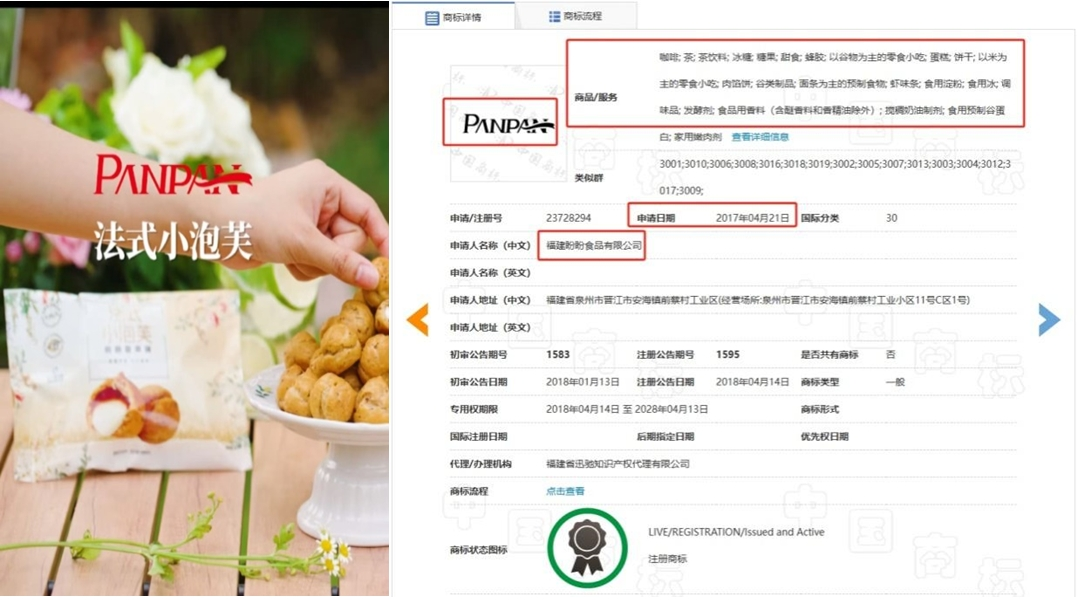
Core Viewpoint - The recent controversy surrounding Sam's Club's product selection adjustments highlights the shift from exclusive brands to more commonly found brands, raising questions about the perceived value of membership privileges [1][2]. Group 1: Product Selection and Branding - Sam's Club has faced criticism for introducing products with unfamiliar English names, such as "PANPAN" French puff, which are actually from well-known domestic brands [2][5]. - The "PANPAN" trademark was registered in 2017, indicating that it was not created specifically for Sam's Club [3][5]. - The "Sweet Hour" brand, associated with the product "益生元岩烧海苔," was registered by Guangdong Xizhilang Group in 2000, long before Sam's Club entered the Chinese market [5][6]. Group 2: Supplier Relationships and Product Quality - Sam's Club maintains high standards for its suppliers, requiring certifications for products, which limits the number of eligible suppliers [10]. - The self-branded products, such as Member's Mark, are primarily produced by well-known Chinese manufacturers, ensuring quality and local sourcing [10][11]. - The company relies heavily on local suppliers for popular items, such as frozen baked goods, which are produced by companies like Lihigh Foods [11]. Group 3: Market Positioning and Consumer Perception - The introduction of products with foreign-sounding names has led to consumer confusion regarding the origin of these products, prompting discussions about transparency in branding [15]. - Industry experts suggest that the quality of products should not be judged solely based on their branding, advocating for a better understanding of the value of domestic manufacturing [15].

股市特别报道·财经聚焦|稳定币点燃资本市场热潮 互联网与传统金融巨头纷纷抢占数万亿美元新战场
Shen Zhen Shang Bao· 2025-07-16 11:57
Group 1 - The recent surge in stablecoin-related stocks in both A-shares and Hong Kong stocks indicates a strong market interest, with notable performances from companies like Jinshi Technology and China San San Media [1][2] - The legislative progress in Hong Kong and the U.S. regarding stablecoin regulations is expected to provide clearer guidelines and promote the development of the stablecoin industry [1][4] - Major financial centers worldwide, including the U.S., EU, and South Korea, are establishing regulatory frameworks for digital currencies, which is likely to enhance market sentiment and facilitate institutional involvement [2][3] Group 2 - Internet giants and traditional financial institutions are rapidly positioning themselves in the stablecoin market, recognizing its potential as a multi-trillion-dollar opportunity [2][3] - Companies like Ant Group and JD.com are actively seeking stablecoin licenses in Hong Kong, indicating a competitive landscape for stablecoin issuance [3] - The global stablecoin market is projected to exceed $3.7 trillion by 2026, driven by cross-border payments and the tokenization of real-world assets [4] Group 3 - The total market size of cryptocurrency stablecoins has surpassed $250 billion, with trading volumes exceeding $20 trillion last year, reflecting the growing demand for stablecoins in the digital asset market [5]