辉瑞

Search documents
114亿美元!信达与武田达成合作 肿瘤药市场能否迎“王炸”?
2 1 Shi Ji Jing Ji Bao Dao· 2025-10-22 04:49
Core Viewpoint - Cinda Biologics has entered a significant global strategic partnership with Takeda Pharmaceutical to accelerate the global development of two late-stage investigational drugs, leveraging Cinda's innovation in tumor immunology and antibody-drug conjugates (ADC) alongside Takeda's extensive experience in global oncology drug development [1] Group 1: Partnership Details - The collaboration will focus on the joint development of the next-generation IO cornerstone therapy IBI363 (PD-1/IL-2α-bias) and its commercialization in the U.S., with Takeda leading the efforts [1][6] - Cinda will receive an upfront payment of $1.2 billion, including a $100 million premium strategic equity investment, with potential milestone payments bringing the total deal value to up to $11.4 billion [1] - Cinda will grant Takeda exclusive commercialization rights for IBI363 outside Greater China and the U.S., as well as exclusive rights for IBI343 (CLDN18.2 ADC) outside Greater China [1][9] Group 2: Market Context - The global oncology drug market is experiencing a shift from the "PD-1 dividend period" to a "next-generation technology-driven period," with a focus on unmet clinical needs and technological iterations such as dual antibodies and ADCs [4][11] - The oncology market has surpassed $200 billion, with a projected compound annual growth rate (CAGR) exceeding 20% over the next five years, driven by the penetration of next-generation technologies [2] Group 3: Product Insights - IBI363 is a globally innovative PD-1/IL-2α-bias dual-specific antibody fusion protein, showing promising results in various cancers, including immune-resistant lung cancer and melanoma [5][10] - IBI343 is an innovative CLDN18.2-targeting ADC, currently in Phase III clinical trials for gastric and gastroesophageal junction cancers, having received breakthrough therapy designation from the NMPA and FDA [8] - IBI3001, a first-in-class dual-targeting ADC, is in Phase I clinical trials and demonstrates multiple anti-tumor mechanisms [8][9] Group 4: Strategic Implications - The partnership reflects a broader trend where multinational pharmaceutical companies are seeking to mitigate patent cliff pressures by acquiring innovative pipelines from biotech firms, particularly in the oncology sector [12] - The collaboration is seen as a typical case of Chinese biotech firms leveraging technological differentiation to penetrate global mainstream markets, potentially reshaping the valuation framework for Chinese innovative drugs [12][15]

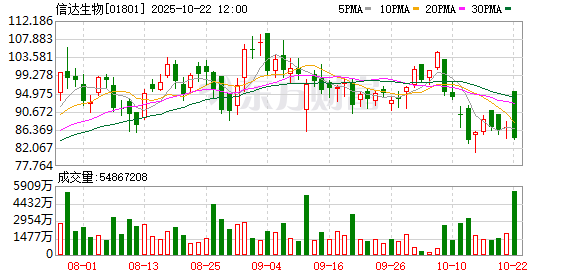
114亿美元!信达与武田达成合作,肿瘤药市场能否迎“王炸”?
2 1 Shi Ji Jing Ji Bao Dao· 2025-10-22 04:34
Core Viewpoint - The collaboration between Innovent Biologics and Takeda Pharmaceutical marks a significant strategic partnership aimed at accelerating the global development of innovative cancer therapies, particularly in the fields of tumor immunology and antibody-drug conjugates, with a total deal value potentially reaching $11.4 billion [1][2][4]. Group 1: Partnership Details - Innovent Biologics and Takeda will jointly develop the novel IO therapy IBI363 and share commercialization rights in the U.S. with a 40/60 cost-sharing ratio [4]. - The agreement includes a $1.2 billion upfront payment, which consists of a $100 million premium strategic equity investment, along with potential milestone payments [1][4]. - Takeda will have exclusive commercialization rights for IBI343 outside Greater China, while Innovent retains rights in the region [1][6]. Group 2: Product Pipeline - IBI363 is a globally innovative PD-1/IL-2α-bias bispecific antibody that has shown promising clinical results in various cancer types, including immune-resistant lung cancer [3][6]. - IBI343 is a targeted CLDN18.2 ADC currently undergoing Phase III trials in China and Japan for gastric cancer, having received breakthrough therapy designation from both the NMPA and FDA [6][7]. - IBI3001, another ADC targeting B7-H3 and EGFR, is in Phase I clinical trials and has demonstrated a strong safety profile in preclinical models [6][7]. Group 3: Market Context - The global oncology market is projected to exceed $200 billion, driven by unmet clinical needs and technological advancements in therapies such as bispecific antibodies and ADCs, with a compound annual growth rate (CAGR) of over 20% expected in the next five years [2][8]. - The partnership reflects a shift in the oncology market from the "PD-1 dividend period" to a "next-generation technology-driven period," highlighting the importance of clinical data and differentiated mechanisms in drug development [2][8]. - The collaboration is indicative of a broader trend where multinational pharmaceutical companies seek to partner with innovative Chinese biotech firms to enhance their pipeline and address the impending patent cliff challenges [9][10].
80个药品注册证书注销背后:中国医药摆脱“批文经济”的阵痛
Guan Cha Zhe Wang· 2025-10-21 08:30
Core Insights - The National Medical Products Administration (NMPA) has announced the cancellation of 80 drug registration certificates, including loratadine tablets, highlighting a significant regulatory shift in China's pharmaceutical industry [1] - Over the past year, NMPA has canceled a total of 626 drug registration certificates, with 89% of these being voluntarily withdrawn by companies, indicating a trend towards industry consolidation and stricter regulations [1][7] - The cancellation of loratadine tablets reflects a broader issue of overcapacity in China's generic drug market, where competition has intensified significantly [2][5] Industry Trends - The Chinese pharmaceutical industry is undergoing a critical phase characterized by increased regulatory scrutiny, normalization of centralized procurement, and accelerated industry consolidation [1][7] - The era of "approval economy" is ending, leading to a drastic reduction in the survival space for low-quality generic drugs [1][7] - The market for loratadine is dominated by a few key players, with Yangtze River Pharmaceutical holding nearly 60% market share, while over 90 companies struggle for the remaining 25% [6] Company Dynamics - Major international pharmaceutical companies are withdrawing from the Chinese market, as seen with Sanofi and Merck Sharp & Dohme canceling multiple product registrations due to competitive pressures and pricing challenges [8][10] - Local companies are also forced to make tough decisions, with Taicang Pharmaceutical canceling 11 products, including commonly used medications, as a response to the pressures of centralized procurement [11][13] - The case of Hengrui Medicine voluntarily canceling a cancer drug registration signals a strategic shift towards innovation rather than competing in the generic drug space [14]

创新药两日5项BD落地,产业趋势延续!港股通创新药ETF(159570)涨近2%,资金近20日净流入超17亿元!
Xin Lang Cai Jing· 2025-10-21 06:35
Core Viewpoint - The A-share and Hong Kong stock markets have experienced significant gains, with the Hong Kong Stock Connect Innovative Drug ETF (159570) seeing a nearly 2% increase and a trading volume approaching 2 billion yuan, indicating strong investor interest and liquidity in the innovative drug sector [1][3]. Group 1: Market Performance - The Hong Kong Stock Connect Innovative Drug ETF (159570) has a current scale exceeding 21 billion yuan, leading its peers in both scale and liquidity [1]. - As of October 20, the ETF has seen a net inflow of over 1.7 billion yuan in the past 20 days [1]. - Major stocks within the ETF, such as Innovent Biologics, CanSino Biologics, and 3SBio, have shown positive performance, with increases exceeding 2% [3]. Group 2: Business Development (BD) Trends - The innovative drug sector continues to thrive, with five business development (BD) deals totaling $4.266 billion reported over two days [3]. - Notable transactions include Hansoh Pharmaceutical with a total deal amount of $1.53 billion and Prigen with $1.64 billion [3]. - The total number of license-out transactions in China from January 1 to October 17, 2025, reached 135, with upfront payments totaling $4.976 billion and total deal amounts reaching $102.996 billion, reflecting strong international interest in Chinese innovative drug assets [5]. Group 3: Upcoming Catalysts - The fourth quarter is expected to see an acceleration in BD activities, with a focus on data from the ESMO conference [5]. - Chinese scholars are leading 23 LBA studies at the 2025 ESMO, showcasing various innovative drugs and highlighting China's growing influence in the global pharmaceutical landscape [7]. - The anticipated release of clinical data from the ESMO conference may lead to a revaluation of Chinese innovative drug pipelines and their corresponding stocks [7]. Group 4: Global Pricing Dynamics - Recent agreements between Pfizer and AstraZeneca with the U.S. government on Most Favored Nation (MFN) pricing have exceeded expectations, potentially impacting global sales forecasts for innovative drugs [8][9]. - Pfizer's agreements cover aspects such as pricing for existing and new drugs, direct sales, and tariff exemptions, which could enhance the market potential for innovative drugs [9][10]. - If MFN pricing trends continue, the peak global sales forecast for innovative drugs, including those licensed out from China, may significantly increase [10].
医药生物行业跟踪周报:高股息创新中药标的被低估,重点推荐佐力药业、方盛制药等-20251019
Soochow Securities· 2025-10-19 11:55
Investment Rating - The report maintains a rating of "Buy" for the pharmaceutical and biotechnology sector, specifically recommending companies like Zhaoli Pharmaceutical and Fangsheng Pharmaceutical as undervalued high-dividend Chinese medicine stocks [1]. Core Insights - The report highlights that the Chinese medicine sector is characterized by strong cash flow and low debt ratios, making it capable of high dividend payouts. This sector is less affected by international political dynamics, making it a viable defensive strategy in a volatile market [16][17]. - The report ranks sub-sectors in the following order of preference: innovative drugs > research services > CXO > Chinese medicine > medical devices > pharmacies [10][12]. Summary by Sections 1. Significant Excess Returns in Pharmaceutical Stocks - The A-share pharmaceutical index has shown a year-to-date increase of 18.85%, with a weekly decline of 2.48%. The Chinese medicine sector saw a slight increase of 0.38%, while other sectors like medical services and medical devices experienced declines [4][9]. 2. High Dividend Yield in Chinese Medicine Sector - The report emphasizes the attractiveness of high dividend yields in the Chinese medicine sector, with companies like Zhaoli Pharmaceutical expected to have a dividend yield of 4.1% in 2025, and Fangsheng Pharmaceutical at 3.1% [17][18]. 3. R&D Progress and Company Dynamics - Recent developments include the approval of innovative drugs and clinical trials by various companies, indicating ongoing advancements in the sector [4][12]. 4. Industry and Regulatory Insights - The report provides insights into the regulatory landscape affecting the pharmaceutical industry, noting that the impact of tariff wars on the sector is limited [4]. 5. Market Review - The report tracks the performance of various pharmaceutical sub-sectors, noting that the Chinese medicine sector has outperformed others in recent weeks [4][9].


成都先导(688222):DEL技术全球领先,核心技术平台助力新药研发
Tianfeng Securities· 2025-10-18 07:50
Investment Rating - The report initiates coverage with a "Buy" rating for Chengdu XianDao (688222) [7] Core Insights - Chengdu XianDao focuses on the discovery and optimization of small molecule and nucleic acid new drugs, leveraging four core technology platforms: DEL, FBDD/SBDD, OBT, and TPD, to establish an internationally leading R&D system for new drug discovery and optimization [1][16] - The company is a leader in DEL technology, possessing the largest known library of small molecule compounds globally, and has formed a DEL alliance with major international pharmaceutical companies, enhancing its technical leadership [2][4] - The integration of DEL and AI technologies, along with the completion of high-throughput infrastructure, positions the HAILO platform to significantly expand the chemical space for molecule screening [3][4] Summary by Sections 1. Diversified Platform Development - Chengdu XianDao is an international high-tech innovative drug R&D company with subsidiaries in Cambridge, UK, and Houston, USA, focusing on small molecule and nucleic acid drug discovery [16] - The company achieved a revenue of 227.01 million yuan in the first half of 2025, representing a year-on-year growth of 16.58%, with a net profit of 50.04 million yuan, up 390.72% [20][22] 2. New Drug Development Trends - The report highlights a resurgence in new drug development, with a significant increase in the number of new chemical entities approved by the FDA, indicating a recovery in both global and domestic new drug R&D [30][34] - In the first half of 2025, the company’s DEL segment generated revenue of 102.19 million yuan, a 40.45% increase year-on-year, driven by flexible and diversified custom library and screening services [22] 3. Financial Forecast - The company is projected to achieve revenues of 504 million yuan, 608 million yuan, and 739 million yuan for the years 2025, 2026, and 2027, respectively, with year-on-year growth rates of 17.95%, 20.70%, and 21.57% [5] - The net profit attributable to shareholders is expected to be 81 million yuan, 122 million yuan, and 156 million yuan for the same years [5]

集体大跌!特朗普,再度出击!
券商中国· 2025-10-17 23:42
Core Viewpoint - The recent comments by former President Trump regarding the price reduction of the obesity drug Ozempic have significantly impacted the stock prices of major players in the weight loss drug market, specifically Novo Nordisk and Eli Lilly, leading to a decline in investor enthusiasm for obesity treatment drugs [2][4]. Group 1: Stock Market Impact - On October 17, 2023, shares of Novo Nordisk and Eli Lilly fell by 3.07% and 2.02% respectively, following Trump's announcement that the price of Ozempic would soon be drastically reduced to $150 per month for consumers [3][4]. - Novo Nordisk's stock has seen a cumulative decline of approximately 58% over the past 12 months due to market concerns about the competitiveness of Ozempic [4]. Group 2: Pricing Strategies and Government Actions - The Trump administration is negotiating with pharmaceutical companies to lower drug prices, extending strategies previously applied to fertility treatment drugs to the weight loss drug sector [2][8]. - The actual net price of Ozempic is estimated to be 60% to 70% lower than its listed price of $1,000, due to rebates from insurance companies [4]. Group 3: Future Market Dynamics - Analysts predict that the introduction of oral weight loss drugs by Novo Nordisk and Eli Lilly by 2026 will likely see pricing comparable to existing injectable drugs, reflecting a shift in pricing strategy under government pressure [8][9]. - The global market for oral GLP-1 drugs is expected to reach a 15% share by 2030, with a potential market size of $150 billion [9].

海外医药:关注2025 ESMO港股医药临床数据更新:——海外消费周报(20251010-20251016)-20251017
Shenwan Hongyuan Securities· 2025-10-17 13:03
Investment Rating - The report indicates a positive outlook for the overseas pharmaceutical industry, particularly focusing on innovative drugs and clinical trial advancements [11]. Core Insights - The report highlights significant clinical trial updates from various companies, including Innovent Biologics, CanSino Biologics, and Kelun-Biotech, with a focus on their ongoing studies for advanced cancer treatments [6][7][8]. - The report emphasizes the successful third-phase clinical trials for several drugs, including TUKYSA for HER2+ metastatic breast cancer, and the acquisition of Orbital Therapeutics by BMS for $1.5 billion, indicating strong market activity and investment in innovative therapies [9][10]. Summary by Sections 1. Overseas Pharmaceuticals - The report discusses the recent updates from the 2025 ESMO conference, including multiple clinical trials for drugs targeting advanced kidney cancer and non-small cell lung cancer [6][7]. - Notable companies mentioned include Innovent Biologics with its study on IBI363 for sq-NSCLC, and Kelun-Biotech's TROP2 ADC for EGFR mutation-positive NSCLC [8][9]. 2. Market Performance - The Hang Seng Healthcare Index experienced a decline of 5.01%, underperforming the Hang Seng Index by 1.78 percentage points [6]. - The report notes the overall positive growth in the pharmaceutical sector, driven by innovative drug commercialization and active mergers and acquisitions [11]. 3. Company Updates - BMS's acquisition of Orbital Therapeutics for $1.5 billion is highlighted, showcasing the trend of consolidation in the pharmaceutical industry [9]. - Strong quarterly performance from Johnson & Johnson and Pfizer is reported, with J&J achieving $23.993 billion in revenue, a 6.8% year-over-year increase [10]. 4. Recommendations - The report suggests focusing on innovative drug companies with active clinical pipelines, including Innovent Biologics, CanSino Biologics, and Kelun-Biotech, as potential investment opportunities [11].
海外消费周报:海外医药:关注2025ESMO港股医药临床数据更新-20251017
Shenwan Hongyuan Securities· 2025-10-17 12:41
Investment Rating - The report maintains an "Overweight" rating for the overseas pharmaceutical industry, indicating a positive outlook for the sector [1]. Core Insights - The report highlights key clinical data updates from the 2025 ESMO conference, focusing on several companies including Innovent Biologics, CanSino Biologics, and Kelun-Biotech, which are conducting pivotal clinical trials for various cancer treatments [1][7]. - Notable advancements include the registration studies for IBI363 by Innovent Biologics and the approval of a third indication for TROP2 ADC by Kelun-Biotech, showcasing the ongoing innovation in the sector [8][9]. - The report emphasizes the strong performance of companies like BMS and Pfizer, with BMS acquiring Orbital Therapeutics for $1.5 billion and Pfizer reporting positive results from its HER2 inhibitor trial [9][10]. Summary by Sections 1. Overseas Pharmaceuticals - The Hang Seng Healthcare Index fell by 5.01%, underperforming the Hang Seng Index by 1.78 percentage points [6]. - Key events include multiple clinical trials presented at the 2025 ESMO, such as Innovent's study on the combination of sintilimab and lenvatinib for advanced renal cell carcinoma [7]. - The report suggests continued monitoring of innovative drugs and clinical progress from companies like BeiGene, Innovent, and CanSino [11]. 2. Company Updates - BMS announced a $1.5 billion acquisition of Orbital Therapeutics, which includes the OTX-201 therapy [9]. - Strong performance reported by Johnson & Johnson with Q3 2025 revenue of $23.993 billion, a 6.8% year-over-year increase [9]. - Pfizer's TUKYSA trial for HER2+ metastatic breast cancer yielded positive top-line results, indicating a successful phase in their drug development [10]. 3. Market Trends - The report notes a significant increase in inbound tourism to Macau during the National Day holiday, with a total of approximately 1.14 million visitors, marking a 1.9% year-over-year growth [13]. - The average daily visitor count reached a record high of 143,000, reflecting a recovery in the tourism sector [13].
2亿元卖早期资产 加科思“舍小保大”
经济观察报· 2025-10-17 11:22
Core Viewpoint - The article discusses the strategic moves of 加科思 (Gakosi) in the biopharmaceutical sector, particularly focusing on its divestment of a cardiovascular project to 海松资本 (Haisong Capital) and the subsequent reinvestment into its core oncology pipeline, especially the development of a Pan-KRAS inhibitor [2][4][9]. Group 1: Transaction Details - 加科思 announced a capital increase and equity transfer involving a cardiovascular treatment project, previously held by its subsidiary 加科瑞康 (Gakosi Ruikang), to 海松资本, which will acquire 80% of the subsidiary [2][4]. - The transaction includes an initial payment of 125 million yuan and a milestone payment of 75 million yuan, totaling 200 million yuan, which will be used for the development, production, and commercialization of its core oncology pipeline [2][3][4]. Group 2: Strategic Focus - Following the divestment of non-core assets, 加科思 aims to concentrate on the oncology field, enhancing its cash flow and retaining a 10% stake in 加科瑞康 for potential future benefits [4][6]. - The company has a strong focus on the Pan-KRAS inhibitor, which is a significant target in its pipeline, as KRAS mutations are linked to a high percentage of cancer cases [11][13]. Group 3: Clinical Development Plans - 海松资本 plans to leverage China's clinical advantages to expedite the development of the pipeline, with intentions to submit an IND application in the first half of next year, aiming to enter clinical trials [7][9]. - The Pan-KRAS inhibitor is currently undergoing I/IIa phase clinical trials in China and the U.S., with results expected to be announced in mid-2026 [14][15]. Group 4: Market Context - The article highlights the competitive landscape for Pan-KRAS inhibitors, noting that other companies like Pfizer and BeiGene are also advancing similar projects in clinical stages [15]. - 加科思's leadership emphasizes the potential of iADC (immune-stimulating antibody-drug conjugates) as a high-risk but high-reward area, indicating a broader strategy in innovative cancer therapies [15].