
阿斯利康

Search documents
“十四五”期间,青岛消费品零售总额在北方城市中仅次于北京
Sou Hu Cai Jing· 2025-12-02 09:45
Economic Growth - Qingdao's GDP is expected to exceed 1.7 trillion yuan in 2023, with an average annual growth rate of 5.9% during the "14th Five-Year Plan" period [1][3] - The city's GDP has crossed five 100 billion yuan thresholds, indicating significant economic advancement [3] Productivity and Income - Labor productivity is projected to reach 311,000 yuan per person in 2024, with an annual growth rate of 6.4%, surpassing GDP growth [3] - Per capita GDP increased from 127,000 yuan in 2020 to 161,000 yuan in 2024, a cumulative growth of 21.3%, equivalent to approximately 23,000 USD [3] Retail and Trade - Social consumer goods retail sales are expected to grow at an annual rate of 6.4%, surpassing 650 billion yuan, ranking second among northern cities after Beijing [3] - The total import and export volume is projected to grow at an annual rate of 9.1%, exceeding 900 billion yuan, accounting for over 2% of the national total [3] Industrial Development - High-tech manufacturing value added is expected to grow at an annual rate of 15.9%, with Qingdao's ranking in the national advanced manufacturing city list improving from 11th in 2020 to 6th in 2024 [4] - The service sector's added value is projected to exceed 1 trillion yuan, contributing approximately 65% to economic growth [4] Marine Economy - The marine economy's output value is expected to exceed 550 billion yuan, ranking third among coastal cities in China, constituting 33% of the GDP [5] - Qingdao Port's cargo and container throughput has risen to 4th and 5th globally, respectively, with container sea-rail intermodal transport maintaining the national lead for ten consecutive years [5] Technological Innovation - The number of high-tech enterprises has reached 8,683, nearly double that at the end of the "13th Five-Year Plan" [6] - R&D expenditure has grown at an annual rate of 11.6%, with significant advancements in technology transfer and innovation capabilities [6] Talent and Employment - The total talent pool in Qingdao has reached 3 million, an increase of 700,000 since the end of the "13th Five-Year Plan" [7] - The city has created 1.81 million new urban jobs, with a focus on improving education and healthcare facilities [11] Foreign Investment and Open Economy - Cumulative foreign investment has reached 18.47 billion USD, accounting for 22.6% of the province's total [8] - Qingdao has been designated as a northern gateway for foreign trade, with significant progress in establishing major open platforms [8] Infrastructure Development - Qingdao has achieved "county-level high-speed rail connectivity" and has the highest highway mileage in the province [9] - The city has improved urban infrastructure, including the expansion of metro lines and the construction of new parks and fitness facilities [10] Environmental Sustainability - Qingdao has been selected as a national pilot for green city development and carbon peak initiatives, with renewable energy capacity reaching 8.06 million kilowatts, 3.3 times that of 2020 [10] - Pollution control measures have led to significant reductions in PM2.5 and PM10 concentrations [10]

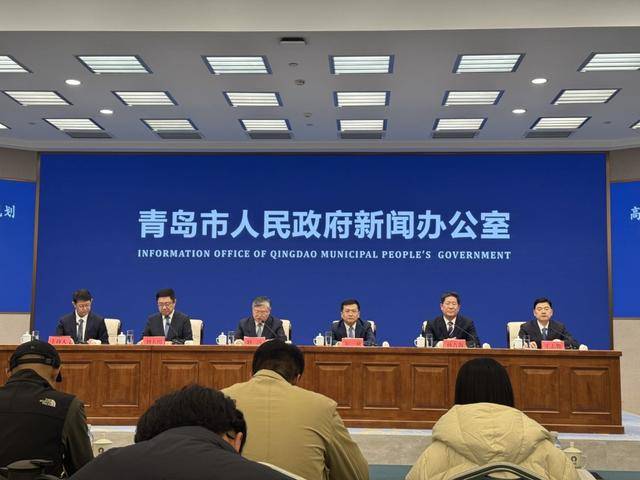
欧企加速“去中国”,“这能怪中国吗,得怪欧洲...”
Guan Cha Zhe Wang· 2025-12-02 07:12
Core Viewpoint - European companies are increasing investments in China despite political concerns about dependency on Chinese manufacturing, highlighting a paradox where businesses seek to leverage China's competitive advantages while governments express worries about trade imbalances and reliance on China [1][2]. Group 1: Investment Trends - European manufacturers are ramping up investments in China, particularly in sectors like chemicals, automotive, machinery, and pharmaceuticals, often to establish China as an export base and R&D center [1][2]. - The European Union's direct investment in China has been on the rise, with a record €3.6 billion in greenfield investments in the second quarter of last year [5][6]. - Approximately 25% of surveyed European companies are shifting more production to China, with localization in pharmaceuticals (80%), machinery (46%), and medical devices (40%) [4]. Group 2: Competitive Landscape - Companies like Clariant are expanding operations in China, with Clariant investing CHF 180 million (approximately RMB 1.6 billion) to expand its facility in Huizhou [4]. - The competitive landscape is shifting as European firms face challenges in competing with local Chinese companies due to lower costs and efficient supply chains [2][4]. - The trend of relocating production to China is partly driven by rising costs in Europe, especially in energy, making China a more attractive production base [8]. Group 3: Employment and Economic Impact - European companies are facing layoffs, particularly in the automotive sector, while simultaneously investing heavily in China, indicating a shift in focus [9]. - For instance, ZF Friedrichshafen plans to cut 7,600 jobs in Europe while expanding operations in China [9]. - The shift towards China for production and R&D may lead to further job losses in Europe, raising concerns about the long-term impact on local employment and industrial competitiveness [9][12]. Group 4: Policy and Regulatory Environment - The European Union is tightening regulations on investments and procurement from non-EU countries, particularly targeting Chinese firms, which may create barriers to trade [13]. - There are calls for Europe to address its own competitiveness issues, such as reducing regulations and energy costs, to better compete with China [12]. - The EU is also considering requiring Chinese companies to invest locally in Europe to access the market, reflecting a growing tension in trade relations [12][13].
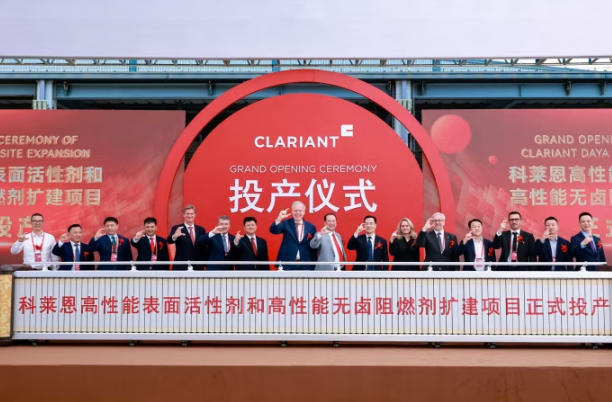
21对话|平安银行宋卓:透视并购市场“新逻辑”
2 1 Shi Ji Jing Ji Bao Dao· 2025-12-02 07:09
Core Viewpoint - The Chinese M&A market is entering a new phase driven by regulatory innovation and capital empowerment, with significant growth in merger and acquisition activities observed in recent years [2][3]. Group 1: Market Dynamics - The introduction of new policies such as the "National Nine Articles," "Sci-Tech Innovation Board Eight Articles," and "M&A Six Articles" has activated the M&A market, leading to a 117.30% year-on-year increase in major M&A transactions disclosed by A-share listed companies, totaling 163 deals by August 31, 2025 [3]. - The total transaction value of these M&A deals reached 4724.48 billion yuan, reflecting a 172.90% increase year-on-year [3]. - The M&A market is shifting from simple scale expansion to value creation, emphasizing the importance of industrial logic and quality of targets [3][5]. Group 2: Changes in M&A Logic - The Chinese M&A market has evolved from a dualistic structure, where state-owned enterprises focused on scale expansion and resource integration, while private enterprises pursued short-term capital returns through speculative activities [4][5]. - The 2017 "goodwill impairment" incident exposed inflated valuations and performance manipulation in some M&A transactions, prompting a reevaluation of M&A logic and value [4][5]. Group 3: Role of Banking in M&A - The recent draft of the "Commercial Bank M&A Loan Management Measures" expands the scope of M&A loans, allowing for minority stake acquisitions and increasing the financing ratio for controlling acquisitions from 60% to 70% [6]. - This regulatory change aims to enhance the funding capabilities for M&A transactions, particularly for strategic investments that require collaboration across the industrial chain [6][7]. Group 4: Private Equity (PE) Involvement - PE institutions are increasingly recognized as key players in industrial integration and value creation, moving beyond the perception of being short-term speculators [9][11]. - Successful PE-led M&A transactions have emerged, demonstrating the potential for significant contributions to local economies, job creation, and overall industry growth [10][11]. Group 5: Foreign Capital Trends - Foreign capital, particularly from the Middle East and Europe, is shifting towards deeper industrial integration and strategic cooperation in China, moving away from purely financial investments [12][13]. - European capital is actively participating in China's innovation ecosystem, focusing on high-tech and green transformation sectors, while also establishing partnerships with local firms [13][14]. - The collaboration between European and Middle Eastern capital is fostering a complementary strategic value, enhancing China's integration into global innovation networks and industrial chains [14].

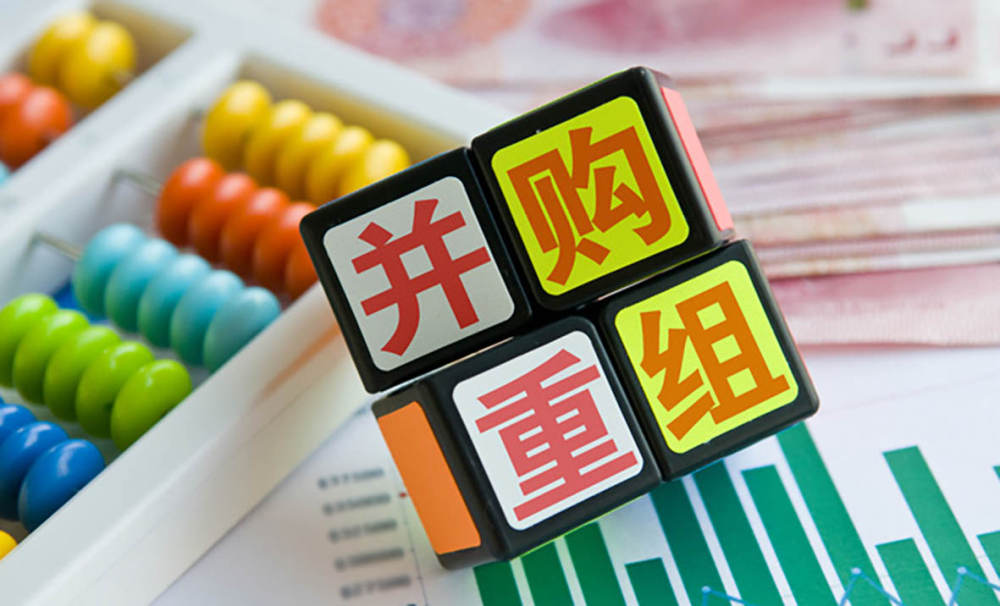
平安银行宋卓:透视并购市场“新逻辑”
2 1 Shi Ji Jing Ji Bao Dao· 2025-12-02 07:07
Core Insights - The Chinese M&A market is entering a new phase driven by regulatory innovation and capital empowerment, with a mature ecosystem emerging for mergers and acquisitions [1] - Recent policies such as the new "National Nine Articles," "Sci-Tech Innovation Board Eight Articles," and "M&A Six Articles" have significantly activated the M&A market, leading to a substantial increase in major transactions [2][3] Regulatory Changes - The introduction of the "M&A Six Articles" by the CSRC on September 24, 2024, has notably increased market activity after five years of declining transaction amounts, with a reported 163 major M&A transactions by A-share listed companies by August 31, 2025, representing a 117.30% year-on-year increase [2][3] - The total transaction amount reached 472.448 billion yuan, marking a 172.90% increase year-on-year [2] Market Dynamics - The development logic of the Chinese M&A market has shifted from simple scale expansion to value creation, emphasizing the importance of industrial logic and quality of targets [3][4] - The market has transitioned from a "dualistic" structure, where state-owned enterprises focused on resource integration and scale, to a more rational approach that values deep industry integration and technological advancement [3][4] Role of Financial Institutions - The recent draft of the "Commercial Bank M&A Loan Management Measures" expands the scope of M&A loans, allowing for minority stake acquisitions and increasing the financing ratio for controlling acquisitions from 60% to 70% [5] - This regulatory change aims to enhance the funding capabilities for M&A transactions, particularly for strategic investments that require collaboration across the industrial chain [5][6] Bank Strategies - Ping An Bank has focused on developing a systematic approach to M&A financing, targeting key strategic areas such as state-owned enterprise reform and technological innovation, with nearly 100 billion yuan in M&A loans provided to state-owned enterprises over the past three years [6][7] - The bank has also supported private equity (PE) acquisitions, facilitating connections between domestic and international capital, and has engaged in significant projects such as the acquisition of Yingde Gas, a leading industrial gas producer [6][7] Foreign Investment Trends - There is a notable shift in foreign capital investment in China, with Middle Eastern and European capital increasingly engaging in strategic partnerships and deeper industrial integration rather than merely financial investments [9][10] - This trend reflects a growing recognition of the value of Chinese innovation and technology, with foreign investors actively participating in sectors such as renewable energy, digital infrastructure, and biomedicine [10][11] Conclusion - The evolving landscape of the Chinese M&A market, characterized by regulatory support and strategic foreign investment, presents significant opportunities for value creation and industrial advancement, positioning it as a critical driver of economic growth [1][2][10]
港股异动 | 和铂医药-B(02142)午后涨近4% 公司与阿斯利康深化推进全球战略合作
智通财经网· 2025-12-02 06:04
Core Viewpoint - The stock of HAPO Pharmaceutical-B (02142) has seen an increase of nearly 4%, currently trading at 13.76 HKD, following the announcement of an enhanced global strategic collaboration with AstraZeneca, focusing on the development of next-generation biotherapies including antibody-drug conjugates (ADC) and T-cell engagers (TCE) [1] Group 1: Strategic Collaboration - HAPO Pharmaceutical has announced an update to its global strategic collaboration with AstraZeneca established in March 2025 [1] - The collaboration will leverage both companies' expertise to jointly discover and develop new biotherapies [1] - AstraZeneca will nominate R&D projects annually for the next four years, highlighting the deepening partnership [1] Group 2: Financial Terms - HAPO Pharmaceutical will be eligible to receive option fees, exercise fees, development and commercial milestone payments, as well as tiered royalties based on future net sales of licensed projects [1] - The economic terms are consistent with the financial framework agreed upon in March 2025 [1]
和铂医药-B午后涨近4% 公司与阿斯利康深化推进全球战略合作
Zhi Tong Cai Jing· 2025-12-02 05:59
Core Viewpoint - Heptagon Pharmaceuticals (02142) has announced an update to its global strategic collaboration with AstraZeneca, focusing on the discovery and development of next-generation biotherapies, including antibody-drug conjugates (ADCs) and T-cell engagers (TCEs) [1] Group 1: Collaboration Details - The collaboration will see AstraZeneca nominate R&D projects to Heptagon Pharmaceuticals annually over the next four years, highlighting the deepening partnership [1] - Heptagon Pharmaceuticals will be eligible to receive option fees, exercise fees, development and commercial milestone payments, as well as tiered royalties based on future net sales of licensed projects [1] - The economic terms of this collaboration align with the financial framework established in March 2025 [1] Group 2: Market Reaction - Heptagon Pharmaceuticals' stock rose nearly 4% in the afternoon session, with a current increase of 3.15%, trading at HKD 13.76, and a transaction volume of HKD 33.4244 million [1]
“愿与中国市场共同发展”(锐财经)
Ren Min Ri Bao Hai Wai Ban· 2025-12-01 22:11
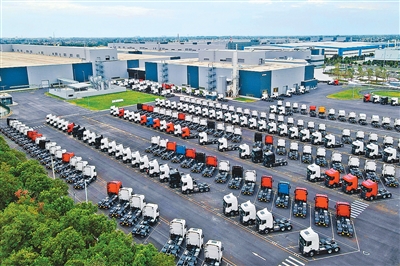
Group 1 - Scania has established its third global production base in Jiangsu, China, with an annual production capacity of 50,000 heavy trucks [2] - Foreign companies are increasingly investing in China, with a 14.7% year-on-year increase in newly established foreign-invested enterprises, totaling 53,782 from January to October this year [2][3] - The actual use of foreign capital in China reached 621.93 billion yuan, with significant investments in high-tech industries, including a 173.1% increase in e-commerce services [3] Group 2 - Guangdong province saw a 32.2% increase in newly established foreign investment projects, totaling 27,000, with actual foreign capital utilization of 84.62 billion yuan, a 7.5% increase [4] - Many foreign enterprises are reinvesting profits earned in China, indicating a strong confidence in the Chinese market [4] - The Chinese government is implementing policies to attract foreign investment, including financial support for foreign R&D centers and initiatives to address foreign enterprises' concerns [7][8] Group 3 - The Ministry of Commerce is focusing on expanding market access for foreign investment, particularly in the service sector, and enhancing the investment environment [8] - A series of investment promotion activities are being held domestically and internationally to showcase investment opportunities in China [8] - The government aims to create a market-oriented, law-based, and international business environment for foreign investors [8]
来凯医药-B涨超6% 业内预计LAE002在中国市场销售峰值有望达到20亿元
Zhi Tong Cai Jing· 2025-12-01 03:31
Core Viewpoint - The announcement by Lai Kai Pharmaceutical-B (02105) regarding the licensing agreement for its breast cancer candidate drug LAE002 (afuresertib) to Qilu Pharmaceutical is a significant development in the domestic biopharmaceutical sector, with a total agreement value of up to 2.045 billion yuan [1] Group 1: Company Developments - Lai Kai Pharmaceutical's stock rose over 6%, currently trading at 17.27 HKD with a transaction volume of 32.1493 million HKD [1] - The licensing agreement includes an upfront payment and a revenue-sharing model where Lai Kai will receive 10%-20% of sales, ensuring funding for further research and development [1] Group 2: Product and Market Potential - LAE002 is a potent AKT inhibitor, with its global development progress second only to AstraZeneca's Capivasertib in the HR+/HER2- breast cancer indication [1] - The peak sales potential for LAE002 in the Chinese market is estimated to reach 2 billion yuan, while global sales could reference Capivasertib, which is projected to achieve 700-800 million USD in sales this year, with peak sales potentially exceeding 1-2 billion USD [1]
港股异动 | 来凯医药-B(02105)涨超6% 业内预计LAE002在中国市场销售峰值有望达到20亿元
智通财经网· 2025-12-01 03:29
Core Viewpoint - LaiKai Pharmaceutical-B (02105) has seen a significant stock increase of over 6%, currently trading at 17.27 HKD, with a transaction volume of 32.15 million HKD, following the announcement of a major licensing deal for its breast cancer candidate drug LAE002 (afuresertib) in China [1] Group 1: Licensing Agreement - On November 12, LaiKai Pharmaceutical announced the licensing of its breast cancer candidate drug LAE002 to Qilu Pharmaceutical for a total agreement value of up to 2.045 billion RMB [1] - In addition to the upfront payment, LaiKai Pharmaceutical will receive a tiered revenue share of 10%-20% from sales, providing substantial funding for future research and development [1] - This transaction is noted as one of the larger licensing agreements in the domestic biopharmaceutical sector this year [1] Group 2: Drug Profile and Market Potential - LAE002 is a potent AKT inhibitor, with its global development progress second only to AstraZeneca's Capivasertib in the HR+/HER2- breast cancer indication [1] - Industry expectations suggest that LAE002 could achieve peak sales of 2 billion RMB in the Chinese market, while global performance may be benchmarked against Capivasertib, which is projected to generate sales of 700-800 million USD this year, with peak sales potentially exceeding 1-2 billion USD [1]
扩大产能 加码研发 外资企业“链”上深耕中国市场
Zhong Guo Zheng Quan Bao· 2025-11-30 20:33
Group 1: Expansion of Production Capacity - Alleima's new production facility in Jiangsu, China, highlights the company's long-term commitment to the Chinese market, aiming to enhance local manufacturing capabilities and improve delivery reliability [1] - Korean company Ailotte has signed a contract for a LOTVACUUM manufacturing project in Xi'an, with an initial investment of approximately 50 million yuan, focusing on semiconductor vacuum pump R&D and production [2] - AstraZeneca plans to invest an additional $136 million to expand its production capacity in Qingdao, reinforcing its commitment to the Chinese market [2] Group 2: Establishment of R&D Centers - Porsche has opened its first strategic overseas R&D center in Shanghai, aiming to enhance its R&D capabilities and respond more quickly to changing customer demands in China [3] - Johnson & Johnson has established its first 'industry-academia-research-application' innovation center in Beijing, focusing on advanced medical technologies such as AI and digital-assisted diagnosis [3] Group 3: Positive Outlook on the Chinese Market - Foreign companies are increasingly investing in China due to its vast consumer market and well-established industrial ecosystem, with over 1.4 billion people contributing to its status as the world's second-largest consumer market [4] - The comprehensive industrial ecosystem in China provides essential support for foreign enterprises, facilitating a "one-stop" solution from raw material supply to logistics [5] - The alignment of China's industrial innovation direction with the strategic needs of foreign companies is seen as a significant advantage for growth and innovation in sectors like healthcare [5]