Momenta

Search documents
智造大变革·智能化丨车企角逐智能驾驶军备赛,寻找下一个增长极
Bei Ke Cai Jing· 2025-11-11 09:21
Core Insights - The Chinese automotive industry is in a competitive race for intelligent driving, with the "14th Five-Year Plan" emphasizing the need for smart and integrated development, accelerating the transition to intelligent and green manufacturing [1][2] - AI capabilities are becoming a new valuation anchor for automotive companies, shifting the focus from mechanical performance to intelligent experiences, with significant implications for investment and market perception [2][4] - The industry is witnessing a shift from hardware competition to software competition, with companies either developing their own chips or forming closer ties with chip manufacturers to define the next generation of computing architecture [4][7] Industry Trends - The integration of AI with manufacturing is expected to create new business models, such as "software-defined vehicles" and service-oriented manufacturing, as highlighted in the "14th Five-Year Plan" [2][4] - The competition in intelligent driving is characterized by a "computing power arms race," with companies investing heavily in AI capabilities both in the cloud and on vehicles [2][3] - The automotive sector is evolving into a comprehensive industry that integrates advanced technologies from AI, energy, chips, and digital services, reflecting a significant transformation in its operational landscape [7][9] Technological Developments - The computational power of in-vehicle intelligent chips is advancing from 500-600 TOPS to over 2500 TOPS, enabling more complex real-time decision-making [3] - The relationship between automotive and chip industries is becoming increasingly symbiotic, with the potential for vehicles to act as distributed computing nodes in the digital economy [8] - The emergence of personalized insurance and services based on user driving behavior data indicates new revenue streams and business opportunities within the automotive sector [8] Strategic Collaborations - The current competitive landscape features three main collaboration models: Huawei's full-stack solutions, Momenta's technology supply approach, and self-research strategies by companies like BYD and Li Auto [7] - The integration of intelligent driving technology is not only reshaping the automotive industry but also connecting it with other sectors, such as robotics, as seen with the development of humanoid robots by companies like Tesla and XPeng [6][7]
车企角逐智能驾驶军备赛,寻找下一个增长极
Xin Jing Bao· 2025-11-11 09:20
Core Insights - The Chinese automotive industry is in a competitive race towards intelligent driving, with the "14th Five-Year Plan" emphasizing the need for smart and integrated development, accelerating the transition to intelligent and green manufacturing [1][2] - AI capabilities are becoming a new valuation anchor for automotive companies, shifting the focus from mechanical performance to intelligent experiences, with significant implications for investment and market perception [2][4] - The industry is witnessing a shift from hardware competition to software competition, with companies increasingly focusing on self-developed chips and partnerships with major chip manufacturers [3][4] Group 1 - The "14th Five-Year Plan" aims to promote technological upgrades and the digital transformation of manufacturing, leading to the emergence of new business models such as "software-defined vehicles" [2][4] - The competition in intelligent driving is characterized by a "computing power arms race," with companies needing substantial AI computing resources to develop and train intelligent driving models [2][3] - The automotive industry is evolving into a comprehensive sector that integrates advanced technologies from AI, energy, chips, and digital services, reflecting a deep interconnection with various industries [7][8] Group 2 - The relationship between automotive and chip industries is becoming increasingly symbiotic, with new business models and value growth points emerging from this integration [8] - Companies are exploring the potential of utilizing excess computing power from vehicles as distributed computing nodes within the broader digital economy [8] - The competitive landscape is marked by different collaboration models, with companies like Huawei providing full-stack solutions, while others focus on self-research to maintain control over core technologies [7][8]
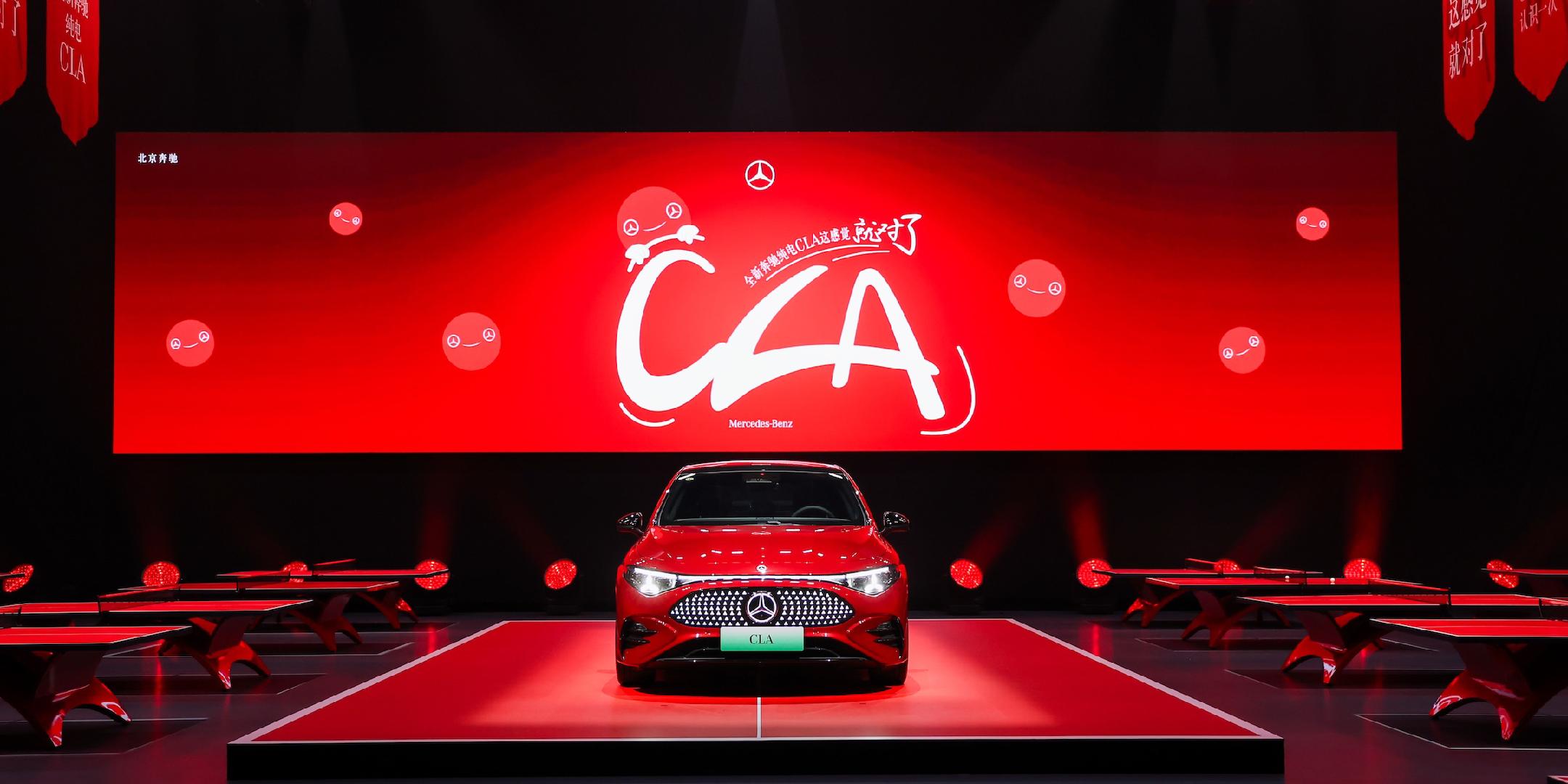
奔驰全新纯电CLA:用“中国配方”追逐年轻流量
Jing Ji Guan Cha Wang· 2025-11-10 03:24
Core Insights - The collaboration between table tennis player Wang Chuqin and Mercedes-Benz for the electric CLA model represents a strategic marketing move aimed at reshaping the brand's value system in China, focusing on technology and premium capabilities [2][3] - The Mercedes-Benz electric CLA is positioned as a core strategic product for the year, with a starting price of 249,000 yuan, which is 10,000 yuan lower than the pre-sale price, and features such as an 800V high-voltage architecture and a range of 866 kilometers [2][3] - Mercedes-Benz aims to narrow the technological gap with local brands by increasing local R&D and collaborating with domestic technology suppliers, a common goal among joint venture brands in the current market [2][3] Product Strength and Differentiation - The electric CLA emphasizes safety with standard features like 11 airbags and a five-star rating in China's electric vehicle fire safety index, along with leading the development of international standards for electromagnetic safety [3] - The marketing strategy includes engaging younger consumers, with the new leadership in the China region and a focus on appealing to the younger demographic through relatable marketing efforts [3][4] - The pricing strategy of the electric CLA, set below 250,000 yuan, is a direct response to the increasing price sensitivity of Chinese consumers and aims to compete in a crowded market alongside models like Tesla Model 3 and Zeekr 007 [4] Market Positioning and Challenges - Mercedes-Benz is adapting to a more localized approach in its marketing and product offerings, acknowledging the diminishing "technology halo" and the need to balance brand premium with cost control [4] - The entry into the competitive segment of electric vehicles means that Mercedes-Benz will face challenges in brand recognition, channel service, and user engagement in the Chinese market [4]

2025年第43周:跨境出海周度市场观察
艾瑞咨询· 2025-11-09 00:05
Group 1: Cross-Border Expansion and Market Trends - China and UAE's bilateral trade has surpassed $100 billion, with over 15,000 Chinese companies operating in the UAE, 90% of which plan to expand into the Middle East market [2][3] - The Dubai IFZA Free Zone has established its first office in Shanghai to facilitate Chinese companies' entry into the UAE and Middle East, aiming for a 30% increase in the number of serviced Chinese companies by 2024 [2][3] - The Chinese gaming industry is experiencing a significant reshuffle in the overseas mobile game market, with Tencent maintaining the top position but slowing growth, while MiHoYo and Muto Technology have seen substantial ranking increases [5] Group 2: Industry-Specific Developments - The global market for AI short dramas is expected to grow significantly by 2025, with China focusing on local production and AI optimization to enhance efficiency and reduce costs [6] - China's commercial aerospace sector is accelerating its international cooperation, with the successful launch of satellites for various countries, showcasing the maturity and cost-effectiveness of its technology [8] - The Chinese home robot market is thriving globally, with a 16.5% year-on-year increase in shipments, and Chinese brands holding four of the top five positions in the global market share [13] Group 3: Brand Strategies and Market Penetration - Chinese tea brands are rapidly expanding overseas, with Mixue Ice Cream and Heytea adopting different strategies to capture markets in Southeast Asia and Europe, respectively [19][20] - The sports goods industry in China is projected to reach an export value of $28.396 billion in 2024, driven by brand building and supply chain efficiency [18] - BYD has achieved impressive overseas sales, with a significant market share in Europe and plans to surpass Toyota by 2025, despite facing challenges in market education and after-sales service [27] Group 4: Technological Innovations and Globalization - Haier Biomedical is transitioning from product export to ecosystem co-building, focusing on laboratory solutions and smart medication to enhance its global competitiveness [28] - Chery Automobile has seen a 26.2% year-on-year increase in exports, emphasizing a strategy of localized production and a comprehensive product matrix [29] - SHEIN is transforming from a super retail entity to a super ecological entity, leveraging flexible supply chains and digital tools to enhance its global manufacturing capabilities [25]

一家企业融到C13轮了
36氪· 2025-11-08 01:19
Core Insights - The investment enthusiasm in the autonomous driving sector is reportedly returning, with significant financing activities observed recently [2][4][11]. Financing Activities - Momenta has completed two rounds of financing (C12 and C13), with the C13 round achieving a valuation of $6 billion [4]. - In the past month, over 10 financing events in the domestic autonomous driving sector have occurred, totaling more than 10 billion [5][7]. - Notable financing events include Didi's autonomous driving company raising 2 billion yuan in D round financing and New Stone's over $600 million in D round financing, which set a record for single financing in the sector [8][11]. Market Trends - The number of financing events in the autonomous driving industry in 2023 is approximately 140, with a total amount of around 20 billion yuan, indicating a clear "warming" signal in the market [11]. - The investment landscape has shifted, with large private equity firms increasingly participating in the sector, contrasting with the previous cautious sentiment [11][21]. Key Drivers of Investment - The push towards large-scale commercial applications, exemplified by companies like NineSight aiming for significant delivery targets, has sparked renewed investor interest [13][20]. - The emergence of embodied intelligence concepts has provided new opportunities for the autonomous driving sector, enhancing its appeal to investors [14][16]. Competitive Landscape - The current investment trend shows a clear tilt towards leading companies in the sector, particularly those demonstrating verifiable progress in commercialization [19][20]. - Companies like New Stone and Didi are highlighted as leaders in the field, with New Stone being the first to deliver over 10,000 L4 autonomous vehicles [20]. Future Outlook - The entry of major players like Huawei into the autonomous driving space is seen as a potential game-changer, with expectations that the competitive landscape will consolidate to a few dominant players [22]. - The industry is anticipated to transition from a phase of diverse players to a more concentrated market, with only a few key players remaining [22].

过去三年半净亏损19亿元 押注Robotaxi的享道出行冲刺IPO
Xin Lang Cai Jing· 2025-11-07 20:52
Core Viewpoint - The ride-hailing industry is expected to experience a "listing boom" in 2025, with Xiangdao Travel officially submitting its IPO application to the Hong Kong Stock Exchange, aiming to raise funds primarily for the development of autonomous driving technology and the commercialization of Robotaxi services [1][10]. Financial Performance - Xiangdao Travel's revenue is projected to grow steadily from approximately 4.73 billion yuan in 2022 to 6.40 billion yuan in 2024, with a compound annual growth rate (CAGR) of 16.3%. However, revenue declined by 2.8% year-on-year to 3.01 billion yuan in the first half of 2025 [2][3]. - The company has incurred significant losses, with net losses of approximately 7.8 billion yuan in 2022, 6 billion yuan in 2023, 4.1 billion yuan in 2024, and 1.1 billion yuan in the first half of 2025, totaling around 19 billion yuan over the past three and a half years [2][3]. Dependency on Aggregation Platforms - Xiangdao Travel heavily relies on aggregation platforms for user acquisition, with orders from these platforms increasing from 91.84% in 2022 to 98.08% in the first half of 2025, leading to substantial commission expenses that erode profits [2][4]. - The commissions paid to aggregation platforms have risen significantly, accounting for 75.3% of total sales expenses in the first half of 2025, up from 52% in 2022 [3][4]. Cost Management and Efficiency - In response to financial pressures, Xiangdao Travel has implemented cost-cutting measures, reducing administrative expenses from 156 million yuan in 2023 to 116 million yuan in 2024, a decrease of 25.9% [8]. - Research and development expenditures also saw a significant reduction, dropping from 170 million yuan in 2023 to 85.4 million yuan in 2024, a decline of 49.6% [9]. Robotaxi Business Development - Xiangdao Travel has established a leading position in the Robotaxi sector, launching trial operations in Shanghai in December 2021 and becoming one of the few companies to enter the L3/L4 autonomous vehicle pilot program by June 2024 [10][11]. - The company plans to achieve fully unmanned Robotaxi operations in Shanghai by the end of 2025 and aims for large-scale commercial operations in multiple cities by 2027 [11]. Strategic Partnerships and Support - Founded in 2018 with backing from SAIC Motor Corporation, Xiangdao Travel has secured significant investments from Alibaba, CATL, and other strategic partners, enhancing its technological capabilities and market position [6][7]. - The company is closely tied to SAIC Group, which serves as both a major customer and supplier, contributing to its revenue and operational support [7].
连续第八年参展 奥迪E5 Sportback进博会首秀
Zhong Guo Jing Ying Bao· 2025-11-06 07:03
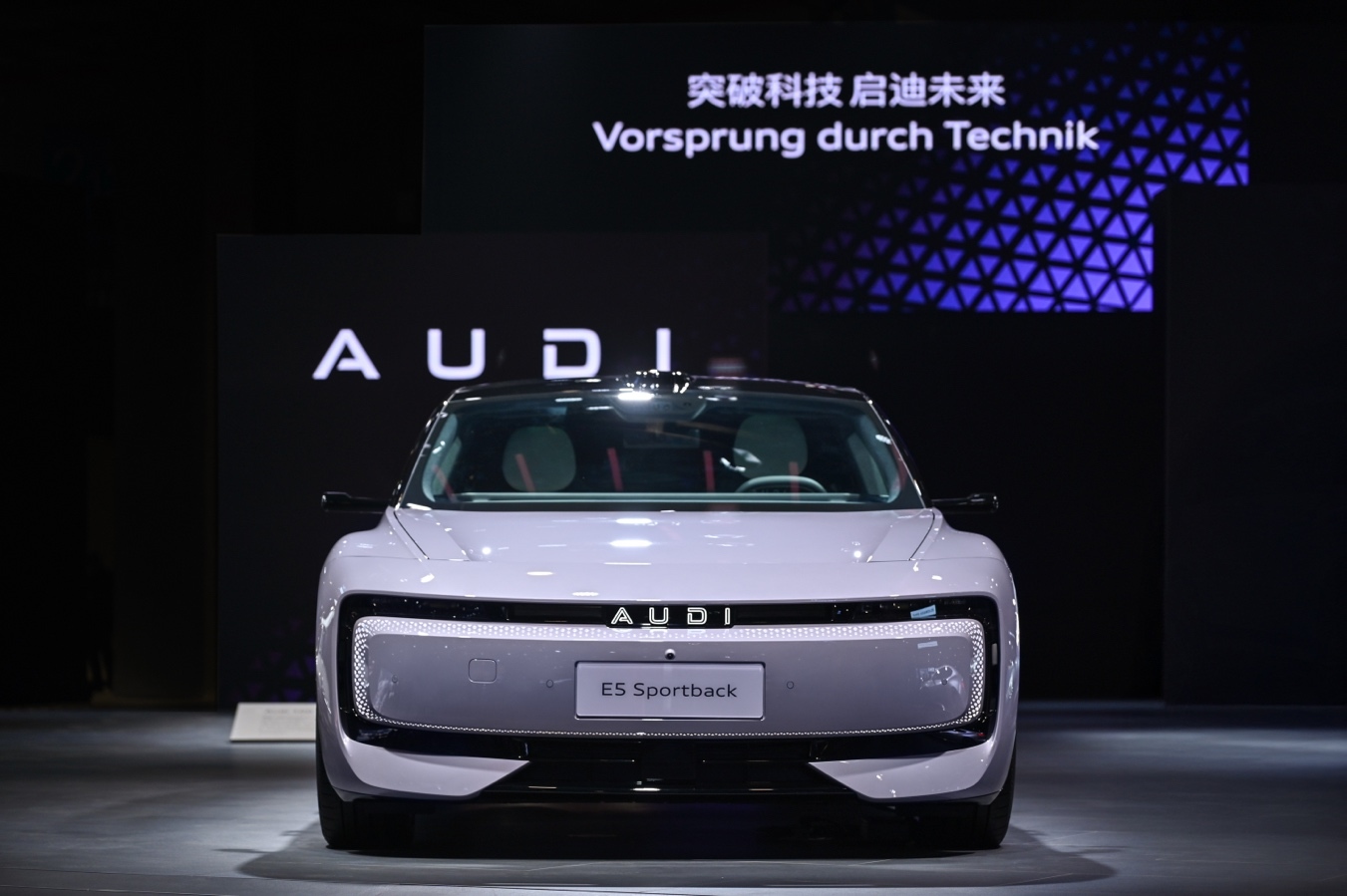
Core Insights - The 8th China International Import Expo (CIIE) is being held from November 5 to 10 at the National Exhibition and Convention Center in Shanghai, with Audi participating for the eighth consecutive year and showcasing the Audi E5 Sportback for the first time [1] - The Audi E5 Sportback is positioned as a milestone model for the luxury electric brand AUDI, featuring advanced aesthetics, intelligent technology, exceptional driving performance, and high-quality craftsmanship [1][2] - The vehicle incorporates a new design language and combines the iconic coupe silhouette with a wagon body style, featuring Audi's unique "Star Diamond Light Curtain" design for a distinctive sci-fi appearance [1][2] Technology and Performance - The Audi E5 Sportback is equipped with the new AUDI OS operating system powered by Qualcomm Snapdragon 8295 automotive-grade chip, offering an iPhone-like user experience tailored for Chinese consumers [2] - In the realm of assisted driving, Audi collaborates with leading Chinese tech company Momenta to create the industry's first integrated assisted driving solution, ensuring a blend of Audi's driving DNA with advanced AI models [2] - The vehicle features a dual-motor system producing 787 horsepower and 800 Nm of peak torque, achieving 0-100 km/h acceleration in just 3.4 seconds, and boasts a maximum range of 773 kilometers with a 10-minute charge providing an additional 380 kilometers of range [2] Sales Incentives - SAIC Audi has introduced a year-end purchase tax subsidy plan for the Audi E5 Sportback, offering up to 15,000 yuan in tax subsidies for orders placed before November 30, applicable to all currently available models [3]
连续八年“全勤” 宝马集团亮相进博会
Zhong Guo Jing Ying Bao· 2025-11-06 03:11
Core Insights - The 8th China International Import Expo (CIIE) opened in Shanghai on November 5, showcasing BMW Group's commitment to innovation and collaboration in the Chinese market [1] - BMW emphasizes a multi-technology approach to meet diverse market demands and achieve sustainable mobility, presenting both high-performance fuel models and electric vehicles at the expo [2] - BMW is entering a new era of collaboration with Chinese partners, integrating advanced technologies and customizing products to better serve local consumers [3] Group 1: Event Highlights - BMW Group showcased significant models including the new BMW M2 CS, BMW M4, BMW X7 M60i, BMW i4 M60, and BMW i7, along with a special edition electric MINI [1] - The company has participated in the CIIE for eight consecutive years, reflecting its strong commitment to the Chinese market and open cooperation [1] Group 2: Technology and Innovation - BMW's multi-technology strategy includes both high-performance fuel vehicles and electric models, demonstrating flexibility and a customer-oriented approach [2] - The new generation technology display at the expo highlighted innovations such as the BMW driving control super brain and new electric drive systems [2] Group 3: Collaboration and Local Adaptation - BMW is collaborating with leading Chinese tech companies to enhance its offerings, including AI integration and smart driving solutions tailored for local conditions [3] - The domestically produced new generation BMW iX3 is set to launch in Shenyang in 2026, designed with input from Chinese teams to meet local consumer preferences [3] Group 4: Open Innovation - The BMW Group Asia Pacific Technology Center showcased innovative solutions from startups across five countries, focusing on AI, materials, electric technology, and robotics [4] - The center acts as a key link in the open innovation ecosystem, connecting regional startups with BMW's global R&D framework [4]
奥迪 E5 Sportback进博会首秀 “美美与共”诠释豪华电动新境
Mei Ri Jing Ji Xin Wen· 2025-11-06 02:56
Core Insights - The 8th China International Import Expo officially opened on November 5, showcasing Audi's commitment to electric transformation with the debut of the Audi E5 Sportback, highlighting the integration of German luxury and advanced Chinese technology [1] Group 1: Product Features - The Audi E5 Sportback is positioned as a milestone for the luxury electric brand, combining avant-garde aesthetics, advanced intelligence, exceptional driving control, and meticulous craftsmanship, redefining luxury electric mobility [3] - The vehicle features a unique design that merges Audi's signature coupe silhouette with a wagon body style, incorporating the distinctive "Star Diamond Light Curtain" design for a futuristic appearance [3] - Equipped with the new AUDI OS operating system and Qualcomm Snapdragon 8295 automotive-grade chip, the E5 Sportback offers an iPhone-like user experience tailored for Chinese consumers [3] Group 2: Performance Specifications - The Audi E5 Sportback is powered by a dual-motor system delivering 787 horsepower and 800 Nm of peak torque, achieving 0-100 km/h acceleration in just 3.4 seconds [4] - It boasts a maximum CLTC range of 773 kilometers, utilizing CATL's CTP battery technology, and can recharge 380 kilometers of range in just 10 minutes due to its 800-volt architecture [4] Group 3: Marketing and Sales Strategy - SAIC Audi has introduced a year-end purchase tax subsidy plan for the E5 Sportback, offering up to 15,000 yuan in tax subsidies for orders placed before November 30, with conditions for delivery by 2026 [4] - The company aims to uphold its brand ethos of "Breakthrough Technology, Inspire the Future," focusing on expanding its presence in the luxury market and enhancing the luxury mobility experience [4]
对话曹越:马尔奖、光年之外、Sand.ai,研究员到 CEO 的十年串起大模型变迁
晚点LatePost· 2025-11-03 08:26
Core Viewpoint - The article discusses the evolution of the AI industry through the experiences of Cao Yue, co-founder of Sand.ai, highlighting the importance of organizational structure and collaboration in driving innovation and success in AI development [3][4][5]. Group 1: Evolution of AI and Organizational Insights - Cao Yue's journey from a researcher to an entrepreneur reflects the broader changes in the AI industry, emphasizing the shift from paper-driven research to problem-driven approaches [3][4][10]. - The success of OpenAI is attributed to its scalable system design and a focus on fundamental problems rather than merely academic publications [5][13]. - The transition from model-driven to product-driven development is crucial for startups in the AI space, as seen in Sand.ai's approach with its models [4][47]. Group 2: Key Developments in AI Models - Sand.ai's Gaga-1 model aims to address the challenges of character consistency and realistic performance in AI-generated videos, which have been significant pain points in the industry [4][41]. - The model's focus on audio-visual synchronization and narrative capabilities marks a significant advancement in AI video generation, aligning with market needs [35][41]. - The competitive landscape is shifting, with major players like OpenAI launching products that emphasize end-to-end solutions, prompting smaller companies to adapt quickly [44][45]. Group 3: Market Dynamics and Future Outlook - The article discusses the potential for AI video generation to unlock new consumer engagement opportunities, particularly in social media contexts [42][43]. - The importance of understanding product-market fit (PMF) is highlighted as essential for achieving commercial success in AI startups [47]. - The future of AI in China is seen as promising, with increasing investment and innovation expected to emerge in the coming years [16][22].