福耀玻璃

Search documents
玻璃期货持续低位震荡:多空胶着,静待破局
Xin Lang Cai Jing· 2025-12-29 13:39
Core Viewpoint - The glass futures market is currently in a weak balance state, characterized by limited price fluctuations and a lack of clear direction due to various pressures and supports [1][19]. Group 1: Market Conditions - Glass futures prices have been experiencing low-level fluctuations, indicating a weak balance with pressure from above and support from below [1][19]. - The market is facing "threefold pressure" from weak terminal real estate demand, high social inventory, and rigid production supply despite widespread losses among companies [3][21]. Group 2: Demand Side - The demand for glass is closely linked to the real estate completion cycle, which is currently underperforming, leading to a decline in core metrics such as new starts, construction, and completion areas [4][22]. - Seasonal demand is further weakened as colder temperatures slow construction activities, resulting in a decrease in orders from downstream processing enterprises [4][22]. Group 3: Inventory Side - Inventory levels are a direct indicator of supply-demand balance; as of December 25, the total inventory of float glass production enterprises reached 58.623 million heavy boxes, showing a year-on-year increase of nearly 30% [5][23]. - The previous trend of inventory reduction has stalled, indicating that real terminal consumption has not initiated a significant inventory drawdown [5][23]. Group 4: Supply Side - The supply side remains relatively rigid, with daily melting volume stable at approximately 154,500 tons and a capacity utilization rate of 73.89% as of December 25 [9][27]. - Cost support is provided by widespread losses among glass producers, with production margins for various fuels showing negative values, which helps to underpin prices [9][27]. Group 5: Market Outlook - The market is expected to continue its low-level oscillation due to high inventory suppressing upward price movement, while deep losses and cold repair expectations provide a bottom support [10][28]. - Key future observation points include the potential for effective inventory reduction before the Spring Festival, the realization of cold repair expectations, and the impact of macro policies on the demand side [11][29][31].


汽车周观点:小鹏联合北大发布FastDriveVLA,继续看好汽车板块-20251229
Soochow Securities· 2025-12-29 11:09
Investment Rating - The report maintains a positive outlook on the automotive sector, particularly highlighting the potential of AI-driven vehicles and related technologies [1][3]. Core Insights - The automotive industry is at a crossroads, transitioning from electric vehicle benefits to a focus on intelligent vehicles and robotics innovation [3]. - Key developments include the collaboration between Xiaopeng Motors and Peking University on the FastDrive VLA model, which addresses significant challenges in autonomous driving [2][3]. - The report anticipates a significant increase in the penetration of L3 and L2+ intelligent driving technologies by 2025, with expected market growth driven by major players like Tesla and Huawei [48][49]. Summary by Sections Market Performance - This week, the automotive sector outperformed the market, with passenger vehicles and auto parts showing the best performance, increasing by 3.3% [2][3]. - The report notes that the automotive sector ranked 11th in A-shares and 18th in Hong Kong stocks this week [7][9]. Investment Opportunities - The report identifies three main investment themes: AI smart vehicles, robotics, and traditional vehicle segments benefiting from favorable market conditions [3]. - Key investment targets include: - **AI Smart Vehicles**: Focus on Robotaxi and Robovan models, with companies like Tesla, Xiaopeng, and Horizon Robotics highlighted [3]. - **Robotics**: Emphasis on component suppliers and companies involved in the development of humanoid robots and related technologies [54][60]. - **Traditional Vehicles**: Companies like Yutong Bus and China National Heavy Duty Truck are expected to benefit from ongoing demand and favorable policies [50][53]. Sales Forecasts - The report projects that domestic retail sales of passenger vehicles will reach 23.62 million units in 2025, representing a year-on-year growth of 3.8% [45]. - The penetration rate of new energy vehicles is expected to increase to 55.4% by 2025, with significant growth in both domestic and export markets [49][53]. Key Companies and Developments - Notable companies mentioned include Xiaopeng Motors, Ideal Auto, and Horizon Robotics, with significant advancements in technology and profitability reported [3][59]. - The report highlights the importance of strategic partnerships and technological advancements in driving future growth within the sector [60].
智通AH统计|12月29日
智通财经网· 2025-12-29 08:19
Core Viewpoint - The report highlights the premium rates of AH shares, with Northeast Electric, Zhejiang Shibao, and Hongye Futures leading in premium rates, while CATL, China Merchants Bank, and Heng Rui Medicine are at the bottom of the list [1][2]. Premium Rate Summary - Northeast Electric (00042) has a premium rate of 847.37%, followed by Zhejiang Shibao (01057) at 428.73% and Hongye Futures (03678) at 283.73% [1]. - The lowest premium rates are observed in CATL (03750) at -11.13%, China Merchants Bank (03968) at -3.84%, and Heng Rui Medicine (01276) at 3.17% [1]. Deviation Value Summary - The highest deviation values are recorded for Zhejiang Shibao (01057) at 136.00%, Junda Co. (02865) at 40.42%, and Nanjing Panda Electronics (00553) at 24.71% [1][2]. - The lowest deviation values are seen in Northeast Electric (00042) at -35.46%, GAC Group (02238) at -26.23%, and Nanhua Futures (02691) at -17.44% [1][3]. Top and Bottom AH Shares - The top ten AH shares by premium rate include companies like Sinopec Oilfield Service (01033) with a premium rate of 271.43% and Fudan Zhangjiang (01349) at 250.53% [1]. - The bottom ten AH shares by premium rate include Weichai Power (02338) at 9.88% and WuXi AppTec (02359) at 10.47% [1].
东吴证券:全球化纵深与AI破局 汽车零部件开启第二增长极
Zhi Tong Cai Jing· 2025-12-29 04:05
Core Viewpoint - The report from Dongwu Securities indicates that the overall Beta of the sector is expected to weaken by 2026, with structural opportunities being more favorable than overall opportunities. The focus should be on three technological main lines: "Intelligent Driving (L2++/L3/L4) + Liquid Cooling (AIDC) + Humanoid Robots," along with the long-term certainty of "going global" [1]. EPS Dimension - The stock market is seeking alpha through cyclical resilience, prioritizing product companies with high competitiveness that can enhance market share and companies that can increase average selling prices (ASP) by entering high-value sectors through internal and external growth [2]. - Globalization is expected to open growth opportunities in the automotive parts sector, with a focus on enhancing growth potential and risk resistance by prioritizing production capacity in Europe, North America, and Southeast Asia. With profit recovery and deeper customer engagement, companies may transition to global Tier 1/platform leaders between 2026 and 2030. Recommended companies include Fuyao Glass, Xingyu Co., Minth Group, Joyson Electronics, and Xingyuan Magnesium, with New Spring Co. as a focus [2]. PE Dimension - Intelligent Driving: The penetration of L2++ is accelerating, with L3 regulations and urban NOA speeding up, and L4-level smart vehicles rapidly coming to market. The focus should be on chips, domain controllers, core sensors, and drive-by-wire chassis, emphasizing systematic capabilities in cost, algorithms, and safety redundancy. Recommended companies include Horizon Robotics, Black Sesame, and Desay SV, with Bertel and Nexperia as points of interest [3]. - Robotics: Transitioning from "0 to 1" to "1 to 10," benefiting from supply chains involving large models, actuators, reducers, lead screws, and force sensors. The focus should be on automotive parts leaders with "technology synergy + manufacturing collaboration." Recommended companies include Top Group, Joyson Electronics, and Shuanghuan Transmission, with interest in Yapp Automotive Parts and Daimay Co. [3]. - Liquid Cooling: Growth in AI capital expenditure and increased power consumption in AIDC; the liquid cooling temperature control market is projected to reach hundreds of billions by 2030. The automotive parts sector should focus on thermal management, pipelines, and quick connectors, emphasizing system integration and cost reduction capabilities. Recommended companies include Minth Group, Yinlun Co., and Feilong Co. [3].

福耀玻璃20251228
2025-12-29 01:04
Summary of Fuyao Glass Conference Call Company Overview - **Company**: Fuyao Glass - **Industry**: Automotive Glass Manufacturing Key Points and Arguments Valuation and Financial Performance - Fuyao Glass's current valuation has dropped to below 15 times earnings, placing it in the bottom 20% of historical percentiles, indicating a high margin of safety [2][4] - Projected revenue and profit growth rates for 2026 are approximately 15% and between 15% to 20% respectively [2][4] Market Conditions and Industry Outlook - Initial pessimism regarding industry recovery led to a decline in stock price, but expectations may improve with the implementation of subsidy policies in 2026, which could positively impact automotive sales growth [2][4] - The automotive supply chain significantly contributes to GDP and retail sales, and the strong continuity of subsidies is favorable for the industry [2][4] Cost Management and Pricing Power - Fuyao Glass possesses strong pricing power, allowing it to pass on some cost pressures to customers; the impact of rising electricity prices in the U.S. is limited, accounting for about 4% of costs [2][4] - The company benefits from significant economies of scale, which help mitigate cost fluctuations [5] Market Share and Competitive Position - Fuyao holds approximately 70% market share in the domestic market and nearly 40% globally, making it sensitive to overall industry conditions [2][3] - Recent stock price adjustments were primarily due to market pessimism regarding the 2026 domestic passenger vehicle market outlook and rising raw material costs [3] Future Growth and Strategic Developments - The new president, Cao Hui, is expected to drive positive developments in product boundary expansion and other areas [6] - There is a robust order pipeline in both the overseas OEM market and the domestic aftermarket, supporting the company's expansion plans [6] - While initial profitability may be pressured due to new capacity investments in 2026, overall profitability is expected to improve significantly by 2027 [6] Investment Recommendation - Fuyao Glass is recommended as a key investment opportunity due to its low current valuation, high margin of safety, and potential for future growth [2][4][6]

重仓龙头,智驾驱动,港股通汽车ETF华宝(520780)12月29日炫动上市
Xin Lang Cai Jing· 2025-12-28 23:20
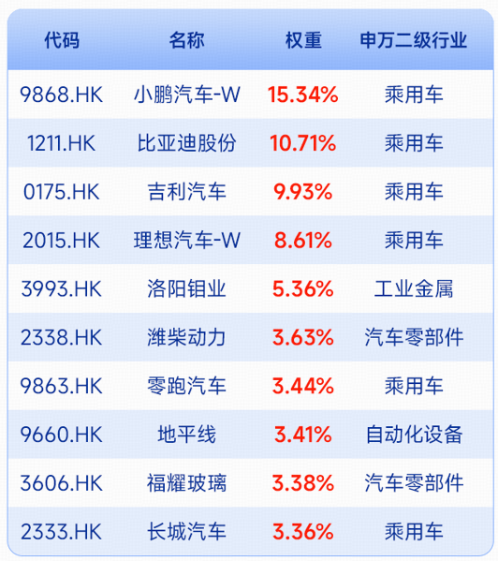
Group 1 - The Hong Kong Stock Connect Automotive ETF by Huabao (520780) has officially launched, providing a clear investment tool focused on vehicle manufacturing and brand car companies [1][12] - The ETF tracks the CSI Hong Kong Stock Connect Automotive Industry Theme Index, which has a high concentration of holdings and includes many scarce Hong Kong smart driving stocks, facilitating easier investment in leading automotive companies [3][6] - The ETF allows T+0 trading, which is expected to enhance market enthusiasm and optimize product liquidity [1][12] Group 2 - Analysts highlight the bright future of "smart driving," supported by high consumer demand, favorable national policies, and significant export potential [3][15] - The integration of AI into the automotive industry is seen as a major transformative force, with the potential for substantial capital influx due to advancements in electric and intelligent technologies [4][15] - The ETF is positioned to help investors easily access high-quality stocks across the entire automotive supply chain, particularly focusing on downstream vehicle manufacturing and applications [3][14] Group 3 - The CSI Hong Kong Stock Connect Automotive Industry Theme Index is characterized by a focus on leading companies, with the top ten constituents accounting for 67.18% of the index [6][16] - As of November 30, 2025, the index includes major players such as XPeng Motors, BYD, Geely, and Li Auto, with significant weightings in the index [6][17] - The index has shown strong performance, with a cumulative increase of 132.21% since its base date, outperforming other industry indices [8][18] Group 4 - The index's research and development expenditures have seen substantial growth, with a year-on-year increase of 22.5% expected in 2024, indicating a strong foundation for future growth in the smart driving sector [10][20] - The automotive industry is increasingly recognized for its global competitiveness, having surpassed Japan as the world's largest automotive exporter for two consecutive years by 2024 [4][15] - The synergy between high-quality automotive parts companies and the robotics industry is anticipated to drive economic development and transition towards a technology-driven future [4][15]
东吴证券:全球化纵深×AI破局 汽车零部件开启第二增长极
Zhi Tong Cai Jing· 2025-12-28 07:49
Core Viewpoint - The automotive parts sector is expected to see a weakening overall Beta by 2026, with structural opportunities being more favorable than total market opportunities. The focus should be on "intelligent driving (L2++/L3/L4) + liquid cooling (AIDC) + humanoid robots" as key technological lines, along with long-term certainty in overseas expansion [1]. Summary by Categories EPS Dimension - Companies should seek alpha through high-competitiveness products that enhance market share and those that can increase average selling price (ASP) by entering high-value sectors through internal and external growth [2]. - Globalization is expected to enhance growth potential and risk resilience in the automotive parts sector, particularly in Europe, North America, and Southeast Asia. With profit recovery and deeper customer engagement, companies may transition to global Tier 1/platform leaders between 2026 and 2030. Recommended companies include Fuyao Glass (600660), Xingyu Co., Ltd. (601799), Minth Group, Joyson Electronics (600699), and Xingyuan Magnesium (301398), with New Spring Co., Ltd. (603179) as a focus [2]. PE Dimension - Intelligent Driving: The penetration of L2++ is accelerating, with L3 regulations and urban NOA speeding up, and L4-level smart vehicles being rapidly deployed. Companies should prioritize chips, domain controllers, core sensors, and drive-by-wire systems that demonstrate systematic capabilities in cost, algorithms, and safety redundancy. Recommended companies include Horizon Robotics, Black Sesame (000716), and Desay SV Automotive, with Bertel (603596) and Nexperia as points of interest [3]. - Robotics: Transitioning from "0 to 1" to "1 to 10," benefiting from large models and supply chains including actuators, reducers, lead screws, and force sensors. Focus should be on automotive parts leaders with "technology synergy + manufacturing collaboration." Recommended companies include Top Group (601689), Joyson Electronics, and Shuanghuan Transmission (002472), with YaPu Co., Ltd. (603013) and Daimay Co., Ltd. (603730) as points of interest [3]. - Liquid Cooling: Growth in AI capital expenditure and increased power consumption in AIDC are expected to create a market space of hundreds of billions for liquid cooling temperature control by 2030. The automotive parts sector should focus on thermal management, pipelines, and quick connectors, emphasizing system integration and cost reduction capabilities. Recommended companies include Minth Group, Yinlun Machinery (002126), and Feilong Co., Ltd. (002536) [3].
【策略报告】汽车零部件2026年投资策略:全球化纵深×AI破局,汽零开启第二增长极
东吴汽车黄细里团队· 2025-12-28 06:24
Core Viewpoint - The overall Beta of the automotive parts sector is expected to weaken in 2026, with structural opportunities being more favorable than total opportunities. The humanoid robot sector opens up valuation elasticity for automotive parts, focusing on three main technology lines: "Intelligent Driving (L2++/L3/L4) + Liquid Cooling (AIDC) + Humanoid Robots," along with the long-term certainty of "going overseas." Traditional advantageous tracks should be selectively laid out based on "performance realization + new order production" [3][8]. EPS Dimension - In the existing market, companies with high competitiveness that enhance market share and those that enter high-value tracks through internal and external expansion to increase ASP should be prioritized. The globalization of automotive parts opens up growth space, with a focus on production capacity in Europe, North America, and Southeast Asia, significantly enhancing growth potential and risk resistance. Companies are expected to transition to global Tier 1/platform leaders between 2026-2030. Recommended companies include Fuyao Glass, Xingyu Co., Minth Group, Joyson Electronics, and Xingyuan Zhuomag, with New Spring Co. as a focus [4][8]. PE Dimension - Intelligent Driving: The penetration of L2++ is accelerating, with L3 regulations and urban NOA speeding up, and L4-level smart vehicles rapidly landing. Focus on chip + domain control + core sensors + steer-by-wire chassis (systematic capabilities in cost/algorithm/safety redundancy). Recommended companies include Horizon Robotics, Black Sesame, and Desay SV. Companies to watch include Bertel and Nexperia [5][9]. - Robotics: Transitioning from "0→1" to "1→10," benefiting from large models + actuators/reducers/lead screws/force sensors, with a focus on automotive parts leaders that have "technological synergy + manufacturing collaboration." Recommended companies include Top Group, Minth Group, and Shuanghuan Transmission, with a focus on Yapu Co. and Daimay Co. [5][9]. - Liquid Cooling: AI capital expenditure growth and AIDC power consumption increase; the liquid cooling temperature control market is expected to reach hundreds of billions by 2030. Automotive parts should focus on thermal management/pipes/quick connectors, emphasizing system integration and cost reduction capabilities. Recommended companies include Minth Group, Yinlun Co., and Feilong Co. [5][9]. Emerging Industries - The expansion of emerging industries is expected to be less than anticipated, with downstream demand also falling short of expectations, and increasing geopolitical uncertainties [7]. Globalization - The global light vehicle market has a capacity of nearly 80 million units. The overseas light vehicle market is vast, with the 2024 overseas light vehicle production expected to reach 51.7 million units, accounting for 66% of the global market. The globalization of automotive parts is crucial for achieving significant revenue scales [47][49][50]. Conclusion - The automotive parts sector is entering a phase where structural opportunities are prioritized over total market growth. Companies focusing on intelligent driving, robotics, and liquid cooling technologies are expected to lead the way, while globalization will enhance growth potential and resilience against risks [3][4][5][8].




非上市公司股权激励:卓勤财税为您开启激励新篇
Sou Hu Cai Jing· 2025-12-28 02:57
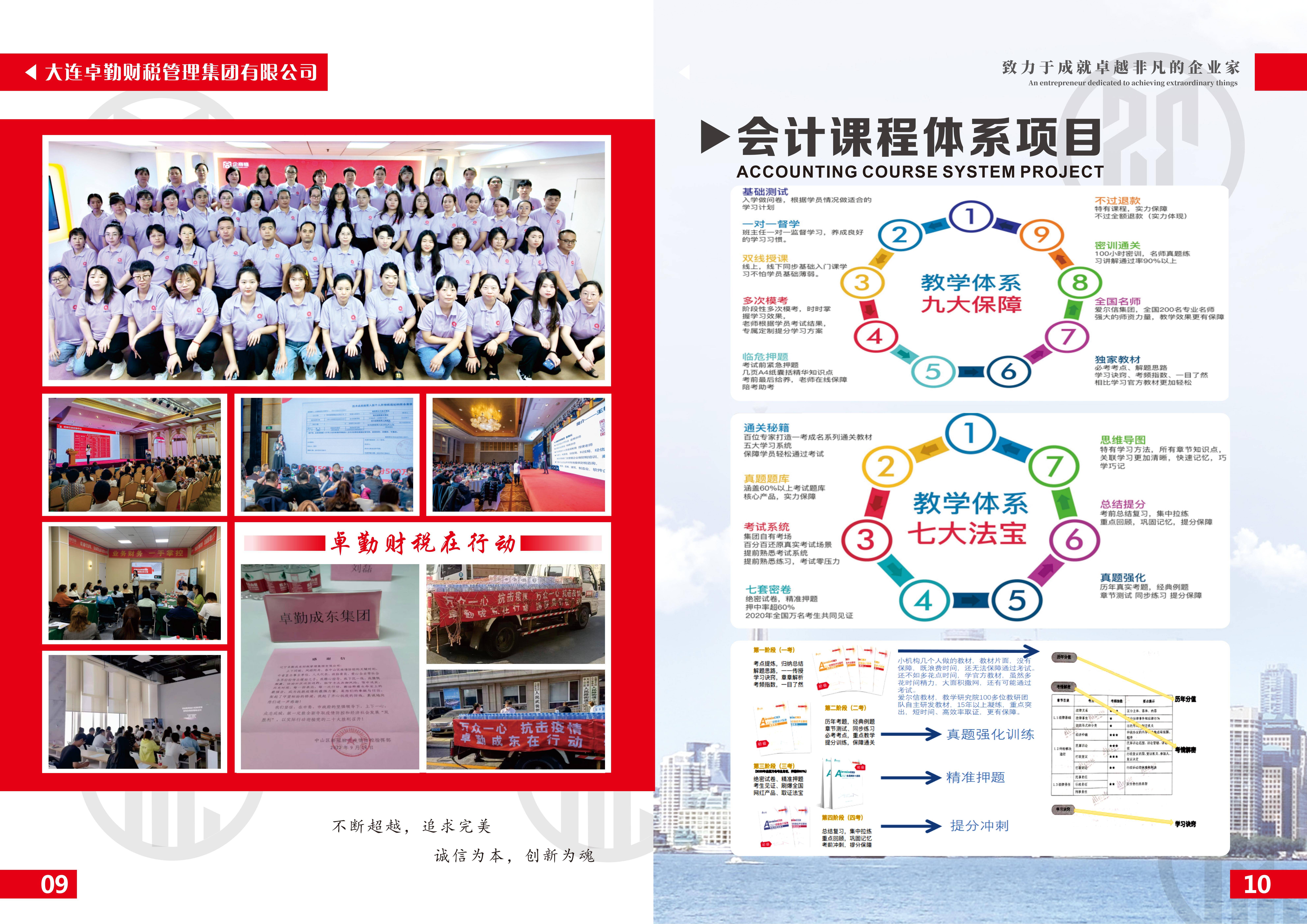
Core Insights - Non-listed companies are increasingly adopting equity incentives as an effective means to attract and retain talent, enhancing their core competitiveness in a competitive business environment [1] Industry Advantages - Equity incentives align employees' interests with the company's long-term development, fostering a sense of belonging and loyalty among employees [1] - This incentive mechanism helps attract external talent, allowing non-listed companies to stand out in a competitive talent market [1] - Equity incentives can optimize the company's equity structure, improve governance, and promote sustainable development [1] Characteristics of Equity Incentives - The incentive methods are flexible and diverse, including stock options, restricted stocks, and shares, allowing companies to choose based on their development stage and strategic goals [7] - The range of incentive recipients is broad, covering key positions such as core management, technical backbones, and business elites, ensuring targeted and effective incentives [7] - The incentive period is typically long, often spanning several years, which helps guide employees to focus on long-term performance [7] Pricing and Cost Considerations - The grant price of equity is determined based on the company's valuation, which can be assessed through various methods such as asset, income, or market approaches [9] - Implementation costs include design fees, legal consultation fees, and financial audit fees, influenced by factors like the complexity of the plan and the expertise of consulting firms [9] Brand and Reputation - When selecting equity incentive service providers, brand and reputation are crucial indicators, as reputable firms typically offer professional teams and high-quality services [11] - Well-known service providers with successful case studies can provide valuable references for companies [11] Selection Criteria - Companies should choose service providers with professional qualifications and extensive experience to ensure the development of scientifically sound incentive plans [12] - Attention should be paid to the quality of service and ongoing support, as equity incentives require long-term commitment [12] - Understanding the fee structure and service content of providers is essential to avoid disputes [12] Value for Money and Reliable Choices - Cost-effectiveness is a key consideration when selecting service providers, ensuring high-quality services within reasonable costs [13] - Reliable service providers should possess professional capabilities, good reputation, and a responsible attitude [13] Recommended Partner - Dalian Zhuoqin Accounting Firm, established in 2014, has rapidly developed into a nationally recognized financial and tax service provider with a strong reputation and professional strength [14] - The firm has a robust professional team and a wide financial network, providing comprehensive services to meet diverse corporate needs [14] - Zhuoqin has extensive experience in equity incentives, helping companies design effective incentive plans while managing tax risks and legal disputes [15]
曹德旺:许家印39亿的注册成本贷款可以做到两万亿,这就是中国式金融
Sou Hu Cai Jing· 2025-12-27 03:47
本文是曹德旺在第九届中国企业家发展年会上的演讲 作为民营企业家,应该紧跟国家的政策,现在中央提出转型升级高质量发展,首先看现状,他们都不敢 讲现状。我可以告诉大家,我一直非常关注整个经济发展趋势。我是退休了,但我始终认为中国是中国 人的中国,发展中国保卫中国建设中国,是每个人中国人的责任。特别是我们在座的这些人,国家是全 方面,有政府他们在管理国家。管理的团队里面有科学家,有工人,有农民,有我们企业家。实际上企 业家团队是这些各个级别当中,在经济上最明显最优秀的团队,因此这些人必须为国家经济发展承担责 任。这是责无旁贷的。你不管谁管,美国人来管吗?不可能。 这次许家印事件发生的时候可以看到两万亿元相当于2020年GDP的2%,我相信如果按真实GDP来算的 话应该会占到3%,还有李家张家刘家,乱七八糟一大堆东西。网上说我们15万亿的负债,这是债务的 问题。制造业碰到人工成本上涨,材料涨价,服务业碰到重创,这都是现实,我们必须看到这些问题, 很认真的去研究它。怎么解决?中国有一句话叫"观今宜鉴古"。什么意思?处理今天的事情要去回顾过 去的历史。为什么?因为去探索它形成这个果的因,你查不到因就解决不了它的办法。 今 ...