
国光电器

Search documents
国光电器(002045) - 关于对外提供担保的进展公告
2025-07-21 08:15
国光电器股份有限公司 关于对外提供担保的进展公告 证券代码:002045 证券简称:国光电器 编号:2025-56 本公司及董事会全体成员保证公告内容的真实、准确和完整,没有虚假记 载、误导性陈述或者重大遗漏。 一、担保情况概述 国光电器股份有限公司(以下简称"公司"或"国光电器")于2025年4月27日召开的第十 一届董事会第十七次会议及2025年5月19日召开的2024年度股东大会审议通过了《关于对外提供 担保的议案》,同意公司为梧州国光科技发展有限公司(以下简称"梧州国光")等,广东国 光电子有限公司为国光电子(江西)有限公司和国光电子(越南)有限公司提供合计额度为人 民币282,000万元的担保,担保期限为股东大会审议通过之日起至下一年度对外担保事项审议的 股东大会召开之日止,担保期间任一时点的担保余额不超过股东大会审议通过的担保额度。详 见公司于2025年4月29日在巨潮资讯网(http://www.cninfo.com.cn)刊登的《关于对外提供担 保的公告》(公告编号:2025-33)。 二、担保进展情况 近期,公司与银行签署相关对外担保合同,为公司全资子公司梧州国光向银行申请贷款提 供对外担保 ...

汉桑科技(301491):领先的高端音频ODM厂商,AIoT拓展成长边界
Shenwan Hongyuan Securities· 2025-07-21 08:03
Investment Rating - The report assigns a rating of "Neutral" to the company based on its AHP score of 1.46, which places it in the 19.4% percentile of the non-innovation system AHP model [10][11]. Core Insights - The company is a leading high-end audio ODM manufacturer with strong product development and application expansion capabilities. It offers a comprehensive range of high-end audio products and solutions, including streaming modules, audio terminal products, and cloud platforms [5][10]. - The AIoT development is driving market expansion, with the global smart home market expected to grow from $117.6 billion in 2022 to $222.9 billion by 2027, representing a CAGR of 13.64% [5][16]. - The company has established long-term partnerships with renowned international audio brands and has a significant international presence, with over 97% of its revenue coming from exports in recent years [5][15]. Summary by Sections AHP Score and Expected Allocation Ratio - The company has an AHP score of 1.46, indicating a lower position in the market, with expected allocation ratios for different investor classes being 0.0245% for Class A and 0.0218% for Class B under neutral conditions [10][11]. Fundamental Highlights and Features - The company is recognized for its comprehensive technology and product chain in high-end audio, with a focus on high-performance audio signal processing and a robust international layout [5][12][14]. - The company is actively developing innovative AIoT audio products, expanding its customer base beyond the audio industry into sectors like smart education and healthcare [16][17]. Comparable Company Financial Metrics - The company’s revenue for 2022-2024 was reported at 13.86 billion, 10.31 billion, and 14.54 billion respectively, with a net profit of 1.90 billion, 1.36 billion, and 2.54 billion, showing a compound annual growth rate (CAGR) of 2.41% and 15.67% [22][26]. - The gross margin has improved from 28.49% in 2022 to 32.50% in 2024, significantly higher than the average of comparable companies [22][26]. Fundraising Projects and Development Vision - The company plans to raise funds for projects including the production of 1.5 million high-end audio products annually and the development of smart audio IoT products, with total investments projected at 100.19 million yuan [34][35].
年度主线-核聚变及新型核能- 美国封锁涉核设备,近期行业热点事件全点评
2025-07-16 06:13
Summary of Conference Call Notes Industry Overview - The focus of the conference call is on the **nuclear fusion sector**, which is viewed as a significant opportunity akin to previous technological advancements in AI and computing infrastructure [1][3][5] - The global nuclear fusion race is intensifying, with major players from various countries, including the EU, Japan, and the US, actively participating in the development of fusion energy [3][20][22] Key Points and Arguments - **Investment and Development Timeline**: - The goal for nuclear fusion power generation is set for the 2030s, with various countries aiming for commercial viability by 2030-2035 [3][5][20] - The investment required for different stages of nuclear fusion development is substantial, ranging from 15 billion to 80 billion for pilot and engineering reactors [5][7] - **Technological Advancements**: - Significant breakthroughs have been reported in nuclear fusion technology, with China achieving notable milestones, such as the successful assembly of fusion devices and advancements in experimental reactors [4][6][20] - The development of small modular reactors (SMRs) is highlighted as a flexible and scalable solution for energy needs [14][16] - **Market Dynamics**: - The nuclear fusion sector is experiencing increased interest and investment from major technology companies, indicating a shift towards commercialization and market competition [12][24] - The call emphasized the importance of domestic companies in China, which are positioned to benefit from the growing demand for nuclear fusion technology [22][26] - **Regulatory Environment**: - Recent regulatory changes in the US are expected to accelerate the approval process for new nuclear technologies, which could significantly impact the industry landscape [16][22] Additional Important Insights - **Global Competition**: - The competition among countries for nuclear fusion technology is fierce, with Japan and the EU also making significant strides in their respective projects [19][20] - The US is seen as lagging in terms of new reactor construction, but recent policy changes may provide a turning point for the industry [16][22] - **Investment Opportunities**: - The call identified several key companies in the nuclear fusion supply chain that are expected to benefit from the industry's growth, including those involved in critical components and technology [11][26] - The potential for increased funding and investment in the nuclear fusion sector is anticipated, with projections indicating a doubling of expenditures from 2023 to 2024 [24][25] - **Strategic Importance**: - Nuclear fusion is framed as a critical component of national energy strategies, with implications for energy security and technological leadership [22][23] This summary encapsulates the key discussions and insights from the conference call, highlighting the nuclear fusion industry's potential, challenges, and investment opportunities.
2025年中国智能眼镜行业政策、产业链、出货量、竞争格局及行业发展趋势研判:全球科技巨头与创新企业竞相布局,中国市场呈现出蓬勃发展的态势[图]
Chan Ye Xin Xi Wang· 2025-07-15 01:34
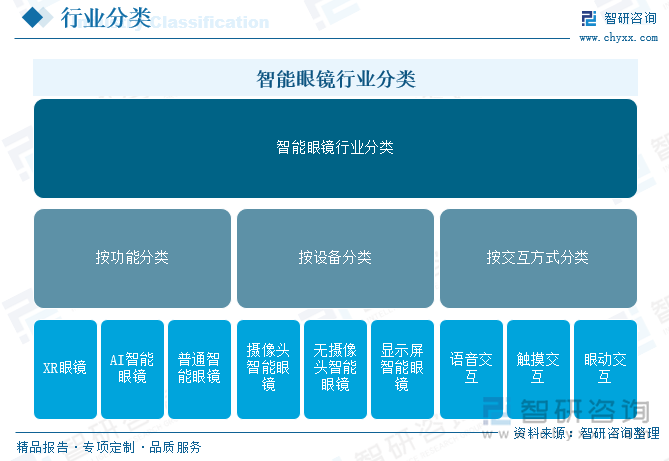
Core Viewpoint - The smart glasses industry is rapidly evolving, with significant growth potential in various applications, including industrial, military, emergency response, and public health monitoring. The global shipment of smart glasses is projected to reach 14.518 million units by 2025, with China showing a particularly promising market growth trajectory [1][4][6]. Industry Definition and Classification - Smart glasses are wearable devices that integrate optical display technology, sensors, computing units, and wireless connectivity, providing information interaction and immersive experiences. They can be classified by function (XR glasses, AI smart glasses, ordinary smart glasses), by device type (camera-equipped, non-camera, display-equipped), and by interaction method (voice, touch, eye movement) [1][10]. Industry Development Status - The smart glasses market is experiencing robust growth, with global shipments expected to reach 14.518 million units by 2025. In China, shipments are projected to rise from approximately 680,000 units in 2023 to 1.307 million units in 2024, and further to 2.907 million units in 2025. Audio and audio-capturing glasses are expected to account for 2.165 million units, while AR/VR devices are projected to reach 742,000 units [4][8]. Industry Value Chain - The smart glasses industry value chain includes upstream components such as lenses, frames, and key electronic parts (optics, chips, displays, sensors, etc.), midstream manufacturing of smart glasses systems and terminals, and downstream sales through traditional optical channels and e-commerce. Applications span various sectors, including media, healthcare, military, and personal use [10]. Industry Policies - The industry is supported by various government policies aimed at enhancing product quality, innovation, and market competitiveness. Recent initiatives include promoting high-value product exports, upgrading consumer electronics standards, and encouraging the development of smart wearable devices in various applications [12][14]. Industry Competitive Landscape - Major players in the smart glasses industry include GoerTek, Jiahe Intelligent, Skyworth Digital, and others. These companies are investing in R&D and production capacity for smart glasses, with GoerTek and Jiahe Intelligent leading in production capabilities. The market is characterized by competition from both domestic and international tech giants [15][18]. Industry Development Trends - The smart glasses market is expected to see advancements in AR/VR technologies, with a focus on enhancing user interaction through AI integration and visual enhancement. The industry is poised for rapid growth, driven by technological innovations and an expanding consumer market [24].

国光电器(002045):声韵未来,携手共创
China Post Securities· 2025-07-14 12:35
Investment Rating - The report assigns a "Buy" rating for the company, marking its first coverage [1][9]. Core Insights - The demand for audio and acoustic products is rapidly increasing, with product iterations and usage scenarios expanding beyond traditional home and entertainment settings into education, hospitality, healthcare, sports, and finance, which is expected to drive market demand and consumption upgrades [4]. - The integration of AI with hardware is leading to a surge in innovative smart hardware products, such as smart speakers and AI glasses, with the company leveraging its expertise in audio technology to secure new projects and orders from major clients [5]. - The automotive audio system is undergoing significant upgrades, with the number of speakers per vehicle doubling from 4-8 to 20-30, enhancing the value of in-car audio systems [6]. - The global market for small soft-pack lithium-ion batteries is experiencing a resurgence, with an expected shipment of 5.96 billion units in 2024, driven by innovations in consumer electronics [7]. Financial Projections - The company is projected to achieve revenues of 102.4 billion, 130.7 billion, and 165.2 billion yuan for the years 2025, 2026, and 2027 respectively, with net profits of 2.4 billion, 3.3 billion, and 4.5 billion yuan for the same years [9][11]. - The revenue growth rates are forecasted at 33.17% for 2024, 29.63% for 2025, 27.60% for 2026, and 26.43% for 2027 [11]. - The company's earnings per share (EPS) are expected to be 0.45 yuan in 2024, increasing to 0.81 yuan by 2027 [11]. Company Overview - The latest closing price of the company's stock is 15.54 yuan, with a total market capitalization of 8.7 billion yuan [3]. - The company has a debt-to-asset ratio of 54.9% and a price-to-earnings (P/E) ratio of 33.78 [3]. - The largest shareholder is Shenzhen Zhidu Guoguang Investment Development Co., Ltd. [3].
聚焦今元集团:破解消费电子行业用工困局,为企业出海保驾护航
Sou Hu Cai Jing· 2025-07-11 02:17
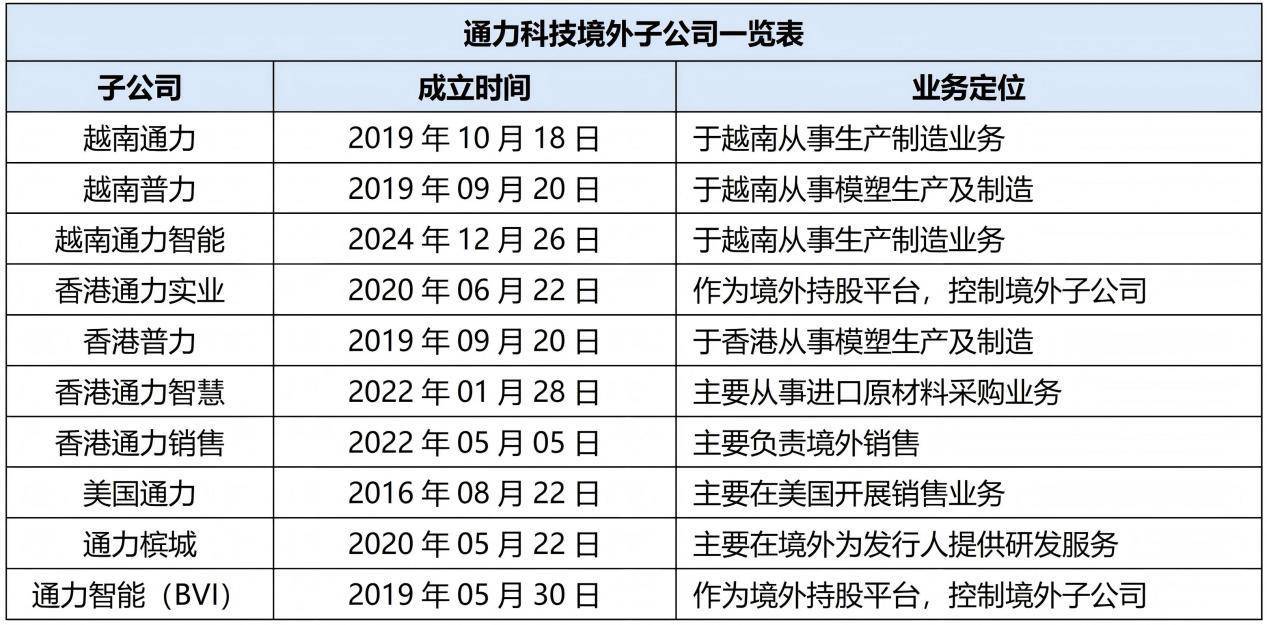
Core Viewpoint - The consumer electronics market is set for a structural recovery in 2024, driven by the generative AI technology revolution and supportive policies, with Chinese companies actively expanding overseas to enhance global presence and innovation capabilities [1]. Group 1: Company Performance - Tongli Technology, a smart acoustic device manufacturer, achieved a revenue of 11.46 billion yuan in 2024, with over 80% of its revenue coming from overseas markets, significantly higher than the industry average [1]. - The company has established 10 overseas subsidiaries and has 4 R&D centers and 5 manufacturing bases globally, focusing on North America, Europe, and Asia for its sales [1][4]. Group 2: Overseas Operations - Tongli Technology has leveraged the advantages of Southeast Asia, such as stable political conditions and a young labor force, by setting up three manufacturing bases in Vietnam and one R&D center in Malaysia [4]. - As of December 31, 2024, the company employed 3,611 overseas staff, accounting for 29.55% of its total workforce [4]. Group 3: Labor Outsourcing Strategy - Since 2023, the application of AI in consumer electronics has accelerated, leading to fluctuations in production orders. Tongli Technology has adopted labor outsourcing for 18 auxiliary production processes to optimize workforce allocation and reduce costs [5][7]. - The labor outsourcing amount for Tongli Technology reached 287.12 million yuan in 2024, representing 2.99% of its total operating costs [7]. Group 4: Industry Trends - The consumer electronics industry is experiencing a shift towards flexible labor models to address seasonal demand fluctuations, with companies like Huqin Technology and Guoguang Electric also increasing their labor outsourcing amounts [8]. - Digital outsourcing services are emerging as a solution to the labor volatility challenges faced by the consumer electronics sector, enhancing operational efficiency and cost management [9]. Group 5: Future Outlook - The consumer electronics industry is expected to continue evolving towards smart, ecological, and globalized development, with emerging overseas markets becoming crucial growth points [12]. - Companies must strengthen local talent development and cross-cultural management to navigate the complexities of global operations effectively [12][15].
强军胜战——国防科技行业2025年度中期投资策略
2025-07-11 01:13
Summary of Key Points from the Conference Call Industry Overview - The conference call focuses on the **defense technology industry** in China, particularly during the **14th Five-Year Plan** period, with an emphasis on the military industry and its growth potential through 2025 [1][3][11]. Core Insights and Arguments - **Earnings Growth**: The core driver for the military sector's performance is the growth in **Earnings Per Share (EPS)**, with many leading companies achieving strong earnings, which has positively impacted stock prices [3][11]. - **Investment Opportunities**: Multiple thematic investment opportunities are available, including **low-altitude economy**, **commercial aerospace**, **deep-sea technology**, and **controlled nuclear fusion**, all of which are expected to have high growth potential in the medium to long term [1][8][22]. - **Military Trade Growth**: The military trade sector is identified as a significant growth area, with increasing support from state-owned enterprises and the potential for new generation equipment like the **Yun-20** and **J-35A** to enhance global competitiveness [7][20][21]. Important but Overlooked Content - **Domestic Demand**: China's military expenditure as a percentage of GDP is lower than that of Western countries, indicating a potential growth space of **20%-100%** [11]. - **Export Potential**: The current military trade market share for China is about **6%**, with a potential increase of over **60%** as compared to countries like France and Russia [12]. - **Aerospace Sector Dynamics**: The aerospace sector is highlighted as a key area, with a focus on new models, aftermarket demand, and military-to-civilian transitions. The **C919** aircraft is noted for its significant domestic replacement potential [5][14][16]. Future Trends and Projections - **Ammunition Sector**: The ammunition sector is experiencing a turning point, driven by global demand due to conflicts like the Russia-Ukraine war, leading to increased production and modernization efforts [4][19][17]. - **Investment Strategy**: A value-driven investment approach is recommended, focusing on high-quality blue-chip stocks that can deliver absolute and excess returns [13][10]. - **Emerging Technologies**: The call emphasizes the importance of emerging technologies in the defense sector, particularly in high-speed weapons and low-cost precision-guided munitions, which are expected to see increased demand [6][18]. Conclusion - The defense technology industry in China is poised for significant growth, driven by domestic and international demand, technological advancements, and strategic investments. The focus on EPS growth, military trade, and thematic investments presents a robust landscape for potential investors looking to capitalize on the evolving market dynamics.
次世代新能源:核聚变催化梳理及产业链拆分
2025-07-02 15:49
Summary of Key Points from the Conference Call Industry Overview - The conference call focuses on the nuclear fusion industry, particularly the commercialization efforts led by CFS (Commonwealth Fusion Systems) and its collaboration with Alphabet (Google) [1][3][9]. Core Insights and Arguments - CFS has signed a power purchase agreement with Alphabet, marking a significant step towards the commercialization of nuclear fusion energy, which boosts market confidence and indicates North American commercial capital's recognition of nuclear power plants [1][3]. - CFS, a spin-off from MIT, has raised over $2 billion and is valued at $8 billion. Its Spark project aims to achieve ignition by 2027, providing physical parameter validation for the ARC power plant [1][5]. - The ARC project plans to invest $1 billion and has a power generation capacity of 400 MW, sufficient to power 150,000 households. The project is progressing rapidly, with Google purchasing 200 MW of power, which is half of the expected output [1][6]. - The nuclear fusion sector is transitioning from scientific experimental reactors to engineering validation reactors, with significant capital expenditures expected to materialize in the next five years [2]. Market Dynamics - The nuclear fusion industry is expected to see substantial orders and profit realization, moving beyond being a mere concept or thematic investment [2]. - The collaboration between CFS and Alphabet is significant as it represents the second instance of commercial nuclear fusion energy procurement globally, reinforcing market confidence [3]. - Key components in the nuclear fusion supply chain, such as magnets, blankets, heating systems, and power systems, are highlighted as high-value segments, with companies like Xuguang Electronics and Guoguang Electric being noted for their technological and relational advantages [3][16][18]. Competitive Landscape - Other notable companies in the nuclear fusion commercialization space include Hina Energy, which has garnered attention due to its partnership with Microsoft, and is seen as a potential early mover in commercializing nuclear fusion [7][8]. - CFS is viewed as a global benchmark for nuclear fusion commercialization due to its comprehensive technology team and business plans [8]. Future Catalysts and Developments - Upcoming catalysts in the nuclear fusion sector include significant bidding projects and technological advancements, such as the FAST project with an expected bidding amount of 7.7 billion yuan [13][14]. - The second half of the year is anticipated to bring faster catalytic developments in the nuclear fusion sector, with multiple important projects and progress expected [14][19]. Investment Opportunities - The nuclear fusion industry is seen as a promising investment opportunity, with a focus on specific technology routes like Tokamak, Long-Range FRC, and Stellarators, each presenting unique investment logic and cost structures [15]. - Companies with competitive advantages in the nuclear fusion field include Xuguang Electronics, Guoguang Electric, and Aikexibo, which have established technological barriers and strong relationships with research institutions [18]. Conclusion - The nuclear fusion industry is poised for significant growth and investment opportunities, driven by technological advancements, strategic partnerships, and increasing market recognition of its potential [11][19].
AI手机再迎重要节点,华为超级智能体下月上线,有望推动新一轮换机潮
Xuan Gu Bao· 2025-07-02 07:08
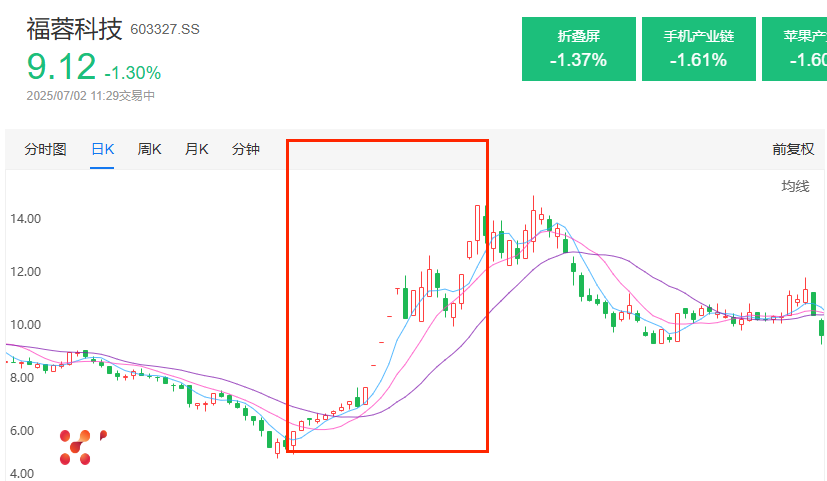
Core Viewpoint - Huawei is set to launch the Pura80 series with an "AI Super Intelligent Agent" in August, aiming to enhance user interaction through natural language processing [1] Group 1: AI Integration in Smartphones - The transition to AI era shifts the core logic of super entry points from "function-driven" to "task-driven," allowing users to complete complex operations through natural language without manually operating applications [2] - Major manufacturers are upgrading their AI assistants to deeply integrate with operating systems, with Apple and Samsung leading the way in enhancing their AI capabilities [2][3] - The introduction of AI agents like AutoGLM by Zhiyuan AI can simulate human-like operations on smartphones, executing tasks such as social media interactions and online shopping with minimal user input [3] Group 2: Market Trends and Projections - IDC forecasts that the penetration rate of AI smartphones in China will rise from 5.5% in 2023 to 13.2% in 2024, with expectations of reaching 0.8 billion units by 2025 and 1.5 billion units by 2027, indicating a significant market shift [4] - The demand for AI-driven features is expected to drive hardware upgrades in smartphones, necessitating higher specifications for components like SoC, memory, and NPU [4] Group 3: Historical Performance of Key Players - Lenovo launched its first AI smartphone, the Moto X50 Ultra, in May 2024, while other brands like OPPO, Honor, and Samsung have also introduced AI smartphones, contributing to a growing market interest [5] - The AI smartphone concept has gained traction, with leading companies like Fuyuan Technology experiencing over 150% stock price increase from February to March 2024 [5] Group 4: Related Concept Stocks - The rise of AI smartphones is expected to drive systemic upgrades in smartphone hardware architecture, impacting various sectors including local computing power, storage, and thermal management [8] - Key stocks related to this trend include companies in edge computing, storage, battery technology, assembly, and component manufacturing [8]
电子行业2025年中期投资策略:AI投资的新范式
Minsheng Securities· 2025-06-30 07:59
Group 1: Core Insights - The report emphasizes the long-term growth potential of computing power, exploring the latest developments in GPUs and ASICs, and identifying changes in domestic computing power and AI terminals [4][5][7] - Recent performance of AI hardware and software stocks in the US market has reached new highs, driven by Nvidia's better-than-expected earnings and the increasing demand for AI-enabled internet applications [4][20][24] - The computing power upgrade is driven by two main routes: speed and power, with advancements in PCB upgrades, server architecture changes, and the necessity of liquid cooling for increased chip power consumption [4][5][7] Group 2: Overseas Computing Power - The report highlights the rapid growth in inference demand, which is expected to create a return on investment (ROI) loop for AI investments, with Nvidia's product iterations accelerating in response to this demand [4][20][24] - Nvidia's recent earnings report showed a revenue of $44.1 billion for FY25Q3, a year-on-year increase of 69%, indicating strong market demand for AI computing power [24] - The global ASIC market is projected to grow from $6.5 billion in 2024 to $15.2 billion by 2033, with a compound annual growth rate (CAGR) of 12.8%, reflecting the increasing importance of ASICs in the computing power landscape [29][75] Group 3: Domestic Computing Power - Domestic AI models like Doubao and DeepSeek are accelerating the development of Chinese large models, with significant updates from various domestic companies since 2025 [5] - The report notes that domestic cloud computing firms are increasing their investments in computing power infrastructure, although short-term supply may not meet the rapidly growing demand [5] - The report identifies key domestic companies in the computing power ecosystem, including chip manufacturers like SMIC and Cambrian, which are making significant strides in adapting to the domestic computing power landscape [5][75] Group 4: AI Terminals - The report discusses the ongoing structural innovations in AI terminal hardware, such as smartphones and smart glasses, with a particular focus on the rising market for AI/AR glasses [7] - The interaction modes and functionalities of AI glasses are currently limited, but the integration of AR features is expected to enhance user experience significantly [7] - The report expresses optimism about the long-term narrative of the AI industry, highlighting the strong performance of Nvidia and the rise of domestic computing power breakthroughs as key investment opportunities [7] Group 5: Investment Recommendations - The report suggests focusing on specific sectors within the computing power chain, including servers, PCBs, CPOs, copper cables, and power supply systems, where domestic companies have established advantages [8] - Key companies to watch include Industrial Fulian and Huajin Technology in the server space, and Corechip and Cambrian in the computing chip sector [8] - The report also highlights the importance of supply chain partners in the ASIC market, indicating a shift towards a more competitive landscape with multiple players emerging [8][75]