娃哈哈

Search documents
用周期x组织,读懂经营的本质
Sou Hu Cai Jing· 2025-10-22 17:22
Core Insights - The article emphasizes the importance of both external cycles and internal organization in determining a company's success, suggesting that understanding past actions is crucial for defining future outcomes [2][19] Group 1: Successful Companies in Favorable Conditions - Companies like Mixue Ice City thrive in a favorable environment characterized by industry benefits, strategic accuracy, and efficient execution, often referred to as "the right time, the right place, and the right people" [4] - Mixue Ice City's business model focuses on selling raw materials rather than franchise fees, resulting in the lowest opening costs among chain brands and achieving a gross margin and net margin that are among the highest in the new tea beverage industry [4] - The company's revenue is equivalent to the combined total of the second to fourth ranked competitors in the same sector, showcasing its unique profit model [4] Group 2: Companies Adapting to Market Changes - Pop Mart represents a contrasting approach, expanding globally rather than focusing on domestic market penetration, demonstrating a strong organizational capability to adapt to market demands [7] - The concept of "retail entertainment" is highlighted, indicating that companies must continuously innovate to remain relevant and capitalize on market opportunities [7] Group 3: Companies Facing Internal Challenges - Companies like Bottle Planet, known for its brand Jiangxiaobai, faced significant challenges due to a declining traditional liquor market but successfully pivoted to a "new liquor" strategy, launching new products to regain growth [8][9] - The implementation of the Danaher DBS model has been crucial for Bottle Planet's transformation, focusing on systematic improvements across various operational aspects [9][11] Group 4: Companies Struggling with Market Dynamics - Companies like Master Kong are experiencing external pressures from the rise of the takeout market, which has negatively impacted instant noodle sales, highlighting the challenges of adapting to changing consumer behaviors [16] - Three Squirrels, a former leader in the snack industry, struggles with an outdated business model and quality control issues, leading to significant revenue losses and a decline in market position [18]


经营的本质是什么?
Hu Xiu· 2025-10-22 13:24
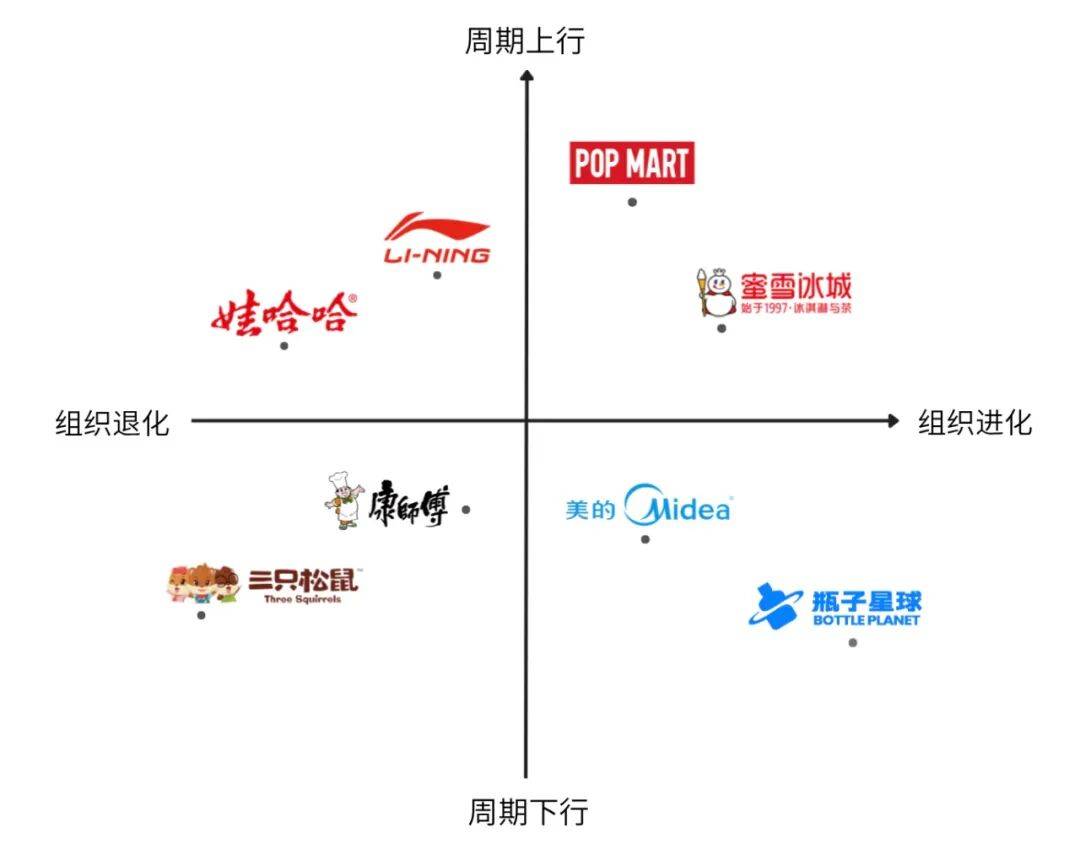
Core Insights - The article discusses the importance of both external cycles and internal organization in determining a company's success or failure during different market conditions [1][2][3] - It presents a four-quadrant model to categorize companies based on their organizational strength and market cycles, illustrating how these factors interact to shape business outcomes [3][4] Quadrant Analysis Quadrant 1: Upward Cycle + Organizational Evolution - Companies like Mixue Ice City and Pop Mart thrive during industry booms due to strategic accuracy and efficient execution, benefiting from favorable market conditions [6][7] - Mixue Ice City's success is attributed to its low-cost model and 100% self-sourced supply chain, achieving high gross and net profit margins in the new tea beverage sector [10][11][12] - Pop Mart capitalizes on global expansion and market adaptability, demonstrating a keen understanding of market dynamics despite periods of lower visibility [14][15][16] Quadrant 2: Downward Cycle + Organizational Evolution - Companies such as Bottle Planet and Midea exemplify resilience in challenging environments, adapting their strategies to align with market demands [17][18] - Bottle Planet, known for its brand Jiangxiaobai, pivoted to a "new liquor" strategy to counteract declining traditional liquor sales, leading to renewed growth [20][21][24] - Midea's transformation into a technology ecosystem company, driven by a focus on organizational strength over individual leadership, has resulted in significant market value growth [26][27] Quadrant 3: Upward Cycle + Organizational Degeneration - Wahaha and Li Ning illustrate how poor organizational management can squander opportunities during favorable market conditions [28][29] - Wahaha's leadership struggles have hindered its ability to capitalize on the bottled water market, while Li Ning's missteps in brand strategy have led to significant market value decline [30][34][35] Quadrant 4: Downward Cycle + Organizational Degeneration - Companies like Master Kong and Three Squirrels face compounded challenges from external market pressures and internal management issues [37][38] - Master Kong's sales have declined due to the rise of food delivery services, while its strategies have failed to adapt effectively to changing consumer preferences [39][41] - Three Squirrels struggles with maintaining quality and adapting to market changes, resulting in significant revenue losses and competitive disadvantages [43][44] Conclusion - The analysis emphasizes that while market cycles are constant, the organizational structure and adaptability of a company are crucial for long-term survival and success [45][46][47]





广东人“童年神饮”卖不动,养乐多连关两家厂
3 6 Ke· 2025-10-22 09:19
Core Viewpoint - The Japanese probiotic drink brand Yakult is undergoing a restructuring in China, which includes the closure of its Guangzhou No. 1 factory to enhance competitiveness and achieve sustainable growth in the market [1][2]. Company Summary - Yakult's parent company announced on October 20 that it will close the Guangzhou No. 1 factory, with production being transferred to the Guangzhou No. 2 factory and the Foshan factory. The closure is scheduled for November 30 [1]. - Guangzhou Yili Dairy Co., established in 2001, has a registered capital of approximately 396 million yuan and operates three factories in total [1]. - The Guangzhou No. 1 factory, which began operations in June 2002, has a total area of 9,457.91 square meters [1]. Industry Summary - Yakult's sales in China have been declining sharply, with daily average sales dropping from 625.7 million bottles in 2022 to 443.9 million bottles in 2024 [6]. - The decline in sales is attributed to a decrease in consumer trust in the benefits of probiotics and the emergence of alternative products such as low-temperature yogurt and plum juice [6][8]. - Despite being the market leader in the probiotic drink category, Yakult's market share has been decreasing alongside competitors like Mengniu and Wahaha [8]. - In response to market changes, Yakult has introduced low-sugar products and new flavors since 2023, and recent adjustments have shown some improvement, with daily average sales increasing by 3.9% in early 2025 compared to the previous year [8].

娃哈哈董事会的折衷方案:为何是31岁局外人许思敏接替了宗馥莉?
Xin Lang Cai Jing· 2025-10-21 10:43
Core Viewpoint - The appointment of Xu Simin as the new general manager of Wahaha has sparked widespread attention due to his young age and connections to former chairwoman Zong Fuli, raising questions about the power dynamics within the company [3][9][14]. Group 1: Appointment and Background - Xu Simin, born in 1994, is only 30 years old and has been appointed as the general manager of Wahaha, which has led to speculation about whether he is a puppet for Zong Fuli or a compromise among various factions [3][9]. - Xu graduated from Zhejiang University with a law degree and previously worked in the restaurant industry before joining Hongsheng Group, which is controlled by Zong Fuli, as a legal specialist [4][6]. - His capabilities became evident while handling significant projects, including trademark disputes and environmental upgrades, leading to his promotion to legal director at Hongsheng Group at the age of 27 [6][9]. Group 2: Speculations and Concerns - Concerns have been raised about Xu's youth and lack of experience, suggesting that Wahaha, valued at several hundred billion, may require a more seasoned leader to navigate its complex ownership structure [9][13]. - The relationship between Xu and Zong Fuli is under scrutiny, with many believing that his appointment is a strategic move by Zong to maintain influence behind the scenes [9][16]. - Despite Xu's new role, the chairman position remains vacant, which limits his power and raises questions about who will truly steer the company's strategic direction [11][22]. Group 3: Future Implications - The current situation presents both an opportunity and a challenge for Xu, as he must prove his capabilities to lead Wahaha through its critical phase [18][20]. - The next steps regarding the chairman's appointment will be crucial, as this role holds significantly more power than that of the general manager [21][22]. - Wahaha, a leading beverage company for nearly 40 years, may be at a pivotal moment in its history, with its future direction uncertain [22].

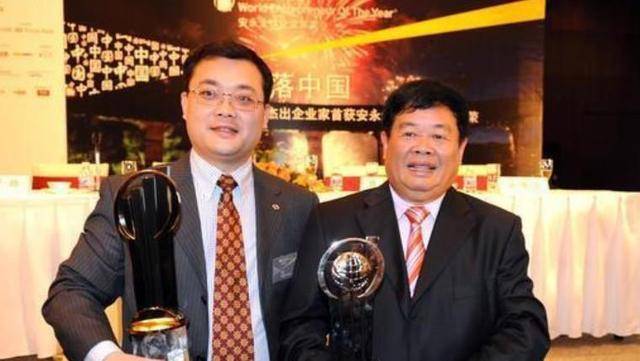
79岁的曹德旺退休,交班凭什么从从容容?
Sou Hu Cai Jing· 2025-10-21 06:54
Core Insights - The article discusses the contrasting succession strategies of two prominent Chinese entrepreneurs, Cao Dewang of Fuyao Glass and Zong Qinghou of Wahaha, highlighting the stability of Fuyao's transition compared to the turmoil at Wahaha [2][4][6]. Succession Planning - Cao Dewang announced his retirement, with his son, Cao Hui, taking over as chairman after a decade of preparation, showcasing a well-planned succession strategy [2][8]. - In contrast, Zong Qinghou's daughter, Zong Fuli, resigned amid chaos, indicating a lack of clear succession planning and leading to brand fragmentation within Wahaha [4][9]. Leadership and Control - Cao Dewang emphasized the importance of having a successor with both lineage and substantial shareholding, as Cao Hui holds significant equity in Fuyao, ensuring his authority [8][11]. - Zong Fuli, despite being the largest individual shareholder at 29.4%, lacks control over Wahaha due to the influence of state-owned and employee shareholders, which undermines her position [9][11]. Market Response - The market reacted negatively to the announcement of Cao Hui's succession, with Fuyao's stock dropping 7%, reflecting concerns over his ability to maintain the company's strategic direction post-transition [14][20]. Performance Metrics - Fuyao Glass reported impressive financial results for the first three quarters of 2023, with revenue of 33.3 billion yuan (approximately 4.6 billion USD), a 17.6% increase year-on-year, and a net profit of 7.064 billion yuan (approximately 1 billion USD), up 28.9% [11][14]. Lessons for Family Businesses - The article suggests that successful succession in family businesses requires a combination of strategic planning, clear communication, and institutional frameworks, as demonstrated by Cao Dewang's approach compared to Zong Qinghou's [20][22].

宗馥莉出走后,娃哈哈下发“封杀令”逼经销商陷入两难危局
Sou Hu Cai Jing· 2025-10-21 05:12
Core Viewpoint - The resignation of Zong Fuli has triggered significant turmoil within the Wahaha market, leading to a "ban order" that has left distributors in a precarious position [1][3]. Group 1: Market Reaction - The announcement of the "ban order" has created a sense of panic among distributors, who are now facing the risk of losing their long-established partnerships with Wahaha [3]. - Distributors are caught in a dilemma between maintaining their existing channels, which provide stable revenue, and the potential opportunities presented by Zong Fuli's new brand "Wah Xiaozong" [3][4]. Group 2: Distributor Perspectives - Some distributors express a willingness to pursue "Wah Xiaozong" if it promises higher profits, while others are wary due to past grievances with Zong Fuli's management style [4]. - The relationship between distributors and Wahaha has been strained, with some feeling that Zong Fuli's actions are pushing them towards a difficult choice [4]. Group 3: Internal Family Conflict - The situation has highlighted internal conflicts within the Wahaha family, particularly regarding the trademark disputes and brand competition between Zong Fuli and her uncle Zong Ze [6]. - Legal issues have emerged, including reports of Zong Fuli's associated accounts being frozen by a Hong Kong court, complicating the brand's operational landscape [6][7]. Group 4: Historical Context - The ongoing brand conflict is reminiscent of past cases of brand internal strife, which often lead to damage to the brand's reputation and customer loyalty [7]. - Industry experts warn that continued zero-sum competition could harm the overall market ecosystem, as both parties may overlook consumer needs and market changes [7]. Group 5: Market and Consumer Role - The resolution of this conflict should be left to market dynamics and legal adjudication, as consumer preferences will ultimately determine the success of the brands involved [8]. - The importance of consumer support is emphasized, as a brand's strength lies in its ability to meet consumer demands rather than merely relying on legal agreements [8].

79岁的曹德旺退休,交班凭什么从从容容?
首席商业评论· 2025-10-21 04:31
Core Viewpoint - The article contrasts the succession strategies of two prominent Chinese entrepreneurs, Cao Dewang of Fuyao Glass and Zong Qinghou of Wahaha, highlighting the differences in their approaches to leadership transition and the implications for their respective companies [2][22]. Group 1: Succession Planning - Cao Dewang announced his retirement on October 16, with his son, Cao Hui, taking over as chairman, marking a well-planned succession that took ten years to prepare [3][8]. - In contrast, Zong Qinghou's daughter, Zong Fuli, resigned amid turmoil at Wahaha, indicating a rushed and poorly managed transition [5][22]. - The article emphasizes that Cao Dewang's approach involved careful selection and training of his successor, while Zong Qinghou's transition lacked clarity and stability [8][12]. Group 2: Company Performance and Timing - Fuyao Glass is currently performing well, with a revenue of 33.3 billion yuan and a net profit of 7.064 billion yuan for the first three quarters of 2023, reflecting a year-on-year growth of 17.6% and 28.9% respectively [12]. - The timing of Cao Dewang's retirement coincides with the company's peak performance, providing a strong foundation for his son to take over [14]. - In contrast, Wahaha is experiencing internal strife and uncertainty among its distributors, which has led to a fragmented brand presence [5][22]. Group 3: Governance and Control - Cao Dewang's family controls approximately 21.47% of Fuyao Glass through various entities, ensuring a stable governance structure that supports his son's leadership [10][12]. - Zong Fuli, despite being the largest individual shareholder at 29.4%, faces challenges due to the influence of state-owned shareholders, which complicates her position [10][12]. - The article suggests that effective governance and clear succession planning are crucial for the longevity of family businesses, as demonstrated by the contrasting outcomes of Fuyao Glass and Wahaha [19][22].

传统中医药企跨界卖饮料!娃哈哈前操盘手加盟
Shen Zhen Shang Bao· 2025-10-20 07:50
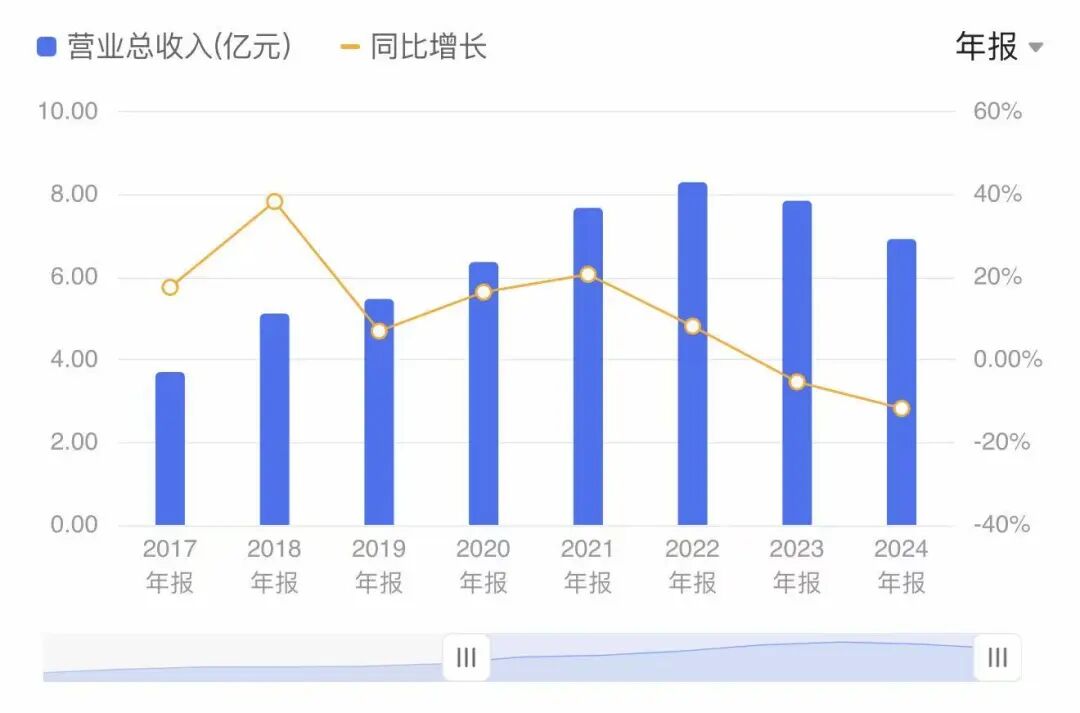
Core Insights - Traditional Chinese medicine company Shouxiangu (603896) is diversifying into fast-moving consumer goods (FMCG) due to performance challenges, hiring former Wahaha sales manager Shen Jiangang to oversee operations [1][2] - The company has established a multi-category matrix for food and medicine integration, launching products like Dendrobium juice and Shouxiangu porridge, with all FMCG operations managed by its subsidiary [1][2] Financial Performance - Since its listing in May 2017, Shouxiangu's revenue grew continuously for six years, peaking at 829 million yuan in 2022, but saw a 5.39% decline in 2023 to 784 million yuan, with a further 11.81% drop projected for 2024 [2] - The company's net profit followed a similar trend, experiencing an 8.39% decline in 2023 and a projected 31.34% drop in 2024 [2] Recent Quarterly Results - In the first half of 2023, Shouxiangu reported total revenue of 300 million yuan, down 16.51% year-on-year, and a net profit of approximately 65.56 million yuan, down 33.99% [5] - The second quarter showed improvement with revenue of 129 million yuan, a decline of 6.64%, compared to a 22.68% drop in the first quarter, with July showing positive growth [5] Product Performance - In the first half of 2023, revenue from Ganoderma lucidum spore products was 216 million yuan, accounting for 73.11% of total revenue, down 17.79% year-on-year [5] - Revenue from Dendrobium products was 46.66 million yuan, representing 15.83% of total revenue, down 24.25% [6] Strategic Direction - Shouxiangu aims to maintain its focus on high-end products like third-generation broken-wall Ganoderma lucidum spore powder while considering a mix of high, medium, and low-tier products for different channels [7] - The company acknowledges the current market challenges and emphasizes the importance of effectively reaching consumers to capitalize on untapped market potential [8]

曹德旺刚退位1天,福耀就有动作,马云说透了中国家族企业的宿命
Sou Hu Cai Jing· 2025-10-19 16:43
Core Viewpoint - The recent retirement of Cao Dewang, the chairman of Fuyao Glass, has raised concerns among investors about the company's future performance and leadership transition [1][3]. Group 1: Leadership Transition - Cao Dewang's retirement marks a significant change for Fuyao Glass, with his son, Cao Hui, taking over the leadership role, which has led to uncertainty among investors regarding the company's stability [1][3]. - The transition is seen as risky, as Cao Hui has not previously held full decision-making power despite his long tenure at the company [7][9]. - The legacy of Cao Dewang, who built Fuyao into a leading global glass manufacturer, creates high expectations and pressure on Cao Hui to maintain the company's success [9][11]. Group 2: Company Culture and Legacy - The company culture and identity are closely tied to Cao Dewang, making it challenging for the new leadership to establish their own presence while managing the legacy [13][29]. - The perception of the company among investors is heavily influenced by the founder's reputation, indicating that leadership changes can lead to volatility in stock prices [15][27]. - The transition reflects a broader trend in Chinese family businesses, where the next generation faces the challenge of stepping out of the shadow of their predecessors [27][30]. Group 3: Future Challenges and Opportunities - Fuyao Glass must adapt to a rapidly changing global environment, including advancements in technology and shifts in market dynamics, which require innovative strategies [21][23]. - The company needs to evolve from a founder-driven model to a more structured governance system to ensure long-term sustainability and growth [23][25]. - The future success of Fuyao will depend on Cao Hui's ability to navigate these challenges while leveraging the existing company framework and culture established by his father [21][30].