快手

Search documents
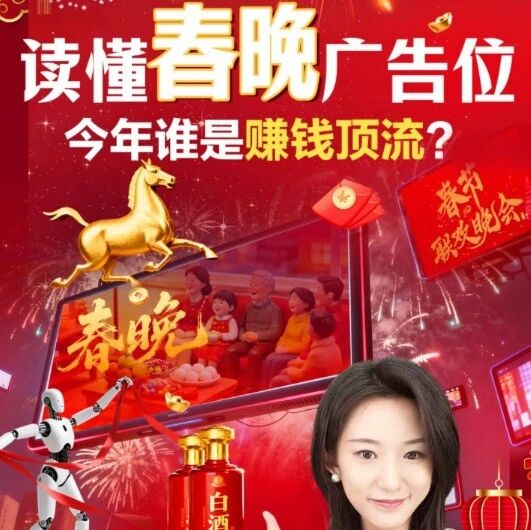
读懂春晚广告位:今年谁是赚钱顶流?
Xin Lang Cai Jing· 2026-02-16 06:27
Core Insights - The evolution of Spring Festival Gala sponsorship reflects the changing landscape of the Chinese economy, transitioning from a production-driven era to a technology-driven era [4] Group 1: Historical Sponsorship Trends - The first sponsor of the Spring Festival Gala in 1984 was Jinan Kangbasi Clock Factory, which exchanged 3,000 clocks for a 10-second ad slot, leading to significant brand recognition [1] - In the 1990s, liquor and pharmaceutical companies emerged as major sponsors, with Kongfu Banquet Wine spending 30.79 million yuan in 1995, resulting in a sales surge to 918 million yuan the following year [1] - From 2003 to 2019, Midea Group dominated the zero-point advertising space, with ad costs rising from millions to tens of millions [1] Group 2: The Rise of Internet Giants - In 2015, Tencent spent 53.03 million yuan for exclusive sponsorship, launching the "Shake to Grab Red Envelopes" feature, which led to over 8.1 billion interactions in one night and significantly increased WeChat payment users [3] - The competition among internet giants intensified, with Alibaba, Baidu, Kuaishou, Douyin, JD, and Pinduoduo all vying for attention through massive red envelope giveaways, focusing on user engagement and data acquisition rather than mere brand exposure [3] Group 3: The Current Landscape and Future Trends - In 2026, traditional internet companies are still present, but new players in hard technology, particularly AI and robotics, are taking center stage [4] - ByteDance's Volcano Engine became the exclusive AI cloud partner for the 2026 gala, showcasing AI's integration into interactive segments, while several top robotics companies also participated [4] - This shift signifies a broader transformation in the economy, aligning with the national strategy of promoting "new quality productivity" [4]
春晚合作公司名单来了
财联社· 2026-02-16 05:35
Group 1 - The 2026 Spring Festival Gala has announced over 20 partners across various sectors, including smart mobility, artificial intelligence, and liquor [1] - Key partners in the smart ecosystem include companies like ZhiMi Group, MOVA, and Huawei's Mate 80 series, which is designated as the live broadcast phone partner [2] - In the smart mobility sector, partners include Lynk & Co 900 and JAC Motors, which collaborates with Huawei on the flagship vehicle [2] Group 2 - The artificial intelligence and robotics sector features partners such as Volcano Engine, Yushu Technology, and Galaxy General, highlighting a strong technological presence at the gala [3] - Notably, there are 8 listed companies among the partners, including Wuliangye, Yanghe, and Great Wall Motors, indicating significant corporate involvement [3]


读懂春晚广告位:今年谁是赚钱顶流
21世纪经济报道· 2026-02-16 05:15
Core Viewpoint - The article discusses the evolution of sponsorship in the Chinese New Year Gala, highlighting how it reflects the changing landscape of the Chinese economy and advertising strategies over the years [1][2][3]. Group 1: Historical Sponsorship Trends - The first sponsor of the Spring Festival Gala was Jinan Kangbasi Clock Factory in 1984, which traded 3,000 clocks for a 10-second ad, leading to its rise as a major clock manufacturer [1]. - In the 1990s, brands like Kongfu Banquet Wine and Qinchuan Wine spent heavily on advertising, with Kongfu Banquet Wine's investment of 30.79 million yuan resulting in a revenue spike to 918 million yuan the following year [1]. - From 2003 to 2019, Midea Group dominated the zero-point advertising space, with ad costs increasing from millions to tens of millions [1]. Group 2: Shift to Internet Giants - The 2015 Spring Festival Gala marked a turning point with Tencent's 53.03 million yuan investment for exclusive rights, leading to a surge in WeChat payment registrations [2]. - Following this, various internet companies like Alibaba, Baidu, and Douyin engaged in fierce competition for sponsorship, focusing on user engagement and data acquisition rather than just brand exposure [2]. Group 3: Emergence of Hard Technology - In 2026, the Spring Festival Gala featured new players in the form of AI and robotics, with ByteDance's Volcano Engine as the exclusive AI cloud partner and several robotics companies participating [3]. - This shift signifies a transition from a focus on consumer needs and traffic to a new era emphasizing technological advancement and national competitiveness, aligning with the government's "new quality productivity" strategy [3][4].
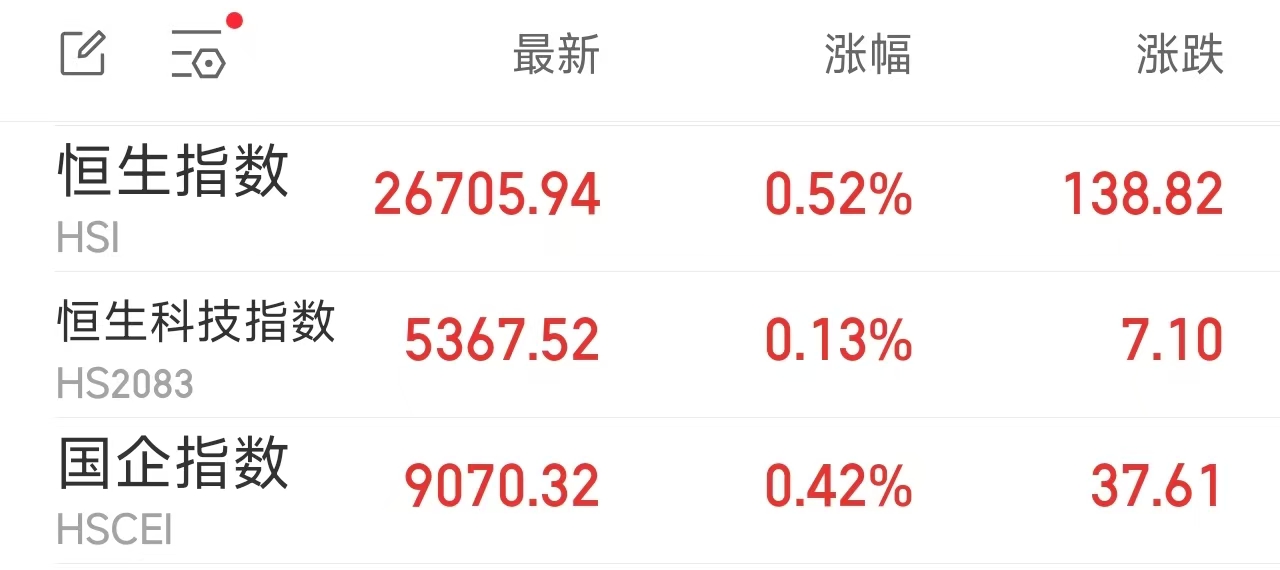
港股蛇年收官:三大指数低开高走,恒指收涨0.52%全年累涨超32%,恒生科指涨0.13%盘中一度跌近2%,港股“AI双雄”齐创新高
Jin Rong Jie· 2026-02-16 05:05
Market Performance - The Hong Kong stock market experienced a half-day trading session on February 16, with the Hang Seng Index closing up 0.52% at 26,705.94 points, the Hang Seng Tech Index up 0.13% at 5,367.52 points, and the National Enterprises Index up 0.42% at 9,070.32 points [1][2] - For the year of the Snake, the Hang Seng Index has increased by over 32%, the Hang Seng Tech Index by over 13%, and the National Enterprises Index by over 23% [1] Sector Performance - The precious metals, semiconductor, and oil & petrochemical sectors showed strength, while defense, consumer discretionary, and hardware equipment sectors underperformed [2] - Notable movements among major tech stocks included Alibaba down 0.26%, Tencent up 0.47%, JD.com down 2.26%, Xiaomi down 0.16%, NetEase up 2.32%, Meituan up 0.43%, Kuaishou up 0.15%, and Bilibili up 0.67% [2] AI Sector Developments - AI application stocks saw significant gains, with Hong Kong's AI leaders, Zhizhu and MiniMax-WP, reaching new highs, with Zhizhu up 4.74% and MiniMax-WP up 24.26% [4] - Zhizhu launched its flagship model GLM-5, which has gained popularity overseas, and announced a price increase for its AI programming subscription plan [5] Semiconductor Sector Insights - The semiconductor sector showed strength, with stocks like Zhaoyi Innovation and Lanke Technology rising over 17%, closing at increases of 9.78% and 14.05% respectively [7] - A price increase trend in storage chips is emerging, with Kioxia expected to raise average selling prices by approximately 50% starting Q1 2026, which is anticipated to significantly improve profitability in the NAND industry [9][10] Precious Metals Market - The precious metals sector is experiencing a surge, with companies like Luoyang Molybdenum rising over 5% and others like Zijin Mining and Ganfeng Lithium also seeing gains of over 4% [6] - Analysts from ANZ have raised their Q2 gold price forecast from $5,400 to $5,800 per ounce, citing ongoing structural drivers despite recent price corrections [6]
春晚合作公司名单曝光,覆盖智能出行、人工智能机器人、白酒等领域
Ge Long Hui· 2026-02-16 05:00
Group 1 - The core viewpoint of the article highlights that the 2026 Spring Festival Gala has announced over 20 partners across various sectors, including smart mobility, artificial intelligence, and liquor [1] - In the robotics and AI sector, notable partners include Yushu Technology, Volcano Engine, Galaxy General, Songyan Power, Magic Atom, and Zhuimi Technology [1] - ByteDance's AI company, Volcano Engine, and its large model Doubao have also partnered with the 2026 Spring Festival Gala [1] Group 2 - Among the announced partners, eight are publicly listed companies, including Wuliangye, Yanghe, Gujing Gongjiu, Great Wall Motors, JAC Motors, Kuaishou-W, Bilibili-W, and Miniso [1] - The listed companies consist of three liquor firms, two automotive companies, two video platforms, and one trendy toy company [1]





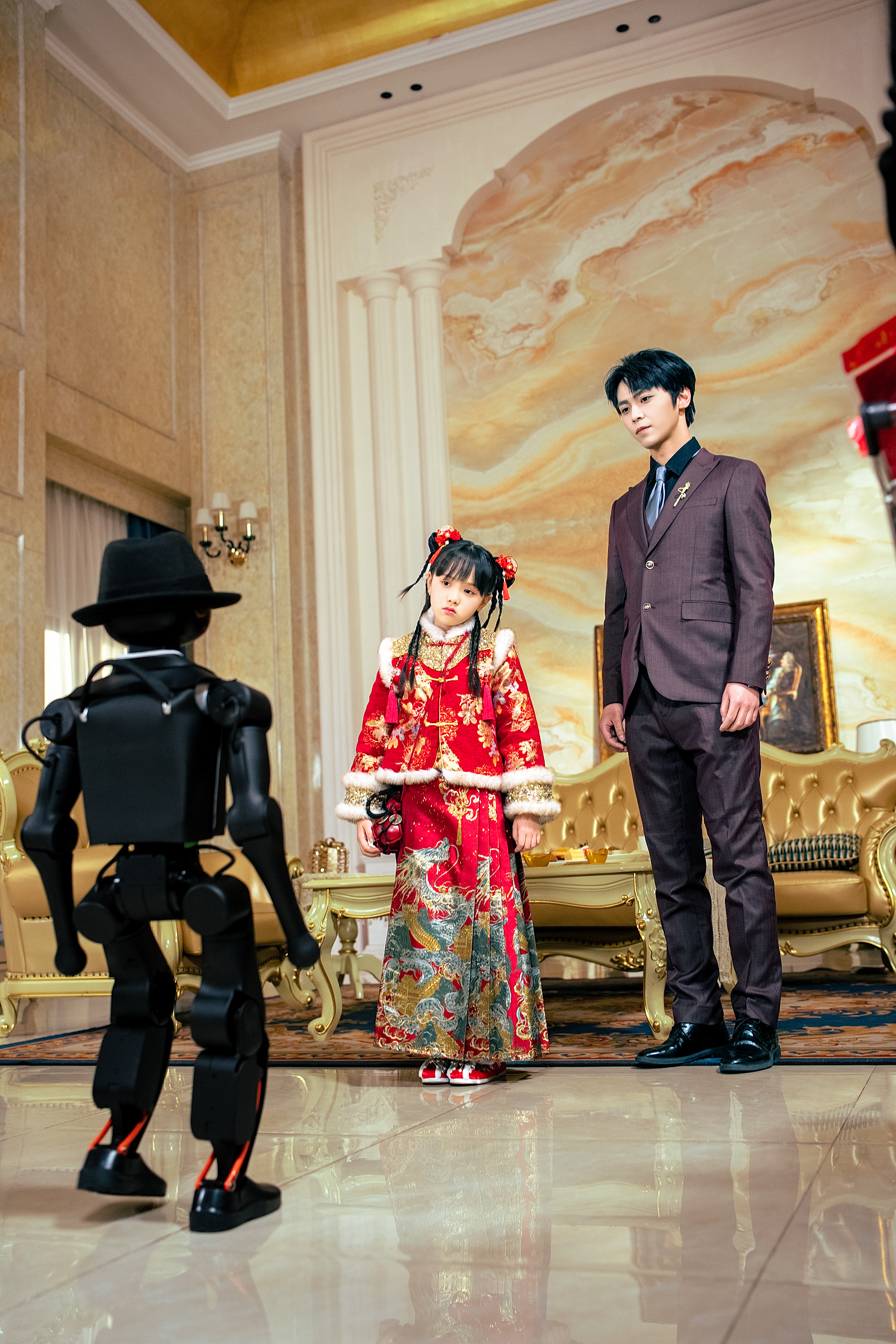
上千部短剧激战春节档,机器人5小时内“学会演戏”
Bei Ke Cai Jing· 2026-02-16 04:37
Core Insights - The short drama industry is experiencing a shift from a focus on traffic to a competition for content quality, with an emphasis on diverse themes and high production values for the Spring Festival season [1][15] - The number of short dramas being produced has significantly increased, with over 1,000 new short dramas expected to be released during the Spring Festival, indicating a growing market [2][14] - Innovations in storytelling and technology, including the use of AI and robots in production, are becoming more prevalent, enhancing the visual appeal and narrative depth of short dramas [4][9][12] Industry Trends - The competition among platforms and production companies has intensified, with a greater willingness to invest in quality scripts and production [1][15] - The emergence of AI-generated content and the integration of technology in storytelling are reshaping the production landscape, leading to a potential restructuring of traditional content creation processes [9][14] - The trend of IP development is gaining traction, with platforms focusing on long-term series rather than standalone hits, as evidenced by the return of popular sequels during the Spring Festival [14] Content Innovation - Short dramas are diversifying their themes, with genres ranging from family-friendly to fantasy and emotional narratives, catering to a wider audience [2][13] - The integration of cultural elements and emotional storytelling is becoming more important, as creators aim to resonate with viewers on a deeper level [10][12] - The use of robots and AI in production is being explored, although challenges remain in terms of emotional expression and real-time interaction [4][5][9]
恒生科技指数跌超1%,阿里巴巴跌2.7%,小米集团跌3.09%
Jin Rong Jie· 2026-02-16 01:57
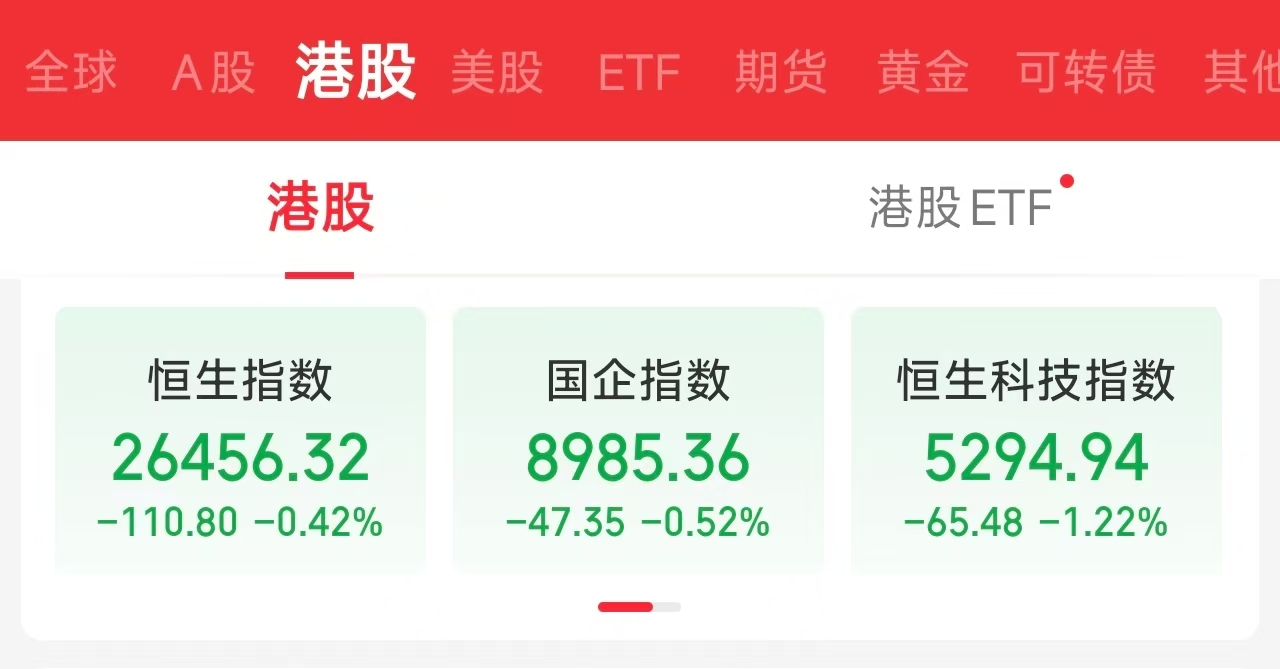
恒生科技指数延续下跌,跌幅扩大至1.22%,现报5294.94点。 华泰证券研报指出,港股上周先扬后抑。一方面,以全球"再通胀"交易与AI国产应用的升级为催化,有色等资源品、国产算力链与部分软件迎来反弹。另一 方面,AI格局在上市和非上市企业间的变化以及电商巨头内卷加剧的担忧压制权重股的表现。当前市场波动依然较高,本周适逢春节假期,影响市场的主 要因素或来自美股、春节期间消费、AI进展等。美股短期内或延续AI主线分化和高低切特征,对市场风偏影响中性;但国内消费高频数据和AI模型等已有 新进展。综合来看,建议均衡配置,短期重点关注直接受益于AI进展的存储等半导体硬件、特色消费α以及电气设备(新增)。 港股频道更多独家策划、专家专栏,免费查阅>> 责任编辑:栎树 大型科技股中,阿里巴巴-W跌2.7%,腾讯控股跌0.28%,京东集团-SW跌2.07%,小米集团-W跌3.09%,网易-S涨0.7%,美团-W跌1.77%,快手-W跌2.19%, 哔哩哔哩-W跌1.75%。 ...

港股开盘:恒指开盘跌0.25%,恒生科指跌0.19%,阿里巴巴跌1.8%
Jin Rong Jie· 2026-02-16 01:37
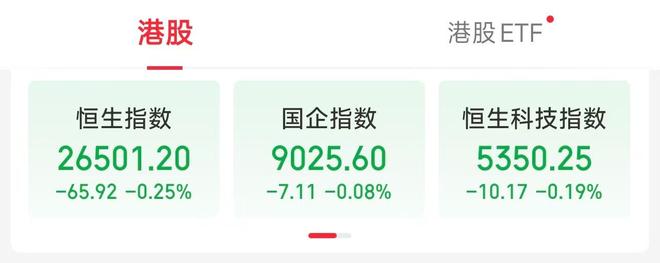
Market Overview - The Hang Seng Index opened down 0.25% at 26,501.2 points, while the Hang Seng Tech Index fell 0.19% to 5,350.25 points, and the National Enterprises Index decreased by 0.08% to 9,025.6 points [1] - Major tech stocks experienced declines, with Alibaba down 1.8%, Tencent down 0.38%, and JD.com down 0.85%. However, Netease saw an increase of 1.83% [3][4] Industry Insights - Huatai Securities reported that the Hong Kong market experienced fluctuations last week, driven by global "reflation" trades and upgrades in AI domestic applications, leading to rebounds in resource products and certain software sectors. However, concerns over the intensifying competition among e-commerce giants suppressed the performance of heavyweight stocks [3] - The market remains volatile, with key factors influencing it being US stock performance, consumer activity during the Spring Festival, and advancements in AI technology [3] Regulatory News - The State Administration for Market Regulation held discussions with major platform companies including Alibaba, Douyin, Baidu, Tencent, JD.com, Meituan, and Taobao, emphasizing compliance with various laws and regulations to enhance promotional practices [5] Company Developments - Qunhe Technology received approval from the China Securities Regulatory Commission for overseas issuance and listing, planning to issue up to approximately 312 million shares in Hong Kong, marking a significant step for the company [6] - China Merchants Energy signed shipbuilding contracts for one ethylene ship and eighteen oil tankers, totaling RMB 7.882 billion [7] - China Shenhua reported coal sales of 33.2 million tons in January, a year-on-year increase of 9.9%, and total electricity sales of 20.96 billion kWh, up 34.4% year-on-year [7] - China Southern Airlines saw a 1.1% decrease in passenger capacity and a 2.86% decline in passenger turnover in January, with a seat load factor of 83.26%, down 1.51 percentage points year-on-year [7] - China Eastern Airlines reported a 3.54% decrease in passenger capacity and a 1.03% decline in passenger turnover, with a seat load factor of 85.01%, up 2.16 percentage points year-on-year [7] - Huizhong Network completed the acquisition of a 25% stake in Jintongling, advancing its "production and sales integration" strategy [7] Performance Metrics - China General Nuclear Power completed 1,647.8 GWh of electricity generation in January, a year-on-year increase of 7.9% [8] - R&F Properties reported a contract sales revenue of approximately RMB 720 million in January, down 8.05% year-on-year [9] - Hopson Development Group recorded a contract sales amount of approximately RMB 591 million in January, a year-on-year increase of 24.95% [10] - Kaisa Group reported contract sales of RMB 325 million in January, down 35.3% year-on-year [11] - Jianye Real Estate reported contract sales of RMB 398 million in January, a year-on-year decrease of 31.1% [12] - Shanghai Fudan projected total revenue of approximately RMB 3.982 billion for 2025, a year-on-year increase of 10.92%, but a net profit decrease of 59.42% [12] - Ruian Real Estate issued a profit warning, expecting a net loss of between RMB 1.7 billion and 1.8 billion for the 2025 fiscal year [12]





智通港股沽空统计|2月16日
Xin Lang Cai Jing· 2026-02-16 00:32
Core Insights - The article highlights the top short-selling stocks in the market, with BYD Company Limited (81211) leading with a short-selling ratio of 100.00% [1][2]. Group 1: Short-Selling Ratios - BYD Company Limited (81211) has a short-selling ratio of 100.00% [2][3]. - JD.com (89618) follows with a short-selling ratio of 97.67% [2][3]. - Kuaishou Technology (81024) has a short-selling ratio of 80.79% [2][3]. Group 2: Short-Selling Amounts - Meituan (03690) has the highest short-selling amount at 2.11 billion [2]. - Alibaba Group (09988) follows with a short-selling amount of 1.673 billion [2]. - Xiaomi Corporation (01810) has a short-selling amount of 1.482 billion [2]. Group 3: Deviation Values - BYD Company Limited (81211) has the highest deviation value at 44.67% [3]. - Jinfang Pharmaceutical (02595) has a deviation value of 35.39% [3]. - Kuaishou Technology (81024) has a deviation value of 34.76% [3].


春晚,合作上市公司曝光!科技新星登场
Xin Lang Cai Jing· 2026-02-16 00:24
Core Insights - The 2026 Spring Festival Gala will feature a diverse range of corporate partners, reflecting the evolution of China's commercial landscape over the past four decades [1][8] - The event serves as a significant platform for brand recognition and influence, with a history of successful partnerships, particularly in the tech and consumer goods sectors [3][8] Company Partnerships - Eight listed companies have been confirmed as partners for the 2026 Spring Festival Gala, including three liquor companies, two automotive companies, two video platforms, and one toy company [3][8] - Wuliangye will be the exclusive interactive partner for the "Harmony and Goodness" segment, marking its fourth appearance at the gala [5][10] - Yanghe Dream Blue M6+ will serve as the exclusive timekeeping partner for the seventh consecutive year, while Gujing Gongjiu celebrates its 11th year of partnership [5][10] Automotive Collaborations - Huawei and JAC Motors have launched the Zun Jie S800, which will be the flagship partner for smart travel at the gala [4][9] - Great Wall Motors will again be the designated vehicle for new media coverage of the gala, featuring its flagship models [4][9] Technological Innovations - The 2026 gala will emphasize technological advancements, with partnerships from companies like Yushutech, Volcano Engine, and Galaxy General, focusing on robotics and AI [6][11] - Volcano Engine will engage in program production and online interaction, while Yushutech will showcase cutting-edge robotics technology [6][11] Cultural and Emotional Engagement - MINISO has partnered with the gala to launch a series of cultural toys, reflecting a shift from material to cultural consumption [6][11] - The collaboration aims to enhance emotional engagement and cultural relevance in consumer products [6][11]