铖昌科技

Search documents
华西证券:商业航天加速推动 卫星互联网应用有望加速落地
智通财经网· 2025-12-01 01:53
Core Insights - The recent commercialization of Google's TPU is impacting NVIDIA's strong ecosystem, but a coexistence of related ecosystems is expected in the future [1] - The TMT sector, including telecommunications, is facing short-term valuation corrections due to geopolitical conflicts, the US-China tech rivalry, and uncertainties in AI investments [1] - Long-term trends in the TMT sector, such as 6G development, domestic substitution, and military industry growth, are anticipated to catalyze market opportunities in computing power leasing, satellite communications, and 6G [1] Group 1 - The acceleration of commercial aerospace is expected to boost satellite internet applications [2] - The National Space Administration has launched an action plan for high-quality development in commercial aerospace by 2027, indicating a dedicated regulatory body for the industry [2] - The issuance of satellite internet licenses is a significant step towards commercial operation, which is expected to drive the entire industry chain towards scaling [2] Group 2 - Recommended beneficiaries in satellite communication and satellite IoT include companies like Chengchang Technology, Guobo Electronics, and Zhenlei Technology [3] - The terminal antenna industry chain includes listed companies such as Chengchang Technology and Tongyu Communication, as well as non-listed companies like Tianrui Xingtong [3] - Key players in terminal chips and core networks include China Mobile, China Unicom, and China Telecom [3] Group 3 - Testing instruments related to the industry include companies like Kunheng Shunwei and Chuangyuan Xinke [4]

科技巨头“卷”向太空
财联社· 2025-11-28 14:58
Core Viewpoint - The article discusses the emerging trend of deploying AI capabilities in space, highlighting the plans and advancements made by both domestic and international companies in establishing space-based data centers and computing power [1][3]. Domestic Developments - Beijing has proposed a clear timeline for the construction of space data centers, with projects like "Star Computing" and "Trinity Computing Constellation" making progress [3]. - Companies such as Guokong Chuangxin and Zhijiang Laboratory are planning to build large-scale data centers in low Earth orbit, aiming for significant AI computing power deployment by 2035 [6][10]. - The "Star Computing" plan aims to launch 2,800 computing satellites, with a total computing power target of 5 Peta Operations Per Second (POPS) by 2025 [6]. International Developments - Major companies like Google, SpaceX, and Amazon are also investing in space computing initiatives. Google plans to launch satellites equipped with AI chips by 2027, while SpaceX aims to deploy a data center capable of 100 GW within the next few years [9][10]. - Amazon's Project Kuiper envisions building a data center in space within the next 10 to 20 years, indicating a long-term commitment to space-based computing [9]. Advantages of Space Computing - Space computing offers unique advantages such as energy efficiency through solar power, reduced cooling requirements due to the cold environment, and the ability to operate continuously without terrestrial resource constraints [4][5]. Industry Chain Overview - The article outlines various companies involved in the space computing industry chain, including those focused on computing infrastructure, satellite manufacturing, and data processing [11]. Key players include: - Hangang Co., Ltd. (computing infrastructure) - China Satellite (satellite manufacturing) - Cambricon (chips) - Softcom Power (data processing) [11].




产业链公司积极布局商业航天细分赛道
Zheng Quan Ri Bao· 2025-11-26 16:13
Group 1 - The National Space Administration of China issued the "Action Plan for Promoting High-Quality and Safe Development of Commercial Space (2025-2027)", which includes 22 key measures across five areas: enhancing innovation, efficient resource utilization, promoting industry growth, improving industry management, and strengthening safety regulation [1] - The Action Plan aims to significantly reduce fixed asset investments for private enterprises while establishing a comprehensive safety review mechanism to manage technology validation and operational risks throughout the process [1] - The plan emphasizes the optimization of industrial structure, supporting commercial space entities in developing new technologies and products, and exploring new application scenarios [1] Group 2 - With continuous policy support, many listed companies are optimizing their business structures and targeting important niche markets in the commercial space industry [2] - Companies like Zhejiang Zhenlei Technology Co., Ltd. have strategically positioned themselves in the satellite internet core chip and component supply sector, developing a product matrix that includes power management chips and integrated RF transceiver chips [2] - Zhejiang Chengchang Technology Co., Ltd. has developed T/R chips with leading performance in the low Earth orbit satellite sector, collaborating closely with core downstream customers to create new products for next-generation low Earth orbit communication satellites [2] Group 3 - The commercial space industry is entering a golden development period, with expanding market size driven by breakthroughs in key technologies, particularly in emerging fields like low Earth orbit communication constellations and deep space exploration [3] - Companies are advised to focus on technology route selection, emphasizing reusable rockets, integrated remote sensing, and space manufacturing while adhering to regulations on space debris mitigation and data security [3] - Establishing a comprehensive risk management system throughout the lifecycle of space projects is essential for companies in the industry [3]
12月起,商业航天将接连迎来多场盛会,政策或也有重磅进展
Xuan Gu Bao· 2025-11-25 07:16
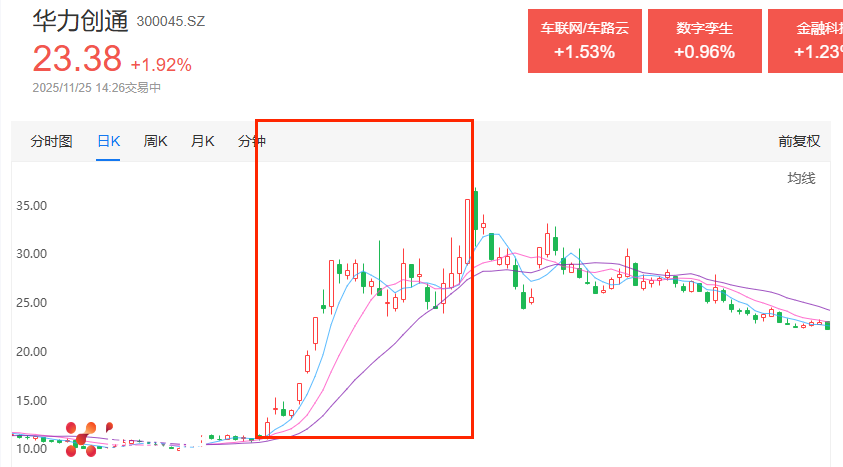
Event Overview - The 2025 Third China Commercial Space Development Conference and the Fourth Zhongguancun Commercial Space Conference will be held in Beijing from December 18 to 19, marking the first national industry event initiated and implemented by industry social organizations in the commercial space sector [1] - Additional major space industry events are scheduled from January to March 2026, including the Third Beijing Commercial Space Industry High-Quality Development Conference and the 2026 Beijing International Commercial Space Exhibition [1] Industry Development Acceleration - The establishment of the Commercial Space Administration signifies a key institutional development, expected to enhance coordination across multiple departments and improve efficiency in satellite industry development, including launch approvals and operational licensing [2] - Analysts from CITIC Securities and Huatai Securities highlight a triple inflection point for the commercial space sector, driven by policy, performance, and technology advancements [2] - The Chinese commercial space industry is projected to reach a value of 2.8 trillion yuan by 2025 [2] Satellite Application Focus - The core of commercial space is identified as satellite applications, which are increasingly integrated with technologies like 6G and AI, leading to rapid expansion in various new business trials [3] - The number of satellite launches is expected to grow by 100%-200% annually during the 14th Five-Year Plan period, with satellite connectivity becoming mainstream in consumer markets [3] Historical Performance of Key Players - Huawei's launch of the HUAWEI Mate 60 Pro, the first mass-market smartphone supporting satellite calls, has significant implications for the industry [4] - Huali Chuantong, a leader in satellite internet, experienced over 200% stock price increase from August 29 to October 11 [5] Related Concept Stocks - A list of concept stocks related to the commercial space industry includes companies involved in solar wings, satellite operations, rocket manufacturing, and testing services, indicating a broad investment landscape [7]
卫星互联网概念投资逻辑与龙头
Sou Hu Cai Jing· 2025-11-25 01:39
Core Viewpoint - The Ministry of Industry and Information Technology of China announced the launch of commercial trials for satellite IoT services, aiming to enrich the satellite communication market and support the development of emerging industries such as commercial aerospace and low-altitude economy [3]. Policy Support - The Ministry of Industry and Information Technology issued guidelines in August 2025, targeting over 10 million satellite communication users by 2030 and promoting large-scale applications of direct satellite connections for mobile phones [4]. - China Unicom received the first satellite internet license in September 2025, marking a significant step towards commercialization in the industry [4]. Market Potential - The domestic satellite internet market is projected to reach 45 billion yuan by 2025 and exceed 1.2 trillion yuan by 2030. The overall commercial aerospace market is expected to surpass 2.5 trillion yuan in 2025 [4]. Technological Advancements - The speed of satellite networking in China is significantly improving, with the launch interval for the GW constellation by China Star Network reduced to 3-5 days, ensuring a growing number of satellites in orbit [4]. Downstream Applications - The commercial trial for satellite IoT services, initiated in November 2025, is expected to enhance connectivity in sectors such as transportation logistics, energy, and low-altitude economy [4]. Leading Companies in Satellite Internet - Tianyin Electromechanical's subsidiary, Tianyin Interstellar, is a leader in the global satellite star sensor market, with products used in national strategic projects and significant growth expected as satellite networking expands [5]. - China Satellite, as the only listed platform for satellite assembly under the Aerospace Science and Technology Corporation, is deeply involved in major satellite constellation projects, including the GW constellation [5]. - Chengchang Technology is the only private company in China to achieve mass production of aerospace-grade satellite T/R chips, holding over 80% market share [6]. - Aerospace Hongtu focuses on satellite application services and is a core player in satellite data processing and analysis [6]. - Zhenyou Technology is one of the few companies in China with satellite communication baseband chip technology, supporting major satellite communication projects [6]. - China Satcom, the second-largest satellite communication operator in Asia, is collaborating on mid-orbit satellite constellation construction [6]. Other Notable Companies - Other companies such as Pake New Materials, AVIC Optoelectronics, and Jiayuan Technology are also involved in the satellite internet industry chain, showcasing technological advantages and market potential [8].

商业航天:卫星应用多点开花加速拓展
HUAXI Securities· 2025-11-23 13:31
Investment Rating - The industry rating for the defense and military industry is "Recommended" [1] Core Insights - The core of commercial aerospace is satellite applications, which are fundamentally space data services. The integration of satellite applications with technologies like 6G and AI is accelerating, leading to a proliferation of new business experiments [2] - The number of satellite launches is expected to grow by 100%-200% annually during the 14th Five-Year Plan period, driven by advancements in domestic reusable rocket testing [2] - Satellite direct connection for mobile phones and vehicles is anticipated to become mainstream applications in the consumer market, with satellite computing transmission scheduling emerging as a key component in the cloud computing market [2] - The development of satellite internet and satellite IoT is expected to complement each other, addressing communication needs in areas where terrestrial networks are unavailable [3] - By 2030, global satellite IoT connections are projected to exceed 300 million, with the market size potentially reaching the hundred billion dollar level, driven by technological maturity and cost reduction [3] Summary by Sections Event Overview - The launch of commercial trials for satellite IoT services in China aims to enhance market supply and stimulate industry vitality [1] - Huawei's upcoming devices are expected to feature satellite connectivity, marking significant advancements in satellite communication technology [1] Analysis and Judgment - The integration of satellite applications with emerging technologies is leading to innovative business models and applications [2] - The trend of satellite computing is emerging, where satellites will incorporate AI capabilities to enhance their functionality [5] Beneficiary Companies - **Putian Technology**: Involved in the "Three-body Computing Constellation" project, contributing to the development of space-based AI computing [6] - **Hollysys**: A key player in satellite measurement, experiencing rapid growth in commercial aerospace orders [7] - **National Science and Technology Military Industry**: Engaged in solid rocket engine production, transitioning to a comprehensive aerospace business model [7] - **Shanghai Hanyun**: Supplies communication systems for low Earth orbit satellite constellations [8] - **Zhenray Technology**: A core supplier of satellite internet chips and components, with significant revenue expected from satellite communication [9]
全球及中国家用饮水机行业研究及十五五规划分析报告
QYResearch· 2025-11-18 01:52
Industry Overview and Statistics - The household water dispenser market is transitioning from basic functionality to health-focused, multifunctional, and smart solutions, driven by consumer demand for water quality and safety [2] - The market is expected to reach $1.740 billion in 2024, with a modest growth to $1.793 billion by 2031, reflecting a compound annual growth rate (CAGR) of only 0.58% from 2024 to 2031 [3] - China is a key consumer market, accounting for 22.25% of the global market in 2024, but is projected to decline to 19.35% by 2031 due to structural shifts in consumption [6] Product Type Analysis - Traditional water dispensers still hold a market share of 32.87% in 2024, but are expected to decline at a CAGR of -0.46% from 2024 to 2031 due to shrinking demand and policy changes [7] - Countertop water dispensers are leading the market with a 46.55% share in 2024, benefiting from their "instant filtration and drinking" capabilities, with a projected CAGR of 1.14% [7] Sales Channel Dynamics - Online sales channels have surpassed offline channels, accounting for 50.80% of global sales in 2024, driven by the convenience of e-commerce platforms [8] - Offline channels remain crucial for lower-tier markets, contributing 49.20% of sales through experiential marketing strategies [8] Competitive Landscape - The market is characterized by a concentration of leading brands, with the top three companies (Midea, Angel, and Qinyuan) holding over 20% of the market share in 2024 [8] - Competition is intensifying, particularly in China, as leading firms leverage technology and market expansion while smaller companies focus on cost-effective models [8] Key Industry Features - High-end and smart features are driving industry upgrades, with products increasingly incorporating app connectivity, precise temperature control, and real-time water quality monitoring [10][11] - The market is witnessing a shift towards specialized products catering to specific consumer needs, such as sterilization for infant formula preparation and tea brewing [10][11] Favorable Factors for Development - Rising consumer income and health awareness are significantly increasing demand for safe and high-quality drinking water, pushing the market towards premium and functional products [12] - The implementation of stricter energy efficiency standards is prompting technological upgrades across the industry [12] Challenges Facing the Industry - The rapid growth of the water purifier market poses a direct threat to traditional water dispensers, with purifiers gaining over 50% penetration in high-end residential areas [13] - Quality and safety concerns persist, with a reported 60% compliance rate in product quality checks, highlighting the need for stricter regulations [14] - The industry faces structural overcapacity, leading to intensified competition and profit compression, particularly in the entry-level market [14]

商业航天:亚马逊Leo预示太空数据服务新方向
HUAXI Securities· 2025-11-17 11:04
Investment Rating - The industry rating for the defense and military industry is "Recommended" [1] Core Insights - Amazon's recent rebranding of its satellite internet project to "Amazon Leo" signifies a shift from experimental testing to commercial operation, with an investment of $10 billion and plans to deploy over 3,200 satellites [1][6] - Amazon Leo aims to create a leading "satellite + cloud + AI" digital ecosystem, focusing on the space data service value chain and positioning itself as a distributed space data center [2][9] - The project is expected to become a significant pillar of Amazon's business, alongside e-commerce, AWS, and subscription services, with over $10 billion invested by the end of 2024 [6] Summary by Sections Event Overview - Amazon announced the rebranding of its satellite internet project to "Amazon Leo" on November 13, indicating a transition to commercial operations with over 150 satellites already launched and plans for more [1] Analysis and Judgment - Amazon Leo and Musk's Starlink represent two different directions in satellite internet applications, with Amazon leveraging its cloud computing strength to replicate its service model in space [2] - The long-term goal is to build a global "satellite + cloud + AI" ecosystem, creating a high-speed data service network in space [2] Kuiper Plan Deployment - The first phase of the Amazon Kuiper low Earth orbit broadband constellation will consist of 3,232 satellites, with deployment milestones set for 2026 and 2029 [4] Ground Segment Development - Amazon is deploying dedicated gateway stations globally, with 12 stations established in 9 countries to provide satellite operations and cloud data services [5] Market Potential - The Kuiper plan targets government and enterprise users, offering private connections and IoT services for specific industries, enhancing data security and operational efficiency [7][8] Beneficiary Companies - Several companies are identified as beneficiaries of the satellite internet ecosystem, including: - Putian Technology, involved in the "Three-body Computing Constellation" project [10] - Holley, a core manufacturer in satellite measurement [10] - Guokai Military Industry, transitioning to a comprehensive rocket engine manufacturer [12] - Shanghai Hanyun, a key supplier for satellite communication systems [14] - Zhenray Technology, a core chip supplier for satellite internet [13]
商业航天:卫星网络将成为太空智能体
HUAXI Securities· 2025-11-10 11:56
Investment Rating - The industry rating is "Recommended" [1] Core Insights - The trend of integrated development of satellite networks is characterized by the convergence of sensing, computing, and communication, evolving into an intelligent entity capable of perception, reasoning, and action [2][5] - The intelligent entity consists of three layers: 1) Global Connectivity Layer, providing comprehensive and optimal connectivity; 2) Fusion Capability Layer, where "cloud-edge-end collaboration" becomes an intrinsic capability; 3) Intelligent Service Layer, where "network as intelligence" offers cognitive-level information services [5][7] - The evolution of satellite networks from "technical tools and infrastructure" to "intelligent ecological hubs" and "value creation platforms" is highlighted, aiming for seamless loops of global perception, intelligent computation, and on-demand services [2][8] Summary by Sections Integrated Sensing and Computing - The sharing of satellite infrastructure allows for multi-modal functionalities on a single satellite platform, exemplified by the Iridium second-generation system integrating communication, navigation, and situational awareness [3] - The communication network is transitioning from "connective collaboration" to "integrated coexistence," with high and low orbit collaboration and integrated space-ground networking as core directions [3] Dynamic Resource Scheduling - The construction of elastic resource networks is possible through dynamic scheduling, as seen in the Zhijiang Laboratory's "Three-body Computing Constellation," which enables in-orbit computing capabilities and resource allocation [4] Global Connectivity and AI-Driven Services - The global connectivity layer features a three-dimensional backbone network with high, medium, and low orbit satellites, each serving distinct roles in global resource scheduling and data processing [5][6] - The intelligent service layer transforms the network into an intelligent entity capable of understanding user intent and providing cognitive-level responses, facilitating applications across various industries [7][10] Case Study: Palantir's Meta Constellation - Palantir's "Meta Constellation" system exemplifies the integration of satellite data with multi-domain data, enabling real-time situational awareness and decision-making across military, commercial, and governmental sectors [8][9] - The system's core functions include planetary-level situational awareness, tactical target tracking, and autonomous learning capabilities, significantly enhancing operational efficiency and responsiveness [10][14] Beneficiary Companies - Companies such as Putian Technology, Holoway, Guoke Military Industry, and others are positioned to benefit from advancements in satellite technology and the growing demand for integrated satellite services [15][16][17]
周跟踪(20251027-20251102):总结通信行业三季报,把握短期业绩与预期错配的机会
Shanxi Securities· 2025-11-06 05:49
Investment Rating - The report maintains an "Outperform" rating for the communication industry, indicating an expected performance exceeding the benchmark index by more than 10% [1][40]. Core Insights - Nvidia's GTC event provided a significant CAPEX guidance of $500 billion for the Blackwell-Rubin series, with North American CSPs showing a clear upward trend in capital expenditures for Q3 2025 [4][16]. - The report highlights a strong growth trend in AI infrastructure investments, with North American CSPs' capital expenditures reaching a total of $113.3 billion in Q3, marking a 75% year-on-year increase [5][17]. - The A-share communication industry is experiencing high growth in AI computing performance, although there is a mismatch between high short-term expectations and actual performance releases [5][17]. Summary by Sections Industry Dynamics - Nvidia's guidance for North American CSPs suggests CAPEX could reach $443 billion, $549 billion, and $632 billion from 2025 to 2027, with GPU shipments expected to total 20 million units [4][16]. - The report emphasizes the stability of capital markets regarding concerns over "AI bubble" investments, with Nvidia's roadmap enhancing investment certainty in areas like 1.6T optical modules and quantum computing [4][16]. A-Share Communication Industry Overview - The report notes that leading companies in optical modules, such as Zhongji Xuchuang and Xinyi Technology, continue to expand production, with stable gross margin trends despite short-term performance fluctuations [5][17]. - The bottleneck effects in core materials like optical chips are becoming more pronounced, with domestic chip manufacturers expected to gain market share as overseas giants slow down production [5][17]. Market Performance - The overall market showed mixed performance during the week of October 27 to October 31, 2025, with the Shenzhen Component Index rising by 0.67% and the communication index declining by 3.59% [11][20]. - The report identifies cloud computing as the leading sector with a weekly increase of 22.48%, followed by IDC and equipment manufacturers [11][20]. Recommended Companies - The report suggests focusing on companies in various segments, including optical devices (e.g., Guangke Technology, Shijia Photon) and AIOT solutions (e.g., Rockchip, Yiyuan Communication) [20].