
来伊份

Search documents
零食巨头们,正纷纷押注“人类猫条”
2 1 Shi Ji Jing Ji Bao Dao· 2025-09-13 11:38
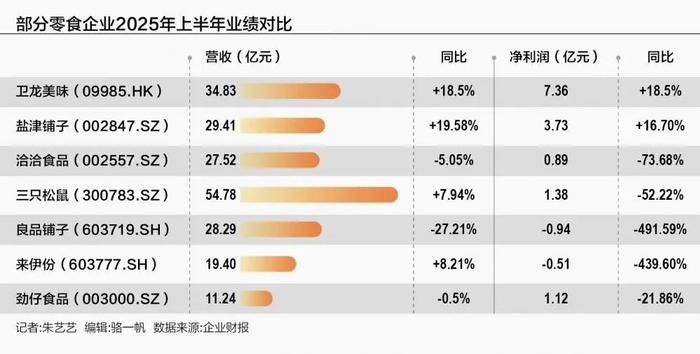
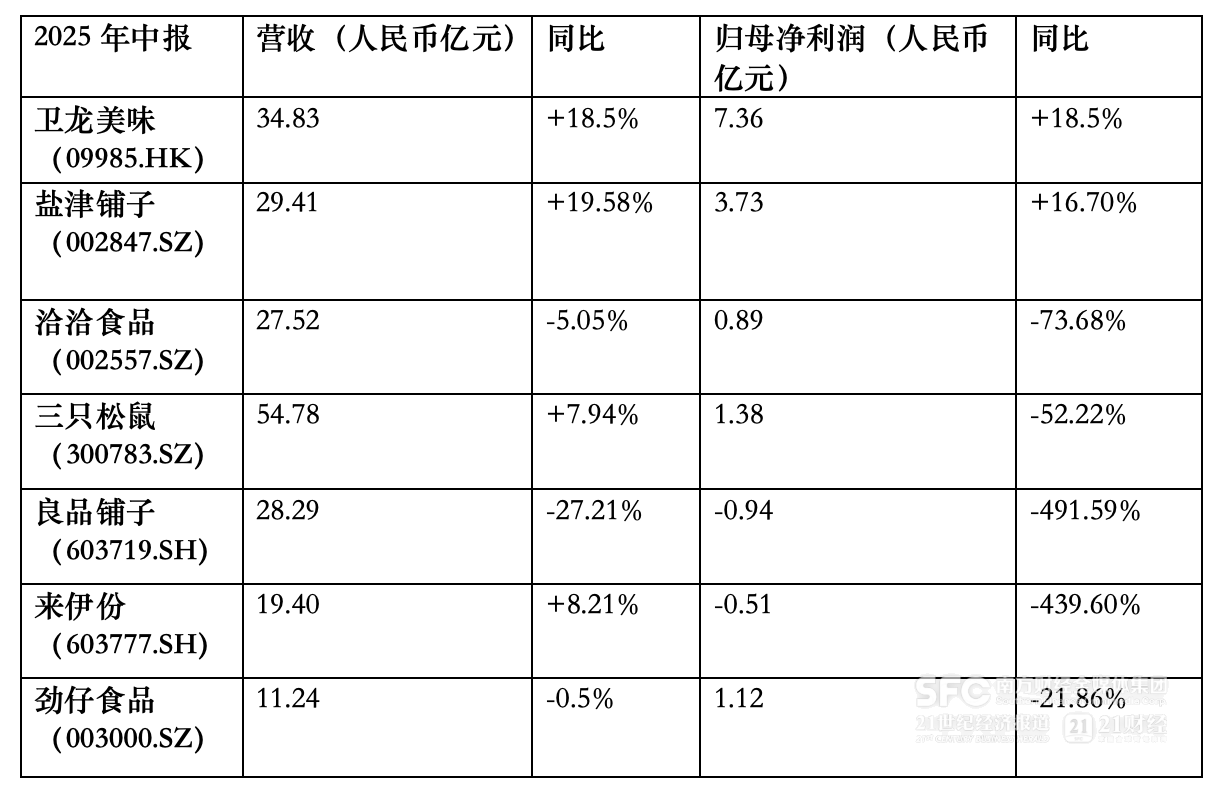
Group 1: Industry Overview - Konjac, known as "human cat strips," is becoming a phenomenon in the snack food market, attracting significant attention from various companies [1][5] - The konjac food industry has experienced a compound annual growth rate of 20% over the past decade, with the market size expected to reach 26.9 billion yuan in 2024 [5] - Major snack companies are increasingly entering the konjac segment, including Salted Fish Pouch, Wei Long, and Qiaqia Food, among others [1][6][7] Group 2: Company Performance - Salted Fish Pouch reported a revenue of 29.41 billion yuan in the first half of 2025, a year-on-year increase of 19.58%, with konjac snacks contributing 7.91 billion yuan, up 155.10% [6][7] - Wei Long's revenue reached 34.83 billion yuan in the first half of 2025, growing 18.5%, with konjac products driving a 44.3% increase in the vegetable product segment [5][6] - Qiaqia Food's revenue declined by 5.05% to 27.52 billion yuan in the first half of 2025, despite launching new konjac products [8] Group 3: Market Competition - The competition among snack companies is intensifying, with the number of stores for the "Ming Ming Very Busy" group surpassing 20,000 nationwide [3][10] - Companies are focusing on expanding their presence in snack retail channels, with Salted Fish Pouch emphasizing a strategy shift towards channel dominance [11][12] - Three Squirrels is also exploring opportunities in the konjac segment while investing in community snack stores to enhance competition [8][12][13]




零食巨头们,正纷纷押注“人类猫条”
21世纪经济报道· 2025-09-13 11:29
Core Viewpoint - The emergence of konjac as a phenomenon-level snack product is driving significant revenue growth for various snack companies, with notable contributions from brands like Salted Fish Pouch and Wei Long [1][4][5]. Group 1: Company Performance - Salted Fish Pouch's konjac snack brand "Da Mo Wang" generated revenue of 791 million yuan in the first half of 2025, a year-on-year increase of 155.10%, accounting for 26.90% of total revenue [1][6]. - Wei Long's konjac products "Mo Yu Shuang" and "Xiao Mo Nu" significantly boosted its vegetable product segment revenue by 44.3% to 2.109 billion yuan, representing 60.5% of total revenue in the first half of 2025 [5][6]. - The overall revenue for Wei Long reached 3.483 billion yuan, with a net profit of 736 million yuan, both reflecting an 18.5% year-on-year growth [2][5]. Group 2: Market Trends - The konjac food industry has experienced a compound annual growth rate of 20% over the past decade, with a projected market size of 26.9 billion yuan by 2024 [4]. - More than 30 companies, including Qiaqia Food, Three Squirrels, and Liangpinpuzi, are entering the konjac snack market, indicating a competitive landscape [6][8]. Group 3: Channel Expansion - The snack industry is witnessing intense competition in the retail channel, with the Mingming Hen Mang Group surpassing 20,000 stores nationwide, prompting companies to focus on snack retail channels [10][12]. - Salted Fish Pouch has shifted its strategy to prioritize channel development, with over 70% of its revenue coming from distribution channels, including snack retail and community group buying [10][12]. - Qiaqia Food reported a significant increase in revenue from snack retail channels, growing from approximately 5 million yuan in January 2023 to around 45 million yuan in April 2024 [11][12].
押注魔芋大单品,扩张零食量贩店,“盐津铺子们”继续跑马圈地
2 1 Shi Ji Jing Ji Bao Dao· 2025-09-12 07:08
Core Viewpoint - Konjac, known as "human cat strips," is becoming a phenomenon in the snack food industry, with companies like Salted Fish Pouch and Wei Long capitalizing on this trend through their konjac product lines [1][4]. Company Performance - Salted Fish Pouch's konjac snack brand "Big Demon King" generated revenue of 791 million yuan in the first half of 2025, a year-on-year increase of 155.10%, contributing significantly to the company's total revenue of 2.941 billion yuan [1][12]. - Wei Long's konjac products "Konjac Shuang" and "Little Witch" drove a 44.3% increase in the vegetable products segment to 2.109 billion yuan, accounting for 60.5% of total revenue in the first half of 2025 [7][8]. - In the first half of 2025, Salted Fish Pouch reported total revenue of 2.941 billion yuan, up 19.58% year-on-year, with a net profit of 373 million yuan, an increase of 16.70% [12][18]. Market Trends - The konjac food industry has seen a compound annual growth rate of 20% over the past decade, with the market size expected to reach 26.9 billion yuan by 2024 [5]. - More than 30 companies, including Qiaqia Food and Three Squirrels, are entering the konjac snack market, indicating a competitive landscape [14]. Channel Development - The competition among snack companies is intensifying in the offline market, with the Mingming Busy Group surpassing 20,000 stores nationwide [3][19]. - Salted Fish Pouch has shifted its strategy to prioritize channel development, emphasizing the importance of distribution channels in its growth [19]. - Qiaqia Food has also increased its investment in emerging channels like snack wholesale stores and membership stores, reflecting a broader trend in the industry [20].
来伊份跌2.05%,成交额1.66亿元,主力资金净流出1802.10万元
Xin Lang Cai Jing· 2025-09-12 06:29
Company Overview - Shanghai Laiyifen Co., Ltd. is located at 90 Guyi Road, Xuhui District, Shanghai, established on July 2, 2002, and listed on October 12, 2016. The company specializes in the chain operation of snack foods [1]. Financial Performance - For the first half of 2025, Laiyifen achieved operating revenue of 1.94 billion yuan, representing a year-on-year growth of 8.21%. However, the net profit attributable to the parent company was -50.68 million yuan, a decrease of 439.60% compared to the previous year [2]. - Since its A-share listing, Laiyifen has distributed a total of 314 million yuan in dividends, with 47.79 million yuan distributed over the past three years [3]. Stock Performance - As of September 12, Laiyifen's stock price decreased by 2.05%, trading at 14.30 yuan per share, with a total market capitalization of 4.782 billion yuan. The stock has declined by 7.26% year-to-date [1]. - The stock has appeared on the "龙虎榜" (a list of stocks with significant trading activity) 12 times this year, with the most recent appearance on March 3 [1]. Shareholder Information - As of June 30, 2025, Laiyifen had 41,800 shareholders, a decrease of 3.06% from the previous period. The average number of circulating shares per person increased by 2.51% to 8,005 shares [2]. - Tianhong Zhongzheng Food and Beverage ETF (159736) is among the top ten circulating shareholders, holding 462,600 shares as a new shareholder [3]. Business Segmentation - Laiyifen's main business revenue composition includes: meat and aquatic products (24.21%), candies and preserved fruits (21.10%), nuts and fried products (18.35%), pastries and puffed foods (14.16%), other food categories (14.15%), non-food items (1.66%), and rental business (0.21%) [1].
万辰利润暴涨背后:好想来的激进与加盟商的无奈
Xin Lang Cai Jing· 2025-09-12 04:15
Core Viewpoint - The rapid growth of Wancheng Group in the snack industry contrasts sharply with the declining performance of established brands, raising questions about sustainability and potential risks in its business model [1][26]. Financial Performance - In the first half of 2025, Wancheng Group reported revenue of 22.583 billion yuan, a year-on-year increase of 106.89%, and a net profit of 472 million yuan, a staggering increase of 50,358.80% [1][3]. - The significant profit surge is primarily attributed to the strong growth in the bulk snack business, which contributed 22.345 billion yuan in revenue, accounting for 98.95% of total revenue, with a year-on-year growth of 109.33% [3][6]. Business Model and Revenue Sources - The bulk snack business generates revenue mainly through three channels: wholesale supply to franchisees, store sales, and others. The majority of income comes from supplying products to franchisees, with 21.810 billion yuan in revenue from this channel, a year-on-year increase of 112.56% [6][8]. - As of June 2025, Wancheng Group had 15,400 stores, a net increase of 8,727 stores compared to the same period in 2024, representing a growth of 131.47% [8]. Franchisee Dynamics - Despite the growth in franchisee numbers, individual store revenue has declined, with average monthly revenue dropping from 32.20 million yuan in the first half of 2024 to 29.57 million yuan in the first half of 2025, a decrease of 8.16% [13]. - Franchisees face increasing pressure due to rising costs and declining revenues, with the initial investment for a store estimated at around 500,000 yuan, leading to a payback period of approximately 17 months under ideal conditions [16]. Market Competition - The snack market is becoming increasingly competitive, transitioning from a "blue ocean" to a "red ocean" environment, with intensified competition among existing players and new entrants [17][19]. - Wancheng's store expansion strategy has led to high regional concentration, particularly in East China, where over 56.80% of its stores are located, resulting in internal competition and diluted customer traffic [17]. Risks and Challenges - Wancheng Group faces significant risks, including food safety issues, high debt levels, and the potential for franchisee closures due to profitability challenges [22][24]. - The company's asset-liability ratio is projected to rise to 90.97% following a planned acquisition, indicating a precarious financial position that could exacerbate cash flow issues if revenues decline [24][26]. Conclusion - While Wancheng Group has achieved remarkable growth through its franchise model, the sustainability of this growth is under scrutiny due to market saturation, franchisee profitability challenges, and associated risks [26][27].

进博“同款”变日常 贸易开出新“繁花”
Jin Rong Shi Bao· 2025-09-12 02:03
Core Insights - The article highlights the transformation of the Oriental International Group from a textile-focused company to a comprehensive trade platform, exemplified by the Hongqiao Import Commodity Display and Trading Center, which now encompasses a wide range of products including coffee and wine [1][2]. Group 1: Trade Platform Development - The Hongqiao International Coffee Port consolidates coffee beans from 60 countries, with a significant contribution from 47 Belt and Road countries, facilitating a trade volume of 3 billion yuan annually [2]. - The platform has expanded its trade offerings beyond textiles to include a variety of global products, with over 85,000 items from 120 countries expected to generate a trading volume exceeding 30 billion yuan in 2024 [2]. - The shift from a single-category focus to a full industry chain approach has been pivotal in enhancing trade efficiency and competitiveness [2][3]. Group 2: Market Penetration and Consumer Preferences - The article discusses the emergence of Chinese consumers as influential players in the global coffee market, with local preferences being integrated into international coffee evaluation systems [3]. - The introduction of foreign alcoholic beverages, such as whiskey and wine, into the Chinese market is being strategically piloted through events like the China International Import Expo, which has successfully connected overseas brands with local consumers [4][5][6]. Group 3: Digital and E-commerce Integration - The integration of digital tools and live streaming has significantly boosted sales for various products, exemplified by the success of Korean instant noodles and other brands, achieving sales figures in the billions [7]. - The Hongqiao platform's logistics and trade infrastructure, including a 50,000 square meter bonded logistics center, enhances the efficiency of cross-border trade [7]. Group 4: Global Trade Dynamics - The article emphasizes the dual-directional nature of trade, where not only foreign products are entering China, but also Chinese goods, such as traditional herbal products, are gaining popularity in international markets [8]. - The narrative illustrates the evolution of Shanghai's trade landscape from a textile hub to a global trade nexus, reflecting China's broader shift towards quality-driven trade [8].

2025年1-4月全国农副食品加工业出口货值为705.1亿元,累计下滑3%
Chan Ye Xin Xi Wang· 2025-09-12 01:10
上市公司:黑芝麻(000716),双汇发展(000895),千味央厨(001215),青岛食品(001219),三 全食品(002216),得利斯(002330),金字火腿(002515),洽洽食品(002557),五芳斋 (603237),安井食品(603345),绝味食品(603517),惠发食品(603536),有友食品 (603697),良品铺子(603719),来伊份(603777),桃李面包(603866) 相关报告:智研咨询发布的《2025-2031年中国农副食品加工专用设备制造行业市场动态分析及发展前 景研判报告》 2019年-2025年1-4月全国农副食品加工业出口货值统计图 数据来源:国家统计局,智研咨询整理 知前沿,问智研。智研咨询是中国一流产业咨询机构,十数年持续深耕产业研究领域,提供深度产业研 究报告、商业计划书、可行性研究报告及定制服务等一站式产业咨询服务。专业的角度、品质化的服 务、敏锐的市场洞察力,专注于提供完善的产业解决方案,为您的投资决策赋能。 根据国家统计局数据可知:2025年4月全国农副食品加工业出口货值为179.2亿元,同比下降6%;2025 年1-4月全国农副食品加 ...

美国超火的国货是啥?秘密藏在这里→
Jin Rong Shi Bao· 2025-09-11 06:51
Core Insights - The article highlights the transformation of Dongfang International Group and its role in cross-border trade through the Hongqiao Import Commodity Display and Trading Center, showcasing innovative strategies like live streaming to boost sales and connect consumers with global products [1][2]. Group 1: Business Operations - The Hongqiao Import Commodity Display and Trading Center, led by Dongfang International Group, has successfully utilized live streaming to enhance the visibility and sales of products, such as the "Samyang Hot Chicken Noodles," achieving an annual sales figure of 2 billion yuan [1]. - The center operates a comprehensive logistics and trade layout, including a 50,000 square meter bonded logistics center and a 210,000 square meter commercial experience center, facilitating easier customs clearance and closer consumer access to global goods [1]. - The center has established partnerships with eight online national pavilions, including those from Pakistan and Cambodia, to streamline the import process for consumers [1]. Group 2: Growth and Future Goals - During the 14th Five-Year Plan period, the company grew from zero to 50 billion yuan in trade volume, with ambitions to create a trillion-yuan international trade enterprise platform by the 15th Five-Year Plan [2]. - The company emphasizes a dual-directional trade approach, where not only are foreign products entering China, but domestic brands are also expanding into international markets [2]. Group 3: Market Trends - There is a growing acceptance of Chinese herbal medicine in foreign markets, presenting significant opportunities despite the high costs associated with international expansion [3]. - Products like traditional Chinese herbal patches and pet health supplements infused with Chinese ingredients are gaining popularity among overseas consumers, indicating a shift in market preferences [2][3].
卤制品巨头煌上煌斥资近5亿入局宠物赛道
Mei Ri Shang Bao· 2025-09-10 23:12
Group 1 - The core point of the article is that the company Huang Shang Huang is expanding into the pet industry by acquiring a 51% stake in Lixing Food for 494.7 million yuan, which is a strategic move to diversify its product offerings and tap into the growing pet food market [1][2] - Lixing Food, established in 2006, is a leading manufacturer of freeze-dried foods with a production capacity of nearly 6,000 tons of various freeze-dried products annually, positioning it among the top in the industry [2][3] - The acquisition is seen as a way for Huang Shang Huang to leverage Lixing Food's sales channels and market resources to reach a broader consumer base, particularly in the pet food sector, which is gaining popularity due to the nutritional benefits of freeze-dried products [2][3] Group 2 - Numerous listed companies have entered the pet market, including Three Squirrels, Lai Yi Fen, and others, through establishing subsidiaries or making investments [4][5] - For instance, Three Squirrels has set up two wholly-owned subsidiaries focused on pet food, with one brand, "Golden Dad," already gaining traction on e-commerce platforms [4][5] - The global pet industry is projected to grow from approximately $207 billion in 2024 to $270.8 billion by 2029, with a compound annual growth rate of 5.5%, indicating a robust market opportunity [7][8]

休闲食品板块9月10日跌0.53%,紫燕食品领跌,主力资金净流出1.25亿元
Zheng Xing Xing Ye Ri Bao· 2025-09-10 08:30
Market Overview - The leisure food sector experienced a decline of 0.53% on September 10, with Ziyan Food leading the drop [1] - The Shanghai Composite Index closed at 3812.22, up 0.13%, while the Shenzhen Component Index closed at 12557.68, up 0.38% [1] Individual Stock Performance - Ziyan Food (603057) closed at 22.22, down 4.72% with a trading volume of 85,400 shares and a transaction value of 191 million [1] - Wancheng Group (300972) closed at 177.45, down 2.29% with a trading volume of 42,900 shares and a transaction value of 762 million [1] - Jinjun Puzhi (002847) closed at 70.71, down 2.20% with a trading volume of 43,200 shares and a transaction value of 305 million [1] - Other notable declines include Lihai Food (300973) down 1.59% and Zhizhi Food (002557) down 1.38% [1] Capital Flow Analysis - The leisure food sector saw a net outflow of 125 million from main funds, while retail investors contributed a net inflow of 110 million [3] - Notable capital inflows include Laiyifen (603777) with a net inflow of 33.97 million from main funds, while it experienced a net outflow of 40.59 million from retail investors [3] - Other stocks like Zhi Shi Ma (000716) and Tao Li Bread (603866) also showed mixed capital flows, with significant outflows from retail investors [3]

