大疆创新

Search documents
如果梁文锋去读博士了
36氪· 2025-05-26 13:39
Core Viewpoint - The article discusses the impact of educational background, particularly the relevance of pursuing a PhD, on entrepreneurial success, highlighting that many successful entrepreneurs did not pursue doctoral studies and questioning the current educational system's effectiveness in fostering practical skills [10][11]. Group 1: Entrepreneurial Backgrounds - Liang Wenfeng, after completing his master's degree, co-founded a quantitative hedge fund, which quickly grew to manage over 100 billion [5][6]. - Wang Xingxing, despite initial setbacks in his academic journey, eventually secured funding for his company, Yushutech, after working at DJI [7][8]. - Wang Tao, the founder of DJI, started his company in a small warehouse and received crucial support from his mentor, leading to DJI's rise as a global leader in drones [8]. Group 2: Educational Insights - The article emphasizes that practical experience is more valuable than formal education, suggesting that the current educational system should focus on transforming knowledge into practical skills [10][11]. - It raises concerns about the current PhD education system, where many students spend significant time on non-research tasks, indicating a need for reform [10][11]. Group 3: China's Engineering Advantage - China ranks second in AI innovation globally, with a significant increase in AI patent applications, indicating a strong growth trajectory in the tech sector [15][16]. - The country boasts a large pool of educated individuals, with over 250 million people holding a university degree, providing a robust foundation for innovation and entrepreneurship [15][16]. - The article highlights the "engineer dividend" in China, suggesting that the country is well-positioned to produce leading global companies in advanced technology sectors [16].


如果梁文锋去读博士了
虎嗅APP· 2025-05-26 09:49
Core Viewpoint - The article discusses the impact of educational background, particularly the relevance of pursuing a PhD, on entrepreneurial success, highlighting examples of successful entrepreneurs who did not pursue doctoral studies [2][9]. Group 1: Entrepreneurial Backgrounds - Liang Wenfeng, after completing his master's degree, co-founded a quantitative hedge fund and later established DeepSeek, focusing on AI, which gained significant attention in 2023 [4][12]. - Wang Xingxing, who faced challenges in his academic journey, eventually founded Yushutech after receiving investment support, demonstrating the importance of practical experience over formal education [6][7]. - Wang Tao, the founder of DJI, also exemplifies the entrepreneurial spirit, having started his company with limited resources and support from mentors, emphasizing the role of practical knowledge and experience [7][11]. Group 2: Educational Insights - The article raises questions about the effectiveness of the current PhD education system in fostering practical skills and real-world applications, suggesting a need for reform [9][10]. - It argues that true capability is developed through practical experience rather than solely through academic knowledge, advocating for a closer integration of education with industry [9][10]. Group 3: China's Engineering Advantage - China is experiencing a significant "engineer dividend," with a large population of highly educated individuals contributing to innovation and entrepreneurship, particularly in AI and technology sectors [13][14]. - The article cites a report indicating that China ranks second globally in AI innovation, with a substantial number of patents filed, showcasing the country's growing technological prowess [13][14]. - The presence of a vast pool of skilled engineers is seen as a critical factor for the success of high-tech companies in China, providing a competitive edge in the global market [14][15].

如果梁文锋去读博士了
投资界· 2025-05-25 07:49
Core Viewpoint - The article discusses the implications of educational paths on entrepreneurship, particularly questioning the necessity of pursuing a PhD for successful innovation and business creation [1][9]. Group 1: Entrepreneurial Journeys - Liang Wenfeng, after completing his master's degree, co-founded a quantitative hedge fund, managing over 10 billion in assets, and later established DeepSeek, focusing on AI [5][6]. - Wang Xingxing, who also pursued a master's degree, founded Yuzhu Technology after initially working at DJI, highlighting the importance of practical experience over formal education [7]. - Wang Tao, the founder of DJI, dropped out of university and later achieved significant success in the drone industry, emphasizing that practical skills and passion can lead to entrepreneurial success [7]. Group 2: Educational Critique - Wang Shuguo's questions raise concerns about the current PhD education system, suggesting that practical experience is more valuable than theoretical knowledge [9][10]. - The article critiques the traditional PhD path, indicating that many students spend time on non-research tasks, which may not contribute to their development as innovators [10]. - The need for educational reform is emphasized, advocating for a system that integrates practical experience with academic learning to better prepare students for real-world challenges [10]. Group 3: The Role of Engineers in Innovation - China is experiencing a significant "engineer dividend," with over 250 million individuals holding university degrees, providing a robust talent pool for innovation [12][13]. - The article highlights that China's AI innovation is rapidly growing, with patent applications in AI being nearly three times that of the U.S., indicating a strong competitive position in the global market [12]. - The presence of a large number of skilled engineers is seen as a critical factor for the success of high-tech industries in China, allowing for the emergence of globally competitive companies [13].

专访吴晓波:大变局中的外贸四十年
吴晓波频道· 2025-05-24 19:06
Core Viewpoint - The article discusses the evolution of China's foreign trade over the past 40 years, highlighting the transition from a focus on low-cost manufacturing to a more comprehensive approach that includes technology, brand, and management exports. It emphasizes the challenges and opportunities faced by Chinese companies in the global market, particularly in light of recent geopolitical tensions and the need for compliance with international regulations [1][9]. Summary by Sections Historical Context of China's Foreign Trade - In 1978, China opened its doors to the world, driven by a strong desire for technology and capital, leading to the introduction of foreign investments and advanced production techniques [3][4]. - The 1980s saw the emergence of small-scale exports from brands like Tianjin's Flying Pigeon bicycles, but these efforts were largely experimental and lacked a clear international market strategy [3][4]. Key Turning Points - The year 1998 marked a significant shift as China faced overcapacity in industries like clothing and home appliances, prompting a need to seek new export markets [6]. - China's accession to the WTO in 2001 was a milestone, with trade volumes skyrocketing from $509.65 billion to over $4 trillion by 2013, establishing China as the world's largest goods trader [7]. Evolution of Export Strategies - The period from 1998 to 2008 was characterized by an export-driven economy, where Chinese manufacturers became global OEMs, producing goods for international brands without their own labels [6][7]. - The rise of cross-border e-commerce in 2013 marked a new phase, allowing companies like Anker to establish their own brands and directly engage with global consumers [7][8]. The "One Jiazi Theory" - Wu Xiaobo's "One Jiazi Theory" divides China's industrial evolution into three phases: 1. From 1978 to 1998, focusing on meeting domestic needs 2. From 1998 to 2008, emphasizing export-driven growth 3. Post-2018, where companies are expected to export all elements of their business, including supply chains and R&D [8][9]. Challenges of "All Elements Going Abroad" - The concept of "All Elements Going Abroad" signifies a shift from mere product exports to comprehensive international operations, including technology and management [9][10]. - Companies face significant compliance challenges in foreign markets, as seen in Brazil's complex tax system and the geopolitical tensions affecting the electric vehicle sector [10][11]. Domestic Market Transition - The idea of transitioning from foreign trade to domestic sales is critiqued as a "pseudo-proposition," as the skills required for each market differ significantly [12][13]. - Successful transitions are rare, with most companies struggling to adapt to the competitive domestic landscape, which demands a full-spectrum operational capability [14][15]. Future Outlook - The article predicts a period of "great elimination and great upgrading," where leading companies will thrive through innovation, while smaller firms may face extinction due to rising costs and market pressures [14][15]. - Emerging industries like electric vehicles and high-end manufacturing are expected to drive future growth, supported by favorable policies and technological advancements [15][18].

汇聚湾区智慧 润泽具身智能科创沃土
Zheng Quan Shi Bao· 2025-05-22 17:30
珠三角也在完善创新体系,支撑技术不断进步。除了加强知识产权保护,围绕人形机器人前沿基础、应 用技术、成果转化、科技中介4个关键环节,广东省已经布局5家国家级企业技术中心、2家省级制造业 创新中心。2024年香港中文大学(深圳)牵头组建广东省具身智能机器人创新中心,整合区域内人工智 能与机器人领域的学术、科研及产业资源,搭建起开放共享的产业服务平台,推动人工智能与机器人技 术在医疗健康、城市管理等多领域的持续创新。 (文章来源:证券时报) 据了解,XbotPark体系已与沙特阿卜杜拉国王科技大学、香港大学、香港科技大学、北京科技大学等近 20所海内外高校建立合作,打破学科壁垒,着重培养学生跨学科解决复杂问题的能力,并且向新艺科、 新医科、新农科等更多复合赛道拓展。在这里,成功不是遥不可及的目标,而是激励后来者突破的动 力;失败也并非终点,创业团队的经历被珍视,每一次挫折都成为集体复盘、共同成长的宝贵财富。 当前,珠三角一方面增强具身智能产业链优势,通过快速迭代、产业升级与场景赋能,多维度推进机器 人加速产业化与商业化进程;另一方面,珠三角正在汇聚全球资源,培育人才创新创业的沃土。广东区 域创新能力连续8年全国第 ...
“千亿产业新势能”系列之具身智能篇:独有“产业生态”加持 珠三角锻造全球具身智能高地
Zheng Quan Shi Bao· 2025-05-22 17:27
Core Insights - The Guangdong-Hong Kong-Macao Greater Bay Area is recognized as a unique region combining electromechanical and artificial intelligence technologies, leading to a golden development period for the robotics industry [1] - The core AI industry in Guangdong has surpassed 220 billion yuan, showcasing the region's rapid rise in the embodied intelligence robotics sector [1] Industry Development - The XbotPark robotics industrial base in Dongguan has nurtured over 80 hard-tech companies, with leading firms valued at over 10 billion USD, and provides a one-stop solution for startups [2] - The industrial robot production base in Dongguan supports the robotics industry by leveraging the demand from 220,000 local industrial enterprises [2] Company Innovations - Midea's acquisition of KUKA has positioned it as a leader in the industrial robotics sector, with its manufacturing park being the largest in China [3] - Shenzhen's "Robot Valley" is home to numerous robotics companies, including Digital Huaxia, which focuses on humanoid robots and aims for mass production [3][4] Supply Chain and Localization - The Pearl River Delta has developed a robust supply chain that allows companies like Leju to achieve over 90% localization in their humanoid robot components, significantly reducing costs [4] - The region's product iteration speed is significantly faster than other areas in China, with a focus on diverse application scenarios [5] Technological Advancements - Companies like Zhaowei Electromechanical are innovating in core components for humanoid robots, launching a new dexterous hand product that integrates advanced technologies [6][7] - Vision perception technology is being advanced by companies like Orbbec, which is integrating AI vision into robotics to enhance operational capabilities [7] Capital Investment - The establishment of a 10 billion yuan AI and robotics investment fund by Guangdong Province aims to support key sectors and foster innovation [10] - Companies are increasingly turning to capital markets for funding, with Orbbec planning to raise 2.187 billion yuan for R&D and production expansion [10][11]



5年IPO长跑即将落地:影石创新开启招股,去年收入激增超50%
Sou Hu Cai Jing· 2025-05-22 07:16
Core Insights - YingShi Innovation has initiated its IPO process, with the subscription date set for May 30, marking the final stage of its long journey to the Sci-Tech Innovation Board after five years [1] - The company reported a projected revenue of 5.574 billion yuan for 2024, reflecting a year-on-year growth of 53.29%, and a net profit of 999.5 million yuan with a stable gross margin above 50% [1] - The company has achieved a market share of 67.2% in the consumer-grade panoramic camera sector, ranking first globally for six consecutive years [2] Company Background - Founded in 2015 by Liu Jingkang and his classmates, YingShi Innovation received initial angel investment of 1 million USD from IDG Capital and Chuangyebang [1] - The company has attracted funding from various investors, including Qiming Venture Partners and Suning.com, and completed a multi-million dollar D round of financing in April 2020 [1] Market Position - The global handheld smart imaging device market is projected to grow from 16.43 billion yuan in 2017 to 36.47 billion yuan in 2023, with expectations to exceed 59.2 billion yuan by 2027 [2] - YingShi Innovation has entered the top three in the action camera market, competing with GoPro and DJI, and has surpassed GoPro in sales in the first half of 2024 [2] Innovation and R&D - The company's success is attributed to technology-driven innovation, with significant R&D investments totaling 1.48 billion yuan from 2022 to 2024, and a dedicated R&D team comprising 57.68% of its workforce [2] - YingShi Innovation has developed over 900 patents, introducing features like the invisible selfie stick and AI editing [2] International Expansion - The company has a presence in over 200 countries, with overseas revenue accounting for 76.52% of total revenue in 2024, primarily from the US, Europe, Japan, and South Korea [3] - However, there are concerns regarding over-reliance on international markets, particularly the US, which contributes nearly a quarter of its revenue [3] Competitive Landscape - Domestic competition from DJI, particularly in the action camera segment, poses a challenge, with DJI's Osmo Action camera capturing over 15% market share in 2024 [3] - GoPro maintains a dominant position in the Americas, holding a 32.1% share of the global action camera market in 2023, significantly higher than YingShi Innovation [3] Future Outlook - The story of YingShi Innovation reflects the challenges and opportunities for Chinese tech startups in global markets, highlighting the need for a balance between innovation and risk management [4] - The outcome of its IPO journey may serve as a reference for other Chinese hard-tech companies in navigating capital support and building sustainable global competitiveness [4]
从首店经济到全球品牌,成都的“磁吸力”为何这么强?
Mei Ri Jing Ji Xin Wen· 2025-05-20 15:51
Core Insights - Chengdu is emerging as a leading consumer market in China, attracting both consumers and international brands, with 148 new flagship stores established by Q1 2025 [1][17] - The city is recognized for its unique blend of high-end and mass-market brands, showcasing a harmonious coexistence of different consumer segments [3][11] Group 1: Market Dynamics - Chengdu's commercial appeal is highlighted by the opening of flagship stores from luxury brands like Dior and Louis Vuitton, indicating a deepening investment in the local market [8][9] - The city has seen significant interest from sports brands, with KOLON KRAFT and On opening their first flagship stores in Chengdu, reflecting the city's vibrant young consumer base [5][6][8] Group 2: Consumer Trends - The opening of Uniqlo's first city flagship store in Southwest China at Chengdu's MixC Mall, covering nearly 2,000 square meters, demonstrates the brand's commitment to the region and its alignment with local consumer preferences [12][15] - Chengdu has attracted over 1.56 million young talents in the past three years, contributing to its status as a popular destination for both tourism and retail [15][17] Group 3: Economic Initiatives - The "Chengdu Action Plan for Promoting the First Store Economy (2025-2027)" aims to establish 6,500 new stores and host over 1,000 premier events by the end of 2027, positioning Chengdu as a hub for new consumption brands [17][20] - Recent high-profile product launches, such as Huawei's new commercial laptops featuring HarmonyOS, underscore Chengdu's role as a center for technological innovation and consumer engagement [21][23]

中国式出海:一部说走就走的史诗
Hu Xiu· 2025-05-18 05:36
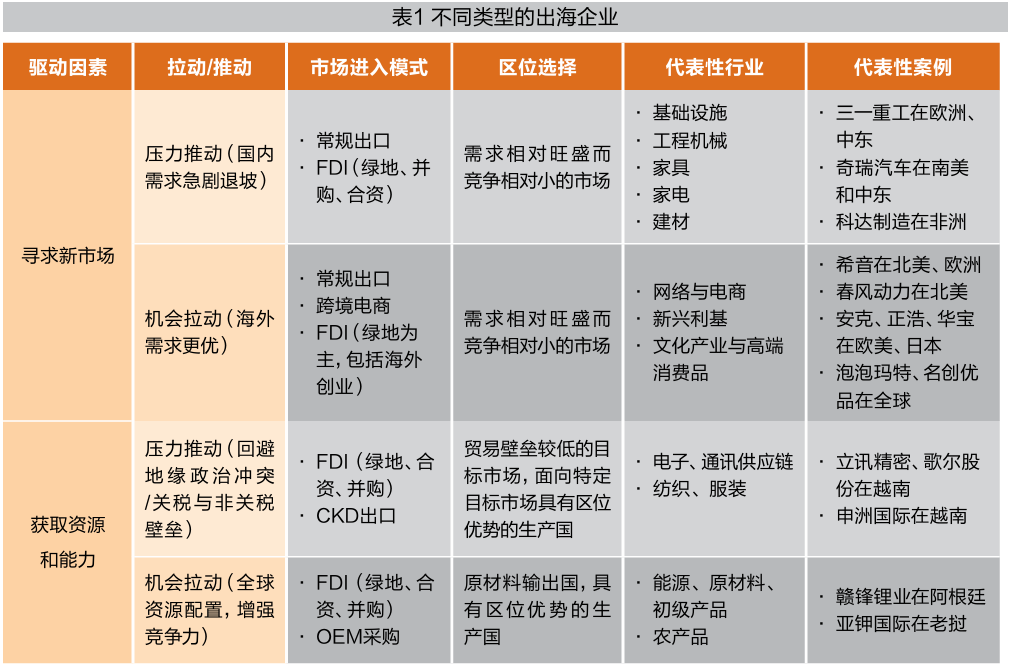
Group 1 - The current wave of Chinese companies going abroad is characterized by an unprecedented urgency and speed, with overseas revenue of A-share listed companies growing by 55.8% from 2020 to 2023, and two-thirds of these companies reporting overseas income, a historical high [2][4] - The trend of "going out" is shifting from product-based international trade to foreign direct investment (FDI), where companies are taking their operations and capabilities abroad rather than just exporting products [2][4] - Companies are categorized based on their motivations for internationalization, primarily seeking new markets or acquiring resources and capabilities to enhance competitiveness [4][5] Group 2 - The majority of companies expanding overseas are driven by domestic cyclical pressures, with a significant shift from domestic sales to exports due to a mismatch in supply and demand [7][8] - Some companies are experiencing rapid growth in overseas markets not due to domestic market shrinkage but because of attractive opportunities abroad, exemplified by brands like Pop Mart and Miniso [9][10] - Companies like SANY Heavy Industry have seen their overseas revenue triple in recent years, highlighting the importance of international markets for growth [8] Group 3 - The pressure to go abroad is intensified by geopolitical conflicts, leading companies to relocate production to maintain competitiveness and meet international demand [12][13] - Companies are also pursuing strategic resources abroad, such as lithium projects in Argentina by Ganfeng Lithium, to secure supply chains and reduce costs [13][14] - The restaurant industry has seen a dramatic increase in foreign direct investment, growing 95 times, indicating a complex mix of domestic demand decline and overseas opportunities [15] Group 4 - The speed of international expansion among Chinese companies is remarkable, with examples like Mixue Ice City opening 2,600 stores in Indonesia in just four years [16][17] - Companies like Chery Automobile have successfully balanced domestic and international growth, achieving a significant increase in export volumes [22] - The relationship between the speed of going abroad and performance is nuanced, with rapid expansion potentially leading to both opportunities and risks [19][21] Group 5 - Companies are increasingly focusing on local market responsiveness while maintaining global operational efficiency, particularly in sectors like food and retail [23][24] - The emergence of "best-value provider" strategies among Chinese manufacturers indicates a shift towards balancing cost leadership with customer value [32][33] - New entrants in the market, such as DJI and Shokz, are leveraging innovation and cultural uniqueness to compete globally, marking a new phase in China's international business landscape [36][37]
双塔双集再聚首发,大疆科技新品空降城市地标
Sou Hu Cai Jing· 2025-05-14 07:59
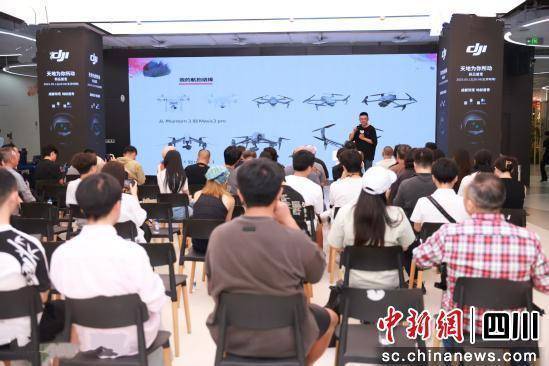
中新网四川新闻5月14日电 首发经济,被视为消费领域的"流量密码"。各地纷纷涌入首发经济赛道,欲 扭动这把"金钥匙"来提振消费。 《成都市推动首发经济发展三年行动计划(2025—2027年)》提出,力争到2027年底,落地各类首店累计 达6500家,高能级首秀首展等首发活动超1000场,打造首发经济地标载体100个,培育新消费品牌500 个。作为核心首发聚集地,成都交子公园商圈双塔双集以首发、首店、首秀为代表的首发经济持续"上 新",为市民游客带来全新体验。 5月13日晚,交子公园商圈灯光璀璨,双塔双集,大疆创新以及比蓝影像将大疆重磅新品带到了交子, 这是该款科技新品全球时间线的首次发布与亮相,让广大成都市民可以抢先一步解锁硬派科技魅力与时 髦潮玩生活。 新品见面会现场。双塔双集供图 赋能城市地标 科技新品全球首发 以地标为背景,以天空为幕布,无人机表演总是成为城市夜空中的"顶流",刷新人们对夜空想象的边 界,也让世界看到了中国科技的力量。 作为民族科技之光、无人机行业巨头的大疆,本次携含"科"量拉满的"神秘新品"Mavic4 Pro无人机,以 繁华璀璨的交子城市景观大道为背景,邀全城数码科技、航拍、摄影爱好 ...