纳睿雷达

Search documents
峰飞货运版eVTOL三证已齐,低空经济博览会多公司签重要合作订单
Huachuang Securities· 2025-07-27 15:21
Investment Rating - The report maintains a "Recommendation" rating for the low-altitude economy sector, expecting the industry index to outperform the benchmark index by more than 5% in the next 3-6 months [47]. Core Insights - The report highlights the successful delivery of the world's first eVTOL with complete certification, the V2000CG Kai Rui Ou, which is expected to accelerate the application of low-altitude logistics [4][5]. - Significant strategic cooperation agreements have been signed during the Low Altitude Economy Expo, indicating strong market demand and competitive positioning of domestic companies [16][20]. - The Huachuang Transportation Low Altitude 60 Index has shown a year-to-date increase of 12.1%, outperforming major indices like the CSI 300 and Wind All A Index [21][22]. Summary by Sections Industry Overview - The low-altitude economy is gaining traction with the successful certification and delivery of the V2000CG Kai Rui Ou, which can carry a maximum payload of 500 kg and is designed for complex logistics scenarios [5][6]. - The report emphasizes the importance of logistics as a primary application for low-altitude economy, suggesting that "cargo first, then passengers" will be the strategy for scaling [9][10]. Market Performance - The Huachuang Transportation Low Altitude 60 Index rose by 1.2% in the week ending July 25, 2025, with a year-to-date increase of 12.1%, compared to the CSI 300's 4.9% increase [21][22][23]. - Notable stock performances include Shanhe Intelligent (37% increase) and Xirui (135% increase year-to-date) [24][25]. Investment Recommendations - The report suggests focusing on key segments of the low-altitude economy, including manufacturers of eVTOLs and drones, supply chain participants, and companies involved in low-altitude infrastructure [31][32]. - Specific companies highlighted for investment include Wan Feng Ao Wei, Xirui, and Zhongshen Power, which are positioned to benefit from the growth in low-altitude logistics and infrastructure [32][36].
谁在加仓?外资公募调仓路径显现
财联社· 2025-07-27 14:35
Core Viewpoint - The article highlights the accelerated rebound of A-shares in Q2, emphasizing the critical role of foreign public funds' portfolio adjustments in this context [1] Group 1: Foreign Fund Adjustments - Major foreign public funds such as JPMorgan, BlackRock, and Morgan Stanley have revealed their portfolio adjustments for Q2 2025, indicating a shift in their market expectations [1] - Notably, the significant increase in stock market value for funds like LGM and LGT, with growth rates of 491.66% and over 340% respectively, showcases a more aggressive adjustment strategy compared to traditional players [2] - The focus of these funds has shifted towards "core assets" in the technology sector, with companies like Xinyiseng and Shenghong Technology becoming key targets for investment [2][3] Group 2: Investment Strategies - The current round of foreign investment is characterized by a focus on "industrial hubs" rather than just technology, with companies spanning multiple segments of the hardware supply chain being prioritized [3] - Leading institutions like JPMorgan and Morgan Stanley have adopted a more stable investment approach, maintaining significant positions in high-profit assets while balancing short-term themes with mid-term fundamentals [4][5] - The strategy of Morgan Stanley emphasizes "performance first," focusing on sectors like AI chips and pharmaceuticals, which are expected to deliver consistent profits [5] Group 3: Core Assets and Defensive Positions - Despite a trend of reducing positions in the pharmaceutical sector, Morgan Stanley continues to hold substantial stakes in innovative pharmaceutical companies, indicating a belief in their long-term potential [5][6] - Foreign funds are maintaining or increasing their holdings in core financial and consumer assets such as Kweichow Moutai and China Ping An, which serve as stable anchors in their portfolios [6] Group 4: Localization of Investment Strategies - The article notes a shift in foreign funds from a mechanical strategy of "low valuation + large blue chips" to a more localized approach that adapts to the high volatility and rotation of the Chinese market [7] - Funds like BlackRock are demonstrating a dual-driven strategy of thematic flexibility and fundamental stability, indicating a more nuanced approach to portfolio construction [7][8] - New entrants like Fidelity and Allianz are exploring innovative small-cap technology stocks, reflecting a strategy aimed at identifying future consensus assets [8]






【盘中播报】6只A股跌停 建筑材料行业跌幅最大
Zheng Quan Shi Bao Wang· 2025-07-25 07:14
Market Overview - The Shanghai Composite Index decreased by 0.29% as of 13:58, with a trading volume of 1,129.57 million shares and a turnover of 1,398.80 billion yuan, representing a decrease of 6.36% compared to the previous trading day [1]. Industry Performance - The top-performing sectors included: - Computer: Increased by 0.83% with a turnover of 132.30 billion yuan, led by Tianrun Technology, which rose by 26.67% [1]. - Real Estate: Increased by 0.60% with a turnover of 18.73 billion yuan, led by Zhangjiang Hi-Tech, which rose by 7.45% [1]. - Textile and Apparel: Increased by 0.55% with a turnover of 10.91 billion yuan, led by Red Dragonfly, which rose by 9.95% [1]. - The sectors with the largest declines included: - Building Materials: Decreased by 1.91% with a turnover of 26.66 billion yuan, led by Huaxin Cement, which fell by 9.57% [2]. - Building Decoration: Decreased by 1.81% with a turnover of 46.99 billion yuan, led by Zhubo Design, which fell by 14.71% [2]. - Comprehensive: Decreased by 1.39% with a turnover of 2.83 billion yuan, led by Nanjing Xinbai, which fell by 7.58% [2]. Summary of Key Stocks - Leading stocks in the computer sector included Tianrun Technology with a significant increase of 26.67% [1]. - In the real estate sector, Zhangjiang Hi-Tech showed a notable rise of 7.45% [1]. - Red Dragonfly in the textile and apparel sector also performed well, increasing by 9.95% [1].
新舟60民用搜救机成功首飞,航空航天ETF(159227)规模续创新高
Xin Lang Cai Jing· 2025-07-25 03:31
Group 1 - The core viewpoint of the news highlights the positive performance of the aerospace industry index and the successful maiden flight of the new Zhi-60 civil search and rescue aircraft, which enhances China's emergency response capabilities and supports national maritime strategies [1][2] - The aerospace ETF (159227) has reached a new high in scale at 674 million yuan, indicating strong investor interest in the sector [1] - The successful development and deployment of the Zhi-60 aircraft is expected to narrow the equipment and capability gap between China and developed countries, promoting the construction of China's maritime emergency system [1] Group 2 - The aerospace ETF is noted for its high concentration in the defense and military sector, with a weight of 98.2%, making it the most "pure" military ETF in the market [2] - As of June 30, 2025, the top ten weighted stocks in the aerospace industry index account for 49.42% of the index, with significant players including Guangqi Technology, AVIC Shenyang Aircraft Corporation, and Aero Engine Corporation of China [2] - The military industry is expected to see increased allocation from active funds, driven by both domestic demand and foreign trade, with a focus on the military trade logic and the potential for performance surprises [1]
二季度外资公募机构动向揭晓 多维策略揭示A股市场结构性机会
Zheng Quan Ri Bao· 2025-07-24 16:09
Group 1 - Foreign public funds have increased their holdings in technology and pharmaceutical sectors, maintaining a balanced strategy of "offensive + defensive" by adding high-dividend assets [1][2] - In the technology sector, several foreign public funds have significantly raised their allocation, with notable increases in AI-related stocks such as NewEase and SMIC, which account for 8.49% and 5.83% of holdings respectively [2] - The pharmaceutical sector has seen a shift in focus towards innovative drugs, with Morgan Fund increasing its stake in 3SBio, reaching a total market value of 158 million yuan [2][3] Group 2 - Many foreign public funds have strengthened their defensive strategies by increasing holdings in stable dividend-paying banks like China Construction Bank and Agricultural Bank of China [3] - The investment strategy of foreign public funds reflects a dual approach of "growth + defense," indicating long-term confidence in China's economic transformation and the ability to price risks in a complex market environment [3] - Looking ahead, foreign public funds anticipate new investment opportunities in high-end manufacturing, new energy, and consumption sectors, driven by China's economic growth and structural optimization [4]



41家科创板公司提前预告上半年业绩
Zheng Quan Shi Bao Wang· 2025-07-22 02:42
Core Insights - 41 companies on the Sci-Tech Innovation Board have released their performance forecasts for the first half of the year, with 34 expecting profit increases, 3 expecting profits, 2 expecting declines, 1 expecting stable performance, and 1 expecting reduced losses [1][5] - The overall proportion of companies reporting positive forecasts is 90.24%, with 19 companies expecting a net profit increase of over 100% [1] - The average stock price increase for high-growth companies on the Sci-Tech Innovation Board this year is 41.11%, with the largest increase being 132.47% for Shengnuo Biological [1] Company Performance Forecasts - The company with the highest expected net profit increase is Narui Radar, forecasting a median increase of 860.00% [3] - Other notable companies include Haitan Ruisheng with a 783.77% increase and Shengyi Electronics with a 451.73% increase [3] - The sectors with significant profit increases include electronics, biomedicine, and communications, with 14, 3, and 3 companies respectively [1] Fund Flow Analysis - In terms of fund flow, companies with significant profit growth such as Hengxuan Technology, Dingtong Technology, and Jinghe Integration have seen net inflows of 261 million, 115 million, and 38.16 million respectively over the past five days [2] - Conversely, companies like Guangda Special Materials, Sitwei, and Lankai Technology experienced net outflows of 156 million, 140 million, and 139 million respectively [2]
37家军工上市公司披露2025H1业绩预告,船舶和国防信息化板块相关标的业绩高增长
China Post Securities· 2025-07-21 09:46
Investment Rating - The industry investment rating is "Outperform" [2] Core Insights - As of July 20, 2025, among the 120 tracked defense industry listed companies, 37 have disclosed their H1 2025 earnings forecasts, with significant growth in the shipbuilding and defense information sectors [5][12] - The defense information sector shows high growth potential, with companies like Gaode Infrared and Chengchang Technology forecasting net profit growth rates of 846% and 335% respectively [6][12] - The shipbuilding sector also demonstrates strong performance, with companies such as China Shipbuilding and China Heavy Industry predicting net profit growth rates of 109% and 105% respectively [6][12] - The report suggests that the defense industry is expected to see an inflection point in orders, driven by new technologies and products aimed at enhancing equipment performance and reducing costs [14] Summary by Sections Industry Overview - The closing index for the defense industry is at 1669.63, with a 52-week high of 1712.48 and a low of 1113.62 [2] Performance Analysis - The defense sector index has outperformed the broader market, with a 2.58% increase in the China Securities Defense Index and a 2.26% increase in the Shenwan Defense Index [15] - The top-performing stocks in the defense sector this week include Yingliu Co. (+20.37%) and Feiliwa (+15.98%) [18] Earnings Forecasts - Among the 37 companies that disclosed earnings forecasts, 14 expect positive growth, while 12 anticipate losses [12] - Notable companies with high growth forecasts include Nairui Radar, Gaode Infrared, and China Heavy Industry, all projecting substantial increases in net profits [6][12] Investment Recommendations - The report recommends focusing on two main investment themes: aerospace and new technologies/products with greater elasticity [14] - Suggested companies for investment include Feiliwa, Gaode Infrared, and China Shipbuilding among others [14] Valuation Metrics - As of July 18, 2025, the defense sector's PE-TTM valuation stands at 117.29, with 83.01% of historical data indicating lower valuations [20][22]
【风口研报】优必选中标9051万元机器人设备采购项目,今年总体人形机器人订单+产量有望超1000台,目前公司工厂已完成小批量试产
财联社· 2025-07-21 03:31
前言 财联社倾力打造王牌栏目《风口研报》,替您"八一八"市场含金量超高的研报、调研信息。以机构视 角,追踪研报和调研纪要细节里的"超预期"、"拐点"、"事件催化"和"价值洼地"。 ①今年和2015年、2021年行情的区别;②优必选中标9051万元机器人设备采购项目,今年总体人形机器 人订单+产量有望超1000台,目前公司工厂已完成小批量试产,产能正快速爬坡,有望带动供应链(U 链)需求放量;③今日全市场机构研报共发布372篇,纳睿雷达、物产环能评级得到上调,16家公司获得 首度覆盖,其中美湖股份等3股获新财富分析师深度覆盖;④在个股机构关注度排行中,匠心家居首次上 榜,前五名依次为东鹏饮料>科沃斯>宝丰能源>继峰股份>匠心家居。 ...

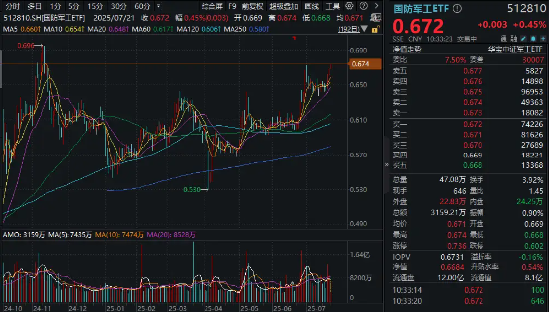
国防军工局部火热,建设工业晋级三连板!512810上探8个月新高,机构:继续超配
Xin Lang Ji Jin· 2025-07-21 02:44
Group 1 - The defense and military sector remains active, with military robot concept stocks experiencing significant gains, including a three-day surge for construction industry stocks, reaching historical highs [1] - The popular defense and military ETF (512810) has seen fluctuations, reaching an 8-month high [1] - During the mid-year reporting season, many component stocks of the defense and military ETF have exceeded performance expectations, indicating a recovery in the sector's fundamentals [3] Group 2 - Among the 29 component stocks that have released mid-year profit forecasts, 23 are expected to be profitable, with 11 stocks anticipating a net profit growth of over 100% [3] - Aerospace Science and Technology is projected to have the highest profit increase, exceeding 23 times, while other companies like Gaode Infrared and Nairui Radar expect profit increases of 9 times and 8 times, respectively [3][4] - Several brokerage firms have highlighted opportunities in the defense and military sector in their latest strategic views [4] Group 3 - Huatai Securities suggests maintaining positions and focusing on sectors with growth potential, including defense and military, large finance, and innovative pharmaceuticals [5] - CITIC Securities recommends a rotation strategy around sectors such as defense and military, innovative pharmaceuticals, and others until the end of the mid-year reporting season [5] - Analysts believe that multiple catalysts, including order releases and military trade improvements, make the defense and military market promising, indicating a potential window for investment [5] Group 4 - The defense and military ETF (512810) covers various popular themes, including commercial aerospace, low-altitude economy, large aircraft, deep-sea technology, and military AI [5] - The ETF underwent a share split in June, reducing the investment threshold by half, making it more accessible for investors [5]

解读2025低空经济
Sou Hu Cai Jing· 2025-07-19 05:11
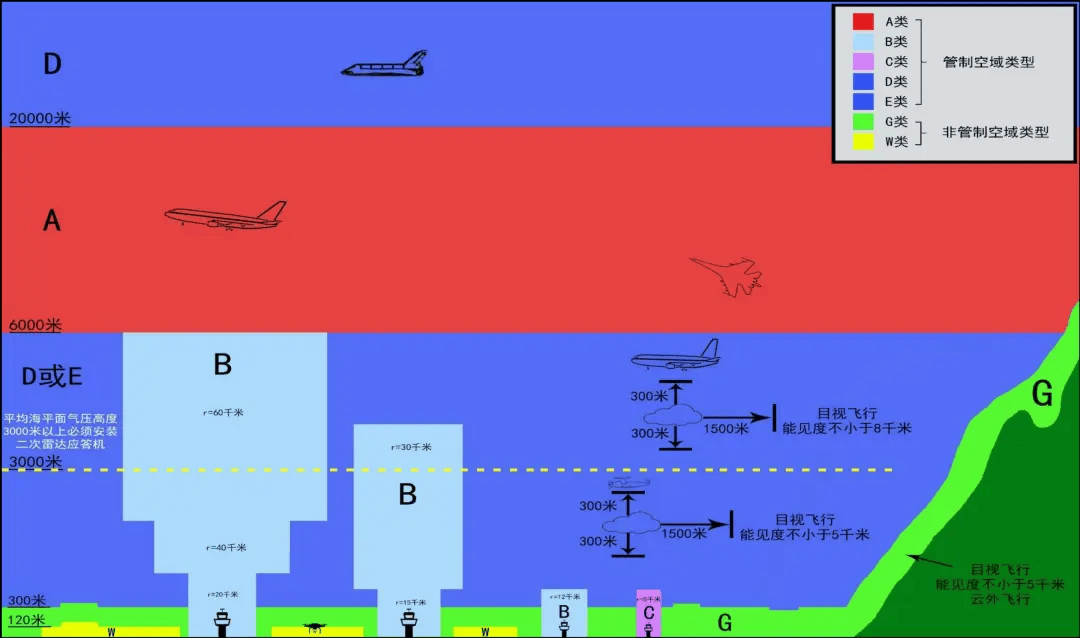
Overview of Low-altitude Economy Development - The low-altitude economy is defined as utilizing low-altitude airspace (below 1000 meters, extendable to 3000 meters) as a physical carrier, focusing on new aviation tools such as drones, eVTOLs (electric vertical takeoff and landing aircraft), and helicopters, integrating the entire production chain of "manufacturing—operation—service—infrastructure" [1] Strategic Positioning and Market Size - The low-altitude economy will be included in the State Council's government work report for the first time in 2024, elevating it to a national strategic emerging industry. The National Development and Reform Commission will establish a "Low-altitude Economy Department" in 2025, marking the industry's entry into a phase of "top-level design + policy implementation" [3] - The market size for the low-altitude economy is projected to reach 505.95 billion yuan in 2023, exceed 800 billion yuan by 2025, approach 1 trillion yuan in 2026, and aim for 2 trillion yuan by 2030, with a compound annual growth rate of over 30% [3] Core Scenarios and Regional Patterns - Key application scenarios include drone logistics (Meituan, SF Express), urban air mobility (UAM) (EHang, XPeng Heitech), low-altitude tourism (Yellow Mountain/Sanya aerial sightseeing), emergency rescue, and agricultural protection [3] - Regional development patterns include the Yangtze River Delta (Shanghai-Suzhou-Hefei-Hangzhou) creating an "aerial corridor," the Pearl River Delta (Shenzhen-Guangzhou) leading in legislation and commercialization, and the Chengdu-Chongqing area leveraging mountainous scenarios [3] Underlying Logic and Support Factors - The underlying logic for the low-altitude economy is driven by policy relaxation (airspace reform + legislative guarantees), technological breakthroughs (5G-A, AI flight control, high-energy batteries), essential market needs (logistics, commuting, emergency), and capital support (over 100 billion yuan in national industrial funds) [3] Reports and Insights - A report titled "2025 Low-altitude Economy City Development Panorama Research Report" introduces a "4+4" element model, identifying four support elements (market, airspace, infrastructure, safety) and four driving elements (technology, policy, capital, talent) [6] - The "2025 China Low-altitude Economy Market Status Report" indicates that the market size will grow from 505.95 billion yuan in 2023 to 2 trillion yuan by 2030, with UAM passenger transport expected to account for over 60% of the market by 2030 [7] Challenges and Solutions - Key challenges include slow airspace approval processes, insufficient battery energy density, lack of infrastructure standards, and a talent gap requiring over 100,000 low-altitude controllers [7] Capital and Global Comparison - The low-altitude industry fund map shows significant capital allocation, with Suzhou at 20 billion yuan, Wuxi at 15.3 billion yuan, and Beijing/Guangzhou/Zhuhai each at 10 billion yuan, indicating government efforts to attract social capital [10] - China leads in drone market share (DJI holds 70%) and has the fastest eVTOL airworthiness progress globally, with EHang obtaining multiple certifications [10]