
百威亚太

Search documents
2025年第39周:酒行业周度市场观察
艾瑞咨询· 2025-09-29 00:05
Industry Environment - The white liquor industry is shifting its endorsement strategy from middle-aged male celebrities to younger, diverse stars like G.E.M. and Zhang Yixing, reflecting a trend towards a more youthful and lifestyle-oriented brand image [2][3] - The light bottle liquor market is experiencing a bifurcation, with traditional brands like Niulanshan facing significant revenue declines due to price competition, while high-quality products like Fenjiu's Guofen are in high demand, indicating a shift towards quality and brand strength in the market [4][5] - The upcoming 2025 China Open tennis tournament will feature enhanced spectator experiences and cultural integration, with Luzhou Laojiao as the exclusive partner, promoting Chinese liquor culture [5] - The high-end beer market is undergoing significant changes, with CR Beer surpassing Budweiser APAC in revenue, indicating the rise of local brands in the premium segment despite overall market contraction [6] - The banquet market is emerging as a new battleground for liquor companies, with several firms reporting double-digit growth in this segment as they adapt to changing consumer preferences [7] - Eight listed liquor companies reported direct sales revenue exceeding 640 billion yuan in the first half of the year, with Moutai and Wuliangye leading the market [8] - The past decade has seen significant changes in the regional liquor market, with notable growth among regional leaders while others struggle due to strategic missteps [9] Key Trends - The trend towards lower alcohol content in liquor is gaining traction, with companies like Wuliangye and Luzhou Laojiao launching lower-alcohol products to attract younger consumers, and the low-alcohol market expected to grow significantly [11] - Regional liquor companies are leveraging local sports events for marketing, enhancing brand connection with consumers, although the effectiveness of such strategies remains to be seen [12] - The first China Liquor Market Prosperity Index was released, indicating a favorable outlook for online sales and low-alcohol products driving consumption [10] Company Dynamics - Songhe Liquor is upgrading its quality strategy with a commitment to long-term aging processes, aiming to enhance its market position [13] - The launch of "Dazhen·Zhenjiu" has seen strong initial sales, indicating a successful entry into the high-end liquor market through strategic partnerships and pricing control [14] - Gujing Gongjiu is integrating cultural elements into consumer experiences, showcasing the importance of cultural heritage in modern marketing strategies [15] - The "Jiuxiao Er" brand is focusing on immediate retail and digital transformation to enhance consumer engagement and market presence [14][19] - Yanghe's summer marketing campaign successfully connected the brand with consumer experiences through sports and cultural events, emphasizing the importance of experiential marketing [20] Emerging Opportunities - The introduction of herbal yellow wine "Bencao Bang" targets health-conscious consumers, indicating a trend towards health-oriented products in the liquor market [21] - A strategic partnership between Huajun Media and Bojiangfang aims to reshape the market for sauce-flavored liquor through quality certification and consumer engagement [22] - The launch of UMEET blueberry distilled liquor exemplifies the industry's shift towards catering to younger, health-conscious consumers with innovative products [24]






餐饮、潮玩及家电行业周报-20250928
Haitong Securities International· 2025-09-28 15:18
Investment Rating - The report assigns an "Outperform" rating to multiple companies including Pop Mart, Anta Sports, and Haidilao, while Budweiser APAC is rated "Neutral" [1]. Core Insights - The report highlights significant developments in the F&B, designer toys, and home appliances sectors, including Amap waiving annual entry fees for F&B merchants and MINISO's plan to spin off TOPTOY for public listing [5][6]. - Key performers this week include XIABUXIABU (+8.6%) and HISENSE V.T. (+12.7%), while underperformers include Green Tea Group (-9.8%) and MINISO (-11.1%) [2][6]. Summary by Sections Industry News - Amap announced a one-year waiver of annual entry fees for all F&B merchants nationwide, along with various support services [5]. - Guoquan proposed a share buyback of up to HK$100 million, citing that the current stock price does not reflect the company's intrinsic value [5]. - MINISO plans to spin off its subsidiary TOPTOY for independent listing on the Hong Kong Stock Exchange [5]. - Xiaomi's major home appliances have officially entered the European market, with the opening of its first direct store in Germany [5]. - Hisense commenced construction of its largest overseas industrial park in Thailand, aimed at expanding its footprint in ASEAN and globally [5]. Weekly Performance of Key Companies - Top performers include XIABUXIABU (+8.6%) in the F&B sector and HISENSE V.T. (+12.7%) in the home appliance sector [6]. - Underperformers include Green Tea Group (-9.8%) in the F&B sector and MINISO (-11.1%) in the designer toys sector [6].
周度市场观察:酒行业-20250927
Ai Rui Zi Xun· 2025-09-27 08:46
Investment Rating - The report does not explicitly provide an investment rating for the industry Core Insights - The white liquor industry is undergoing a significant transformation with a shift towards younger and more diverse brand ambassadors, moving from traditional middle-aged male figures to younger celebrities to connect with new generations of consumers [2] - The high-end beer market is experiencing a competitive shift, with local brands like China Resources and Qingdao Beer gaining ground against international players like Budweiser [4] - The banquet market is emerging as a new battleground for revenue growth, with several liquor companies reporting double-digit growth in this segment [5] - The direct sales revenue of eight listed liquor companies exceeded 640 billion yuan in the first half of the year, with Moutai and Wuliangye leading the market [6] - The low-alcohol product segment is rapidly growing, with expectations to surpass 742 billion yuan by 2025, driven by changing consumer preferences [8] Summary by Sections Industry Trends - The white liquor industry is shifting towards younger brand ambassadors, reflecting a broader trend of appealing to younger consumers through lifestyle marketing [2] - The light bottle liquor market is experiencing a split, with traditional brands struggling while high-quality products like Guojiao are in high demand [2] - The high-end beer market is seeing local brands outperform international ones, with China Resources surpassing Budweiser in revenue [4] - The banquet market is becoming a key area for growth as companies adapt to changing consumer behaviors [5] - The direct sales model is gaining traction, with significant revenue growth reported by leading companies [6] - The low-alcohol segment is expected to grow rapidly, indicating a shift in consumer preferences towards lighter beverages [8] Top Brand News - Songhe Liquor is enhancing its quality strategy and aims for long-term growth through a focus on aged products [10] - The launch of "Dazhen·Zhenjiu" marks a significant entry into the high-end liquor market, leveraging a strong sales strategy [11] - Gujing Gongjiu is integrating cultural elements into consumer experiences to enhance brand engagement [13] - The "UMEET" blueberry distilled liquor targets younger consumers by combining health and quality [20] - The collaboration between Huajun Media and Bojiangfang aims to reshape the market for sauce-flavored liquor through strategic marketing [19]
啤酒板块,跌到头了吗
Ge Long Hui· 2025-09-27 08:05
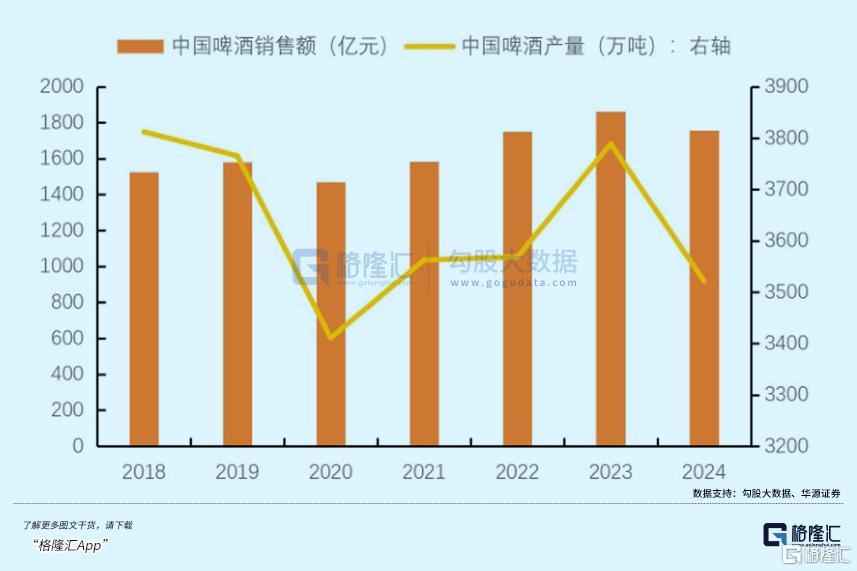
Group 1: Industry Overview - The demand for liquor, particularly white liquor, has shown slight improvement as the Mid-Autumn Festival and National Day approach, indicating a potential seasonal boost in sales [1] - The beer industry, however, has not yet shown signs of recovery after a prolonged downturn since early 2020, with production in 2024 expected to decline by 0.6% year-on-year [2][4] - The beer sector's revenue for the first half of 2025 is projected at 41.534 billion yuan, a year-on-year increase of 2.75%, while net profit is expected to rise by 11.81% to 6.512 billion yuan [4] Group 2: Company Performance - Major beer companies are experiencing varied performance, with Qingdao Beer reporting a revenue of 20.491 billion yuan, a year-on-year increase of 2.11%, while Chongqing Beer saw a slight decline in revenue [6] - Budweiser APAC, once a leader in the domestic beer market, reported a 6.1% decline in total beer sales and a 5.6% drop in revenue for the first half of 2025, with net profit down 24.4% [7][8] - The competitive landscape is shifting, with Budweiser APAC's market share falling to around 40%, indicating a significant change in the rankings among domestic beer companies [8][9] Group 3: Market Trends - The beer market has transitioned from a phase of rapid growth to one of saturation, with a notable shift towards high-end products, which now account for 72.7% of Qingdao Beer's sales [12][14] - The average price of beer in China remains relatively low compared to global standards, suggesting potential for future price increases [19] - The rise of the Z generation as a key consumer group is driving demand for craft and low-alcohol beers, with expected consumption growth rates of 17% for craft beer by 2025 [20] Group 4: Strategic Developments - Beer companies are diversifying their product lines, with some entering the yellow wine market and others focusing on beverage innovations to capture new consumer segments [22][23] - The rise of instant retail channels has become a significant sales avenue for beer, with sales penetration reaching 6.5% and expected to grow rapidly [23][24] - The beer industry is expected to recover from its current low point through new product categories and channel expansions, with a projected market size in instant retail expected to exceed 1.2 trillion yuan by 2026 [26]



啤酒板块,跌到头了吗
格隆汇APP· 2025-09-27 08:01
Group 1 - The core viewpoint of the article is that the liquor industry, particularly the white liquor sector, is showing signs of recovery as demand improves, while the beer sector continues to struggle with declining sales and market challenges [1][2][3]. - The white liquor market is expected to see a gradual improvement in sales velocity as the peak season approaches [2]. - In contrast, the beer sector has not shown any signs of recovery, with production in 2024 expected to decline by 0.6% compared to the previous year, reaching 35.213 million kiloliters, which is only 70% of the peak production capacity seen a decade ago [6]. Group 2 - The beer industry's financial performance is under pressure, with total revenue for the beer sector in the first half of 2025 reaching 41.534 billion yuan, a year-on-year increase of 2.75%, while net profit rose by 11.81% to 6.512 billion yuan [8]. - Major beer companies are experiencing a divergence in performance, with Qingdao Beer reporting a revenue of 20.491 billion yuan, a year-on-year increase of 2.11%, while Chongqing Beer saw a slight decline in revenue [9]. - Budweiser APAC, once the leader in the domestic beer market, reported a total beer sales volume of 4.363 billion liters in the first half of 2025, a decline of 6.1%, with revenue dropping by 5.6% to 3.136 billion USD [10][11]. Group 3 - The beer market has shifted from a phase of rapid growth to one of stock competition, with the peak in beer sales occurring in 2013, leading to overcapacity issues [15]. - The high-end beer market has become increasingly competitive, with domestic brands struggling to maintain their market share against foreign brands [17][19]. - Despite the challenges, the average price of beer in China remains low compared to global standards, indicating potential for future price increases [29][31]. Group 4 - The rise of the Z generation as a key consumer group is driving demand for craft and low-alcohol beers, with expected consumption of craft beer reaching 230,000 kiloliters by 2025, growing at a compound annual growth rate of 17% [33][36]. - Beer companies are exploring new growth avenues, including diversifying into other alcoholic beverages like yellow wine and soft drinks [39][40]. - The instant retail channel is emerging as a significant sales avenue for beer, with sales in this channel expected to reach 780 billion yuan in 2024, growing at a compound annual growth rate of 23% [50][52]. Group 5 - The article concludes that after several years of valuation adjustments, some leading beer companies now present attractive investment opportunities due to their stable cash flows and generous dividends [56][58]. - The beer sector is showing signs of bottoming out, but a full recovery will depend on improvements in the overall consumption environment [59].
港股收评:恒指跌0.7%险守26000点,科技股普跌,教育、黄金股表现活跃
Ge Long Hui· 2025-09-23 08:49
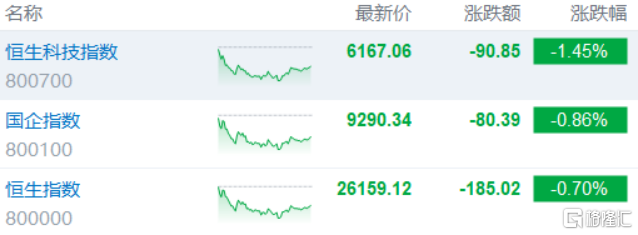
9月23日,港股三大指数集体收跌,继上周四刷新阶段新高后持续回落,恒生科技指数一度大跌至2.6%,最终收跌1.45%,恒生指数跌0.7%险守26000点,国 企指数跌0.86%。 | 名称 | | 最新价 | 涨跌额 | 涨跌幅 | | --- | --- | --- | --- | --- | | 恒生科技指数 | | 6167.06 | -90.85 | -1.45% | | 800700 | Marrow | | | | | 国企指数 | | 9290.34 | -80.39 | -0.86% | | 800100 | Municipan | | | | | 恒生指数 | | 26159.12 | -185.02 | -0.70% | | 800000 | Manrow | | | C 簡容口 | | 行业热力图 v | 频流板块 | | | | | | | | | --- | --- | --- | --- | --- | --- | --- | --- | --- | | | | | | 汽车 | 生物技术 -1.02% | 地产发展商 -1.76% | | 药品 -2.36% | | 银行 | + ...
啤酒五巨头,半年吸金840亿
36氪· 2025-09-22 10:37
Core Viewpoint - The Chinese beer market is experiencing a significant shift, with domestic giants gaining ground against foreign competitors, particularly in the context of the "takeout war" that has revitalized the industry [4][6][30]. Group 1: Market Dynamics - The competitive landscape of the Chinese beer market is changing, with domestic brands outperforming foreign giants in the first half of 2025 [4][6]. - In the first half of 2025, China’s beer market saw a decline in overall production by 0.3%, continuing a trend of stagnation [18]. - Despite the overall market decline, domestic giants like China Resources Beer, Qingdao Beer, and Yanjing Beer achieved over 2% growth in sales [19][20]. Group 2: Performance of Major Players - China Resources Beer surpassed Budweiser APAC to become the market leader, with a revenue of approximately 239.42 billion RMB, a 0.8% increase year-on-year [10][11]. - Budweiser APAC reported a revenue of 31.36 billion USD (approximately 224.5 billion RMB), a 5.6% decline year-on-year, marking the worst performance among the top five [9]. - Yanjing Beer and Chongqing Beer are in a tight race for the fourth position, with Yanjing Beer achieving a net profit growth of 45.45%, surpassing Chongqing Beer [13][14]. Group 3: Impact of Instant Retail - The "takeout war" has provided a new growth driver for the beer industry, with instant retail becoming a significant channel for sales [17][21]. - Qingdao Beer reported a nearly 60% increase in sales through instant retail platforms, significantly outperforming the industry average [26]. - China Resources Beer noted a nearly 40% growth in its online business and a 50% increase in its instant retail business [27]. Group 4: Foreign Brands' Struggles - Foreign brands, particularly Budweiser APAC and Chongqing Beer, are facing challenges, with Budweiser's sales in China declining by 8.2% [10][30]. - The high-end beer market, once dominated by Budweiser, is seeing its advantages eroded by the growth of domestic brands [30][33]. - Both Budweiser APAC and Chongqing Beer are shifting focus to non-immediate channels in response to declining performance in traditional immediate consumption venues [36][37].
量减价增失灵?看啤酒站在“冰与火”的十字路口
Sou Hu Cai Jing· 2025-09-18 10:27
Core Insights - The beer industry in China is facing significant challenges due to a decline in on-the-go consumption, decreasing contributions from traditional channels, and a reduction in alcohol consumption willingness [1] - The overall production of beer has decreased, with major companies experiencing performance pressures, leading to a noticeable market segmentation [1] Industry Performance - Budweiser APAC reported a total beer sales volume of 4.363 billion liters in the first half of 2025, a year-on-year decline of 6.1%, with revenue at $3.136 billion, down 5.6% [2] - In China, the sales volume decreased by 8.2%, with revenue and revenue per hectoliter dropping by 9.5% and 1.4%, respectively, leading to a market share decline to around 40% [2] - The cumulative production of large-scale beer enterprises in China reached 35.213 million kiloliters in 2024, a decrease of 0.6% from the previous year, only about 70% of the peak level ten years ago [2] Regional Market Dynamics - Local brands like Yanjing Beer and Chongqing Beer have shown strong competitiveness through product innovation and marketing strategies, solidifying their market share [2] - Some brands exhibit significant regional dependency, with one brand generating nearly 70% of its revenue from Shandong, while another brand has over 60% of its revenue from Chongqing, Chengdu, and Sichuan [2][3] Growth Strategies - To achieve further growth, brands need to deepen their regional market strategies, focusing on both consolidating their positions in existing strongholds and exploring new growth points [3] - A brand successfully avoided direct competition with eastern giants by acquiring local brands in Yunnan, focusing on the western market [3] High-End and Differentiation Strategies - High-end product strategies have shown mixed results, with some brands experiencing a decline in revenue despite a high proportion of mid-to-high-end products [4] - Conversely, certain brands have achieved significant growth in high-end product revenue, with one brand's mid-to-high-end product revenue share exceeding 70% and a year-on-year increase of 9.32% [4] Consumer Trends - The demand for cost-effective beer has resurged, with low-priced products gaining traction among consumers, particularly in the context of slowing income growth among migrant workers [6] - Brands are encouraged to adjust their product strategies to focus on value for money, optimizing production processes to lower costs while maintaining quality [6][7] Diversification and Innovation - Some brands are exploring diversification by entering new beverage categories, such as acquiring stakes in yellow wine and launching soft drinks [9] - The Z generation, aged 18-24, is becoming a significant consumer group, with their preferences shifting towards emotional value and experiences rather than traditional drinking culture [9] Channel Transformation - The beer sales channel is undergoing structural changes, with the share of on-the-go channels declining from over 50% to about 40%, while non-on-the-go channels like convenience stores are growing [13] - Brands are encouraged to collaborate with convenience stores and leverage e-commerce to enhance sales, with instant retail platforms showing significant growth potential [14] Operational Efficiency and Sustainability - Improving operational efficiency is crucial for long-term success, focusing on production, supply chain, and decision-making processes [15] - Brands are increasingly adopting sustainable practices, with some reducing their carbon footprint significantly, which is becoming a key factor for consumer preference [15][16] Market Outlook - The beer industry has experienced a downturn over the past two years but shows signs of potential recovery, although uncertainties remain due to high-end market segmentation and channel transformations [16]

瑞银:升百威亚太(01876)目标价至9.07港元 维持“买入”评级
Zhi Tong Cai Jing· 2025-09-18 07:33
Group 1 - UBS expects Budweiser APAC (01876) to see a turnaround in the Chinese market by Q4 2025 due to low base effects and stabilization of average selling prices, maintaining a "Buy" rating [1] - The target price for Budweiser APAC has been slightly raised from HKD 9.05 to HKD 9.07, implying a projected EV/EBITDA of 7 times for 2026, based on a 5% CAGR in EBITDA from 2025 to 2027 [1] - UBS conducted an on-site visit in Fujian, including factory and market tours, and discussions with Budweiser APAC's CFO, revealing ongoing challenges in the Chinese beer market due to a decline in offline channels such as restaurants and nightlife [1] Group 2 - The company has adjusted its profit forecasts for 2025 to 2027 down by 3% to 2%, considering a projected decline in sales in China during the second half of 2025 [1]
瑞银:升百威亚太目标价至9.07港元 维持“买入”评级
Zhi Tong Cai Jing· 2025-09-18 07:28
Core Viewpoint - UBS expects Budweiser APAC (01876) to see a turnaround in the Chinese market by Q4 2025 due to low base effects and potentially stabilized average selling prices, maintaining a "Buy" rating [1] Group 1: Financial Projections - The target price for Budweiser APAC has been slightly raised from HKD 9.05 to HKD 9.07, implying a projected EV/EBITDA of 7 times for 2026, based on a CAGR of 5% for EBITDA from 2025 to 2027 [1] - The company is expected to maintain stable dividends in 2025 due to progress in the premiumization of home channels and a solid cash balance [1] Group 2: Market Insights - UBS conducted an on-site visit in Fujian, including factory and market tours, and discussions with Budweiser APAC's CFO, revealing that the outlook for the Chinese beer market remains challenging due to a decline in offline channels, including restaurants and nightlife [1] - Given the anticipated decline in sales in China during the second half of 2025, UBS has adjusted its earnings forecasts for 2025 to 2027 down by 3% to 2% [1]