
禾望电气

Search documents
禾望电气涨2.01%,成交额7.63亿元,主力资金净流入1217.18万元
Xin Lang Zheng Quan· 2025-09-25 05:43
Company Overview - Hezhong Electric, established on April 20, 2007, and listed on July 28, 2017, is located in Nanshan District, Shenzhen, Guangdong Province. The company focuses on the field of electric energy conversion, providing efficient, reliable, and high-quality solutions for power generation, usage, and transmission [1][2]. Financial Performance - For the first half of 2025, Hezhong Electric achieved operating revenue of 1.884 billion yuan, representing a year-on-year growth of 36.39%. The net profit attributable to shareholders was 243 million yuan, reflecting a year-on-year increase of 56.79% [2]. - Since its A-share listing, Hezhong Electric has distributed a total of 299 million yuan in dividends, with 170 million yuan distributed over the past three years [3]. Stock Performance - As of September 25, Hezhong Electric's stock price increased by 2.01%, reaching 34.50 yuan per share, with a trading volume of 763 million yuan and a turnover rate of 4.91%. The total market capitalization stands at 15.683 billion yuan [1]. - Year-to-date, the stock price has risen by 73.89%, with a 1.08% increase over the last five trading days, an 8.68% decrease over the last 20 days, and a 7.71% increase over the last 60 days [1]. Shareholder Structure - As of June 30, 2025, Hezhong Electric had 26,900 shareholders, a decrease of 8.91% from the previous period. The average number of circulating shares per shareholder increased by 10.23% to 16,895 shares [2]. - The top ten circulating shareholders include Hong Kong Central Clearing Limited as the second-largest shareholder, holding 13.4852 million shares, an increase of 7.4263 million shares from the previous period. Other notable shareholders include Guotai Asset Advantage Mixed Fund and Southern CSI 1000 ETF, with varying changes in their holdings [3]. Market Position - Hezhong Electric operates within the power equipment sector, specifically in wind power equipment and components. The company is part of several concept sectors, including mid-cap stocks, semiconductors, margin trading, smart grids, and heavily held by funds [2].

南华煤焦产业风险管理日报-20250924
Nan Hua Qi Huo· 2025-09-24 11:06
Group 1: Report Overview - Report Title: Nanhua Coking Coal and Coke Industry Risk Management Daily Report [1] - Date: September 24, 2025 [1] - Research Team: Nanhua Research Institute, Black Research Team [2] Group 2: Price Forecast and Risk Management Strategies Price Forecast - The monthly price range for coking coal is predicted to be between 1200 - 1350, with a current 20 - day rolling volatility of 37.90% and a historical percentile of 73.74% [3] - The monthly price range for coke is predicted to be between 1650 - 1850, with a current 20 - day rolling volatility of 29.18% and a historical percentile of 62.12% [3] Risk Management Strategies - **Inventory Hedging for Coke**: When coke production recovers rapidly, and the spot supply - demand becomes loose, coke enterprises worried about price drops can short - sell the J2601 contract. The recommended hedging ratios are 25% at the entry range of (1780, 1830) and 50% at (1830 - 1880) [3] - **Procurement Management for Coking Coal**: Due to factors like repeated macro - sentiment, low seasonal coking coal mine开工率, and production - overrun inspections, coking plants worried about price increases can long - buy the JM2605 contract. The recommended hedging ratios are 25% at the entry range of (1200, 1250) and 50% at (1150, 1200) [3] Group 3: Black Warehouse Receipt Daily Report Warehouse Receipt Quantity Changes - For various black commodities such as rebar, hot - rolled coil, iron ore, coking coal, coke, ferrosilicon, and silicomanganese, the report shows their warehouse receipt quantities on September 24, 23, and 17, as well as the daily and weekly changes [4] Market Situation Analysis - Downstream pre - holiday stockpiling improved the coking coal inventory structure, and there was a price - support sentiment at the mine mouth, leading to a stop in the decline and a rebound of coking coal spot prices. The second - round price cut for coke was fully implemented, and the cost of coking coal for furnaces increased, squeezing coking profits. Some coke enterprises tried to raise prices, but it was difficult to implement before the holiday [4] Outlook and Strategy - "Anti - involution" remains the focus in the second half of the year. Market participants' expectations for the future have improved, and the willingness to hold goods has increased. Coal and coke are not considered as short - allocation in the black series. The high supply pressure of steel and high inventory will limit the rebound height of coal and coke prices. The report does not recommend using coking coal as a short - allocation in the black series and suggests paying attention to the 1 - 5 reverse spread of coal and coke [4] Factors Affecting the Market - **Positive Factors**: Pre - holiday seasonal stockpiling by downstream, improved inventory pressure at mines, price - support at the mine mouth, and attempts by some coke enterprises to raise prices; the second - round price cut for coke improved steel profits, and high pig - iron production provided rigid support for coal and coke demand in the short term; "Anti - involution" is the trading focus, and macro - sentiment will affect the market; the Fed's 25BP interest rate cut and expected further cuts support the overall valuation of commodities [4][6] - **Negative Factors**: High social inventory pressure of finished steel products and lower - than - expected peak - season demand limit the rebound space of coal and coke; high average daily customs clearance at the 288 Port and high coal shipping volume indicate strong imported coal supply [4][7] Group 4: Coal and Coke Price Data Futures Price Data - The report provides detailed data on coking coal and coke futures, including warehouse receipt costs, basis, spreads between different contracts, coking profit, and various ratios such as the ore - coke ratio, screw - coke ratio, and carbon - coal ratio, along with their daily and weekly changes [8] Spot Price Data - It shows the spot prices of various coking coal and coke products, including domestic and imported coal, different types of coke, and their daily and weekly changes. It also presents data on import and export profits, coking profits, and the ratio of coking coal to thermal coal [9][10] Group 5: Graphical Data - The report includes multiple graphs showing historical volatility percentages of coking coal and coke, seasonal customs clearance vehicle numbers at the 288 Port, term - structure spread of coking coal and coke, seasonal patterns of futures spreads and basis, warehouse receipt inventory seasonality, import profit seasonality, coking profit seasonality, and ratio seasonality between different types of coal and thermal coal [11][12][13]
油料产业风险管理日报-20250923
Nan Hua Qi Huo· 2025-09-23 11:22
Group 1: Report Overview - Report Title: Oilseed Industry Risk Management Daily Report [1] - Date: September 23, 2025 [1] - Analysts: Bian Shuyang (Investment Consulting License No.: Z0012647), Jin Wandong (Futures Practitioner License No.: F03118199) [2] - Investment Consulting Business Qualification: CSRC License [2011] No. 1290 [2] Group 2: Price Forecast and Hedging Strategies Price Forecast - Monthly price range for soybean meal: 2800 - 3300 yuan, current 20 - day rolling volatility is 8.8%, and historical percentile (3 - year) is 3.8% [3] - Monthly price range for rapeseed meal: 2350 - 2750 yuan, current 20 - day rolling volatility is 14.6%, and historical percentile (3 - year) is 15.3% [3] Hedging Strategies - For traders with high protein inventory, to prevent losses from inventory and price decline, sell 25% of M2601 soybean meal futures at 3300 - 3400 yuan [3] - For feed mills with low inventory, to prevent cost increase from price rise, buy 50% of M2601 soybean meal futures at 2850 - 3000 yuan [3] - For oil mills worried about excessive imported soybeans and low prices, sell 50% of M2601 soybean meal futures at 3100 - 3200 yuan [3] Group 3: Core Contradictions Soybean Meal - Short - term: Argentina's export tax exemption policy has a negative impact on the market. Argentina's old - crop sales progress is about 60% - 70%, with a maximum exportable volume of 10 million tons to China. The policy may support domestic soybean meal cost by approaching Brazilian prices [4] - Long - term: Focus on the impact of Sino - US trade relations on soybean supply [4] Rapeseed Meal - Short - term: Follows soybean meal, but will be stronger than soybean products before November due to China's extension of anti - dumping investigation on Canada. After November, it will face the issue of Australian rapeseed arrivals, and inventory may increase by the end of the year [4] Group 4: Market Analysis Bullish Factors - There is still a bullish sentiment for the far - month contracts due to supply - demand gap [7] - Brazil's export premium supports the far - month contract prices from the cost side [7] Bearish Factors - High inventory of imported soybeans at ports and oil mills, increasing oil mill crush volume, and seasonal inventory accumulation of soybean meal. Rapeseed meal follows soybean meal but is slightly stronger [4] - After the concentrated cancellation of warehouse receipts, the pressure of soybean and rapeseed meal warehouse receipts has increased again, leading to a dominant supply pressure narrative in the near - month market [5] Group 5: Futures Prices and Spreads Futures Prices - Soybean meal 01: Closing price is 2928 yuan, down 106 yuan (-3.49%) [8] - Soybean meal 05: Closing price is 2733 yuan, down 49 yuan (-1.76%) [8] - Soybean meal 09: Closing price is 2843 yuan, down 48 yuan (-1.66%) [8] - Rapeseed meal 01: Closing price is 2447 yuan, down 81 yuan (-3.2%) [8] - Rapeseed meal 05: Closing price is 2328 yuan, down 45 yuan (-1.9%) [8] - Rapeseed meal 09: Closing price is 2411 yuan, down 36 yuan (-1.47%) [8] - CBOT yellow soybeans: Closing price is 1011.25, unchanged [8] - Offshore RMB: Closing price is 7.1178, up 0.0241 (0.34%) [8] Spreads - M01 - 05 spread is 195 yuan, down 57 yuan; RM01 - 05 spread is 119 yuan, down 36 yuan [9] - M05 - 09 spread is - 110 yuan, down 1 yuan; RM05 - 09 spread is - 83 yuan, down 9 yuan [9] - M09 - 01 spread is - 85 yuan, up 58 yuan; RM09 - 01 spread is - 36 yuan, up 45 yuan [9] - Soybean meal spot price in Rizhao is 2930 yuan, down 50 yuan; basis is 2 yuan, up 56 yuan [9] - Rapeseed meal spot price in Fujian is 2655 yuan, up 145 yuan; basis is 127 yuan, up 139 yuan [9] - Spot price difference between soybean meal and rapeseed meal is 275 yuan, down 50 yuan; futures price difference is 481 yuan, down 25 yuan [9] Group 6: Import Costs and Profits - US Gulf soybean import cost (23%): 4423.6298 yuan/ton, down 74.2222 yuan daily, up 0.0177 yuan weekly [10] - Brazilian soybean import cost: 3934.29 yuan/ton, down 11.28 yuan daily, down 121.95 yuan weekly [10] - Cost difference between US Gulf (3%) and US Gulf (23%): - 719.2894 yuan, up 9.2866 yuan daily, up 14.2315 yuan weekly [10] - US Gulf soybean import profit (23%): - 593.4053 yuan, down 74.2222 yuan daily, down 25.1891 yuan weekly [10] - Brazilian soybean import profit: 135.1432 yuan, up 45.0221 yuan daily, up 3.9232 yuan weekly [10] - Canadian rapeseed import profit (on - paper): 987 yuan, up 56 yuan daily, up 224 yuan weekly [10] - Canadian rapeseed import profit (spot): 1169 yuan, up 62 yuan daily, up 244 yuan weekly [10]
国信证券每日晨报精选:8月规上工业发电量同比增长1.6%
Zhong Guo Neng Yuan Wang· 2025-09-23 02:26
Group 1: AIDC Power Equipment and Grid Industry - The AIDC power equipment sector has seen a general increase in the past two weeks, with the top three performers being uninterruptible power supplies (UPS) at +21.0%, high voltage direct current (HVDC) at +20.7%, and battery backup power (BBU) at +15.9% [1] - Recommendations for investment focus include four key areas: transformers and switchgear, UPS and HVDC, active power filters (APF), and server power supplies, with specific companies suggested such as Jinpan Technology, Mingyang Electric, Hezhong Electric, Shenghong Co., and Weilan Lithium [1] - For the grid sector, the national power engineering investment completion amount in July 2025 was 65.3 billion yuan, down 8.9% year-on-year, while the cumulative investment from January to July was 428.8 billion yuan, up 3.1% year-on-year [1] Group 2: Wind Power Industry - In July 2025, China's newly installed wind power capacity was 2.28 GW, a decrease of 44.0% year-on-year, while the cumulative new capacity from January to July reached 53.67 GW, an increase of 79.4% year-on-year, totaling 574.87 GW, which accounts for 15.7% of total installed capacity [1] - The wind power sector has also experienced a general increase in the past two weeks, with the top three performing segments being bearings at +14.9%, complete machines at +12.5%, and blades at +11.7% [1] Group 3: Offshore Wind and Onshore Wind Developments - Major projects in Jiangsu and Guangdong for offshore wind are set to commence in the first half of 2025, with expectations for planning, competitive allocation, bidding, and policies to be implemented in the second half of the year [2] - The annual average offshore wind installation during the 14th Five-Year Plan period is expected to exceed 20 GW, significantly surpassing the previous plan's levels [2] - The onshore wind industry is projected to reach 100 GW of installed capacity in 2025, marking a historical high, with component manufacturers experiencing simultaneous increases in volume and price, leading to substantial growth in annual performance [2] Group 4: Public Utilities and Environmental Protection - In August, the industrial power generation volume increased by 1.6% year-on-year, totaling 936.3 billion kWh, while the cumulative generation from January to August was 6419.3 billion kWh, reflecting a 1.5% year-on-year growth [3] - The Guangdong Provincial Development and Reform Commission and Energy Bureau released a plan to deepen the market-oriented reform of renewable energy grid pricing, with existing project pricing set at 0.453 yuan per kWh [3]
2025年1-4月广东省能源生产情况:广东省发电量2117亿千瓦时,同比下滑1.8%
Chan Ye Xin Xi Wang· 2025-09-23 01:13
上市企业:深圳燃气(601139)、明阳智能(601615)、禾望电气(603063)、白云电器(603861)、 博力威(688345)、嘉元科技(688388)、珠海冠宇(688772)、德瑞锂电(833523)、雷特科技 (832110)、力王股份(831627) 相关报告:智研咨询发布的《2025-2031年中国能源行业市场研究分析及投资前景评估报告》 2025年4月,广东省发电578.9亿千瓦时,同比增长0.5%。2025年1-4月,广东省发电2117亿千瓦时,同 比下滑1.8%。分品种看,2025年1-4月,广东省火力发电量1447.5亿千瓦时,占总发电量的68.4%,同比 下滑4.1%;广东省水力发电量55.6亿千瓦时,占总发电量的2.6%,同比下滑27%;广东省核能发电量 415.9亿千瓦时,占总发电量的19.6%,同比增长5.7%;广东省风力发电量145.1亿千瓦时,占总发电量 的6.9%,同比增长2.7%;广东省太阳能发电量52.89亿千瓦时占总发电量的2.5%,同比增长46.7%。 报告中的产量数据统计口径均为规模以上工业,其统计范围为年主营业务收入2000万元及以上的工业企 业。 由于 ...


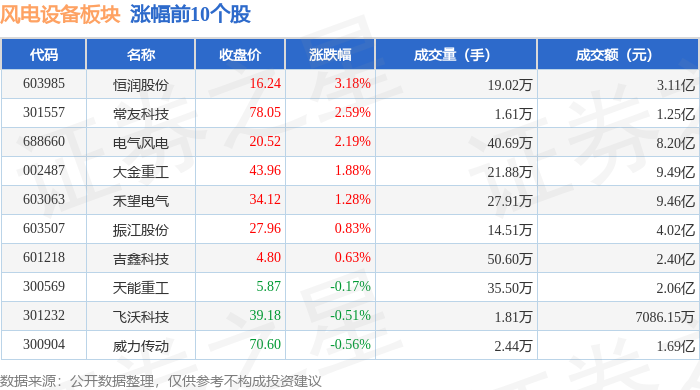
风电设备板块9月22日跌0.49%,新强联领跌,主力资金净流出3.06亿元
Zheng Xing Xing Ye Ri Bao· 2025-09-22 08:47
Market Overview - The wind power equipment sector experienced a decline of 0.49% on September 22, with Xin Qiang Lian leading the drop [1] - The Shanghai Composite Index closed at 3828.58, up 0.22%, while the Shenzhen Component Index closed at 13157.97, up 0.67% [1] Stock Performance - Notable gainers in the wind power equipment sector included Hengrun Co. (603985) with a closing price of 16.24, up 3.18%, and Changyou Technology (301557) at 78.05, up 2.59% [1] - Conversely, Xin Qiang Lian (300850) saw a significant decline of 3.12%, closing at 38.75 [2] Trading Volume and Capital Flow - The total trading volume for the wind power equipment sector indicated a net outflow of 306 million yuan from institutional investors, while retail investors saw a net inflow of 206 million yuan [2] - The trading data showed that major stocks like Daqian Heavy Industry (002487) and Hewei Electric (603063) had varying levels of net capital inflow and outflow [3] Individual Stock Analysis - Daqian Heavy Industry (002487) had a net inflow of 65.14 million yuan from major investors, while retail investors experienced a net outflow of 78.41 million yuan [3] - Hengrun Co. (603985) reported a net inflow of 9.48 million yuan from major investors, but a significant outflow of 35.53 million yuan from retail investors [3]


风电产业链双周度跟踪(9月第2期)-20250922
Guoxin Securities· 2025-09-22 05:14
Investment Rating - The investment rating for the wind power industry is "Outperform the Market" (maintained rating) [1] Core Views - The offshore wind sector is expected to see significant project launches in Jiangsu and Guangdong in the first half of 2025, with a projected average annual installation of over 20GW during the 14th Five-Year Plan period, surpassing the previous plan's levels. The onshore wind sector is anticipated to reach a historical high of 100GW in installations in 2025, with component manufacturers experiencing growth in both volume and price [4][5] - The report suggests focusing on three main areas: 1) Leading companies in export layouts such as pile foundations and submarine cables; 2) Domestic manufacturers with bottoming profits and accelerating exports; 3) Component manufacturers benefiting from simultaneous volume and profit growth opportunities in 2025 [5] Summary by Sections Industry News - The wind power sector has generally risen in the past two weeks, with the top three performing segments being bearings (+14.9%), complete machines (+12.5%), and blades (+11.7%). The top three individual stocks were Jinlei Co. (+20.1%), Wuzhou Xinchun (+19.4%), and Yunda Co. (+17.6%) [3] Market Performance - As of mid-September 2025, the cumulative public bidding capacity for wind turbines in China is 68.6GW, with a 13% decrease year-on-year. The average winning bid price for onshore wind turbines (excluding towers) is 1,533 CNY/kW [7][8] - In 2024, the total public bidding capacity for wind turbines is projected to be 107.4GW, a 61% increase year-on-year, with onshore wind turbines accounting for 99.1GW of this total [7][8] Installation Data - In 2024, the total new wind power installation capacity is expected to be 79.8GW, with onshore wind contributing 75.8GW and offshore wind 4.0GW. The report forecasts new installations of 130GW from 2025 to 2027 [8][39] Investment Recommendations - The report recommends focusing on companies such as Goldwind Technology, Oriental Cable, and others that are positioned well for growth in the wind power sector [5]





浙大校友创立新材料企业完成数亿元C轮融资,打破海外60年技术垄断
Sou Hu Cai Jing· 2025-09-19 12:42
Financing and Investment - Jiangsu Qingyun New Materials Co., Ltd. announced the completion of several hundred million C-round financing, led by Yuanhe Puhua, with follow-on investments from Hongxian Capital and Zhongyi Investment [1] - The financing will primarily be used for the research and development of the next-generation Kunlun supermaterials, global capacity expansion, and the construction of an industrial ecosystem [1] Technological Breakthroughs - Qingyun New Materials has successfully broken a 60-year overseas technology monopoly, filling a gap in China's new materials technology industry [4] - The company has achieved full-chain autonomy in the research and development of supermaterials, from raw material formulation to core equipment and production processes [4] - The self-developed Kunlun material has a fiber fineness that is one-third of similar competing products, combining "waterproof and breathable" with "strong and lightweight" characteristics, surpassing international giants in performance metrics [4] Production Capacity and Sustainability - Qingyun New Materials has built the first domestic and globally leading 15,000-ton intelligent production line, achieving exponential growth in capacity within three years [6] - The company has a market share exceeding 33%, with a 100% self-controlled supply chain, and has adopted advanced energy recycling technologies to align with carbon neutrality goals [6] - The Kunlun material has received ESG certification, positioning the company as a new benchmark for green manufacturing in the industry [6] Market Applications and Ecosystem Development - The Kunlun material is a special fiber material with strong plasticity, suitable for various processing techniques, and is available in both hard and soft structural forms [8] - Qingyun New Materials empowers nearly a hundred high-value application scenarios in sectors such as healthcare, semiconductors, construction, and protection [9] - The company has launched a dual-brand strategy, "Kunlun Inside," to avoid price competition and collaborate deeply with industry-leading clients to develop customized solutions [9] Future Outlook - The product's unique performance and wide application scenarios open up vast market opportunities for Qingyun New Materials [13] - The company aims to reconstruct safety boundaries through material science, positioning Chinese manufacturing as a reliable "safety card" in the global supply chain [15] - The C-round financing is a key milestone for the company's development, focusing on technological innovation to drive industrial upgrades and contribute to the high-quality development of China's manufacturing industry [15]
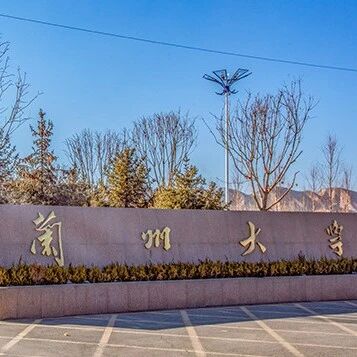
「最委屈的985」,将中国光伏送上全球第一
36氪· 2025-09-19 00:56
Core Viewpoint - The article highlights the significant role of Lanzhou University in the development of China's photovoltaic (PV) industry, showcasing how its alumni have become key players in transforming China into a global leader in solar energy technology and production [9][15][69]. Group 1: Historical Context and Development - The photovoltaic industry was initially dominated by multi-crystalline technology, which had lower efficiency but was easier to produce [17][20]. - In the early 2000s, the founders of LONGi Green Energy, all alumni of Lanzhou University, chose to pursue the more challenging mono-crystalline technology, which ultimately changed the trajectory of the global PV industry [24][30]. - LONGi Green Energy has achieved significant milestones, including setting world records for solar cell efficiency, with a conversion efficiency of 27.3% recorded in 2024 [30][15]. Group 2: Industry Leadership and Market Position - China now holds over 90% market share in various segments of the PV supply chain, including polysilicon, silicon wafers, and solar cells [15]. - In 2024, China generated 839 TWh of solar power, leading the world in solar energy production, followed by the United States and India [16]. - The success of LONGi and other companies has positioned China as a dominant force in the global solar energy market, effectively reshaping the industry's landscape [15][9]. Group 3: Educational and Research Contributions - Lanzhou University has produced numerous influential figures in the PV sector, contributing to the establishment of a robust alumni network that supports innovation and development in solar technology [38][55]. - The university's focus on physics, chemistry, and materials science has laid a strong foundation for its graduates to excel in the PV industry [55][49]. - Research initiatives at Lanzhou University, such as the development of new solar energy technologies and ecological restoration methods, further enhance its contribution to the industry [60][63]. Group 4: Future Prospects and Innovations - Lanzhou University is actively involved in cutting-edge research, including the development of hybrid solar-thermal systems and innovative materials for solar cells [60][62]. - The university's initiatives aim to integrate ecological sustainability with solar energy production, promoting a model of renewable energy that benefits both the environment and local communities [66][64]. - The ongoing advancements in solar technology and the commitment to research at Lanzhou University suggest a promising future for the PV industry in China [70][69].

风电行业反内卷取得了阶段性成效,资金抢筹股出炉(附名单)
Zheng Quan Shi Bao Wang· 2025-09-18 10:43
Group 1 - The wind power industry has achieved preliminary results in countering internal competition, with significant stock price increases among key players such as Tongyu Heavy Industry and Chuanrun Co., Ltd. [1] - The average bidding prices for wind turbine models have rebounded in the first half of this year, alleviating pressure across the industry chain. For instance, the minimum bidding price for 5 MW units rose from 1157 RMB/kW in 2024 to approximately 1700 RMB/kW in the first half of this year [1]. - All turbine models' bidding prices in the first half of this year are now above their minimum cost prices, effectively curbing the trend of vicious low-price competition in the industry [1]. Group 2 - Major wind power stocks have seen substantial gains, with companies like China National Materials and Hangzhou Gear achieving over 100% increase in stock prices this year. China National Materials leads with a 192.84% increase [2]. - Mingyang Smart Energy reported a stabilization and recovery in bidding prices for wind turbines, with external environment improvements and better order structures contributing to a clearer path for industry and company profitability recovery [2]. - Significant net inflows of capital were observed in wind power stocks, with Tongyu Heavy Industry and Zhongtian Technology receiving 566 million RMB and 147 million RMB in net inflows, respectively [2][3].


