
三生制药

Search documents
春节期间医药行业重点梳理!港股通创新药ETF(159570)冲高回落,近5日累计吸金超3.4亿元!FDA创新药审评政策再松绑,利好创新药!
Sou Hu Cai Jing· 2026-02-24 03:40
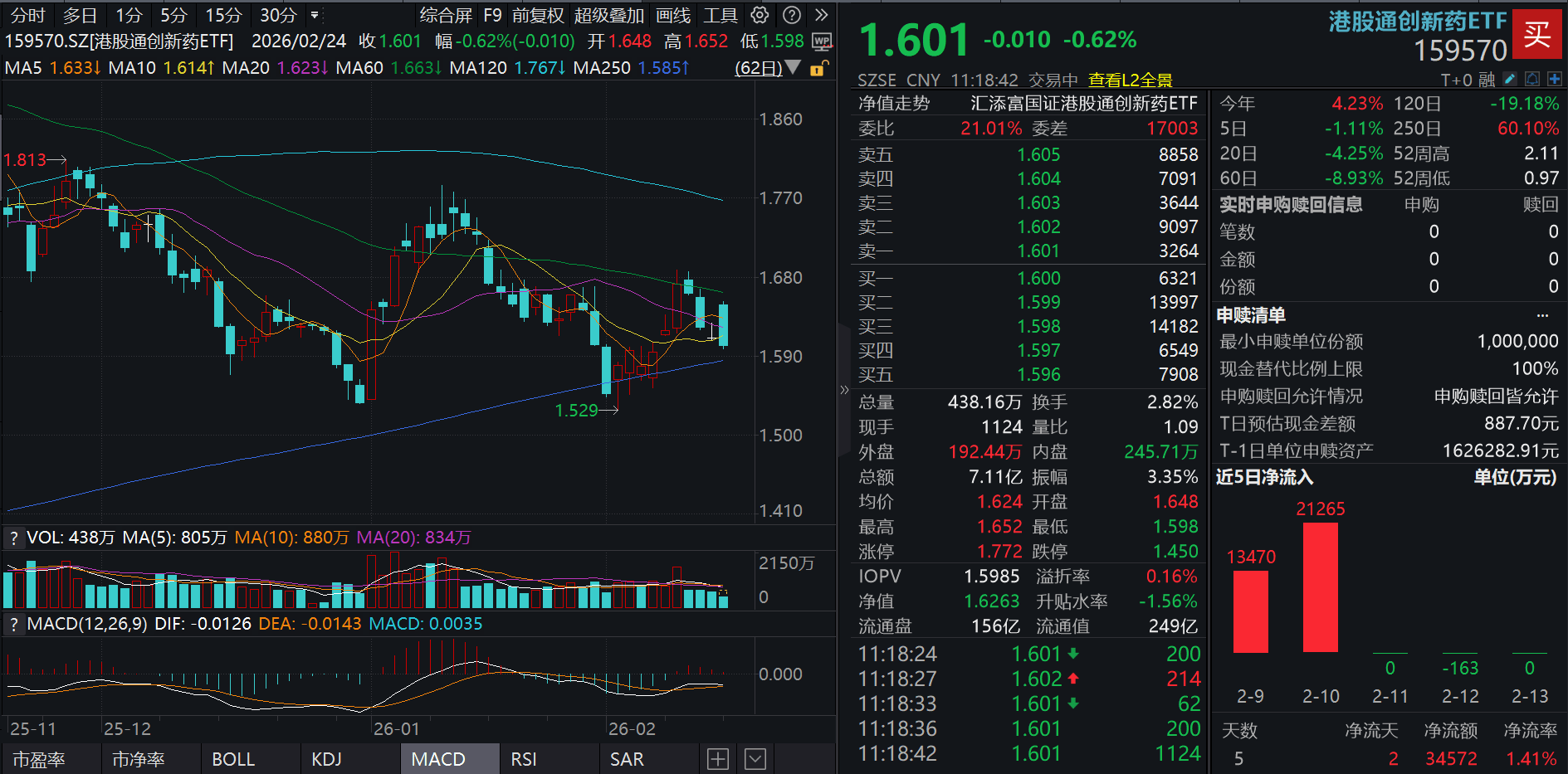
截至11:07,港股通创新药ETF(159570)标的指数热门股多数回调:石药集团、中国生物制药、三生制药、翰森制药、荣昌生物跌超5%,信达生物跌超4%, 康方生物跌超3%。 | 序号 | 代码 | 名称 | 估算板車 | 涨跌幅 | 17.47 80 ▼ | | --- | --- | --- | --- | --- | --- | | 1 | 1801 | 信达生物 | 10.51% | -0.56% | 6.81亿 | | 2 | 1093 | 石药集团 | 12.18% | -3.15% | 5.98 7. | | 3 | 6160 | 高密被田 | 10.99% | -1.13% | 2.83 Z | | 4 | 1530 | 三生制药 | 6.50% | -2.57% | 2.65 Z | | 5 | 9926 | 康方生物 | 8.49% | -1.33% | 2.57 Z | | 6 | 3692 | 翰森制药 | 6.84% | -1.84% | 1.99 Z | | 7 | 1177 | 中国生物制药 | 10.01% | -3.66% | 1.74Z | | 8 | 6990 | 科伦博 ...


新股前瞻|盈利上行但现金流告急,CRO新秀博纳西亚能否“后来居上”?
智通财经网· 2026-02-23 10:57
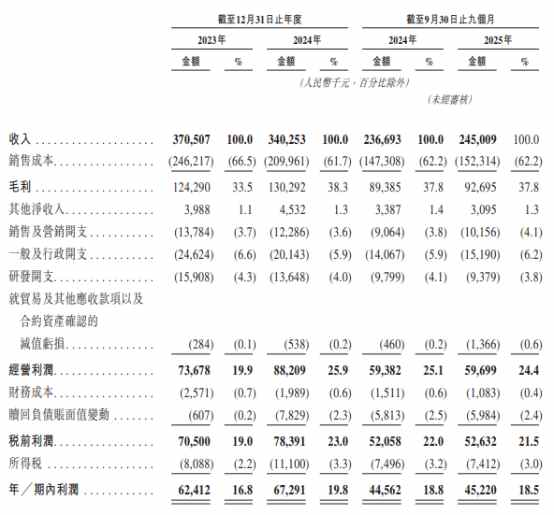
近日,博纳西亚(杭州)医药科技股份有限公司(简称:博纳西亚)向港交所主板递交上市申请,兴证国 际、工银国际为其联席保荐人。 招股书显示,这家总部位于杭州的临床合同研究组织(CRO)致力于通过数字化赋能创新药临床研究,深 耕肿瘤及自身免疫性疾病两大领域,于2024年已取得约6729.1万元盈利。不过,与此同时,公司现金 流、应收账款状况面临考验,且公司市场份额并不占优,或将成为市场投资者担忧的因素。 在巨头林立的CRO行业,博纳西亚讲述的"小而美"故事,能否收获投资者青睐? 2025年业绩回暖 毛利率稳步上行 财务数据显示,博纳西亚的业绩在经历2024年的短暂回调后,于2025年重回增长轨道。公司于2023年 度、2024年度分别录得收入约为3.71亿元、3.40亿元(单位为人民币,下同),年内利润为6241.2万元、 6729.1万元,其中2024年收入下滑主要受行业整体环境影响。 智通财经APP了解到,随着公司业务恢复增长,2025年截至9月30日止九个月,公司收入约为2.45亿, 相比去年同期的2.37亿元同比增长3.38%;期内利润为4522万元,相比去年同期的4456.2万元同比增长 1.48%。 | ...
招银国际焦点股份
Zhao Yin Guo Ji· 2026-02-23 10:50
Group 1: Stock Recommendations - 吉利汽车 (Geely Auto) has a market cap of $23.4 billion, with a target price of $25.00, indicating an upside potential of 48%[5] - 正力新能 (Zhengli New Energy) has a market cap of $2.8 billion, with a target price of $18.00, indicating an upside potential of 113%[5] - 极兔速递 (Jitu Express) has a market cap of $12.2 billion, with a target price of $13.40, indicating an upside potential of 25%[5] - 三一国际 (Sany International) has a market cap of $6.2 billion, with a target price of $20.60, indicating an upside potential of 37%[5] - 瑞幸咖啡 (Luckin Coffee) has a market cap of $11.0 billion, with a target price of $54.68, indicating an upside potential of 41%[5] Group 2: Performance Overview - The basket of 26 long positions had an average return of -2.3%, outperforming the MSCI China Index, which returned -2.4% by 0.1 percentage points[10] - Out of the 26 stocks, 11 had returns exceeding the benchmark[10] - The report includes a new addition of Datadog (DDOG US) to the buy list, while Salesforce (CRM US) has been removed[7]





医药周报:春节期间医药行业重点事件梳理
Guolian Minsheng Securities· 2026-02-23 07:45
Investment Rating - The report maintains a "Recommended" rating for the pharmaceutical industry [5] Core Insights - The underlying logic of the current pharmaceutical industry era is innovation and international expansion, with a focus on innovative drugs and technology-driven sectors [2][3] - The report highlights the strong performance of the CRO market and suggests a dual investment strategy focusing on both "0 to 1" technology innovation and low-position stocks [2][3] - The report emphasizes the ongoing trend of BD (Business Development) transactions in innovative drugs, with significant growth expected in 2026 [4][15] Summary by Sections 1. Key Events in the Pharmaceutical Industry During the Spring Festival - Innovative drug BD transactions have seen a strong start, with significant overseas development and registration progress for key products [13][14] - The total amount of BD transactions for innovative drugs in China for 2026 has already surpassed one-third of the total for 2025 [15] - The revision of the National Essential Medicines List Management Measures may signal changes in the essential medicines directory [28] 2. Pharmaceutical Market Review and Hotspot Tracking - The pharmaceutical sector's performance was relatively weak, with a weekly decline of 0.81%, ranking 20th among all industries [34][38] - The total trading volume for pharmaceuticals was 401.12 billion yuan, accounting for 3.83% of the total market, below the historical average of 7.09% [55] - The report notes a rising valuation level for the pharmaceutical industry, with a PE ratio of 29.25, which is below the historical average [52] 3. Stock Performance Review - The report lists the top-performing stocks, including Dongyangguang and Zhendemedical, while highlighting the underperformers like Huayuan Biology and *ST Sailong [58][59]


中国创新药产业加速迈向全球价值链核心
Jing Ji Guan Cha Wang· 2026-02-18 03:24
Core Insights - The Chinese innovative pharmaceutical industry is transitioning from "importing and imitating" to "innovating and exporting," enhancing its global influence and authority in the innovative drug sector [1] - In early 2026, the market for outbound licensing transactions in China's innovative drugs continued its strong growth, with the first quarter's transaction amount exceeding $33.28 billion, setting a historical record [1][2] - By 2025, the total value of China's innovative drug license-out transactions reached $140.27 billion, a significant increase from $2.56 billion in 2017, making China the global leader in this sector [2] Transaction Growth - The growth in China's innovative drug licensing transactions is driven by the dual pressures of a "patent cliff" and "innovation demand" in the global pharmaceutical industry [1] - In 2026, the upfront payment scale in just one month approached half of the total for the entire year of 2025, indicating a rapid increase in transaction volume and quality [2] - The structure of transactions is evolving, with a shift from simple rights transfers to deep binding models based on technology platform sharing and global R&D collaboration [2][3] Strategic Partnerships - Notable collaborations include partnerships between Innovent Biologics and Eli Lilly, as well as between 3SBio and Pfizer, showcasing the trend of comprehensive capability partnerships rather than mere product supply [3] - Leading pharmaceutical companies are adopting a dual strategy of "independent R&D + global licensing," creating a sustainable innovation cycle [3] Financial Performance - Over 70% of innovative pharmaceutical companies reported positive revenue growth in 2025, with cash flow from outbound licensing contributing to a virtuous cycle with capital market financing [4] - The evolving payment system in China, which combines basic medical insurance with commercial insurance, supports a stable cash flow from the domestic market while enhancing long-term corporate value through global collaborations [4] Global Impact - The trend of outbound licensing is reshaping cooperation rules and competitive dynamics in the global pharmaceutical industry, with Chinese companies increasingly playing a proactive and critical role [4][6] - The collaboration between companies like Innovent and Takeda exemplifies a mutually beneficial partnership that leverages global channels and local clinical capabilities [4] Market Sentiment - Despite market fluctuations, analysts generally view high-quality innovative pharmaceutical companies as attractive long-term investments, reflecting a dual recognition of explosive innovative potential and structural growth resilience in the Chinese pharmaceutical industry [5] Industry Dynamics - The surge in outbound licensing is prompting local companies to balance "bringing in" and "going out," with the latter gaining prominence and indicating international market recognition of China's innovative drug quality [6] - There is a need for rational and cautious approaches in the face of rising transaction prices and potential market uncertainties, emphasizing the importance of thorough scientific and commercial due diligence [6]
创新药出海开年跑出“加速度”:产业迈入2.0时代
Jing Ji Guan Cha Wang· 2026-02-18 02:45
Core Insights - The Chinese innovative pharmaceutical industry has entered the 2.0 era, shifting from "import imitation" to "innovation output," with new forms like license-out and new co indicating a transformation in internationalization [1] - In the first quarter of 2026, the total transaction amount for Chinese innovative drug licensing (BD) exceeded $33.28 billion, surpassing the highest quarterly level of 2025, marking a shift from a "follower" to a core driver in the global innovation value chain [1][2] - The explosive growth in BD transactions is attributed to multiple factors, including the global pharmaceutical industry's "patent cliff" and "innovation demand," alongside China's recognized R&D efficiency and clinical capabilities [1] Transaction Growth - In 2025, the total value of China's innovative drug license-out transactions reached $140.27 billion, a significant increase from $2.56 billion in 2017, accounting for 49% of global innovative drug licensing transactions, surpassing the U.S. for the first time [2] - In January 2026, the upfront payment scale approached half of the total for 2025, with total transaction amounts reaching 22% of 2025's total [2] - The quality of transactions is also improving, with frequent occurrences of upfront payments exceeding $100 million and 37 transactions exceeding $1 billion, second only to the U.S. [2] Transaction Structure - The upgrade in transaction structure is a core feature of China's innovative drug internationalization, with traditional "selling seedlings" models being replaced by "technology platform output" and "global R&D collaboration" [2][3] - Notable collaborations include Innovent Biologics and Eli Lilly, where the partnership is based on a new molecule, demonstrating deep trust in China's R&D capabilities [2] Strategic Transformation - Leading pharmaceutical companies are adopting a dual strategy of "independent R&D + global licensing," creating a sustainable innovation ecosystem [3] - Examples include BeiGene's revenue surpassing 36 billion yuan in 2025, showcasing strong commercialization capabilities, and other companies achieving breakeven for the first time [3] Financial Performance - Over 70% of innovative pharmaceutical companies achieved revenue growth in 2025, with cash flow from BD transactions and IPO funding providing substantial resources for the industry [4] - The combination of domestic market cash flow and global licensing is creating a dual-driven model that reduces financial risks and accelerates the conversion of innovative results [4] Industry Ecosystem - The internationalization of innovative drugs is reshaping the global pharmaceutical landscape, with predictions of the emergence of global Chinese pharmaceutical giants [4] - Collaborations like that between Innovent Biologics and Takeda illustrate the strategic partnerships that enhance project advancement efficiency [4] Investment Trends - The innovative drug sector has seen a correction over the past two quarters, but long-term prospects for quality targets remain favorable, suggesting increased allocation [5] - The "dumbbell strategy" proposed by CICC highlights the dual characteristics of "innovation output" and "steady growth" in the Chinese innovative drug industry [5][6] Market Dynamics - An increasing number of Chinese innovative pharmaceutical companies are transitioning from "license-in" to proactive "license-out," achieving record high transaction amounts and gaining recognition in international markets [6] - Horizontal cooperation and integration among domestic pharmaceutical companies are accelerating to optimize resource allocation and address market competition and regulatory challenges [6]
港股通创新药ETF工银(159217)跌0.30%,成交额2.32亿元
Xin Lang Cai Jing· 2026-02-13 07:14
Core Viewpoint - The Hong Kong Stock Connect Innovative Drug ETF (工银, 159217) has shown a slight decline of 0.30% in its closing price, with a trading volume of 2.32 billion yuan on February 13, 2025. The fund has experienced growth in both its share count and total assets since the beginning of the year [1]. Fund Overview - The Hong Kong Stock Connect Innovative Drug ETF (工银, 159217) was established on March 26, 2025, with an annual management fee of 0.40% and a custody fee of 0.07%. Its performance benchmark is the adjusted return of the National Index for Hong Kong Stock Connect Innovative Drugs [1]. - As of February 12, 2025, the fund's latest share count is 3.935 billion shares, with a total asset size of 5.214 billion yuan. Compared to December 31, 2025, the fund's shares have increased by 4.57% and its total assets by 9.73% [1]. Liquidity - Over the last 20 trading days, the cumulative trading amount for the Hong Kong Stock Connect Innovative Drug ETF (工银, 159217) reached 7.823 billion yuan, with an average daily trading amount of 391 million yuan [1]. Fund Management - The current fund managers are Liu Weilin and Jiao Wendong. Liu has managed the fund since March 26, 2025, achieving a return of 31.76%, while Jiao has been managing it since April 10, 2025, with a return of 50.17% [2]. Top Holdings - The fund's top holdings include: - CSPC Pharmaceutical Group (石药集团) - 10.65% of the portfolio, valued at 506 million yuan - BeiGene (百济神州) - 10.10%, valued at 480 million yuan - CanSino Biologics (康方生物) - 9.91%, valued at 471 million yuan - China National Pharmaceutical Group (中国生物制药) - 9.85%, valued at 468 million yuan - Innovent Biologics (信达生物) - 9.72%, valued at 462 million yuan - 3SBio (三生制药) - 7.08%, valued at 337 million yuan - Hansoh Pharmaceutical (翰森制药) - 7.07%, valued at 336 million yuan - Kelun Pharmaceutical (科伦博泰生物-B) - 3.54%, valued at 168 million yuan - Kangzhe Pharmaceutical (康哲药业) - 2.60%, valued at 124 million yuan [3].
大健康风向标〡跨越千亿美元门槛:中国分子站在全球化起点
Jing Ji Guan Cha Wang· 2026-02-13 07:06
Core Viewpoint - The keyword for the stock market in 2025 is expected to be "innovative drugs," with significant stock price increases driven by the potential of in-development innovative drugs and BD (business development) transactions rather than traditional revenue from already marketed drugs [1] Group 1: BD Transactions - In 2025, China's innovative drug BD transaction total exceeded $100 billion, with notable orders reaching $10 billion, and upfront payments from multinational pharmaceutical companies reaching a new high of $1.25 billion [1] - Landmark transactions include a $13 billion collaboration between Qihuang Dejian and Biohaven/AimedBio in January, marking a milestone for China's ADC technology [2] - In May, 3SBio's deal with Pfizer exceeded $6 billion, setting a record for upfront payments in China at $1.25 billion, highlighting the value of both first-in-class and fast-follow drugs [2] - In July, a $12 billion strategic partnership between Hengrui Medicine and GlaxoSmithKline showcased the depth of early-stage pipelines in leading Chinese pharmaceutical companies [2] - In October, Innovent Biologics and Takeda's collaboration worth $11.4 billion included a cost-sharing model for global R&D, enhancing operational capabilities for future international ventures [2] Group 2: Milestone Payments and Emerging Fields - Several past BD transactions reached milestone payments in 2025, including a $300 million payment to China National Pharmaceutical's subsidiary from Merck and a $250 million payment to Bairui Tianheng from Bristol-Myers Squibb [3] - The focus of BD transactions is shifting from oncology to other therapeutic areas, with autoimmune diseases, metabolism, and central nervous system disorders emerging as new hot fields [3] - Notable deals include the global rights licensing of BTK inhibitor Orelabrutinib for multiple sclerosis by Nocera Biopharma, with a potential total transaction value exceeding $2 billion [3] - The metabolic field is gaining traction, driven by global weight loss trends, with several companies entering into licensing agreements for GLP-1 targeted drugs [3] Group 3: Independent Clinical Trials and Regulatory Approvals - Numerous innovative drug companies in China are advancing their own overseas clinical trials, achieving significant progress [4] - In early 2025, Dize Pharmaceutical's lung cancer targeted drug received priority review from the FDA and was approved in July, becoming the first globally innovative drug independently developed in China to gain approval in the U.S. [4] - Other advancements include breakthrough therapy designations for CS0159 by Kexi Kedi and a Phase III trial approval for a recombinant human albumin injection by Heyuan Biopharma [4] - These developments indicate that the Chinese innovative drug industry is becoming a significant force in global innovation, transitioning from fast-following to original innovation and integrating deeply into the global value chain [4]


医药行业周报:1-8批国采平稳接续扰动有限,机构加仓创新,持续看好低估创新标的
BOCOM International· 2026-02-12 12:24
Industry Rating - The report rates the pharmaceutical industry as "Leading" [1] Core Insights - The report highlights that the recent national procurement has been stable, with limited disruptions, and institutions are increasing their positions in innovative companies, maintaining a positive outlook on undervalued innovative targets [1][4] - The overall market sentiment has improved, driven by significant business development transactions, and the pharmaceutical sector is expected to continue its steady growth in 2026, despite potential short-term volatility [4][5] Summary by Sections Market Performance - The Hang Seng Index rose by 1.3% and the Hang Seng Healthcare Index increased by 5.0%, ranking second among 12 industry indices [4][6] - Sub-sectors such as biopharmaceuticals and CXO both saw a growth of 7.4% [6] Institutional Holdings - Since Q4 2025, the proportion of domestic capital holding pharmaceutical stocks through Hong Kong Stock Connect has slightly decreased, while foreign capital holdings have increased [32] - As of February 10, 2026, domestic holdings were at 22.2%, down 0.2 percentage points, while foreign holdings rose to 39.7%, up 0.9 percentage points [32] Sales Performance - In 2025, China's pharmaceutical market sales decreased by 1% year-on-year, with public hospitals accounting for the largest market share at 10,977 billion RMB, down 2.1% [5] - Retail pharmacy sales reached 5,878 billion RMB, growing by 2.4%, with online pharmacies seeing a significant increase of 13.6% [5] National Procurement - The recent national procurement round had a high selection rate of 93%, with 1,020 products from 1,091 participating companies expected to be implemented by the end of March 2026 [5] - The procurement process has seen increased participation and a diverse range of selected products, ensuring stability in clinical demand [5] Investment Recommendations - The report recommends focusing on innovative drugs, particularly companies like Sanofi and Hengrui Medicine, which have rich catalysts and clear long-term growth logic [4] - It also suggests looking into CXO companies benefiting from high downstream demand and improving financing conditions, such as WuXi AppTec [4]
医药行业周报:1-8批国采平稳接续扰动有限,机构加仓创新,持续看好低估创新标的-20260212
BOCOM International· 2026-02-12 11:21
Industry Rating - The report rates the pharmaceutical industry as "Leading" [1] Core Insights - The report highlights that the recent national procurement has been stable, with a high selection rate of 93%, indicating a positive outlook for innovative companies in the sector [4][5] - The market sentiment has improved, driven by significant business development (BD) transactions, suggesting a continuation of the positive trend in 2026 despite potential short-term volatility [4] - The report emphasizes the importance of focusing on fundamentals and valuations when selecting stocks, particularly undervalued innovative companies that have been overlooked during market fluctuations [4] Summary by Sections Market Performance - The Hang Seng Index rose by 1.3% and the Hang Seng Healthcare Index increased by 5.0%, outperforming the broader market [4][6] - Sub-sectors such as biopharmaceuticals and CXO both saw a growth of 7.4% [6] Institutional Holdings - As of February 10, 2026, domestic institutional holdings through Hong Kong Stock Connect slightly decreased to 22.2%, while foreign holdings increased to 39.7%, indicating a shift towards more positive sentiment among foreign investors [32] - Key increases in holdings were noted in leading CXO companies benefiting from demand recovery, such as Tigermed and WuXi AppTec [37][38] Valuation Overview - The report provides a valuation summary for various companies, with notable buy ratings for AstraZeneca, BeiGene, and others, indicating strong growth potential [3] - The average price-to-earnings (P/E) ratio for the healthcare sector is reported at 28.4 times, with specific segments like biopharmaceuticals at 13.1 times [16] Sales Trends - The report notes a 1% year-on-year decline in China's pharmaceutical market sales for 2025, with significant variations across different sales channels [5] - Public hospitals accounted for the largest market share but experienced a 2.1% decline, while retail pharmacies saw a 2.4% increase, driven by online sales growth [5] Procurement Insights - The recent national procurement round involved 316 commonly used drugs, with a high participation rate and diverse product offerings, ensuring stable clinical supply [5] - The procurement process has been refined to enhance quality and reliability, with stricter requirements for participating companies [5]