国联安基金

Search documents
越跌越买!“抄底”资金加仓
Zhong Guo Zheng Quan Bao· 2026-02-03 12:44
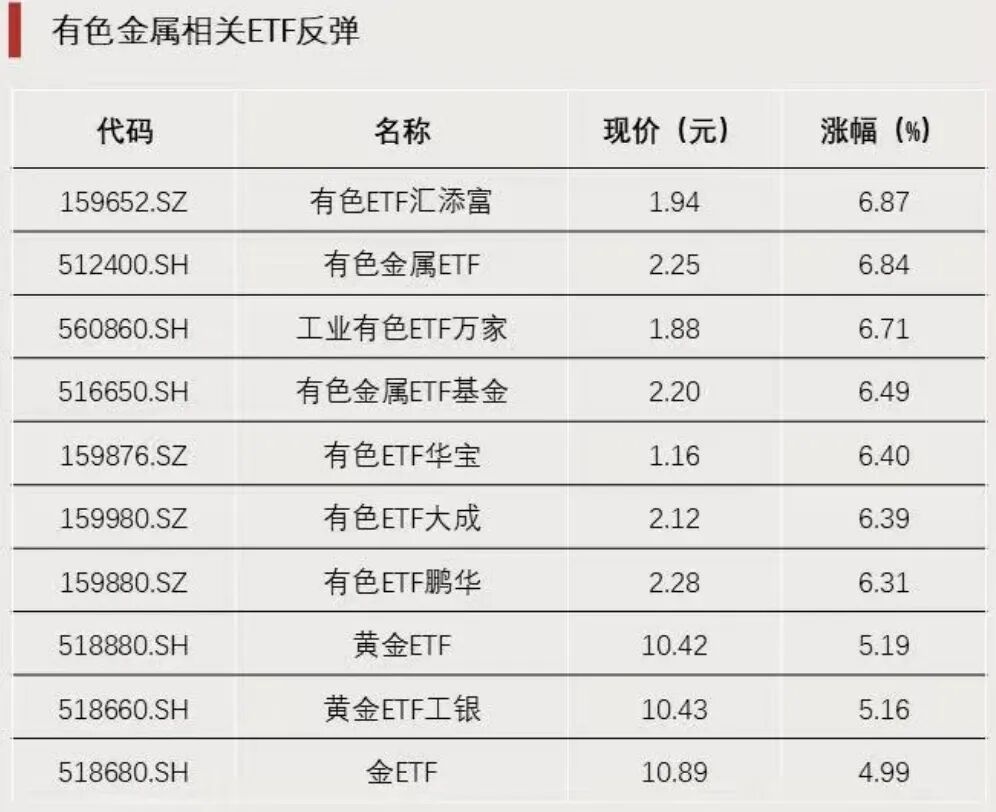
Group 1: Market Overview - On February 3, the A-share market rebounded after a dip, with resource-related ETFs such as gold, non-ferrous metals, and mining showing strong performance [1] - Multiple popular thematic ETFs saw significant inflows during the volatile market, with the Guotai Gold ETF experiencing a net inflow of over 2.2 billion yuan despite declines of 7.33% and 10% on January 30 and February 2, respectively [1][9] - The market is characterized by a clear divergence in hotspots, with the technology sector and cyclical sectors showing upward resonance [11] Group 2: Performance of Thematic ETFs - Non-ferrous metals and gold sectors experienced a notable rebound, with several related thematic ETFs rising over 5% [2] - The Huazhang Gold ETF closed with a gain of 5.19% and a trading volume of 21.613 billion yuan [3] - Specific ETFs such as the Zhonghan Semiconductor ETF and Guotai Photovoltaic ETF saw increases exceeding 6% [6] Group 3: Fund Inflows - The Guotai Gold ETF led the market in net inflows, with 1.371 billion yuan on February 2 and 871 million yuan on January 30 [10] - The Boshi Convertible Bond ETF also attracted significant inflows, with 1.054 billion yuan on February 2 and 276 million yuan on January 30 [9][10] Group 4: Sector Insights - The recent sharp decline in gold prices is viewed as a short-term technical adjustment rather than a long-term trend reversal, with macro structural factors supporting gold remaining intact [4] - The semiconductor sector, particularly the Zhonghan Semiconductor ETF, has shown a trading turnover rate exceeding 120%, with a cumulative increase of over 40% since 2026, leading the ETF market [7]

超130亿元,“跑了”
3 6 Ke· 2026-02-03 09:56
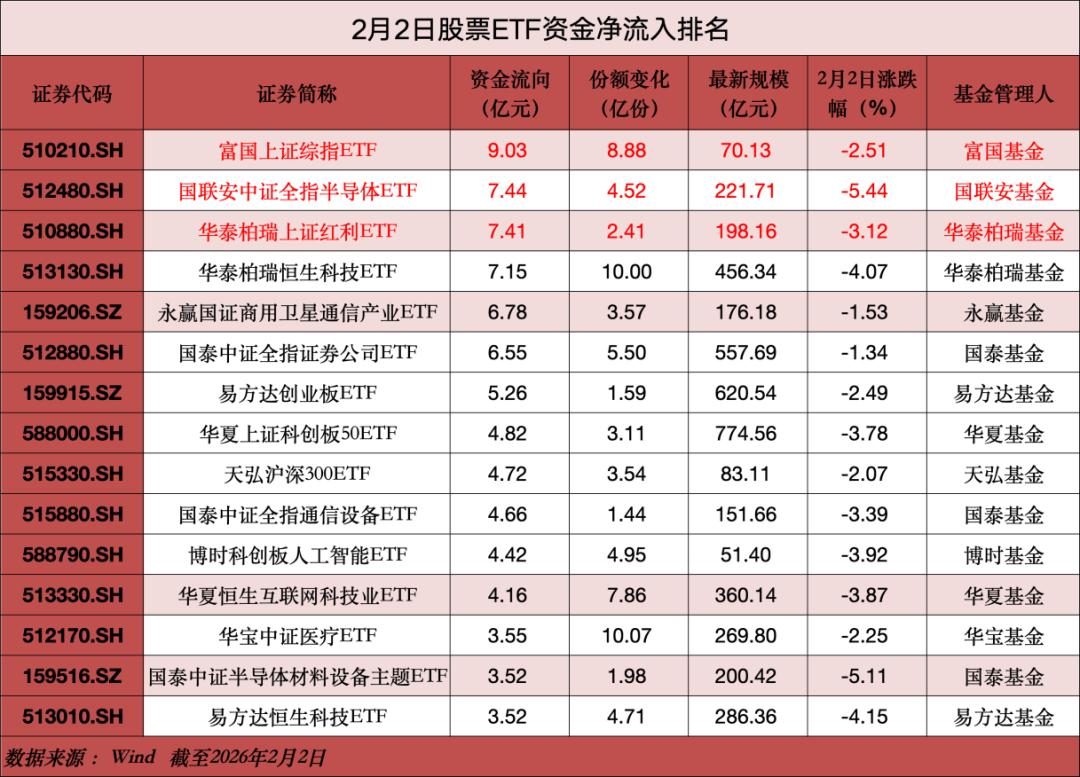
Group 1 - The stock ETF market experienced a net outflow of 790 billion yuan in January, with broad-based ETFs being the main contributors to the outflow [1] - In February, the trend of capital outflow continued, with a single-day net outflow of 13.771 billion yuan on the first trading day, influenced by significant declines in the three major stock indices [1] - Broad-based ETFs and the metals sector were the largest "blood loss" categories, while sector-specific ETFs like semiconductors and pharmaceuticals attracted significant inflows [1][2] Group 2 - As of February 2, the total scale of 1,321 stock ETFs (including cross-border ETFs) was 4.09 trillion yuan, showing a notable decrease due to market declines [2] - Sector-specific ETFs and Hong Kong stock ETFs saw the largest inflows, with 3.715 billion yuan and 3.346 billion yuan respectively on February 2 [2] - The semiconductor sector had a remarkable net inflow of 2.61 billion yuan on February 2, with the Guolian An CSI All-Share Semiconductor ETF leading with a net inflow of 903 million yuan [2] Group 3 - The broad-based ETF sector saw a significant net outflow of 23.778 billion yuan on the previous day, with a total scale decrease of 68.672 billion yuan [5] - The CSI 500 ETF had the largest single-day net outflow of 13.02 billion yuan, followed by the CSI 300 ETF with 7.2 billion yuan [5] - The metals sector also experienced a notable net outflow of 4.39 billion yuan, influenced by market sentiment and short-term profit-taking [6] Group 4 - On February 2, the top inflow ETFs included the Fortune CSI 300 ETF with a net inflow of 903 million yuan and the Guolian An CSI All-Share Semiconductor ETF with 744 million yuan [3][7] - The Huatai-PineBridge CSI Dividend ETF also saw a significant inflow of 741 million yuan, indicating strong investor interest in dividend-related investments [3] - The top inflow for the Hong Kong technology sector ETFs included the Huatai-PineBridge Hang Seng Technology ETF with a net inflow of 715 million yuan [4]
超130亿元,“跑了”!
Zhong Guo Ji Jin Bao· 2026-02-03 06:49
Group 1 - The stock ETF market experienced a significant net outflow of 790 billion yuan in January, with broad-based ETFs being the main contributors to this outflow [2] - On February 2, the first trading day of the month, stock ETFs saw a net outflow of 13.771 billion yuan, influenced by a sharp decline in the three major stock indices [2] - Broad-based ETFs and the metals sector were the largest "bloodletting" categories, while sector-specific ETFs like semiconductors and pharmaceuticals attracted significant inflows [2][3] Group 2 - As of February 2, the total scale of 1,321 stock ETFs (including cross-border ETFs) was 4.09 trillion yuan, showing a notable decrease due to the market downturn [3] - Sector-specific ETFs and Hong Kong stock ETFs saw substantial inflows, with 3.715 billion yuan and 3.346 billion yuan respectively on the previous trading day [3] - The semiconductor sector had a remarkable net inflow of 2.61 billion yuan on February 2, with the Guolian An CSI All-Share Semiconductor ETF leading with a net inflow of 903 million yuan [3] Group 3 - Over the past five days, the SGE Gold 9999 index saw inflows exceeding 13.9 billion yuan, while the specialized chemical index attracted over 7 billion yuan [4] - Leading institutions like E Fund reported a total ETF scale of 642.71 billion yuan, with a net inflow of 800 million yuan on the previous day [4] - Notable single product inflows included 526 million yuan for the ChiNext ETF and 352 million yuan for the Hang Seng Technology ETF [4] Group 4 - Broad-based ETFs continued to experience significant outflows, with a net outflow of 23.778 billion yuan on the previous day, leading to a scale decrease of 68.672 billion yuan [5] - The CSI 500 ETF had the largest single-day outflow of 13.02 billion yuan, followed by the CSI 300 ETF with 7.2 billion yuan [5] Group 5 - The metals sector also faced notable outflows, with a net outflow of 4.39 billion yuan, influenced by expectations surrounding the Federal Reserve's monetary policy and profit-taking sentiments [6] - Despite short-term volatility, the long-term investment logic for the metals sector remains solid, supported by global manufacturing cycles and energy transition demands [6] Group 6 - Current market adjustments are viewed as providing better valuation windows for long-term investments, with a stable long-term market outlook supported by policy measures and improving economic fundamentals [7] - Key factors include ongoing policy support, marginal improvements in economic indicators, and a favorable funding environment with increasing allocations to A-shares from various institutional investors [7]

超30只ETF,批量跌停!
Zhong Guo Zheng Quan Bao· 2026-02-02 12:24
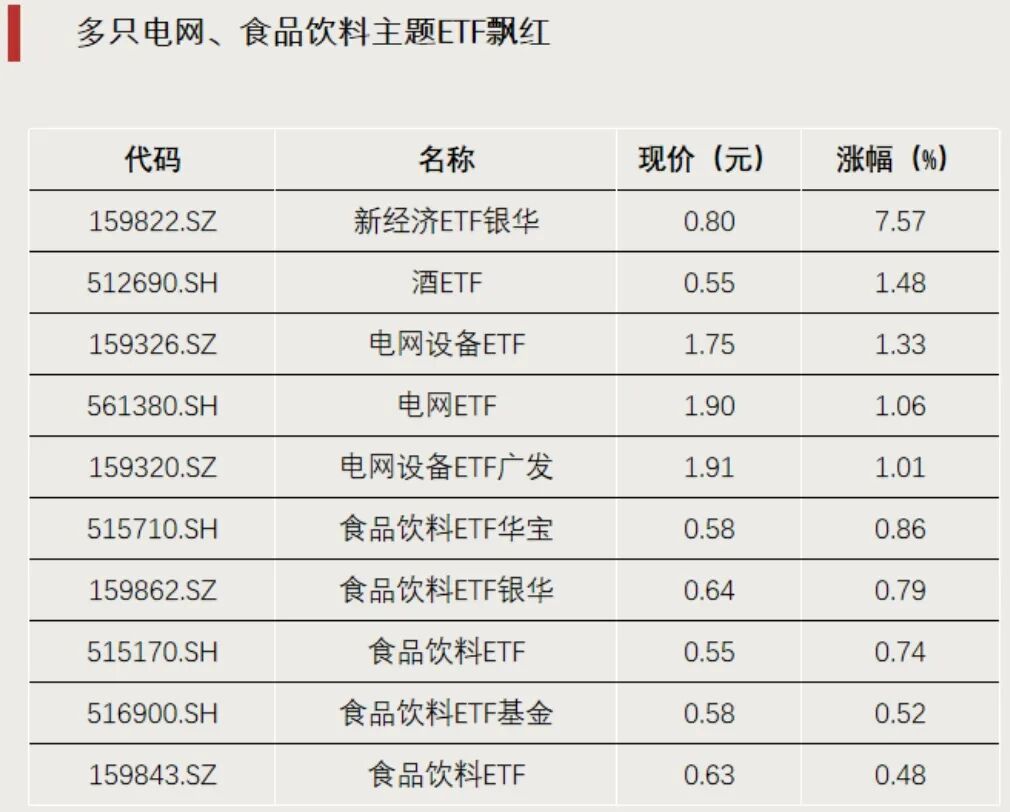
Market Overview - On February 2, over 30 ETF products hit the daily limit down, primarily from the gold and non-ferrous metal sectors, while ETFs related to electric grids, food and beverages, and banks showed resilience with gains [1][5] - The overall ETF market saw only about 50 products in the green at the close of trading [3] ETF Performance - The New Economy ETF by Yinhua (159822) recorded the highest single-day gain of over 7% on February 2 [3] - Several ETFs in the electric grid and food and beverage sectors demonstrated significant anti-drawdown characteristics, with notable performances including: - New Economy ETF Yinhua: 0.80 CNY, +7.57% - Food and Beverage ETF: 0.55 CNY, +1.48% - Electric Grid Equipment ETF: 1.75 CNY, +1.33% [4] Fund Flows - In January, multiple broad-based ETFs experienced significant net outflows, with a total exceeding 570 billion CNY from four major Hu-Shen 300 ETFs [8] - The specific net outflows for January included: - Huatai-PineBridge Hu-Shen 300 ETF: -190.84 billion CNY - E Fund Hu-Shen 300 ETF: -152.66 billion CNY - China Asset Hu-Shen 300 ETF: -137.59 billion CNY - Harvest Hu-Shen 300 ETF: -98.69 billion CNY [9] Market Sentiment - Current market conditions are characterized as a short-term emotional disturbance period, with expectations of a spring rally not yet concluded [3] - Analysts suggest that while there may be short-term volatility, the underlying logic supporting risk assets remains intact due to anticipated easing in 2026 and limited tightening actions from the Federal Reserve [3][7] Precious Metals Market - The precious metals market has seen a significant correction, attributed to a combination of speculative trading and increased margin requirements, leading to a technical clearing rather than a fundamental policy shift [6][7] - Despite recent volatility, long-term trends suggest continued support for precious metals due to weakening dollar credit and ongoing central bank purchases [7]
净流出超7900亿元!
Zhong Guo Ji Jin Bao· 2026-02-02 06:24
Core Viewpoint - In January, the stock ETF market experienced significant outflows, totaling over 790 billion yuan, with a notable net outflow of 37.20 billion yuan on January 30 alone [1][5][3]. Group 1: ETF Market Performance - On January 30, the Shanghai Composite Index fell over 2%, closing down 0.96% at 4117 points, with most industry sectors declining, while communication, electronics, and agriculture sectors showed gains [2][3]. - The total net outflow for all stock ETFs (including cross-border ETFs) in January reached 795.67 billion yuan [5]. - The largest inflows were seen in thematic ETFs such as non-ferrous metals, chemicals, electric grid equipment, and satellite ETFs, while broad-based ETFs like the CSI 300 ETF and SSE 50 ETF faced significant outflows [6][7]. Group 2: Specific ETF Data - On January 30, the SGE Gold 9999 index had the highest net inflow of 16.24 billion yuan, while the CSI 300 index saw the largest outflow of 73.23 billion yuan [3]. - Over the past five days, the SGE Gold 9999 index attracted over 20.2 billion yuan, and the chemical sector saw inflows exceeding 9.9 billion yuan [3]. - Leading fund companies like Huaxia Fund reported significant inflows in their non-ferrous metals ETF and chip ETF, with net inflows of 1.134 billion yuan and 430 million yuan, respectively [3]. Group 3: Sector Insights - The chemical industry ETF from E Fund saw a net inflow of 390 million yuan, while the chip ETF from E Fund had a net inflow of 170 million yuan [4]. - Analysts suggest that geopolitical uncertainties and rising nationalism may drive resource commodities into a super cycle, with metals like gold, silver, copper, aluminum, tungsten, and cobalt being particularly noteworthy [9]. - Investment opportunities are identified in sectors such as steel, building materials, chemicals, and silicon materials, which are expected to benefit from demand recovery [9].
1月股票ETF资金累计净流出超7900亿元
Xin Lang Cai Jing· 2026-02-02 06:22
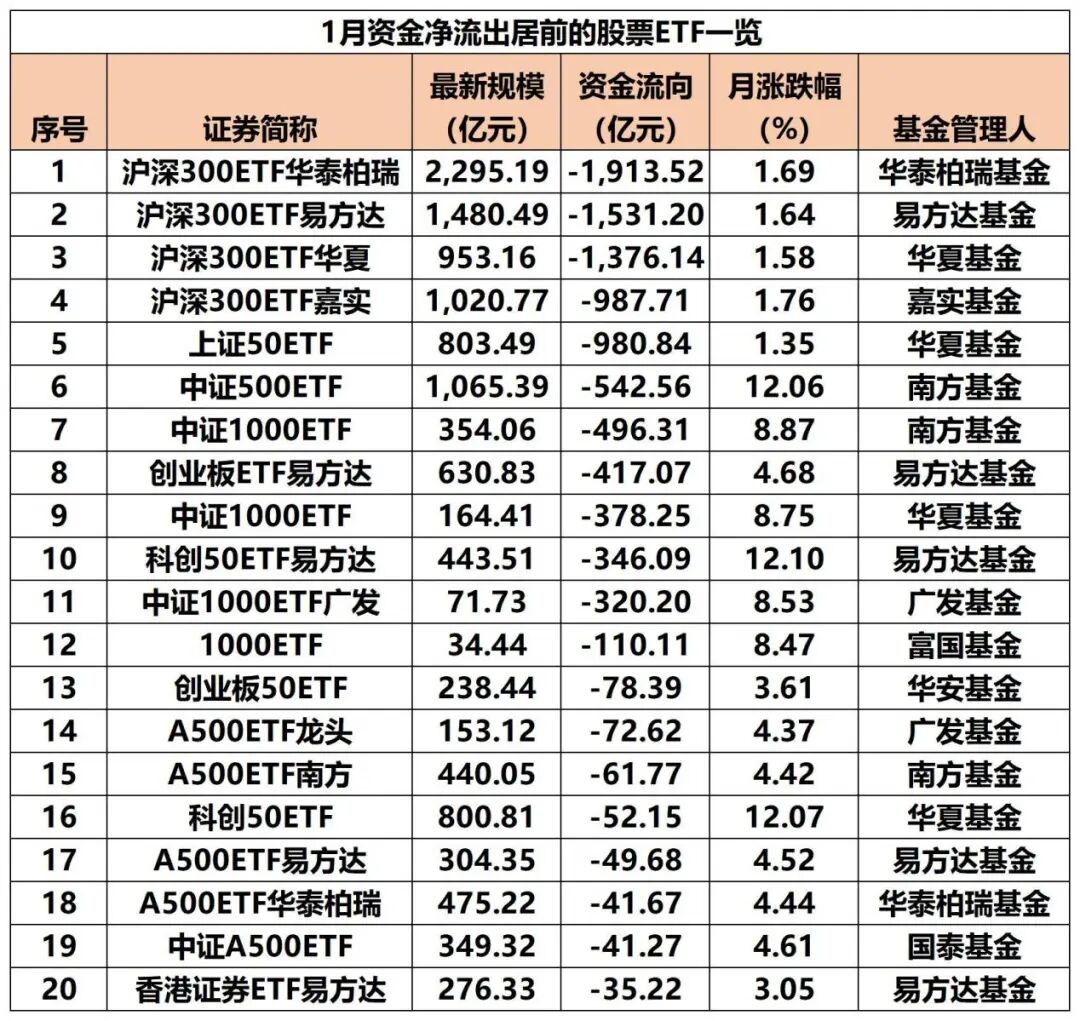
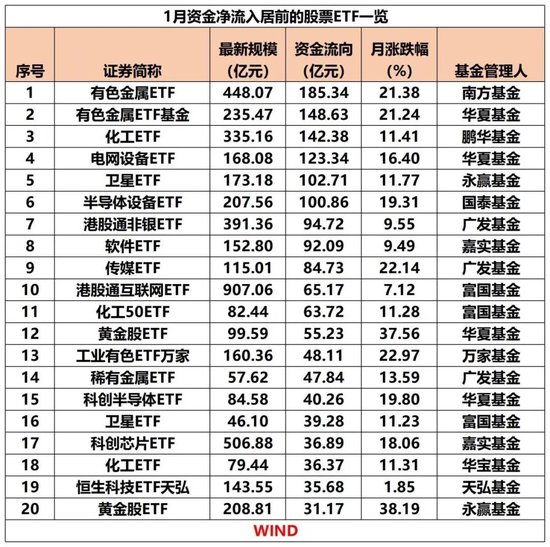
Core Viewpoint - In January, the stock ETF market in China experienced a significant net outflow of over 790 billion yuan, indicating a turbulent market environment with specific sectors showing varied performance [1][5][11]. Summary by Category Market Performance - On January 30, the Shanghai Composite Index fell by over 2%, closing down 0.96% at 4117 points, with most sectors declining, while communication, electronics, and agriculture sectors showed gains [2][12]. - The total net outflow for stock ETFs (including cross-border ETFs) on January 30 was 37.20 billion yuan, with industry theme ETFs and commodity ETFs seeing inflows of 112.63 billion yuan and 21.66 billion yuan, respectively [3][13]. ETF Inflows and Outflows - In January, the cumulative net outflow for all stock ETFs reached 795.67 billion yuan, with popular theme ETFs like non-ferrous metals, chemicals, electric grid equipment, and satellite ETFs attracting significant inflows [5][15]. - The largest net outflows were observed in broad-based ETFs such as the CSI 300 ETF, which saw a net outflow of 1,913.52 million yuan, followed by other major ETFs [7][17]. Sector-Specific Insights - The SGE Gold 9999 index recorded a net inflow of 16.24 billion yuan on January 30, while the CSI 300 index had a net outflow of 73.23 billion yuan [3][13]. - Notable inflows were seen in specific ETFs managed by major fund companies, with the non-ferrous metals ETF and chip ETF from Huaxia Fund seeing inflows of 11.34 billion yuan and 4.3 billion yuan, respectively [3][13][14]. Investment Opportunities - Analysts suggest that geopolitical uncertainties and rising national consciousness may drive resource commodities into a super cycle, highlighting metals like gold, silver, copper, and aluminum as having long-term investment value [8][18]. - The focus is also on sectors benefiting from domestic demand and self-sufficiency trends, such as engineering machinery, new energy vehicles, and AI computing, which are expected to provide structural investment opportunities [8][18].
巨量主力资金,最新动向来了!
Ge Long Hui· 2026-02-02 01:02
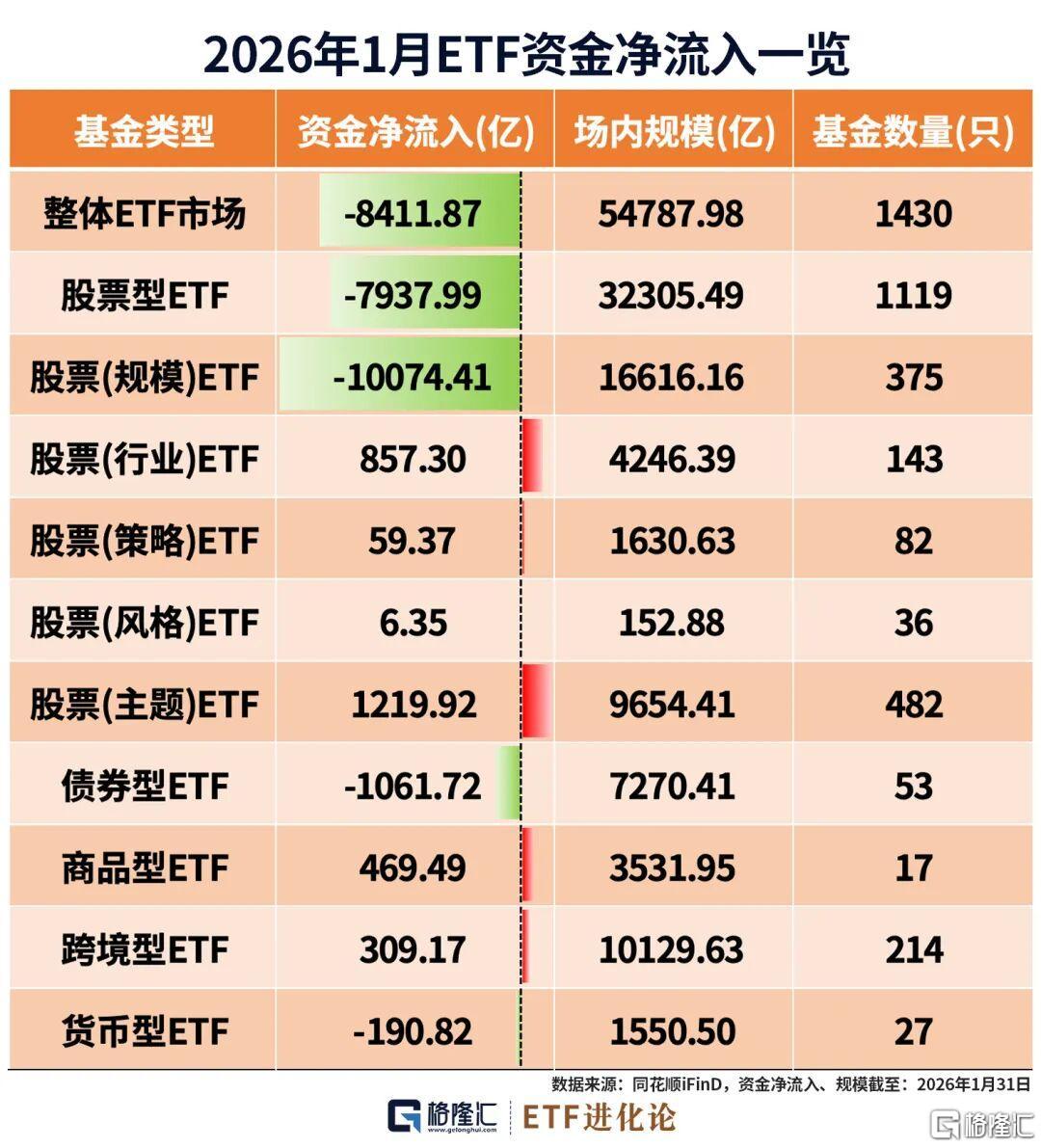
Core Viewpoint - In January 2026, the A-share ETF market exhibited a clear divergence, with over 200 billion yuan flowing into thematic ETFs in sectors like non-ferrous metals, gold, chemicals, and technology, while core broad-based ETFs like CSI 300 and CSI 1000 experienced a net outflow exceeding 1 trillion yuan [1][10]. Group 1: ETF Market Overview - The overall ETF market size reached approximately 54,787.98 billion yuan, with a net outflow of 841.87 billion yuan in January [3]. - Stock-type ETFs saw a net outflow of 793.80 billion yuan, while thematic stock ETFs recorded a net inflow of 1,219.92 billion yuan [3]. - The CSI 300 ETF from Huatai-PineBridge had a net outflow of 1,908.43 billion yuan, marking the largest outflow among broad-based ETFs [11]. Group 2: Performance of Thematic ETFs - The non-ferrous metals ETF and gold ETFs attracted significant inflows, with the non-ferrous metals ETF receiving 182.57 billion yuan and the gold ETF 147.71 billion yuan [13]. - The semiconductor ETFs, including the China-Korea Semiconductor ETF, saw substantial gains, with the former increasing by 45.09% in January [6]. - Other notable performers included the chemical ETF and the electric grid equipment ETF, which also received over 100 billion yuan in inflows [13]. Group 3: Sector Performance - In January, the non-ferrous metals and technology sectors alternated as the leading gainers, with the semiconductor and gold stock ETFs rising over 40% [4]. - The AI application concept surged, leading to a 20% increase in the media ETF, while oil and gas stocks also saw gains of over 20% [4]. - Conversely, the banking ETF and automotive ETF experienced declines, with the banking ETF dropping over 6% [7][8].
突发公告!多家基金今起集体停牌
Sou Hu Cai Jing· 2026-01-30 04:19
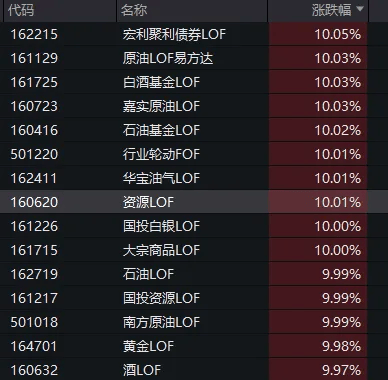
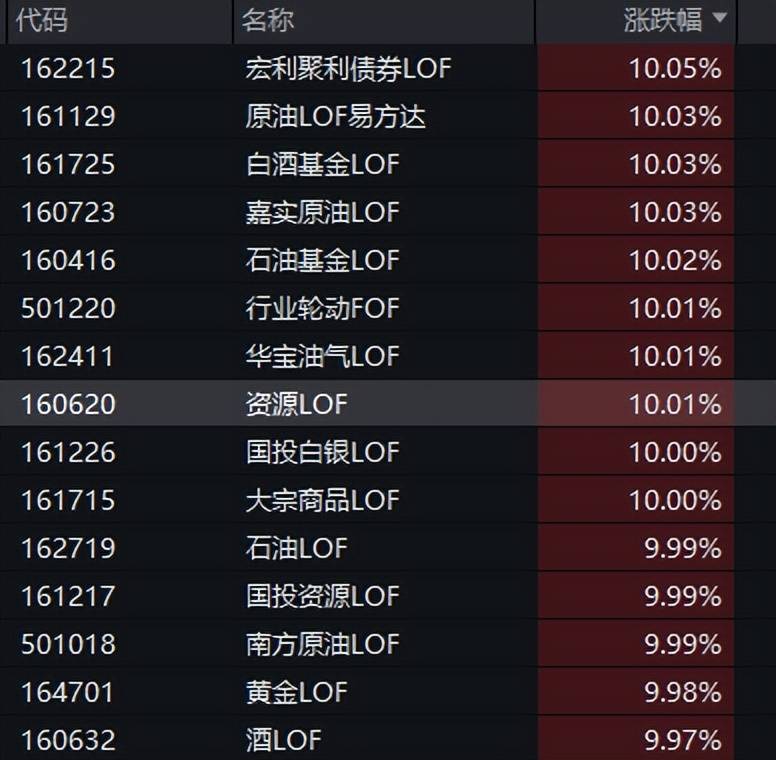
Core Viewpoint - On January 29, a rare event occurred in the market where resource-related LOFs, including oil LOFs from E Fund and Jiashi, experienced a collective surge, leading to multiple products hitting the daily limit up. Many of these products announced a suspension of trading starting January 30 [1][9]. Group 1: Performance of LOFs - Several LOFs showed strong performance on January 29, with multiple products quickly reaching the daily limit up during trading, indicating high premium rates. By the end of the day, products such as E Fund Oil LOF, Jiashi Oil LOF, and others had hit the limit up [4]. - The top-performing LOFs included E Fund Oil LOF with a rise of 10.03%, Jiashi Oil LOF at 10.03%, and the Oil Fund LOF at 10.02% [2]. Group 2: Market Dynamics - The surge in oil-related LOFs is attributed to a combination of factors, including tight QDII quotas, low subscription limits, and investors utilizing the "offshore subscription + onshore selling" arbitrage mechanism. Additionally, rising international oil prices and heightened risk aversion contributed to the premium of oil LOFs [5][6]. - As of January 29, WTI crude oil futures reached $65.002 per barrel, marking a 2.83% increase and the highest level since September 2025 [6]. Group 3: Fund Suspension and Adjustments - Following a week of rapid price increases, multiple fund companies announced the suspension of resource-related LOFs starting January 30 to alert the market of potential risks. This includes the suspension of trading for the Oil Fund LOF until 10:30 AM on January 30 [9][10]. - Starting January 30, the daily subscription limit for the Oil Fund LOF was drastically reduced from 100 yuan to 2 yuan, while other resource LOFs also implemented similar restrictions, leading to a scarcity of available quotas for investors [7][11].
最新公告!今天,多家基金集体停牌
Sou Hu Cai Jing· 2026-01-30 02:25
Core Viewpoint - Multiple resource-related LOF funds have announced a collective suspension of trading due to significant price premiums and market volatility, signaling potential risks to investors [5][6]. Group 1: Fund Performance and Market Reactions - Several LOF products, including the oil LOF funds, experienced a strong performance with multiple funds hitting the daily limit up, reflecting high premium rates [1][2]. - The WTI crude oil futures reached $65.002 per barrel, marking a 2.83% increase and the highest level since September 2025, contributing to the bullish sentiment in the market [4]. Group 2: Suspension and Limit Adjustments - Starting January 30, 2026, several funds, including the Huazhong Oil Fund LOF and others, will suspend trading until 10:30 AM due to significant price deviations from net asset values [5][6]. - The Huazhong Oil Fund LOF has reduced the daily purchase limit from 100 yuan to 2 yuan, while other funds have similarly tightened their subscription limits to manage inflows [4][7]. Group 3: Market Dynamics and Investor Sentiment - Analysts attribute the high premiums in oil LOF funds to tight QDII quotas, low subscription limits, and a surge in investor interest driven by international oil prices and risk aversion [4]. - The overall market sentiment remains strong for commodities, supported by factors such as inflation expectations and demand recovery, indicating continued upward momentum in the short term [4][9].
深夜悬崖式过山车!白银黄金跳水重挫,随后收复近半跌幅……多家基金今日突发公告:停牌!
Sou Hu Cai Jing· 2026-01-30 00:55
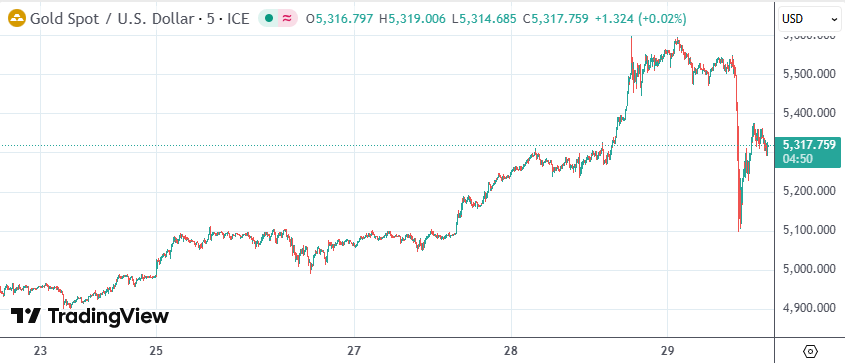
Group 1: Gold Market Dynamics - Gold prices experienced a sharp decline, dropping over $400 before recovering nearly half of the loss, with a maximum intraday drop of 5.7% [1][17] - The spot gold price approached $5600 but fell to $5105.83 before rebounding to around $5317, reflecting a 1.8% decrease at the time of reporting [1] - The volatility in gold prices is attributed to profit-taking by investors after recent highs, with gold up 6.5% for the week and 23% for the month [17] Group 2: Factors Influencing Precious Metals - The rise in precious metals is supported by dual factors: escalating geopolitical risks increasing global risk aversion and a deepening trend of "de-dollarization" raising doubts about the dollar's credibility [4] - Industrial metals and oil sectors are also gaining momentum due to a recovery in manufacturing and steady demand from green technology [4] Group 3: Silver Market Movements - Silver prices fell from a historical high of $121.67 to $106.80, with a maximum intraday drop of 8.5%, before recovering to around $114, reflecting a 2.3% decrease [6] Group 4: Investor Sentiment and Reactions - Investor sentiment is mixed, with some expressing frustration over recent losses in gold investments, highlighting the emotional impact of market fluctuations [5][13] - The demand for gold remains strong, with significant interest from both cryptocurrency companies and central banks, indicating a sustained appetite for gold as a safe-haven asset [17]