
极飞科技

Search documents
广州经济“U型”回升,谁在支撑?
2 1 Shi Ji Jing Ji Bao Dao· 2025-12-18 14:44
Group 1: Economic Overview - Guangzhou's GDP growth trajectory has formed a clear "U-shaped" curve, with a forecasted growth rate of 2.1% for 2024, lower than the national and provincial averages [1] - In 2025, GDP growth is expected to rebound significantly, starting from 3.0% in Q1 and reaching 4.1% in the first three quarters, aligning with Guangdong province's growth rate [1] Group 2: Emerging Industries - The "3+5" strategic emerging industries in Guangzhou achieved an added value of 751.73 billion yuan, with a year-on-year growth of 4.6%, contributing 35.2% to GDP growth [2] - Key sectors such as new energy vehicles, OLED production, and low-altitude economy are showing strong growth, with significant increases in production and new business formations [2][3] Group 3: Automotive Industry - The automotive industry remains a pillar of Guangzhou's economy, with a decrease in added value of 2.6% in Q3, but a notable improvement from earlier declines [3] - Guangzhou Automobile Group reported a Q3 sales volume of 428,400 vehicles, a quarter-on-quarter increase of 11.49%, with significant growth in overseas sales [3][4] Group 4: Traditional Manufacturing Upgrades - Traditional manufacturing sectors, including home appliances and display manufacturing, are experiencing double-digit growth, with integrated circuit manufacturing value increasing by 37.4% [5] - The automotive sector's strategic adjustments focus on electrification, intelligence, and internationalization, contributing to its recovery [4][5] Group 5: New Economic Drivers - New economic drivers are emerging, with significant projects like the G8.6 OLED production line and flying car production facilities being established [7][8] - The low-altitude economy is rapidly developing, with over 4,200 companies in the sector and substantial growth in aerospace manufacturing and drone production [9] Group 6: Policy Support and Ecosystem - Guangzhou's supportive policies in the autonomous driving sector have attracted companies, facilitating advancements in technology and commercial applications [10] - The presence of unicorns and specialized enterprises in emerging industries is crucial for further economic growth, with a focus on strengthening supply chains [11]
乡村发展的中国经验提供了有益借鉴
Ren Min Ri Bao· 2025-12-16 22:56
11月30日至12月9日,由中国农业大学与腾讯公司联合发起的"全球南方青年兴乡计划"2025年项目实训 顺利完成。来自印度尼西亚、肯尼亚、老挝、坦桑尼亚和乌干达五国的49名青年学员访问北京和云南, 进行了为期10天的系统学习与实践考察。 "我们希望通过系统的培育,将中国在乡村全面振兴与减贫领域的实践经验带给各国青年,支持他们将 中国经验与本国实际相结合,成为推动全球南方国家乡村转型的重要力量。"12月1日,在中国农业大学 举行的开班仪式上,中国农业大学副校长杜太生这样说。 坦桑尼亚驻华大使馆全权公使米拉吉·乌库蒂·乌斯表示:"青年是南方国家最富活力、最具创造力的群体 之一。这个项目通过系统的理念培育、知识传授和技能实训,将帮助各国青年把本土资源优势转化为切 实的发展动能。" 学 习 系列培训课程"干货满满" 从中国农业的发展实践、不同国情下的乡村转型特点,到农产品电商如何运营、乡村直播有哪些经 验……12月1日至2日,在中国农业大学,学员们接受了一系列培训课程。 中国农业大学文科资深讲席教授李小云以"全球南方乡村发展的路径探索与中国实践"为题作主旨报告; 中国农业大学人文与发展学院唐丽霞教授围绕"全球乡村变迁 ...
“乡村发展的中国经验提供了有益借鉴”
Ren Min Ri Bao Hai Wai Ban· 2025-12-16 22:50
Core Viewpoint - The "Global South Youth Rural Revitalization Program" initiated by China Agricultural University and Tencent aims to share China's rural revitalization and poverty alleviation experiences with youth from various countries, empowering them to drive rural transformation in their own nations [12][19]. Group 1: Program Overview - The program took place from November 30 to December 9, involving 49 youth participants from Indonesia, Kenya, Laos, Tanzania, and Uganda, who engaged in a 10-day training and practical study in Beijing and Yunnan [12]. - The initiative focuses on cultivating youth as key players in rural transformation by integrating local resource advantages with practical knowledge and skills [12][19]. Group 2: Training Content - Training sessions included topics such as China's agricultural development practices, rural transformation characteristics under different national conditions, and e-commerce operations for agricultural products [13]. - Notable lectures were delivered by professors from China Agricultural University, covering global rural development paths and the policy framework of rural development since China's reform and opening up [13][14]. Group 3: Practical Experience - Participants visited modern agricultural facilities, including greenhouses and agricultural technology labs, learning about high-value vegetable breeding, multi-crop systems, and AI-driven agricultural practices [14][18]. - The program emphasized hands-on experiences, such as operating drones and understanding automated production lines, showcasing the integration of technology in agriculture [18][19]. Group 4: Local Insights - In Yunnan, participants explored rural areas that successfully integrated agriculture with tourism, learning about diverse income sources and community-driven development [17]. - The program highlighted the importance of local leadership in rural development, with a focus on empowering farmers as decision-makers and beneficiaries [17]. Group 5: Participant Feedback - Participants expressed a transformative experience, gaining insights into how technology and innovative practices can enhance rural development [19]. - The program fostered a sense of respect for land and traditional wisdom, encouraging participants to apply learned concepts in their home countries [19].


黔“雁”南飞取真经,第二期贵州“头雁”培育能力提升集训班在中山大学结业
Nan Fang Nong Cun Bao· 2025-12-13 13:01
黔"雁"南飞取真 经,第二期贵 州"头雁"培育能 力提升集训班在 中山大学结业_ 南方+_南方plus 12月6日至9日, 第二期贵州"头 雁"培育能力提 升集训班在中山 大学举办,来自 贵州各地的170 余名乡村产业带 头人——"头 雁"们,飞越黔 岭,齐聚珠江之 畔,开启了一场 为期四天的沉浸 式学习与对接之 旅。 开班式现场 政校协同育"领 头雁" 贵州省农业农村 厅党组成员、副 厅长缪杰,贵州 省人力资源和社 会保障厅人才服 务局局长陈鹏, 中山大学副校长 邰忠智等出席开 班式,共同 为"头雁"们鼓 劲。贵州省委组 织部、省财政 厅、团省委及相 关市州农业农村 部门负责人、国 内五所顶尖培育 高校代表齐聚一 堂。 中山大学副校长邰忠智致欢迎辞 "头雁项目,上 接国家乡村振兴 战略天线,下连 贵州田间地头地 气,是培育乡村 产业人才的金字 招牌。"中山大 学副校长邰忠智 殷切期望学员们 能将"湾区的理 念、市场的逻 辑、创新的火 花"带回贵州, 转化为乡村产业 高质量发展的强 劲动能。 贵州省农业农村厅副厅长缪杰作开班动员讲话 贵州省农业农村 厅副厅长缪杰寄 语学员们要珍惜 机会、潜心学 习,希望通过各 ...

做好“土特产”大文章,让广东薯成“黄金薯”“幸福薯”
Nan Fang Nong Cun Bao· 2025-12-12 14:31
Core Viewpoint - The Guangdong sweet potato industry is undergoing a transformation aimed at enhancing its brand and market competitiveness through technological innovation and collaboration across the entire supply chain [9][10][16]. Group 1: Industry Overview - Sweet potatoes are the largest grain crop in Guangdong after rice, with a planting area of 2.67 million acres and a fresh sweet potato yield of 4.52 million tons in 2024 [13]. - The province is focusing on the "Hundred-Thousand-Million Project" to improve the quality of agricultural products and increase farmers' income [17][19]. Group 2: Technological Innovation - The conference featured a keynote report by an academician from the Chinese Academy of Sciences, discussing innovative technologies in the sweet potato industry, including the "potato rice" technology that transforms coarse grains into fine grains [22][23]. - The integration of technology and industry is advancing Guangdong's sweet potato production from traditional methods to large-scale, precise cultivation [24]. Group 3: Brand Development - Guangdong has established 18 key counties for sweet potato yield improvement and cultivated 35 leading enterprises in the sweet potato industry [53]. - The province has created three regional public brands and 26 product brands, enhancing the market competitiveness of Guangdong sweet potatoes [52]. Group 4: Market Expansion - The event showcased nearly 100 types of sweet potato products, attracting significant consumer interest and facilitating connections between businesses and buyers [50][52]. - Companies are innovating with sweet potato products, including sweet potato ice cream and snacks, appealing to younger consumers and expanding market opportunities [72][79]. Group 5: Future Initiatives - Six key cooperation projects were signed at the conference, focusing on the construction of a full industry chain base for purple sweet potatoes and the digital application of the industry [86][88].
大疆市场策略转舵 多线出击打响价格阻击战
Zhong Guo Jing Ying Bao· 2025-12-05 20:20
Core Insights - DJI Agriculture has launched three new agricultural drones with improved performance and reduced prices, interpreted as a competitive move against XAG Technology's upcoming IPO [3][4][5] - DJI's aggressive pricing strategy across various sectors, including smart imaging and consumer drones, has raised concerns about a price war in the industry [3][8] - The shift in DJI's strategy reflects a dynamic evolution in its business approach, moving from a focus on technological superiority to a combination of technology innovation and aggressive pricing to expand market share [3][12] Agricultural Drone Pricing Strategy - The new agricultural drones T100S, T70S, and T55 are priced at 48,999 yuan, 43,999 yuan, and 36,999 yuan respectively, with discounts of up to 8,000 yuan for early orders [4][5] - The flagship T100S has a maximum takeoff weight of 149.9 kg and a payload capacity of 95 kg, featuring significant technological upgrades [4] - The market share for agricultural drones is dominated by DJI and XAG, with DJI holding 59% and XAG 17.1% as of 2024 [5] Market Dynamics and Competition - DJI's pricing strategy is seen as a move to solidify its market position ahead of XAG's IPO, indicating a clear intent to maintain dominance in the agricultural sector [5][6] - The trend of decreasing prices has shifted the user demographic from professional agricultural teams to individual farmers, with the ratio of professional users to individual users changing from 9:1 to 5:5 [7] - XAG has also responded with competitive pricing, indicating a mutual recognition of the need to adapt to market pressures [6][7] Broader Price War Context - DJI's price competition extends beyond agricultural drones, impacting the smart imaging market where it faces competition from companies like YI Technology [8][9] - The aggressive pricing tactics have led to significant price reductions across various DJI products, including handheld imaging devices and consumer drones [9][10] - Industry experts suggest that while price competition can expand the market, it may also dilute brand value and innovation potential in the long term [12][14] Strategic Shift and Future Considerations - DJI's historical strategy focused on high margins through technological innovation, but recent actions indicate a shift towards aggressive pricing to capture market share [12][13] - The company aims to balance its pricing strategies with ongoing technological advancements to avoid potential risks associated with over-reliance on price competition [14] - Industry analysts emphasize the importance of maintaining innovation and brand integrity while navigating competitive pricing pressures [14]
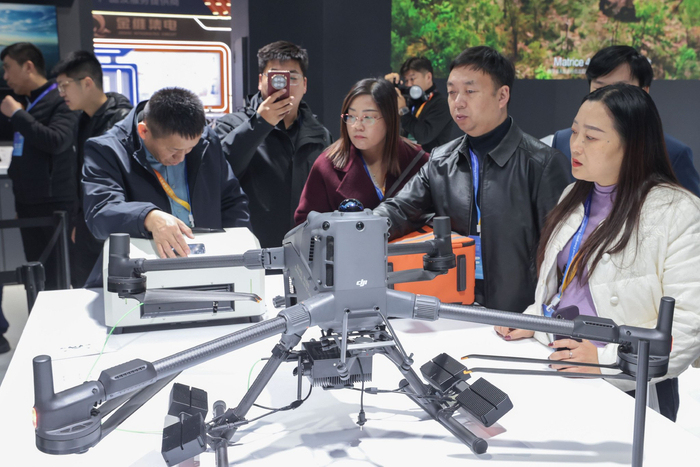
从都国际论坛“广州之夜”晚宴举行 广州智造闪耀“广州之夜”
Guang Zhou Ri Bao· 2025-12-03 02:17
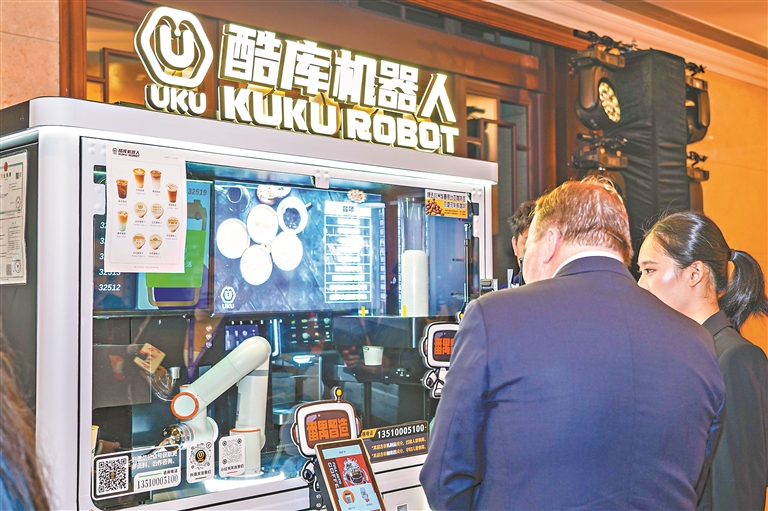
Group 1: Event Overview - The "Guangzhou Night" dinner showcased Guangzhou's unique charm and cultural heritage, emphasizing the city's blend of tradition and modernity [1] - Attendees expressed optimism about Guangzhou's development, highlighting its strong industrial foundation, vast market potential, and favorable business environment [1] Group 2: Cultural Performances - The event featured rich cultural performances, including the dance drama "Yong Chun," which showcased the essence of Lingnan culture [4] - Foreign dignitaries praised the performances, with Slovenia's former president noting Guangzhou's lasting impression on the world [4] Group 3: Technological Innovations - The event highlighted innovative products such as the "AI Barista," which can serve coffee in 90 seconds and print intricate designs on foam [8] - The "Land Aircraft Carrier," a flying car with a unique design, attracted significant interest from attendees, showcasing advanced technology [8] - Agricultural drones from XAG were also featured, capable of precision tasks with efficiency up to 80 times that of manual labor, indicating the integration of technology in modern agriculture [9]
大疆打响农业无人机“价格战”,极飞科技等对手如何应对?
Mei Ri Jing Ji Xin Wen· 2025-11-24 12:55
Core Insights - DJI's agricultural drone segment has seen significant growth, with operational acreage increasing from less than 500 million acres in 2019 to 3.2 billion acres in 2023, representing a substantial transformation in traditional agricultural practices [1] - The global agricultural drone market is dominated by two Chinese companies, DJI holding a 59% market share and XAG with 17.1% [1] - XAG has submitted a prospectus for its IPO, showing a turnaround to profitability with a net profit of 134 million yuan in the first half of 2023, compared to the previous year's total [1][2] Market Dynamics - DJI has launched new models at competitive prices, with the T100S starting at 40,999 yuan, aiming to capture market share amid XAG's IPO efforts [2] - The agricultural drone market is evolving from reliance on manual labor to automated solutions, significantly improving efficiency and reducing labor costs [3][4] - The average price of agricultural drones has decreased significantly, with XAG's average selling price dropping to 37,500 yuan, a 10% reduction from the previous year [4][5] Technological Advancements - The introduction of advanced sensors in DJI's new models enhances obstacle detection, addressing challenges in complex agricultural environments [7] - The ability to operate in challenging conditions, such as night or adverse weather, is crucial for expanding the market for agricultural drones [7] International Expansion - Both DJI and XAG are targeting international markets, with XAG's overseas revenue growing significantly from 1.46 billion yuan in 2022 to an expected 3.71 billion yuan in 2024 [8] - Entering foreign markets presents challenges, including regulatory hurdles and varying agricultural practices, necessitating tailored approaches for each region [8]
大疆打响农业无人机价格战,极飞科技等如何应对?
Mei Ri Jing Ji Xin Wen· 2025-11-20 14:37
Core Insights - DJI's agricultural drone segment has seen significant growth, with operational acreage increasing from less than 500 million acres in 2019 to 3.2 billion acres in 2023, representing a substantial transformation in traditional agricultural practices [1] - DJI holds a dominant market share of 59% in the global agricultural drone market, while its main competitor, XAG, has a 17.1% share [1] - XAG has submitted a prospectus for its IPO, reporting a net profit of 134 million yuan in the first half of 2023, a significant improvement from previous losses [1][2] Market Dynamics - The introduction of new DJI models at competitive prices has intensified the price war in the agricultural drone market, with models priced significantly below market expectations [2] - The average selling price of agricultural drones has decreased, with XAG's average price dropping to 37,500 yuan, a 10% reduction from the previous year [4][5] Technological Advancements - Agricultural drones have evolved from being a novelty to becoming essential tools in farming, significantly improving efficiency and reducing labor costs [3][4] - DJI's agricultural drones have improved their spraying capacity from 3.6 liters per minute in 2016 to a maximum of 50 liters per minute in 2023 [4] - The integration of advanced sensors in new models allows drones to navigate complex environments, addressing previous challenges related to obstacles like power lines [6][7] Competitive Landscape - The agricultural drone market is increasingly competitive, with both DJI and XAG targeting international markets for growth, as evidenced by XAG's rising overseas revenue [7][8] - DJI's strategy for entering new markets involves adapting products to local agricultural practices and regulatory requirements, focusing initially on regions with similar crop types [8]
低空耕者:农业无人机重塑智慧农耕的新范式与未来图景,头豹词条报告系列
Tou Bao Yan Jiu Yuan· 2025-11-19 13:15
Investment Rating - The report rates the agricultural drone industry positively, indicating a strong growth potential with a projected market size increase from 250.7 billion RMB in 2024 to 325.54 billion RMB by 2029, reflecting a compound annual growth rate (CAGR) of 5.47% [42][45]. Core Insights - Agricultural drones are transforming smart farming practices, driven by technological advancements, policy support, and a concentrated market structure dominated by leading companies like DJI and XAG, which together hold 70%-80% of the global market share [5][20]. - The industry is characterized by a shift from traditional pest control applications to a broader range of functions, including precision seeding and monitoring, facilitated by advancements in AI and sensor technology [18][40]. - The market is expected to benefit from labor shortages in agriculture, increasing demand for precision management, and ongoing technological improvements [5][43]. Industry Overview - Agricultural drones are defined as unmanned aerial vehicles that operate without human pilots, utilizing remote control or autonomous systems for various agricultural tasks [6]. - The industry has seen significant growth from 231.2 billion RMB in 2020 to 250.7 billion RMB in 2024, with expectations of further expansion due to labor shortages and policy support [42][43]. Market Dynamics - The agricultural drone market is highly concentrated, with DJI and XAG leading the competition, which is characterized by a duopoly [20][52]. - The report highlights the importance of technological innovation, with companies investing heavily in R&D to enhance product capabilities and maintain competitive advantages [54][55]. Policy Support - Government policies are increasingly supportive of the agricultural drone sector, with subsidies reaching up to 40% for drone purchases, which is expected to further stimulate market growth [19][44]. - The "14th Five-Year Plan" emphasizes the development of smart agricultural machinery, providing a framework for the industry's future [45]. Technological Advancements - Continuous technological upgrades are expanding the application scenarios for agricultural drones, moving beyond pest control to include precision seeding and real-time monitoring [18][40]. - The integration of AI and advanced sensors is enhancing operational efficiency, with significant improvements in data collection and analysis capabilities [27][40]. Competitive Landscape - The competitive landscape is marked by a few dominant players, with DJI holding a significant market share and a strong patent portfolio, while XAG excels in precision spraying algorithms [20][53]. - New entrants are emerging, leveraging innovative technologies to carve out niche markets, indicating a dynamic competitive environment [56][57].