
百联股份

Search documents
未知机构:2026年房地产市场前低后高全年板块或迎来两大拐点25年房-20260213
未知机构· 2026-02-13 01:55
Summary of Conference Call Notes Industry Overview - The real estate market is expected to experience a "front low and back high" trend in 2026, with two significant turning points anticipated throughout the year [1][3]. - The real estate market and investment continue to face adjustment pressures in 2025 [1][3]. Short-term Strategies - Short-term measures should focus on destocking and boosting demand and confidence to stabilize the market [1][3]. - Support for reasonable financing needs of real estate companies is essential to stabilize investment [1][3]. - Immediate policy interventions are necessary to prevent a sharp market decline [1][3]. Long-term Strategies - In the medium to long term, there is a need to guide real estate companies to actively transform from increasing investment development value to enhancing service operation value [2][3]. - Development models and systems require updates to adapt to changing market conditions [2][3]. Market Dynamics - The ongoing market weakness is primarily due to supply-demand mismatches and weak expectations regarding future housing prices [4]. - Recommendations include: 1. Government side (G-end): Utilize land reserves and urban renewal to absorb supply and create demand [4]. 2. Business side (B-end): Activate existing assets through securitization and restructuring to shift supply [4]. 3. Consumer side (C-end): Adjust administrative, provident fund, and fiscal policies to boost consumer demand and digest supply [4]. Investment Trends - Real estate investment continues to weaken, largely due to significant financial pressures on developers [5]. - Key predictions for 2026 include: 1. Sales area of 810 million square meters, down 8% year-on-year [6]. 2. Average sales price of 9,144 yuan per square meter, down 4% year-on-year [6]. 3. Sales amount of 7.4 trillion yuan, down 12% year-on-year [6]. 4. Investment of 6.9 trillion yuan, down 16% year-on-year [6]. 5. New construction area of 480 million square meters, down 18% year-on-year [6]. 6. Completed area of 490 million square meters, down 19% year-on-year [6]. - The main market contradiction has shifted from "shrinking transaction volume" to "continuously falling prices," particularly in the second-hand housing market [6]. Market Outlook - The decline in the second-hand housing market further impacts the transaction volume of new homes [7]. - Overall liquidity is shrinking, leading to weakened demand that affects developers' investment and subsequently drags down the economy [8]. - 2026 is seen as the beginning of the "14th Five-Year Plan," with expectations for the real estate market to improve under the central economic work conference's goal of stabilizing investment [8]. - Two potential turning points are anticipated: a "policy turning point" around the end of Q1 and a "fundamental turning point" around Q4 [8]. - The "policy turning point" may reflect increased policy enthusiasm on both supply and demand sides, while the "fundamental turning point" will be indicated by a narrowing decline in second-hand housing prices [8]. Investment Recommendations - Despite expected declines in real estate sales, investment, and new construction in 2026, the rate of decline is anticipated to be less severe than in 2025 [8]. - Investment opportunities may arise in the real estate sector throughout 2026, with a focus on companies that have adequately accounted for impairments in 2025, as well as those that have proactively adapted to new business models [11]. - Suggested companies for investment include China Resources, Binjiang, Zhaoshang, Yuexiu, Jianfa, Poly Real Estate, and others involved in new consumption opportunities [11]. Risk Factors - Key risks include policies not being implemented as expected, continued declines in sales and housing prices, and slower-than-expected recovery of market confidence [12].
中银晨会聚焦-20260213-20260213
Bank of China Securities· 2026-02-13 00:50
Core Insights - The report predicts a "front low and back high" trend for the real estate market in 2026, suggesting potential recovery opportunities in the sector [1][3] - It emphasizes the importance of stabilizing the market through inventory reduction and boosting demand and confidence, while also supporting reasonable financing needs of real estate companies [3][4] - The report identifies three main investment lines: stable companies in core cities, "small but beautiful" firms with significant breakthroughs, and commercial real estate companies exploring new consumption scenarios [1][9] Market Outlook - The real estate market is expected to face continued pressure in 2025, with a focus on policy measures to prevent a sharp decline [3][4] - The report forecasts a decline in key real estate indicators for 2026, including a projected 8% decrease in sales area to 810 million square meters and a 12% drop in sales revenue to 7.4 trillion yuan [5][6] - It anticipates a gradual recovery in the market, with potential policy and fundamental turning points in Q1 and Q4 of 2026, respectively [7][8] Investment Recommendations - The report suggests focusing on companies with strong fundamentals in first and second-tier cities, such as China Resources Land and China Merchants Shekou [1][9] - It highlights the potential of Poly Real Estate Group as a "small but beautiful" firm that has made significant sales and land acquisition breakthroughs [9] - The report also points to commercial real estate companies like China Resources Vientiane Life and Swire Properties that are actively exploring new operational models [1][9]





2026年房地产行业展望:2026年房地产市场“前低后高”,全年板块或迎来两大拐点
Bank of China Securities· 2026-02-12 07:57
Investment Rating - The report rates the real estate industry as "Outperform" [1] Core Insights - The 2026 real estate market is expected to experience a "front low and back high" trend, with two significant turning points anticipated throughout the year [2] - The overall sales volume and price are projected to face pressure in Q1, with potential policy adjustments by the end of Q1 to stabilize the market in Q2 [3][24] - The report emphasizes the need for policy measures to support demand and stabilize investment, particularly focusing on the financial pressures faced by developers [8][19] Sales Forecast - The report forecasts a total sales area of 810 million square meters in 2026, representing a year-on-year decrease of 8% - The average sales price is expected to be 9,144 yuan per square meter, down 4% year-on-year - The total sales amount is projected to be 7.4 trillion yuan, reflecting a 12% decline compared to the previous year [3][22][21] Development Investment - Real estate development investment is anticipated to reach 6.9 trillion yuan in 2026, a decrease of 16% year-on-year, although the rate of decline is expected to narrow compared to 2025 [4][21] - The report indicates that the decline in new construction area is expected to be 18% year-on-year, with a total of 480 million square meters [4][21] Completion Forecast - The report predicts that the completion area will be 490 million square meters in 2026, down 19% year-on-year, continuing the trend of cyclical contraction [5][21] Market Dynamics - The report highlights that the main contradiction in the real estate market has shifted from "shrinking transaction volume" to "continuing price declines," particularly affecting the second-hand housing market [9] - It suggests that the market's recovery will depend on effective policy measures and the stabilization of developer financing [8][19] Investment Recommendations - The report recommends focusing on three main lines for investment: 1. Developers with stable fundamentals and high market share in first and second-tier cities 2. Smaller developers showing significant breakthroughs in sales and land acquisition 3. Commercial real estate companies exploring new operational models in the new consumption era [9][21]





银发消费2025年度复盘:1.6亿老人撕掉“老年”标签,巨头加入社区生意争夺战
3 6 Ke· 2026-02-12 01:40
Core Insights - In 2025, the domestic silver-haired consumption market transitioned from providing basic survival needs to offering high-quality living supplies for the elderly [1] - Significant growth was observed in various segments of silver-haired consumption, with health management and wellness services becoming new consumption hotspots, showing year-on-year revenue growth of 11.7% and 12% respectively [1] - The growth in the industry is driven by the upgrading of consumption concepts and capabilities among the elderly population, leading to a revolution in supply channels [1] Policy Support - In 2025, multiple policies were introduced by the government to enhance the silver-haired consumption industry, focusing on optimizing service supply for the elderly and supporting pilot projects for various services [2] - The Ministry of Civil Affairs and other departments issued measures to cultivate elderly service operators and promote the development of the silver economy, emphasizing the construction of convenient living circles and the development of suitable products for the elderly [3] Product Trends - The silver-haired consumption products are shifting from "one-size-fits-all" solutions to those that target specific needs and provide satisfactory experiences [7] - The health management awareness among the elderly is shifting from "post-treatment" to "prevention," leading to the emergence of niche markets in brain, gastrointestinal, cardiovascular, and bone health [8] - Sales of sleep aids for the elderly saw a remarkable increase of 300% year-on-year, with innovative products catering to specific health needs [8] Channel Innovations - The digitalization of the elderly population is accelerating, with 52% of internet users aged 60 and above as of mid-2025, leading to a shift in shopping habits towards online platforms [13] - Companies are increasingly utilizing short video platforms and live streaming to engage with the elderly consumer base, creating a new shopping experience [15] - Offline, businesses are focusing on meeting the immediate needs of the elderly in communities, with companies like 足力健 expanding their presence through community-based membership stores [16][17] Brand Engagement - Brands are increasingly recognizing the need to connect with the elderly population on a deeper emotional level, moving away from viewing them as mere consumers [20] - Campaigns featuring older celebrities are being used to resonate with the silver-haired demographic, promoting a positive image of aging and encouraging active lifestyles [22] - The narrative around aging is being redefined, with brands portraying the elderly as vibrant individuals capable of enjoying life to the fullest [22]



中银晨会聚焦-20260212-20260212
Bank of China Securities· 2026-02-12 01:01
Group 1: Macro Insights - January CPI growth rate year-on-year was lower than expected, while PPI growth rate was slightly higher than expected, influenced by the Spring Festival timing and base period rotation [4][5] - The average impact of the base period rotation on CPI and PPI year-on-year indices is estimated to be approximately 0.06 and 0.08 percentage points, respectively, which is relatively small [4][5] - CPI in January increased by 0.2% month-on-month and year-on-year, with core CPI rising by 0.8%, indicating a mixed inflationary environment influenced by seasonal factors and external inputs [5] Group 2: Real Estate Sector - The traditional residential development sector is contracting, while commercial real estate is entering a policy-driven growth phase, with a focus on creating new consumption scenarios to meet diverse consumer needs [12][13] - The shift from traditional commercial spaces to new consumption scenarios emphasizes emotional engagement and immersive experiences, moving beyond mere transactional spaces [14][20] - The rise of non-standard commercial projects, characterized by innovative space and operational models, is gaining traction, particularly in major cities like Shanghai and Beijing [16][17] Group 3: Chemical Industry - The dye industry is experiencing price increases due to rising costs of intermediate products, with significant price hikes observed in January, benefiting integrated companies with stable market shares [24][25] - The concentration of supply in the dye industry is improving due to stringent safety and environmental regulations, which may lead to a more favorable market environment for leading companies [26][27] Group 4: Electronics Sector - The demand for AI computing materials is expected to rise significantly as cloud service providers increase capital expenditures, leading to a supply-demand mismatch in the electronic fabric market [29][30] - Traditional electronic fabric production is transitioning to low-dielectric materials, with price increases anticipated across both traditional and low-dielectric electronic fabrics due to supply constraints [32][33]
山姆、盒马、叮咚集体官宣春节调价
21世纪经济报道· 2026-02-11 08:23
Core Viewpoint - As the Spring Festival approaches, multiple platforms are launching "Spring Festival services" while adjusting delivery fees during the holiday period to ensure service continuity and rider compensation [1][2]. Delivery Fee Adjustments - Sam's Club will charge an additional 3 yuan per order from February 11 to February 24, 2026, to subsidize delivery personnel working during the holiday [3]. - Hema will implement a base delivery fee of 6 yuan for all orders from February 14 to February 21, 2026, with additional charges for overweight items [4]. - Dingdong Maicai will add a 3 yuan service fee per order from February 15 to February 21, 2026, due to increased delivery demand during the holiday [7][10]. - Xiaoxiang Supermarket will also charge an extra 3 yuan per order for deliveries expected between February 15 and February 21, 2026 [11][12]. - Century Lianhua will increase the base delivery fee by 1 yuan, charging 6 yuan per order from February 14 to February 21, 2026, with additional charges for overweight items [13]. Platforms Not Increasing Delivery Fees - Meituan Waimai will not raise delivery fees during the Spring Festival, focusing on rider subsidies through cash incentives and welfare guarantees [17]. - Taobao Shanguo will maintain current fees while investing nearly 2 billion yuan in rider incentives from February 4 to March 3, 2026 [17]. - JD.com announced a commitment of over 1.3 billion yuan for employee welfare during the nine-day Spring Festival period [17].



新消费时代下的大机遇系列报告一:从“场所”到“场景”,新消费时代下的商业地产迎来重大机遇
Bank of China Securities· 2026-02-11 08:04
Investment Rating - The report rates the real estate industry as "Outperforming the Market" [1] Core Insights - The traditional residential development sector is contracting, while commercial real estate is entering a policy-driven growth phase, with a focus on new consumption scenarios starting from 2024 [1][8] - The shift from traditional commercial spaces to immersive experience-driven scenarios is essential to meet the diverse needs of modern consumers [1][10] - The report emphasizes the importance of integrating "scene" and "consumption" to create unique consumer experiences, enhancing customer retention and engagement [1][10] Summary by Sections 1. Current State of Commercial Real Estate - The commercial real estate sector has entered a "stock era," with the number of new openings in 2025 reaching a ten-year low, with 369 new projects and a total area of approximately 27.41 million square meters, down 24% and 25% year-on-year respectively [15][19] - High vacancy rates and declining rents are significant challenges, with 2025 seeing a 20% share of new openings being stock renovation projects [14][15] - New market entrants include outlet malls and themed commercial spaces, which are becoming differentiated "new scenes" [14][15] 2. New Consumption Scenarios - The core of new scenarios lies in transitioning from merely providing sales spaces to creating emotionally resonant immersive experiences [1][10] - The rise of new consumption brands is reshaping the operational strategies of commercial real estate, focusing on customer flow and experience rather than just transactions [1][10] - Non-standard commercial projects, characterized by small-scale and open street designs, are gaining traction, with a 18.7% increase in foot traffic compared to traditional shopping centers [1][10] 3. Differentiated Commercial Spaces - The report categorizes non-standard commercial spaces into three types: fashion innovation, retro innovation, and ecological innovation, each targeting different consumer emotional needs [1][10] - Major cities like Shanghai, Beijing, Hangzhou, and Chengdu are leading in the development of non-standard commercial projects, with a significant focus on cultural and experiential elements [1][10] 4. Recommendations for Developers and Operators - Developers and operators are encouraged to innovate by creating differentiated offerings that resonate with specific consumer segments, emphasizing cultural integration and social spaces [1][10] - The report suggests that the focus should shift from traditional metrics like rental income to new indicators such as customer dwell time and engagement in experiential activities [1][10] - The commercial real estate sector is expected to benefit from favorable policies during the 14th Five-Year Plan, with opportunities for high-quality assets to thrive [1][10]
人文经济激活消费新动能丨传统商厦“变身”动漫的“宝藏商场”
Xin Lang Cai Jing· 2026-02-11 04:17
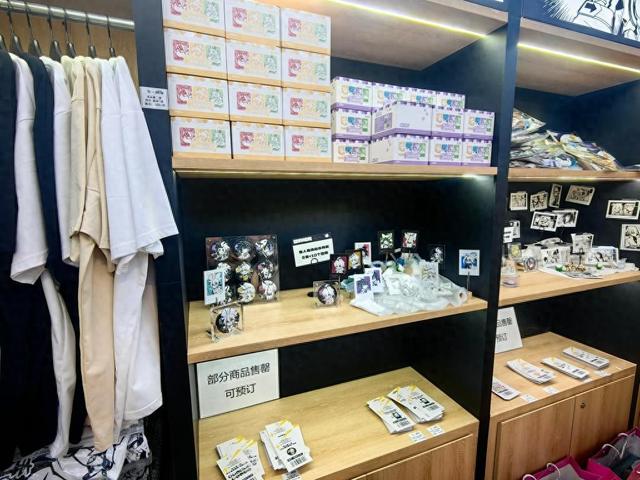
颇为年轻的客群,极高的提袋率,潮流的动漫IP产品……走在人流如织的"中华商业第一街"——南京路 步行街,百联ZX创趣场有些不一样。 以前,这里是百联股份旗下的华联商厦,进驻的是"老字号",也曾是南京路上的"顶流"。2023年1月, 瞄准"年轻力"消费,百联股份完成了对华联商厦的整体改造,这便是在"90后""00后"心中鼎鼎有名的百 联ZX创趣场。 走进ZX创趣场,处于"C位"的是主打青少年热血动漫的中国原创动漫IP"凹凸世界"。镜面吧唧、无边色 纸、纸夹相卡……为期18天的快闪店时间才过半,这里有不少"谷子"已经提前售罄,取而代之的是一张 张"提货券",却仍然架不住消费者购买的热情。 "完全没想到,这场快闪的销售额这么高!"光和社衍生品研发中心负责人唐英虎说,快闪店首日营业额 近百万元,"这个数据不仅在国内表现优异,在国际上也是对标一线大IP的销售水平,有些爆款第一天 卖到晚上就断货了"。 趣场内的"凹凸世界"快闪店里,不少"谷子"已经提前售罄。新华社记者 周蕊 摄 "10多年前国漫还寥寥无几,现在每年都有亮眼的国漫新IP涌现,衍生品市场更加成熟,商场里的'C 位'也开始出现了知名国漫的身影。"唐英虎说,"凹 ...
房地产行业第6周周报(2026年1月31日-2026年2月6日)-20260210
Bank of China Securities· 2026-02-10 12:17
Investment Rating - The report rates the real estate sector as "Outperform" [6] Core Insights - The real estate market is experiencing significant year-on-year growth due to a low base from the previous year, particularly during the Spring Festival period, but there is a month-on-month decline in transactions [1][6] - The Shanghai pilot program for purchasing second-hand homes for rental housing is expected to positively influence market expectations and confidence if implemented effectively [2][6] - The new housing transaction area has shifted from positive to negative month-on-month, with a narrowing year-on-year growth rate [6][17] - The inventory of new homes is decreasing both month-on-month and year-on-year, while the de-stocking cycle has decreased month-on-month but increased year-on-year [6][46] Summary by Sections New Housing Market Tracking - In the week of January 31 to February 6, 2026, new housing transaction volume in 40 cities was 17,000 units, a month-on-month decrease of 4.3% and a year-on-year increase of 225.1% [18][19] - The new housing transaction area was 163.1 million square meters, with a month-on-month decline of 9.6% and a year-on-year increase of 203.0% [18][27] - The transaction volume and area for first, second, and third/fourth-tier cities showed varying month-on-month and year-on-year growth rates [20][21][22] Second-Hand Housing Market Tracking - The transaction area for second-hand homes in 18 cities was 174.1 million square meters, with a month-on-month decline of 4.7% and a year-on-year increase of 349.7% [6][19] - The month-on-month decline in transaction volume for second-hand homes is more pronounced in first-tier cities compared to second and third/fourth-tier cities [6][19] Inventory and De-stocking Cycle - The inventory of new homes in 12 cities was 11,235 million square meters, with a month-on-month decrease of 0.7% and a year-on-year decrease of 6.4% [46][47] - The de-stocking cycle for new homes is 17.4 months, showing a month-on-month decrease but a year-on-year increase [46][47] Land Market Tracking - The total area of land transactions across 100 cities was 1,188.4 million square meters, with a month-on-month increase of 74.1% and a year-on-year increase of 582.1% [6][14] - The average land price per square meter decreased month-on-month and year-on-year, indicating a cooling in land prices [6][14] Investment Recommendations - The report suggests focusing on companies with stable fundamentals in core cities, those that have made significant breakthroughs in sales and land acquisition, and commercial real estate companies exploring new consumption scenarios [7][6]

作为老龄化程度最深的城市,上海如何回应老年人需求?
Xin Lang Cai Jing· 2026-02-07 07:23
Core Insights - Shanghai has launched a "Silver Store" to cater to the elderly population, which is expected to exceed 37.6% of the city's registered residents by the end of 2024, addressing the needs of an aging society [1][2] Group 1: Silver Store Concept - The "Silver Store" provides a one-stop experience for elderly consumers, offering products such as smart assistive devices, age-friendly home goods, health foods, functional clothing, and entertainment options [2] - The store has shown promising operational results, with an average daily sales of approximately 30,000 yuan, peaking at 50,000 yuan in a single day, and has received widespread recognition from elderly customers and their families [2] Group 2: Development of Elderly-Friendly Consumption Spaces - The "Silver Store" is part of a broader initiative in Shanghai to create elderly-friendly consumption spaces, including rehabilitation assistive product experience centers and themed spaces in various districts [2] - The city has introduced guidelines for the construction of elderly-friendly shopping environments, focusing on aspects such as environmental facilities, product offerings, and operational management [3]